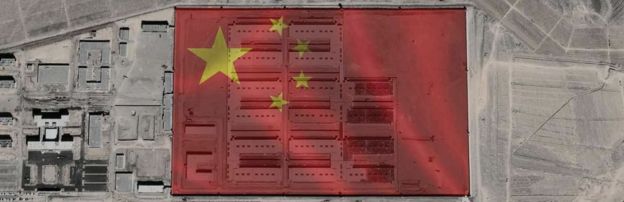
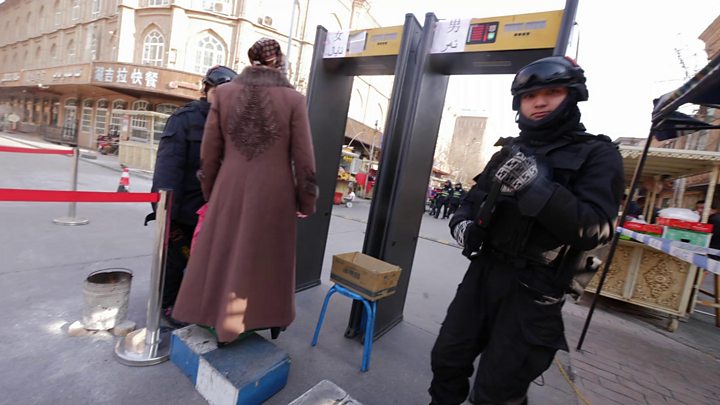
Archive for ‘Uighur’

02/03/2020

Think-tank report on Uighur labor in China lists global brands

BEIJING (Reuters) – Tens of thousands of ethnic Uighurs were moved to work in conditions suggestive of “forced labor” in factories across China supplying 83 global brands, and Australian think tank said in a report released on Sunday.

The Australian Strategic Policy Institute (ASPI) report, which cited government documents and local media reports, identified a network of at least 27 factories in nine Chinese provinces where more than 80,000 Uighurs from the western region of Xinjiang have been transferred.

“Under conditions that strongly suggest forced labor, Uighurs are working in factories that are in the supply chains of at least 83 well-known global brands in the technology, clothing and automotive sectors, including Apple, BMW, Gap, Huawei, Nike, Samsung, Sony and Volkswagen,” the think-tank said in the introduction to its report.

The ASPI report said the transfers of labor were part of a state-sponsored program.

It says the workers “lead a harsh, segregated life,” are forbidden to practice religion, and are required to participate in mandarin language classes.

It also says the Uighurs are tracked electronically and restricted from returning to Xinjiang.

China’s Foreign Ministry on Monday said reports the government had violated the Uighurs’ rights were untrue.

“This report is just following along with the U.S. anti-China forces that try to smear China’s anti-terrorism measures in Xinjiang,” spokesman Zhao Lijian at a regular press briefing on Monday.

The United Nations estimates over a million Muslim Uighurs have been detained in camps in Xinjiang over recent years as part of a wide-reaching campaign by Chinese officials to stamp out terrorism.

The mass detentions have provoked a backlash from rights groups and foreign governments, which say the arbitrary nature of the detentions violates human rights.

China has denied the camps violate the rights of Uighurs and say they are designed to stamp out terrorism and provide vocational skills.

“Those studying in vocational centers have all graduated and are employed with the help of our government,” said the Foreign Ministry’s Zhao, “They now live a happy life.”

The 83 global brands mentioned in ASPI’s report either work directly with the factories or source materials from the factories, it said, citing public supplier lists and the factories’ own information.

One of the factories, O-Film Technology Co Ltd, which has manufactured cameras for Apple Inc’s (AAPL.O) iPhones, received 700 Uighur laborers as part of the program in 2017, a local media article cited by the report said.

Apple referred Reuters to an earlier statement that said “Apple is dedicated to ensuring that everyone in our supply chain is treated with the dignity and respect they deserve. We have not seen this report but we work closely with all our suppliers to ensure our high standards are upheld.”

The other companies mentioned in the introduction to ASPI’s report – BMW (BMWG.DE), Gap Inc (GPS.N) , Huawei Technologies Co Ltd, Nike Inc (NKE.N), Samsung and Sony Corp (6758.T) did not respond to requests for comment on Monday.

O-Film Technology did not respond to a request for a comment either.

Volkswagen told Reuters in a statement that none of the listed companies is a direct supplier. It said the company holds “direct authority” in all parts of its business and “respects minorities, employee representation and social and labor standards.”

The report said a small number of the brands, including Abercrombie & Fitch Co [ANF.N], advised vendors to terminate their relationships with these companies in 2020, and others denied direct contractual relationships with the suppliers.

ASPI describes itself as an independent think-tank whose core aim is to provide insight for the Australian government on matters of defense, security and strategic policy.

Source: Reuters
29/12/2019

China ends forced labour for sex workers

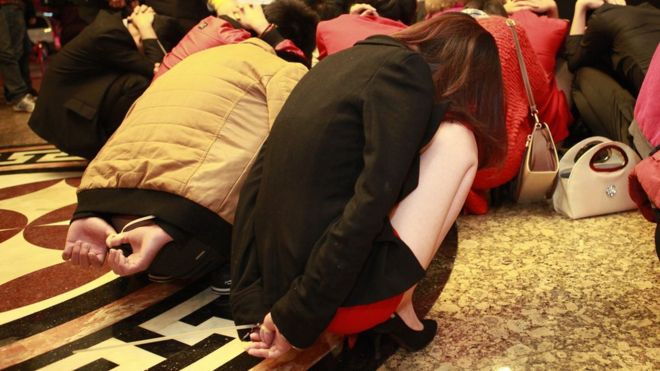
Sex workers and clients are rounded up in DongguanImage copyright AFP
Image caption Past detainees claim they were forced to work making toys and household goods

China is to end a punishment system for prostitution that allowed police to hold sex workers and their clients in custody for up to two years at so-called education centres.

Detainees were forced to work, allegedly making toys and household goods.

The detention system will come to an end on 29 December. Those still in custody will be released, according to Xinhua, China’s state media.

Prostitution remains illegal in China.

It carries punishments of up to 15 days in detention and fines of up to 5,000 yuan (£546).

China’s state media claims the “custody and education” system has helped to maintain a “good social atmosphere and public order” since it was introduced more than 20 years ago.

It added that over time, the system has become less and less appropriate.

A study by NGO Asia Catalyst in 2013 questioned whether this scheme was effective.

The report included interviews with 30 female sex workers from two cities.

It claimed detainees were unable to learn new skills during detention that could help them after their release. The report added that the detainees typically undertake manual labour.

It said: “All of the sex workers we interviewed returned to the sex trade immediately after release.”

A 2013 report by Human Rights Watch interviewed 140 sex workers, clients, police and specialists and found that many sex workers were beaten by police in an attempt to coerce confessions.

One worker claimed she had been deceived into signing a confession.

“The police told me it was fine, all I needed to do was sign my name and they would release me after four or five days,” she said.

“Instead, I was locked up in [a] Custody and Education centre for six months.”

Shen Tingting, director of Asia Catalyst, said the move to abolish forced labour detention centres is positive but only a small step towards safeguarding the rights of sex workers.

“Chinese law and policies focus on prohibition and cracking down on sex work, rather than providing a framework to ensure the health and safety of sex work as a profession,” she said.

In 2013, China announced it had abolished its system of “re-education through labour camps” for petty criminals.

That decision came after several high-profile miscarriages of justice, including a case where a mother was sent to a labour camp after demanding justice for her daughter who had been raped.

However, the abolition did not extend to the “custody and education” system affecting sex workers and their clients.

China isn’t totally abandoning the idea of re-education. Authorities in the country claim a number of camps in the north-west region of Xinjiang are voluntary education camps that help to combat extremism.

However rights groups claim many Chinese Uighur people have been rounded up into the camps and made to criticise or denounce their faith.

Source: The BBC

13/11/2019

Xinjiang cotton sparks concern over ‘forced labour’ claims

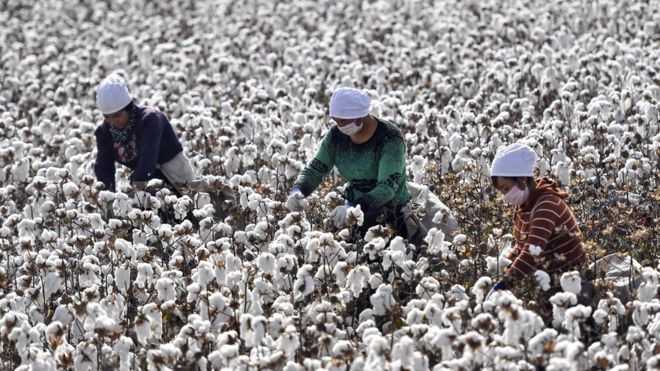
Farmers pick cotton during the harvest on October 21, 2019 in Shaya County, Xinjiang Uygur Autonomous Region of China.Image copyright GETTY IMAGES

Global retailers are facing scrutiny over cotton supplies sourced from Xinjiang, a Chinese region plagued by allegations of human rights abuses.

China is one of the world’s top cotton producers and most of its crop is grown in Xinjiang.

Rights groups say Xinjiang’s Uighur minority are being persecuted and recruited for forced labour.

Many brands are thought to indirectly source cotton products from the Xinjiang region in China’s far west.

Japanese retailers Muji and Uniqlo attracted attention recently after a report highlighted the brands used the Xinjiang-origin of their cotton as a selling point in advertisements.

H&M, Esprit and Adidas are among the firms said to be at the end of supply chains involving cotton products from Xinjiang, according to a Wall Street Journal investigation.

“You can’t be sure that you don’t have coerced labour in your supply chain if you do cotton business in China,” said Nathan Ruser, researcher at the Australian Strategic Policy Institute.

“Xinjiang labour and what is almost certainly coerced labour is very deeply entrenched into the supply chain that exists in Xinjiang.”

What is happening in Xinjiang?

UN experts and human rights groups say China is holding more than a million Uighurs and other ethnic minorities in vast detention camps.

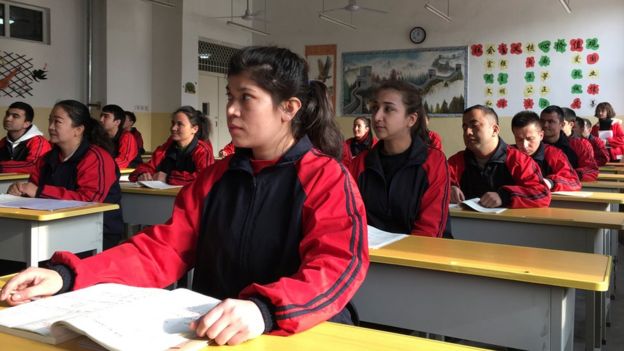
Rights groups also say people in camps are made to learn Mandarin Chinese, swear loyalty to President Xi Jinping, and criticise or renounce their faith.

China says those people are attending “vocational training centres” which are giving them jobs and helping them integrate into Chinese society, in the name of preventing terrorism.

What is produced in Xinjiang?

The Xinjiang region is a key hub of Chinese cotton production.

China produces about 22% of global cotton supplies, according to a report by the Center for Strategic and International Studies (CSIS).

Last year, 84% of Chinese cotton came from Xinjiang, the report said.

That has raised concerns over whether forced labour has been used in the production of cotton from the region.

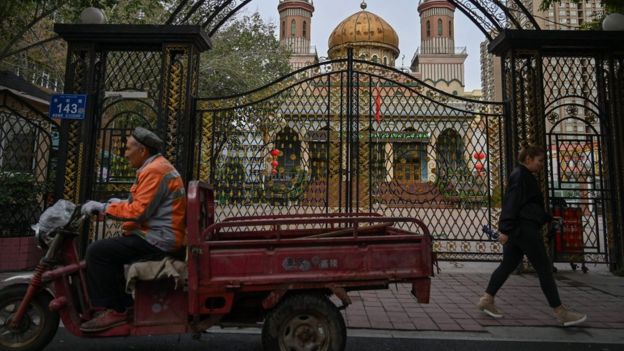
This photo taken on September 11, 2019 shows people walking past a mosque in Urumqi, the regional capital of Xinjiang.Image copyright GETTY IMAGES
Image caption The Uighurs are mostly Muslims, and number about 11 million in China’s Xinjiang region

Nury Turkel, chairman of the Uighur Human Rights Project in Washington, said the Uighurs were being “detained and tormented” and “swept into a vast system of forced labor” in Xinjiang.

In testimony to US congress, he said it was becoming “increasingly hard to ignore the fact” that the goods manufactured in the region have “a high likelihood” of being produced with forced labour.

Which brands use Xinjiang cotton?

Amy Lehr, director of CSIS Human Rights Initiative, said in many cases Western companies aren’t buying directly from factories in Xinjiang.

“Rather, the products may go through several stages of transformation after leaving Xinjiang before they are sent to large Western brands,” she said.

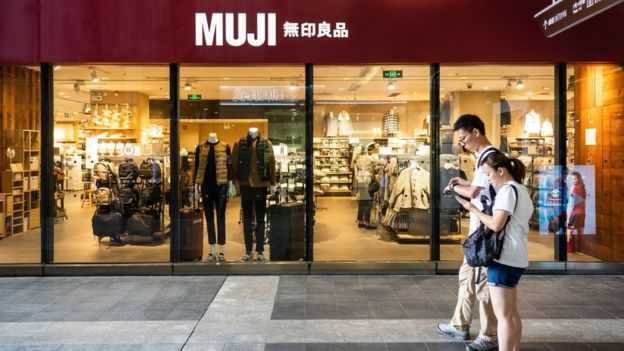
Some, like Muji, are very open about sourcing material from Xinjiang.

The Japanese retail chain launched a new Xinjiang Cotton collection earlier this year.

One of its advertisements boasts “soft and breathable” men’s shirts made from organic cotton “delicately and wholly handpicked in Xinjiang”.

Another Japanese fashion brand Uniqlo had also touted the Xinjiang region in an advertisement advertisment for men’s shirts.

In the fine print of the shirt description, the advert said the shirts were made from Xinjiang cotton, “famous for its superb quality”.

That reference was later removed from the advertisement “given the complexity of this issue”, according to a spokesperson for Uniqlo.

“Uniqlo does not have any production partners located in the Xinjiang region. Moreover, Uniqlo production partners must commit to our strict company code of conduct.

“To the best of our knowledge, this means our cotton comes only from ethical sources,” the spokesperson told the BBC.

Pedestrians walk past a Japanese household and consumer goods retailer, Muji store in ShenzhenImage copyright GETTY IMAGES

According to the Wall Street Journal report which focused on workers at a mill operated by Huafu Fashion in Aksu, Xinjiang, yarn made in the region was present in the supply chains of several international retailers including H&M, Esprit and Adidas.

Many of the companies looked into the allegations, including those without clear links to the Huafu mill.

In a statement to the BBC, Adidas said: “While we do not have a contractual relationship with Huafu Fashion Co., or any direct leverage with this business entity or its subsidiary, we are currently investigating these claims.”

“We advised our material suppliers to place no orders with Huafu until we have completed those investigations,” the Adidas spokesperson said.

Esprit, which also does not source cotton directly from Xinjiang, said it had made several inquiries earlier this year.

“We concluded that a very small amount of cotton from a Huafu factory in Xinjiang was used in a limited number of Esprit garments,” the firm said in a statement.

The company has instructed all suppliers to not source Huafu yarn from Aksu, the statement said.

H&M said it does not have “a direct or indirect business relationship” with any garment manufacturer in the Xinjiang region.

“We have an indirect business relationship with Huafu’s spinning unit in Shanyu, which is not located in the Xinjiang region, and according to our data, the vast majority of the yarn used for our garment manufacturing comes from this spinning unit,” a spokesperson for H&M said.

“Since we have an indirect business relationship with the yarn supplier Huafu, we also asked for access to their spinning facilities in Aksu. Our investigations showed no evidence of forced labor.”

Source: The BBC

09/10/2019

US imposes China visa restrictions over Uighur issue

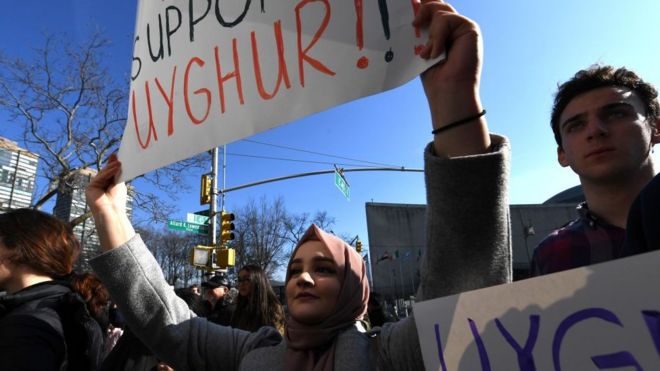
Uighur protesters demonstrating in the US in FebruaryImage copyright GETTY IMAGES
Image caption Protests calling for Uighur freedom have been happening all year

The US has said it will impose visa restrictions on Chinese officials accused of involvement in repression of Muslim populations.

It follows the decision on Monday to blacklist 28 Chinese organisations linked by the US to allegations of abuse in the Xinjiang region.

US Secretary of State Mike Pompeo said the Chinese government had instituted “a highly repressive campaign”.

China has dismissed the allegations as groundless.

In a statement, Mr Pompeo accused the Chinese government of a string of abuses against Uighurs, ethnic Kazakhs, Kyrgyz Muslims and other minority Muslim groups.

These included “mass detentions in internment camps; pervasive, high-tech surveillance; draconian controls on expressions of cultural and religious identities; and coercion of individuals to return from abroad to an often perilous fate in China”.

China has rebuffed the US moves.

“There is no such thing as these so-called ‘human rights issues’ as claimed by the United States,” foreign ministry spokesman Geng Shuang said on Monday.

“These accusations are nothing more than an excuse for the United States to deliberately interfere in China’s internal affairs.”

Media caption The BBC visits the camps where China’s Muslims have their “thoughts transformed”

Visa restrictions are to be imposed on Chinese government and Communist Party officials, as well as their family members.

“The United States calls on the People’s Republic of China to immediately end its campaign of repression in Xinjiang, release all those arbitrarily detained, and cease efforts to coerce members of Chinese Muslim minority groups residing abroad to return to China to face an uncertain fate,” the US statement said.

The US and China are currently embroiled in a trade war, and have sent delegations to Washington for a meeting about the tensions later this week.

What is the situation in Xinjiang?

China has been carrying out a massive security operation in Xinjiang, in its far west, in recent years.

Human rights groups and the UN say China has rounded up and detained more than a million Uighurs and other ethnic minorities in vast detention camps, where they are forced to renounce Islam, speak only in Mandarin Chinese and learn obedience to the communist government.

But China says they are attending “vocational training centres” which are giving them jobs and helping them integrate into Chinese society, in the name of preventing terrorism.

Media caption The BBC’s John Sudworth meets Uighur parents in Turkey who say their children are missing in China

There have been increasingly vocal denunciations from the US and other countries about China’s actions in Xinjiang.

Last week, Mr Pompeo alleged that China “demands its citizens worship government, not God” in a press conference in the Vatican.

And in July more than 20 countries at the UN Human Rights Council signed a joint letter criticising China’s treatment of the Uighurs and other Muslims.

Who are the Uighurs?

Uighurs are ethnically Turkic Muslims. They make up about 45% of the Xinjiang region’s population; 40% are Han Chinese.

China re-established control in 1949 after crushing short-lived state of East Turkestan.

Since then, there has been large-scale immigration of Han Chinese and Uighurs fear erosion of their culture.

Xinjiang is officially designated an autonomous region within China, like Tibet to its south.

Source: The BBC

05/05/2019

China putting minority Muslims in ‘concentration camps,’ U.S. says

WASHINGTON (Reuters) – The United States accused China on Friday of putting well more than a million minority Muslims in “concentration camps,” in some of the strongest U.S. condemnation to date of what it calls Beijing’s mass detention of mostly Muslim Uighur minority and other Muslim groups.

The comments by Randall Schriver, who leads Asia policy at the U.S. Defense Department, are likely to increase tension with Beijing, which is sensitive to international criticism and describes the sites as vocational education training centres aimed at stemming the threat of Islamic extremism.

Former detainees have described to Reuters being tortured during interrogation at the camps, living in crowded cells and being subjected to a brutal daily regimen of party indoctrination that drove some people to suicide.

Some of the sprawling facilities are ringed with razor wire and watch towers.

“The (Chinese) Communist Party is using the security forces for mass imprisonment of Chinese Muslims in concentration camps,” Schriver told a Pentagon briefing during a broader discussion about China’s military, estimating that the number of detained Muslims could be “closer to 3 million citizens.”

When asked by a reporter why he used the term, Schriver said that it was justified “given what we understand to be the magnitude of the detention, at least a million but likely closer to 3 million citizens out of a population of about 10 million.””So a very significant portion of the population, (given) what’s happening there, what the goals are of the Chinese government and their own public comments make that a very, I think, appropriate description,” he said.
The Chinese embassy in Washington did not immediately respond to a request for comment.
U.S. Secretary of State Mike Pompeo on Thursday used the term re-education camps to describe the sites and said Chinese activity was “reminiscent of the 1930s.”
The U.S. government has weighed sanctions against senior Chinese officials in Xinjiang, a vast region bordering central Asia that is home to millions of Uighurs and other Muslim ethnic minorities. China has warned that it would retaliate “in proportion” against any U.S. sanctions.
The governor of Xinjiang in March directly dismissed comparisons to concentration camps, saying they were “the same as boarding schools.”
U.S. officials have said China has made criminal many aspects of religious practice and culture in Xinjiang, including punishment for teaching Muslim texts to children and bans on parents giving their children Uighur names.
Academics and journalists have documented grid-style police checkpoints across Xinjiang and mass DNA collection, and human rights advocates have decried martial law-type conditions there.
Source: Reuters
12/02/2019

Uighur crackdown: ‘I spent seven days of hell in Chinese camps’

Aibota Serik
Image captionAibota Serik says her father has disappeared into China’s network of detention centres

The Chinese government calls them free “vocational training centres”; Aibota Serik, a Chinese Kazakh whose father was sent to one, calls them prisons.

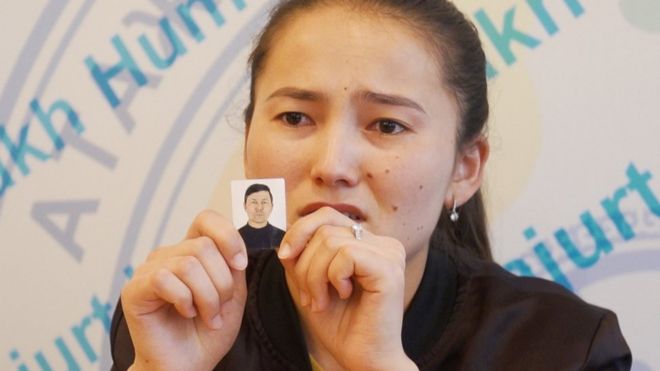
Her father Kudaybergen Serik was a local imam in Tarbagatay (Tacheng) prefecture of China’s western Xinjiang region. In February 2018 the police detained him and Aibota hasn’t heard from her father since then.

“I don’t know why my father was imprisoned. He didn’t violate any laws of China, he was not tried in a court,” she says, clutching a small photo of him, before breaking down in tears.

I met Aibota together with a group of other Chinese Kazakhs in Almaty, Kazakhstan’s largest city. They gathered in a small office to petition the Kazakh government to help secure the release of their relatives who had disappeared in “political re-education camps”.

The UN Committee on the Elimination of Racial Discrimination has heard there are credible reports that around one million people have been detained in internment camps in Xinjiang. Almost all of them are from Muslim minorities such as the Uighurs, Kazakhs and others.

There are more than a million Kazakhs living in China. After the collapse of the Soviet Union, thousands moved to oil-rich Kazakhstan, encouraged by its policy to attract ethnic Kazakhs. Today, these people feel cut off from their relatives who stayed in China.

Nurbulat Tursunjan
Image captionNurbulat Tursunjan says the Chinese authorities have confiscated his parents’ passports

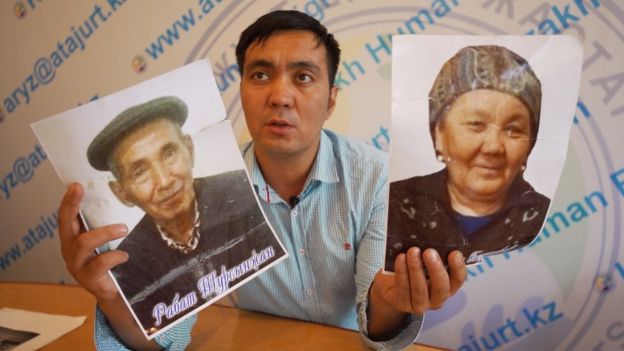
Nurbulat Tursunjan uulu, who moved to the Almaty region in 2016, says his elderly parents are unable to leave China and come to Kazakhstan because the authorities took away their passports.

Another petitioner, Bekmurat Nusupkan uulu, says that relatives in China are afraid to talk on the phone or on the popular Chinese messaging app WeChat. And they are right to be afraid, he says.

“My father-in-law visited me in February 2018. From my place, he called his son in China, he asked how he was and so on. Shortly after that his son Baurzhan was detained. He was told that he had received phone calls from Kazakhstan two or three times and was sent to a political camp.”

Human Rights Watch says detainees are held “without any due process rights – neither charged nor put on trial – and have no access to lawyers and family”.

Detention centre in Kashgar, ChinaImage copyrightREUTERS
Image captionChina insists its detention centres, such as this one in the city of Kashgar, are for “vocational training”

Orynbek Koksybek is an ethnic Kazakh who spent several months in camps.

“I spent seven days of hell there,” he says. “My hands were handcuffed, my legs were tied. They threw me in a pit. I raised both my hands and looked above. At that moment, they poured water. I screamed.

“I don’t remember what happened next. I don’t know how long I was in the pit but it was winter and very cold. They said I was a traitor, that I had dual citizenship, that I had a debt and owned land.”

None of that was true, he says.

A week later Mr Koksybek was taken to a different place where he learnt Chinese songs and language. He was told he would leave if he learnt 3,000 words.

Orynbek Koksybek
Image captionOrynbek Koksybek says he was thrown into a pit

“In Chinese they call it re-education camps to teach people but if they wanted to educate, why do they handcuff people?

“They detain Kazakhs because they’re Muslims. Why imprison them? China’s aim is to turn Kazakhs into Chinese. They want to erase the whole ethnicity,” he says.

It is not possible to independently verify Orynbek Koksybek’s story, but his account is similar to many documented by Human Rights Watch and other activists.

The Chinese embassy in Kazakhstan has not replied to the BBC’s request for comment, but the Chinese authorities have been quoted in state media as saying the camps are “vocational training centres”, which aim to “get rid of an environment that breeds terrorism and religious extremism”.

The Kazakh government says that any restrictions on Chinese citizens in China are their internal matter, and it does not interfere. However, Kazakhstan says it will try to assist any Kazakh citizens who are detained in China.

Source: The BBC

11/02/2019

China retaliates after Turkey’s claims about Abdurehim Heyit

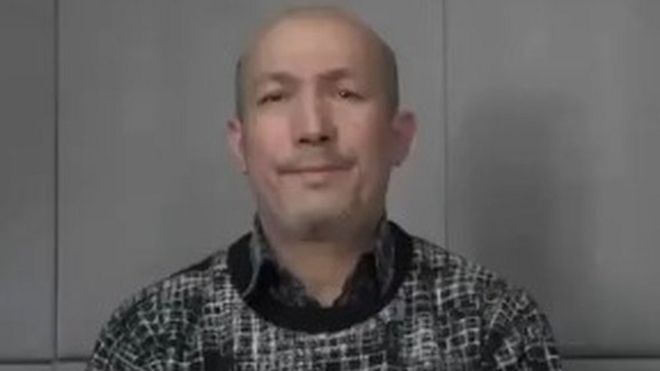
screenshot of video appearing to show Abdurehim HeyitImage copyrightCRI
Image captionA screenshot of the footage appearing to show Mr Heyit

China has railed at Turkish claims it is mistreating its Uighur minority, after a dispute about the fate of a prominent musician.

Turkey cited reports Abdurehim Heyit had died in a detention camp, and called China’s treatment of the Uighurs a “great embarrassment for humanity”.

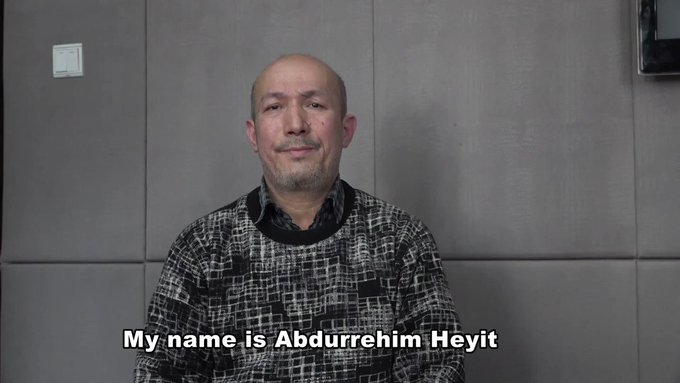
China then released a video allegedly showing Mr Heyit alive.

The Uighurs are a Muslim minority in north-western China who speak a language closely related to Turkish.

They have come under intense surveillance by the authorities and up to a million Uighurs are reportedly being detained. A significant number of Uighurs have fled to Turkey from China in recent years.

China has asked Turkey to revoke its “false” claims. A Chinese foreign ministry spokeswoman said the musician was “very healthy”.

“We hope the relevant Turkish persons can distinguish between right and wrong and correct their mistakes,” spokeswoman Hua Chunying told reporters.

What is in the video?

The video was released by China Radio International’s Turkish-language service, which said Turkey’s criticism of China was unfounded.

Dated 10 February, the video features a man said to be Mr Heyit stating that he is in “good health”.

He gives the date of the video and says he has “never been abused”.

The man is wearing civilian clothes, and is speaking the Uighur language.

What did Turkey say?

Turkey foreign ministry had said that detained Uighurs were being subjected to “torture” in “concentration camps”.

Foreign ministry spokesman Hami Aksoy said the reports of Mr Heyit’s death “further strengthened the Turkish public’s reaction to the serious human rights violations in Xinjiang”.

China has described the comments as “completely unacceptable”.

Meanwhile Nury Turkel – chairman of the US-based Uyghur Human Rights Project – told the BBC that some aspects of the video were “suspicious”.

Mr Turkel says China has the technology to doctor the footage and said it was “their responsibility to prove the video is authentic”.

So far, few Muslim-majority countries have joined in public international condemnation of the allegations.

Analysts say many fear political and economic retaliation from China.

Presentational grey line

Turkey’s strategic blunder?

By John Sudworth, BBC News, Beijing

Critics have long seen Turkey’s silence over the plight of China’s Uighurs as a strategic blunder, undermining President Recep Tayyip Erdogan’s lofty claim to moral leadership of the Muslim world.

But belatedly basing its condemnation of China’s system of internment camps on a wrongful claim of a death in custody might be seen as an even bigger blunder.

That is certainly the view of China’s foreign ministry. “The video clip has provided very good evidence for the truth,” the ministry’s spokeswoman said.

In reality, it’s impossible to verify anything about the status of Abdurehim Heyit. Before the claims of the musician’s death, and China’s quick rebuttal, there had been no official word about his detention at all.

Like hundreds of thousands of Uighurs, he had simply disappeared into a legal black hole.

And the video bears all the hallmarks of the forced, televised confessions regularly produced by the combined efforts of China’s Communist Party-controlled courts, police investigators and state-run media.

China has been quick to claim that the reports of Mr Heyit’s death prove that much of the criticism of the situation in Xinjiang is based on falsehoods.

But critics will continue to argue that the confusion – stemming from the lack of any independent scrutiny – shows precisely why there’s such growing concern, even, finally, in Turkey.

Presentational grey line

China’s hidden camps

BBC
Presentational grey line

What do we know about Heyit’s fate?

Heyit was a celebrated player of the dutar, a two-stringed instrument that is notoriously hard to master. At one time, he was venerated across China. He studied music in Beijing and later performed with national arts troupes.

Mr Heyit’s detention reportedly stemmed from a song he had performed, titled Fathers. It takes its lyrics from a Uighur poem calling on younger generations to respect the sacrifices of those before them.

But three words in the lyrics – “martyrs of war” – apparently led Chinese authorities to conclude that Mr Heyit presented a terrorist threat.

Who are the Uighurs?

The Uighurs make up about 45% of the population in Xinjiang.

Media captionJohn Sudworth reports from Xinjiang, where one million Uighurs have reportedly been detained

They see themselves as culturally and ethnically close to Central Asian nations.

In recent decades, large numbers of Han Chinese (China’s ethnic majority) have migrated to Xinjiang, and the Uighurs feel their culture and livelihoods are under threat.

Xinjiang is officially designated as an autonomous region within China, like Tibet to its south.

Source: The BBC

10/02/2019

Turkey demands China close camps after reports of musician’s death

John Sudworth reports from Xinjiang, where one million Uighurs have reportedly been detained

Turkey has called on China to close its detention camps following the reported death of a renowned musician from the ethnic Uighur minority.

Abdurehim Heyit is thought to have been serving an eight-year sentence in the Xinjiang region, where up to a million Uighurs are reportedly being detained.

A statement from Turkey’s foreign ministry said they were being subjected to “torture” in “concentration camps”.

China described the comments as “completely unacceptable”.

The Uighurs are a Muslim Turkic-speaking minority based in the north-west Xinjiang region of China, which has come under intense surveillance by Chinese authorities.

Their language is close to Turkish and a significant number of Uighurs have fled to Turkey from China in recent years.

So far few Muslim-majority countries have joined in public international condemnation of the allegations. Analysts say many fear political and economic retaliation from China.

What did Turkey say?

In a statement issued on Saturday, foreign ministry spokesman Hami Aksoy said: “It is no longer a secret that more than a million Uighur Turks exposed to arbitrary arrests are subjected to torture and political brainwashing” in prisons, adding that those not detained were “under great pressure”.

“The reintroduction of concentration camps in the 21st century and the systematic assimilation policy of Chinese authorities against the Uighur Turks is a great embarrassment for humanity,” Mr Aksoy said.

He also said the reports of Heyit’s death “further strengthened the Turkish public’s reaction to the serious human rights violations in Xinjiang” and called on UN Secretary General Antonio Guterres “to take effective steps to end the human tragedy” there.

Presentational grey line

China’s hidden camps

BBC
Presentational grey line

Rights groups say Uighurs, Kazakhs and other Muslim minorities are being detained indefinitely without charge for infractions like refusing to give a DNA sample, speaking in a minority language, or arguing with officials.

What was Beijing’s response?

In a statement quoted by the Associated Press, China through its embassy in Ankara called on Turkey to withdraw its “false accusations”.

“Both China and Turkey face the arduous task of fighting terrorism. We are opposed to maintaining double standards on the question of fighting terrorism,” it said.

“We hope the Turkish side will have a correct understanding of the efforts made by China to legally deploy measures to effectively fight terrorism and extremism, withdraw its false accusations and take measures to eliminate their harmful effects.”

Beijing claims that the detention camps in Xinjiang are “vocational education centres” designed to help rid the region of terrorism.

Speaking last October, the top Chinese official in Xinjiang, Shohrat Zakir, said “trainees” in the camps were grateful for the opportunity to “reflect on their mistakes”.

What do we know about Heyit’s fate?

Amnesty International said it was very concerned about reports of his death, which has not been officially confirmed.

Heyit was a celebrated player of the Dutar, a two-stringed instrument that is notoriously hard to master. At one time, he was venerated across China. He studied music in Beijing and later performed with national arts troupes.

Heyit’s detention reportedly stemmed from a song he performed titled Fathers. It takes its lyrics from a Uighur poem calling on younger generations to respect the sacrifices of those before them.

But three words in the lyrics – “martyrs of war” – apparently led Chinese authorities to conclude that Heyit presented a terrorist threat.

Presentational grey line

Who are the Uighurs?

Uighur men read newspapers in Xinjiang (2015)Image copyrightGETTY IMAGES

The Uighurs make up about 45% of the population in Xinjiang.

They see themselves as culturally and ethnically close to Central Asian nations.

In recent decades, large numbers of Han Chinese (China’s ethnic majority) have migrated to Xinjiang, and the Uighurs feel their culture and livelihoods are under threat.

Xinjiang is officially designated as an autonomous region within China, like Tibet to its south.

Source: The BBC

Law of Unintended Consequences

continuously updated blog about China & India

ChiaHou's Book Reviews

continuously updated blog about China & India

What's wrong with the world; and its economy

continuously updated blog about China & India