Archive for ‘UK government’

08/04/2020

Coronavirus: Carrie Lam takes pay cut, Hong Kong set for HK$138 billion in Covid-19 aid

  • Most of the relief fund earmarked to subsidise employees’ wages in affected industries
  • Lam and ministers slash their salaries following controversy over chief executive’s pay
Many businesses have been forced to close because of the coronavirus outbreak. Photo: Winson Wong

More than 1 million Hong Kong workers will have part of their wages paid for by the government under a HK$137.5 billion package of measures to help businesses and residents struggling during the Covid-19 crisis, while the city’s leader and her ministers have vowed to take a pay cut, the Post has learned.

Revealing the massive relief fund on Wednesday, Chief Executive Carrie Lam Cheng Yuet-ngor said HK$80 billion would go towards the wage scheme, targeting coronavirus-hit industries over six months with individual payments capped at 50 per cent of salaries, up to HK$9,000 a month. The employers receiving the lifeline must pledge not to lay off workers, she added.

Hong Kong records 25 new cases, including two-month-old baby; tally at 960

8 Apr 2020

Lam said the package, together with other recent pledges of financial relief, would cost a total of HK$287.5 billion, causing the budget deficit to surge from HK$139.1 billion this financial year to HK$276.6 billion, which is equivalent to 9.5 per cent of gross domestic product.

The relief deal is equivalent in size to 4.6 per cent of the city’s GDP.

Meanwhile, Lam’s monthly salary will fall to HK$390,000 after rising to HK$434,000 last July.

Lam and her 16 ministers had voluntarily agreed to a 10 per cent pay reduction for a year, the chief executive told the press conference.

The HK$137.5 billion deal – which was given the green light by her Executive Council earlier in the day – aims to safeguard employment and ease the woes of businesses, with the number of confirmed Covid-19 cases in the city reaching 960 on Wednesday.

A source said: “The scheme is aimed at coping with the economic hardship brought by the pandemic in the next six months. More than 1 million employees from various sectors, on top of those directly affected by the government’s social-distancing measures, will benefit.”

Staff affected by the latest social-distancing rules – including businesses forced to close – will benefit from the wage scheme, along with employees in sectors such as tourism and construction, two other sources said.

Some businesses set to benefit would be those related to education, such as tutorial centres, school bus operators and  PE coaches contracted from outside, according to one.

In February, the government unveiled a HK$30 billion fund that included 24 initiatives to help struggling sectors.
‘Lost faith’: EU’s top scientist quits over Covid-19 response
8 Apr 2020

“The government is drawing reference from the British government’s recent practice of paying 80 per cent of salaries of employees in affected industries, although the percentage and cap are lower in Hong Kong,” one source said.

In an unprecedented step announced last month, the UK government said the state would pay grants covering up to 80 per cent of salaries if companies kept workers on the payroll rather than laying them off.

In Singapore, the government has offered to pay 75 per cent of workers’ April wages, capped at S$4,600 (HK$25,000) per person.

The Japanese government on Tuesday approved its largest-ever economic relief package, which includes grants of up to 2 million yen (US$18,350), for small and medium-sized businesses whose revenues had more than halved.
Hongkonger recalls weeks of lockdown in Wuhan, China, the first epicentre of the Covid-19 pandemic
With the Hong Kong government sitting on reserves of more than HK$1.1 trillion, the Professional Commons think tank said the authorities should spend HK$200 billion on businesses and workers, including handing HK$7,500 a month over six months to sacked staff and covering 80 per cent of salaries up to a monthly maximum of HK$25,000 for workers at struggling firms and the self-employed.
Source: SCMP
04/04/2020

Coronavirus: China mourns Covid-19 victims with three-minute silence

Media caption A day of remembrance is held in China to honour those who have died in the coronavirus outbreak

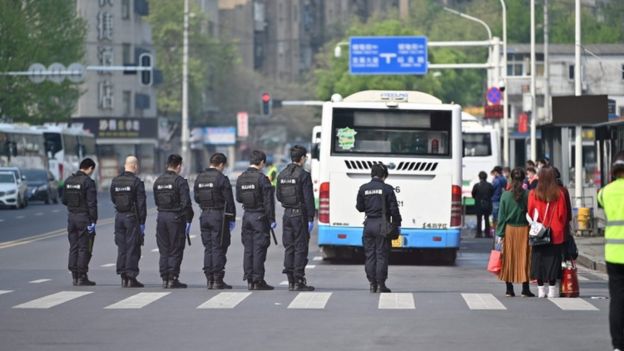
China has mourned the victims of the coronavirus outbreak by observing a three-minute silence, bringing the nation to a halt.

A day of remembrance was declared in China on Saturday to honour the more than 3,300 people who died of Covid-19.

At 10:00 local time (03:00 GMT), people stood still nationwide for three minutes in tribute to the dead.

Cars, trains and ships then sounded their horns, air raid sirens rang as flags were flown at half-mast.

The first cases of coronavirus were detected in the Chinese city of Wuhan in Hubei province late last year.

Since then, the virus has swept the globe, infecting more than one million people and killing nearly 60,000 in 181 countries.

In Wuhan, the epicentre of China’s outbreak, all traffic lights in urban areas were turned red at 10:00, ceasing traffic for three minutes.

China’s government said the event was a chance to pay respects to “martyrs”, a reference to the 14 medical workers who died battling the virus.

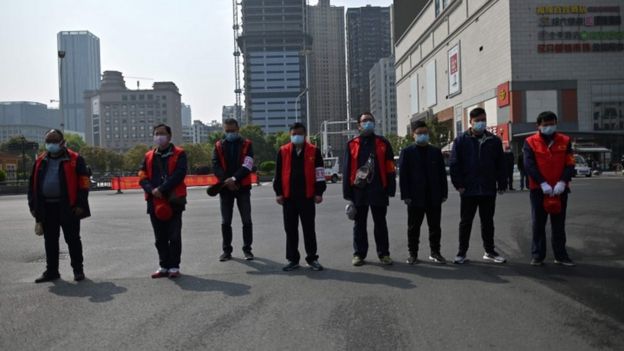
People stop and pay their respects in Wuhan, 4 April 2020Image copyright GETTY IMAGES
Image caption China came to a standstill during the three-minute silence at 10:00 local time

They include Li Wenliang, a doctor in Wuhan who died of Covid-19 after being reprimanded by the authorities for attempting to warn others about the disease.

“I feel a lot of sorrow about our colleagues and patients who died,” a Chinese nurse who treated coronavirus patients told AFP news agency. “I hope they can rest well in heaven.”

Wearing white flowers pinned to their chest, Chinese President Xi Jinping and other government officials paid silent tribute in Beijing.

Saturday’s commemorations coincide with the annual Qingming festival, when millions of Chinese families pay respects to their ancestors.

China first informed the World Health Organization (WHO) about cases of pneumonia with unknown causes on 31 December last year.

By 18 January, the confirmed number of cases had risen to around 60 – but experts estimated the real figure was closer to 1,700.

Police officers and officials stop and pay their respects during a three minutes of silence to mourn those who died in the fight against the pandemicImage copyright GETTY IMAGES
Image caption China’s government said the commemoration was held to pay respects to “martyrs”

Just two days later, as millions of people prepared to travel for the lunar new year, the number of cases more than tripled to more than 200 and the virus was detected in Beijing, Shanghai and Shenzhen.

From that point, the virus began to spread rapidly in Asia and then Europe, eventually reaching every corner of the globe.

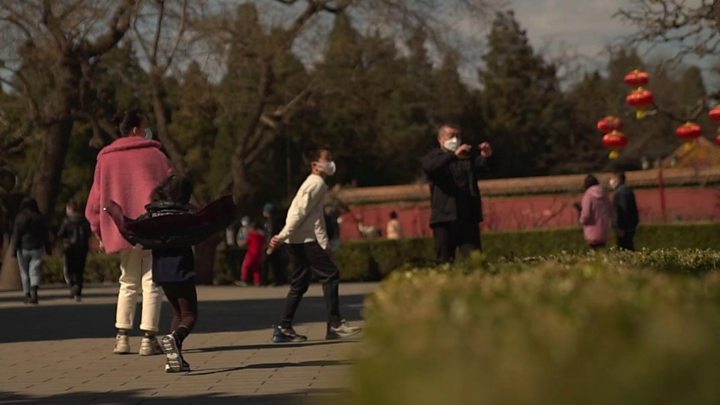
Media caption The BBC met people in Beijing heading out after the lockdown

In the past few weeks, China has started to ease travel and social-distancing restrictions, believing it has brought the health emergency under control.

Last weekend, Wuhan partially re-opened after more than two months of isolation.

On Saturday, China reported 19 new confirmed cases of coronavirus, down from 31 a day earlier. China’s health commission said 18 of those cases involved travellers arriving from abroad.

As it battles to control cases coming from abroad, China temporarily banned all foreign visitors, even if they have visas or residence permits.

What is the latest worldwide?

As the coronavirus crisis in China abates, the rest of the world remains firmly in the grip of the disease.

In the US, now the global epicentre of the outbreak, the number of deaths from the disease jumped to 7,152 on Friday, according to data collated by Johns Hopkins University.

The deaths increased by 1,480 in 24 hours, the highest daily death toll since the pandemic began, AFP news agency reported, citing Johns Hopkins University’s case tracker.

Banner image reading 'more about coronavirus'
Banner

As of Friday, there were 277,953 confirmed cases of coronavirus in the US, a rise of more than 32,000 in 24 hours.

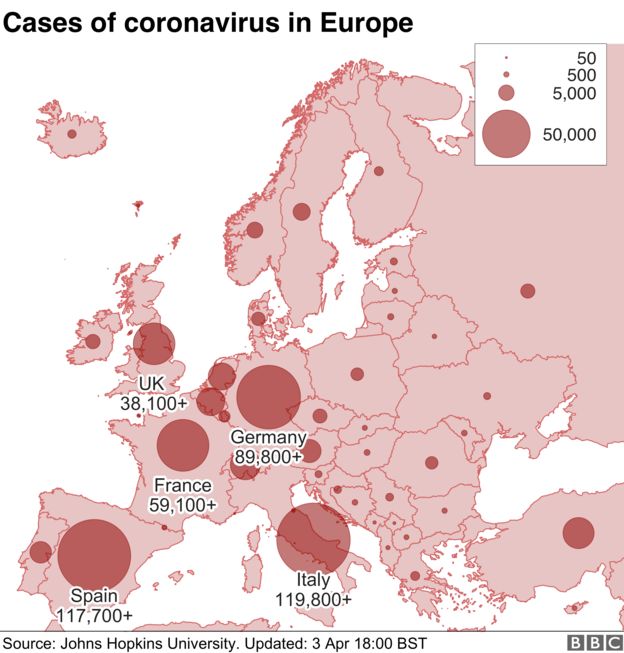
Meanwhile, deaths continue to climb in Italy and Spain, the second and third worst-affected countries in the world.

Map showing number of cases in Europe
Presentational white space

In Italy, deaths increased by 766 on Friday, bringing the total to 14,681. In Spain, the death toll stood at 10,935, a rise of 932 in the past day.

However, there was a glimmer of hope for both countries, as the downward trend in the rate of new cases continued.

In other global developments:

18/01/2020

New Chinese virus ‘will have infected hundreds’

VirusesImage copyright GETTY IMAGES
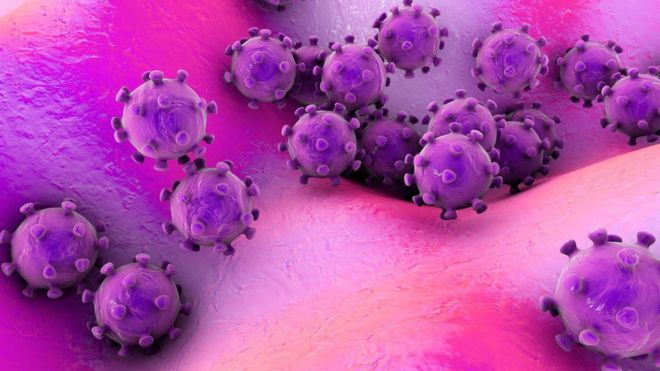
Image caption There were six coronaviruses known to infect people before the latest discovery

The number of people already infected by the mystery virus emerging in China is far greater than official figures suggest, scientists have told the BBC.

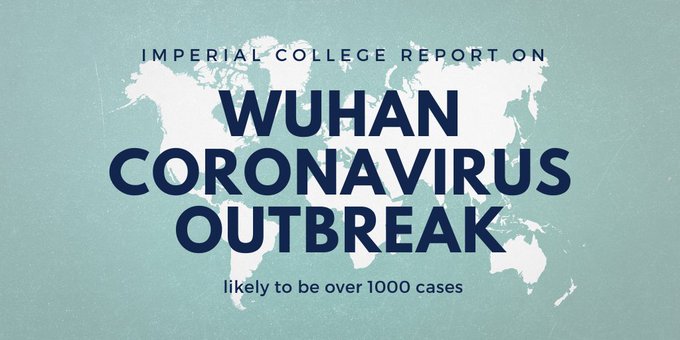
There have been more than 60 confirmed cases of the new coronavirus, but UK experts estimate a figure nearer 1,700.

Two people are known to have died from the respiratory illness, which appeared in Wuhan city in December.

“I am substantially more concerned than I was a week ago,” disease outbreak scientist Prof Neil Ferguson, said.

The work was conducted by the MRC Centre for Global Infectious Disease Analysis at Imperial College London, which advises bodies including the UK government and the World Health Organization (WHO).

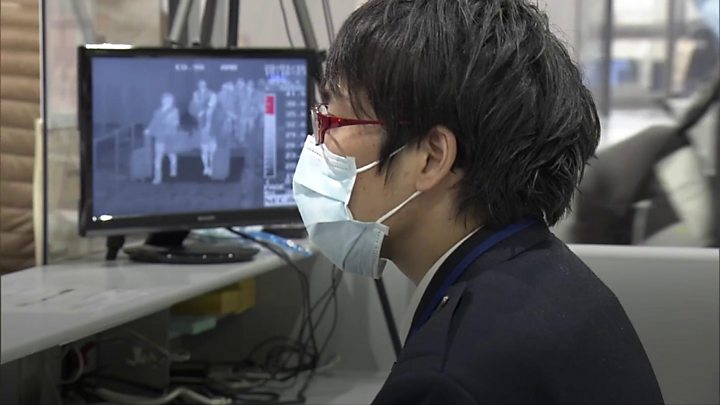
Singapore and Hong Kong have been screening air passengers from Wuhan, and US authorities announced similar measures starting on Friday at three major airports in San Francisco, Los Angeles and New York.

How were the numbers calculated?

The crucial clue to the scale of the problem lies in the cases being detected in other countries.

While the outbreak is centred on the central Chinese city of Wuhan, there have been two cases in Thailand and one in Japan.

“That caused me to worry,” said Prof Ferguson.

He added: “For Wuhan to have exported three cases to other countries would imply there would have to be many more cases than have been reported.”

It is impossible to get the precise number, but outbreak modelling, which is based on the virus, the local population and flight data, can give an idea.

Wuhan International Airport serves a population of 19 million people, but only 3,400 a day travel internationally.

The detailed calculations, which have been posted online ahead of publication in a scientific journal, came up with a figure of 1,700 cases.

What does it all mean?

Prof Ferguson said it was “too early to be alarmist” but he was “substantially more concerned” than a week ago.

Chinese officials say there have been no cases of the virus spreading from one person to another.

Instead they say the virus has crossed the species barrier and come from infected animals at a seafood and wildlife market in Wuhan.

Prof Ferguson argues: “People should be considering the possibility of substantial human-to-human transmission more seriously than they have so far.

“It would be unlikely in my mind, given what we know about coronaviruses, to have animal exposure, be the principal cause of such a number of human infections.”

Understanding how a novel virus is spreading is a crucial part of assessing its threat.

The WHO’s China office said the analysis was helpful and would help officials plan the response to the outbreak.

“Much remains to be understood about the new coronavirus,” it said. “Not enough is known to draw definitive conclusions about how it is transmitted, the clinical features of the disease, the extent to which it has spread, or its source, which remains unknown.”

WuhanImage copyright GETTY IMAGES
Image caption The outbreak occurred in the city of Wuhan, south of Beijing

What is this virus?

Viral samples have been taken from patients and analysed in the laboratory.

And officials in China and the World Health Organization have concluded the infection is a coronavirus.

Coronaviruses are a broad family of viruses, but only six (the new one would make it seven) are known to infect people.

At the mild end they cause the common cold, but severe acute respiratory syndrome (Sars) is a coronavirus that killed 774 of the 8,098 people infected in an outbreak that started in China in 2002.

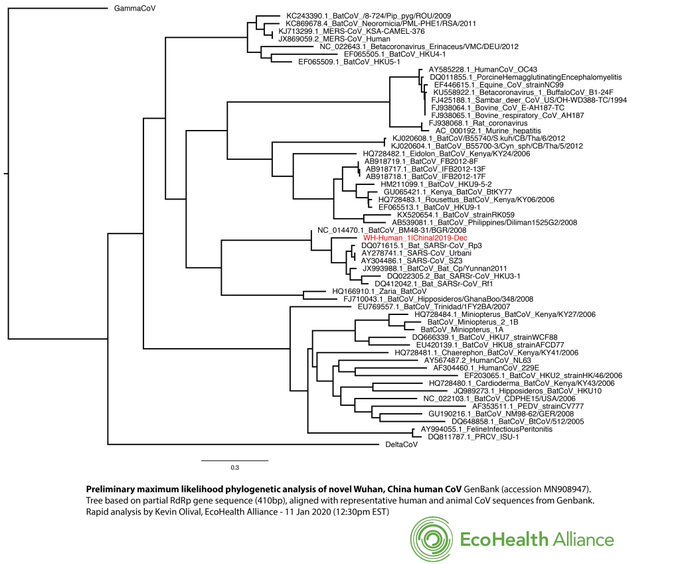
Analysis of the genetic code of the new virus shows it is more closely related to Sars than any other human coronavirus.

The virus has caused pneumonia in some patients and been fatal in two of them.

What do other experts say?

Dr Jeremy Farrar, director of the Wellcome medical research charity, said: “There is more to come from this epidemic.

“Uncertainty and gaps remain, but it’s clear that there is some level of person-to-person transmission.

Media caption Coronavirus feared to have infected more than initially thought, according to scientists

“We are starting to hear of more cases in China and other countries and it is likely, as this modelling shows, that there will be many more cases in a number of countries.”

Prof Jonathan Ball, from the University of Nottingham, said: “What’s really important is until there has been widespread laboratory testing it is very difficult to put a real number on the cases out there.

“But this is a figure we should take seriously until we know otherwise, 41 animal-to-human ‘spillovers’ is stretching it a bit and there probably is more underlying infection than has been detected so far.”

Source: The BBC

Law of Unintended Consequences

continuously updated blog about China & India

ChiaHou's Book Reviews

continuously updated blog about China & India

What's wrong with the world; and its economy

continuously updated blog about China & India