Chindia Alert: You’ll be Living in their World Very Soon
aims to alert you to the threats and opportunities that China and India present. China and India require serious attention; case of ‘hidden dragon and crouching tiger’.
Without this attention, governments, businesses and, indeed, individuals may find themselves at a great disadvantage sooner rather than later.
The POSTs (front webpages) are mainly 'cuttings' from reliable sources, updated continuously.
The PAGEs (see Tabs, above) attempt to make the information more meaningful by putting some structure to the information we have researched and assembled since 2006.
BEIJING (Reuters) – The spectre of new confrontation between Pyongyang and Washington hangs over meetings between China, Japan and South Korea this week, with growing risks North Korean actions could end an uneasy detente and upend recent diplomatic efforts.
South Korean President Moon Jae-in and Japanese Prime Minister Shinzo Abe are expected to meet Chinese President Xi Jinping separately on Monday. They will then travel to the southwestern city of Chengdu for a trilateral meeting with Chinese Premier Li Keqiang. Though they are expected to discuss various economic matters, North Korea appears likely to dominate the agenda.
Pyongyang has grown increasingly frustrated that its halt of nuclear and long-range missile tests has not ended the crippling economic sanctions against it. It set a Dec. 31 deadline for the United States to make concessions, but Washington has been unmoved.
Some experts believe North Korea may be readying to test an intercontinental ballistic missile launch soon, which would likely end the 2018 agreement struck by its leader, Kim Jong Un, and U.S. President Donald Trump.
“Safeguarding the stability and peace of the Korean Peninsula and pushing for a political solution to the Korean Peninsula issue are in the interests of China, Japan and South Korea,” Chinese Vice Foreign Minister Luo Zhaohui told reporters on Thursday at a briefing on the trilateral meetings.
U.S. special envoy for North Korea Stephen Biegun met with two senior Chinese diplomats during his two-day visit to Beijing this week, following similar meeting in South Korea and Japan days earlier, as diplomats make last-ditch attempts to prevent new confrontation.
North Korea has not responded to his public call to resume dialogue, however.
“The silence, even after Biegun’s speech in Seoul, makes me concerned,” Jenny Town, managing editor at the North Korea monitoring website 38 North, said on Twitter.
Beijing, jointly with Russia, proposed on Monday that the United Nations Security Council lift some sanctions in what it calls an attempt to break the current deadlock and seeks to build support. But it’s unclear whether Beijing can convince Seoul and Tokyo to break ranks from Washington, which has made its opposition clear and can veto any resolution.
Though South Korea sees China as instrumental in reviving negotiations, it has so far sidestepped questions on whether it supports the new proposal by Beijing and Moscow. Japan, which has historically been a staunch supporter of sanctions against North Korea, has also refrained from commenting on the proposal.
“With the (2020 Tokyo) Olympics coming up, North Korea going wild would pose a problem for Japan,” said Narushige Michishita, professor at Japan’s National Graduate Institute for Policy Studies.
“But bilateral talks with North Korea, for example, will probably be a better approach for Japan than easing UN sanctions.”
Leaders exchange congratulatory messages on 70th anniversary of diplomatic relations amid speculation that Kim Jong-un will visit China soon
It comes after Pyongyang’s denuclearisation negotiations with Washington broke off in Stockholm without any breakthroughs
North Korean leader Kim Jong-un (left) may soon visit China again. He last met Xi Jinping during the Chinese leader’s trip to Pyongyang in June. Photo: AFP
China and North Korea on Sunday vowed to continue strengthening their ties that have “stood the test of time”, hours after another squabble broke out between Pyongyang and Washington over the breakdown of their first nuclear talks in eight months.
Chinese President Xi Jinping exchanged congratulatory messages with North Korean leader Kim Jong-un on the 70th anniversary of diplomatic ties, according to state media in both countries, amid speculation that Kim will soon pay another visit to China.
Observers said the communist neighbours’ warm exchanges and Kim’s possible visit showed Beijing and Pyongyang shared mutual interests and needed each other in their respective geopolitical plans to counter Washington – especially as they both come under pressure from US President Donald Trump.
The two countries are said to be preparing for Kim to visit China as early as Sunday, which would be his fifth China trip since March last year and the first since Xi’s state visit to Pyongyang in June.
But given Pyongyang’s denuclearisation negotiations with Washington on Saturday – which broke off in Stockholm without any breakthroughs – China and North Korea may need to reconsider or delay Kim’s visit to avoid criticism of Beijing’s role in the nuclear talks, one expert suggested.
“The triangular ties between China, the United States and North Korea are of immense importance in finding a solution to the nuclear issue on the Korean peninsula and Beijing’s role in the talks has always been sensitive, especially in the eyes of the US and its allies,” said Wang Sheng, a North Korea specialist at Jilin University.
“While China will almost certainly reiterate its stance to support continued dialogue and talks between Pyongyang and Washington, it may not be a good time for Kim’s high-profile visit just a day after their talks broke down, which would inevitably make it more difficult for China to play a mediating role,” he said.
On Sunday, Xi said the traditional friendship between the two countries had “stood the test of time and changes in the international landscape, growing stronger with the passage of time” and “made important and positive contributions to regional peace and stability”, according to Chinese state news agency Xinhua.
Citing his five recent meetings with Kim, Xi said bilateral ties had entered a new era and China would promote “long-term, healthy and stable” relations with North Korea.
Kim also hailed the special relationship between the two countries, which he said had been forged “at the cost of blood” and “weathered all tempests while sharing weal and woe with each other”, the Korean Central News Agency reported.
North Korean mouthpiece Rodong Sinmun meanwhile said in a commentary that bilateral ties with Beijing were “fully in accordance” with the interests of the two sides and would develop “regardless of the international situation”, according to South Korea’s Yonhap news agency.
The lavish praise for Sino-North Korean relations comes as a group of working-level officials from North Korea are working with the Chinese side for a possible visit by Kim in the next few days, according to South Korea’s Dong-A Ilbo.
China and North Korea have set aside their differences as both countries come under pressure from US President Donald Trump. Photo: AFP
North Korea was among the first countries to recognise the People’s Republic of China
70 years ago and Xi has exchanged three messages with Kim in the past month, repeatedly pledging to move closer despite lingering grievances over Pyongyang’s nuclear brinkmanship.
In the face of Trump’s increasingly antagonistic approach, the former communist allies – whose relationship deteriorated over Beijing’s support for the UN sanctions against the North, led by Washington – have set aside their differences to patch up ties in recent months.
Meanwhile, Pyongyang’s first nuclear talks with Washington in eight months ended on Saturday with the two sides offering conflicting assessments of their first formal discussion since the failed Trump-Kim summit in Vietnam in February.
North Korea’s top negotiator Kim Myong-gil expressed his “great displeasure” with the discussions, blaming Washington and urging the Trump administration to correct its course and keep the talks alive or “forever close the door to dialogue”, according to Yonhap.
North Korean negotiator Kim Myong-gil expressed his “great displeasure” with the discussions on Saturday. Photo: AP
But the US State Department issued a rebuke hours later, claiming the negotiators had a “good discussion”. State Department spokeswoman Morgan Ortagus said in a statement that the US had put forward “creative ideas” and “a number of new initiatives that would allow us to make progress in each of the four pillars of the Singapore joint statement”.
The two countries were not expected to “overcome a legacy of 70 years of war and hostility on the Korean peninsula through the course of a single Saturday”, she said, adding that Washington would return for more discussions with Pyongyang in two weeks at Sweden’s invitation.
As Trump administration enters survival mode, foreign policy moves are anyone’s guess
Wang from Jilin University said the breakdown of another round of talks had again laid bare the huge gap between the two sides over a long list of issues, from the definition of denuclearisation to their vastly different, often conflicting, demands and interests.
“It’s very likely that Washington has again rejected some of Pyongyang’s key demands in the recent talks, such as providing a security guarantee for Kim’s regime and a range of economic sanctions relief,” he said.
And with North Korea a polarising issue in the looming US presidential poll for Trump as he seeks to score diplomatic points for his re-election bid, it might become even more challenging for the two sides to narrow their differences.
“The breakdown of the talks should not be seen as a failure,” Wang said. “It simply underscores the difficulty of reaching any consensus in the nuclear talks, which still have a long way to go.”
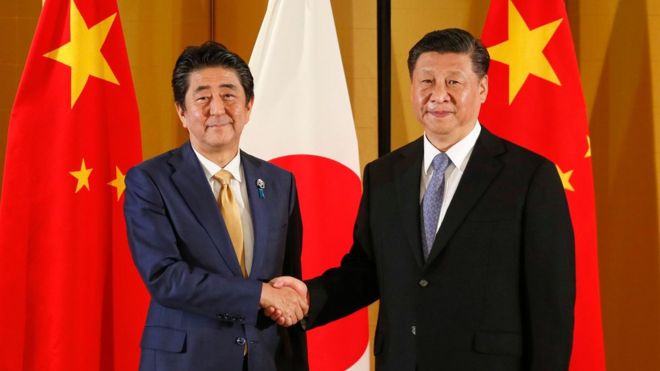
The pair agreed to work together to promote “free and fair trade” following a “very frank exchange”, a Japanese official said.
It is the first official visit Mr Xi has made to Japan since becoming president in 2013. At the outset of their talks on Thursday, Mr Abe invited him to return on a state visit next year.
“Around the time of the cherry blossoms next spring, I would like to welcome President Xi as a state guest to Japan,” he said. “[I] hope to further elevate ties to the next level.”
What did the leaders discuss?
Japan and China are by far Asia’s largest economies and the talks on Thursday focused strongly on business.
Last year, the two sides signed a deal to maintain annual dialogue and to co-operate on innovation. This time around, officials say, they pledged to develop a “free and fair trading system” in a “complicated” global economic landscape.
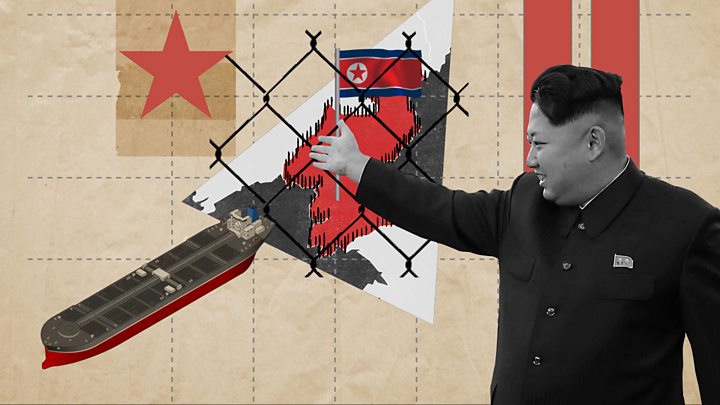
Media caption North Korea has been called out for evading UN sanctions
Another topic on the schedule would probably have been North Korea. While China is North Korea’s biggest trading partner, both Tokyo and Beijing want it to abandon its nuclear programme.
Mr Abe has only very limited leverage on the matter and will try to sway both the US and China to keep Tokyo’s interests in mind in any negotiations.
The G20 summit will begin on Saturday, but the main meeting is likely to be overshadowed by the many bilateral talks that are set to happen on the sidelines.
For example, Mr Xi will meet President Trump as China and the US try to resolve their trade dispute.
Do Japan and China get along?
In the past, relations have been tense. While the two countries do have close trade ties, politically things have been much more fragile.
Image copyright EPAImage caption Japan and China have not always had warm relations
Japan’s World War Two occupation of parts of China remains a very emotional issue. There are also several ongoing territorial disputes between Tokyo and Beijing.
But tensions with Washington over its protectionist trade policy have driven Japan and China into an unlikely friendship.
In 2018, Mr Abe hailed his high-profile visit to Beijing as an historic turning point. Both leaders have since promised to establish positive, constructive, relations.
President Xi Jinping will meet Russian counterpart Vladimir Putin next month and address economic summit in St Petersburg
Diplomatic flurry will also include regional security forums in Kyrgyzstan and Tajikistan
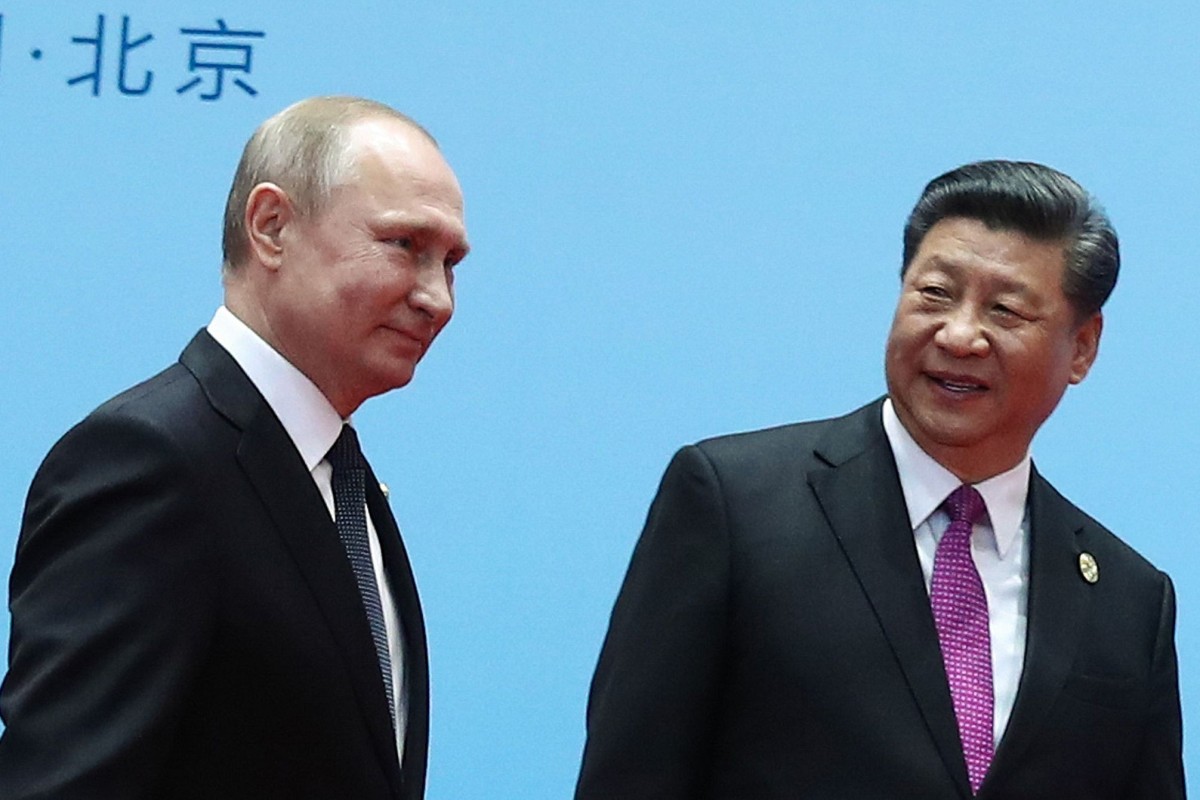
Xi Jinping has met Vladimir Putin more times than any other foreign leader since he took power in 2013. Photo: AFP
Beijing is stepping up efforts to seek support from regional and global players such as Russia and Central Asian nations as its geostrategic rivalry with Washington heats up.
President Xi Jinping is expected to meet his Russian counterpart Vladimir Putin next month, when he will also address the St Petersburg International Economic Summit,
The Chinese president will also visit the Kyrgyzstan capital Bishkek for the Shanghai Cooperation Organisation (SCO) summit in June, as well as another regional security forum in Dushanbe, Tajikistan.
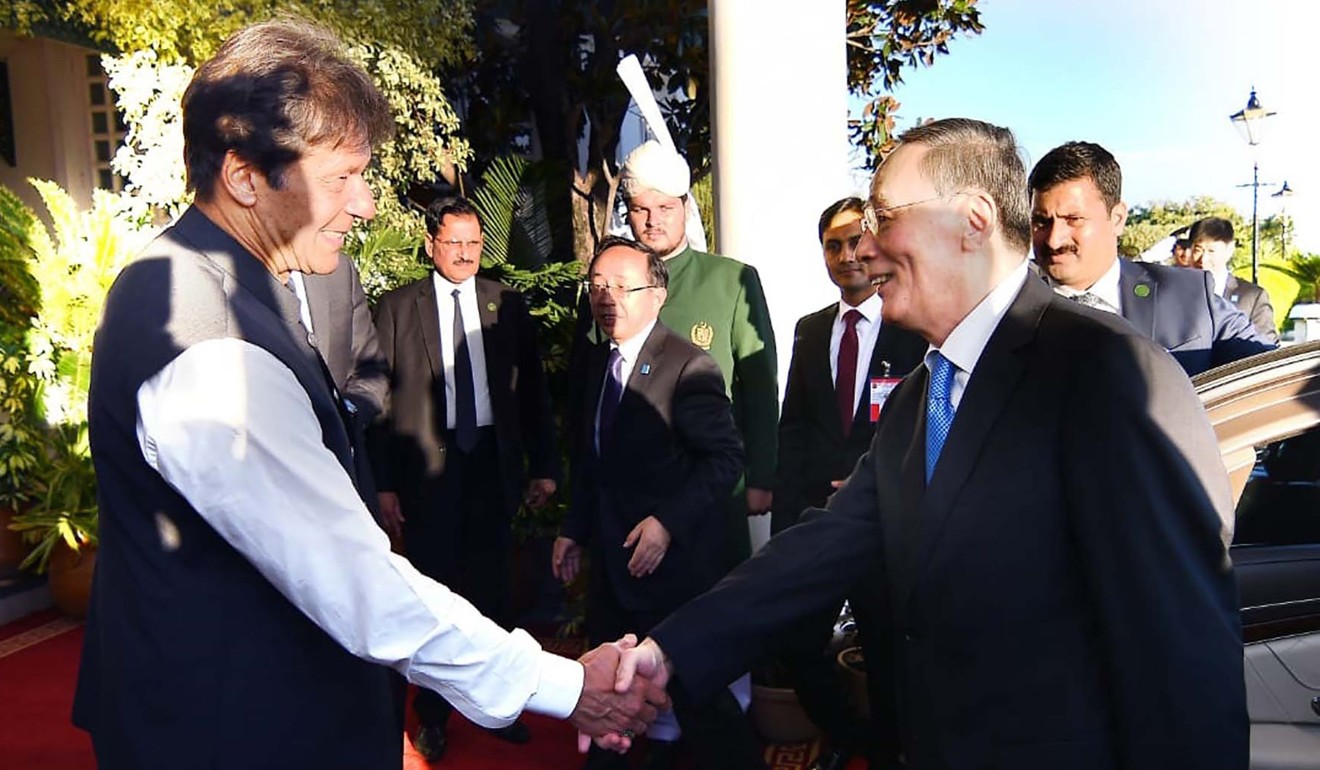
Meanwhile, Vice-PresidentWang Qishan is visiting Pakistan before he heads to the Netherlands and Germany, according to the Chinese foreign ministry.
Pakistani Prime Minister Imran Khan meets Chinese Vice-President Wang Qishan in Islamabad on Sunday. Photo: AFP
The latest flurry of diplomatic activity comes as competition between China and the US intensifies on several fronts including trade and technology, the South China Sea and the Arctic, where Beijing’s partnership with Moscow –
It will be Xi’s second time at the St Petersburg forum, and observers expect the Chinese leader will reaffirm Beijing’s commitment to multilateralism and promote the nation as a champion of openness and cooperation.
China-Russia ties unrivalled, Beijing warns before Pompeo meets Putin
It will also be his second meeting with Putin in two months, after talks on the sidelines of the Belt and Road Forum in Beijing in late April, when the Russian president
for the controversial China-led infrastructure and investment initiative.
With China and Russia edging closer, the latest meeting is likely to see efforts to coordinate their strategies on a range of issues – including Venezuela, North Korea, nuclear weapons and arms control, according to observers. Xi has met Putin more times than any other foreign leader since he took power in 2013.
“This time it is very likely that the latest anti-China moves by the US, such as new tariffs and the Huawei ban, will feature prominently in their conversations,” said Artyom Lukin, an associate professor at Far Eastern Federal University in Vladivostok.
Lukin said Russia’s stagnating economy and sanctions imposed by the West limited its role as a substitute for the foreign markets and technologies China could lose access to because of the US crusade. But he said Putin would “provide political and moral support to Xi”.
“That is also significant as Russia has been withstanding intense US-led sanctions pressure for more than five years already,” Lukin said, referring to sanctions imposed after Russia’s annexation of Crimea in 2014.
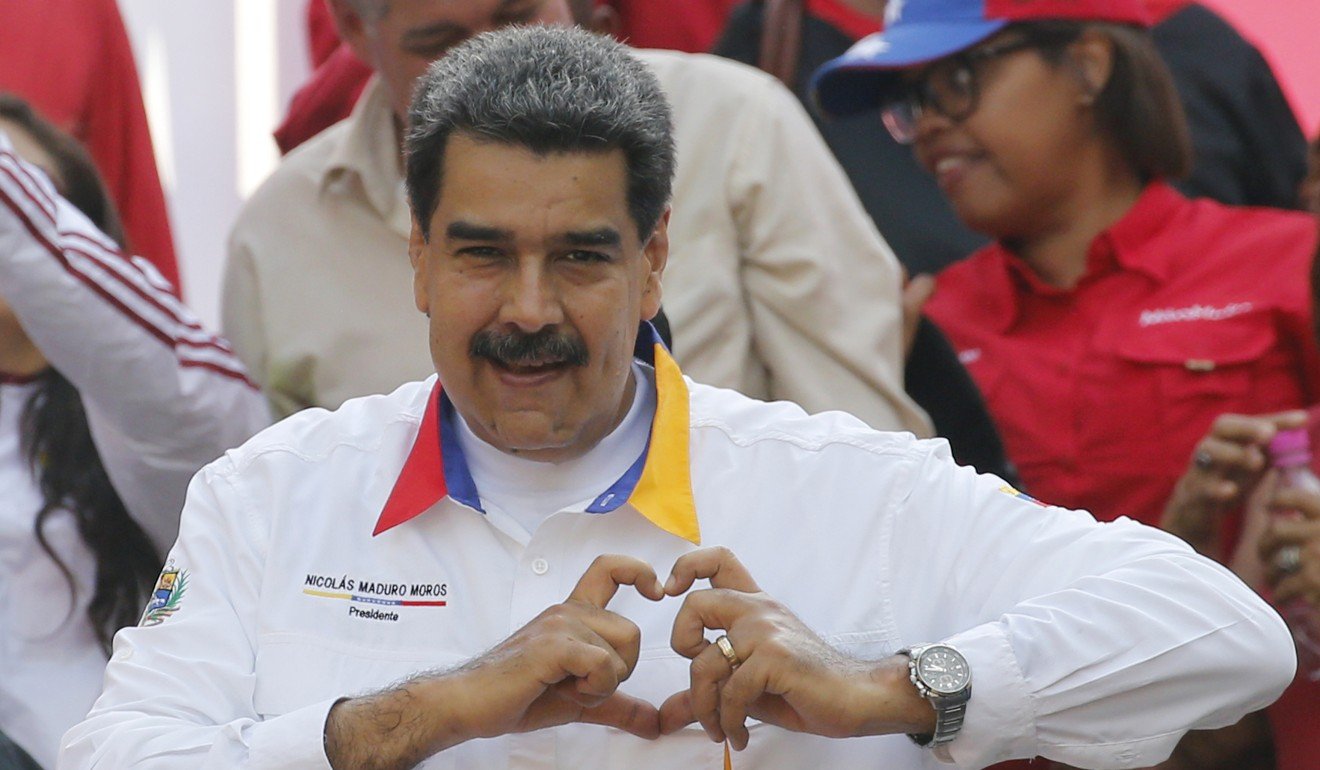
Xi and Putin are also expected to talk about Venezuela, where US-backed opposition leader Juan Guaido is attempting to oust socialist President Nicolas Maduro, who has the support of China and Russia.
Venezuelan President Nicolas Maduro has the backing of China and Russia. Photo: AP
“Moscow and Beijing are not able to seriously hurt Washington by raising tariffs or denying access to high technology. However, there are plenty of areas where coordinated Sino-Russian policies can damage US interests in the short term or in the long run,” Lukin said. “For example, Moscow and Beijing could intensify their joint support for the Venezuelan government of Nicolas Maduro, frustrating Washington’s efforts to dislodge him.”
China and Russia would also be seeking to boost economic ties. Bilateral trade, dominated by Chinese imports of gas and oil, reached US$108 billion last year – falling far short of the target set in 2011 by Xi’s predecessor, Hu Jintao, of US$200 billion by 2020.
China and Russia to forge stronger Eurasian economic ties
Li Lifan, an associate research professor at the Shanghai Academy of Social Sciences, said bilateral trade was a sticking point. “This is one of the potential hindrances in China-Russia relations and Beijing is hoping to [address this] … in the face of a possible global economic slowdown,” Li said.
Given the escalating trade war with Washington, he said China would seek to diversify its investments and markets to other parts of the world, particularly Russia and Europe.
“China will step up its investment cooperation with Europe and Russia and focus more on multilateral investment,” Li said.
But Beijing was not expected to do anything to worsen tensions with Washington.
“China is currently taking a very cautious approach towards the US, trying to avoid heating up the confrontation and further aggravation of the situation,” said Danil Bochkov, a contributing author with the Russian International Affairs Council. “For China it is important to demonstrate that it has a reliable friend – Russia – but that should not be done in an openly provocative manner.”
Stephen Blank, a senior fellow at the American Foreign Policy Council in Washington, said Beijing and Moscow would also seek to contain US influence “as far as possible” from Central Asia, where China has increased its engagement through infrastructure building under the “Belt and Road Initiative”.
Leaders from the region will gather in Bishkek next month for the SCO summit, a security bloc set up in 2001 that now comprises China, Russia, Kazakhstan, Kyrgyzstan, Tajikistan, Uzbekistan, India and Pakistan. Those members account for about 23 per cent of the world’s land mass, 45 per cent of its population, and 25 per cent of global GDP.
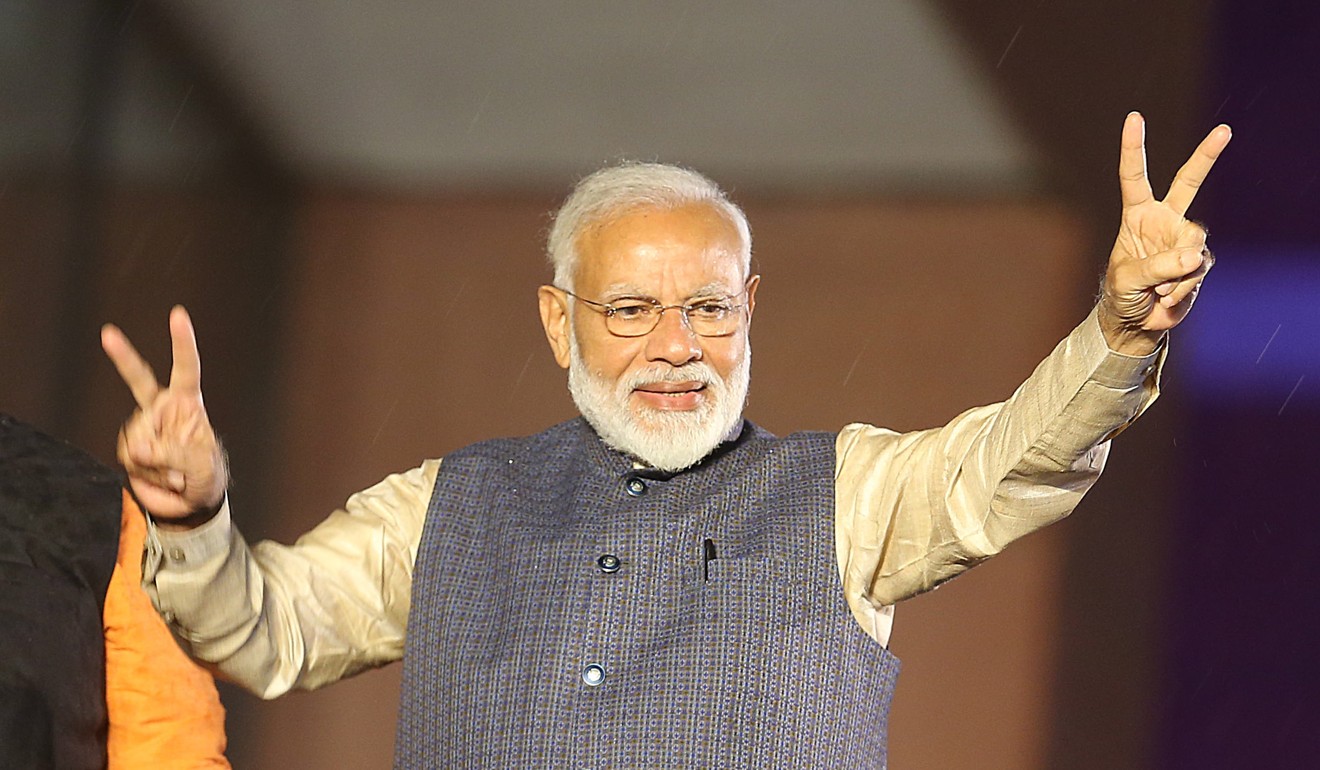
Newly re-elected Indian Prime Minister Narendra Modi could meet the Chinese president for talks in Bishkek next month. Photo: EPA-EFE
There is growing speculation that Xi will meet newly re-elected Indian Prime Minister Narendra Modi on the sidelines of that summit.
Independent analyst and author Namrata Goswami said India would be seeking a commitment to a WTO-led and rules-based multilateral trading system during the SCO talks.
“This is interesting and significant given the current US tendencies under President Donald Trump focused on ‘America first’ and the US-China trade war,” Goswami said.
Counterterrorism will again be a top priority at the SCO summit, amid concerns among member states about the rising number of Islamic State fighters returning from Syria and Iraq. Chinese scholars estimated last year that around 30,000 jihadists who had fought in Syria had gone back to their home countries, including China.
Alexander Bortnikov, chief of the main Russian intelligence agency FSB, said earlier that 5,000 fighters from a group affiliated with Isis had gathered in areas bordering former Soviet states in Central Asia, saying most of them had fought alongside Isis in Syria.
War-torn Afghanistan, which shares a border with four SCO member states – China, Pakistan, Tajikistan and Uzbekistan – is also likely to be high on the agenda at the Bishkek summit.
“With the Trump administration drafting plans to withdraw troops from Afghanistan, the SCO will assess the security situation there and decide whether to provide training for Afghan troops,” Li said.
Eva Seiwert, a doctoral candidate at the Free University of Berlin, expected the security bloc would also discuss Iran after the US withdrew from the 2015 nuclear deal and ordered new sanctions against the country.
Iran, which has observer status with the SCO, was blocked from becoming a full member in 2008 because it was subject to UN sanctions at the time. But its membership application could again be up for discussion.
Iran presses China and Russia to save nuclear deal
“The Trump administration’s unilateral withdrawal from the Iran nuclear deal in 2018 made it easy for China and Russia to present themselves as the proponents of peaceful settlement of conflicts,” Seiwert said. “Discussing the possibility of admitting Iran as a full member state would help the SCO members demonstrate their support of multilateral and peaceful cooperation.
“This would be a strong signal to the US and enhance the SCO’s standing in the international community,” she said.
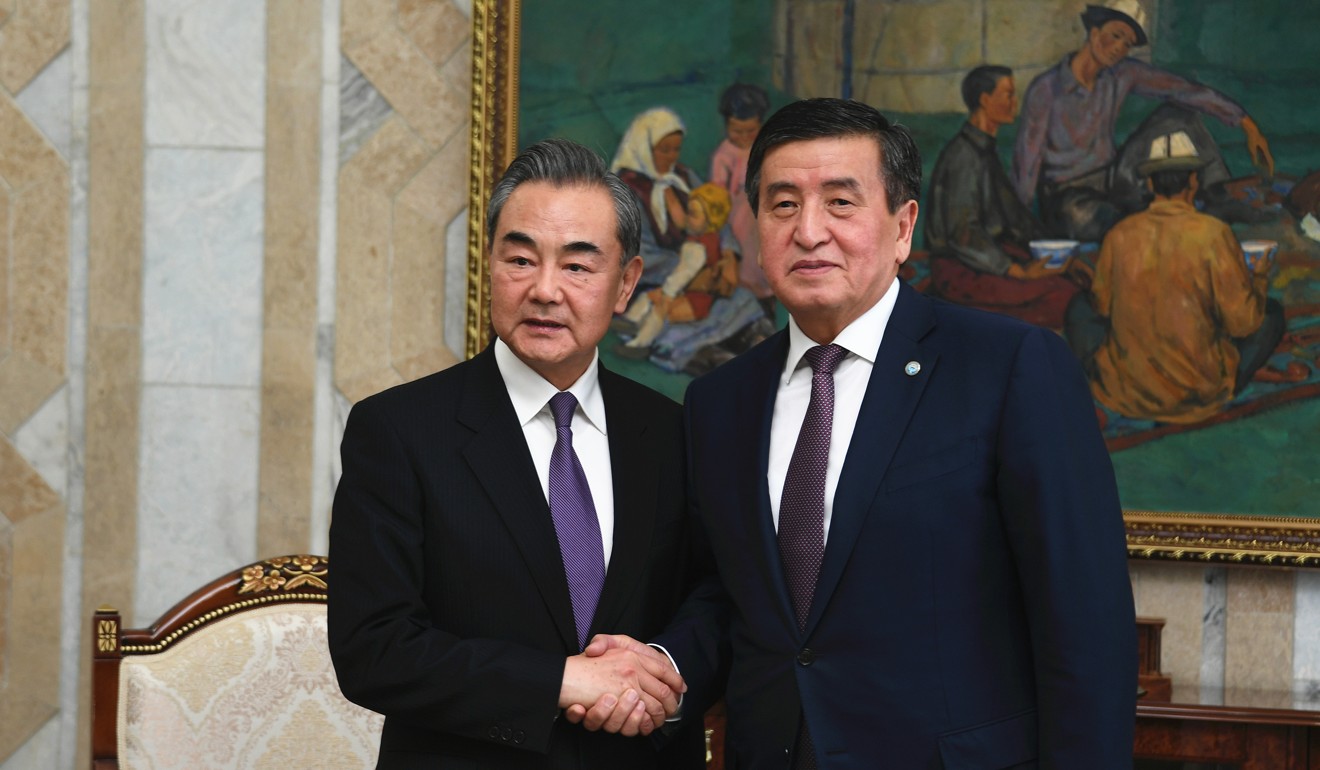
Kyrgyz President Sooronbay Jeenbekov (right) meets Chinese Foreign Minister Wang Yi in Bishkek on Tuesday last week. Photo: Xinhua
As well as security, Xi’s visit to Central Asia is also likely to focus on economic ties. Meeting Kyrgyz President Sooronbay Jeenbekov in Bishkek last week, Chinese Foreign Minister Wang Yi said Beijing would continue to “provide support and help national development and construction in Kyrgyzstan”.
Li said China may increase investment in the Central Asian region, especially in greenfield projects.
“China will continue to buy agriculture products from Central Asia, such as cherries from Uzbekistan, and build hydropower projects to meet local energy demand,” Li said. “Investment in solar and wind energy projects is also expected to increase too.”
Buses from the North make return trip to China on Monday, according to South Korean media
Opening of Jian-Manpo border crossing had been delayed during heightened tension over sanctions on the North
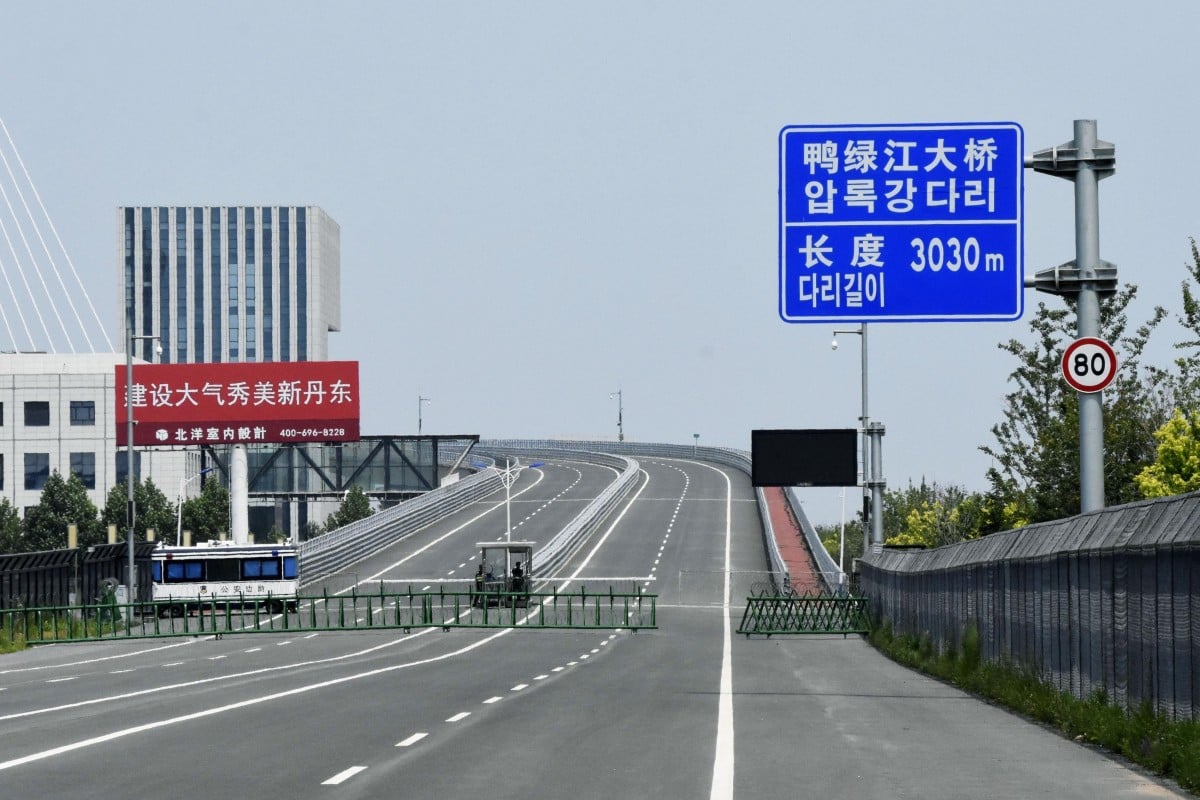
The bridge crosses the Yalu River on the border between China and North Korea. Photo: Kyodo
China and North Korea have finally opened a border bridge built between the two countries in 2016, in a potential boost to the North’s economy as Beijing tries to balance its concerns about its neighbour against ongoing international pressure for it to denuclearise.
A border checkpoint and bridge connecting the Chinese city of Jian with North Korea’s Manpo were open on Monday, following three years of delays since they were built.
Four buses crossed the border from North Korea in the morning and returned to the hermit kingdom about an hour later carrying about 120 people, who included tourists, according to South Korean media. It was not known whether the people travelled from North Korea or boarded the buses in China.
The bridge had remained closed on its completion in 2016, with Beijing taking a cautious approach at a time when it faced international scrutiny of whether it was fully implementing UN Security Council sanctions on the North.
to enforce the sanctions after a UN committee accused it and South Korea of being reluctant to enforce a ban on coal exports from the North.
But there has been a change in the status of the Jian-Manpo border crossing – built near to where Kim’s father, the former leader Kim Jong-il, was reported to have crossed the border in 2010 in a rare trip outside his country.
Kim’s second summit with Trump in February collapsed against a backdrop of continued economic struggles for North Korea. Beijing is wary of instability around the North Korean regime posing a threat to the security of China’s northeast, fearing an influx of refugees into one of its poorest regions.
North Korea’s trade has suffered to the extent that the Korea Development Institute said in February it had almost collapsed.
The North’s exports to China – which accounts for the bulk of its trade – plunged 87 per cent year-on-year in 2018, according to data compiled by South Korea’s Korea
International Trade Association, while there have been myriad other economic problems at a time when Kim has vowed to deliver on the economy.
In April last year, Kim announced that Pyongyang was moving away from its twin-track “byungjin” policy of developing nuclear weapons and the economy simultaneously to focus exclusively on rebuilding the economy.
Boo Seung-chan, adjunct professor at the Yonsei Institute for North Korean Studies in Seoul, said the bridge’s primary use would be to boost tourism in North Korea, which is not restricted by the UN sanctions.
“Tourism is the only sector left for the North Koreans to earn foreign revenue,” Boo said. “Besides, China can only offer its financial help through the tourism sector as it does not wish to violate UN sanctions.
“China’s Korean peninsula policy is to maintain the stability of the region. It may also be drawing a road map for when sanctions may be lifted, finding its means to accelerate its economic engagement to increase its sphere of influence.”




 CHINDIA ALERT: You'll be living in their world, very soon