Archive for ‘Uncategorized’

22/05/2019

Chinese envoy asks for adherence to political solution in Libya

UN-SECURITY COUNCIL-LIBYA-CHINA-ENVOY

Ma Zhaoxu (C, Front), China’s permanent representative to the United Nations, addresses a Security Council meeting on the situation in Libya, at the UN headquarters in New York, on May 21, 2019. Ma Zhaoxu on Tuesday called for the proper handling of sanctions against Libya. (Xinhua/Ma Jianguo)

UNITED NATIONS, May 21 (Xinhua) — A Chinese envoy on Tuesday called for adherence to a political solution in Libya.

“There is a need to stick to a political solution. China has always believed that the Libyan issue must be settled through political means,” Ma Zhaoxu, China’s permanent representative to the United Nations, told the Security Council.

“We hope that parties to the conflict in Libya will put the interests of the country and the people first, respond to the calls of the international community for a cease-fire as soon as possible, ease the tensions and return to the path of settlement through peaceful dialogue and consultation.”

He added that the safety and security of civilians must be protected and the humanitarian situation in the country must be improved.

Ma asked for synergy of international efforts. The international community should respect Libya’s sovereignty, independence and territorial integrity. Countries with influence should push for the resolution of differences among the parties, help build trust and provide constructive assistance to the parties in achieving a cease-fire and returning to political dialogue, said the Chinese ambassador.

He also stressed the need for coordination. China supports the promotion of the political settlement process in Libya under the leadership of the United Nations, and the good offices of the UN secretary-general and his special representative for Libya, he said. China also supports the active role of regional organizations such as the African Union, and hopes that the mechanisms will fully leverage their advantages and enhance coordination and cooperation.

Source: Xinhua

22/05/2019

China plans to remove all expressway toll booths by end of 2019

BEIJING, May 21 (Xinhua) — China has unveiled a guideline to meet the goal of removing all expressway toll booths at provincial borders by the end of this year.

Local governments should work to improve toll collecting systems and promote the application of non-stop electronic toll collection systems, according to the guideline released by the General Office of the State Council.

Meanwhile, related laws and regulations should be optimized, said the guideline.

Through the move, China aims to help solve the issue of expressway traffic congestion, enhance traffic efficiency and reduce logistics costs.

Source: Xinhua

22/05/2019

China, Kenya relations have developed with deep roots: Chinese envoy

NAIROBI, May 21 (Xinhua) — China and Kenya have deepened mutual political trust and expanded cooperation over the years, pushing their relations to the level of a comprehensive strategic cooperative partnership, Chinese Ambassador to Kenya Wu Peng said on Tuesday.

Wu said increased cooperation has seen China’s non-financial direct investment in Kenya record double-fold increase to about 520 million U.S. dollars in 2018.

“Now we have over 400 Chinese companies in Kenya, creating thousands of jobs for local community,” Wu said.

“Both sides enjoy frequent exchanges in education, science and culture. The China-Africa Joint Research Center and China-Kenya Joint Laboratory for Crop Molecular Biology have been operating smoothly in Kenya,” Wu said during the sixth press club meeting in Nairobi.

Since 2015, he said, China has provided over 67,000 training opportunities for Kenyans.

“Currently, over 2,400 Kenyan students are studying in China. In 2018, over 81,000 Chinese tourists traveled to Kenya for leisure and adventure,” he said.

Wu observed that China’s funding to Kenya and other developing countries is aimed at development.

“China always attaches high importance to debt sustainability. Before making decisions, Chinese companies and banks, even the third party, go through rigorous feasibility studies, evaluation, and review of a country’s credit rating,”said Wu, who used the occasion to discuss some hot topics about the China-Kenya partnership.

Huge infrastructural projects like the standard gauge railway (SGR) may take long to yield returns, but they are solid and valid assets, whose value will grow in time, he stressed.

The SGR, according to Wu, is a flagship project that showcases the fast speed and high quality of China-Kenya cooperation.

The building of Mombasa-Nairobi SGR has driven the Kenya’s economic growth by 1.5 percent and created 46,000 jobs for local residents.

He said the train shortened the Nairobi-Mombasa trip from over 10 hours to five hours. Since its launch in May 2017, with an average booking rate of 99 percent, over 2.77 million passengers have traveled by the SGR, and around 4.2 million tonnes of goods have been transported, said Wu.

In the first full year of operation, SGR earned nearly 10.33 billion Kenyan shillings (about 103 million dollars, which is very close to the operation cost of 120 million dollars a year, he said, adding that for an infrastructural project of SGR’s magnitude, it is not easy to achieve near break-even in one year.

China and Kenya are currently discussing the construction of the Mombasa Special Economic Zone and the Naivasha Industrial Park, said the ambassador.

“With the development of the industrial chain from railway transportation, port economy to industrial parks, we have every reason to believe that SGR will benefit Kenya’s efforts towards industrialization, and strongly boost Kenya’s GDP growth significantly.”

He noted that China does not pursue a policy of trade surplus with Kenya, adding it is paying great attention to Kenya’s desire to expand exports.

“We understand how important agricultural exports are to Kenya. Consequently, we have been working hard to expand China’s imports for Kenya’s agricultural produce,” said Wu.

Last year, China and Kenya signed an agreement on export of stevia to China. An agreement on the export of frozen avocados was also signed, which makes Kenya the first African country to export avocados to China, he added.

He said the two countries are working to seal the deal on export of fresh avocados, as well as working on other horticultural products.

Christopher Chika, head of Asia and Australasia affairs at Kenya’s Ministry of Foreign Affairs, said Kenya will continue to engage with China as long as the relationship is beneficial.

“Our relationship is based on mutual respect and equality. China plays a great role in stabilizing Africa and we shall work with the Chinese nationally, regionally and internationally,” Chika said.

Source: Xinhua

22/05/2019

Chinese, Kyrgyz officials vow to enhance bilateral cooperation

 KYRGYZSTAN-BISHKEK-CHYNGYZ AIDARBEKOV-CHINA-WANG YI-MEETING

Visiting Chinese State Councilor and Foreign Minister Wang Yi (L) and Kyrgyz Foreign Minister Chyngyz Aidarbekov attend a signing ceremony of the Cooperation Program from 2020 to 2021 between Chinese Foreign Ministry and Kyrgyz Foreign Ministry in Bishkek, Kyrgyzstan, on May 21, 2019. (Xinhua/Li Yong)

BISHKEK, May 21 (Xinhua) — Visiting Chinese State Councilor and Foreign Minister Wang Yi on Tuesday held talks with Kyrgyz Foreign Minister Chyngyz Aidarbekov in Bishkek, vowing to enhance cooperation in various fields between the two countries.

Wang noted that China and Kyrgyzstan are friendly neighbors and comprehensive strategic partners linked by mountains and rivers. The two heads of states reached a wide range of consensuses on further developing bilateral comprehensive strategic partnership on the sidelines of the second Belt and Road Forum of International Cooperation in Beijing in April.

Taking the opportunity of jointly building the Belt and Road, China is ready to pursue coordination of the development strategies between China and Kyrgyzstan and effectively implement the key projects for the benefit of the two peoples, the Chinese state councilor said during the meeting.

To this end, the two sides should work to build closer people-to-people ties, promote local-level cooperation, further strengthen security cooperation ties and expand cooperation in fighting the “three forces” of terrorism, separatism and extremism, transnational crime and drug trafficking, said Wang, adding that China fully supports Kyrgyzstan in hosting the summit of the Shanghai Cooperation Organization in June to promote further cooperation among the member states.

Wang stressed that the sustained, steady and sound development of bilateral relations serves the fundamental interests of the two peoples. China appreciates Kyrgyzstan’s firm support on some major issues concerning Taiwan and Xinjiang, and will resolutely support Kyrgyzstan’s independent choice of development path as well as its internal and external policies to maintain national independence, sovereignty and security.

For his part, Aidarbekov extended warm congratulations on the 70th anniversary of the founding of the People’s Republic of China and expressed sincere admiration for China’s great achievements during the 40 years of reform and opening up.

He noted that Kyrgyzstan attaches great importance to the comprehensive strategic partnership between the two countries, fully supports the Belt and Road Initiative, and is ready to further promote bilateral cooperation in the fields of trade, investment, energy, transportation, agriculture and disaster relief.

The Kyrgyz foreign minister stressed that his country firmly upholds the one-China policy, fully supports China’s stance on its internal affairs including Taiwan and Xinjiang issues and hopes the mutual political trust between the two countries can be further strengthened.

Following their talks, the two officials signed the Cooperation Program from 2020 to 2021 between Chinese Foreign Ministry and Kyrgyz Foreign Ministry and jointly met with the press.

Source: Xinhua

22/05/2019

China’s top legislator seeks to tap cooperation potentials with Austria

AUSTRIA-VIENNA-LI ZHANSHU-AUSTRIAN PRESIDENT-MEET

Li Zhanshu (L), chairman of the Standing Committee of the National People’s Congress (NPC), meets with Austrian President Alexander Van der Bellen in Vienna, Austria, on May 20, 2019. China’s top legislator Li Zhanshu paid an official friendly visit from May 18 to 21 to Austria, where he met with Austrian leaders on promoting bilateral ties and expressed China’s stance on upholding multilateralism and free trade. (Xinhua/Shen Hong)

VIENNA, May 21 (Xinhua) — China’s top legislator Li Zhanshu paid an official friendly visit from May 18 to 21 to Austria, where he met with Austrian leaders on promoting bilateral ties and expressed China’s stance on upholding multilateralism and free trade.

EXCHANGING VIEWS ON TIES AND GLOBAL ISSUES

In meeting with Austrian President Alexander Van der Bellen, Li, chairman of the Standing Committee of the National People’s Congress (NPC), conveyed Chinese President Xi Jinping’s greetings.

He said during the Austrian president’s state visit to China in April last year, the two countries’ heads of state jointly established a new orientation for bilateral ties, which pushed forward the ties to usher in a new stage.

“China is willing to work together with the Austrian side to implement the important consensus of the two heads of state and promote the in-depth development of cooperation in various fields,” said Li.

During the meeting, Li and Van der Bellen also exchanged in-depth views on issues of common concerns, including free trade, climate change, and the Iranian nuclear issue.

Li said China always adheres to the principle of mutual respect, equal treatment, mutual benefit and common development in dealing with the relationship between countries.

“Maintaining multilateralism and free trade is the common responsibility of the international community. Unilateralism and trade protectionism are not in line with the world trend,” said Li, adding that unilateral withdrawal and unilateral sanctions will not only harm other countries but also harm the interests of the countries which take the moves.

Li said China advocates that economic and trade differences should be resolved through negotiation and consultation. In the meantime, people who conduct negotiations must follow a bottom line and some principles, conform to international trade rules, adhere to equality, mutual benefit, and non-discrimination, and resolutely oppose “long-arm jurisdiction”.

China is willing to work with countries including Austria to uphold multilateralism and free trade, work together to address global challenges, and promote the building of a community of shared future for the mankind, said Li.

For his part, Van der Bellen spoke highly of the development of bilateral ties, and highly appreciated China’s positive role in global affairs. He said that the Austrian side shares the same or similar position with China on many issues.

The two sides should strengthen communication and coordination in international and regional affairs, support liberalization and facilitation in trade and investment, jointly address climate change, and promote friendly cooperation to yield more results, the president said.

TO FURTHER TAP COOPERATION POTENTIALS

When meeting with Austrian Chancellor Sebastian Kurz, Li said jointly building the “Belt and Road” has become a new growth point for bilateral cooperation. The two sides should adhere to the principle of extensive consultation, joint contribution and shared benefits, and continuously explore and tap the potential of cooperation.

Li called on the two countries to deepen cooperation in fields like high-end manufacturing, energy conservation, environmental protection, ecological agriculture, tourism, and finance. And the two sides are expected to actively explore innovative cooperation in such area as the Internet, big data, artificial intelligence and 5G technology.

Noting China is preparing for the 2022 Beijing Winter Olympic Games, Li said China will learn from Austria’s experience, and carry out cooperation in athlete training, winter sports education and research, and winter sports equipment.

“China always regards Europe as a comprehensive strategic partner and an important global power which is indispensable,” said Li, adding that China is happy to see Europe maintain unity, stability, openness and prosperity, and supports the integration process in Europe.

Kurz said that the Belt and Road Initiative has set up a new platform for equal cooperation among the countries in the world. China is Austria’s largest trading partner in Asia, and the two countries have strong economic complementarities.

Noting the two sides share strong aspiration of deepening cooperation, Kurz said the cooperation potential is huge, and more investment from Chinese companies as well as more Chinese tourists are welcome to Austria.

TO ENHANCE EXCHANGES BETWEEN LEGISLATIVE BODIES

In his respective talks with Austrian National Council President Wolfgang Sobotka and Federal Council President Ingo Appe, Li said the cooperation between the two countries’ legislative bodies should “closely follow the pace of development of state-to-state relations,” through cementing mutual understanding and exchanging experience on such areas as legislative supervision in regular visits, so as to create a good law environment for pragmatic cooperation.

Noting that people-to-people and cultural exchanges have always been the most active part of China-Austria relations, Li called on the legislative bodies to “respond to the voices of the people” by promoting cooperation in art, music, sports, and local areas, and advancing exchanges among young people.

The two leaders of the Austrian parliament expressed the willingness to strengthen exchanges and cooperation with the National People’s Congress of China, saying the Austrian side highly values the development of ties between the two countries. They will promote the implementation of the bilateral cooperation agreement, and forge ahead personnel and culture exchanges between the two countries.

During his stay in Austria, Li also met with regional officials from Salzburg to discuss cooperation between local areas of the two countries. Li and Van der Bellen also attended a ceremony in which a giant panda from China was officially handed over to the Austrian side.

After wrapping up his tour in Norway on May 18, Li’s stay in Austria marked the second lag of his 10-day tour in Europe, which will also take him to Hungary.

Source: Xinhua

22/05/2019

In an Indian village, Muslims talk of leaving as divide with Hindus widens

NAYABANS, India (Reuters) – Muslims in Nayabans, an unremarkable village in northern India, say they remember a time when their children played with Hindu youths, and people from either faith chatted when they frequented each other’s shops and went to festivals together.

Such interactions no longer happen, many say, because of how polarized the two communities have become in the past two years, and some are frightened and thinking of moving away – if they can afford it.

Muslim residents who spoke to Reuters said they thought tensions would only worsen if Prime Minister Narendra Modi’s Hindu nationalist Bharatiya Janata Party (BJP) wins a second term in the current general election, as exit polls released on Sunday indicate is likely. Votes will be counted Thursday.

“Things were very good earlier. Muslims and Hindus were together in good and bad times, weddings to deaths. Now we live our separate ways despite living in the same village,” said Gulfam Ali, who runs a small shop selling bread and tobacco.

Modi came to power in 2014 and the BJP took control of Uttar Pradesh state, which includes Nayabans, in 2017, partly on the back of a Hindu-first message. The state’s chief minister, Yogi Adityanath, is a hardline Hindu priest and senior BJP figure.

“Modi and Yogi have messed it up,” said Ali. “Dividing Hindus and Muslims is their main agenda, only agenda. It was never like this earlier. We want to leave this place but can’t really do that.”

He says about a dozen Muslim families have left in the past two years, including his uncle.

The BJP denies its policies have stoked community divisions.

COW KILLING

At the end of last year, Nayabans, a village of wheatfields, narrow cemented streets, bullock carts and loitering cows, became a symbol of India’s deepening divide as some Hindu men from the area complained they had seen a group of Muslims slaughtering cows, which Hindus regard as sacred.

Angry Hindus accused police of failing to stop an illegal practice, and a Hindu mob blocked a highway, threw stones and burned vehicles. Two people were shot and killed – including a police officer.

Five months later many Muslims, who only number about 400 of the village’s population of more than 4,000, say the wounds haven’t healed.

And in a country where 14 percent of the population are Muslim and 80 percent Hindu, Nayabans reflects wider tensions in places where Muslim residents are heavily outnumbered by Hindu neighbours.

The BJP denies it is seeking to make Muslims second-class citizens or is anti-Muslim.

“There have been no riots in the country under this government. It’s wrong to label criminal incidents, which we denounce, as Hindu-Muslim issues,” BJP spokesman Gopal Krishna Agarwal said.

“The opposition has been playing communal politics but we believe in neutrality of governance. Neither appeasement of any, nor denouncement of any. Some people may be finding that they are not being appeased anymore.”

CALL TO PRAYER

To be sure, villagers say Nayabans was not free of conflict in the past – attempts to build a mosque in 1977 led to communal riots in which two people were killed. But for the 40 years after that there had been relative harmony, villagers say.

Some Muslim residents said Hindu hardliners started asserting themselves more in the village after Yogi took office in March 2017.

The atmosphere worsened around the Muslim holy month of Ramadan in 2017 – Hindu activists demanded Muslims stop using a microphone in their madrasa, which also acts as a mosque, to call people to prayer, arguing it disturbed the whole community.

The Muslims reluctantly agreed to stop using the mike and speaker – even though they say it had been operating for many years – to keep the peace, but the move created deep resentment.

Some Hindus were unsympathetic.

“God knows what they are moaning about,” said Hindu elder Om Prakash, a 63-year-old tailor. “There’s peace here but we won’t tolerate any mike there. That’s a madrasa, not a mosque.”

Islam requires the faithful to pray five times a day. Without the reminder of hearing the call, some Muslim residents say they risk missing prayer times.

“We can’t express our religion in any way here, but they are free to do whatever they want,” said Muslim law student Aisha, 21.

She said that Hindu men from the village often shouted anti-Muslim slogans during festival processions. At least a dozen Hindus in the village denied that was the case.

Aisha remembers when relations were better.

“Earlier they would speak very nicely to us, but now they don’t,” said Aisha. “If there was any problem at all, or someone was sick in the family, all the neighbours would come over and help – whether Hindus or Muslims. Now that doesn’t happen.”

“EMPTY OUT”

Sharfuddin Saifi, 38, who runs a cloth shop at a nearby market, was named in a complaint filed with the police by local Hindus over the cow incident last year.

After 16 days in jail, he was released as the police found he had nothing to do with the suspected slaughter, but said he found much had changed.

Hindus now shun his business. The money he spent on lawyers meant he had to stop going to Delhi to buy stock for the shop, which is largely empty. And he withdrew his 13-year-old son from a private school because he could no longer afford it.

“For someone who had never seen the inside of a police station or even dreamt of committing a crime, it’s a big thing,” he said of the trauma of his detention.

He often thinks about leaving the village, he says, but tells himself: “I have not done anything wrong, why should I leave?”

Carpenter Jabbar Ali, 55, moved to a Muslim-dominated area in Masuri, closer to Delhi, buying a house with money he saved from working in Saudi Arabia.

“If Hindus could kill a Hindu police inspector, in front of a police outpost, with armed guards alongside him, then who are we Muslims?” Ali said, recalling the December incident.

He still keeps his house in Nayabans and visits occasionally but said he feels much safer in his new home, where all his immediate neighbours are Muslims.

“I’m fearful here,” he said. “Muslims may have to empty out this place if Modi gets another term, and Yogi continues here.”

Junaid, a round-faced 22-year-old with a goatee, comes from one of the most affluent Muslim families in the village. His father runs a gold shop in a town nearby.

Seated outside his home, he recalled playing sport together with Hindus.

“When we were young all the Hindus and Muslims used to play together, especially cricket – I played it a lot,” he said. “Now we haven’t played in at least a year.”

He said he wanted to move to New Delhi soon to study at a university there. “Things are not good here,” he said.

Some Muslims, however, say they are committed to remaining. Aas Mohammed, 42, the owner of a flourishing tiles and bathroom fixtures business in a nearby town, has decided to stay in the village, though he has a house on Delhi’s outskirts.
Mohammed helped arrange a lawyer for Saifi after his arrest over the cow incident. He is now lobbying to have the microphone brought back and fighting a legal battle to get a new mosque built.
“I will fight on,” he said. “I am not scared, but another term for Modi will make it very difficult for many other people to live here.”
Source: Reuters
21/05/2019

Guangdong to fully open elderly care market

GUANGZHOU, May 20 (Xinhua) — South China’s Guangdong Province abolished an old regulation on the market access of elderly care institutions to boost the development of the industry, local civil affairs authorities said Monday.

A registration and filing system will be put into practice to replace the previous license system, which has been implemented since December 20, 2014, to lower the threshold for setting up elderly care institutions. Social sectors are encouraged to participate in the industry.

The provincial department of civil affairs will issue relevant policy documents on the registration and supervision of elderly care institutions, to further promote services for the aged in Guangdong.

China saw improved elderly care system, with 163,800 elderly care institutions and facilities offering 7.46 million beds for senior citizens as of the end of 2018.

A raft of measures are being taken to accelerate the development of the elderly care service industry, including fully opening the elderly care market by 2020.

Source: Xinhua

21/05/2019

Xi visits village of old revolutionary base

CHINA-JIANGXI-XI JINPING-OLD REVOLUTIONARY BASE (CN)

Chinese President Xi Jinping, also general secretary of the Communist Party of China Central Committee and chairman of the Central Military Commission, visits Tantou Village in Yudu County, Ganzhou City, during an inspection tour of east China’s Jiangxi Province on May 20, 2019. At the home of veteran Sun Guanfa, a descendant of a Red Army martyr, Xi chatted with Sun’s family. (Xinhua/Ju Peng)

NANCHANG, May 20 (Xinhua) — Xi Jinping, general secretary of the Communist Party of China Central Committee, visited Tantou Village in Yudu County, Ganzhou City, during an inspection tour of east China’s Jiangxi Province on Monday afternoon.

At the home of veteran Sun Guanfa, a descendant of a Red Army martyr, Xi chatted with Sun’s family and local officials, and learned in detail about the production developments and life improvements of people in the old revolutionary base.

Source: Xinhua

21/05/2019

China, EU sign milestone agreements on civil aviation cooperation

BELGIUM-BRUSSELS-CHINA-EU-CIVIL AVIATION-COOPERATION

Representatives from China and the European Union shake hands after signing agreements on civil aviation cooperation in Brussels, Belgium, on May 20, 2019. China and the European Commission on Monday signed two milestone agreements on civil aviation, marking an important step to implement the consensuses reached by leaders from both sides during the China-EU Summit held last month. (Xinhua/European Union)

BRUSSELS, May 20 (Xinhua) — China and the European Commission on Monday signed two milestone agreements on civil aviation, marking an important step to implement the consensuses reached by leaders from both sides during the China-EU Summit held last month.

The two agreements are Agreement on Civil Aviation Safety between China and the European Union (EU) and Agreement between China and the EU on Certain Aspects of Air Services.

Hailing the two aviation agreements as “a first big step”, European Commission President Jean-Claude Juncker said: “In an increasingly unsettled world, Europe’s partnership with China is more important than ever before.”

“The EU firmly believes that nations working together makes the world a stronger, safer and more prosperous place for all,” Juncker said in a statement.

The two agreements “will create jobs, boost growth and bring our continents and peoples closer together. Today’s agreements show the potential of our partnership (with China) and we should continue on this path of cooperation,” he said.

Feng Zhenglin, head of the Civil Aviation Administration of China (CAAC), said the two agreements will further promote cooperation between China and Europe in civil aviation fields while enriching the content of China-EU comprehensive strategic partnership.

“Signing of the first agreement and its airworthiness certification annex is a response to the call for aviation industry development in both China and Europe, and is conducive to the two-way exchanges of civil aviation products developed and manufactured by both sides,” Feng said ahead of the signing ceremony.

“The signing of the second one will remove the contradiction between the bilateral air services agreements signed by China and EU member states and EU law, and will provide legal certainty for the operation of air carriers from both sides,” said Feng.

“The two agreements will for sure bring China-EU civil aviation cooperation to a new stage and a new high,” he added.

“The two agreements … are highly professional and reflect the broadness and depth of the two sides’ cooperation. Both China and the EU stand for multilateralism and want to build an open world. Strengthening cooperation in the field of civil aviation is a strong example of walking the talk,” Ambassador Zhang Ming, head of the Chinese Mission to the EU who also attended the ceremony, said in a statement.

The main objective of the first agreement is to support worldwide trade in aircraft and related products, the EU said in the statement.

“This agreement will remove the unnecessary duplication of evaluation and certification activities for aeronautical products by the civil aviation authorities, and therefore reduce costs for the aviation sector. The agreement will also promote cooperation between the EU and China towards a high level of civil aviation safety and environmental compatibility,” it said.

The second agreement marks China’s recognition of the principle of EU designation, whereby all EU airlines will be able to fly to China from any EU member state with a bilateral air services agreement with China under which unused traffic rights are available, read the statement.

Up until now, only airlines owned and controlled by a given member state or its nationals could fly between that member state and China. The conclusion of a horizontal agreement will thereby bring bilateral air services agreements between China and EU member states into conformity with EU law — a renewed legal certainty which will be beneficial to airlines on both sides, it said.

Source: Xinhua

21/05/2019

Chinese street cleaner says unlicensed taxi drivers who throw cigarette ends cost him nearly half a day’s wages

  • Man says his pay packet takes a hit every time cabbies flick butts onto the street
  • Zhengzhou city management says supervisors are too zealous with staff fines
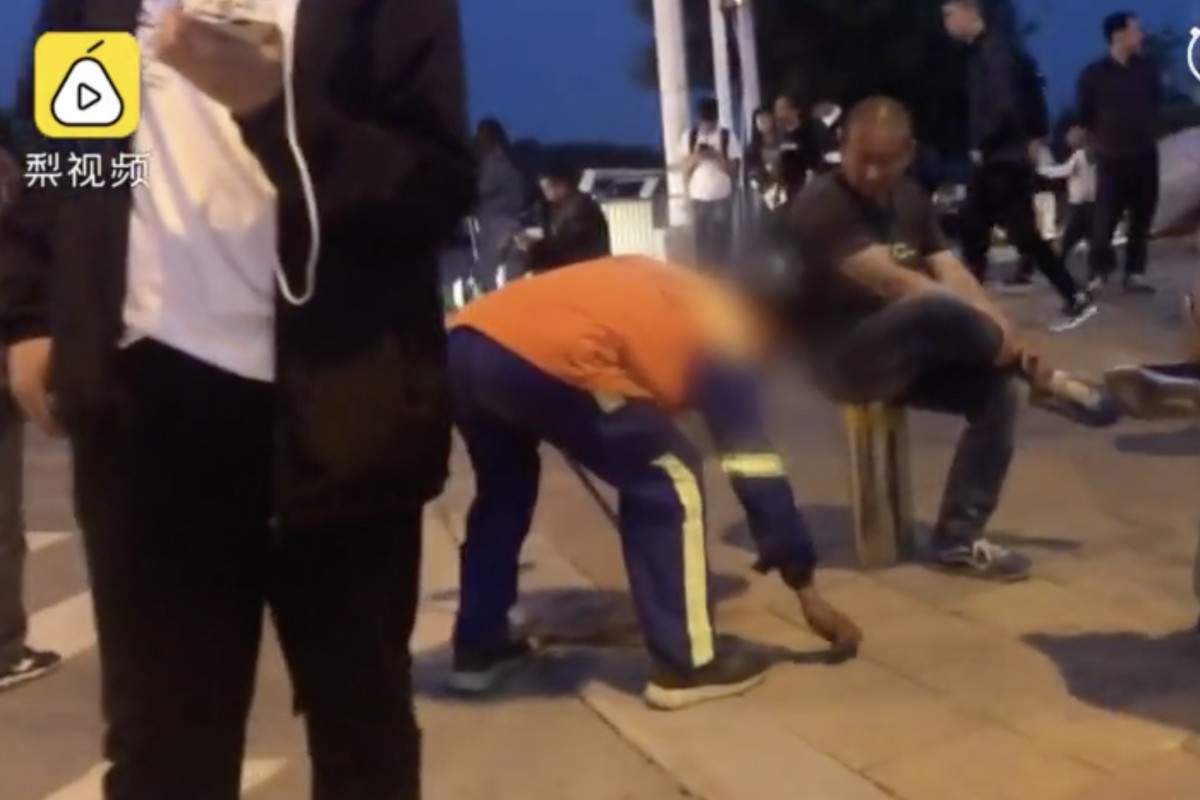
Local authorities say a street cleaner in Henan province fined for the cigarette butts left by smokers on his beat may be the victim of a zealous supervisor. Photo: Weibo
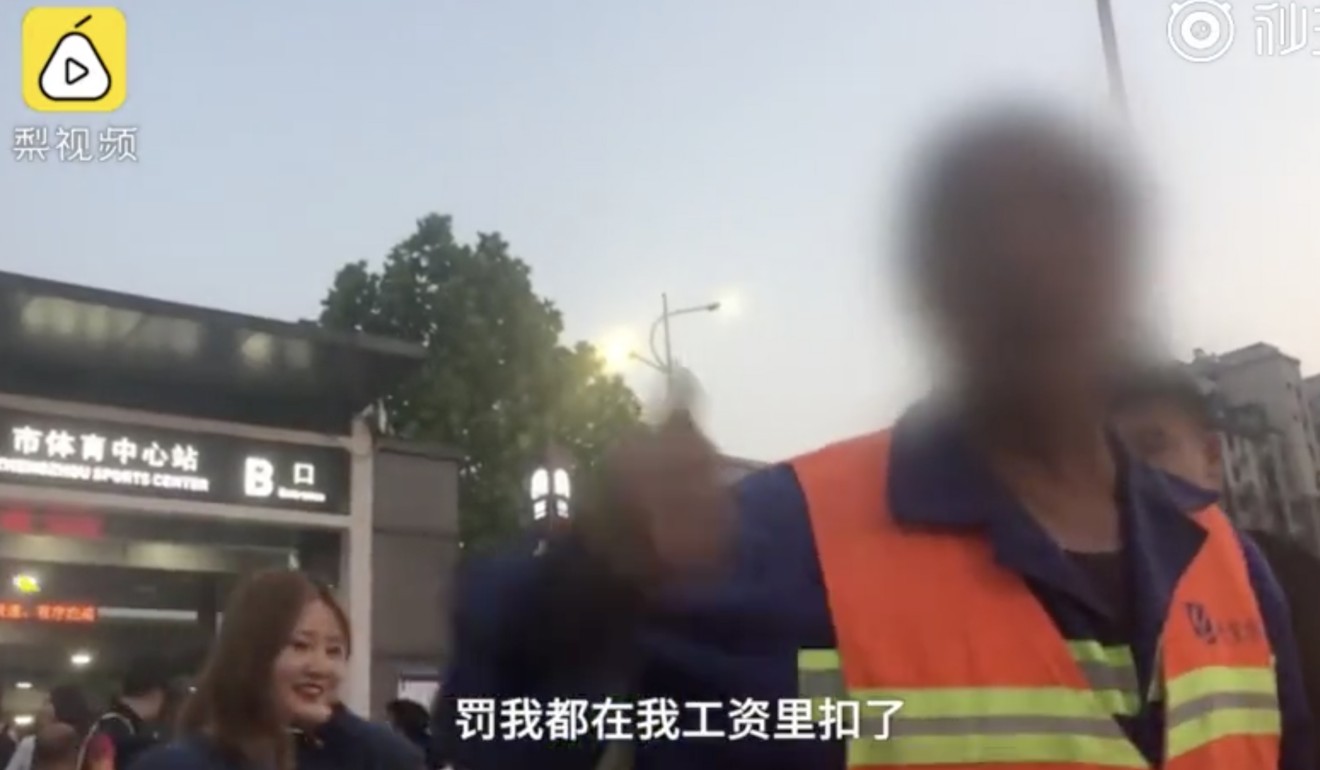
A street cleaner in eastern China who was filmed complaining about the hefty fines he had to pay for the cigarette ends found littering his section of road has won a hearing for his case and the support of internet users, social media site Pear Video said on Tuesday.
In the video taken on Saturday, the elderly man from Zhengzhou in Henan province claimed that he was once fined 260 yuan (US$38) – 7 yuan (about US$8) per cigarette end – from an 86 yuan per day pay packet.
“Today, I had to clean up five or six thousand cigarette butts,” the man said in the video while working outside a subway station.
“All the fines come out of my salary. This month they docked me a few hundred yuan.”
The Zhengzhou street cleaner says he can pick up thousands of cigarette ends off the street each day but the littering in his section does not stop. Photo: Weibo

The man blamed littering on unauthorised taxi drivers who throw cigarette ends into the street.

“These black cab drivers come here every day, again and again. They never stop coming here,” the cleaner was quoted as saying.

Pear Video spoke to other street cleaners in Zhengzhou, who confirmed that they were fined 7 yuan per cigarette butt found after cleaning.

It’s a dirty job, but don’t treat them like trash: Hong Kong’s cleaners are an aged, overlooked group
However, city authorities denied that the penalty system was strictly enforced and blamed overzealous monitoring officers.

“[Management patrol] will say things like this because they want to supervise the street cleaners. But there are no detailed written guidelines, and this was never formally implemented,” a representative from the Zhengzhou City Management Command Centre was quoted as saying in the report.

“It is just for the purpose of verbal supervision and encouragement.”

The Zhengzhou official said the centre would investigate further and speak to the street cleaners about fines.

In response to the cleaner’s complaints, city authorities in Zhengzhou say they will investigate and speak to staff about fines. Photo: Weibo

The video stirred up angry reactions on Weibo, China’s Twitter-like platform.

“When [Pear Video] investigated they say it hasn’t been implemented. If they didn’t investigate, they would have just carried on giving fines,” read one comment that attracted more than 17,000 likes.

Street cleaners in China often earn meagre salaries for gruelling manual labour for long periods of time.

Last month, it emerged that more than 500 street cleaners in the city of Nanjing were ordered to wear GPS tracking bracelets that would alert authorities if they stayed in the same place for more than 20 minutes. The manufacturer removed the feature after a backlash inside and outside China.

Source: SCMP

Law of Unintended Consequences

continuously updated blog about China & India

ChiaHou's Book Reviews

continuously updated blog about China & India

What's wrong with the world; and its economy

continuously updated blog about China & India