Chindia Alert: You’ll be Living in their World Very Soon
aims to alert you to the threats and opportunities that China and India present. China and India require serious attention; case of ‘hidden dragon and crouching tiger’.
Without this attention, governments, businesses and, indeed, individuals may find themselves at a great disadvantage sooner rather than later.
The POSTs (front webpages) are mainly 'cuttings' from reliable sources, updated continuously.
The PAGEs (see Tabs, above) attempt to make the information more meaningful by putting some structure to the information we have researched and assembled since 2006.
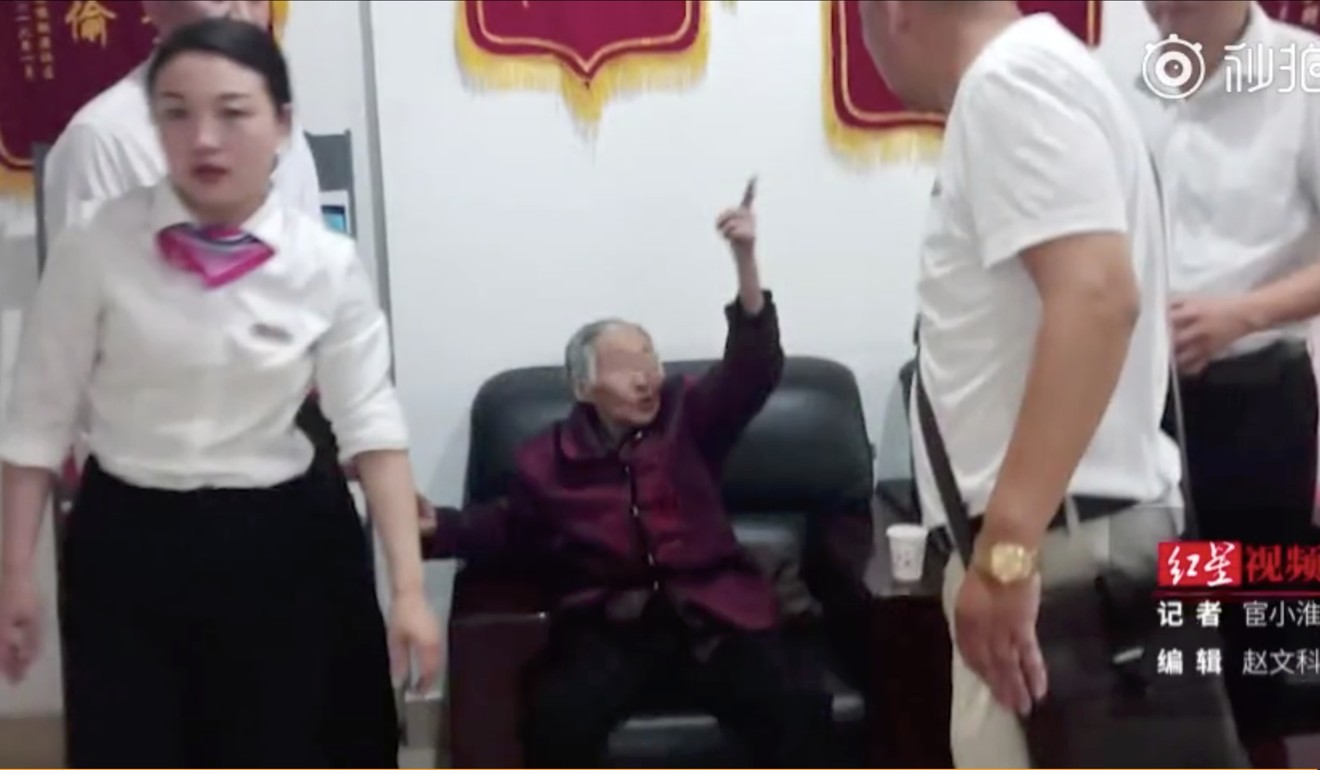
Property management workers pull to safely elderly woman with Alzheimer’s disease climbing down side of building
The elderly woman with Alzheimer’s climbs down the outside of her residential building in Chengdu, Sichuan province, on Thursday. Photo: Weibo
An 84-year-old woman with Alzheimer’s disease in southwestern China stunned her neighbours by climbing out of a lavatory window in a high-rise building and down from her 14th-floor flat.
The octogenarian was rescued by property management workers, who were waiting near the window of a flat on the fifth floor to intercept her, news website Thepaper.cn reported.
The woman squeezed through the window of her home’s toilet in a residential block in Chengdu, Sichuan province, on Thursday after she was locked in by relatives, a property management employee said.
“She couldn’t open the door from inside. But she wanted to go out as it was so humid and hot today,” the unnamed worker said.
As she climbed down the outside of the building, her neighbours unfolded a bedsheet on the ground, hoping to catch her if she fell.
The elderly woman survived the incident unscathed. Photo: Weibo
Property management workers gave the woman water and food after rescuing her. She was later picked up by her relatives and was reported to have no injuries from her adventure, the report said.
There were 6 million Alzheimer’s disease patients in China in 2015, with around 300,000 new cases reported each year, news portal Sohu.com reported.
Chinese taxi driver takes his wife with Alzheimer’s to work every day
A 2016 white paper released by the Zhongmin Social Assistance Institute, a Beijing-based research NGO, said half a million old people got lost in China each year, with a quarter of them diagnosed with Alzheimer’s.
“China is seriously hit by Alzheimer’s disease based on the country’s rapidly ageing population,” Dr Wang Luning, chairman of the Chinese Alzheimer’s Disease Association, told Legal Daily.
“But many people, even some doctors, have little knowledge about this disease, leading to low rates of people seeking diagnosis, the rate of them being diagnosed and being treated all being low.”
NEW DELHI (Reuters) – Indian officials travelled nearly 70 km (45 miles) through lion-infested jungle this week to ensure a 69-year-old holy man got his chance to take part in the world’s biggest democratic exercise.
A four-member team of election officials, accompanied by a policeman, set up a special polling station deep in the Gir wildlife sanctuary in Gujarat state so a sole voter – Bharatdas Darshandas – could vote in the general election.
A priest who has lived at his remote forest temple for two decades, Darshandas has not missed an election since 2002, and cast his vote on Tuesday by walking nearly a kilometre to the special polling station.
Darshandas looks after a Shiva Temple in the 350 square kilometre (850-square-mile) wildlife sanctuary, home to some 600 of the last remaining Asiatic lions.
India has more than 900 million eligible voters who can cast their ballots at 1 million polling stations.
Officials often have to travel to remote regions over days to get to voters. But an arduous trip for just one voter is not so common.
“The fact that the government is taking so much effort to ensure the casting of one vote speaks to the importance of each and every vote,” Darshandas told Reuters partner ANI in an interview.
“Just the way voting is 100 percent in Banej, there should be 100 percent voting everywhere,” Darshandas said, referring to the place he lives.
The staggered general election has seven phases. It began on April 11 and will end on May 19. Votes will be counted on May 23.
Sourabh Pardhi, an election official from the area, said the Election Commission had worked hard to ensure everyone got a chance to vote.
“We want to make sure that no voter is left behind,” he told ANI.
CHANGSHA, April 24 (Xinhua) — China will promote international space cooperation to contribute to sustainable development goals set by the United Nations, a senior official with the China National Space Administration (CNSA) said here Wednesday.
“China is to build a new type of cooperative and win-win relationship with other space agencies and international organizations around the world, to jointly enhance the role of space industries in facilitating sustainable development,” said CNSA deputy director Wu Yanhua at the United Nations/China Forum on Space Solutions: Realizing the Sustainable Development Goals.
Over the years, the use of space has been recognized as one of the key components to successfully achieve the 17 Sustainable Development Goals (SDGs) of the 2030 Agenda for Sustainable Development adopted by the UN, according to Simonetta Di Pippo, director of United Nations Office for Outer Space Affairs.
In order to quantify the impact, a dedicated study was published in early 2018 and shows that around 40 percent of the 169 targets underpinning the 17 SDGs benefit from the use of geo-location and earth observation satellites, said Simonetta at the forum.
Committed to better service for countries along the Belt and Road Initiative, especially developing countries, China is constructing a space information corridor and sharing satellite resources, according to Wu.
“China’s earth observation satellites have actively supported the construction of the Belt and Road spatial information corridor, vigorously developed space international cooperation,” said Wang Cheng, a researcher from the CNSA.
FY-2H, the meteorological satellite located over the Indian Ocean, can fill the observation gap and provide weather monitoring service to countries along the Belt and Road, said Tang Shihao from China Meteorological Administration.
The unique strength of satellites in supporting telemedicine, epidemic prevention and control, and distance education, social security services can be improved, Wu said.
Independently constructed and operated by China, the BeiDou Navigation Satellite System has been widely used in many countries and regions. “The system started to provide RNSS (Radio Navigation Satellite System) services worldwide last December,” said Gao Weiguang from China Satellite Navigation Project Center.
Wu Yanhua said that China was developing a space economy and supporting commercial space development by pushing forward the commercialization of space technologies.
As the provider of Long March launch services, the China Great Wall Industry corporation (CGWIC) has performed 48 dedicated launch services and 17 piggyback launch services for international clients with high successful rate and competitive pricing, according to Zhou Yuanying from CGWIC.
Wu said that China would undertake monitoring and research of global climate change by taking advantage of satellites, to achieve the goals outlined in the Paris Agreement.
By pushing forward international space cooperation, China is also committed to joint efforts to tackle contemporary issues with global impact including poverty, hunger, natural disasters and environmental pollution, Wu added.
Many countries, in particular developing countries, need to make the best possible use of space assets to support the SDGs. At the same time, a lot of space agencies and companies are struggling to find partners/users to which they can offer their particular space solutions, Simonetta said.
“This Forum will build on previous UN workshops and symposiums to provide a unique platform for users and space solution providers to forge partnerships and thus contribute concretely to the achievement of the SDGs.” Simonetta said.
Also on Wednesday, the CNSA inked agreements on space cooperation separately with the UN Office for Outer Space Affairs, Turkey, Ethiopia and Pakistan.
Since 2016, China has set April 24 as the country’s Space Day. Activities on Space Day have become a window for the Chinese public and the world to gain a better understanding of China’s aerospace progress.
The theme this year is to “pursue space dreams for win-win cooperation.”
Wang Yang (R), chairman of the Chinese People’s Political Consultative Conference National Committee, meets with Azerbaijani President Ilham Aliyev ahead of the Second Belt and Road Forum for International Cooperation in Beijing, capital of China, April 24, 2019. (Xinhua/Gao Jie)
BEIJING, April 24 (Xinhua) — China’s top political advisor Wang Yang on Wednesday met with Azerbaijani President Ilham Aliyev ahead of the Second Belt and Road Forum for International Cooperation to be held from April 25 to 27 in Beijing.
Hailing the long-term friendship between China and Azerbaijan, Wang, a member of the Standing Committee of the Political Bureau of the Communist Party of China Central Committee and chairman of the Chinese People’s Political Consultative Conference National Committee, said that the two countries have continued to strengthen their mutual political trust and promoted cooperation in various fields in recent years.
“Azerbaijan was one of the first countries to respond to the Belt and Road Initiative, and cooperation between the two countries in various fields has seen a series of early harvest,” said Wang, adding that China is willing to work with Azerbaijan to seize the great opportunity of jointly building the Belt and Road and deepen bilateral ties and cooperation in various areas to benefit the two countries and the peoples.
Aliyev also expressed the willingness of the Azerbaijani side to contribute to the implementation of the Belt and Road Initiative and promote the continuous development of bilateral relations.
Guests unveil the English and French editions of a compilation of President Xi Jinping’s discourses on the Belt and Road Initiative during a launch ceremony in Beijing, capital of China, April 24, 2019. (Xinhua/Zhang Yuwei)
BEIJING, April 24 (Xinhua) — The English and French editions of a compilation of President Xi Jinping’s discourses on the Belt and Road Initiative were published Wednesday.
The book contains 42 articles from September 2013 to July 2018 by Xi, also general secretary of the Communist Party of China Central Committee.
The new editions were translated and published by the China Foreign Languages Publishing Administration and the Foreign Languages Press.
Chinese President Xi Jinping (R) and his Chilean counterpart Sebastian Pinera hold talks ahead of the Second Belt and Road Forum for International Cooperation in Beijing, capital of China, April 24, 2019. (Xinhua/Rao Aimin)
BEIJING, April 24 (Xinhua) — Chinese President Xi Jinping and his Chilean counterpart Sebastian Pinera held talks in Beijing on Wednesday ahead of the Second Belt and Road Forum for International Cooperation.
China and Chile should take joint pursuit of the Belt and Road Initiative as a new opportunity to deepen political mutual trust and pragmatic cooperation, and push the China-Chile comprehensive strategic partnership to a new level, Xi said.
Xi said the two countries should promote the upgrading of bilateral trade and investment, and strengthen cooperation in areas such as mining, clean energy, telecommunication, e-commerce, technological innovation and Antarctic science.
Efforts should be made to better hold a series of celebrations next year that will mark the 50th anniversary of China-Chile diplomatic relations, and boost people-to-people ties, he said.
China supports Chile in hosting the UN climate change summit and Asia-Pacific Economic Cooperation (APEC) Economic Leaders’ Meeting this year, and will work with Chile to push forward the construction of the Free Trade Area of the Asia-Pacific and uphold multilateralism as well as the multilateral trading system, said Xi.
The nature of cooperation between China and Latin American and Caribbean countries is South-South cooperation, and the two sides should continue to support and help each other, complement each other with respective strengths, pursue win-win cooperation, so as to achieve common development and rejuvenation, and jointly forge a community with a shared future between China and Latin America, he said.
Pinera said Chile and China had achieved marked progress in bilateral relationship since the two countries established diplomatic ties.
Chile supports joint pursuit of the Belt and Road Initiative to enhance connectivity among regions, Pinera said.
Chile hopes to learn from China’s achievements in innovation-driven development and green development, and expand bilateral cooperation in such areas, he said.
Pinera also noted that Chile would enhance coordination and cooperation with China on regional and multilateral affairs, and continue to play an exemplary role in promoting relations between Latin America and China.
After the talks, the two leaders witnessed the signing of bilateral cooperation documents.
Quake hits area around Hualien at 1.01pm, followed by aftershocks
Tremors send residents fleeing and rattle buildings more than 100km away in Taipei
A magnitude 6.1 earthquake hit the area around Hualien in Taiwan on Thursday. Photo: CNA
A magnitude 6.1 earthquake rocked eastern Taiwan at 1.01pm on Thursday, sending panicked residents rushing onto the streets and shaking buildings 115km (71 miles) away in the island’s capital, Taipei.
The quake’s epicentre was just over 10km northwest of the city of Hualien, at a depth of 18.8km, the island’s Central Weather Bureau said, adding that a 4.1 quake was reported 17 minutes later.
At least 17 people were injured, and a 12-storey building in Taipei was left leaning to one side, but there were no reports of major property damage.
Two Malaysian tourists – a man and a woman – were injured by falling rocks at Taroko National Park in Hualien county, with both being airlifted to a hospital in the city. Ten people in Taipei and five in New Taipei City also suffered injuries.
Train services on Taipei’s subway were suspended as were the airport subway to Taoyuan International Airport and most other metro and train systems in various parts of Taiwan, especially those around eastern and northern Taiwan, for safety inspections, the island’s cabinet said.
Taiwan Power Company said operations were normal at the island’s first and second nuclear power plants in northern Taiwan and asked the public to stay calm.
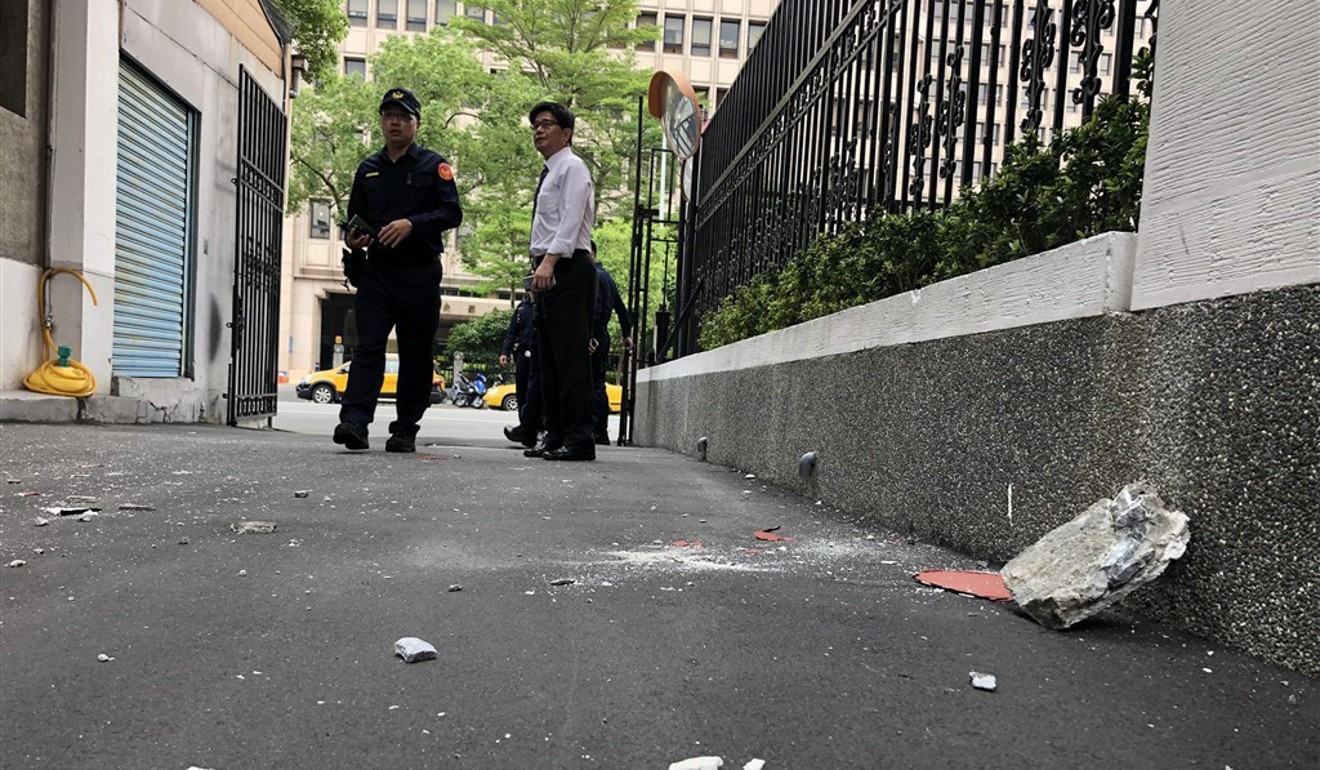
Debris outside the Legislative Yuan, in Taipei, after a magnitude 6.1 earthquake hit the area around Hualien. Photo: CNA
Share:
The strong quake sent high-rise buildings swaying in Taipei, with a number of households and offices reporting fallen objects.
“I was so panic and tried to find some place for shelter after the quake rocked for a moment. It seemed like the building was going to collapse. All the books were shaken off the shelves and glasses shattered all over the floor,” a resident of Taipei’s bustling Ximending district said.
The Daan District Office in Taipei reported that a ceiling had fallen into the middle of its office, but nobody was injured.
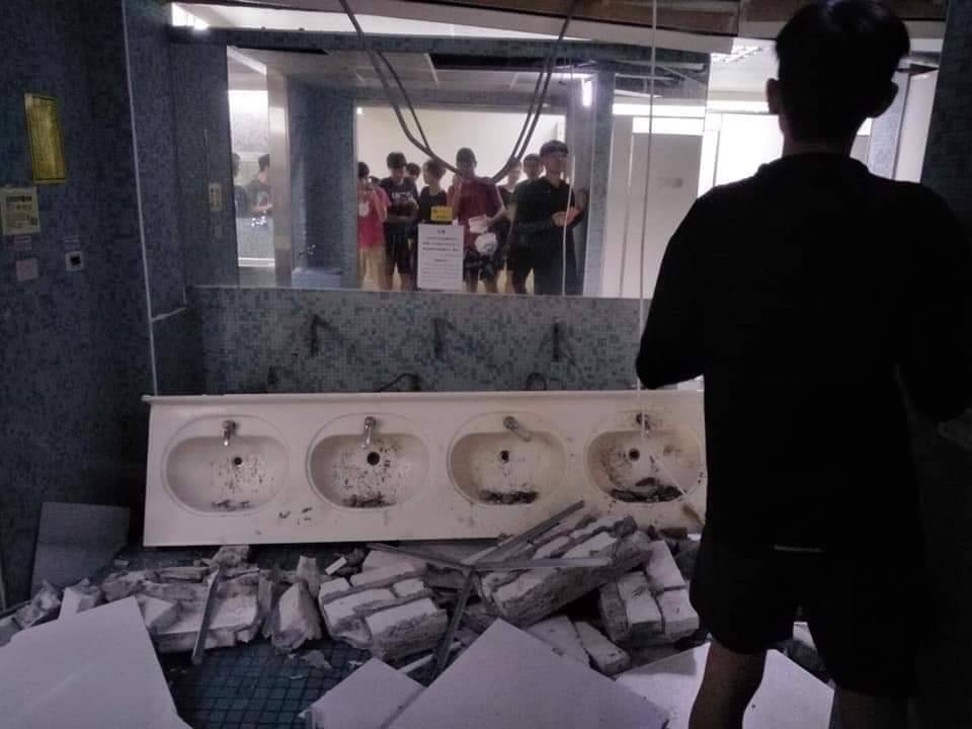
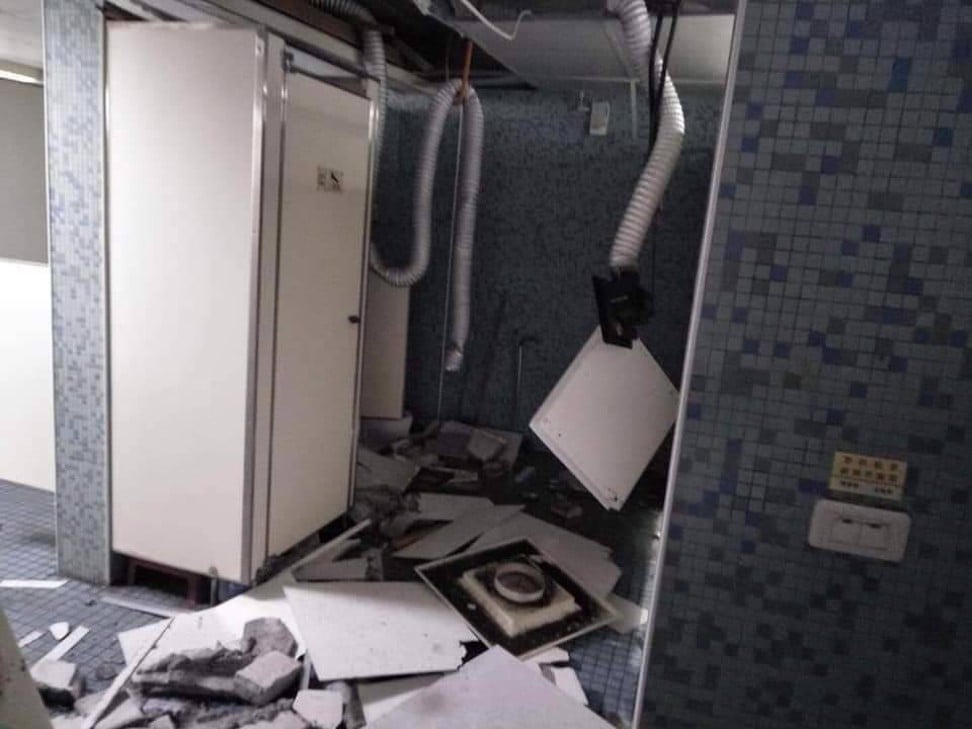
The quake damaged a bathroom in a men’s dormitory at Taiwan Normal University. Photo: Handout
A building on Changan East Road in Taipei was reported to have tilted to one side, prompting residents to flee into the street.
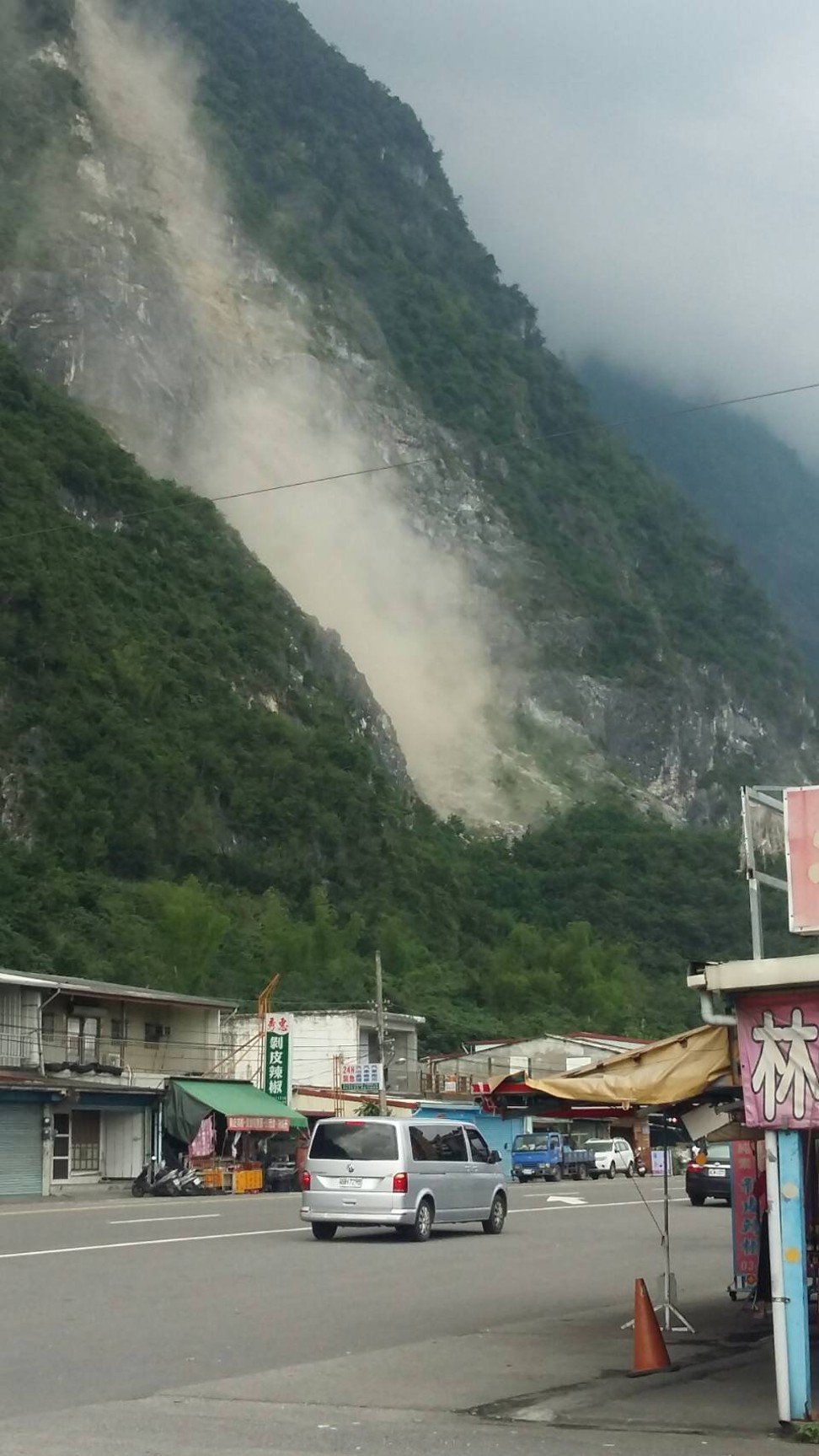
Taiwanese television stations ran footage showing overturned furniture in homes and offices and at least one landslide along the mountainous and lightly populated east coast.
A bathroom at a Taiwan Normal University dormitory in Taipei was damaged in Thursday’s quake. Photo: Handout
Elsewhere in Taiwan, part of the Suao-Hualien Highway collapsed but there were no injuries, the National Fire Agency said.
Near the epicentre in Hualien, more cases of damage were reported, including several supermarkets where items were shaken off shelves.
A resident said he was taking an afternoon nap when the earthquake shook.
“I felt as if my heart was spilling out of my mouth and was so panicked that I could hardly move, but I managed to rush to the street,” he said, adding that aftershocks were rocking the area.
Workers at Hualien’s main railway station were struggling to clear a flooded lobby after several water pipes burst in the quake, county authorities said.
Operations remain unaffected at Taiwan’s hi-tech industrial estates, including Hsinchu Science Park.
A landslide near Hualien. Photo: Handout
Taiwan is on the string of seismic faults around the Pacific Ocean known as the “Rim of Fire” and is frequently rocked by tremors, including a 1999 quake that killed more than 2,300 people.
An earthquake in Hualien in February last year killed 17 people when four buildings partially collapsed. That quake hit two years to the day after a residential building in the southwestern city of Tainan collapsed in an earthquake, killing 115 people.
Stiff penalties like those given to drink-drivers needed to make people wake up to the risks, newspaper says
Commentary comes after woman who died in high-speed crash is found to have used her phone 34 times in 30 minutes
The fatal crash in Fujian province was caught on surveillance camera and the footage was shown by Pearvideo.com. Photo: Weibo
The death of a woman in a high-speed car accident who is believed to have been sending messages on her phone at the time of the crash has sparked calls in the Chinese media for harsher punishments for reckless driving.
“Death or causing death as the result of driving when using a phone is a very serious consequence of people becoming slaves to mobile phones,” Beijing Youth Daily said in a commentary on Thursday.
“To reverse the harm caused by this behaviour, they must be punished in line with the punishments for drink-driving.”
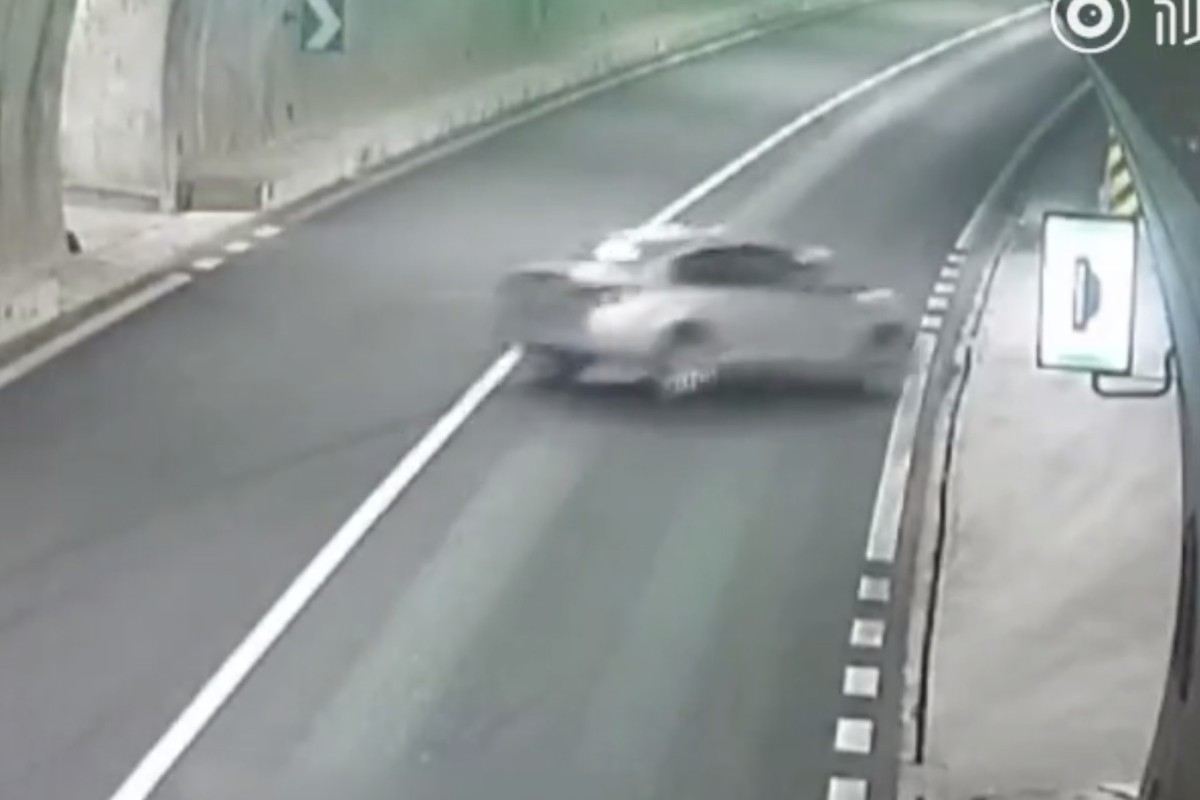
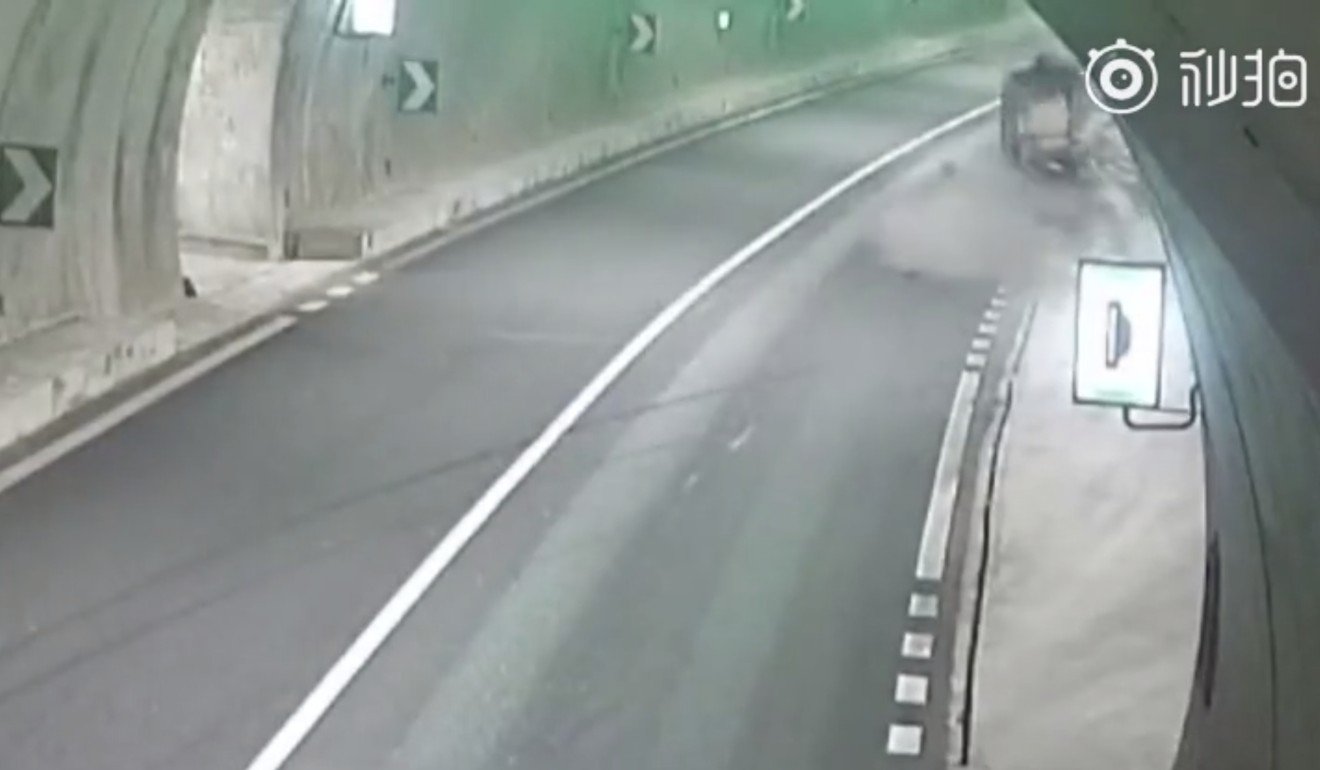
The article came after Pearvideo.com on Sunday published footage from a surveillance camera of the fatal accident in southeast China’s Fujian province. The film shows the woman’s car speeding through a tunnel before veering on to the wrong side of the road and crashing into a wall. It then flips over and bursts into flames.
The victim is believed to have been using her phone at the time of the crash. Photo: Weibo
A police officer interviewed in the video said the driver, who was not identified, had not been wearing a seat belt at the time of the accident and had been observed speeding, cutting in and out of lanes and using her phone 34 times in just 30 minutes.
“I think all four factors contributed to her accident,” he said. “But the fundamental ones were speeding and using a mobile phone when driving.”
Five children killed as driver crashes into group crossing road
The video report said the woman sent a total of 16 text and voice messages from behind the wheel, one of which said that she was driving at 120km/h (75mph).
While drink-driving is a criminal offence in China – with a maximum penalty of six months’ detention, loss of licence and a five-year ban – the top punishment for using a phone while behind the wheel is a 200 yuan (US$30) fine and the loss of two licence points. Drivers start with 12 points and can be suspended from driving if they lose them all.
The film shows the car crashing into a wall before flipping over and bursting into flames. Photo: Weibo
According to a Ministry of Transport survey cited by Beijing Youth Daily, people are 2.8 times more likely to have an accident if they make a phone call while driving and 23 times more likely if they look at their handset.
While the strict enforcement of drink-driving laws has helped to change motorists’ behaviour, using a phone behind the wheel is still widely regarded as acceptable behaviour, the commentary said.
“I don’t know how many disasters like the woman in Sanming [a city in Fujian] are needed to alert people,” it said.
“[But] amending the road traffic safety law to make [the offence of] driving while using a mobile phone equivalent to that of drink-driving and implementing corresponding penalties can … help to reduce the devastating consequences.”
A commentary on Gmw.com, the website of the official Guangming Daily newspaper, also called for the offence to be criminalised.
People know the risks but disregard them because the legal consequences are very small, it said.
Accident happened about 7.20am at residential development in Hengshui, Hebei province, authorities say
Injured pair said to be in stable condition in hospital
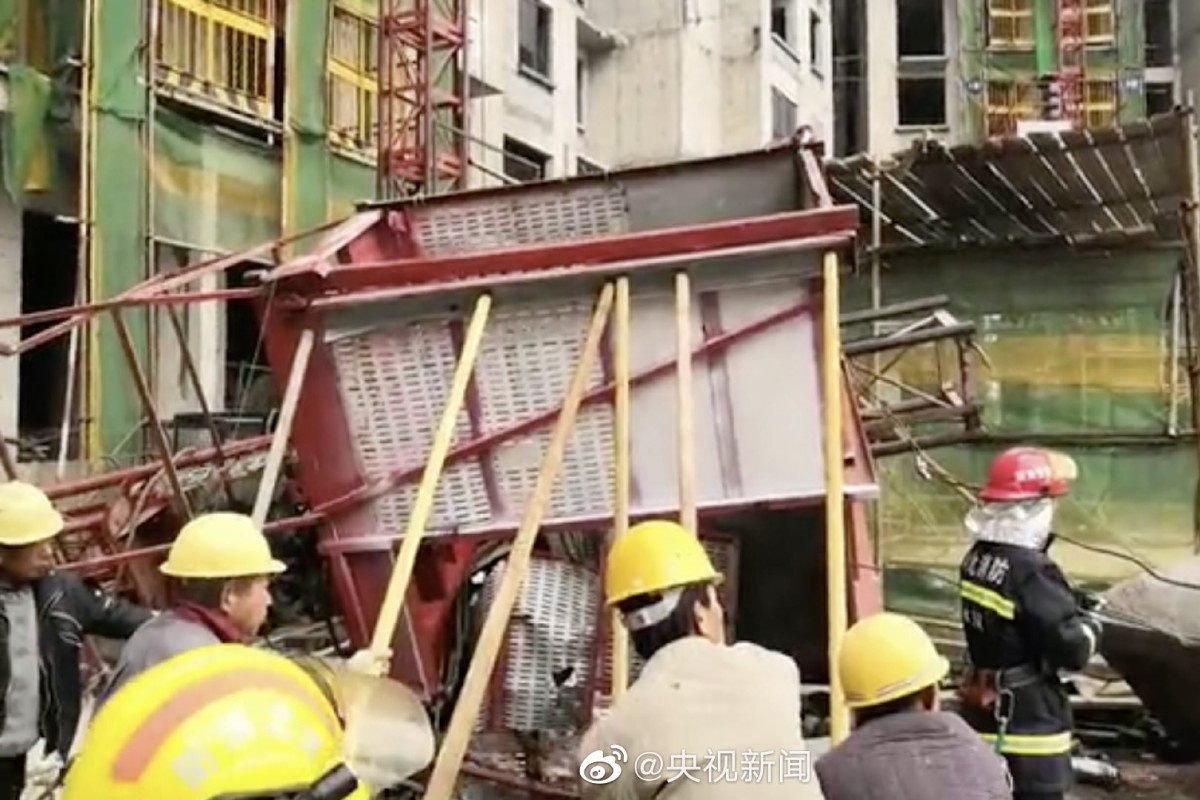
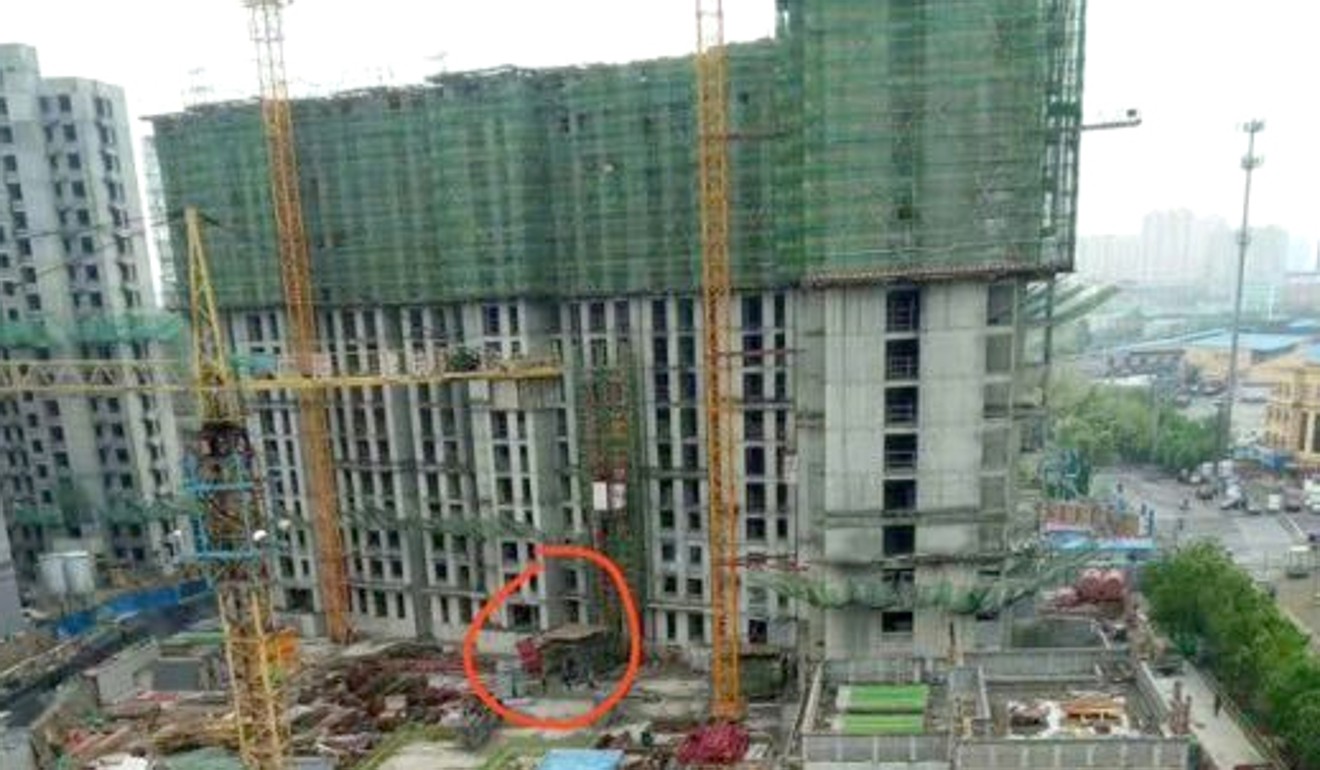
Eleven people were killed when a lift fell at a construction site in Hengshui, Hebei province. Photo: Weibo
Eleven people were killed and two others seriously injured when a lift fell at a construction site in northern China on Thursday morning, municipal authorities said.
The accident happened at about 7.20am on the site of the Jade Huating compound, a residential property development under construction in the Taocheng district of Hengshui, Hebei province, according to a statement issued by the city government.
The two people hurt were being treated at a local hospital and in a stable condition, it said.
Police, work safety officials and construction authorities have begun an investigation to determine the cause of the accident, the statement said.
The accident happened at about 7.20am on the site of the Jade Huating compound. Photo: Weibo
A witness was quoted by The Beijing News as saying the crash happened in a matter of seconds.
“I heard a big bang and saw the lift had fallen,” the witness said. “Then six or seven ambulances arrived on the scene.”
Kindergarten flattened by falling debris from building site
The housing project is being developed by Hengshui Youhe Real Estate Development.
The firm said on WeChat earlier this month that the project was making good progress thanks to “reasonable construction with maximum efficiency”, despite work having to be suspended several times for environmental reasons. The post was later deleted.
At the first day of the forum in Beijing, Chinese Finance Minister Liu Kun said China aims to make the Belt and Road initiative sustainable and to prevent debt risks.
Last year, Foreign Minister Wang Yi said in a speech Belt and Road was not a “geostrategic concept” but was part of efforts to build “a community with a shared future for mankind together with countries around the globe.”
Leaders from 37 countries and dozens of officials are due to attend the three-day summit, including Russian President Vladimir Putin and Italian Prime Minister Giuseppe Conte.
Western governments, and particularly the US, are increasingly wary of China’s growing influence.
The US, which has fought a trade war with China over the past year, has been particularly critical of the project.
Vice President Mike Pence said in a speech last year China was using “debt diplomacy” to expand its influence around the world.
Debt trap?
Other countries that are set to benefit from the project also seem to be growing more cautious.
Sri Lanka, Malaysia and Pakistan have all expressed concerns about the programme. Recipient countries worry about debt accumulation and increased Chinese influence.
Tom Rafferty, China economist at The Economist Intelligence Unit, said China is using this week’s summit to “reposition and, it hopes, revive the initiative after it lost its way in 2018 amid project delays and a slowdown in associated lending.”
Mr Rafferty said the Chinese government “wants to convince the international community that the Belt and Road Initiative is inclusive and policy concessions in areas such as debt sustainability” are likely.