Archive for ‘Uncategorized’

01/12/2018

Chinese scientists discover spider species nurses young with milk

BEIJING, Nov. 30 (Xinhua) — Chinese scientists have discovered a species of spiders that can produce milk and care for their young, providing a new take on the understanding of invertebrate animals’ maternal care.

The study, published online Thursday on the U.S. journal Science, was conducted by researchers from the Chinese Academy of Sciences (CAS).

The findings focus on Toxeus Magnus, a species of jumping spider native to southeastern Asia, which lives in nests and looks like ants.

According to the study, spider mothers in their laboratory-based nests were found to feed a milk-like substance to their spiderlings and continue to care for them as they matured.

During the first 20 days, the spider babies were found to first drink droplets of spider milk left on the surface of the nest and then suck directly from their mother’s abdomen area.

Compared with cow’s milk, spider milk has nearly four times the protein but less fat and sugar.

From about day 20 to day 40, the young spiders were able to leave the nest to hunt food, but they were still allowed to drink milk from their mothers.

The most intriguing part starts after 40 days when the spiders reach sexual maturity. Only daughters were allowed to stay with their mother in the nest, while the sons were attacked by the females and not allowed to return home.

In the study, maternal care and milk provisioning appeared to work together to ensure the long-term survival of young spiders.

Of the 187 spiderlings observed in 19 different nests, the survival rate was 76 percent for spiders that received both. Separated from the mother at day 20, the survival rate of the spiderlings dropped to 50 percent.

Previous studies show that maternal care, which continues after the offspring reach maturity, only exist among some long-lived advanced social vertebrates like humans and elephants.

Chen Zhanqi, lead author of the study from Xishuangbanna Tropical Botanical Garden, CAS, told Xinhua the findings demonstrate that mammal-like provisioning and parental care for sexually mature offspring also evolved in invertebrates.

He noted that the new findings encourage researchers to reevaluate this “parenting style” among animals, especially in invertebrates. Invertebrates make up over 95 percent of Earth’s species.

Nicole Royle, a senior lecturer in the behavioral ecology of Exeter University in Britain, said it is the most comprehensive study that proves long-term maternal care also exists in invertebrates.

“It will help researchers gain a better understanding of the evolution process of milk provisioning and parental care for sexually mature offspring across the animal kingdom,” he said.

01/12/2018

Boeing delivers 2,000th airplane to China

U.S.-SEATTLE-CHINA-BOEING AIRPLANE-2000TH

Rick Anderson (L, front), Boeing vice president of Northeast Asia sales, and Che Shanglun (R, front), chairman of Xiamen Airlines, attend the signing ceremony during the delivering of the 2,000th Boeing airplane to China in Seattle, the United States on Nov. 30, 2018. Top U.S. aircraft manufacturer Boeing Company on Friday delivered its 2,000th airplane to China, which is a milestone for the U.S. aircraft maker in the world’s largest commercial aviation market. (Xinhua/Wu Xiaoling)

SAN FRANCISCO, Nov. 30 (Xinhua) — Top U.S. aircraft manufacturer Boeing Company on Friday delivered its 2,000th airplane to China, which is a milestone for the U.S. aircraft maker in the world’s largest commercial aviation market.

The aircraft, a Boeing 737 MAX, is the eighth of the same model that Boeing has delivered to Xiamen Airlines, a fast growing carrier that operates the largest all-Boeing fleet in China with more than 200 jets.

“Our long-standing industrial relationship in this market has been mutually beneficial, fueling significant growth in Boeing’s business, the U.S. economy, and the Chinese aviation industry,” said Ihssane Mounir, senior vice president of Commercial Sales and Marketing at Boeing.

Che Shanglun, chairman of Xiamen Airlines, said his company has steadily grown in the past 34 years, doubling its fleet size over the past five years and achieving profits for 31 years in a row.

“Throughout that time, Boeing has been a valued partner in our growth and expansion by providing safe and reliable airplanes,” he said.

Xiamen Airlines is one of Boeing’s more than 30 commercial customers in China. Boeing-made jets comprise more than half of the over 3,000 jetliners flying in the Asian country.

Boeing delivered its first 1,000 airplanes to Chinese airlines over four decades, but the next 1,000 Boeing jets have been delivered over the past five years.

The next 20 years will witness China’s commercial fleet more than doubled, and Boeing predicts China, the world’s second largest economy, will need 7,690 new airplanes valued at 1.2 trillion U.S. dollars by 2038.

The commercial services market in China will be driven by a growing demand of 1.5 trillion dollars over the next two decades, accounting for 17 percent of the world total, Boeing said.

01/12/2018

Xi urges G20 to steer world economy responsibly

ARGENTINA-BUENOS AIRES-XI JINPING-G20-SUMMIT-SPEECH

The 13th summit of the Group of 20 (G20) is held in Buenos Aires, Argentina, Nov. 30, 2018. Chinese President Xi Jinping delivered a speech titled “Look Beyond the Horizon and Steer the World Economy in the Right Direction” at the first session of the summit. (Xinhua/Li Tao)

BUENOS AIRES, Nov. 30 (Xinhua) — Chinese President Xi Jinping on Friday urged the Group of 20 (G20) to stick to openness, partnership, innovation and inclusiveness and steer world economy responsibly.

Xi made the remarks while addressing the 13th G20 summit in the Argentine capital of Buenos Aires.

He warned the G20 leaders of accelerated accumulation of risks in global economy and pledged that China will firmly push forward a new round of reform and opening-up, with increased efforts in intellectual property rights (IPR) protection and more imports.

Noting that it has been 10 years since the global financial crisis broke out and the first G20 summit was convened, the Chinese president said the global economy today, while maintaining growth on the whole, is still not free from the underlying impacts of the crisis.

Old growth drivers are yet to be replaced by new ones, while various risks are rapidly building up, he said, adding that the world economy is facing another historical choice.

“We G20 members must closely follow the underlying historical trend so as to chart the course for the future. In mankind’s relentless quest for development and progress, the trend toward openness and integration among countries is unstoppable despite ups and downs in the global economy,” Xi said.

Greater coordination and complementarity among countries meet the need of productivity growth and will also shape the future of relations of production, he said.

In this process, countries are increasingly becoming a community with shared interests, shared responsibilities and a shared future, Xi said, stressing that win-win cooperation is the only choice going forward.

“Facing various challenges, we must have a stronger sense of urgency, be rational in approach and look beyond the horizon. We must fulfill our responsibility and steer the global economy in the right direction,” he told the G20 leaders.

Noting that the G20 was born out of the international community’s need to maintain stable growth of the global economy, Xi said the group has braced difficulties together, navigated the global economy out of recession and brought it back to the track of recovery and growth over the past decade.

“Ten years later, let us work with the same courage and strategic vision and ensure that the global economy grows on the right track,” he said, putting forward a four-point proposal to the summit.

Firstly, Xi called on G20 members to stay committed to openness and cooperation and uphold the multilateral trading system.

“We should firmly uphold free trade and the rules-based multilateral trading system,” he said.

China supports necessary reform of the World Trade Organization, and believes that it is critical to uphold the WTO’s core values and fundamental principles such as openness, inclusiveness and non-discrimination and ensure the development interests and policy space of developing countries, according to the Chinese president.

During the process, all sides need to conduct extensive consultation to achieve gradual progress, he said.

Secondly, Xi urged the G20 to forge strong partnership and step up macro-policy coordination.

All participating sides should employ the three tools of fiscal and monetary policies and structural reform in a holistic way to ensure strong, balanced, sustainable and inclusive growth of the global economy, Xi said.

Developed economies, when adopting monetary and fiscal policies, should give more consideration to and work to minimize the impact such policies may exert on emerging markets and developing economies, he said.

The international monetary system should become more diversified, and the global financial safety net should continue to be strengthened, he added.

Thirdly, the G20 should stay committed to innovation and create new momentum for growth, Xi said.

He called on the group to encourage innovation and leverage the role of the digital economy in growing the real economy.

“We need to watch out for risks and challenges brought by the application of new technologies, and strengthen the legal and regulatory framework,” Xi said, adding that more efforts are needed to boost education and vocational training.

“We should give priority to achieving development through fully tapping our innovation potential. At the same time, we also need to keep our doors open and encourage the spread of new technologies and knowledge so that innovation will benefit more countries and peoples,” said the Chinese president.

To better adapt to and guide technological innovation, Xi proposed that the G20 carry out an in-depth study on the application and impact of new technologies on a priority basis to explore new thinking and new ways of cooperation in this area.

Fourthly, Xi urged the G20 to stay committed to win-win cooperation to promote inclusive global development.

“We need to continue to follow a people-centered development philosophy and endeavor to deliver a sense of fulfillment, happiness and security to our people,” Xi said.

He encouraged the G20 members to continue to prioritize development in global macro-policy coordination, implement in real earnest the 2030 Agenda for Sustainable Development and give strong support to work in this area within the UN framework.

Calling on the group to protect the development interests and space of developing countries, Xi said the G20 should also continue to support Africa’s development by helping Africa with its infrastructure and connectivity building and new industrialization.

Noting that this year marks the 40th anniversary of China’s reform and opening-up, Xi recalled that during the past 40 years, with the support of the international community, the Chinese people have forged ahead with perseverance and made historic achievements in development.

China owes its progress to reform and opening-up, and will continue to advance on this path, Xi told the G20 leaders, pledging to continue to deepen market-oriented reform, protect property rights and IPR, encourage fair competition and do more to expand imports.

China will continue to improve its business environment, and hopes that all countries will work together for a free, open, inclusive and orderly international economic environment, Xi said.

The Chinese president arrived in Buenos Aires on Thursday night to attend the G20 summit and pay a state visit to Argentina.

Argentina is the second stop of Xi’s Europe and Latin America trip from Nov. 27 to Dec. 5, which had taken him to Spain and also includes state visits to Panama and Portugal.

01/12/2018

Xi, Putin, Modi agree to increase trilateral cooperation

ARGENTINA-BUENOS AIRES-XI JINPING-PUTIN-MODI-INFORMAL MEETING

Chinese President Xi Jinping(C), Russian President Vladimir Putin and Indian Prime Minister Narendra Modi hold an informal meeting in Buenos Aires, Argentina, Nov. 30, 2018. Leaders of China, Russia and India had an in-depth exchange of views on cooperation among their countries under new circumstances at the meeting. (Xinhua/Yao Dawei)

BUENOS AIRES, Nov. 30 (Xinhua) — Leaders of China, Russia and India had an in-depth exchange of views on cooperation among their countries under new circumstances at an informal meeting held here Friday on the sidelines of the Group of 20 (G20) summit.

Chinese President Xi Jinping, Russian President Vladimir Putin and Indian Prime Minister Narendra Modi agreed to strengthen coordination, build consensus and increase cooperation among their countries to jointly promote world peace, stability and development.

Xi pointed out that China, Russia and India are all major countries of important influence, and they are each other’s important strategic cooperation partners.

The three countries have extensive common interest and similar development goals, and bear great responsibility for the future of the region and the world as a whole, Xi said.

Common development and close cooperation among China, Russia and India under current circumstances have become an increasingly important force for stability and certainty in the transformation of the world landscape, Xi said.

In the past over 10 years, Xi said, the three countries have actively conducted trilateral dialogue and cooperation in the spirit of openness, unity, mutual understanding and trust, and have made important progress.

He called on the countries to further advance trilateral cooperation in the face of fresh challenges.

He suggested that China, Russia and India advocate a new type of international relations, keep consolidating political mutual trust, establish partnerships instead of alliances, and strive for a virtuous cycle in major-country relations and win-win cooperation.

He also called on the three countries to strengthen coordination and cooperation in important multilateral mechanisms including the Group of 20, BRICS and Shanghai Cooperation Organization.

China, Russia and India should advance liberalization and facilitation of trade and investment, promote an open world economy, take a clear-cut stand against protectionism and unilateralism, and jointly safeguard the multilateral trading system as well as the common interest of emerging economies and developing countries, he said.

The three countries, he added, should actively champion a vision of common, comprehensive, cooperative and sustainable security, strengthen regional and global counterterrorism cooperation, promote political settlement of hotspot issues, and play an even bigger part in safeguarding peace and security in the region and the world.

For his part, Putin said Russia, China and India are friendly countries to each other and have developed sound relations based on equality and mutual respect.

Under the current circumstances, it serves the interest of all three countries and bears positive significance on the world that Russia, China and India strengthen cooperation, he said.

He called on the three countries to dedicate themselves to building a fairer and more just international system, promoting world peace and stability, strengthening cooperation in economy and finance and on issues on the G20 agenda, and boosting the synergy between the Eurasian Economic Union and the Belt and Road Initiative.

In his remarks, Modi said it is very necessary for the three countries to compare notes on major issues faced by today’s world.

There are increasing uncertainties on the international horizon, with rising unilateralism and cliquism posing challenges to multilateralism, he said.

Modi said developed countries have failed to meet their assistance commitments to developing countries, and that there is a long way to go before the realization of the 2030 Sustainable Development Goals.

India, China and Russia, as major countries in the world, have the responsibility to maintain close communication, and actively play their parts in safeguarding international and regional stability, promoting economic prosperity, sharing development experience and jointly meeting new challenges, so as to safeguard multilateralism and maintain the multilateral system, he added.

The three leaders agreed to further strengthen the cooperation mechanism among their countries.

BUENOS AIRES, Nov. 30 (Xinhua) — Leaders of China, Russia and India had an in-depth exchange of views on cooperation among their countries under new circumstances at an informal meeting held here Friday on the sidelines of the Group of 20 (G20) summit.

Chinese President Xi Jinping, Russian President Vladimir Putin and Indian Prime Minister Narendra Modi agreed to strengthen coordination, build consensus and increase cooperation among their countries to jointly promote world peace, stability and development.

Xi pointed out that China, Russia and India are all major countries of important influence, and they are each other’s important strategic cooperation partners.

The three countries have extensive common interest and similar development goals, and bear great responsibility for the future of the region and the world as a whole, Xi said.

Common development and close cooperation among China, Russia and India under current circumstances have become an increasingly important force for stability and certainty in the transformation of the world landscape, Xi said.

In the past over 10 years, Xi said, the three countries have actively conducted trilateral dialogue and cooperation in the spirit of openness, unity, mutual understanding and trust, and have made important progress.

He called on the countries to further advance trilateral cooperation in the face of fresh challenges.

He suggested that China, Russia and India advocate a new type of international relations, keep consolidating political mutual trust, establish partnerships instead of alliances, and strive for a virtuous cycle in major-country relations and win-win cooperation.

He also called on the three countries to strengthen coordination and cooperation in important multilateral mechanisms including the Group of 20, BRICS and Shanghai Cooperation Organization.

China, Russia and India should advance liberalization and facilitation of trade and investment, promote an open world economy, take a clear-cut stand against protectionism and unilateralism, and jointly safeguard the multilateral trading system as well as the common interest of emerging economies and developing countries, he said.

The three countries, he added, should actively champion a vision of common, comprehensive, cooperative and sustainable security, strengthen regional and global counterterrorism cooperation, promote political settlement of hotspot issues, and play an even bigger part in safeguarding peace and security in the region and the world.

For his part, Putin said Russia, China and India are friendly countries to each other and have developed sound relations based on equality and mutual respect.

Under the current circumstances, it serves the interest of all three countries and bears positive significance on the world that Russia, China and India strengthen cooperation, he said.

He called on the three countries to dedicate themselves to building a fairer and more just international system, promoting world peace and stability, strengthening cooperation in economy and finance and on issues on the G20 agenda, and boosting the synergy between the Eurasian Economic Union and the Belt and Road Initiative.

In his remarks, Modi said it is very necessary for the three countries to compare notes on major issues faced by today’s world.

There are increasing uncertainties on the international horizon, with rising unilateralism and cliquism posing challenges to multilateralism, he said.

Modi said developed countries have failed to meet their assistance commitments to developing countries, and that there is a long way to go before the realization of the 2030 Sustainable Development Goals.

India, China and Russia, as major countries in the world, have the responsibility to maintain close communication, and actively play their parts in safeguarding international and regional stability, promoting economic prosperity, sharing development experience and jointly meeting new challenges, so as to safeguard multilateralism and maintain the multilateral system, he added.

The three leaders agreed to further strengthen the cooperation mechanism among their countries.

01/12/2018

China’s research icebreaker Xuelong sails at Prydz Bay in Antarctica Source: Xinhua| 2018-12-01 07:32:55|Editor: Yang Yi ANTARCTICA-PRYDZ BAY-XUELONG-EXPEDITION

China’s research icebreaker Xuelong, or Snow Dragon, sails at the Prydz Bay in Antarctica, Nov. 29, 2018. Xuelong, carrying a research team on the country’s 35th Antarctic expedition, set sail from Shanghai on Nov. 2 and passed Prydz Bay, the last sea area before arriving at China’s Zhongshan Station in Antarctica. (Xinhua/Liu Shiping)

ANTARCTICA-PRYDZ BAY-XUELONG-EXPEDITION

15/11/2016

The Economist explains: Why India scrapped its two biggest bank notes | The Economist

In a surprise televised address on the evening of November 8th, Narendra Modi, the prime minister of India, delivered a bombshell: most of the money in Indians’ wallets would cease to be accepted in shops at midnight. The two most valuable notes, of 500 and 1000 rupees ($7.50 and $15), were to be “demonetised”, economist slang for taken out of circulation. Indians have until the end of the year to visit banks to either exchange their cash against newly printed notes or deposit it in their accounts. After that, their notes will become mere pieces of printed paper with no value at all.

Citizens and businesses face weeks or months of disruption as the new currency stock is deployed. So why bother?

The government justified the move in part due to concerns over a proliferation of counterfeit notes (not unusually, it pointed the finger at neighbouring Pakistan), which it claims is fuelling the drug trade and funding terrorism. But its main impact will be on “black money”, cash from undeclared sources which sits outside the financial system. Perhaps 20% of India’s economy is informal. Some of that is poor farmers, who are largely exempt from tax anyway. But the rich are perceived to be sitting on a vast illicit loot. Though a large part of that sits in bank accounts in predictable foreign jurisdictions, a chunk of it is held in high-value Indian notes. Purchases of gold or high-end real estate have long been made at least in part with bundles (or suitcases) of illicit cash. The impact of the move is that everyone will have to disclose all their cash or face losing it. Those with mere bundles of 500 rupee notes clearly aren’t the target: the government has said tax authorities won’t be told about deposits of less than 250,000. But those who have stashed large piles of notes are in a bind. A recent amnesty programme for “black money” has just passed meaning the tax man is unlikely to look upon undeclared cash piles with sympathy.

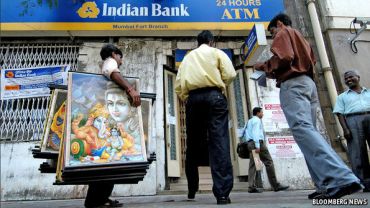
The question is not whether the scheme will work but whether the cost of implementing it is worth it. The notes being nixed represent 86% of all cash in circulation: everyone is impacted. Queues have snaked around banks for days as Indians have tried to convert their notes into new money. And the “black money” hoarders have ways to liquidate their loot, for example hiring lots of people to deposit their notes into their own accounts and then send it back, all for a fee. The benefits are hard to gauge for now. The government is keen to be seen to be cracking down on tax-dodgers on behalf of the “common man”. But if the poor fellow then has to spend his days (like your correspondent) scouring the streets for an ATM that works, he may end up wondering if he is a beneficiary of the scheme or its victim.

Source: The Economist explains: Why India scrapped its two biggest bank notes | The Economist

02/06/2016

Bureaucrats at the till | The Economist

INDIA’S biggest banks tend to have official-sounding names, worthy of a central bank. There is State Bank of India, Union Bank of India, Bank of India and even Central Bank of India (the actual central bank is called the Reserve Bank of India, or RBI). That is because, starting in 1969, the entire financial system was nationalised. Although the government has grudgingly permitted private-sector banks over the past 20 years, the 27 public-sector banks (PSBs), which are listed but majority-owned by the government, still account for 70% of lending. That is a worry, because the PSBs are in terrible shape, having lent freely to companies that cannot pay them back. In response, both the government and the RBI are imposing various reforms—but not the most obvious one.

Indian banks dodged the global financial meltdown in 2008. But they promptly embarked on a frenzy of lending to big companies, sowing the seeds of a home-made crisis. The PSBs gleefully funded infrastructure projects that never got the required permits, mines with an output made much less valuable by slumping commodity prices, and tycoons whose main qualification was friendship with government ministers. PSBs have tried to gloss over the problem for years, but the RBI is now forcing them to admit the true extent of the damage.

The reckoning has been brutal: 3 trillion rupees ($44 billion) of loans have been recognised as “non-performing” by banks in the past two quarters, the vast bulk of them at PSBs; 17% of all loans there have either been written off, provisioned for or categorised as impaired, according to Credit Suisse, a bank. More losses are in the pipeline. The revelations have driven the combined market capitalisation of the 27 PSBs down to that of a single well-run private lender, HDFC Bank, founded in 1994.

Tidying up a mess on this scale is never easy, but it is proving particularly tricky in India. The absence of a bankruptcy law (one was enacted in May but it will take months, if not years, to become operational) leaves bankers powerless in the face of defaults. Indian lenders recover just 25% of their money from delinquent borrowers on average, and only after four years of haggling, compared with 80% in America in half the time. A creaky judicial system piles delays upon delays.

Worse, as quasi-bureaucrats, Indian bankers are loth to do the one thing that would help a recovery, which is to sell iffy loans to outside investors and move on. Such investors exist, albeit in limited numbers, but doing business with them can be treacherous: if the borrower’s fortunes recover after a sale and it pays back the new owner of the loans in full, bankers fear government auditors will accuse them of selling the distressed loans on the cheap. Best for the bankers to do nothing, and hope that the situation somehow improves.

The government wants to change this dynamic. A new “bank board bureau”, headed by an unimpeachable former government auditor, has been created to insulate bankers from government meddling, and so give them cover to sell assets at less than face value. Much of what it suggests is sensible: giving longer terms to PSBs’ bosses, for example, and ensuring they are not judged merely on how quickly they increase the bank’s loan book—part of the reason the PSBs ran into trouble before. The government also wants to halve the number of PSBs through mergers.

Source: Bureaucrats at the till | The Economist

22/01/2016

Beijing shut down over 1,000 factories over past 5 years|Society|chinadaily.com.cn

Very good news, indeed.

Beijing has closed 1,006 manufacturing and polluting enterprises over the past five years, the municipal government revealed Friday.

In addition, 228 markets were also closed over the period, Beijing Mayor Wang Anshun said in a government work report presented during the city’s annual parliamentary session, which opened Friday.

More than 13,000 applications for new businesses have also been rejected because they were on the list of prohibited or restricted operations, Wang said.

Beijing had closed or relocated nearly 400 polluting factories in 2014 and another 300 in 2015, previous figures show.”

Source: Beijing shut down over 1,000 factories over past 5 years|Society|chinadaily.com.cn

10/08/2015

China to build highway for Liberia as part of Ebola recovery aid | Reuters

China will build a new coastal highway for Liberia as part of its aid to the country recovering from an Ebola epidemic, Liberia’s foreign minister said on Sunday.

English: Map of the Mano River Union showing G...

English: Map of the Mano River Union showing Guinea, Liberia and Sierra Leone. (Photo credit: Wikipedia)

He was speaking at a news conference with China’s Foreign Minister Wang Yi who is visiting Liberia, Guinea and Sierra Leone, the countries hardest hit by the epidemic.

Liberia’s existing coastal route is vital for commerce as the country rebuilds after a civil war that ended in 2003. It connects the capital to the border with Ivory Coast via the port city of Buchanan, where exports of exports of iron and timber pass through, but much of the road is unpaved.

“China has agreed to help Liberia with the construction of a ministerial complex which will host about 10 ministries. Also, China will construct a coastal highway,” Liberia’s Augustine Kpehe Ngafuan said.

China would use its global fund for Africa to finance the project and seek partners, he said. The construction of the ministries had already been announced.

Wang did not directly refer to the highway but said Ngafuan had explained the specific components of China’s aid.

“China is open to cooperation in all areas and we know that Liberia is attracting investments from all countries around the world. We know about the historic ties between Liberia and USA but China has its own strength,” Wang said.

“Our relations with Liberia have enjoyed fast growth,” he said. Liberia was founded by freed American slaves and has retained close ties with the United States.

Ebola has killed more than 4,800 people in Liberia and almost 11,300 people in the three countries since the outbreak began in December 2013 but the number of new cases has fallen to close to zero in recent weeks.

China, Africa’s biggest trading partner, has sent hundreds of medical workers to Africa and contributed aid of more than $120 million to the anti-Ebola effort, after initially facing criticism for not doing enough.

Many big companies in China have invested in Africa, tapping the continent’s rich vein of resources to fuel the Asian giant’s economic growth over the past couple of decades.

via China to build highway for Liberia as part of Ebola recovery aid | Reuters.

22/07/2015

Kind of Blue: China’s Air Pollution Not as Terrible as Before – China Real Time Report – WSJ

If you’re living in China and have the vague impression that the skies have been bluer than usual this year, it’s not just wishful thinking.

According to an analysis released Wednesday by Greenpeace East Asia, China’s air is not as awful as it used to be. Among 189 cities examined by the environmental nonprofit, PM2.5 levels in the first half of 2015 were down an average of 16% compared to the same period last year. Only 18 cities saw their levels of PM2.5 increase.

Health experts say that small particles such as PM2.5 are particularly worrisome for human health, given their ability to creep deep into the lungs and aggravate heart or lung disease.

“I think this is the first time I’ve seen a massive reduction on PM2.5 concentrations at a national level,” said Dong Liansai, Greenpeace East Asia energy and climate campaigner. In recent years, the frequent grey pall and onset of periodic “airpocalyses” have helped discourage tourism to Beijing and have spurred expats and locals alike to leave for more oxygen-rich environments.

In the country’s notoriously smoggy capital, residents have seen PM2.5 levels drop by 15.5%, with levels of sulfur dioxide – which can contribute to respiratory problems — experiencing a still more precipitous drop of 42.6%, the group said. The capital has been making a concerted push to clean up its skies, closing or relocating 185 firms in the first half of this year, according to the Beijing government. Since last July, the city has also shuttered three of its four coal-fired power plants.

Mr. Dong said the bump in clean air doesn’t appear to be just a blip. He credited more aggressive government standards on emissions and efforts to shutter its dirtiest factories. He also cited the government’s 2013 air pollution control plan, which mandates that by 2017, certain regions must reduce their PM2.5 levels by as much as 25% compared to 2012 levels.

Compared with the rest of the world, the Middle Kingdom’s air still ranks as wretched: the average PM2.5 level in the 385 cities ranked by the group was 53.8 µg/m3, more than five times the World Health Organization’s recommended annual mean.

To keep skies blue-hued for events such as last November’s APEC summit, the city periodically shuts down nearby factories and orders cars off the streets. Such a strategy has in the past paid health dividends for residents. A recent study found that women pregnant during the 2008 Beijing Olympics—when the Chinese government worked aggressively to keep air pollution down for a seven-week period—gave birth to heavier, and presumably healthier, babies.

via Kind of Blue: China’s Air Pollution Not as Terrible as Before – China Real Time Report – WSJ.

Law of Unintended Consequences

continuously updated blog about China & India

ChiaHou's Book Reviews

continuously updated blog about China & India

What's wrong with the world; and its economy

continuously updated blog about China & India