Archive for ‘Uncategorized’

07/05/2015

China pulls out stops to avoid lay-offs as economy cools | Reuters

As growth in China’s sagging economy looks on the verge of spilling below 7 percent, officials worried about a spike in unemployment are pulling out all the stops to avoid mass lay-offs.

State firms are encouraged to keep idle workers employed, subsidies and tax breaks are given to companies that do not fire their workers, and some businesses are even enticed into hiring despite the slackening economic growth.

The measures appear to be working for now, said a senior economist at the Development Research Center, a think-tank affiliated to China’s cabinet.

“There is no big problem in employment. They (top leaders) are more worried about financial risks and debt risks,” said the economist, who declined to be named.

But things could change quickly.

In one of the first signs of distress in China’s labor market, the Liaoning government said in April it had slashed its 2015 job creation target to 400,000 from 700,000, to reflect a “severe” employment trend.

That came in the wake of data that showed Liaoning, one of three rustbelt provinces in northeastern China, grew just 1.9 percent in the first three months of the year, the slowest of China’s 31 provinces and regions.

Disappearing job opportunities or a spike in unemployment are always a concern for China’s stability-obsessed government, especially with 7.5 million university graduates estimated to join the labor market this year.

via China pulls out stops to avoid lay-offs as economy cools | Reuters.

28/11/2014

Narendra Modi woos Saarc nations, pledges slew of investments to counter China – The Times of India

India pledged a slew of regional investments at Saarc summit this week, seeking to counter China’s growing economic inroads into its backyard as it remains embroiled in bitter rivalry with Pakistan.

Prime Minister Narendra Modi said South Asia‘s largest economy would fund regional infrastructure, health facilities and even a communications satellite, and promised to free up its markets to exporters in smaller countries in the region.

Modi, who won a landslide election victory in May, has made clear that boosting India’s influence in its immediate neighbourhood is a key strategic priority for his government.

Critics say the previous Congress party government began to take relationships for granted, allowing economic giant China — which shares a border with four of India’s neighbours — to step into the breach.

But the failure of the South Asian Association for Regional Cooperation (Saarc) to make any significant progress during a two-day meeting underscored the scale of the challenge New Delhi faces.

Cross-border trade among the eight Saarc nations — Afghanistan, Bangladesh, Bhutan, India, Nepal, the Maldives, Pakistan and Sri Lanka — still accounts for less than five percent of total commerce in the region.

“Indians want to keep South Asia as their exclusive sphere of influence,” said Sreeram Chaulia, dean of the Jindal School of International Affairs in Delhi.

“To do that… we need to play the economic game and we need to play the connectivity game better. We have been protectionist, and that is not good,” he said, welcoming Modi’s pledge to help smaller nations reduce their trade deficits with India.

Leaders signed just one agreement, on energy cooperation, at a summit that was overshadowed by the rivalries between India and Pakistan, leading host country Nepal’s Prime Minister Sushil Koirala to say that Saarc had fallen short of expectations.

Nepal, long under the political influence of New Delhi, has benefited hugely from China’s bounty over the last decade, getting much-needed new roads and other infrastructure. Even the venue where the leaders met was built with Chinese money.

It is among several Saarc nations including Pakistan and Sri Lanka that reportedly support full membership for China, which currently enjoys observer status in the regional grouping.

India has resisted promoting its regional rival to full membership status, which comes with the power to veto agreements.

Frustrated by the slow pace of progress towards regional cooperation, it has also sought to woo its neighbours outside the Saarc framework.

via Narendra Modi woos Saarc nations, pledges slew of investments to counter China – The Times of India.

25/11/2014

# Chinese overseas acquisitions / investments – 25 November 2014

#          “China’s outbound direct investment is for the first time set to exceed investment into the country, highlighting the ongoing shift of global economic influence to the east.” – FT.com, 22 Oct, 2014 – http://www.ft.com/cms/s/0/28f6b8d4-59cd-11e4-9787-00144feab7de.html#axzz3JzPW4Z3o

#          “Chinese enterprises completed a record 176 mergers and acquisitions (M&A) overseas in the first nine months of 2014, up 31 percent year-on-year, according to a report released by accounting firm PwC on Monday.

Among them, private enterprises completed 120 M&A transactions, more than doubling the number carried out by state-owned enterprises and making them the major force in the M&A market, according to the report.” – China Daily, 22 Oct 2014 – http://usa.chinadaily.com.cn/business/2014-10/27/content_18809601.htm

#          “The theme of outbound China M&A has changed. State-owned enterprises are no longer the only buyers going overseas, private companies in industries like consumer and technology have started doing high-profile acquisitions on the global stage in recent years,” said Stephen Gore, Asian-Pacific head of mergers and acquisitions at Bank of America Merrill Lynch.” – WSJ, 21 Sept, 2014 – http://online.wsj.com/articles/chinese-overseas-buying-increasingly-shifts-to-private-from-state-1411335001

#          There are five kinds of Chinese overseas investments (or at least JVs) – which are not mutually exclusive – in rough order of priority:

  • Natural resources: oil and gas serving a growing need:
    • Chesapeake Energy – Sinopec(July 2013)
    • Wolfcamp shale exploration – stake by Sinochem (Jan 2013)
    • Pre-August 2012:
      • Oil and gas: (Sinopec, CNOOC and PetroChina have all been very active in several continents, including North America – Nexen, Canada),
      • coal, steel, minerals (incl Australia’s Sundance),
      • arable land (parts of Africa and South America).
  • Infrastructure and other tangibles which are ‘safer’ than holdings of US or Euro bonds and provides relatively predictable yields; they often also provide technology transfer at no additional cost:
    • Salov – Bright Foods( Oct 2014)
    • Tnuva – Bright Foods( May 2014)
    • AMC Entertainment cinemas – Wanda(Sept 2012)
    • Weetabix – Bright Foods(May 2012)
    • Smithfield Foods – Shuanghui Foods (May 2013)
    • Pre-August 2012:
      • manufacturing plants (Putzmeister),
      • oil refineries (INEOS’ Grangemouth (Scotland) and Lavéra (France),
      • utilities (Redes Energeticas Nacionais, Energias de Portugal, Thames Water; Brazilian electricity grid, Northumbrian Water), office blocks (Canary Wharf, London),
      • housing in the US;
      • construction – Spanish construction company; all sorts in parts of Africa and the Caribbean (sports stadium, holiday resorts, roads, ports, etc).
  • Technology: esp new and innovative building for the future:
    • Motorola – Lenova (Jan 2014)
    • Pre-August 2012:
  • Brands: especially luxury brands which reduces the outflow of currency and increases the inflow as the population gains affluence and demand for luxury goods continue to expand:
    • Waldorf Astoria – Anbang Insurance(June 2014)
    • Corum watches – Wanda (April 2014)
    • Pre-August 2012:
      • yachts (Ferretti),
      • high fashion (Cerruti, Sonia Rykiel),
      • essentials (Putzmeister);
      • soccer (Inter Milan).
  • Financial houses, esp owners/managers of funds (BlackRock) – which are not as ‘safe’ as resources and tangibles, but much safer that Euro and $ bonds.


03/11/2014

Wagah Border Flag Ceremony a Casualty of Pakistan Bomb Attack – India Real Time – WSJ

At sunset each day, before the only road crossing between India and Pakistan closes for the night, a military spectacle takes place in which forces from both countries come face-to-face and goose-step to goose-step at the Wagah border for an elaborate flag-lowering ceremony.

On Sunday, as spectators there headed for home, a suicide bomber on the Pakistan side detonated a device that killed dozens and more than 100 injured.

In response, India has now put on hold the ceremony that has taken place for six decades since the creation of Pakistan, according to officials from India’s Border Security Force, a paramilitary force responsible for guarding the country’s land border.

For at least three days the border will close without fanfare, officials said.

The Wagah border is about 14 miles from Lahore. The ceremony, known as ‘Beating Retreat’, attracts thousands of Indians and Pakistanis  as well as a few bemused-looking foreign tourists to the tiered seating on each side of the border and the place echoes to cheers  “Long live India” and “Long live Pakistan” as each side tries to outdo each other.

The south Asian nuclear-armed neighbors have had frosty relations since the partition of the Indian subcontinent in 1947, and have fought three wars over the Himalayan territory of Kashmir, which both sides claim. Sunday’s suicide attack comes amid increased tensions between India and Pakistan after a resurgence of cross-border shooting at the disputed frontier in the Kashmir region.

Despite India and Pakistan’s rocky past and fractious present, the Wagah border ceremony is full of good-natured nationalistic pomp. If you want to get a sense of the atmosphere, think changing of the guard crossed with a baseball game.

The ritual begins with the sound of bugles blown together by military guards on both sides followed by a parade – a well-coordinated, energetic military display of competitive high-kicking put together by members of India’s Border Security Force and the Rangers of Pakistan.

Representatives from each side take it in turns to shout at the top of their voices and for as long as they can into a microphone in what could be described as a yell-off.

The end is marked by the lowering of the flags as soldiers shake hands across the divide between the hostile neighbors, before the border gates are slammed shut.

via Wagah Border Flag Ceremony a Casualty of Pakistan Bomb Attack – India Real Time – WSJ.

26/10/2014

Samsung’s China Smartphone Problems Come to India – Businessweek

And you thought iPhones were popular. At 2 p.m. on Oct. 14, Xiaomi put 100,000 of its Redmi 1S smartphones up for sale in India, using local e-commerce site Flipkart to sell them, unsubsidized, for 5,999 rupees ($98) apiece. Within four seconds the phones sold out. Such Flipkart flash sales have become weekly events since China’s Xiaomi entered India in July. “It’s the most important market for us after China,” says Hugo Barra, the Google (GOOG) alumnus now in charge of Xiaomi’s international expansion. Indians “are without a doubt the most demanding users that we have encountered.”

Xiaomi CEO Lei Jun

Consumers in India bought 44 million smartphones last year, close to 200 percent more than they did the year before. Four-year-old Xiaomi, which sells the most popular smartphones in China, has made 2014’s splashiest entrance into India’s phone market. Other companies have also sought to gain market share, especially in the peak holiday shopping season leading up to the nationwide Diwali festival on Oct. 23. Huawei (002502:CH) began selling its Honor Holly smartphone on Flipkart for $115 on Oct. 16. Motorola, which Lenovo (992:HK) has agreed to buy from Google, had 5 percent of the market in the second quarter, up from almost nothing a year ago, thanks to sales of its Moto G ($164 on Flipkart). Models from Chinese phone makers Gionee and Oppo start at $86 and $130, respectively.

via Samsung’s China Smartphone Problems Come to India – Businessweek.

03/09/2014

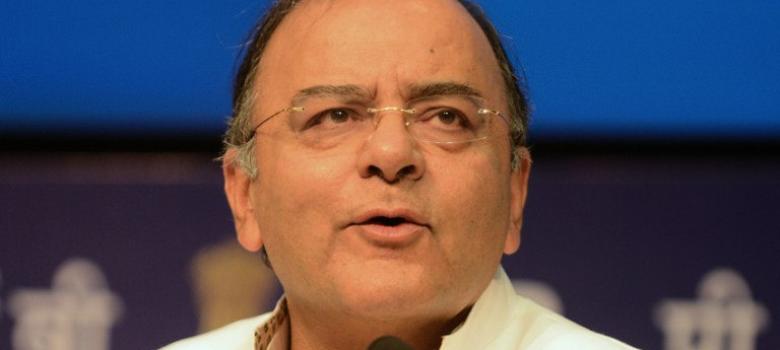
Jaitley’s biggest tasks lie ahead: big-bang reforms and restructuring the Finance Ministry

The finance minister has had to tackle inflation, India’s stance in the WTO and easing regulatory hurdles. That was the easy part.

Even before the general election ended in May, it was clear that if the Narendra Modi-led Bharatiya Janata Party formed the government, Arun Jaitley would head one of the important ministries on Raisina Hill, the area of Lutyen’s Delhi that houses some of the most important government buildings.

But Jaitley’s move to North Block, the part of the Hill housing the finance ministry, was not easy. Contesting his first Lok Sabha election, he lost the race in Amritsar to the Congress candidate by nearly one lakh votes, raising questions within the party about his eligibility to be granted a key ministry. Jaitley, who has also been given charge of the defence ministry, is a man with as many detractors as admirers in New Delhi and within his own party.

Often teased in Delhi circles as the only Congresswala in the BJP, Jaitley was seen by many as an obvious choice for the crucial portfolio of finance. He got the job because he has a shrewd strategic mind and knows how to work Delhi. In addition, the BJP needed someone who had the nerves to handle a ministry that was practically in the ICU despite valiant, though sometimes questionable, efforts by his predecessor and friend, the Congress’s P Chidambaram.

Both Prime Minister Narendra Modi and Jaitley had only a few days to present their first budget to a Parliament and nation that had been promised big-bang economic reforms. As Jaitley presented the Modi government’s first budget on July 12, many who had expected major reforms were left disappointed even though some praised it for pointing in the right direction.

As a member of the Federation of Indian Chambers of Commerce and Industry said, this was a “benefit of the doubt” budget because of the short period in which Jaitley and his team had to think things over. The real test will come in 2015.

Huge challenges

A change in government is not the only factor that drives ministerial reform. The bureaucracy also needs to endorse the new policies. In getting the bureaucracy on board, Jaitley’s team in North Block has faced plenty of challenges, such as the minister’s inability to address the thorny issue of retrospective taxation.

Other things that kept Jaitley busy as soon as he took over were controlling inflation, India’s stance on subsidies at the WTO and making it easier to do business by removing regulatory hurdles. But the enormity of reforms needed to transform the Indian economy and pushing its growth rate to more than 6% require willpower and the stomach to take politically unpopular measures, especially in sectors such as power.

“There are three or four sectors where we just cannot continue doing business as usual,” said Pratap Bhanu Mehta, president of the New Delhi-based Centre for Policy Research. “In areas such as energy we are too dependent on imports and on carbon-intensive energy sources. If we are not on an alternative energy path soon, which means low carbon and technologically efficient [forms], we could be out of the development game in 15 to 20 years.”

It is the support system for business that requires key changes. Foreign industry remains bullish on India but has made its displeasure known over the slow progress on issues such as foreign direct investment, land acquisition and retrospective taxation.

On the domestic front, many industrialists have asked for a revitalised subsidy regime, one in which the government gives subsidies wherever required instead of using them as a populist measure to get votes. At the same time, as a vital component of the global economy, India could find it increasingly difficult to persist with its subsidy regime even if it makes sense on the domestic front.

Back to the drawing board

Globalisation and climate change will become central to India’s economic story. The Asian Developmental Bank concluded in a recent report that South Asian economies such as India could lose 1.8% of their GDP by 2050 and 8.8% of their GDP by the end of the century to climate change.

via Scroll.in – News. Politics. Culture..

22/08/2014

India and China: Strangers by choice | The Economist

For those readers really interested in China AND India, this is a ‘must-read’ article.  I’ve only extracted the first part.  For full article go to – India and China: Strangers by choice | The Economist.

FEW subjects can matter more in the long term than how India and China, with nearly 40% of the world’s population between them, manage to get along. In the years before they fought a short border war, in 1962, relations had been rosy. Many in China, for example, were deeply impressed by the peaceful and successful campaign led by Mohandas Gandhi to persuade the British to quit India. A few elderly people in China yet talk of their admiration for Rabindranath Tagore, the Bengali writer who won the Nobel prize for literature in 1913. And though Nehru, India’s first prime minister, was resented as arrogant and patronising by some Chinese leaders, the early post-war years saw friendship persist and some popular respect for him too. In China, for example, books on India were then easily available—unlike today.

The past half-century has produced mostly squabbles, resentment and periodic antagonism. India felt humiliated by its utter defeat at the hands of Mao’s army in the 1962 war. China’s long-running close ties to Pakistan look designed to antagonise India. In return India is developing ever warmer relations with the likes of Vietnam and Japan. An unsettled border in the Himalayas, periodic incursions by soldiers into territory claimed by the other side and China’s claim—for example—that India’s Arunachal Pradesh is really a part of Tibet, all suggest that happier relations will be slow in coming. Even a booming bilateral trade relationship is as much a bone of contention as a source of friendlier ties, given India’s annoyance at a yawning deficit.

One glimmer of hope, in theory, is that ordinary people of the two countries might start to understand each other better as levels of education, wealth and interest in the outside world all grow. As tourists, students and business types visit each other’s countries, perhaps they will find that they have more in common than they believed. In fact, judging by a sharp and well-crafted memoir by an Indian journalist who was posted in Beijing for four years, ignorance and bafflement are likelier to persist.

Reshma Patil was sent by the Hindustan Times, a large Indian newspaper, to Beijing in 2008, one of only four Indian print journalists in the country (by contrast Chinese media groups had 16 correspondents in India). Her account of time there, “Strangers across the border; Indian encounters in boomtown China”, is revealing for its detail and anecdote, but also for its broadly damning conclusion about the state of ties between the countries: “extreme ignorance and nationalism illustrate their mutual relations”, she says.

Most entertaining, from an Indian point of view at least, are her accounts of Chinese ignorance about India. She visits a centre in Beijing devoted to learning cricket in case it ever becomes an Olympic sport (it is called shenshi yundong, or “the noble game”), whose players have never heard of Indian stars, or of the cricket world cup, and who appear to prefer playing ping pong. During numerous forays to universities she finds students learning foreign languages who routinely dismiss India as dirty, poor and irrelevant. A wide misapprehension, she says, is a belief that India is Buddhist. Officials and journalists tell her that India suffers from an “inferiority complex”, that it is so backward (“naked…children piss on the streets”) that there can be “nothing to learn” from the country. She suggests that one Indian drink, the mango lassi, has become popular in China, but otherwise the Chinese she meets mostly have little interest in Indian products or culture. Indian traders are famously stingy. Its brands, such as those of big outsourcing firms, are poorly understood or assumed to be of low quality. Persistent racism towards dark-skinned Indians is broken in only one case, by the head of a Chinese modelling agency who says he is fond of Indians who can pull off a “Western look”.

India meanwhile makes pitifully little effort to correct Chinese misunderstandings. As well as few journalists, India had only 15 diplomats based in Beijing during Ms Patil’s time, most of them inactive. Only two had any economic expertise, and most only started learning Mandarin after their arrival in the country. A big Indian business lobby group had a single representative based in Shanghai. She estimates that only a few hundred Indian businesses, in any case, are active in China (with even fewer Chinese ones in India), and few of the Indian ventures are led by Mandarin-speakers or local hires. As an example of ignorance, she mentions a Chinese business reporter who has never heard of Infosys, a $33 billion Indian IT firm. India’s low profile in China, she argues, “prolongs the shelf-life of anti-India propaganda”. For if most Chinese are merely ignorant, many are troublingly nationalistic where their neighbour is concerned.Ms Patil dismisses annual exchanges of a few hundred students each as a hopeless affair.  Sometimes India ships a low-cost dance troupe to China. Most such exchanges of students, journalists and others end up in mutual frustration; a failure to communicate; and terrible hunger among vegetarian Indians horrified by Chinese cuisine.

via India and China: Strangers by choice | The Economist.

17/07/2014

With Tensions Rising, Japanese Investment in China Plummets – Businessweek

Another consequence of the worsening Sino-Japanese relations: Japanese investment into China dropped by nearly half in the first six month of 2014, according to a new report by China’s Ministry of Commerce. As recently a 2012, Japanese investment posted growth of 16.3 percent, reaching $7.28 billion. The decline actually started last year, with a 4.3 percent drop.

Zhang Jifeng, director of the Japanese economy department in the Chinese Academy of Social Sciences, told the China Daily that Japan’s entrepreneurs are “waiting and watching.” He added: ”They’re profoundly aware of the connection between the political climate and their commercial performance [in China]. They don’t want to put their assets at risk.”

English: Yasukuni Shrine in Tokyo.

English: Yasukuni Shrine in Tokyo. (Photo credit: Wikipedia)

China and Japan are in a dispute over the ownership of the uninhabited Diaoyu Islands in the East China Sea. Japanese Prime Minister Shinzo Abe further angered Beijing in December when he visited Tokyo’s Yasukuni shrine, a temple that honors Japanese soldiers but also its war criminals. Earlier this month Japan’s cabinet passed a resolution reinterpreting its pacifist constitution so its military can defend its allies.

via With Tensions Rising, Japanese Investment in China Plummets – Businessweek.

10/04/2014

Govt declares holiday on B R Ambedkar’s birth anniversary – The Times of India

English: B. R. Ambedkar delivering a speech to...

English: B. R. Ambedkar delivering a speech to a rally at Yeola, Nasik, on 13 October 1935 (Photo credit: Wikipedia)

The Centre has declared a holiday on Monday on account of Dr B R Ambedkar‘s birth anniversary, giving about 50 lakh central government employees an extended weekend.

“It has been decided to declare Monday, the 14th April 2014, as a closed holiday on account of the birthday of Dr B R Ambedkar, for all central government offices including industrial establishments throughout India,” said an office memorandum issued by ministry of personnel.

April 14 is not a compulsory holiday for central government employees. “Every year, the Centre takes a call on whether or not to declare an off for its offices across the country,” a personnel ministry official said.

via Govt declares holiday on B R Ambedkar’s birth anniversary – The Times of India.

Enhanced by Zemanta
05/02/2014

China’s Oil Pipeline Through Myanmar Brings Energy—and Resentment – Businessweek

Until recently, 80 percent of China’s oil and gas imports were transported by ship through a narrow waterway separating Indonesia and Malaysia, known as the Strait of Malacca. The possibility that hostile forces could one day block that crucial passageway and starve the country of energy has long made China’s leaders nervous.

Oil and gas pipeline

Oil and gas pipeline (Photo credit: Wikipedia)

In 2009, two state-owned energy giants inked a $2.5 billion agreement to loosen the pinch: China National Petroleum and Myanmar Oil & Gas Enterprise agreed to lay down more than 500 miles of oil and gas pipelines from Myanmar’s western coast to China’s southwestern Yunnan province. When the oil pipeline goes online later this year, tankers carrying crude from the Middle East and Africa will be able to dock at Myanmar’s port of Kyaukpyu and send as many as 440,000 barrels of oil a day overland to China. Industry news service Platts (MHFI) reports that the oil pipeline is 75 percent complete and should be operational by June.

A parallel gas pipeline went into operation last July, capable of transporting as much as 12 billion cubic meters of natural gas per year across Myanmar to China. “China’s piped gas is mainly imported from areas around the Malacca Strait,” Lin Boqiang, a professor with the China Center for Energy Economics Research at Xiamen University, told the state-run Global Times. “Now we have one more pipeline from the land instead of the seabed, which will decrease” China’s energy vulnerability.

via China’s Oil Pipeline Through Myanmar Brings Energy—and Resentment – Businessweek.

Enhanced by Zemanta
Law of Unintended Consequences

continuously updated blog about China & India

ChiaHou's Book Reviews

continuously updated blog about China & India

What's wrong with the world; and its economy

continuously updated blog about China & India