Archive for ‘United States’

27/07/2019

China deploys J-20 stealth fighter ‘to keep tabs on Taiwan’

  • Aircraft could also be used to counterbalance Japanese and US military activities in the region, analysts say
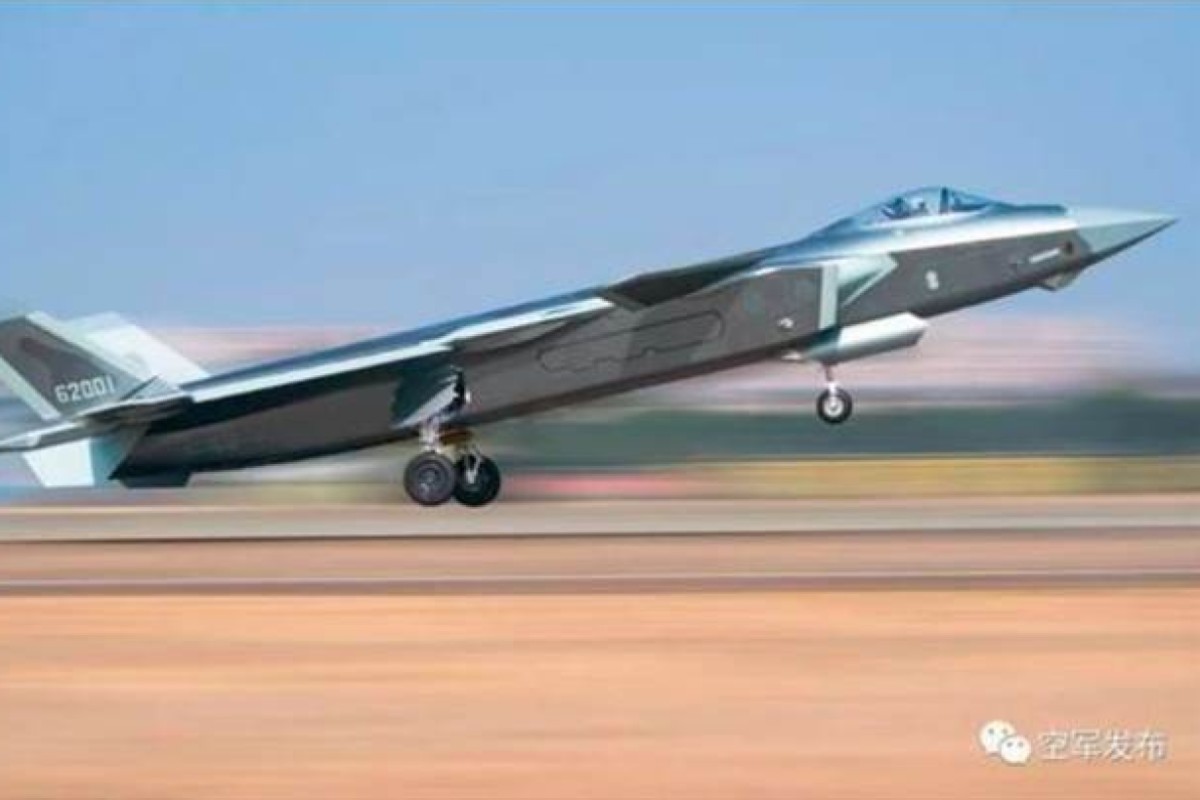
China’s J-20 stealth fighter has gone into service in the Eastern Theatre Command. Photo: PLA Air Force
China’s J-20 stealth fighter has been officially deployed to the country’s Eastern Theatre Command, suggesting it will be focused on the Taiwan Strait and military activities between Japan and the United States, observers said.
The People’s Liberation Army Air Force posted a photo on its social media account this week showing the fifth-generation fighter tagged with the number 62001, designating the aircraft as part of a frontline unit.
Chinese media reported that the stealth fighter had entered the Eastern Theatre Command, which encompasses Taiwan.
Collin Koh, a research fellow at the S Rajaratnam School of International Studies at Nanyang Technological University in Singapore, said the aircraft appeared to have two missions.
“The unit turning operational in Eastern Theatre Command is precisely aimed at Taiwan,” Koh said.
“And to challenge US military activities in Taiwan Strait, besides posing a threat to the median line that Taiwan’s air force patrols along.”
US Air Force gears up for aggressor drills to simulate combat with China’s J-20 fifth-generation fighters

The photo’s release came as China issued a defence white paper, highlighting the risks from “separatist forces”.

In the document, the military said it faced challenges from pro-independence forces in Taiwan but would always defeat those fighting for the island’s independence. It also said there were risks from separatists in the autonomous regions of Tibet and Xinjiang.
A day after the paper was released, an American warship sailed through the Taiwan Strait.

The J-20 is expected to enter mass production this year. If the aircraft was declared ready to go into active operations, it would signal China was a “greater threat” and had “greater capability” in the Pacific, General Charles Brown, the US Air Force’s Pacific commander, said in May.

Brown said US efforts to counter those developments included increasing deployments of next-generation F-35 jets and continuing overflights of strategic areas such as the South China Sea.

China’s J-20 stealth jet may be ready this year, US commander says

According to the US Defence Intelligence Agency, fielding the J-20 would add to what was already the region’s biggest air force and world’s third-largest.

China had more than 2,500 aircraft, including 1,700 combat fighters, strategic bombers, tactical bombers and multi-mission tactical and attack aircraft, in service, the agency said in a report earlier this year.

China’s J-20 fighter was part of a modernisation effort that had been “closing the gap with Western air forces across a broad spectrum of capabilities, such as aircraft performance, command and control and electronic warfare”, the report said.

Macau-based military expert Antony Wong Dong said that in addition to Taiwan, the J-20 fighter could also be used to counterbalance military activities by the United States and Japan.

But Wong added that the Chinese military was still exploring how best the fighter could be used.

“It will take a few years for the aircraft to be fully deployed and to mature. Right now, it’s still in the exploration stage,” he said.

Source: SCMP

21/07/2019

Uygurs in Xinjiang didn’t choose to be Muslims, China says in white paper

  • Islam was forced on ethnic group ‘by religious wars and the ruling class’, Beijing says in latest report defending its actions in far western region
  • Uygurs’ ancestors were enslaved by the Turks, document says
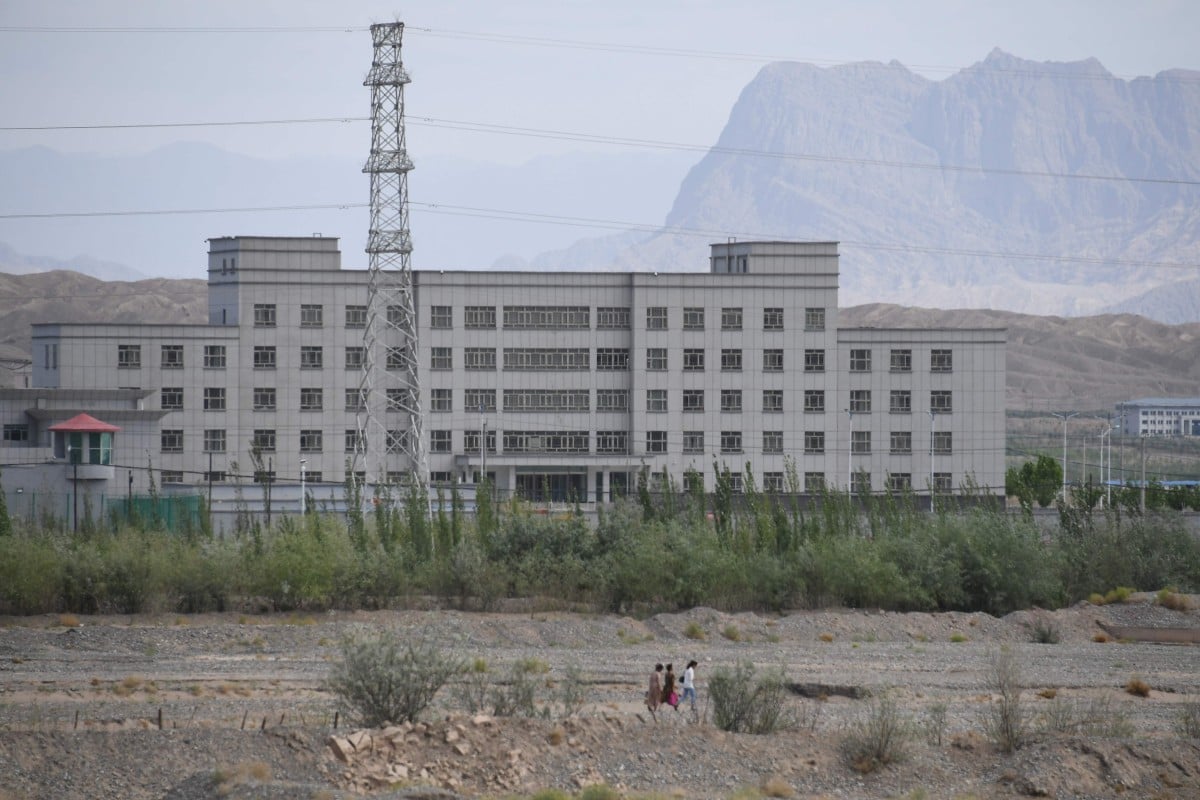
Beijing has issued a white paper seemingly designed to defend its actions in Xinjiang where as least 1 million Uygurs are being held in detention centres. Photo: AFP
Uygurs became Muslims not by choice but by force, and Islam is not their only religion, Beijing said in a white paper published on Sunday, as it continued its propaganda campaign to justify its controversial policies in the far western province of

Xinjiang

.

“The Uygur people adopted Islam not of their own volition … but had it forced upon them by religious wars and the ruling class,” according to the document released by the State Council Information Office.

Islamic beliefs were forced on the Uygurs during the expansion of Arabic states. This is a historical fact, the report said, though that did not undermine the Uygurs’ religious rights now.

The report said also that there are Uygurs who hold to faiths other than Islam, and others who do not practise any religion at all.

The paper also took aim at the Uygurs’s historic links with Turkey.

“Historically, the Uygurs’ ancestors were enslaved by the Turks,” it said, citing a history of conflicts between the two groups dating back to the 8th century.

China promotes Xinjiang as tourist idyll

The white paper was issued amid a campaign by Beijing to justify its policies in the restive region, which is home to more than 10 million Uygurs, most whom are Muslim.

Earlier this month, the ambassadors of 22 countries signed a letter calling on Beijing to halt its mass detention of Uygurs in Xinjiang, the first such joint move on the issue at the UN Human Rights Council.

The signatories included envoys from Britain, France, Germany, Australia, Canada, Japan and Switzerland. The United States, which quit the forum a year ago, did not sign the letter.

China responded by issuing a letter signed by the ambassadors of 37 countries, including several Muslim majority states like Saudi Arabia and Pakistan, backing its policies in the region.

Beijing said the show of support was “a powerful response to the groundless accusations made against China by a small number of Western countries”.

UN experts and activists say at least 1 million Uygurs and other Muslims are currently being held in detention centres in Xinjiang. China describes the facilities as training and education centres that aim to stamp out religious extremism and provide people with useful skills. It has never said how many people are being detained in them.

The United States has repeatedly criticised Beijing over its policies in Xinjiang.

On Wednesday, US President Donald Trump met victims of religious persecution from around the world, including Jewher Ilham, a Uygur woman whose father Ilham Tohti was sentenced to life imprisonment in 2014 after being found guilty of promoting separatism.

“That’s tough stuff,” Trump said after hearing Ilham’s account of her father’s ordeal.

China describes the detention camps in Xinjiang as training and education centres. Photo: AFP
In January, US lawmakers nominated the imprisoned economist, writer and former professor at Minzu University in Beijing, for the 2019 Nobel Peace Prize in a bid to pressure China to stop its crackdown on the minority group.
Sunday’s white paper is the latest in a string of similar documents published recently by Beijing as it seeks to defend the legitimacy of its policies in Xinjiang. In a document issued in March, it said that over the past five years it had arrested nearly 13,000 “terrorists” in the region.
Xinjiang camps defended at UN human rights forum
Neither the March report nor Sunday’s white paper mentioned Beijing’s other controversial policies in the region, such as the collection of DNA samples and extensive surveillance on local people.
“Xinjiang has borrowed from international experiences, combined them with local realities, and taken resolute measures against terrorism and extremism,” it said.
The measures have been effective, it said, though did not elaborate.
Over the past year, China has increased its efforts to defend the camps, including organising strictly controlled visits by selected diplomats and journalists to see the people who live in them.
State media has also released videos showing seemingly happy and healthy people inside the camps in a bid to counter accounts of harsh conditions and abuse published by the Western media.
Source: SCMP
08/07/2019

World cannot shut China out, vice president says, in jab at U.S.

BEIJING (Reuters) – China and the rest of the world must co-exist, Vice President Wang Qishan said on Monday, in an indirect jab at the United States, with which Beijing is trying to resolve a bitter trade war.

Top representatives of the world’s two biggest economies are trying to resume talks this week to try and resolve their year-long trade dispute, which has seen the two countries place increasingly harsh tariffs on each other’s imports.

The Trump administration has accused China of engaging in unfair trade practices that discriminate against U.S. firms, forced technology transfers and intellectual property rights theft. Beijing has denied all the charges.

“China’s development can’t shut out the rest of the world. The world’s development can’t shut out China,” Wang told the World Peace Forum at Beijing’s elite Tsinghua University.

He also warned against “protectionism in the name of national security”, but without mentioning the United States, and urged major powers to make greater contributions to world peace.

China has also been angered by U.S. sanctions against tech giant Huawei Technologies Co Ltd over national security concerns, and U.S. visa curbs on its students and academics.

In his speech, Wang, who is extremely close to Chinese President Xi Jinping and rarely speaks in public, reiterated China’s commitment to opening up.

“Large countries must assume their responsibilities and set an example, make more contributions to global peace and stability, and broaden the path of joint development,” he added.

“Development is the key to resolving all issues,” Wang, who became vice president last year, after having led Xi’s fight to root out corruption, told an audience that included Western diplomats based in Beijing and former European Council President Herman Van Rompuy.

“NOT A RATIONAL ACTION”

The United States should not blame China for the problems it is facing, Vice Foreign Minister Le Yucheng told the forum later.

“Viewing China as the enemy is not a rational action,” the foreign ministry quoted him as saying, adding that China would not put up “high walls” or “decouple itself from any country”.

China has been nervous that the United States is seeking to sever, or at least severely curb, economic links, in what has been called a “decoupling”.

Tariff, trade, finance and science and technology wars are “turning back the clock on history,” Le said. “The consequences will be extremely dangerous.”

The two sides have communicated by telephone since last month’s summit of leaders of Group of 20 major nations in Japan, at which U.S. President Donald Trump and Xi agreed to relaunch stalled talks.

Talks broke down in May, after U.S. officials accused China of pulling back from commitments previously made in the text of an agreement negotiators said was nearly finished.

The countries have also been at loggerheads over issues ranging from human rights to the disputed South China Sea and U.S. support of self-ruled Taiwan, which China claims as its own.

No matter how the international situation or China developed, Vice President Wang said, the country would follow the path of peace, and not seek spheres of influence or expansion.

“If there is no peaceful, stable international environment, there will be no development to talk of.”

Source: Reuters

05/07/2019

Shanghai begins new waste sorting era, as China eyes cleaner image

  • The city’s ambitious waste and recycling rules took effect on Monday, aiming to emulate successes of comparable policies in Japan, Taiwan and California
  • President Xi Jinping has urged China – the world’s second-biggest waste producer after the United States – to sort rubbish better
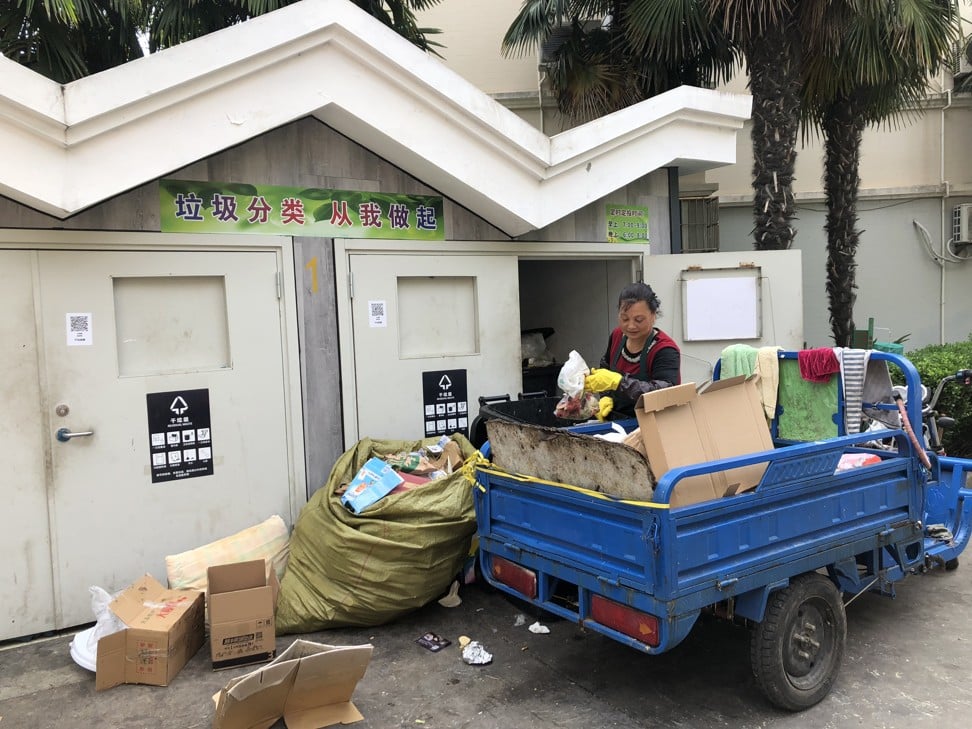
Recyclables such as plastic must be separated from wet garbage, dry garbage and hazardous waste under the new rules in Shanghai. Photo: AFP
At 9pm, Li Zhigang was sitting in front of his fruit shop on a bustling street in central Shanghai’s Xujiahui area, peeling the thin layers of plastic from rotten pears and mangoes.
“This is so much trouble!” he mumbled to himself while throwing the plastic into one trash can and the fruit into another.
In the past, Li simply threw away what could not be sold with the packaging on, but from July 1 he could be fined up to 200 yuan (about US$30) for doing so.
Like Li, many of the tens of millions of residents in the eastern Chinese city have been complaining in recent weeks that the introduction of compulsory 
household garbage sorting

is making life difficult, but at the same time have been having to learn to do it.

Calls for garbage sorting have brought little progress in China in the past decade, but Shanghai is leading a fresh start for the world’s second-largest waste producer with its new municipal solid waste (MSW) regime, observers have said.
China generated 210 million tonnes of MSW in 2017, 48 million tonnes less than the United States, according to the World Bank’s What a Waste database.

“If we say China is now classifying its waste, then it’s Shanghai that is really doing it,” said Chen Liwen, a veteran environmentalist who has worked for non-governmental organisations devoted to waste classification for the past decade.

“It’s starting late, comparing with the US, Japan or Taiwan, but if it’s successful in such a megacity with such a huge population, it will mean a lot for the world,” she said.

A cleaner re-sorts household waste left at a residential facility in Shanghai. Photo: Alice Yan

Household waste in the city is now required to be sorted into four categories: wet garbage (household food), dry garbage (residual waste), recyclable waste and hazardous waste.

General rubbish bins that had previously taken all types of household waste were removed from buildings. Instead, residents were told to visit designated trash collection stations to dispose of different types of waste during designated periods of the day.

Companies and organisations flouting the new rules could be fined 50,000-500,000 yuan (US$7,000-70,000), while individual offenders risked a fine of 50-200 yuan.

The city’s urban management officers will be mainly responsible for identifying those who breach the rules.

Huang Rong, the municipal government’s deputy secretary general, said on Friday that nearly 14,000 inspections had been carried out around the city and more than 13,000 people had been warned on the issue since the regulations were announced at the start of the year.

As July 1’s enforcement of the rules approached, it became a much-discussed topic among Shanghainese people. A hashtag meaning “Shanghai residents almost driven crazy by garbage classification” was one of the most popular on China’s Twitter-like Weibo platform.

“My daughter took a box of expired medicine from her workplace to the trash collection station near our home yesterday because she couldn’t find the local bin for hazardous waste,” Li said.

While the measures force a change of habits for most people, they bring opportunities for some.

Du Huanzheng, director of the Recycling Economy Institute at Tongji University, said waste sorting was crucial for China’s recycling industry.

“Without proper classification, a lot of garbage that can be recycled is burned, and that’s a pity,” he said. “After being classified, items suitable to be stored and transported can now be recycled.”

G20 set to agree on ways to reduce plastics in oceans

Shanghai’s refuse treatment plants deal with 19,300 tonnes of residual waste and 5,050 tonnes of kitchen waste every day, according to the municipal government. By contrast, only 3,300 tonnes of recyclables per day are collected at present.

Nationwide, the parcel delivery industry used more than 13 billion polypropylene woven bags, plastic bags and paper boxes as well as 330 million rolls of tape in 2016, but less than 20 per cent of this was recycled, according to a report by the State Post Bureau.

Prices of small sortable rubbish bins for home use have surged on e-commerce platforms, while bin makers are also developing smart models in response to new needs.

Some communities are deploying bins that people are required to sign in with their house number to use, and are equipped with a “big data analysis system”. The system records households have “actively participated” and which have not, so that neighbourhood management can publicise their addresses and make house visits, according to a report by Thepaper.cn.

In a residential community in Songjiang district, grocery store owner Nie Chuanguo has found something new to sell: a rubbish throwing service.

He has offered to visit homes, collect waste and throw it into the right bin at a designated time. He charges 30 yuan a month for those living on the ground and first floors, 40 yuan for those on the second and third, and 50 yuan for the fourth and fifth.

“This service will start from July 1. Many people have come to inquire about it,” he said.

According to Du, waste classification is not only about environmental impact or business opportunities. “Garbage sorting is an important part of a country’s soft power,” he said.

For China, it was an opportunity to improve its international reputation, he said. “In the past, Chinese people were rich and travelled abroad, but they threw rubbish wilfully, making foreigners not admit we are a respected powerhouse.”

He added: “It’s also related to 1.3 billion people’s health, since the current waste treatment methods – burying and burning – are not friendly to the environment.”

Shanghai’s part in tackling waste comes amid President Xi Jinping’s repeated calls for the country to sort waste better.

“For local officials, it is a political task,” said Chen, who heads a waste management programme in rural China called Zero Waste Villages.

Huang said the president had asked Shanghai in particular to set a good example in waste classification.

In March 2017, the central government set out plans for a standardised system and regulations for 

rubbish sorting by 2020

, with a target for 46 major cities, including Shanghai, to recycle 35 per cent of their waste by then.

In early June, Xi issued a long statement calling for more action from local governments.

However, it was a long process that required input from individuals, government and enterprises, Du said.

“Japan took one generation to move to doing its waste sorting effectively, so we shouldn’t have the expectation that our initiative will succeed in several years,” Du said.

How China’s ban on plastic waste imports caused turmoil

“The lessons we can learn from Japan include carrying out campaigns again and again, and paying close attention to educating young pupils about rubbish classification.”

Chen echoed that Shanghai’s waste sorting frenzy now was only a beginning.

“What we can see now is that people are being pushed to sort waste by regulators, but what’s next? How shall we keep up the enthusiasm?” she asked.

She suggested that how well officials worked on garbage sorting should be included in their job appraisal, and that ultimately people should pay for waste disposal.

“The key to waste classification, going by international experience, is making polluters pay,” Chen said.

Most of Hong Kong and Taiwan’s dumped plastic bottles come from mainland

There is plenty of experience for Shanghai to learn from in California, where unrecyclable waste is charged for at twice the price of recyclables, and Taiwan, where people are charged only for disposal of residual waste, according to Chen.

Taiwan has one of the world’s most impressive recycling rates, with nearly 60 per cent of its waste between January and October last year having been recycled, according to the Taipei government.

The daily amount of garbage produced per person during that period was about 0.41kg – down substantially from 1.14kg in 1997 – the government said.

Hong Kong has tried to copy the Taipei model over the years but failed, with a recycling rate of MSW slightly above 30 per cent in recent years, according to official data.

The city has recently postponed a mandatory 

waste charging scheme

until late 2020 at the earliest. Under its plan, 80 per cent of household waste will have to go into designated bags and will be priced at an average of 11 HK cents (1 US cent) per litre.

On Friday, Shanghai officials admitted that there were plenty of challenges involved in
sorting and transport.
Zhang Lixin, deputy chief of the municipal housing administration, said: “Many property management companies fear the difficulties brought by garbage sorting or are reluctant to implement the new rules.”
The administration trained the heads of more than 200 companies across the city in April, he said.
“We do find that some cleaners and rubbish trucks mix the waste, despite residents being asked to throw different types in different bins,” said Deng Jianping, head of the city’s landscaping and city appearance administration – the government department spearheading the initiative.
In the interests of curbing such practices, they could face fines of up to 50,000 yuan or even have their licences revoked, he said.
Source: SCMP
04/07/2019

China to Britain: Keep your ‘colonial’ hands off Hong Kong

BEIJING/LONDON (Reuters) – China told Britain to keep its hands off Hong Kong on Wednesday while London called for Beijing to honour the agreements made when the city was handed over in 1997, escalating a diplomatic spat over the former British colony.

Beijing denounced British Foreign Secretary Jeremy Hunt as “shameless” and said it had made a diplomatic complaint to London after he warned of consequences if China neglected its commitments to guarantee basic freedoms.

“In the minds of some people, they regard Hong Kong as still under British rule. They forget … that Hong Kong has now returned to the embrace of the Motherland,” China’s ambassador to London, Liu Xiaoming, said.

“I tell them: hands off Hong Kong and show respect. This colonial mindset is still haunting the minds of some officials or politicians,” Liu told reporters.

The growing war of words between China and Britain follows mass protests in Hong Kong against a now suspended bill that would allow extradition to mainland China.

Hundreds of protesters in the former British colony besieged and broke into the legislature on Monday after a demonstration marking the anniversary of return to Chinese rule.

China called the violence an “undisguised challenge” to the “one country, two systems” model under which Hong Kong has been ruled for 22 years.

On Tuesday, Hunt warned of consequences if China did not abide by the Sino-British Joint Declaration in 1984 on the terms of the return of Hong Kong, which allows freedoms not enjoyed in mainland China, including the right to protest.

“We can make it clear we stand behind the people of Hong Kong in defence of the freedoms that we negotiated for them when we agreed to the handover in 1997 and we can remind everyone that we expect all countries to honour their international obligations,” Hunt told Reuters.

Hunt is one of two contenders vying to replace Theresa May as British prime minister and his rival Boris Johnson told Reuters on Wednesday that he also backed the people of Hong Kong “every inch of the way”.

The comments clearly irked Beijing. China’s London envoy scolded Britain and said meddling in Hong Kong would cause a “problem in the relationship” between them.

“The UK government chose to stand on the wrong side: it has made inappropriate remarks not only to interfere in internal affairs of Hong Kong but also to back up the violent law-breakers,” Liu said.

‘SHAMELESS’

Earlier, Foreign Ministry spokesman Geng Shuang chided Hunt, saying that only after Hong Kong’s return to China did its people get an “unprecedented” guarantee about democracy and freedom.

“To say that the freedoms of Hong Kong residents is something Britain strived for is simply shameless,” he told a news briefing. “I would like to ask Mr. Hunt, during the British colonial era in Hong Kong, was there any democracy to speak of? Hong Kongers didn’t even have the right to protest.”

China had lodged “stern representations” with Britain both in Beijing and London about Hunt’s remarks, he added.

Britain said it had summoned Liu to the foreign office following his “unacceptable” comments, a government source said.

“Message to Chinese govt: good relations between countries are based on mutual respect and honouring the legally binding agreements between them,” Hunt said on Twitter after Liu’s media briefing.

“That is the best way to preserve the great relationship between the UK and China.”

RESETTING TIES

The turbulence in Hong Kong was triggered by an extradition bill opponents say will undermine Hong Kong’s much-cherished rule of law and give Beijing powers to prosecute activists in mainland courts, which are controlled by the Communist Party.

Hong Kong’s Beijing-backed leader Carrie Lam had strongly promoted the bill, but suspended it on June 15 in the face of public protests against it. Critics have called on her to officially kill the bill, but she has resisted.

Britain and China had been seeking to reset ties after a row over the disputed South China Sea last year, with Chinese Vice Premier Hu Chunhua visiting London last month to oversee the start of a link between its stock exchange and that of Shanghai.

Confrontation and lawlessness in Hong Kong could damage its reputation as an international business hub and seriously hurt its economy, China’s top newspaper, the People’s Daily, said in an editorial.

“It will not only serve no purpose, but will also severely hinder economic and social development,” the ruling Communist Party’s official paper said, denouncing what it called artificially created division and opposition.

China has blamed Western countries, particularly the United States and Britain, for offering succour to the protests.

In an editorial, the official China Daily, an English-language newspaper Beijing often uses to send its message to the world, condemned “outside agitations”.

“What has also been notable is the hypocrisy of some Western governments – the United States and United Kingdom most prominently – which have called for a stop to the violence, as if they have had nothing to do with it,” the paper said.

“But, looking back at the whole protest saga, they have been deeply involved in fuelling it since its inception.”

Source: Reuters

02/07/2019

China welcomes DPRK, U.S., South Korea leaders’ meeting at DMZ

BEIJING, July 1 (Xinhua) — China on Monday said it welcomed the recent trilateral meeting among leaders of the Democratic People’s Republic of Korea, the United States and the Republic of Korea in Panmunjom truce village.

While describing the friendly meeting held at the demilitarized zone Sunday afternoon “constructive,” Foreign Ministry spokesperson Geng Shuang said the meeting achieved positive outcomes.

“In particular, the DPRK and the U.S. agreed to resume working-level dialogue in the immediate future, which is of great significance,” Geng said at a press briefing, adding that China supports the decision.

China remains committed to realizing the denuclearization of the Korean Peninsula, safeguarding its peace and stability, and settling problems via dialogue, said Geng, noting that President Xi Jinping’s recent visit to the DPRK has injected new vitality into the political settlement of the Korean Peninsula issue.

The interaction among the three parties is in line with their common interests and conforms to the general expectation of the international community, the spokesperson said.

“Under the current circumstances, China hopes the relevant sides can seize the opportunity to meet each other halfway, and actively explore effective ways of addressing each other’s concerns, so as to promote denuclearization on the Peninsula and strive for new progress in the political settlement of the Peninsula issue,” Geng added.

Source: Xinhua

01/07/2019

Spotlight: Xi’s trip to Osaka drives multilateralism, G20 cooperation, global economy

JAPAN-OSAKA-XI JINPING-G20 SUMMIT

Chinese President Xi Jinping attends the 14th G20 summit held in Osaka, Japan, June 28, 2019. Xi called on G20 to join hands in forging high-quality global economy while addressing the 14th G20 summit held in the Japanese city of Osaka. (Xinhua/Xie Huanchi)

BEIJING, June 29 (xinhua) — Attending the summit of the Group of 20 (G20) major economies and holding meetings with his counterparts, Chinese President Xi Jinping paid a three-day visit to Osaka, Japan, which has proved a success with expanding consensus on the promotion of multilateralism and providing direction for both the G20 cooperation and global growth.

Chinese State Councilor and Foreign Minister Wang Yi made the remarks while noting that the 14th summit happened at a historic moment when chaos and uncertainties have brought the world to a critical crossroads, and that Xi’s tight diplomatic agenda marked China’s continuous efforts as a reliable and responsible major country to help with broad visions and workable solutions.

Envisioning a new type of international relations and a community with a shared future for mankind, Xi’s efforts were focused on promoting multilateralism, partnerships, mutually beneficial cooperation and joint development, which helped expand consensus, push forward cooperation, and increase confidence in global peace and development.

According to Wang, Xi’s speech at the G20 summit struck an extensive chord and China’s ideas received widespread support. In addition, the world is happy to see that Xi’s meetings with other leaders will help shape healthier major-country relations, that new opportunities will come with the new measures Xi announced for China’s further opening-up, and that Xi and U.S. President Donald Trump agreed that the two countries will restart trade talks.

WIDE CONSENSUS

During his trip to Osaka, by upholding multilateralism, the Chinese president guided the dialogue and discussions towards the direction of cooperation and inclusiveness in order to achieve win-win results.

Xi made four overseas trips since the beginning of June, setting a record for the history of the diplomacy of The People’s Republic of China, Wang said.

Xi put forward a four-point proposal in his speech at the summit, including exploring driving force for growth, improving global governance, removing development bottlenecks, and properly addressing differences.

Those proposals have outlined the direction to tackle the challenges facing the world economy, which is conducive to creating greater space for the global development and a better environment for international cooperation, Wang said.

With joint efforts, the G20 summit in Osaka has voiced support for multilateralism. It has been proven that upholding and practicing multilateralism is not just China’s choice, but a consensus and wish of the majority of countries in the world, Wang said.

Besides, on the sidelines of the G20 summit, Xi also attended a meeting of BRICS nations, China-Africa leaders’ meeting, China-Russia-India leaders’ meeting, and held a series of bilateral meetings.

During the meetings, Xi urged more efforts to promote global governance based on the principle of extensive consultation, joint contribution and shared benefits, safeguard the international system with the UN at the core and the international law as the foundation, preserve the multilateral trade regime with the World Trade Organization at the core and the rules as the foundation, promote multilateralism and free trade, push forward the democratization of international relations, and build an open world economy, Wang said.

Meanwhile, Xi met with Japanese Prime Minister Shinzo Abe with the two sides reaching a 10-point consensus to promote the development of bilateral relations.

When meeting with UN Secretary-General Antonio Guterres, Xi said the more complex and severe the situation is, the more necessary it is to highlight the UN’s authority and role.

Xi also exchanged views and reached new consensus with South Korean President Moon Jae-in on bilateral relations and the Korean Peninsula situation. Xi’s meetings with his French counterpart, Emmanuel Macron, and German Chancellor Angela Merkel will promote the in-depth development of China-Europe relations, Wang said.

Xi also met with Trump, South African President Cyril Ramaphosa, Indonesian President Joko Widodo during his visit.

COOPERATION, NOT CONFRONTATION

As China’s legitimate and lawful rights have been undermined by a series of unilateral and protectionist measures by the United States, China has to adopt necessary counter-measures, Wang said.

During the summit, Xi, at the invitation of his U.S. counterpart, met with President Trump, stating China’s stance on fundamental issues concerning the development of bilateral relations, and conducting candid communication over major challenges facing the two sides, Wang added.

Summing up the experience and illumination in the past the four decades since China and the United States established diplomatic ties, Xi said the two sides both benefit from cooperation and lose in confrontation, and that cooperation and dialogue are better than friction and confrontation.

China and the United States have highly integrated interests and extensive cooperation areas, and they should not fall into so-called traps of conflict and confrontation, Xi said.

On issues involving China’s sovereignty and dignity, China must safeguard its core interests, Xi stressed.

For his part, Trump said he values the good relationship with Xi and that it is of great significance for the two heads of state to maintain close contacts.

The U.S. side attaches importance to its relations with China, and harbors no hostility towards China, Trump said, adding that his country is willing to cooperate with China and that he hopes for better relations between the two countries.

During the meeting, Xi also reiterated the position of the Chinese government on the Taiwan issue, urging the United States to stick to the one-China principle and the three China-U.S. joint communiques.

The U.S. stance has not changed and it continues to pursue the one-China policy, Trump said.

When talking about the China-U.S. trade frictions, Xi emphasized that the essence of the China-U.S. economic and trade cooperation is mutual benefit and win-win, and that the two sides will eventually have to find a mutually acceptable solution to their differences through equal dialogue and consultation. Trump agreed with Xi in this regard.

Trump said the differences in such fields as economy and trade between the two sides should be properly settled, and that the United States will not add new tariffs on imports from China.

The most important consensus reached between the two heads of state is that China and the United States agree to continue to advance a China-U.S. relationship featuring coordination, cooperation and stability, Wang said.

They announced the restart of economic and trade consultations between their countries on the basis of equality and mutual respect. These significant consensuses send positive signals to the international community and global markets, Wang said.

As long as the two sides follow the principles and consensus established by the two heads of state, firmly grasp the correct direction of bilateral ties, expand cooperation based on mutual benefit, manage differences on the basis of mutual respect, and properly settle all problems that exist or will likely happen in bilateral relations, there is hope of a long-term and steady growth of the China-U.S. ties, and of more benefit to the two peoples and the people from other parts of the world, Wang said.

BRIGHT FUTURE OF CHINA

During the G20 summit and meetings with other world leaders, Xi explained China’s development philosophy and cooperation proposals.

According to Wang, Xi stressed that China is confident in pursuing its path, handling its own affairs well, achieving peaceful co-existence and win-win cooperation with all other countries, which has enhanced their understanding and support for China.

Stressing that the Chinese economy is registering a stable performance with good momentum for growth, Xi introduced a clear attitude and the latest measures on opening up the Chinese market, expanding imports, improving business environment as well as advancing free trade arrangements and regional economic integration, Wang said.

The Chinese president said China is breaking new ground in opening-up and pressing ahead with high-quality development.

Meanwhile, during the summit, Xi invited all interested parties to join the Belt and Road Initiative, amplifying the positive effects of the second Belt and Road Forum for International Cooperation.

Xi also advocated international cooperation in innovation so as to benefit more countries and people, Wang said.

According to Wang, all sides are optimistic about China’s development prospects, and believe that the new round of reform and opening-up measures announced by Xi are sincere and substantial, and the high-quality cooperation on building the Belt and Road corresponds with the trend of the times and the aspirations of people in the world.

It has been once again proven that China is a driving force for world economic growth, promoting openness in the world and providing a major market for other countries to explore business opportunities, Wang said.

Source: Xinhua

29/06/2019

‘Back on track’: China and U.S. agree to restart trade talks

OSAKA (Reuters) – The United States and China agreed on Saturday to restart trade talks with Washington holding off new tariffs on Chinese exports, signalling a pause in the trade hostilities between the world’s two largest economies.

Commenting on a long-running dispute over China’s Huawei, President Donald Trump said U.S. firms would be able to sell components to the world’s biggest telecoms network gear maker where there was no national security problem.
The truce offered relief from a nearly year-long trade standoff in which the countries have slapped tariffs on billions of dollars of each other’s imports, disrupting global supply lines, roiling markets and dragging on global economic growth.
“We’re right back on track and we’ll see what happens,” Trump told reporters after an 80-minute meeting with Chinese President Xi Jinping on the sidelines of a summit of leaders of the Group of 20 (G20) major economies in Osaka, western Japan.
Trump said while he would not lift existing import tariffs, he would refrain from slapping new levies on an additional $300 billion worth of Chinese goods – which would have effectively extended tariffs to everything China exports to the America.
“We’re holding back on tariffs and they’re going to buy farm products,” he said at a news conference, without giving any details of China’s future agricultural product purchases.

“If we make a deal, it will be a very historic event.”

He gave no timeline for what he called a complex deal but said he was not in a rush. “I want to get it right.”

HUAWEI HOPES

On Huawei, Trump said the U.S. commerce department would meet in the next few days on whether to take it off a list of firms banned from buying components and technology from U.S. companies without government approval.

China welcomed the step.

“If the U.S. does what it says, then of course, we welcome it,” said Wang Xiaolong, the Chinese foreign ministry’s envoy for G20 affairs.

U.S. microchip makers also applauded the move.

“We are encouraged the talks are restarting and additional tariffs are on hold and we look forward to getting more detail on the president’s remarks on Huawei,” John Neuffer, president of the U.S. Semiconductor Association, said in a statement.

Huawei has come under mounting scrutiny for over a year, led by U.S. allegations that “back doors” in its routers, switches and other gear could allow China to spy on U.S. communications.

While the company has denied its products pose a security threat, the United States has pressed its allies to shun Huawei in their fifth generation, or 5G, networks and has also suggested it could be a factor in a trade deal.

RELIEF AND SCEPTICISM

In a lengthy statement on the two-way talks, China’s foreign ministry quoted Xi as telling Trump he hoped the United States could treat Chinese companies fairly.

On the issues of sovereignty and respect, China must safeguard its core interests, Xi was cited as saying.

“China is sincere about continuing negotiations with the United States … but negotiations should be equal and show mutual respect,” the foreign ministry quoted Xi as saying.

Trump had threatened to extend existing tariffs to almost all Chinese imports into the United States if the meeting brought no progress on wide-ranging U.S. demands for reforms.

Source: Reuters

Slideshow (4 Images)

Financial markets are likely to breathe a sigh of relief on news of the resumption in U.S.-China trade talks.

“Returning to negotiations is good news for the business community and breathes some much needed certainty into a slowly deteriorating relationship,” said Jacob Parker, a vice-president of China operations at the U.S.-China Business Council.

“Now comes the hard work of finding consensus on the most difficult issues in the relationship, but with a commitment from the top we’re hopeful this will put the two sides on a sustained path to resolution,” he said.

Some, however, warned the pause might not last.

“Even if a truce happens this weekend, a subsequent breakdown of talks followed by further escalation still seems likely,” Capital Economics said in a commentary on Friday.

The United States says China has been stealing American intellectual property for years, forces U.S. firms to share trade secrets as a condition for doing business in China, and subsidizes state-owned firms to dominate industries.

ADVERTISEMENT

China has said the United States is making unreasonable demands and must also make concessions.

Talks collapsed in May after Washington accused Beijing of reneging on reform pledges. Trump raised tariffs to 25% from 10% on $200 billion of Chinese goods, and China retaliated with levies on U.S. imports.

The U.S.-China feud had cast a pall over the two-day G20 gathering, with leaders pointing to the threat to global growth.

In their communique, the leaders warned of growing risks to the world economy but stopped short of denouncing protectionism, calling instead for a free, fair trade environment after talks some members described as difficult.

27/06/2019

UN’s environment chief urges China to keep belt and road projects green and clean

  • Joyce Msuya of the UN Environment Programme is full of praise for Beijing’s success in tackling air pollution but says there is work still to be done
  • Commitment to environmental protection seen at home must be extended to infrastructure projects developed overseas, she says
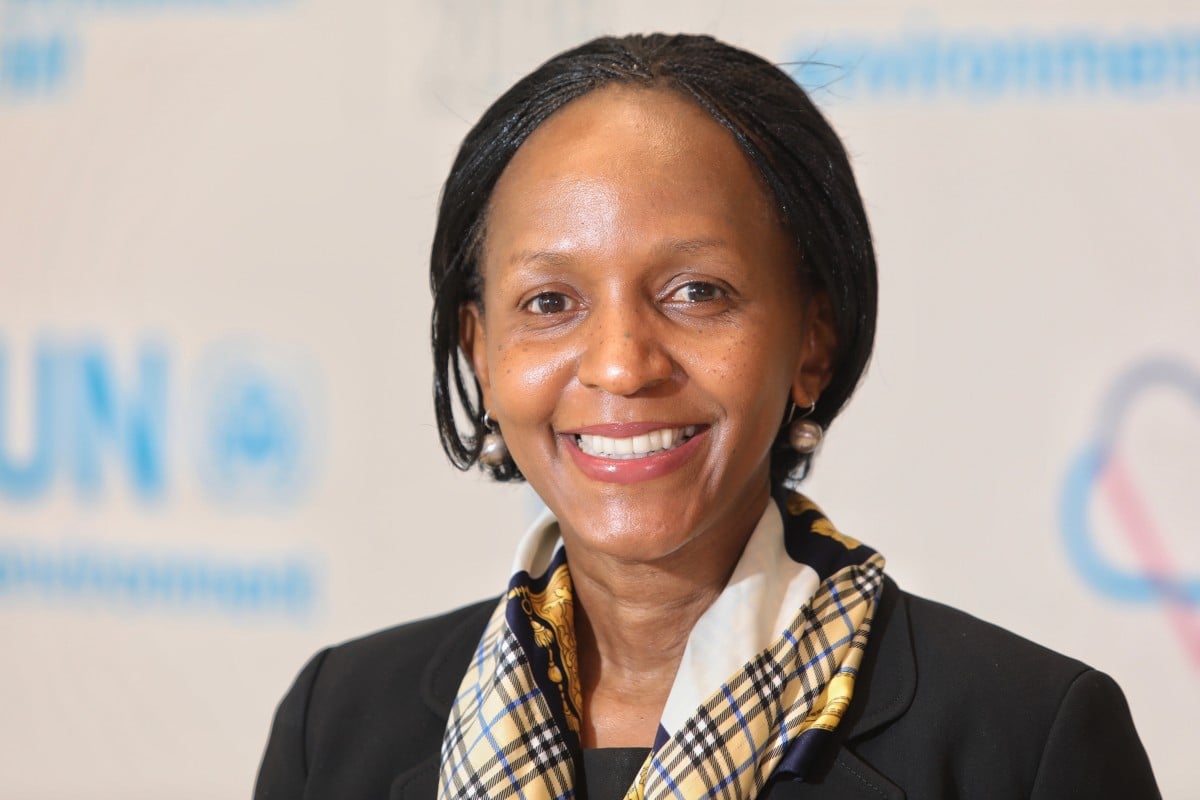
Joyce Msuya, acting head of the UN Environment Programme, says bad infrastructure can have a negative environmental impact. Photo: Simon Song
The United Nations’ environment chief has appealed to China to apply the same environmental standards to infrastructure projects it develops overseas under its Belt and Road Initiative as it does to those built on its own soil.
“We know from history, bad infrastructure can lead to negative environmental impact,” said Joyce Msuya, acting executive director of the UN Environment Programme. “Given China’s record on and interest in environmental protection, we hope and expect they will apply the same spirit as they invest in developing countries.”
While acknowledging the value of infrastructure building in developing nations, Msuya said it was equally important to consider the environmental implications of 
belt and road

schemes.

“We are interested in working with member countries that have been beneficiaries [of Chinese investment] to see what concerns, if any, what risks, if any, they see,” she said in an interview on the sidelines of an event in Hangzhou, capital of east China’s Zhejiang province, to mark World Environment Day, which fell on Wednesday.
Scores of countries are involved in Beijing’s multibillion-dollar belt and road plan in one way or another, but as it has expanded so too have the concerns over its environmental impact.
In late 2017, the WWF issued a report claiming that the development of two motorway projects in Myanmar would have a negative environmental impact on about half of its population.
China ‘facing uphill struggle’ in fight against pollution

On China’s efforts to tackle pollution at home, Msuya said that although the move towards a greener economy might require communities to make sacrifices in the short term, these would be outweighed by the long-term benefits.

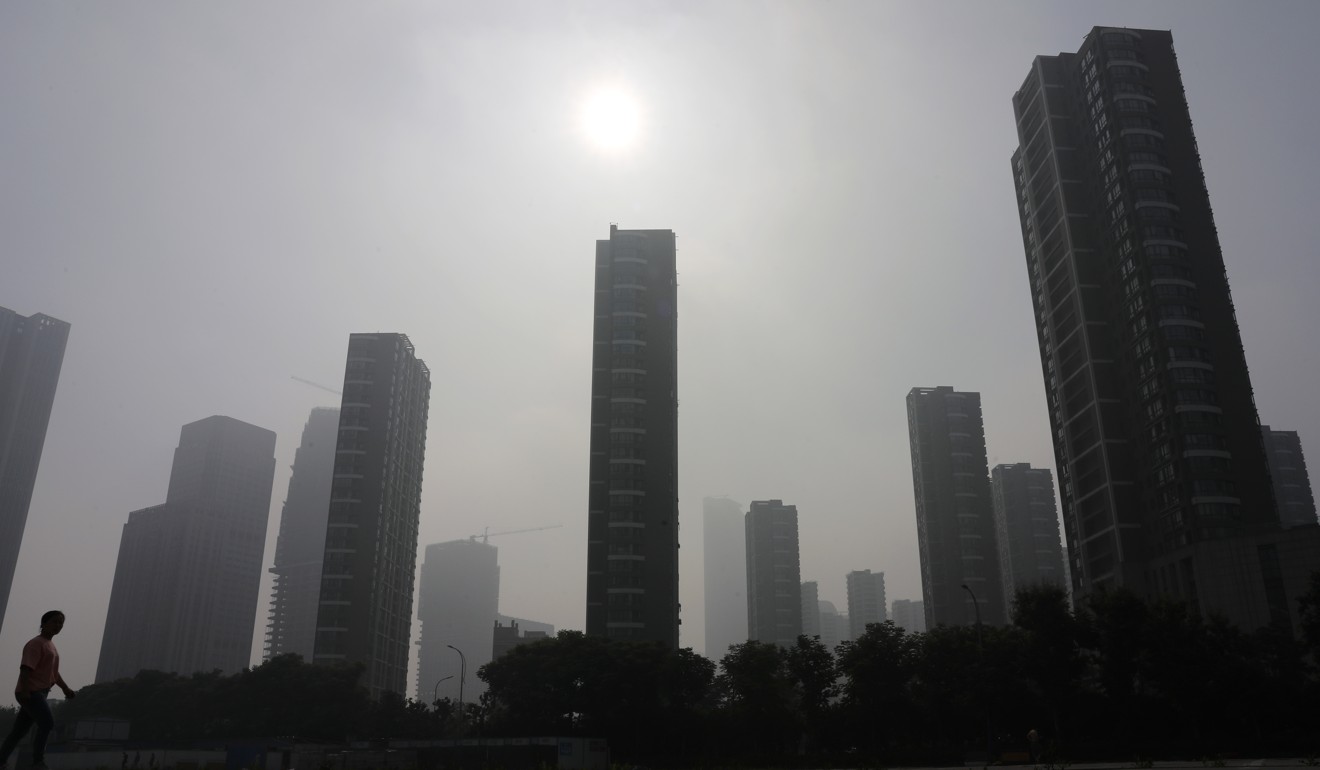
China has been fighting a “war on pollution” since 2013 but as 

economic pressures

have grown so too have concerns that industry unfriendly environmental efforts might be relegated to the back burner. The nation’s gross domestic product grew by just 6.6 per cent in 2018, its slowest rate since 1990, and for the past year it has been embroiled in a stinging trade war with the United States.

China has been fighting a “war on pollution” since 2013. Photo: Simon Song

Msuya said that while Beijing had done a good job in improving air quality, it still had some way to go on issues like water, soil and noise pollution.

“China is quite diverse, with many provinces … so the scale of the challenge of dealing with pollution is more complex,” she said. “[But] by building on its experience of cleaning the air, I have full confidence in the Chinese government.”

Pollution in northern China up 16 per cent in January as industrial activity spikes

According to a report issued by Beijing on Wednesday, average levels of PM2.5 – the tiny airborne particles that are particularly harmful to health – in more than 70 cities across

China fell by an average of 42 per cent in the five years through 2018.

Smog levels in the Chinese capital fell 43 per cent in the period, but the average reading in the city last year was still more than five times the World Health Organisation’s recommended safe level.

Air quality was the main theme of the Hangzhou event.

Msuya has first-hand experience of Beijing’s air quality having worked in the city as the World Bank Group’s regional coordinator for East Asia and the Pacific between 2011 and 2014.

“When I moved to Beijing in 2011, I honestly didn’t know how bad the air pollution was.

My son was six at the time and I always made sure he wore a mask when he went out to play,” she said.

“Fast forward to now, and China has shown us that the problem of air pollution can be tackled if everyone participates.”

Source: SCMP

17/06/2019

Chinese Vice-Premier Liu He says ‘external pressure’ can actually help China’s economy

  • President Xi Jinping’s chief US trade war negotiator did not specifically reference rising tensions with United States during surprise speech in Shanghai
  • Keynote address at Lujiazui financial forum his first public appearance in three weeks since tour of Jiangxi province with Xi
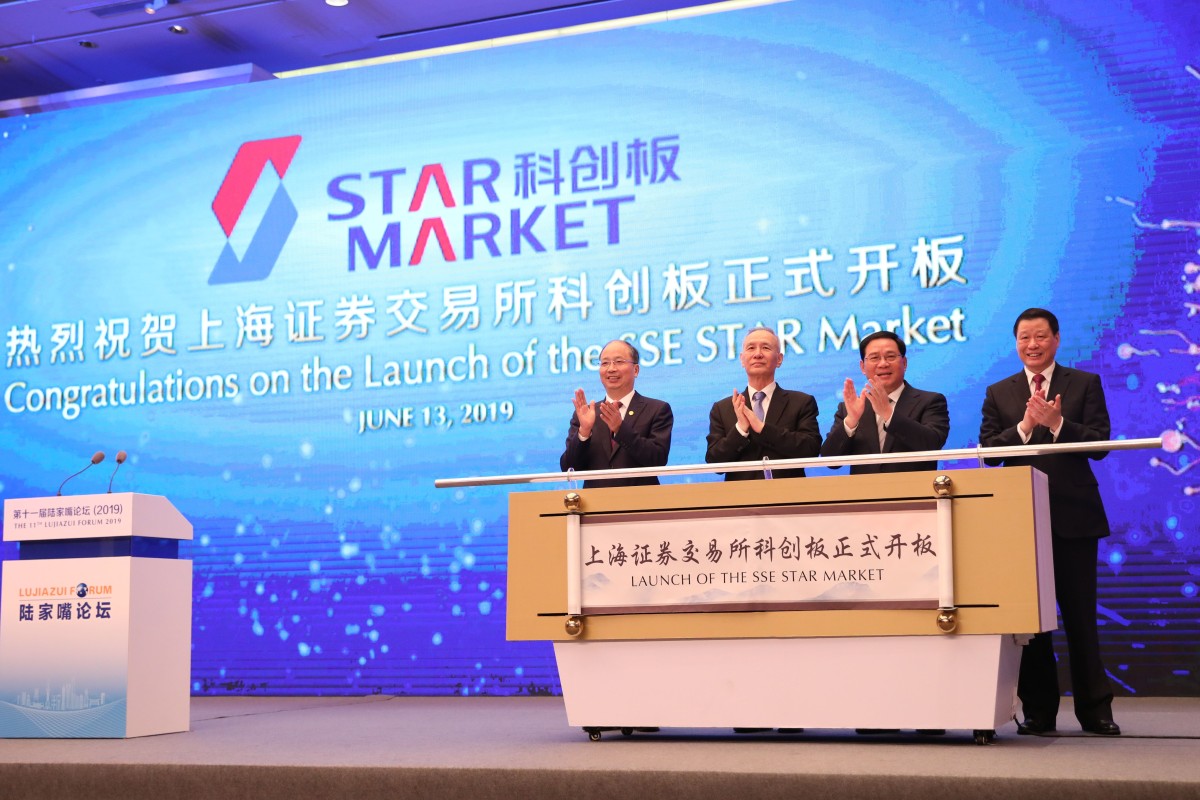
The keynote address by Liu He (second left) at the Lujiazui financial forum in Shanghai on Thursday was his first public appearance in three weeks. Photo: Xinhua
Vice-Premier Liu He believes the “external pressure” now hitting China’s economy was inevitable and could actually boost the country’s innovation and development.
Liu, the top economic aide to President Xi Jinping and chief negotiator in the trade talks with the United States, backed up comments last week from

People’s Bank of China governor Yi Gang

that Beijing has sufficient policy tools to address the risks and challenges to ensure that China’s long-term growth prospects remain sound.

He did not directly mention the US-China trade war in remarks at the Lujiazui financial forum on Thursday, but said that there was ample room in China’s macroeconomic system to support growth and that recent moves by the government to cut taxes and government administrative fees were starting to have a positive impact on the economy.

“We do face some external pressure at the moment, but this is the inevitable test that China’s economic upgrade must experience,” Liu told the forum, which is an annual event organised by the Shanghai government and the People’s Bank of China. “The external pressure will help us improve innovation and self-development, speed up reform and opening up and push forward with high quality growth.”

Liu was critical of economists for focusing solely on monthly economic data that has shown signs of weakness in the Chinese economy, while neglecting positive trends that support long-term growth in the world’s second largest economy.

Chinese employment, consumer prices and the balance of payment remained at “reasonable” levels, he said, although 

China’s consumer price index

did rise to the highest level in 15 months in May, partly because of the rising price of pork and fresh fruit.

“No matter what happens temporarily, China’s long-term growth remains positive, which won’t change,” Liu said. “After the global financial crisis, our financial system has been stable. The rapid growth of debt in the system has been contained.”

The keynote speech, which was Liu’s first public appearance since accompanying Xi on a tour of Jiangxi province three weeks ago, was only confirmed at the last minute having initially been announced as a speech by “a State Council leader”.

The external pressure will help us improve innovation and self-development, speed up reform and opening up and push forward with high quality growthLiu He

In an unusual move, Liu used charts and slides, both in Chinese and English, to address Chinese and foreign bankers and investors as well as other Chinese officials including Banking and Insurance Regulatory Commission chairman Guo Shuqing and People’s Bank of China governor Yi.
It remains to be seen whether Liu will resume trade talks on China’s behalf, with a meeting between 
Xi and US counterpart Donald Trump

at the G20 summit at the end of June yet to be confirmed after negotiations broke down in early May.

“We noticed that the US side had repeatedly expressed the hope that the two presidents could meet during the G20 summit later this month. Right now I have no new information to offer about the China-US trade talk,” said Chinese Ministry of Commerce spokesman Gao Feng during Thursday’s regular press conference.
“Nothing is agreed until everything is agreed.”
Since the last round of talks in Washington, which were attended by Liu, the US has increased tariffs on US$200 billion of Chinese goods from 10 per cent to 25 per cent, while Trump has threatened to impose tariffs on the US$300 billion worth of imports not yet covered by duties.
“The US used state power to suppress Chinese enterprises and generalise the concept of national security. These are the behaviours of distorting the market,” Gao added.
“It was the US who reneged and was dishonest in the trade talks, unilaterally escalated the trade tensions and made the negotiation fall into an impasse.”

Source: SCMP

Law of Unintended Consequences

continuously updated blog about China & India

ChiaHou's Book Reviews

continuously updated blog about China & India

What's wrong with the world; and its economy

continuously updated blog about China & India