Chindia Alert: You’ll be Living in their World Very Soon
aims to alert you to the threats and opportunities that China and India present. China and India require serious attention; case of ‘hidden dragon and crouching tiger’.
Without this attention, governments, businesses and, indeed, individuals may find themselves at a great disadvantage sooner rather than later.
The POSTs (front webpages) are mainly 'cuttings' from reliable sources, updated continuously.
The PAGEs (see Tabs, above) attempt to make the information more meaningful by putting some structure to the information we have researched and assembled since 2006.
But in Delhi and the financial capital, Mumbai, people fearing shortages quickly thronged shops and pharmacies.
“I have never witnessed such a chaos in my life,” the owner of one store in the Shakarpur district of Delhi said, quoted by the Press Trust of India.
“All our stocks, including rice, flour, bread, biscuits, edible oils, have been sold out.”
Police in the busy city of Ghaziabad, in Uttar Pradesh state, patrolled the streets with megaphones to tell residents to stay indoors.
Image copyright AFPImage caption People in Mumbai rushed to stock up on essentials following Mr Modi’s address
Under the new measures, all non-essential businesses will be closed but hospitals and other medical facilities will continue to function as normal. Schools and universities will remain shut and almost all public gatherings will be banned.
Anyone flouting the new rules faces up to two years in prison and heavy fines.
In his address, Prime Minister Modi also:
Stressed that the 21-day lockdown was “very necessary to break the chain of coronavirus”
Emphasised the seriousness of the situation and said that even developed countries had faced problems in combating it
Said that “social distancing was the only way to stop” the virus spreading
Announced that nearly $2bn (£1.8bn) would be made available to boost the country’s health infrastructure
Called on people not to “spread rumours” and to follow instructions
His announcement came after several Indian states introduced measures of their own, such as travel restrictions and the closure of non-essential services.
India has already issued a ban on international arrivals and grounded domestic flights. The country’s rail network has also suspended most passenger services.
Many parts of India, including cities such as Delhi and Mumbai, are already under tight restrictions. But this move extends those provisions to every corner of the country.
An earlier one-day curfew, which was seen as a trial, was flouted by many.
Mr Modi called on Indians to clap and cheer the emergency services from their balconies on Sunday. But many misunderstood the call and congregated in the streets as they danced and chanted.
“It’s impossible to fathom the cost that India may have to pay if such irresponsible behaviour continues,” Mr Modi warned at the time. “Social distancing is the only option to combat coronavirus.”
The implications of a total lockdown in India are huge, not just economically, but socially.
This is a nation where community is everything. Going to worship at a temple, mosque or church is an essential part of daily life for so many.
This is a seismic cultural shift but – like the rest of the world facing similar restrictions – a necessary one.
What’s the latest from around Asia?
Neighbouring Pakistan has almost twice as many confirmed cases – 878 as of Monday evening. Sweeping restrictions are in place although the government has stopped short of imposing a nationwide lockdown. However, several provinces have announced them independently. The army is being brought in to help enforce the restrictions
Bangladesh, which has reported 33 cases and three deaths, is also deploying its armed forces to help maintain social distancing and boost Covid-19 preventive measures. The soldiers will also monitor thousands of quarantined expatriate returnees. Across South Asia, there are concerns that the actual number of cases could be much higher than is being reported.
Indonesia, which has 49 confirmed Covid-19 deaths – the highest in South East Asia – has converted an athlete’s village built for the 2018 Asian Games into a makeshift hospital for coronavirus patients. A state of emergency was declared in Jakarta on Monday
In Thailand, a month-long state of emergency which will include curfews and checkpoints will begin on Thursday. The government has been criticised for failing to take strong action so far. Four people have died and nearly 900 tested positive
The most populous country that was without a case until now – Myanmar – has announced two cases
And what about the rest of the world?
Elsewhere, governments are continuing to work to stem the spread of the virus which has now affected more than 190 countries worldwide
More than 2.6 billion people are in lockdown now India has introduced its new measures, according to a tally by the AFP news agency
Media caption Reality Check tackles misleading health advice being shared online
Europe remains at the epicentre of the pandemic. On Tuesday, the death toll jumped by 514 in a single day in Spain and other European countries also reported sharp increases
Italy is the worst affected country in the world in terms of deaths. The virus has killed almost 7,000 people there over the past month
The World Health Organization (WHO) has warned that the US has the potential to become the new epicentre of the pandemic
In other developments, Japanese Prime Minister Shinzo Abe said the International Olympic Committee has agreed that the 2020 Tokyo Olympics should be postponed by a year
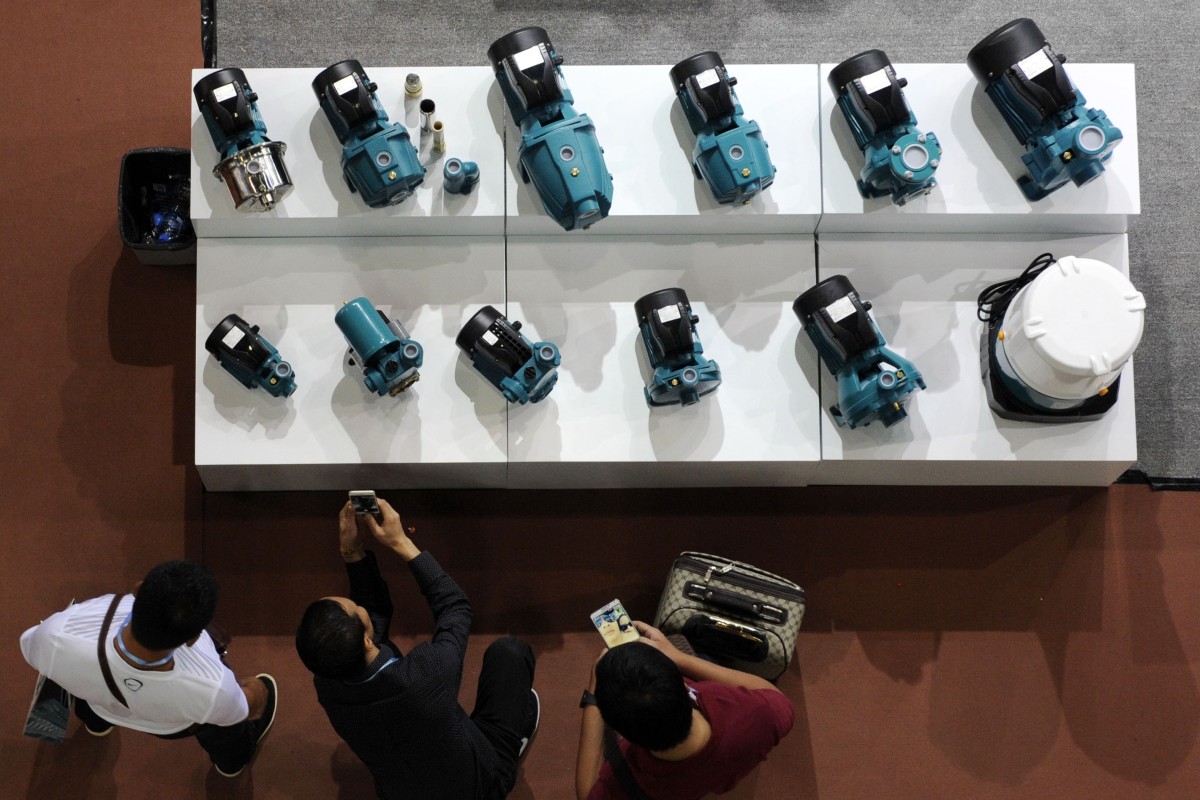
The spring session of China’s Canton Fair has been postponed due to fears about the spread of the coronavirus pandemic, authorities in Guangdong province say
Premier Li Keqiang had insisted early this month that the fair’s spring session would go ahead as it was crucial for efforts to ‘stabilise’ the global economy
The spring session of China’s Canton Fair has been postponed due to the coronavirus outbreak. Photo: Xinhua
The spring session of China’s largest trade expo, the Canton Fair, has been suspended over concerns about the spread of the coronavirus, Chinese authorities said on Monday.
The announcement comes amid reports that regular foreign buyers were scrapping plans to attend the event, which was due to open on April 15. The fair has held its spring session in Guangzhou, the capital of Guangdong province, between mid-April and early May since 1957.
The decision was made after considering the current development of the pandemic, especially the high risk of imported infections, Ma Hua, deputy director of Guangdong’s department of commerce, was quoted as saying on Monday by the official Nanfang Daily.
Guangdong will assess the epidemic situation and make suggestions to the relevant departments of the central government, Ma said at a press conference.
No new date for the fair was announced, but veteran traders who regularly attend the event said the Guangdong government is talking with Beijing about a new time, possibly in May.
Premier Li Keqiang had insisted early this month that the fair’s spring session would go ahead despite the virus outbreak, as it was an important part of Beijing’s efforts to
Authorities of Guangdong, China’s main export and manufacturing hub, joined other large cities, including Beijing and Shanghai, in introducing new restrictions on Saturday that require all foreign visitors be isolated for 14 days at their own expense.
The containment measures, which come as China braces for a second wave
of imported coronavirus cases, would have applied to tens of thousands of foreign merchants attending the fair.
Coronavirus: Chinese companies cut salaries and staff in industries hit hardest by Covid-19
The Canton Fair occurs twice a year and is China’s oldest and largest exhibition. The spring session last year attracted 195,454 foreign buyers from 213 countries and regions across the world. The top five sources of buyers were from Hong Kong, India, the United States, South Korea and Thailand.
But a growing number of regular attendees have recently cancelled plans to take part in this year’s spring session, Chinese exporters said, as concerns mount about possible infection and extra expenses due to a mandatory two week quarantine after arrival.
“About 80 per cent of our firm’s veteran clients told us last month they won’t come this time,” said Jason Liang, a sales manager at a Guangzhou-based exporter of electronic products, who did not want his company identified. “Plus with this new [quarantine], I think at least 90 per cent or almost all of them would drop the trip.
“The costs – time, security and expense – are totally uncontrollable for international travel currently. We also have no plans to attend any exhibition before the summer.”
About 80 per cent of our firm’s veteran clients told us last month they won’t come this time … The costs – time, security and expense – are totally uncontrollable for international travel currently. Jason Liang
Felly Mwamba, a leader of the Congolese community in Guangzhou who has been in the city since 2003, said China’s quarantine measures made it hard for people to visit Guangzhou.
Xie Jun, a furniture and fabric exporter from Zhejiang, said buyers from developing countries that were part of the Belt and Road Initiative would be hard hit if they were forced to pay for quarantine and treatment.
“In February before the pandemic occurred, to cushion the impact some local governments in China’s exporting trade hubs, such as Yiwu and Jinhua, introduced subsidies to attract foreign merchants,” he said. “But now all the subsidies policies are cancelled from what I know.”
Coronavirus and the ‘war economy’: the US and China bicker as the shop goes down
Chinese exporters, traders, and even local residents in Guangdong, have previously voiced concern about authorities’ decision to press on with the even due to the growing number of imported cases to China.
“We strongly call on the government to cancel the spring session of the Canton Fair,” said Zhu Yinghua, a retired teacher in Guangzhou, said before the announcement.
“It’s too dangerous for us local residents if dozens of thousands of foreigners to flock into Guangzhou.”
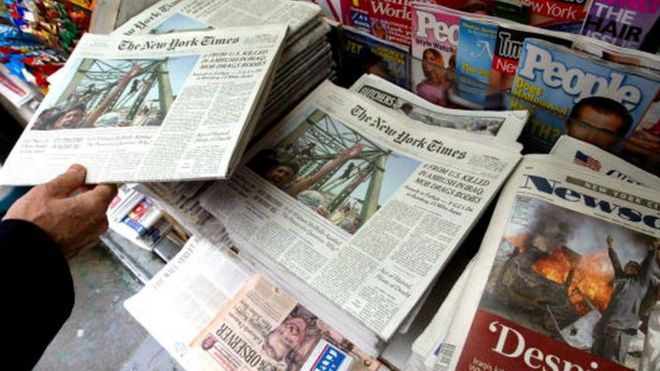
China has effectively expelled journalists from three US newspapers in retaliation for restrictions on its news outlets in the US.
Its foreign ministry ordered reporters from the New York Times, the Washington Post and the Wall Street Journal to return media passes within 10 days.
The ministry also demanded information about their operations in China.
The measures were in response to “unwarranted restrictions on Chinese media agencies” in the US, it said.
China’s action also prohibits the newspapers’ journalists from working in the semi-autonomous regions of Hong Kong and Macau, where there is greater press freedom than on the mainland.
Earlier this month, the Trump administration imposed limits on the number of Chinese citizens who could work as journalists in the US – the latest move in a tit-for-tat row over press freedoms.
“What the US has done is exclusively targeting Chinese media organisations, and hence driven by a Cold War mentality and ideological bias,” China’s foreign ministry said in a statement on Tuesday.
US Secretary of State Mike Pompeo urged Beijing to reconsider its decision, calling the move “unfortunate”.
“I regret China’s decision today to further foreclose the world’s ability to conduct the free press operations that, frankly, would be really good for the Chinese people in these incredibly challenging global times, where more information, more transparency are what will save lives,” Mr Pompeo said.
Great loss for Chinese journalism
Zhaoyin Feng, BBC Chinese
All foreign correspondents in China are required to renew their press credentials annually, which usually happens at the year end.
This means most American reporters of the three US major publications have an expiring visa and will need to leave China under the new rules. We don’t know the exact number of affected journalists yet, but it’s believed to be close to a dozen.
The expulsions will lead to a major personnel loss in these three media organisations’ China operation, especially for the Wall Street Journal, which had already seen three reporters expelled from China last month.
Critics say it’s an even greater loss for China, as the draconian measures come at a time when the country and the rest of the world need high-quality journalism on China more than ever.
It’s still unclear whether the US publications can send new correspondents, American citizens or not, to fill in the positions in China.
In the midst of a dangerous pandemic, the world’s two superpowers are locked in an escalating war with multiple fronts. By fighting over media, the origin of the coronavirus, and technology and trade, the US and China are competing to prove the superiority of their own political model.
At the beginning of March, the US state department said five media outlets, including China’s official news agency Xinhua, would be required to reduce their total number of staff to 100 from 160.
The move was seen as retaliation for China’s expulsion of two US journalists for the Wall Street Journal over a coronavirus editorial in February.
The row over media access is the latest episode in an increasingly acrimonious dispute between China and the US.
Disagreements over trade, intellectual property rights and 5G networks have damaged relations in recent years.
The coronavirus pandemic has been a source of tension too, with Washington and Beijing both accusing each other of spreading misinformation.
On Tuesday, US President Donald Trump angered China by referring to the coronavirus as “Chinese”.
A foreign ministry spokesman accused the US of stigmatising China, where the first cases of Covid-19 were recorded in the city of Wuhan in late 2019.
However, last week a Chinese foreign ministry spokesman shared a conspiracy theory, alleging the US Army had brought it to the region.
The unfounded accusation led Mr Pompeo to demand China stop spreading “disinformation” as it tried “to shift blame” for the outbreak.
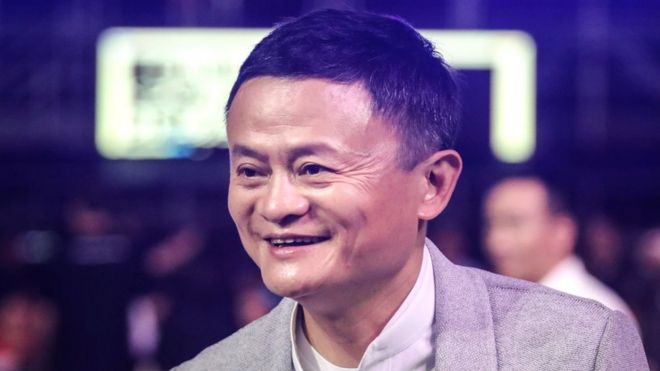
Alibaba co-founder Jack Ma has sent the first shipment of surgical masks and coronavirus test kits to the US.
The Chinese billionaire tweeted two pictures of the pallets of goods being loaded on to a plane in Shanghai.
Earlier this month he said he would give 500,000 testing kits and one million masks to America.
Mr Ma is also sending consignments of medical supplies to Europe as he called for international cooperation efforts to combat the pandemic.
In his first tweet, Asia’s richest person posted photos of a China Eastern Airlines jet being loaded with boxes of coronavirus test kits and face masks as they were shipped to the US.
It comes after the Jack Ma Foundation and the Alibaba Foundation last week announced that they had prepared 500,000 testing kits and 1 million masks to be sent to America.
They also said that they had already donated supplies to other countries including Japan, South Korea, Italy, Iran and Spain, with two million protective masks pledged for distribution across Europe.
The first consignment of 500,000 masks and other medical supplies such as test kits, which was destined for Italy, arrived in Belgium on Friday.
He joins other high-profile technology executives in pledging support for coronavirus research and disease prevention.
Microsoft co-founder Bill Gates, who is the world’s second-richest person, has announced that the Bill and Melinda Gates Foundation would give $100m to help efforts to stop the spread of the virus.
On Friday Mr Gates announced that he was stepping down from Microsoft’s board to spend more time on philanthropic activities. He said he wanted to focus on global health and development, education and tackling climate change.
Chinese tech giants, including Tencent, ride-hailing company Didi Chuxing, and TikTok owner ByteDance, have all pledged money and resources to fight the coronavirus outbreak.
China is now making more than 100 million masks a day, up from 20 million before the coronavirus outbreak, and may start to export more to other countries
Mask shortages elsewhere once more raise the debate about an over-reliance on China, with critics pointing to a lack of US industrial policy
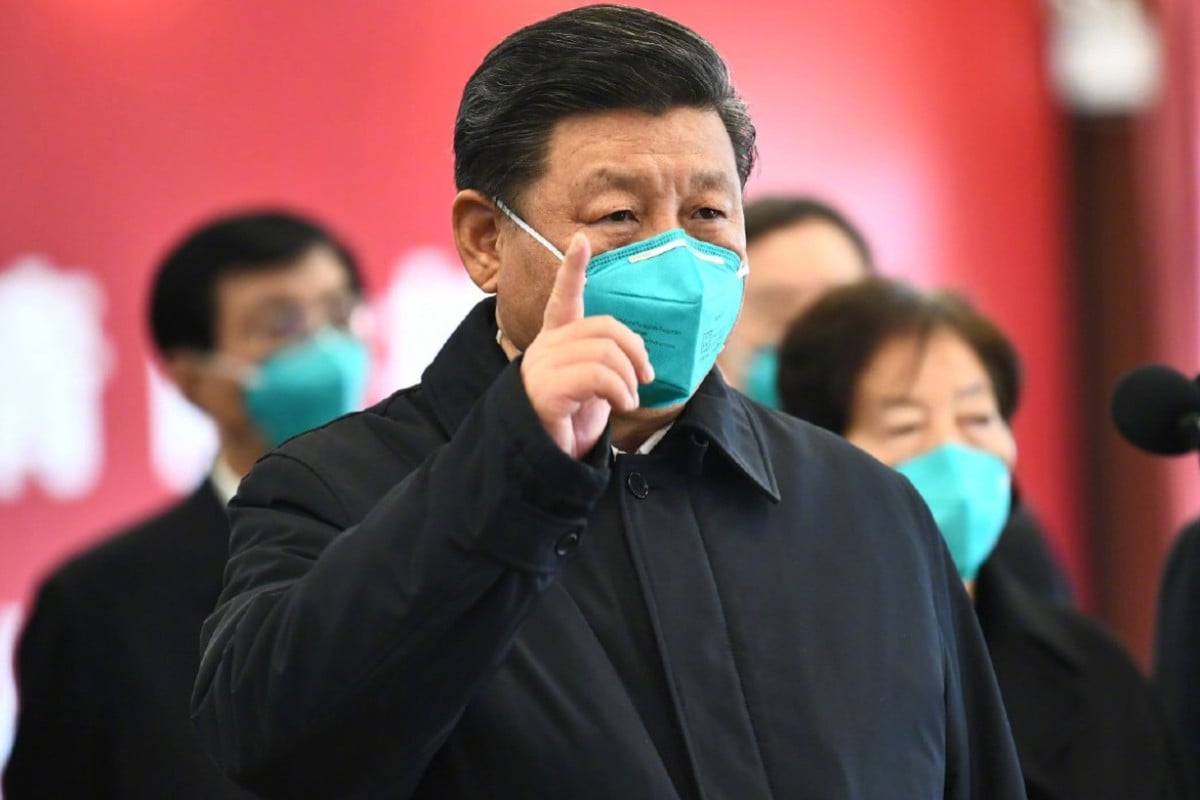
China was producing 116 million masks per day of February 29, including a mix of disposable and high-end masks like the American-designed N95 model worn by President Xi Jinping on his trip on Tuesday to Wuhan. Photo: Xinhua
The Liu family factory has been making diapers and baby products in the Chinese city of Quanzhou for over 10 years, but in February, for the first time, it started making face masks, as demand soared spectacularly due to the coronavirus outbreak.
The business – which employs 100 people in the Southeastern Fujian province – has added two production lines to make up to 200,000 masks a day.
And while the decision was primarily commercial, “encouragement” from the Chinese government – in the form of subsidies, lower taxes, interest-free loans, fast-track approvals for expansion and help alleviating labour shortages – made the decision an obvious one, said Mr Liu who preferred only to give his family name.
“The government is advocating an expansion in production,” Liu said. “With faster approvals, producers need to prioritise the government’s needs over exports.”
WHO declares coronavirus crisis a pandemic
The factory is one of thousands of refitted pop-ups around China making masks and other protective equipment for the first time, part of a massive industrial drive to respond to the spread of the coronavirus.
Before the outbreak, China already made about half the world’s supply of masks, at a rate of 20 million units a day. That rose to 116 million as of February 29, according to China’s state planning agency, a mix of disposable and high-end masks like the American-designed N95 model worn by President Xi Jinping on his trip on Tuesday to Wuhan, the epicentre of the outbreak.
This exponential jump is the result of a wartime-like shift in industrial policy, with Beijing directing its powerful state-owned enterprises to lead the nationwide mask-making effort, and the country’s sprawling manufacturing engine following their lead.
For me, this is the big advantage of China, the speed Thomas Schmitz
“For me, this is the big advantage of China, the speed,” said Thomas Schmitz, president of the China branch of Austrian engineering giant Andritz, which has seen a big uptick in demand for its wet wipe-making machines in recent weeks, also due to the virus. “When you need to run, people know how to run, and this is something which has been lost in other countries since their industrial heydays.”
Chinese oil and gas major Sinopec upped production of mask raw materials such as polypropylene and polyvinyl chloride in January. This week, it set up two production lines in Beijing to produce melt-blown non-woven fabric, intended to make four tonnes of the fabric each day, which can then be used to produce 1.2 million N95 respirators or six million surgical masks a day.
The maker of China’s new J-20 stealth fighter jet, Chengdu Aircraft Industry Group, repurposed part of its factory to design a mask production line, according to local media reports. The SichuanDaily said 258 of the company’s engineers spent three days fast-tracking development of an assembly line with more than 1,200 components.
Coronavirus: From mysterious origins to a global threat
More than 2,500 companies in China have reportedly started making masks, among them 700 technology companies including iPhone assembler Foxconn and smartphone makers Xiaomi and Oppo, in an extraordinary mobilisation of resources.
The result resembles “the war effort” in the middle of the last century in the United States and western Europe, but arguably no other nation could undergo such a transformation so quickly today.
It is a reminder of what can happen in a centrally-planned economy with a strong manufacturing base, but also brings into sharp focus some of the geopolitical issues which have characterised China’s at-times difficult relationship with the rest of the world, particularly the European Union and US, over the past couple of years.
China’s dominance in manufacturing has become all the more evident as the rest of the world scrambles to shore up their own dwindling medical supplies, leading many to wonder why the world is so dependent on it for vital supplies.
The lesson for Washington is not that we need to emulate the Chinese economic model, but rather that we need to better steward the industrial base in key sectors Rush Doshi
The Italian government, which is dealing with the highest number of coronavirus cases and deaths after China, is to take shipment of 1,000 ventilators, 2 million masks, 100,000 respirators, 200,000 protective suits and 50,000 testing kits from China.
Italian foreign minister Luigi Di Maio said after a phone call with Chinese counterpart Wang Yi, they had agreed the export deal in the same week that European neighbours France and Germany banned masks from being exported because of low domestic supplies.
The Italy export deal showed that “China is emerging as a global public goods provider as the US proves unable and unwilling to lead,” said Rush Doshi, the director of the China Strategy Initiative at the Washington-based Brookings Institute think tank.
“China’s ability to produce what is needed to fight coronavirus is not simply a product of its economic model – it’s also a product of its industrial capacity,” Doshi said. “The US once had this capacity too, but it has lost important parts of it. The lesson for Washington is not that we need to emulate the Chinese economic model, but rather that we need to better steward the industrial base in key sectors.”
The frustration is felt acutely by Michael Einhorn, president of medical equipment distributor Dealmed-Park Surgical in New York, who has been trying to source stock from China for weeks, “but cannot get straight answers” from vendors.
Einhorn said he placed an order with a private seller in China’s virus-stricken city last week, but that the goods had not been shipped.
“Everyone is running out here, people are panicking in hospitals and we want to be able to help our most important customers,” Einhorn said. “We are dealing with hospitals that do not have products, how in the United States of America in 2020 did this happen?”
With the number of confirmed coronavirus cases in China falling daily, it is not inconceivable that the sort of export deal struck with Italian leaders becomes commonplace, although for now, it deal can be chalked up as a significant public relations coup for Beijing.
The World Medical Association is unable to specify how many masks are required to supply frontline medical staff in virus-hit areas, but said that “this crisis should be a wake up call for politicians and societies to make the necessary investment in emergency preparedness and to look into the vulnerability of our supply chains”.
Australian-listed manufacturer Eagle Health announced on Friday that it had installed production lines at its Xiamen factory in southern China to make 300 million masks a year and said it had already received orders from China and would be securing further larger orders internationally.
The group, which normally makes products including amino acids, protein supplements and lozenges in China, said it would prioritise meeting the large domestic demand, but was aware of an impending global shortage.
Eagle Health has already commenced production of its first order of 3.2 million medical masks for the Yiling Hospital Management Group in China, a process which will take 10 days. It has other smaller orders from Chinese government agencies and expects to receive more orders outside China.
The decision to make more masks came from increased demand. These are opportunities. The global demand for high quality masks will be significant Xu Gang
“The decision to make more masks came from increased demand. These are opportunities,” said chief executive Xu Gang. “The global demand for high quality masks will be significant. Imagine when the schools open. The situation will take some time to peak.”
Last week, the Australian Dental Association said supplies of masks at many practices were expected to run out within four weeks. The Australian government has since arranged a supply of 54 million masks for both the dental and medical industries.
At the same time, the US only has 1 per cent of the 3.5 billion masks it would need to counter a serious outbreak, Bloomberg reported.
While China has no quota on the volume of masks that had to be hived off for local consumption, the government has said domestic demand needs to be prioritised.
Businesses are free to export but overseas demand has yet to explode like it has in China, said Fujian factory owner Liu.
Wendy Min, sales director of Pluscare, a manufacturer based near the virus’ epicentre in Hubei province, said her company is making 200,000 masks per day, much of which are sold to the government, with exports still restricted by partial lockdown of workers and cargo transport.
“We previously exported to Europe, South America and other parts of Asia,” Min said. “But at the moment we can’t export. We are trying to discuss this with the government, but we cannot wait any more – we have to export soon.”
Min said that while she was receiving countless cold calls up until last week from people in China looking for masks, these have stopped, perhaps unsurprising given the abundance in supplies becoming available.
An influx of Chinese-made masks, though, is likely to be welcomed in other virus-stricken parts of the world.
Self-quarantine of all international travellers to Beijing as China fights import of coronavirus
Miguel Luiz Gricheno, CEO of Brazilian mask manufacturer Destra, said that his company is making 30,000 masks a day, but cannot meet local demand due to a lack of supplies, including the non-woven fabric from which masks are made.
“In disposable masks, most Brazilian companies are paralysed due to the lack of raw materials,” Gricheno said. “With the arrival of the coronavirus in Brazil, the demand has increased a lot but the main raw material comes from abroad.”
However, a short-term supply fix will not answer underlying questions about how so many countries found themselves in such dire straits,meaning the geopolitical fallout of the coronavirus will be extensive.
Decades of weak industrial policy helped elect US President Donald Trump, who said he would bring manufacturing jobs back to America at China’s expense. While he has waged a bruising two-year trade war with China in response, the current situation shows just how difficult it will be to change the global manufacturing processes, which are so heavily controlled by China.
One of the great flaws of globalisation is that everyone wanted things cheaper, but did you compromise your health care infrastructure in the process? Stephen Roach
“In the guise of trying to improve efficiency and create value for price-sensitive consumers, we’ve created a global production network that is very difficult to unwind,” said Stephen Roach, a professor of economics at Yale University and a veteran China watcher. “One of the great flaws of globalisation is that everyone wanted things cheaper, but did you compromise your health care infrastructure in the process.
Reuters reported that Trump is considering invoking the emergency provisions of the Defence Production Act, which would allow the government to instruct companies to alter production to help address the domestic shortage of medical supplies like masks. If a company is producing 20 per cent N95 masks and 80 per cent standard masks, the White House could order them to rejig the ratio, an unnamed official said.
The New York Times reported on Wednesday that the White House is preparing an executive order that would allow the government to buy medical supplies from overseas in the hope that it will incentivise companies to make them within the US.
But these changes still do not give Trump the sort of sweeping powers enjoyed by Chinese counterpart Xi.
“When you have a pluralistic, democratic situation that Trump is overseeing, it becomes more unwieldy” to take the steps necessary to address a crisis situation, said Harry Broadman, chair of the emerging markets practise at the Berkeley Research Group and a senior US government official in the 1980s and 1990s.
“That is why I think Trump looks at Xi with envy, because he doesn’t have to deal with a disparity of views or democratic interests,” Broadman said. “I think Trump is at heart a bilateral guy, as you saw with the phase one [US-China] trade deal and the state-to-state purchases. That is why he likes dealing with [Russian President Vladimir] Putin and Xi, because each of them can move mountains. I think Trump is very envious of that ability.”
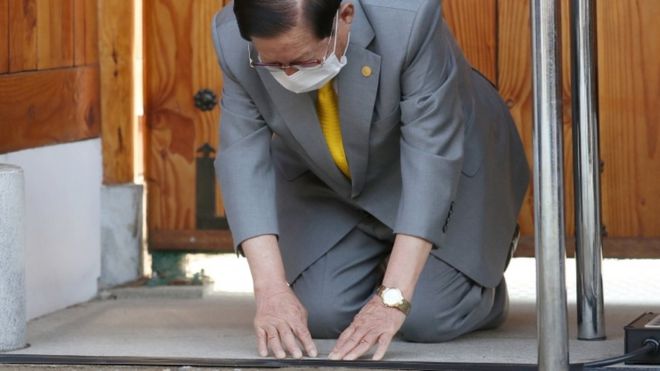
Image copyright EPAImage caption Lee Man-hee is the founder of the Shincheonji Church
The head of the religious sect that has been at the centre of the coronavirus outbreak in South Korea has apologised to the nation for the disease’s spread.
Lee Man-hee, the leader of the Shincheonji Church of Jesus, got on his knees and bowed at a news conference.
About 60% of the country’s more than 4,000 confirmed cases are sect members.
On Monday, South Korea – the biggest hotspot outside China – reported 476 new cases, bringing the total number to 4,212. It has recorded 26 deaths.
Prosecutors have been asked to investigate Mr Lee on possible charges of gross negligence.
“Although it was not intentional, many people have been infected,” said the 88-year-old leader. “We put our utmost efforts, but were unable to prevent it all.”
Media caption Empty shelves as coronavirus ‘panic-buying’ hits Australia
Of the confirmed cases, 3,081 are from the southern city of Daegu and 73% of these cases have been linked to the Shincheonji Church near there.
In the capital Seoul, the mayor urged the city’s 10 million residents to work from home and to avoid crowded places.
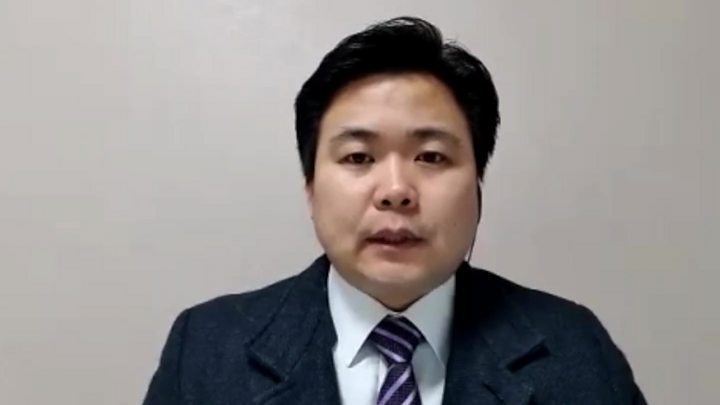
But church spokesman Kim Shin-chang told the BBC they had provided a list of members, students, and buildings to authorities.
“We were worried about releasing this information because of the safety of our members,” Mr Kim said.
Media caption ‘We’re often persecuted’: Spokesman for virus-hit S Korean church defends secrecy
Mr Lee claims he is the second coming of Jesus Christ and identifies as “the promised pastor” mentioned in the Bible who will take 144,000 people to heaven with him.
The Shincheonji Church is labelled as a cult within South Korea and also in the Christian community, which results in the group often being discriminated against, persecuted or criticised, Mr Kim told the BBC.
What’s the global situation?
The number of people killed worldwide by the coronavirus has exceeded 3,000, as China reported 42 more deaths. More than 90% of the total deaths are in Hubei, the Chinese province where the virus emerged late last year.
But there have also been deaths in 10 other countries, including more than 50 in Iran and more than 30 in Italy.
Worldwide, there have been almost 90,000 confirmed cases, with the numbers outside China now growing faster than inside China.
In other developments:
In the UK, where there are 36 confirmed cases, Prime Minister Boris Johnson has called a meeting of the emergency Cobra committee on Monday
Indonesia – one of the world’s most populous countries – has announced its first confirmed cases of coronavirus, a 64-year-old woman and her 31-year-old daughter, currently being treated at a Jakarta hospital
Iceland and Andorra also reported their first confirmed cases on Monday
Share prices in Asia and in Europe rose after central banks pledged to intervene to help protect markets from the impact of the coronavirus. Concerns about the outbreak last week wiped more than $5tn (£3.9tn) from global stocks
US sportswear giant Nike has closed its European headquarters in Hilversum city in the Netherlands after an employee tested positive for the virus
In the European hotspot of Italy, the number of infections doubled in 48 hours, the head of the country’s civil protection body said on Sunday.
There have been at least 34 deaths and 1,694 confirmed cases. Amazon said two of its employees in Italy have the virus and are under quarantine.
Countries including Qatar, Ecuador, Luxembourg and Ireland all confirmed their first cases over the weekend. On Monday, Ecuador reported five new cases of the disease, bringing the total number of infected patients in the country to six.
The US state of New York has also confirmed its first case. The patient is a woman in her 30s who contracted the virus during a recent trip to Iran. Two people have died in the US, both in the state of Washington.
A spokesman from China’s National Health Commission said the next stop would be to “focus on the risks brought by the resumption of work”.
China’s economy has taken a hit – with factory activity falling at a record rate.
On Monday, a man was sentenced to death by a Chinese court for fatally stabbing two officials at a virus checkpoint, news agency AFP reported.
Ma Jianguo, 23, refused to co-operate with officials – though it is not clear what he was told to do – and stabbed two checkpoint officials.
What has the WHO said?
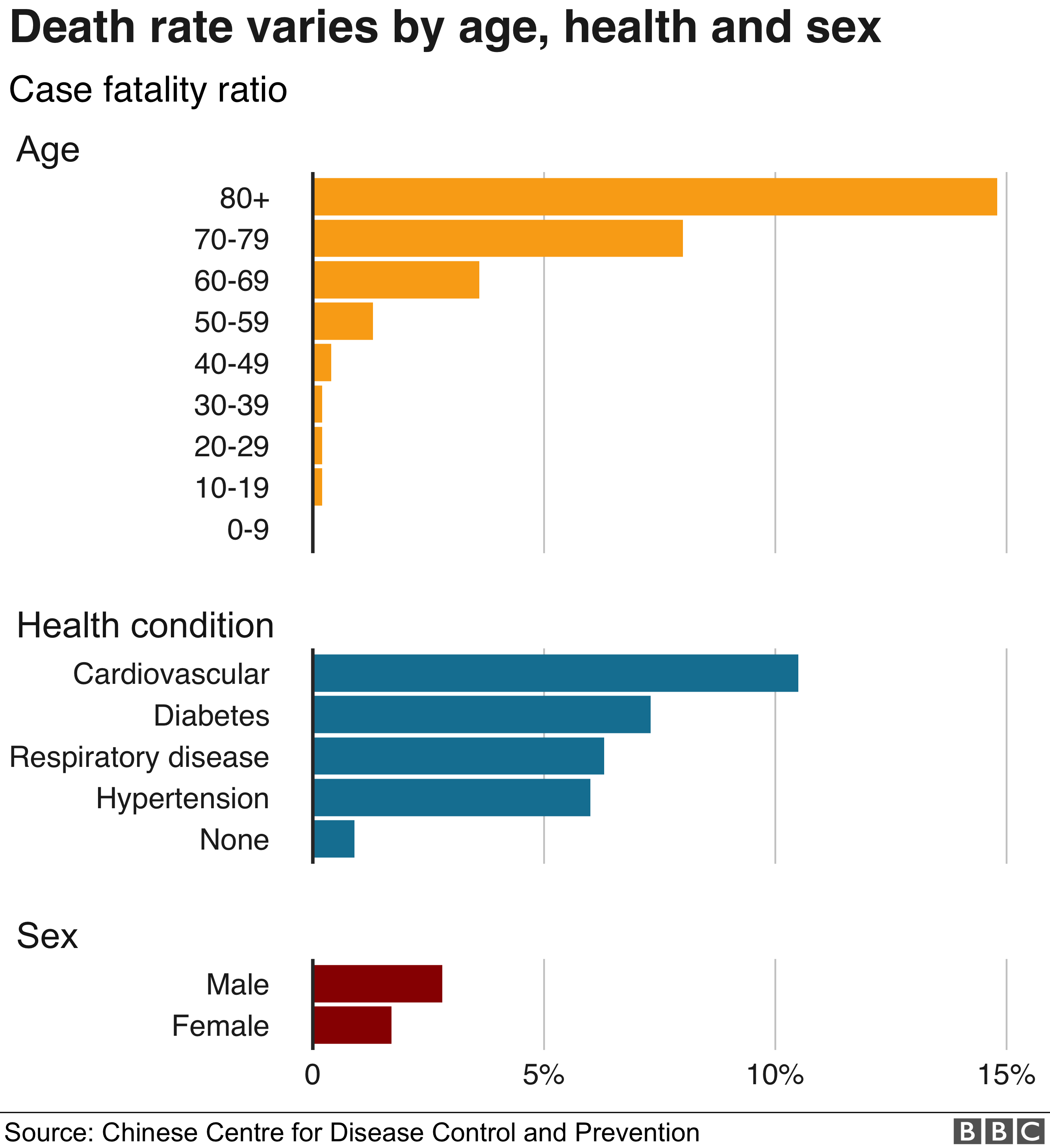
On Sunday, the World Health Organization (WHO) said the virus appears to particularly affect those over 60, and people already ill.
It urged countries to stock up on ventilators, saying “oxygen therapy is a major treatment intervention for patients with severe Covid-19”.
In the first large analysis of more than 44,000 cases from China, the death rate was 10 times higher in the very elderly compared to the middle-aged.
But most patients have only mild symptoms and the death rate appears to be between 2% and 5%, the WHO said.
By comparison, the seasonal flu has an average mortality rate of about 0.1%, but is highly infectious – with up to 400,000 people dying from it each year.
Other strains of coronavirus, such as Severe Acute Respiratory Syndrome (Sars) and Middle East Respiratory Syndrome (Mers), have much higher death rates than Covid-19.
The US invaded Afghanistan weeks after the September 2001 attacks in New York by the Afghanistan-based al-Qaeda group.
More than 2,400 US troops have been killed during the conflict. About 12,000 are still stationed in the country. President Trump has promised to put an end to the conflict.
What happened in Doha?
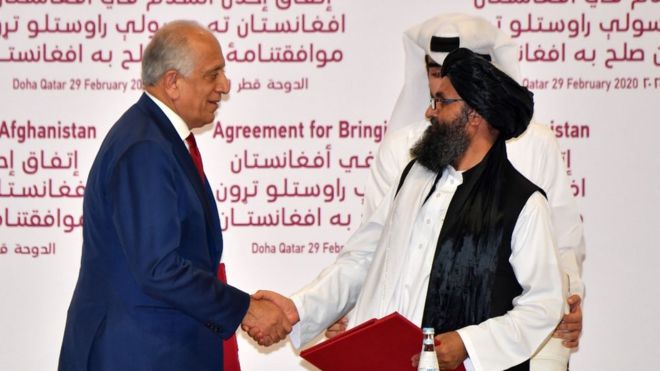
The deal was signed by US special envoy Zalmay Khalilzad and Taliban political chief Mullah Abdul Ghani Baradar with Mr Pompeo as a witness.
In a speech, Mr Pompeo urged the militant group to “keep your promises to cut ties with al-Qaeda”.
Meanwhile US Defence Secretary Mark Esper was in the Afghan capital Kabul alongside Afghanistan’s President Ashraf Ghani – whose government did not take part in the US-Taliban talks.
Mr Esper said: “This is a hopeful moment, but it is only the beginning. The road ahead will not be easy. Achieving lasting peace in Afghanistan will require patience and compromise among all parties.” He said the US would continue to support the Afghan government.
What’s in the agreement?
Within the first 135 days of the deal the US will reduce its forces in Afghanistan to 8,600, with allies also drawing down their forces proportionately.
The move would allow US President Donald Trump to show that he has brought troops home ahead of the US presidential election in November.
The deal also provides for a prisoner swap. Some 5,000 Taliban prisoners and 1,000 Afghan security force prisoners would be exchanged by 10 March, when talks between the Taliban and the Afghan government are due to start.
The US will also lift sanctions against the Taliban and work with the UN to lift its separate sanctions against the group.
Landmark deal rife with uncertainties
This historic deal has been years in the making, as all sides kept seeking advantage on the battlefield.
The agreement is born of America’s determination to bring troops home and a recognition, at least by some Taliban, that talks are the best route to return to Kabul.
It’s a significant step forward, despite deep uncertainty and scepticism over where it will lead. When the only alternative is unending war, many Afghans seem ready to take this risk for peace.
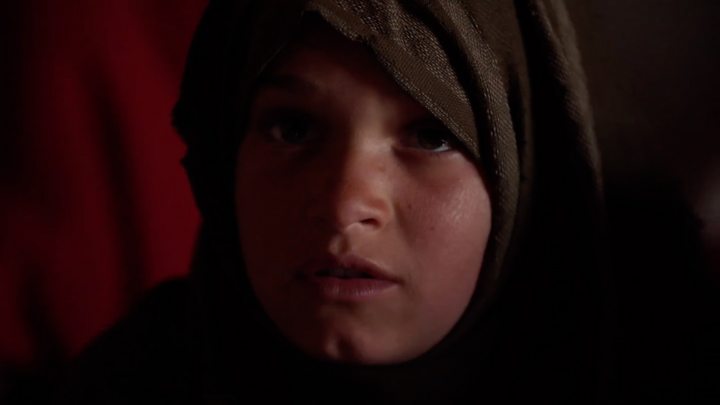
Taliban leaders say they’ve changed since their harsh rule of the 1990s still seared in the memory of many, and most of all Afghan women.
This process will test the Taliban, but also veteran Afghan leaders of the past, and a new generation which has come of age in the last two decades and is hoping against hope for a different future.
How did US-Taliban talks come about?
Since 2011, Qatar has hosted Taliban leaders who have moved there to discuss peace in Afghanistan. It has been a chequered process. A Taliban office was opened in 2013, and closed the same year amid rows over flags. Other attempts at talks stalled.
In December 2018, the militants announced they would meet US officials to try to find a “roadmap to peace”. But the hard-line Islamist group continued to refuse to hold official talks with the Afghan government, whom they dismissed as American “puppets”.
Media caption The view from Lashkar Gah province on whether peace with the Taliban is possible
Following nine rounds of US-Taliban talks in Qatar, the two sides seemed close to an agreement.
Washington’s top negotiator announced last September that the US would withdraw 5,400 troops from Afghanistan within 20 weeks as part of a deal agreed “in principle” with Taliban militants.
Days later, Mr Trump said the talks were “dead”, after the group killed a US soldier. But within weeks the two sides resumed discussions behind the scenes.
A week ago the Taliban agreed to a “reduction of violence” – although Afghan officials say at least 22 soldiers and 14 civilians have been killed in Taliban attacks over that period.
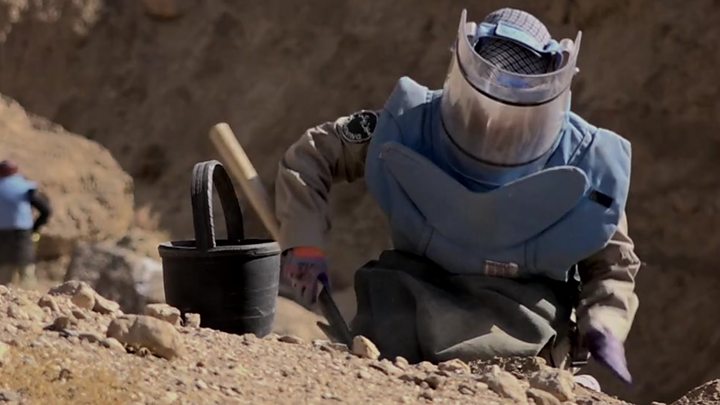
Media caption Meet Fatima and Fiza, some of the women removing landmines in Afghanistan
It began when the US launched air strikes one month following the 11 September 2001 attacks and after the Taliban had refused to hand over the man behind them, Osama bin Laden.
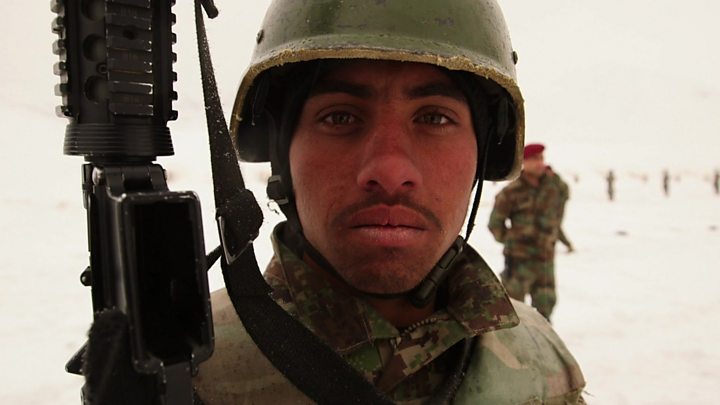
Media caption Tens of thousands of Afghan soldiers have been killed and injured. This is their story
The US was joined by an international coalition and the Taliban were quickly removed from power. However, they turned into an insurgent force and continued deadly attacks, destabilising subsequent Afghan governments.
The international coalition ended its combat mission in 2014, staying only to train Afghan forces. But the US continued its own, scaled-back combat operation, including air strikes.
The Taliban has however continued to gain momentum and last year the BBC found they were active across 70% of Afghanistan.
Media caption Zan TV presenter Ogai Wardak: “If the Taliban come, I will fight them”
Nearly 3,500 members of the international coalition forces have died in Afghanistan since the 2001 invasion.
The figures for Afghan civilians, militants and government forces are more difficult to quantify. In a February 2019 report, the UN said that more than 32,000 civilians had died. The Watson Institute at Brown University says 58,000 security personnel and 42,000 opposition combatants have been killed.
Why has the war lasted so long?
There are many reasons for this. But they include a combination of fierce Taliban resistance, the limitations of Afghan forces and governance, and other countries’ reluctance to keep their troops for longer in Afghanistan.
At times over the past 18 years, the Taliban have been on the back foot. In late 2009, US President Barack Obama announced a troop “surge” that saw the number of American soldiers in Afghanistan top 100,000.
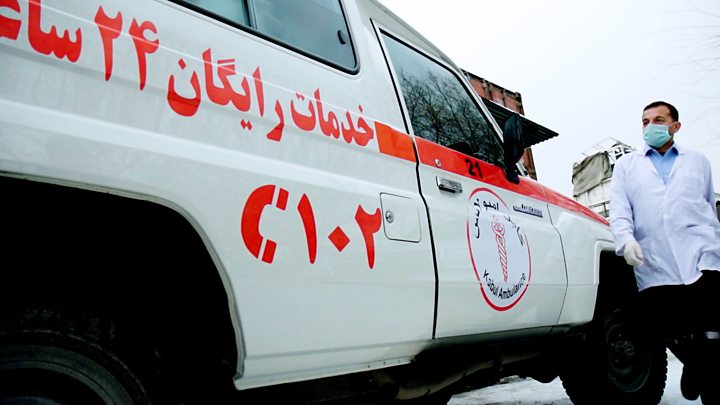
Media caption The BBC was given exclusive access to spend a week with ambulance workers in Afghanistan.
The surge helped drive the Taliban out of parts of southern Afghanistan, but it was never destined to last for years.
The BBC World Service’s Dawood Azami says there are five main reasons the war is still going on now. They include:
a lack of political clarity since the invasion began, and questions about the effectiveness of the US strategy over the past 18 years
the fact each side is trying to break what has become a stalemate – and that the Taliban have been trying maximise their leverage during peace negotiations
an increase in violence by Islamic State militants in Afghanistan – they’ve been behind some of the bloodiest attacks recently
There’s also the role played by Afghanistan’s neighbour, Pakistan.
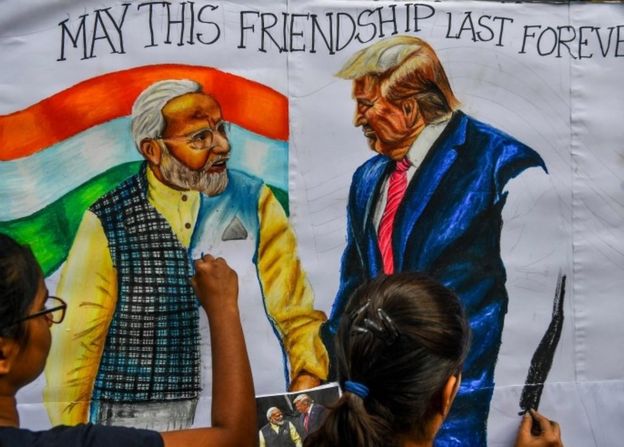
Image copyright GETTY IMAGESImage caption Mr Trump is making his first official visit to India
US President Donald Trump is expecting a raucous welcome on his first official state visit to India on Monday and Tuesday.
He follows a long line of leaders who have made the journey. Some of his predecessors were greeted enthusiastically; others stumbled through diplomatic gaffes; one even had a village named after him.
Can history be a guide to how this diplomatic tryst might go? Here’s a brief look at past visits, ranked in order of how they went.
The good: President Eisenhower
Let’s begin at the beginning.
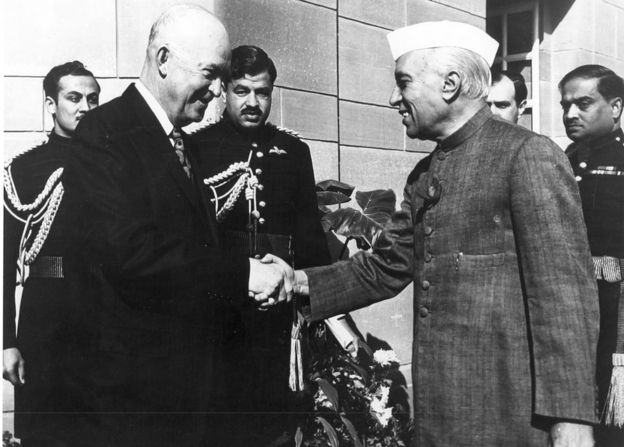
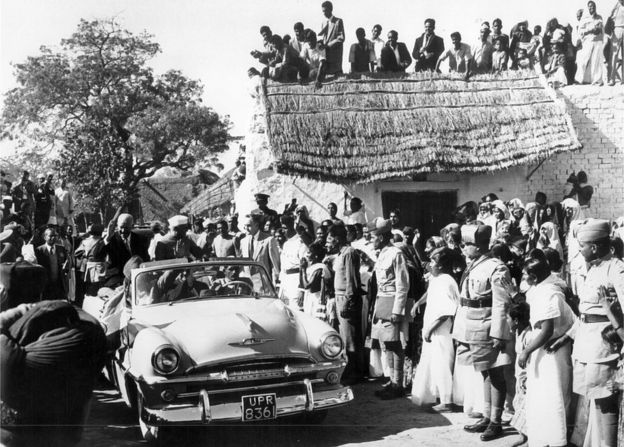
Dwight D Eisenhower, the first US president to visit India, was greeted with a 21-gun salute when he landed in the national capital, Delhi, in December 1959. Huge crowds lined the streets to catch a glimpse of the World War Two hero in his open-top car – Mr Trump is expecting a similar reception in Ahmedabad city, where he will be doing a road show.
Image copyright US EMBASSY ARCHIVESImage caption Dwight D Eisenhower, pictured with Prime Minister Jawaharlal Nehru, was the first US president to make the trip
The warmth between President Eisenhower and Indian Prime Minister Jawaharlal Nehru helped during what was a rocky phase in US-India ties. This was early in the Cold war, when the US and Pakistan had become become close allies, and India insisted on staying neutral or “non-aligned”. Like today, relations with China were at the core of the India-US equation, with Washington pressuring Delhi to take an aggressive stance with Beijing on the issue of Tibet.
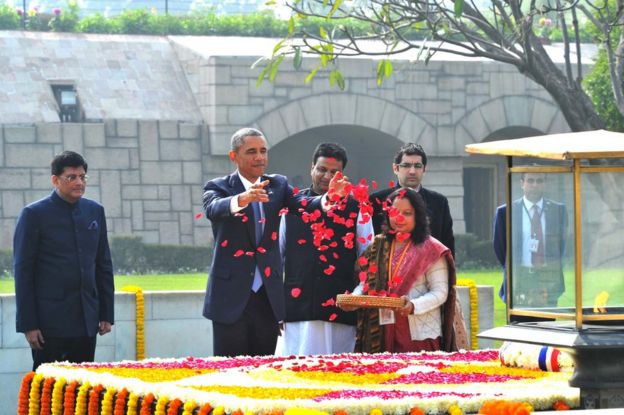
But, on the whole, Eisenhower’s four-day trip was billed a success. And nearly every US president on a state visit to India has emulated his itinerary: he laid flowers at Mahatma Gandhi’s memorial, took in the splendour of the Taj Mahal, addressed parliament and spoke at Delhi’s iconic Ramlila grounds, which, according to one news report, attracted one million people.
When he left, Nehru said he had taken with him “a piece of our heart”.
Image copyright US EMBASSY ARCHIVESImage caption President Eisenhower was greeted by large crowdsThe game-changer: Bill Clinton
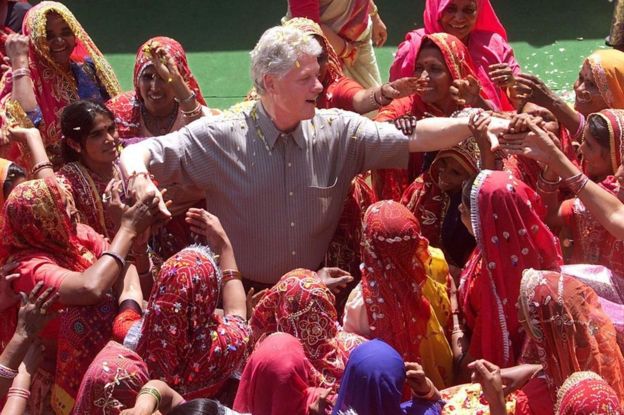
If there was a game-changing visit, it would be Bill Clinton’s in March 2000 with Prime Minister Atal Bihari Vajpayee. Mr Clinton’s arrival came after a two-decade lull – neither Ronald Reagan nor George Bush Snr made the journey East. It came at a tricky time as Washington had imposed sanctions on Delhi following its 1999 test of a nuclear bomb.
But, according to Navtej Sarna, a former Indian Ambassador to the US, the five-day trip was “a joyous visit”. It included stops in Hyderabad, a southern city that was emerging as a tech hub, and Mumbai, India’s financial capital. “He came and saw the economic and cyber potential of India, and democracy in action,” says Mr Sarna.
Image copyright GETTY IMAGESImage caption Bill Clinton’s visit was described as “joyous”Mr Clinton also danced with villagers, took a tiger safari and sampled Delhi’s famously creamy black dal (lentils) at a luxury hotel that has since been associated with the president.
The country’s reaction is perhaps best expressed in this New York Times headline: “Clinton fever – a delighted India has all the symptoms.”
The nuclear deal: George W Bush
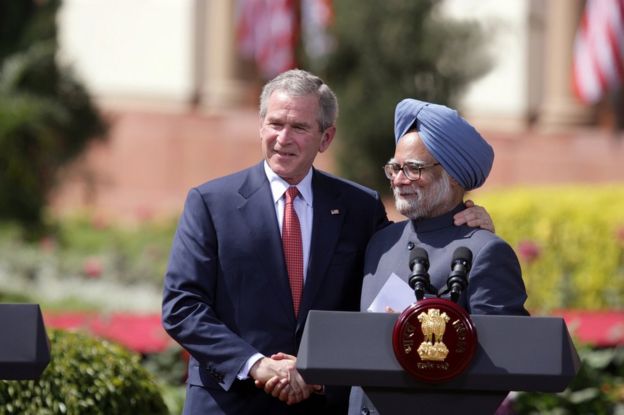
George W Bush, as Forbes magazine once put it, was the “best US president India’s ever had”. His three-day visit in March 2006 was a highlight in the two countries’ strategic relationship – especially in matters of trade and nuclear technology, subjects they have long wrangled over. His strong personal dynamic with Prime Minister Manmohan Singh was hard to miss – after he left office, Mr Bush, a keen artist, even painted a portrait of Mr Singh.
The two leaders are credited for a historic but controversial nuclear deal, which was signed during Mr Bush’s visit. It brought India, which had for decades refused to sign the Nuclear Non-Proliferation Treaty (NPT), out of isolation. Energy-hungry India got access to US civil nuclear technology in exchange for opening its nuclear facilities to inspection.
Image copyright US EMBASSY ARCHIVESImage caption George W Bush and Manmohan Singh had a very good relationshipHowever, while the visit was substantive, it was not as spectacular as others – there was no trip to the Taj, nor an address to parliament. But the timing was important. Anti-US sentiment over the invasion of Iraq was running high – left-wing MPs had staged a protest against Mr Bush’s visit, and there were demonstrations in other parts of India.
Double visit: Barack Obama
Barack Obama was the only president to make two official visits. First, in 2010 with Prime Minister Manmohan Singh, and then in 2015 with Prime Minister Narendra Modi.
On his first visit – in a break from the past – he landed in Mumbai, instead of Delhi, with a large trade delegation. This was not just about economic ties but a show of solidarity following the Mumbai terror attacks of 2008, which killed 166 people. Mr and Mrs Obama even stayed at the Taj Mahal hotel, one of the main targets.
It was significant that the US president declared support for India to join a reformed and expanded UN Security Council, says Alyssa Ayres, a former US deputy assistant secretary of state for South Asia. “That all these years later nothing has changed in the UN system is another matter, but that was a major policy shift for the United States.”
Image copyright US EMBASSY ARCHIVESImage caption Barack Obama visited India twiceMr Obama returned in 2015 as chief guest at India’s Republic Day celebrations, at PM Modi’s invitation. Trade, defence and climate change were at the heart of the talks. The trip also emphasised an Indo-Pacific strategy, where both leaders expressed unease over Beijing’s provocations in the South China Sea.
The not-so-good: Jimmy Carter
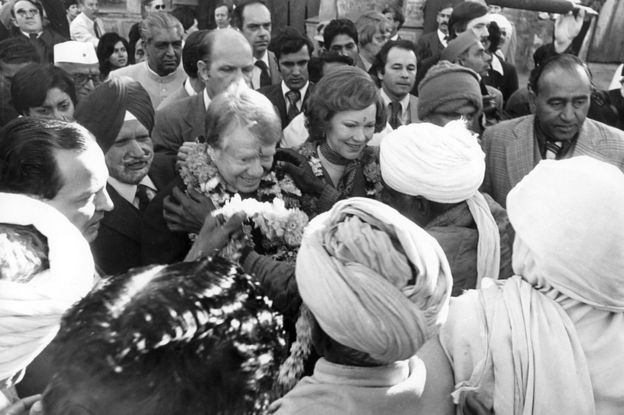
Although Jimmy Carter’s two-day visit in 1978 was a thaw in India-US relations, it was not free of hiccups.
With some 500 reporters in tow, Carter followed a packed itinerary: he met Prime Minister Morarji Desai, addressed a joint session of parliament, went to the Taj Mahal, and dropped by a village just outside Delhi.
The village, Chuma Kheragaon, had a personal connection: Carter’s mother, Lillian, had visited here when she was in India as a member of the Peace Corps in the late 1960s. So when Carter and his wife, Rosalynn, made the trip, they gave the village money and its first television set. It was even renamed “Carterpuri”, a moniker it still holds.
Image copyright US EMBASSY ARCHIVESImage caption Jimmy Carter being greeted by villagers of ‘Carterpuri’But beyond the photo-ops, India and the US were sparring. India was building its nuclear programme, and had conducted its first test in 1974. The US wanted India to sign the NPF, which sought to stop the spread of nuclear weapons. But India refused, saying the agreement discriminated against developing countries.
In a leaked conversation that made headlines and threatened to derail the visit, Mr Carter promised his Secretary of State, Cyrus Vance, a “very cold and very blunt” letter to Desai. The two leaders signed a declaration, promising greater global co-operation, but Carter left India without the assurances he had hoped for.
The ugly: Richard Nixon
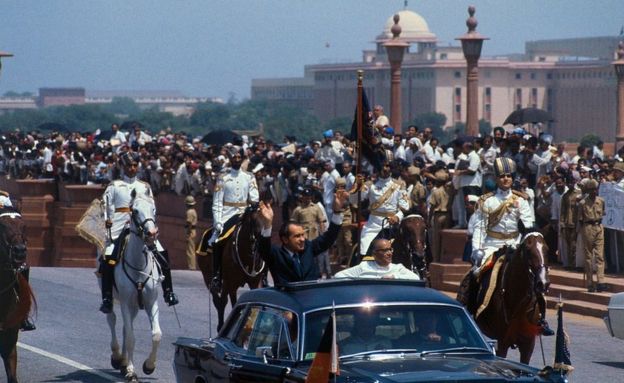
Richard Nixon was no stranger to India when he arrived in August 1969 for a day-long state visit. He had been here as vice-president in 1953, and before that on personal trips. But, by all accounts, he wasn’t a fan.
“Nixon disliked Indians in general and despised [Prime Minister] Indira Gandhi,” according to Gary Bass, author of Blood Telegram: Nixon, Kissinger and a Forgotten Genocide. And, he adds, the feeling was said to be mutual.
This was also at the height of the Cold War, and India’s non-alignment policy “appalled” American presidents. Mr Bass says that under Gandhi, India’s neutrality had turned into a “noticeably pro-Soviet foreign policy”.
Image copyright GETTY IMAGESImage caption Richard Nixon waves to the crowds alongside Mohammad Hidyatullah, India’s acting presidentThe relationship only turned frostier after the trip as India backed Bangladesh (then East Pakistan) in its fight for independence from Pakistan, a close American ally. The differences were laid bare when Gandhi visited the White House in 1971. Declassified state department cables later revealed that Nixon referred to her as an “old witch”.
And the future: Donald Trump
The US and India have certainly had their ups and downs, but during the last official visit in 2015, Mr Obama and Mr Modi signed a declaration of friendship: “Chalein saath saath (Let’s move forward together)…” it began.
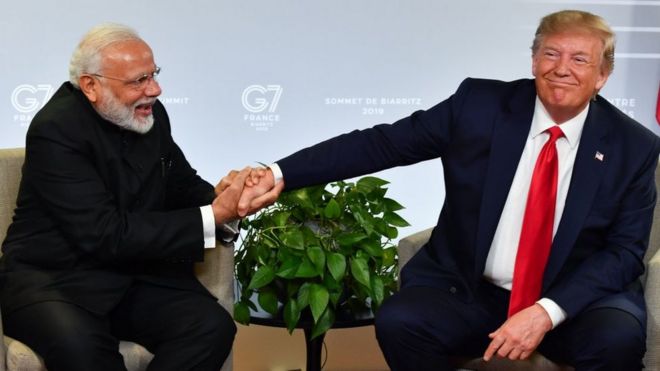
President Trump’s visit will take the relationship forward, but it’s unclear how.
Image copyright AFP
His arrival in Ahmedabad, the main city in PM Modi’s home state of Gujarat, followed by a big arena event, is expected to draw a massive crowd. It will echo President Eisenhower’s rally in Delhi years ago, perhaps cementing the personal ties between the two leaders.
But while Mr Trump’s trip will be packed with pageantry, it could be light on policy. Unlike other presidential visits, this one is not expected to yield concrete agreements, with the trade deal Mr Trump so badly wants looking unlikely.
The authorities suspect the current outbreak in South Korea originated in Cheongdo, pointing out that a large number of sect followers attended a funeral of the founder’s brother from 31 January to 2 February.
On Friday, a second person who contracted the coronavirus died.
The victim was a woman in her 50s. She died in the south-western city of Busan after being transferred there from a hospital in a nearby country, according to Yonhap news agency.
Reports say she had earlier been a patient at the same mental hospital in Cheongdo as the country’s first victim – an elderly man. Another 15 patients there have also tested positive.
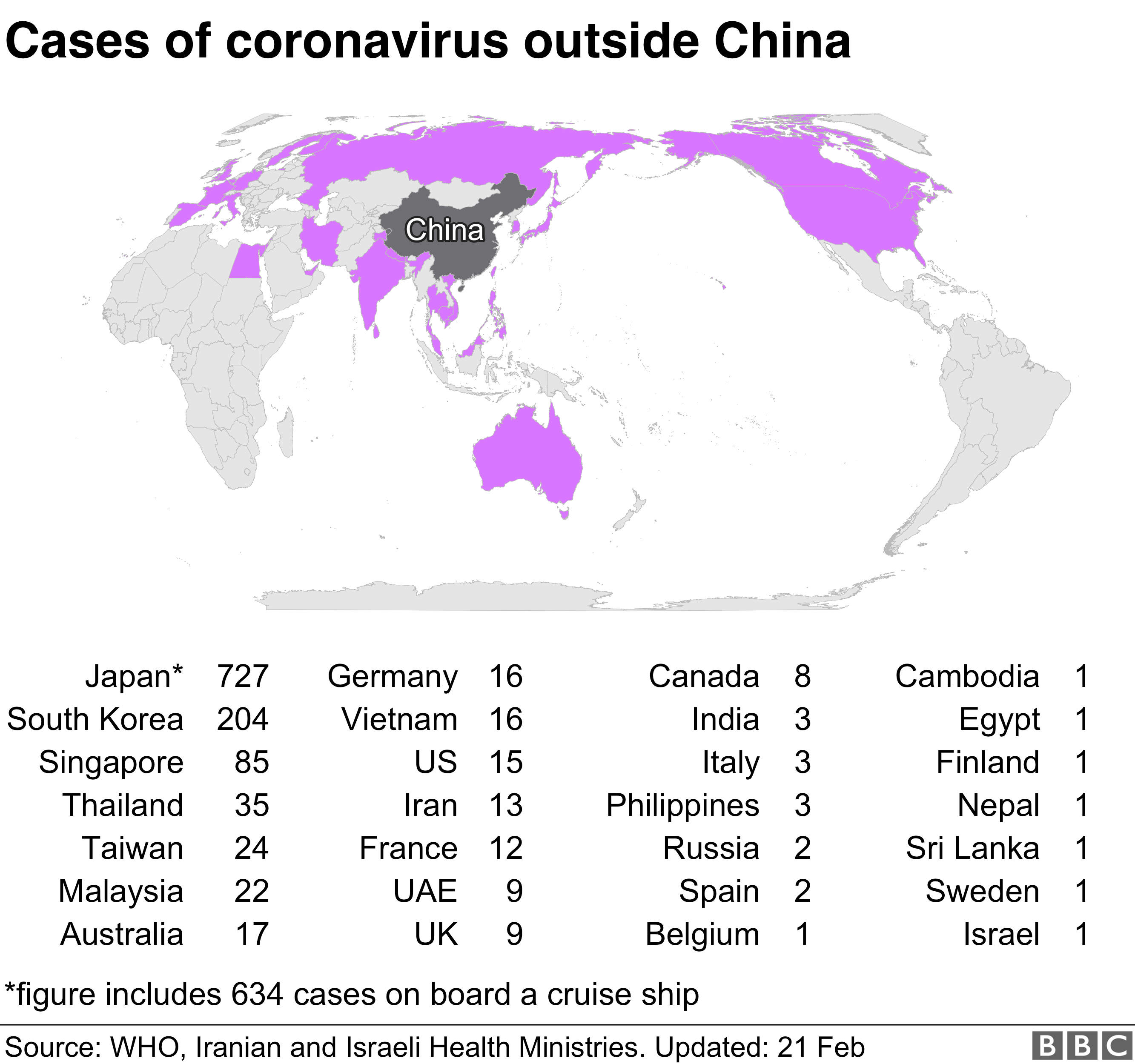
On Thursday, 53 new cases were reported. South Korea now has a total of 204 cases making it the largest cluster outside mainland China and the cruise ship docked off Japan.
The new virus, which originated last year in Hubei province in China, causes a respiratory disease called Covid-19.
What measures are being taken?
From the 100 new cases reported on Friday, 86 were in Daegu, a city 300km (186 miles) south-east of the capital Seoul, and nearly all of those were from a cluster involving the religious sect.
Image copyright AFPImage caption South Korea is trying hard to stop the local spread of the new coronavirus
Reacting to the quickly deteriorating situation, the government promised swift measures to prevent further spread of the virus.
“It is urgent to find people who have contacted infected people and cure patients,” PM Chung said, according to Yonhap.
He said the government was readying resources like sickbeds, medical equipment and health workers and warned the virus was now spreading locally.
“The government has so far focused on curbing infections coming from outside the country. From now on, the government will further prioritise preventing the virus from spreading locally.”
Health Minister Park Neung-hoo said authorities would allow hospitals to isolate respiratory patients from others in an effort to prevent any spread within medical institutions.
He also said that all pneumonia patients in Daegu hospitals would be checked for the virus.
What happened in Daegu?
The city’s biggest cluster appears to be at a branch of a religious sect which calls itself the Shincheonji Church of Jesus, Temple of the Tabernacle of the Testimony.
South Korean health officials believe these infections are linked to a 61-year-old woman who tested positive for the virus earlier this week.
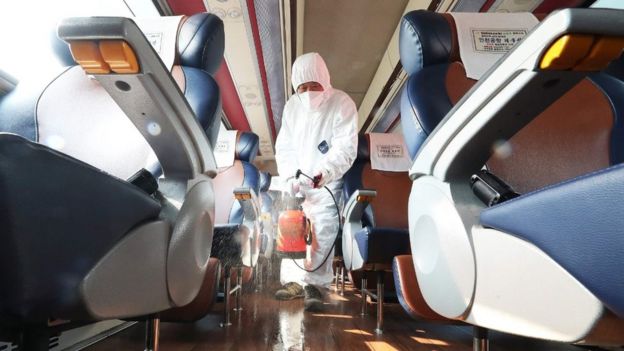
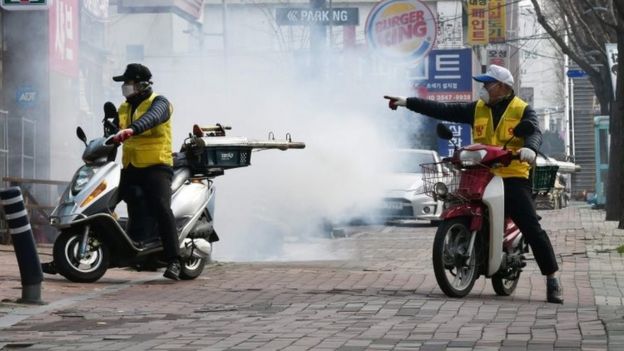
Image copyright AFP/GETTY IMAGESImage caption Workers have been disinfecting the streets of Daegu, South Korea’s fourth-largest city
The Shincheonji, which has been accused of being a cult, said it had now shut down its Daegu branch and that services in other regions would be held online or individually at home.
As of Friday, more than 400 members of the church were showing symptoms of the disease, though tests were still ongoing, the city mayor said.
Can we answer your question on the coronavirus?
Here’s what others have been asking
Once you’ve had coronavirus, will you be immune?
Could the coronavirus become a pandemic?
Is the coronavirus worse than flu or Sars?
Daegu is the country’s fourth-largest city, with a population of 2.5 million people.
Residents are now being asked to remain at home after authorities described the church cluster as “super-spreading event”.
Hand sanitizers and warning signs
By Hyung Eun Kim, BBC Korean Service, Seoul
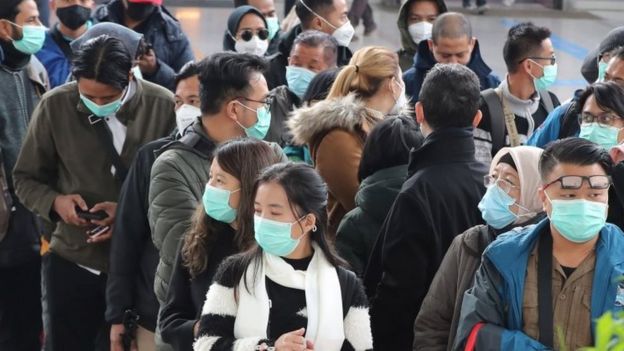
Many people in South Korea are wearing masks on a daily basis.
Hand sanitizers have been placed at public transport stops and building entrances.
Warning government signs are everywhere. They say: “Three ways to prevent further infection: wear a mask at all times; wash your hands properly with soap for more than 30 seconds; and cover yourself when coughing.”
Image copyright EPAImage caption New norm: Mask-wearing crowd in Seoul
Koreans have also developed several apps and websites that tell you how much risk you face where you are. They show where the infected people are within a 10km radius.
“I can’t miss work, what I can do is minimise contact with others and stay at home during the weekend,” Seung-hye Lim, a Seoul resident, told the BBC.
“I do wonder if we reacted too laxly initially or if it really is because of the specific service practices of the Shincheonji sect.”
So-young Sung, a mother of two in Seoul, told the BBC: “It feels like my daily life is collapsing.”
She said she was struggling to find pharmacies that had masks.
She added that checking coronavirus-related alarms from her children’s schools and kindergartens was now a daily routine for her.
What about China and elsewhere?
The latest figures from China put the death toll from the disease at 2,236 people and total infections at more than 75,000.
The virus has now hit the country’s prison system, with more than 500 inmates confirmed infected.
Senior officials have already been sacked for mishandling management of the outbreak.
The virus has also spread around the globe with more than 1,000 cases and several deaths in the rest of Asia, in Europe, the Middle East, the US and Africa.
On Friday, Iran confirmed 13 new cases, saying that two of those infected had died.
Health ministry official Minou Mohrez was quoted by the state-run Iran news agency as saying the coronavirus has spread to several cities, including the capital Tehran.
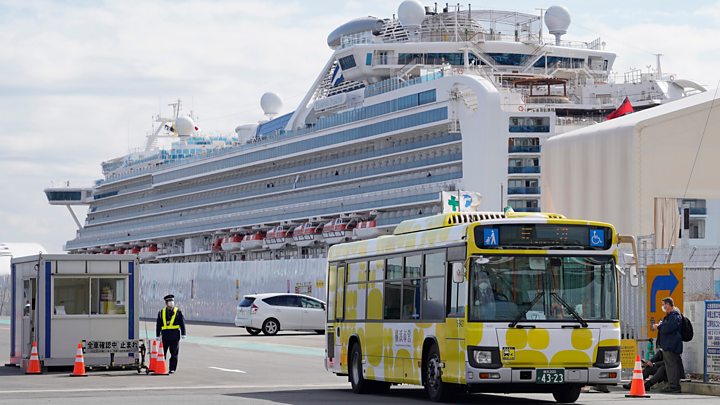
South Korea is now the worst affected country after mainland China and the more than 600 infections on a cruise ship docked in Japan.
Media caption Coronavirus: Quarantined passengers released from Japan ship
Passengers of the Diamond Princess who have tested negative continue to disembark the ship in Yokohama after more than 14 days quarantined on board.
More than 150 Australian passengers have been evacuated from the ship and have already arrived in Darwin, where they will begin two more weeks of quarantine.
Australian officials said on Friday that six people had reported feeling unwell on arrival in Darwin and were immediately tested.
Two of those people tested positive despite having received negative tests before leaving Japan.
The first batch of people from Hong Kong have also flown back to the city, where they will similarly be quarantined.
A government task force has estimated a US$5 billion loss if Chinese students – angered and frustrated by the ban – cannot enrol for university
The tourism sector is also likely to be hit by restrictions on travel from the mainland as Chinese visitors spend about U$8 billion in Australia each year
Some 150,000 Chinese nationals are enrolled at Australian universities, making up around 11 per cent of the student population. Photo: Shutterstock
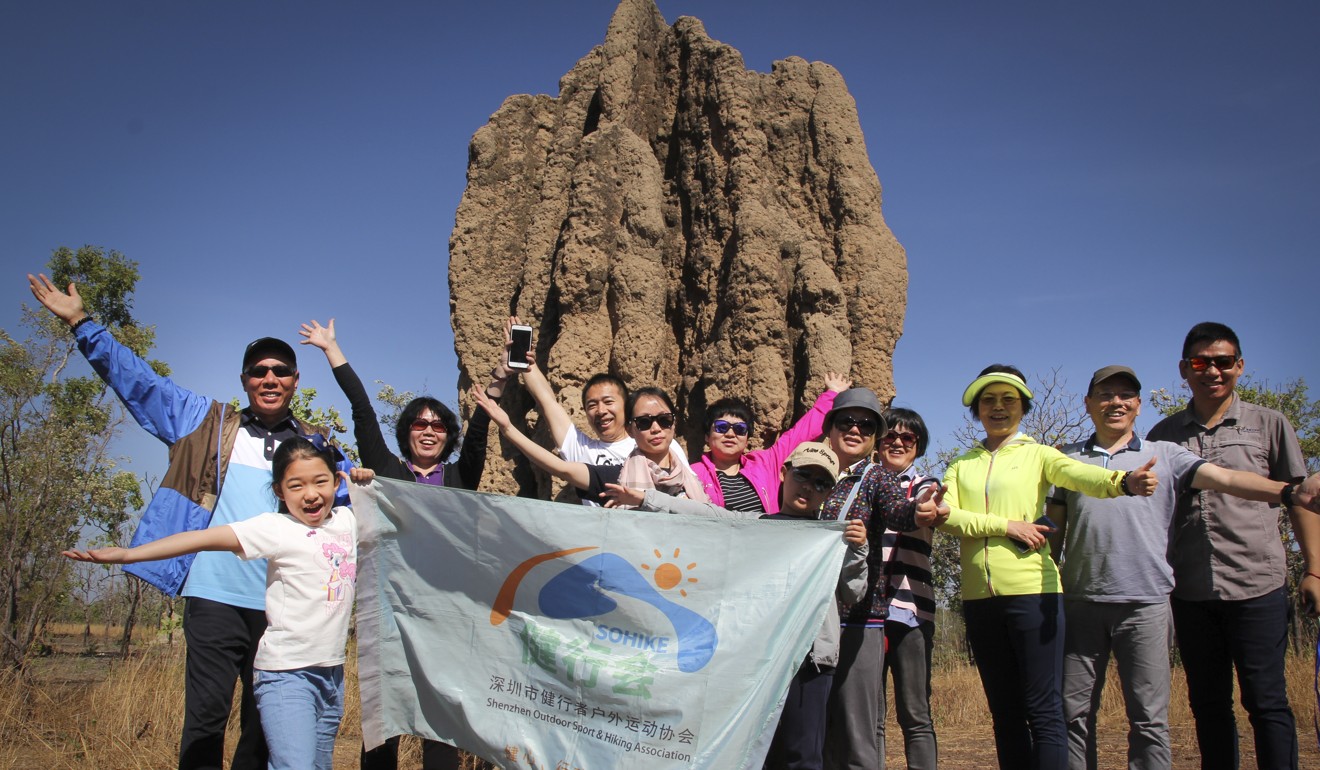
Abbey Shi knows first hand the anger and frustration felt by Chinese students left stranded by the Australian government’s decision to ban travel from the mainland in response to the coronavirus outbreak.
Shi, general secretary of the Students’ Representative Council at the University of Sydney, is in contact with more than 2,000 Chinese students who went home for the Lunar New Year holiday and now cannot return to Australia with just weeks to go until the start of the new academic year.
“There is a lot of confusion about the ban and anger towards the government,” said Shi, an international student from Shanghai. Currently in Australia, she is sharing information with the stranded students via WeChat.
How to beat the coronavirus? Re-creating it in Singapore, Australia is vital first step
3 Feb 2020
“The education sector in Australia is being commercialised and students are being treated like cash cows,” she said. “Universities don’t care about our affected career path, life, tenancy issues, our pets at home.”
Prime Minister Scott Morrison on Saturday announced that non-citizens – excluding permanent residents and their immediate family members – who arrived from or passed through mainland China within the previous 14 days would be denied entry to Australia as part of efforts to halt the spread of the coronavirus, which was first detected in December in the Chinese city of Wuhan.
Other countries including the United States, Singapore and the Philippines have introduced similar travel restrictions in response to the outbreak, which has sickened more than 19,000 people in at least 26 countries and territories outside mainland China and claimed 425 lives.
The travel ban, which is due to be reviewed on February 15, has upended the plans of numerous Chinese students who were due to begin or return to their studies from late February following the summer break.
Tony Yan, a mathematics undergraduate at Australian National University (ANU), said he had been left out of pocket for several weeks’ rent after being stranded in his home province of Jiangsu, but hoped he could return before classes started on February 24.
“I think the Australian government should have given a few days earlier notice,” Yan said. “I haven’t paid the tuition yet, many others haven’t as well.”
About 150,000 Chinese nationals are enrolled at Australian universities, making up around 11 per cent of the student population – a far greater proportion than in Britain and the United States, which came in at 6 per cent and 2 per cent respectively, in a 2017 report from an Australian think tank.
Coronavirus: Australia evacuates 243 people from China as deaths mount
3 Feb 2020
ANU Vice-Chancellor Brian Schmidt on Saturday described the travel ban as “disappointing”, pledging that the university would be “generous and flexible in supporting our students” through the coming weeks.
Monash University in Melbourne has delayed the start of its academic year, while other universities are exploring options such as online tuition and intensive summer courses.
Australian universities, some of which rely on Chinese students for nearly one-quarter of their revenue, are bracing to take a major financial hit due to the ban.
Phil Honeywood, the head of a government task force initially set up to manage the reputation of Australia’s international education sector in the wake of the country’s bush fires crisis, on Sunday warned the ban could cost universities A$8 billion (US$5.34 billion) if Chinese students could not enrol for the first semester of the year.
Coronavirus: what we know so far about the outbreak spreading in China and abroad
Education minister Dan Tehan on Monday met with peak body Universities Australia to discuss ways to minimise fallout for the sector.
“Australia will remain an attractive study destination for Chinese students, but it may take several years for Chinese student numbers to recover,” said Salvatore Babones, associate professor at the University of Sydney and adjunct scholar at the Centre for Independent Studies. “Students who are already in the middle of a degree are likely to return at the first possible opportunity, even at the cost of missing one semester, but students who have not yet started may make other plans.”
But ANU tertiary education expert Andrew Norton said there remained too many unknowns, including the number of Chinese students stranded abroad, to gauge the impact of the ban.
How the coronavirus spread anti-Chinese racism like a disease through Asia
17 Feb 2020
“This travel ban is a short-term policy to minimise the risk of disease spreading, which would be a more serious problem than a disruption to university timetables,” he said. “One of Australia’s major [education] competitors – the US – has a similar policy, and due to travel restrictions within China and the cancelling of commercial flights to and from China Australia’s competitors are unlikely to be able to take advantage.”
Norton noted that the sector had weathered previous outbreaks such as the 2003 outbreak of severe acute respiratory syndrome (Sars), and “although there were sometimes short-term dips in numbers, none of them have changed the long-term trend towards growth”.
The ban has also sent jitters throughout the tourism industry, which relies on Chinese visitors for a quarter of international spending. Nearly 1.5 million
visited Australia in 2018-19, Australian Bureau of Statistics records show, accounting for about one in eight arrivals.
Nearly 1.5 million Chinese nationals visited Australia in 2018-19, according to Australian Bureau of Statistics records. Photo: SCMP / Alkira Reinfrank
With Chinese tourists spending about A$12 billion (US$8 billion) in Australia each year, according to Tourism Research Australia, every month the travel ban remains in place could amount to billion-dollar losses for the sector.
Tourism Tropical North Queensland on Monday said the outbreak had already cost operators for Cairns and the Great Barrier Reef 25,000 direct bookings worth A$10 million. Chief executive Mark Olsen said the situation constituted a crisis for the industry that called for “unprecedented action” by the government.
David Beirman, senior lecturer in tourism at the University of Technology Sydney, said the ban was especially damaging for the industry as it came on the heels of devastating bush fires that had kept visitors away.
Coronavirus: how Facebook clickbait fuels a perfect storm of fake news
15 Feb 2020
“There is no doubt that the coronavirus outbreak following on so closely to the bush fires will combine to hit international tourism to Australia very hard,” Beirman said. “Later this month the Australian Bureau of Statistics will reveal the December 2019 tourism figures, which are expected to show at best a 25 per cent downturn in international visitor arrivals compared to December 2018. January 2020 is likely to be far worse as the impact of coronavirus will certainly be a factor.”
Others have raised concerns about the impact of the travel restrictions on public attitudes toward Chinese and Chinese-Australians, warning they could stoke latent prejudices.
“This is an overreaction from the Australian government, and in many ways it feels like it is a form of racial targeting,” said Erin Chew, national convenor of the Asian Australian Alliance. “When previous viruses happened such as mad cow disease or the swine flu, Australia didn’t ban non-citizens from Britain and the US. Nor was the blame placed on the people in [those countries].
“Since the coronavirus outbreak it has been coined that this virus is the fault of Chinese people, not just in mainland China, but really all over the world.”




 Narendra Modi

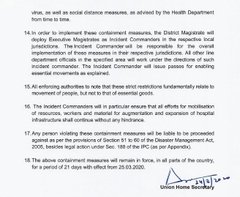
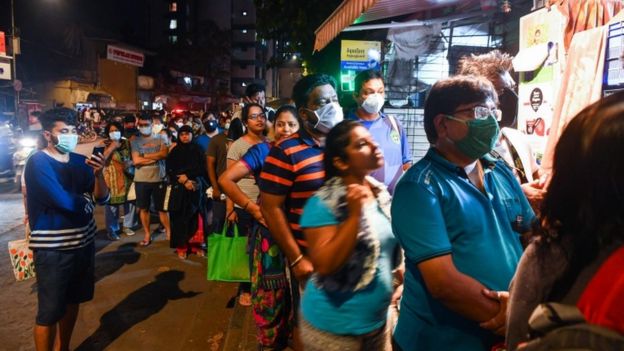 Image copyright AFP











 CHINDIA ALERT: You'll be living in their world, very soon