Chindia Alert: You’ll be Living in their World Very Soon
aims to alert you to the threats and opportunities that China and India present. China and India require serious attention; case of ‘hidden dragon and crouching tiger’.
Without this attention, governments, businesses and, indeed, individuals may find themselves at a great disadvantage sooner rather than later.
The POSTs (front webpages) are mainly 'cuttings' from reliable sources, updated continuously.
The PAGEs (see Tabs, above) attempt to make the information more meaningful by putting some structure to the information we have researched and assembled since 2006.
Pou Chen makes footwear for the likes of Nike and Adidas, but says it has suffered from a lack of orders as global value chains strain under the impact from the virus
Chinese workers moved to Vietnam to help set-up new factories as the company expand its production, but have now become expendable
With the likes of Nike and Adidas closing retail stores around the world to comply with social distancing requirements, analysts also said orders plummeted 50 per cent in the second quarter, although the company declined to comment on the media reports. Photo: Bloomberg
A group of 150 Chinese workers believe the world’s largest maker of trainers used the coronavirus as an excuse to fire them, having helped Taiwanese firm Pou Chen successfully expand its production into Vietnam for more than a decade.
Pou Chen, which makes footwear for the likes of Nike and Adidas, informed the group in late April that they would no longer be needed as they were unable to return to
from their hometowns in China due to the coronavirus lockdowns.
“We believe we contributed greatly to the firm’s relocation process, copying the production line management experience and successful model of China’s factories to Vietnamese factories,” said Dave Zhang, who started working for Pou Chen in Vietnam in 2003.
“Now, when the factories over there have matured, and there is a higher automation level in production, our value has faded in the management’s eyes and we got laid off, in the name of the automation level.”
Rush hour chaos returns to Vietnam’s streets as coronavirus lockdown lifted
The group claims the firm began to fire Chinese employees several years ago, with the total number dropping from over 1,000 at its peak to around 400 last year.
“We 150 employees were the first batch of Chinese employees to be laid off this year. We are all pessimistic and expect more will be cut,” added Zhang.
In its email on April 27, Pou Chen said it was forced to terminate the contracts of the Chinese employees across five of its factories due to an unprecedented decline in orders and financial losses.
The Chinese employees, many of whom have been working for the shoemaker for decades, said the compensation offered was unfair and below the levels required by labour law in both Vietnam and China.
In a further statement to the South China Morning Post, Pou Chen stood by the move as the coronavirus pandemic had reduced demand for footwear products and so required an “adjustment of manpower.”
“[The dismissals were] in accordance with the relevant labour laws of the country of employment … and employee labour contracts,” added the statement from Pou Chen, which employs around 350,000 people worldwide.
Company data showed Pou Chen’s first quarter revenues tumbled 22.4 per cent year-on-year to NT$59.46 billion (US$1.99 billion), the weakest in six years.
With the likes of Nike and Adidas closing retail stores around the world to comply with social distancing requirements, analysts also said orders plummeted 50 per cent in the second quarter, although the company declined to comment on the media reports.
Last month, the company was also mulling pay cuts and furloughs that would affect 3,000 employees in Taiwan and officials based in its overseas factories, according to the Taipei Times.
Andy Zeng, who had worked for the firm since 1995, said the group were “very upset” when they received the news last month as the impact of the coronavirus pandemic began to reverberate around the world, disrupting global value chains.
“Most of us joined Pou Chen in the 1990s when we were in our late teens or early 20s, when the Taiwan-invested company started investing and setting up factories in mainland China. Now more than two decades have passed,” he said.
Zeng was among the first generation of skilled workers in China as Pou Chen developed rapidly, enjoying the benefits of cheap labour, although the workers themselves were rewarded with regular pay rises.
The company needed a group of skilled Chinese workers to go to its new factories in Vietnam. I said yes because I thought it was a good opportunity to see the outside world – Andy Zeng
“I worked at the Dongguan branch of Pou Chen for 11 years from 1995.” Zeng added “In the 1990s and early 2000s, the company expanded rapidly in Dongguan with a growing number of large orders, and every worker had to work hard around the clock. I remember I earned 300 yuan (US$42) a month in 1995, and my monthly salary rose to 1,000 yuan (US$141) in 1998.”
Zeng’s salary eventually rose to over 3,000 yuan in 2005 as China’s economy boomed, leading Pou Chen to seek alternative production sites in Vietnam and Indonesia where labour and land were even cheaper. However, in the early 2000s, the new locations lacked skilled shoe manufacturing workers like Zeng.
“The company needed a group of skilled Chinese workers to go to its new factories in Vietnam. I said yes because I thought it was a good opportunity to see the outside world and the offer of US$700 per month was not bad.” Zeng said.
“We actively cooperated with their plans. Over the past decade, we have been away from our families and hometowns, and followed the company’s strategy to work hard in Vietnam.
With no deaths and cases limited to the hundreds, Vietnam’s Covid-19 response appears to be working
“In 2005, the company sent me to its newly-built factory in Vietnam. This year was my 14th year in Dong Nai in Vietnam. I have witnessed the company’s production capacity in Vietnam become larger and larger. When I arrived, there were only a few production lines, and now there are at least dozens of them, employing more than 10,000 workers in each factory.”
According to a report in the Taipei Times on April 14, citing both Reuters and Bloomberg, Pou Chen was ordered to temporarily shut down one of its units in Vietnam over coronavirus concerns, according to Vietnamese state media.
The company was forced to suspend production for two days after failing to meet local rules on social distancing, Tuoi Tre newspaper reported.
“We Chinese employees actually were pathfinders for the company’s relocation from China to Vietnam,” said Zhang, who was in charge of a 1,700-worker factory producing 1.7 million shoe soles per month.
What our Chinese employees have done in Vietnam for more than a decade can be said to be very simple but very difficult – Dave Zhang
“We were sent to resolve any ‘bottlenecks’ in the production lines that were slowing down the rest of the plant, because during the launch of every new production line, Vietnamese workers would strike and get into disputes. As far as I know, there were over a thousand Chinese employees managing various aspects of the production lines in the company’s Vietnamese factories.
“In fact, what our Chinese employees have done in Vietnam for more than a decade can be said to be very simple but very difficult. That is to teach Vietnamese workers our experience of working on a production line, improve the productivity of the Vietnamese workers, and help the factories become localised.”
Overall, Pou Chen says it produces more than 300 million pairs of shoes per year, accounting for around 20 per cent of the combined wholesale value of the global branded athletic and casual footwear market.
“Because of cultural shock and great pressure to expedite orders, Vietnamese workers were not used to the management style of Taiwan factories,” Zhang added.
“Many of our Chinese employees were beaten by Vietnamese workers [due to cultural differences about work]. During anti-China protests in Vietnam, we were still under great pressure to keep the local production lines operating.”
Faced with a backlash from the West over its handling of the early stages of the pandemic, Beijing has been quietly gaining ground in Asia
Teams of experts and donations of medical supplies have been largely welcomed by China’s neighbours
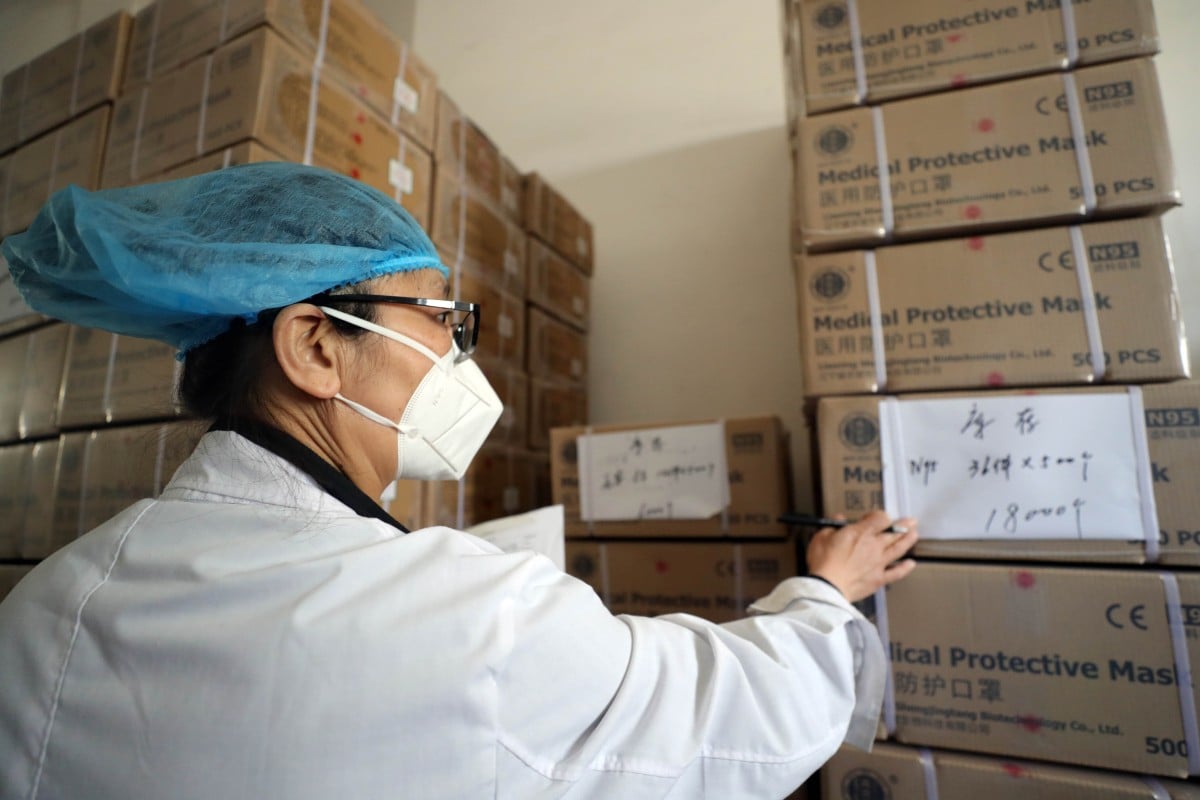
Despite facing some criticism from the West, China’s Asian neighbours have welcomed its medical expertise and vital supplies. Photo: Xinhua
While China’s campaign to mend its international image in the wake of its handling of the coronavirus health crisis has been met with scepticism and even a backlash from the US and its Western allies, Beijing has been quietly gaining ground in Asia.
Teams of experts have been sent to Cambodia, the Philippines, Myanmar, Pakistan and soon to Malaysia, to share their knowledge from the pandemic’s ground zero in central China.
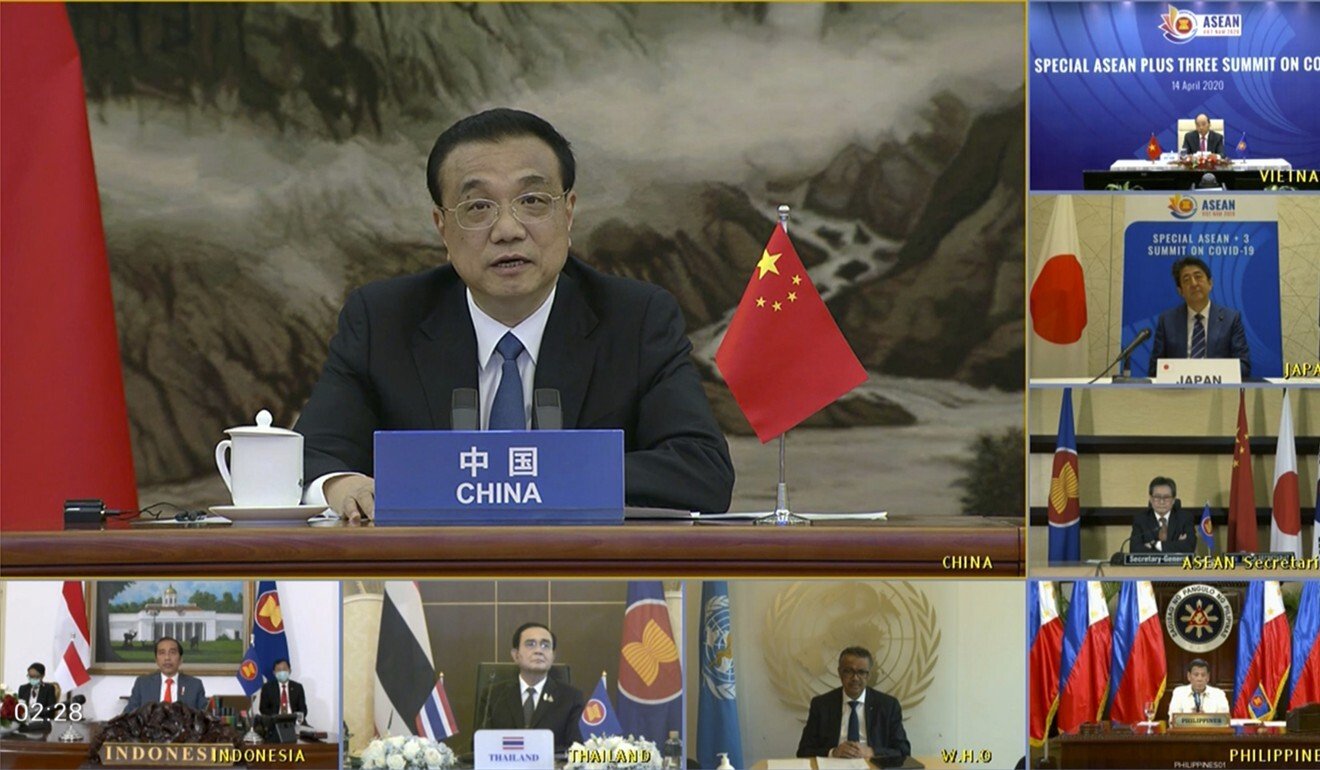
China has also held a series of online “special meetings” with its Asian neighbours, most recently on Tuesday when Premier Li Keqiang discussed his country’s experiences in combating the disease and rebooting a stalled economy with the leaders of the Association of Southeast Asian Nations (Asean), Japan and South Korea.
Chinese Prime Minister Li Keqiang speaks to Asean Plus Three leaders during a virtual summit on Tuesday. Photo: AP
Many Western politicians have publicly questioned Beijing’s role and its subsequent handling of the crisis but Asian leaders – including Philippine President Rodrigo Duterte and Japanese Prime Minister Shinzo Abe – have been reluctant to blame the Chinese government, while also facing criticism at home for not closing their borders with China soon enough to prevent the spread of the virus.
An official from one Asian country said attention had shifted from the early stages of the outbreak – when disgruntled voices among the public were at their loudest – as people watched the virus continue its deadly spread through their homes and across the world.
“Now everybody just wants to get past the quarantine,” he said. “China has been very helpful to us. It’s also closer to us so it’s easier to get shipments from them. The [medical] supplies keep coming, which is what we need right now.”
The official said also that while the teams of experts sent by Beijing were mainly there to observe and offer advice, the gesture was still appreciated.
Another Asian official said the tardy response by Western governments in handling the outbreak had given China an advantage, despite its initial lack of transparency over the outbreak.
“The West is not doing a better job on this,” he said, adding that his government had taken cues from Beijing on the use of propaganda in shaping public opinion and boosting patriotic sentiment in a time of crisis.
“Because it happened in China first, it has given us time to observe what works in China and adopt [these measures] for our country,” the official said.
Experts in the region said that Beijing’s intensifying campaign of “mask diplomacy” to reverse the damage to its reputation had met with less resistance in Asia.
Why China’s ‘mask diplomacy’ is raising concern in the West
29 Mar 2020
“Over the past two months or so, China, after getting the Covid-19 outbreak under control, has been using a very concerted effort to reshape the narrative, to pre-empt the narrative that China is liable for this global pandemic, that China has to compensate other countries,” said Richard Heydarian, a Manila-based academic and former policy adviser to the Philippine government.
“It doesn’t help that the US is in lockdown with its domestic crisis and that we have someone like President Trump who is more interested in playing the blame game rather than acting like a global leader,” he said.
Shahriman Lockman, a senior analyst with the foreign policy and security studies programme at Malaysia’s Institute of Strategic and International Studies, said that as the US had withdrawn into its own affairs as it struggled to contain the pandemic, China had found Southeast Asia a fertile ground for cultivating an image of itself as a provider.
China’s first-quarter GDP shrinks for the first time since 1976 as coronavirus cripples economy
Beijing’s highly publicised delegations tasking medical equipment and supplies had burnished that reputation, he said, adding that the Chinese government had also “quite successfully shaped general Southeast Asian perceptions of its handling of the pandemic, despite growing evidence that it could have acted more swiftly at the early stages of the outbreak in Wuhan”.
“Its capacity and will to build hospitals from scratch and put hundreds of millions of people on lockdown are being compared to the more indecisive and chaotic responses seen in the West, especially in Britain and the United States,” he said.
Coronavirus droplets may travel further than personal distancing guidelines
16 Apr 2020
Lockman said Southeast Asian countries had also been careful to avoid getting caught in the middle of the deteriorating relationship between Beijing and Washington as the two powers pointed fingers at each other over the origins of the new coronavirus.
“The squabble between China and the United States about the pandemic is precisely what Asean governments would go to great lengths to avoid because it is seen as an expression of Sino-US rivalry,” he said.
“Furthermore, the immense Chinese market is seen as providing an irreplaceable route towards Southeast Asia’s post-pandemic economic recovery.”
Aaron Connelly, a research fellow in Southeast Asian political change and foreign policy with the International Institute for Strategic Studies in Singapore, said Asian countries’ dependence on China had made them slow to blame China for the pandemic.
“Anecdotally, it seems to me that most Southeast Asian political and business elites have given Beijing a pass on the initial cover-up of Covid-19, and high marks for the domestic lockdown that followed,” he said.
“This may be motivated reasoning, because these elites are so dependent on Chinese trade and investment, and see little benefit in criticising China.”
China and Vietnam ‘likely to clash again’ as they build maritime militias
12 Apr 2020
The cooperation with its neighbours as they grapple with the coronavirus had not slowed China’s military and research activities in the disputed areas of the South China Sea – a point of contention that would continue to cloud relations in the region, experts said.
Earlier this month an encounter in the South China Sea with a Chinese coastguard vessel led to the sinking of a fishing boat from Vietnam, which this year assumed chairmanship of Asean.
And in a move that could spark fresh regional concerns, shipping data on Thursday showed a controversial Chinese government survey ship, the Haiyang Dizhi 8, had moved closer to Malaysia’s exclusive economic zone.
The survey ship was embroiled in a months-long stand-off last year with Vietnamese vessels within Hanoi’s exclusive economic zone and was spotted again on Tuesday 158km (98 miles) off the Vietnamese coast.





 CHINDIA ALERT: You'll be living in their world, very soon
Coronavirus: Chinese workers in Vietnam cry foul after being fired by Taiwanese firm making shoes for Nike, Adidas
A group of 150 Chinese workers believe the world’s largest maker of trainers used the coronavirus as an excuse to fire them, having helped Taiwanese firm Pou Chen successfully expand its production into Vietnam for more than a decade.
Pou Chen, which makes footwear for the likes of Nike and Adidas, informed the group in late April that they would no longer be needed as they were unable to return to
from their hometowns in China due to the coronavirus lockdowns.
“We 150 employees were the first batch of Chinese employees to be laid off this year. We are all pessimistic and expect more will be cut,” added Zhang.
In its email on April 27, Pou Chen said it was forced to terminate the contracts of the Chinese employees across five of its factories due to an unprecedented decline in orders and financial losses.
The Chinese employees, many of whom have been working for the shoemaker for decades, said the compensation offered was unfair and below the levels required by labour law in both Vietnam and China.
“[The dismissals were] in accordance with the relevant labour laws of the country of employment … and employee labour contracts,” added the statement from Pou Chen, which employs around 350,000 people worldwide.
Company data showed Pou Chen’s first quarter revenues tumbled 22.4 per cent year-on-year to NT$59.46 billion (US$1.99 billion), the weakest in six years.
With the likes of Nike and Adidas closing retail stores around the world to comply with social distancing requirements, analysts also said orders plummeted 50 per cent in the second quarter, although the company declined to comment on the media reports.
Andy Zeng, who had worked for the firm since 1995, said the group were “very upset” when they received the news last month as the impact of the coronavirus pandemic began to reverberate around the world, disrupting global value chains.
“Most of us joined Pou Chen in the 1990s when we were in our late teens or early 20s, when the Taiwan-invested company started investing and setting up factories in mainland China. Now more than two decades have passed,” he said.
Zeng was among the first generation of skilled workers in China as Pou Chen developed rapidly, enjoying the benefits of cheap labour, although the workers themselves were rewarded with regular pay rises.
The company needed a group of skilled Chinese workers to go to its new factories in Vietnam. I said yes because I thought it was a good opportunity to see the outside world – Andy Zeng
What our Chinese employees have done in Vietnam for more than a decade can be said to be very simple but very difficult – Dave Zhang
Posted in 50 per cent, accordance, Adidas, adjustment of manpower, around the world, automation level, below the levels, Bloomberg, boomed, bottlenecks, Chaos, cheaper, China, China’s economy, Chinese employees, Chinese workers, closing, comment, Company, compensation, comply, contributed, cooperated, coronavirus, coronavirus lockdowns, Covid-19 response, cry foul, cultural shock, deaths, decade, decline, declined, dismissals, disputes, Dong Nai, Dongguan, employee labour contracts,, expand, expendable, factories, families, financial losses, fired, footwear, furloughs, higher, hometowns, impact, Indonesia, Labour law, lack of orders, land, Mainland China, making, management experience, management style, media reports, Nike, opportunity, orders, pay cuts, pessimistic, plans, plummeted, Pou Chen, production, production line, relocation process, requirements, retail stores, returns, Reuters, Rush hour, second quarter, set up, shoe manufacturing, shoes, skilled, Social distancing, south china morning post, strain under, streets, strike, Taipei Times, Taiwan, Taiwan-invested, Taiwanese firm, Uncategorized, unfair, unprecedented, Vietnam, Vietnamese, Virus, workers, world’s largest maker of trainers | Leave a Comment »