Chindia Alert: You’ll be Living in their World Very Soon
aims to alert you to the threats and opportunities that China and India present. China and India require serious attention; case of ‘hidden dragon and crouching tiger’.
Without this attention, governments, businesses and, indeed, individuals may find themselves at a great disadvantage sooner rather than later.
The POSTs (front webpages) are mainly 'cuttings' from reliable sources, updated continuously.
The PAGEs (see Tabs, above) attempt to make the information more meaningful by putting some structure to the information we have researched and assembled since 2006.
LONDON (Reuters) – The United Kingdom’s COVID-19 death toll surpassed 47,000 on Tuesday, a dire human cost that could define the premiership of Boris Johnson.
The Office for National Statistics said 42,173 people had died in England and Wales with suspected COVID-19 as of May 15, bringing the UK total to 47,343 – which includes earlier data from Scotland, Northern Ireland, plus recent hospital deaths in England.
A death toll of nearly 50,000 underlined Britain’s status as one of the worst-hit countries in a pandemic that has killed at least 345,400 worldwide.
Johnson, already under fire for his handling of the pandemic, has had to defend his top adviser Dominic Cummings who drove 250 miles from London to access childcare when Britons were being told to stay at home to fight COVID-19.
One Johnson’s junior ministers, Douglas Ross, resigned on Tuesday in protest. Johnson has stood by Cummings, saying the aide had followed the “instincts of every father”.
The government says that while it may have made some mistakes it is grappling with the biggest public health crisis since the 1918 influenza outbreak and that it has ensured the health service was not overwhelmed.
Unlike the daily death toll published by the government, Tuesday’s figures include suspected cases and confirmed cases of COVID-19, the respiratory disease caused by the novel coronavirus.
But even these figures underestimate the true number of deaths.
In March, Britain’s chief scientific adviser said keeping deaths below 20,000 would be a “good outcome”. In April, Reuters reported the government’s worst-case scenario was 50,000 deaths.
Disease experts are watching the total number of deaths that exceed the usual for amount for the time of year, an approach that is internationally comparable.
The early signs suggest Britain is faring badly here too.
Excess deaths are now approaching 60,000 across the UK, ONS statistician Nick Stripe said, citing the latest data – a toll equivalent to the populations of historic cities like Canterbury and Hereford.
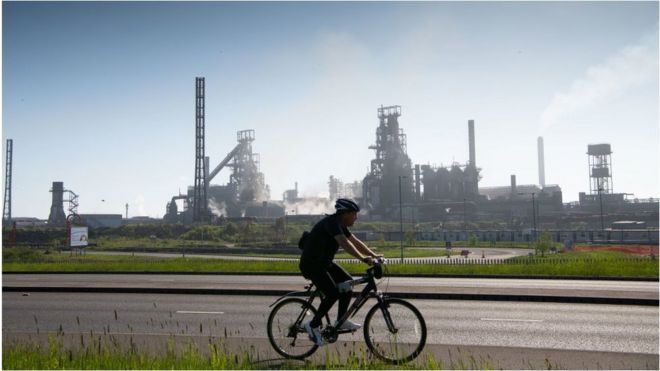
Image copyright GETTY IMAGESImage caption Port Talbot employs just under half of Tata’s 8,385 UK workforce
Tata Steel plans to cut as many as 3,000 jobs across its European business in another bid to come to terms with a “severe” international steel market.
The company wants to focus on higher-value products, it said, adding there would be no plant closures.
About two thirds of the job cuts will be office-based, it added.
The announcement comes after a merger with German rival Thyssenkrupp was blocked during the summer. Bosses had hoped the deal could reduce costs.
“Today we are highlighting important proposals towards building a financially strong and sustainable European business,” said Henrik Adam, chief executive of Tata Steel in Europe.
“We plan to change how we work together to enable better cooperation and faster decision-making. This will help us become self-sustaining and cash positive in the face of unprecedented severe market conditions, enabling us to lead the way towards a carbon-neutral future.”
The business employs about 20,000 people and is owned by India’s Tata.
Port Talbot steelworks employs just under half of Tata’s 8,385-strong workforce in the UK.
Wales’ economy minister Ken Skates said: “I am seeking an urgent conversation with Tata to establish what this means for workers in Wales and how we can support those affected by this announcement.”
It also said it would seek to “preserve thousands of jobs in a key foundation industry for the UK” but did not put a number on how many would be saved.
British Steel employs about 4,000 people in Scunthorpe and Teesside.



 CHINDIA ALERT: You'll be living in their world, very soon