16/05/2019
WASHINGTON/NEW YORK (Reuters) – The Trump administration on Wednesday took aim at China’s Huawei Technologies Co Ltd, banning the firm from buying vital U.S. technology without special approval and effectively barring its equipment from U.S. telecom networks on national security grounds.
Taken together, the two moves threaten Huawei’s ability to continue to sell many products because of its reliance on American suppliers, and represents a significant escalation in the U.S. government’s worldwide campaign against the company.
The steps also come at a delicate time in relations between China and the United States as the world’s two largest economies ratchet up tariffs in a battle over what U.S. officials call China’s unfair trade practices.
Washington believes the handsets and network equipment for telecommunications companies made by Huawei could be used by the Chinese state to spy on Americans.
Huawei, which has repeatedly denied the allegations, said in a statement that “restricting Huawei from doing business in the U.S. will not make the U.S. more secure or stronger; instead, this will only serve to limit the U.S. to inferior yet more expensive alternatives, leaving the U.S. lagging behind in 5G deployment.”
“In addition, unreasonable restrictions will infringe upon Huawei’s rights and raise other serious legal issues.”
The ban on U.S. suppliers, which appears similar to one on Huawei rival ZTE Corp. last year, could hit the shares of Huawei’s biggest U.S. suppliers, including chipmakers Qualcomm Inc and Broadcom Inc (AVGO.O).
In the first action taken on Wednesday, President Donald Trump signed a long-awaited executive order declaring a national emergency and barring U.S. companies from using telecommunications equipment made by firms posing a national security risk.
The order invoked the International Emergency Economic Powers Act, which gives the president the authority to regulate commerce in response to a national emergency that threatens the United States. It directs the Commerce Department, working with other government agencies, to draw up an enforcement plan by October.
Members of Congress said Trump’s order was squarely aimed at Chinese companies like Huawei, which generated $93 billion in revenue last year and is seen as a national champion in China.
“China’s main export is espionage, and the distinction between the Chinese Communist Party and Chinese ‘private-sector’ businesses like Huawei is imaginary,” Republican Senator Ben Sasse said.
ENTITY LIST
Soon after the White House announced the order had been signed, the Commerce Department said it had added Huawei and 70 affiliates to its so-called Entity List – a move that bans the telecom giant from buying parts and components from U.S. companies without U.S. government approval.
U.S. officials told Reuters the decision would make it difficult, if not impossible, for Huawei, the largest telecommunications equipment producer in the world, to sell some products because of its reliance on U.S. suppliers. It will take effect in the coming days.
Commerce Secretary Wilbur Ross said in a statement Trump backed the decision that will “prevent American technology from being used by foreign owned entities in ways that potentially undermine U.S. national security or foreign policy interests.”
With Huawei on the Entity List, U.S. suppliers will need to apply for licenses to provide the Chinese company with anything subject to U.S. export control regulations. Obtaining such licenses will be difficult because they will have to show the transfer of items will not harm U.S. national security, said John Larkin, a former export control officer in Beijing for the Commerce Department.
The United States in January unsealed a 13-count indictment against Huawei accusing the company and its chief financial officer of conspiring to defraud global financial institutions by misrepresenting Huawei’s relationship with a suspected front company that operated in Iran.
The indictment was unsealed a month after CFO Meng Wanzhou was arrested in Canada on a U.S. warrant for her role in the alleged fraud. Meng, who maintains her innocence, is fighting extradition.
5G NETWORKS
Reuters reported on Tuesday that Trump was expected to sign his long-awaited executive order this week. The order does not specifically name any country or company, but U.S. officials have previously labeled Huawei a “threat”.
The United States has been actively pushing other countries not to use the Chinese company’s equipment in next-generation 5G networks that it calls “untrustworthy.” In August, Trump signed a bill that barred the U.S. government from using equipment from Huawei and another Chinese provider, ZTE Corp.
ZTE was added to the Commerce Department’s Entity List in March 2016 over allegations it organised an elaborate scheme to hide its re-export of U.S. items to sanctioned countries in violation of U.S. law.
The restrictions prevented suppliers from providing ZTE with U.S. equipment, potentially freezing the company’s supply chain, but the restrictions were suspended in a series of temporary reprieves, allowing the company to maintain ties to U.S. suppliers until it agreed to a plea deal a year later.
The status of Huawei and ZTE has taken on new urgency as U.S. wireless carriers rollout 5G networks.
While the big wireless companies have already cut ties with Huawei, small rural carriers continue to rely on both Huawei and ZTE switches and other equipment because they tend to be cheaper. Trump’s order applies to future purchases and does not address existing hardware, officials said Wednesday.
Source: Reuters
Posted in 5G deployment, Americans, arrested, Beijing, Ben Sasse, Broadcom Inc, canada, CFO, Chief financial officer, Chinese ‘private-sector’ businesses, chinese communist party, Chinese state, Commerce Department, Commerce Secretary, defraud, distinction, Entity List, Espionage, export control officer, global financial institutions, handsets, hits, Huawei, imaginary, International Emergency Economic Powers Act, iran, John Larkin, Members of Congress, Meng Wanzhou, national security risk, network equipment, one-two punch, President Donald Trump, Qualcomm Inc, Republican Senator, spy, Trump, U.S. national security, Uncategorized, United States, Washington, White House, Wilbur Ross, zte corp |
Leave a Comment »
12/05/2019
WASHINGTON, May 11 (Xinhua) — Chinese Vice Premier Liu He said Friday that cooperation is the only right choice for China and the United States, but China will not compromise on major issues of principle.
China-U.S. relations are of great importance, Liu said in a group interview with Chinese media after the conclusion of the 11th round of high-level economic and trade consultations between the world’s top two economies, which took place on Thursday and Friday in Washington.
Economic and trade relations serve as the ballast and propeller of the overall China-U.S. relationship, and matter not only to bilateral ties, but also to world peace and prosperity, added Liu, also a member of the Political Bureau of the Communist Party of China (CPC) Central Committee.
Cooperation is the only right choice for the two sides, but it has to be based on principles, said the vice premier, who heads the Chinese side of the China-U.S. comprehensive economic dialogue.
China, he stressed, will never make concessions on major issues of principle.
The Chinese delegation came to Washington for the latest round of talks with sincerity, and held candid and constructive exchanges with the U.S. side, Liu said, adding that the two sides agreed to continue to push forward the consultations.
China strongly opposes U.S. tariff hikes, which are harmful not only to China and the United States, but to the world at large, and China will have to take necessary countermeasures, he added.
Stressing that any agreement must be equal and mutually beneficial, Liu said that the two sides have reached important consensus on many aspects, but there remain three core concerns of China that must be addressed.
The first is to remove all the additional tariffs, he said, adding that the levy of those tariffs is the starting point of the ongoing bilateral trade dispute, and must be totally revoked if the two sides were to reach a deal.
The second is that the amount of purchases should be realistic, he said, adding that the two sides reached consensus on the volume in Argentina, and should not change it randomly.
The third is to improve the balance of the wording of the text, he said, adding that every country has its dignity, the text must be balanced, and more discussions are needed on some critical issues.
Noting that it is just normal that there have been some ups and downs in bilateral consultations since last year, Liu pointed out that it is irresponsible to casually accuse one party of “backtracking” while the two sides are still in the process of negotiation.
As for China, the vice premier said the most important thing is to focus on its own business.
China enjoys huge domestic market demand, the implementation of the supply-side reform will comprehensively boost the competitiveness of Chinese products and enterprises, and there is still ample room for fiscal and monetary policy manoeuvres, he said, adding the Chinese economic prospect is very optimistic.
Liu pointed out that it is a good thing for a major country to encounter some twists and turns in its development, as they can serve as an ability test.
Under the strong leadership of the CPC Central Committee with Xi Jinping at the core, as long as the Chinese people have firm confidence and make joint efforts, China is not afraid of any difficulties, and will certainly be able to maintain the good momentum of sustained and sound economic development, he added.
Source: Xinhua
Posted in China-U.S. cooperation, Chinese President Xi Jinping, Chinese Vice Premier Liu He, compromise, countermeasures, major principles, member of the Political Bureau of the Communist Party of China (CPC) Central Committee, U.S. tariff hikes, Uncategorized, vows, Washington |
Leave a Comment »
12/05/2019
- South Korean violinist and North Korean singer hold rare joint performance they hope will help bring the divided Koreas closer together
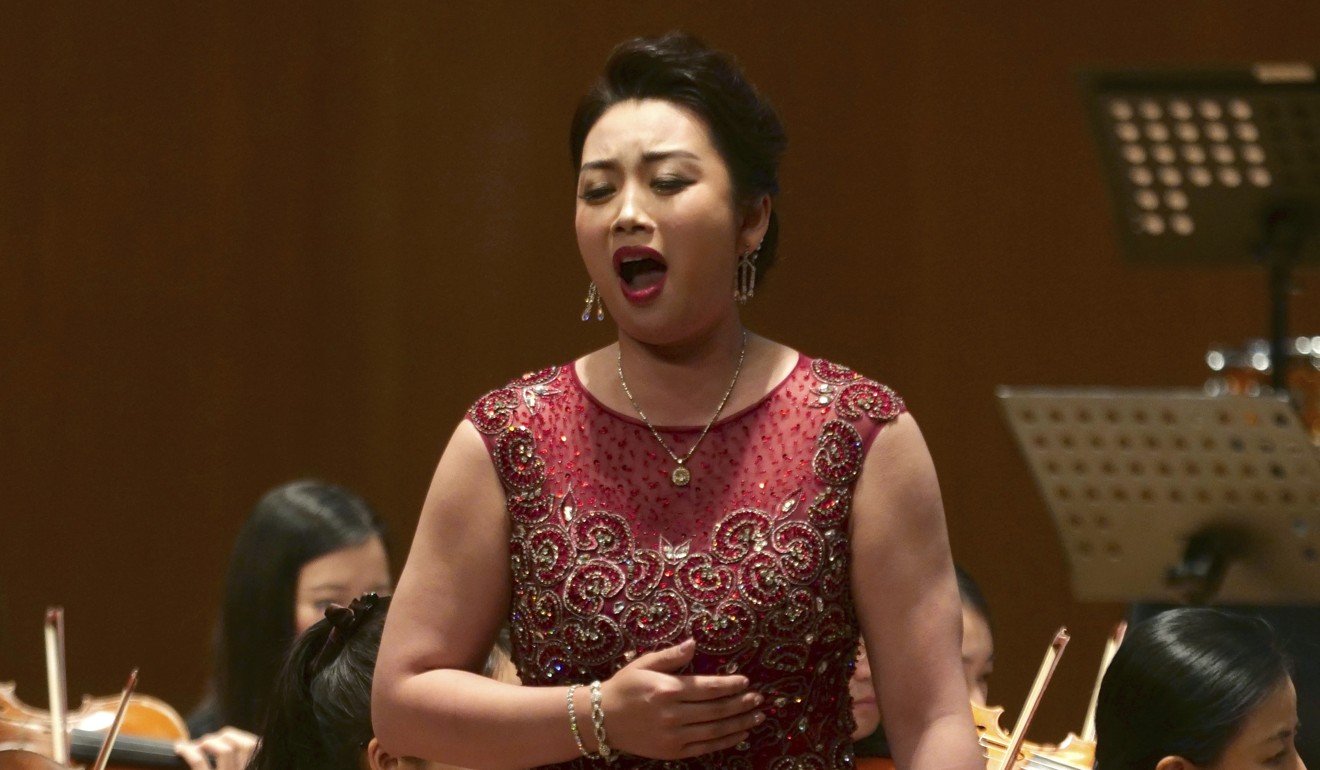
South Korean violinist Won Hyung Joon performs at the Shanghai Oriental Arts Centre in Shanghai on Sunday. Photo: AP
A South Korean violinist and a North Korean singer on Sunday held a rare joint performance they hope will help bring the divided Koreas closer together via music – especially at a time of emerging tensions amid deadlocked nuclear diplomacy.
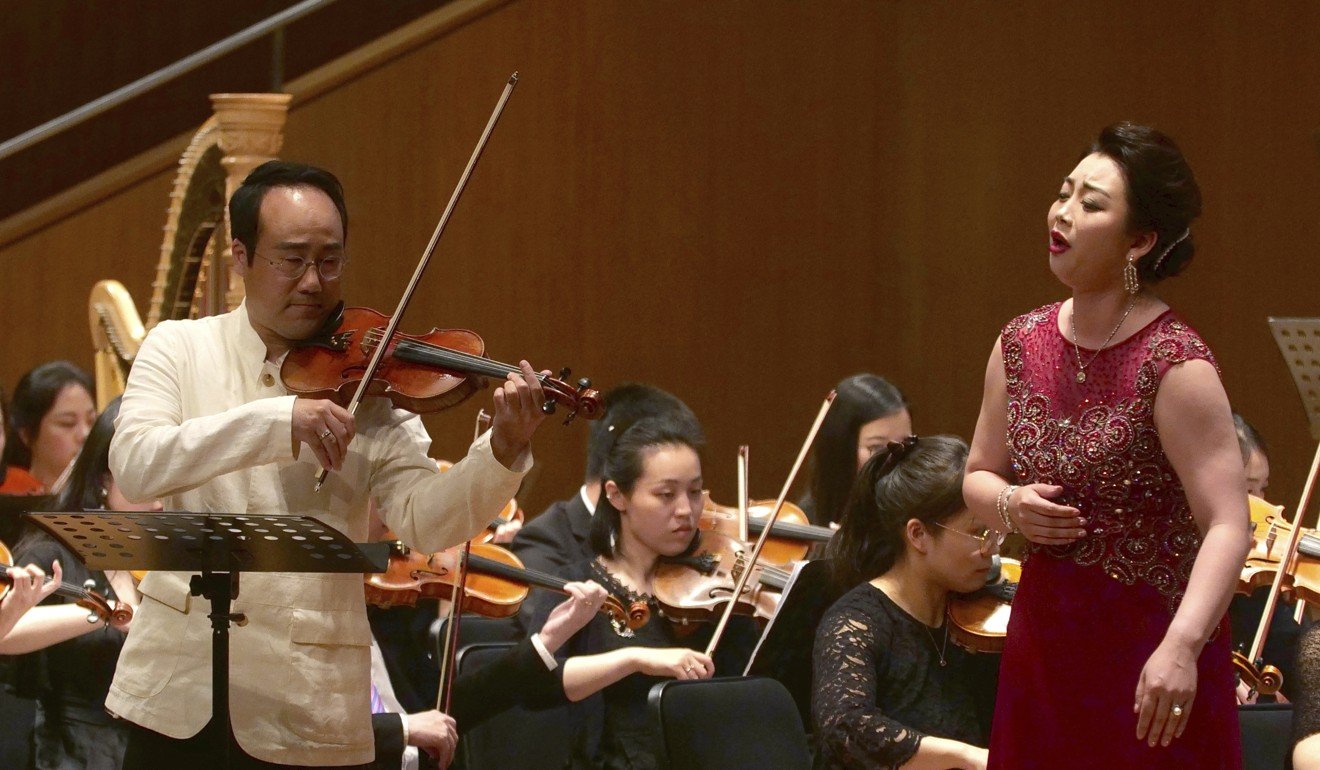
Violinist Won Hyung Joon and his North Korean soprano partner Kim Song Mi performed together at a Shanghai concert hall with a Chinese orchestra. Their concert came three days after North Korea fired two suspected short-range missiles in the second such weapons test in five days.
For both, it was their first concert with a musician from the other side of the Korean border, the world’s most heavily fortified. They met several times last year in Beijing and agreed on a joint performance to help promote peace on the Korean peninsula.
As a duet, Kim sang Antonin Dvorak’s Songs My Mother Taught Me while Won played the violin. Kim later sang Arirang, a Korean traditional folk tune beloved in both countries, while the Shanghai City Symphony Orchestra played the music.
North Korean soprano singer Kim Song Mi performs on Sunday. Photo: AP
“When I met her [Kim] for the first time, I felt like I was reuniting with an old friend who’s been on the same wavelength with me,” Won said before Sunday’s concert. “This performance shouldn’t be the end … and what’s important now is what other dreams we can have together.”
In a written interview, Kim said she “heartily wishes” that her songs would help bring back reconciliation mood.
North Korea’s missile testing is not a ‘breach of trust’, says Donald Trump
“I’m nervous and anxious about what inspiration the audience would have and what reaction North and South Korean compatriots would show to our joint performance,” she said.
North and South Korean musicians performing together is extremely rare as their governments do not even allow their citizens to exchange phone calls, letter and emails without special approvals. Last year saw an unusual wave of cross-border exchanges after North Korean leader Kim Jong-un abruptly entered talks on the fate of his advancing nuclear arsenal. A group of North Korean dancers and singers performed in South Korea during the Pyeongchang Winter Olympics, before South Korean K-pop stars flew to Pyongyang and sang in the presence of Kim and his young wife Ri Sol Ju. Both events were the first of their kind in more than 10 years.
Moon Jae-in begins third year in power
But such exchange programmes are now becoming a rarity again as North Korea is resuming provocative weapons tests in an apparent protest against the lack of progress in nuclear negotiations with the United States. Kim returned home empty-handed from his second summit with US President Donald Trump in Vietnam in February after Trump rebuffed his calls for major sanctions relief in return for his promise to conduct partial disarmament measures. No publicly known high-level meetings between Pyongyang and Washington have since been reported.
Won and Kim performed with a Chinese orchestra. Photo: AP
Sunday’s concert will not likely work as a breakthrough in the stalled nuclear diplomacy but it could still “establish an environment” that could make it easier to improve ties between the Koreas, said analyst Cho Han Bum at Seoul’s Korea Institute for National Unification.
Inspired by the West-Eastern Divan Orchestra founded in 1999 to bring together Arab and Israeli musicians together to promote mutual understanding, Won, 42, has been pushing for the establishment of an inter-Korean orchestra for nearly a decade. He’s contacted both governments on numerous occasions, and sometimes partnered with renowned foreign maestros such as Charles Dutoit and Christoph Poppen.
But his push for a Korean orchestra performance has never been realised and was often scrapped at the last minute due to the delicate nature of ties between the Koreas, which are still technically at war because an armistice that ended the 1950-53 has yet to be replaced with a peace treaty. Incidents that helped spike his past plans included the 2015 mine blasts that maimed two South Korean soldiers, and the 2011 tensions touched off by annual South Korean-US military drills that North Korean sees as an invasion rehearsal.
North Korean weapons test was ‘long-range strike’ drill, state media says
Sunday’s performance appeared less difficult to achieve as it involves just one person from each Korea, not dozens of musicians required for an orchestra, and it was happening in China, a third country and North Korea’s major ally but also South Korea’s biggest trading partner.
Jointly performing with the two Koreans is the Shanghai City Symphony Orchestra, the first and biggest amateur symphony orchestra in China. The orchestra earlier invited Won and Kim to its annual charity concert, Love In The City, Pyongyang Shanghai Seoul, before it and Won’s Lindenbaum Festival Orchestra decided to co-organise the event, according to Won.
In a response to questions last week, South Korea’s Unification Ministry said that it approved Won’s contact with Kim as part of efforts to promote diverse kinds of civilian exchanges between the rivals. The South Korean government is led by President Moon Jae-in, a liberal who espouses greater rapprochement with North Korea and has shuttled between Pyongyang and Washington ahead of two summits between Kim and Trump.
Facebook sues South Korean analytics company Rankwave
Kim, 33, a graduate of Pyongyang’s prestigious Kim Won Gyun University of Music, is the North Korean representative in China of the Korean Association for Art Exchange. She is been living in China since 2010. Known for her classical crossover singing technique, she has also released several music albums with North Korean and well-known pieces of classical music. South Korea media reported she is the first North Korean sent abroad as a singer.
Won said when he first met Kim last spring, he felt it was easier for him to communicate with her and explain his dream than when he dealt with North Korean diplomats.
“When I talked about music with [North Korean] diplomats, I had to explain why we need music and why music is good … But I didn’t need to do that when I met Kim, and we could just get to the point,” Won said.
Kim said Won’s works had led her think again about her “love” of the Korean people and that she was willing to contribute to any efforts to promote inter-Korean cooperation.
Won said he would work together with Kim Song Mi to realise similar joint performances on bigger world stages. But he also understood how difficult it had been for him to have a concert like Sunday’s.
“If we can do music together, that means we can understand each other,” Won said. “People are talking about unification, an inter-Korean railway, a peace treaty and the end of war declaration. But can we really do those while failing to do an easy thing like doing music together?”
Source: SCMP
Posted in Antonin Dvorak, Arirang, Charles Dutoit, China alert, Chinese orchestra, Cho Han Bum, Christoph Poppen, Facebook, inter-Korean railway, Kim Song Mi, Kim Won Gyun University of Music, Korean Association for Art Exchange, Korean traditional folk tune, Lindenbaum Festival Orchestra, Love In The City, music, North and South Korean musicians, North Korean soprano partner, peace treaty, perform together, President Moon Jae-in, Pyongyang, Pyongyang Shanghai Seoul, Rankwave, Seoul’s Korea Institute for National Unification, Shanghai City Symphony Orchestra, Shanghai concert hall, Shanghai Oriental Arts Centre, Songs My Mother Taught Me, South Korean soldiers, South Korean violinist, Uncategorized, Unification Ministry, war declaration, Washington, West-Eastern Divan Orchestra, Won Hyung Joon |
Leave a Comment »
10/05/2019
Chinese Vice Premier Liu He receives an interview in Washington D.C., the United States, May 9, 2019. Liu He, a member of the Political Bureau of the Communist Party of China Central Committee and chief of the Chinese side of the China-U.S. comprehensive economic dialogue, arrived in Washington D.C. on Thursday for the 11th round of high-level economic and trade consultations with the U.S. side. (Xinhua/Liu Jie)
WASHINGTON, May 9 (Xinhua) — Chinese Vice Premier Liu He arrived in Washington on Thursday for the 11th round of high-level economic and trade consultations with the U.S. side.
Liu told reporters upon his arrival that he came to Washington with sincerity, saying that under the current special circumstances he hopes to engage in rational and candid exchanges with the U.S. side.
Liu is also a member of the Political Bureau of the Communist Party of China Central Committee and chief of the Chinese side of the China-U.S. comprehensive economic dialogue.
China believes that raising tariffs is not a solution to the problems, Liu said, noting that it is harmful to China, to the United States and to the whole world.
Source: Xinhua
Posted in China-U.S. trade consultations, Chinese Vice Premier Liu He, Uncategorized, Washington |
Leave a Comment »
08/05/2019
The document was riddled with reversals by China that undermined core U.S. demands, the sources told Reuters.
In each of the seven chapters of the draft trade deal, China had deleted its commitments to change laws to resolve core complaints that caused the United States to launch a trade war: theft of U.S. intellectual property and trade secrets; forced technology transfers; competition policy; access to financial services; and currency manipulation.
U.S. President Donald Trump responded in a tweet on Sunday vowing to raise tariffs on $200 billion (153 billion pounds) worth of Chinese goods from 10 to 25 percent on Friday – timed to land in the middle of a scheduled visit by China’s Vice Premier Liu He to Washington to continue trade talks.
The stripping of binding legal language from the draft struck directly at the highest priority of U.S. Trade Representative Robert Lighthizer – who views changes to Chinese laws as essential to verifying compliance after years of what U.S. officials have called empty reform promises.
Lighthizer has pushed hard for an enforcement regime more like those used for punitive economic sanctions – such as those imposed on North Korea or Iran – than a typical trade deal.
“This undermines the core architecture of the deal,” said a Washington-based source with knowledge of the talks.
“PROCESS OF NEGOTIATION”
Spokespeople for the White House, the U.S. Trade Representative and the U.S. Treasury Department did not immediately respond to requests for comment.
Chinese Foreign Ministry spokesman Geng Shuang told a briefing on Wednesday that working out disagreements over trade was a “process of negotiation” and that China was not “avoiding problems”.
Geng referred specific questions on the trade talks to the Commerce Ministry, which did not respond immediately to faxed questions from Reuters.
Lighthizer and U.S. Treasury Secretary Steven Mnuchin were taken aback at the extent of the changes in the draft. The two cabinet officials on Monday told reporters that Chinese backtracking had prompted Trump’s tariff order but did not provide details on the depth and breadth of the revisions.
Liu last week told Lighthizer and Mnuchin that they needed to trust China to fulfil its pledges through administrative and regulatory changes, two of the sources said. Both Mnuchin and Lighthizer considered that unacceptable, given China’s history of failing to fulfil reform pledges.
One private-sector source briefed on the talks said the last round of negotiations had gone very poorly because “China got greedy”.
“China reneged on a dozen things, if not more … The talks were so bad that the real surprise is that it took Trump until Sunday to blow up,” the source said.
“After 20 years of having their way with the U.S., China still appears to be miscalculating with this administration.”
FURTHER TALKS THIS WEEK
The rapid deterioration of negotiations rattled global stock markets, bonds and commodities this week. Until Sunday, markets had priced in the expectation that officials from the two countries were close to striking a deal.
Investors and analysts questioned whether Trump’s tweet was a negotiating ploy to wring more concessions from China. The sources told Reuters the extent of the setbacks in the revised text were serious and that Trump’s response was not merely a negotiating strategy.
Chinese negotiators said they couldn’t touch the laws, said one of the government sources, calling the changes “major.”
Changing any law in China requires a unique set of processes that can’t be navigated quickly, said a Chinese official familiar with the talks. The official disputed the assertion that China was backtracking on its promises, adding that U.S. demands were becoming more “harsh” and the path to a deal more “narrow” as the negotiations drag on.
Liu is set to arrive in Washington on Thursday for two days of talks that just last week were widely seen as pivotal – a possible last round before a historic trade deal. Now, U.S. officials have little hope that Liu will come bearing any offer that can get talks back on track, said two of the sources.
To avert escalation, some of the sources said, Liu would have to scrap China’s proposed text changes and agree to make new laws. China would also have to move further towards the U.S. position on other sticking points, such as demands for curbs on Chinese industrial subsidies and a streamlined approval process for genetically engineered U.S. crops.
The administration said the latest tariff escalation would take effect at 12:01 a.m. Friday (0401 GMT), hiking levees on Chinese products such as internet modems and routers, printed circuit boards, vacuum cleaners and furniture.
The Chinese reversal may give China hawks in the Trump administration, including Lighthizer, an opening to take a harder stance.
Mnuchin – who has been more open to a deal with improved market access, and at times clashed with Lighthizer – appeared in sync with Lighthizer in describing the changes to reporters on Monday, while still leaving open the possibility that new tariffs could be averted with a deal.
Trump’s tweets left no room for backing down, and Lighthizer made it clear that, despite continuing talks, “come Friday, there will be tariffs in place.”
Source: Reuters
Posted in China backtracked, chinese foreign ministry spokesman, Chinese Vice Premier, Geng Shuang, Robert Lighthizer, Steven Mnuchin, Tariff, Trump’s tweets, U.S. President Donald Trump, U.S. trade deal, U.S. Trade Representative, U.S. Treasury Secretary, Uncategorized, Vice Premier Liu He, Washington, White House |
Leave a Comment »
05/05/2019
WASHINGTON (Reuters) – The United States accused China on Friday of putting well more than a million minority Muslims in “concentration camps,” in some of the strongest U.S. condemnation to date of what it calls Beijing’s mass detention of mostly Muslim Uighur minority and other Muslim groups.
The comments by Randall Schriver, who leads Asia policy at the U.S. Defense Department, are likely to increase tension with Beijing, which is sensitive to international criticism and describes the sites as vocational education training centres aimed at stemming the threat of Islamic extremism.
Former detainees have described to Reuters being tortured during interrogation at the camps, living in crowded cells and being subjected to a brutal daily regimen of party indoctrination that drove some people to suicide.
Some of the sprawling facilities are ringed with razor wire and watch towers.
“The (Chinese) Communist Party is using the security forces for mass imprisonment of Chinese Muslims in concentration camps,” Schriver told a Pentagon briefing during a broader discussion about China’s military, estimating that the number of detained Muslims could be “closer to 3 million citizens.”
Schriver, an assistant secretary of defence, defended his use of a term normally associated with Nazi Germany as appropriate, under the circumstances.
When asked by a reporter why he used the term, Schriver said that it was justified “given what we understand to be the magnitude of the detention, at least a million but likely closer to 3 million citizens out of a population of about 10 million.””So a very significant portion of the population, (given) what’s happening there, what the goals are of the Chinese government and their own public comments make that a very, I think, appropriate description,” he said.
The Chinese embassy in Washington did not immediately respond to a request for comment.
U.S. Secretary of State Mike Pompeo on Thursday used the term re-education camps to describe the sites and said Chinese activity was “reminiscent of the 1930s.”
The U.S. government has weighed sanctions against senior Chinese officials in Xinjiang, a vast region bordering central Asia that is home to millions of Uighurs and other Muslim ethnic minorities. China has warned that it would retaliate “in proportion” against any U.S. sanctions.
The governor of Xinjiang in March directly dismissed comparisons to concentration camps, saying they were “the same as boarding schools.”
U.S. officials have said China has made criminal many aspects of religious practice and culture in Xinjiang, including punishment for teaching Muslim texts to children and bans on parents giving their children Uighur names.
Academics and journalists have documented grid-style police checkpoints across Xinjiang and mass DNA collection, and human rights advocates have decried martial law-type conditions there.
Source: Reuters
Posted in Academics, Asia policy at the U.S. Defense Department, assistant secretary of defence, Beijing, China alert, Chinese embassy, Communist Party, concentration camps, human rights advocates, Islamic extremism, journalists, martial law-type conditions, mass DNA collection, Mike Pompeo, minority Muslims, Nazi Germany, U.S. says, U.S. Secretary of State, Uighur, Uncategorized, vocational education training centres, Washington, Xinjiang |
Leave a Comment »
01/05/2019
- Xi’s message talks of promoting ‘peaceful development’ as Reiwa era begins in Japan
- Analysts see diplomacy as latest steps towards bringing an end to bitter rivalry
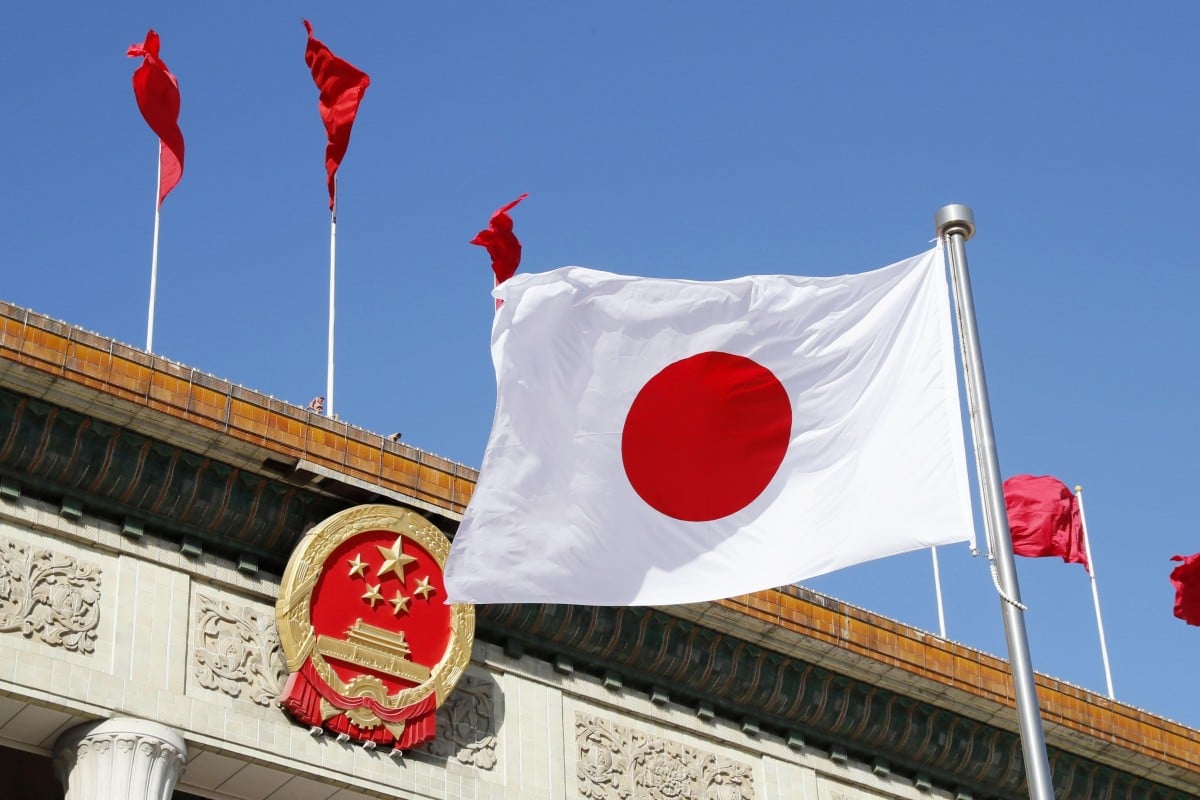
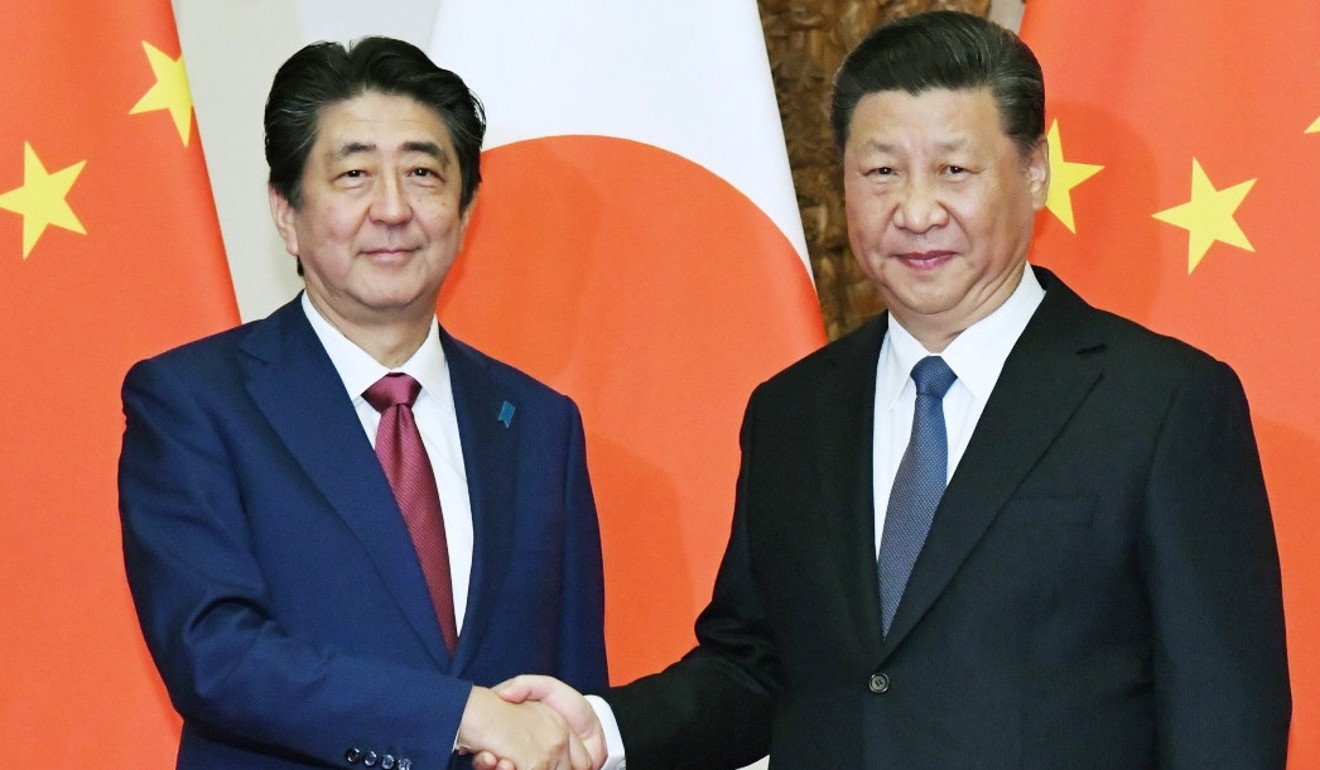
The Japanese flag flies at the Great Hall of the People in Beijing on October to mark the visit of Japanese Prime Minister Shinzo Abe to China. Photo: Kyodo
Chinese President Xi Jinping congratulated Emperor Naruhito on his ascent to the throne of Japan in an effort to strengthen China’s ties with its neighbour and competitor as Beijing’s trade dispute with the United States went on.
Xi sent greetings on Wednesday in which the president stressed the importance of relations between Beijing and Tokyo, China’s state-run Xinhua news agency reported.
The two countries should “work together to promote peaceful development and create a bright future for bilateral relations”, Xi said.
The president also sent a message to Akihito, now Japan’s emperor emeritus, and “expressed his greetings and wishes”, Xinhua said.
Akihito, 85, relinquished the throne to his son at midnight on Tuesday, bringing the Heisei era that spanned his 30-year reign to an end.
Naruhito took the Chrysanthemum Throne to begin the Reiwa era with a pledge to become a “symbol of unity”.
Xi’s message came as China and Japan tried to repair relations damaged by disputes over the East China Sea and the bitter legacy of the second world war.
Washington was locked in a trade tariff war with Beijing, and President Donald Trump’s America First policy had prompted fears about the US’ commitment to Asia at the highest levels of Japanese government. These have pushed Beijing and Tokyo closer and, in October, Japanese Prime Minister Shinzo Abe visited Beijing.
China set to appoint new ambassador to Japan, as Xi Jinping prepares for June visit
Xi was expected to attend a Group of 20 summit to be held in Osaka in June. A source said officials were considering whether Xi would dovetail a state visit to Japan with the summit.
Felix Wiebrecht, a China researcher at the Chinese University of Hong Kong, said in the international environment China was more willing to put a deep-seated rivalry aside and take Japan as a partner.
“Facing increasing tensions with the US, China is naturally turning towards other potential opportunities for cooperation,” Wiebrecht said.
“Xi is indeed very likely to visit Japan this year since it seems that both he and Abe are interested in strengthening their cooperation. A visit this year could be seen as a culmination in normalising their relationship and comes at the right time for China as its conflict with the US intensifies”.
Ryo Hinata-Yamaguchi, a visiting professor at Pusan National University in South Korea and an adjunct fellow at the Pacific Forum foreign policy research institute, said Xi’s message could be seen as Beijing’s expectation on Tokyo to keep relations positive.
“[But] this would raise questions in Japan, particularly regarding regional and bilateral security issues, as well as the trade issues between the US and China,” he said.
As Japan prepares to mark end of an era, a look back at how China started the system
“The big question is whether China – as well as the US – expects Japan to work as some kind of mediator between Beijing and Washington, causing dilemmas for the Japanese government”.
Some observers remarked on the possibility of sideline meeting between the two leaders at Osaka.
“Xi could meet with Abe [at G20] in a bilateral context too,” Zhang Baohui director of the Centre for Asian Pacific Studies at Lingnan University in Hong Kong, said.
He also felt that Xi may make a separate state visit to Japan, after the G20 meeting closed.
“Japan is reportedly interested in having a second and separate visit by Xi later in the year … The Japanese efforts are part of a broader attempt by the Abe administration to improve relations with China,” Zhang said.
“A separate state visit would cement the full recovery of Sino-Japanese relations since the 2012 Diaoyu Islands dispute,” Zhang said.
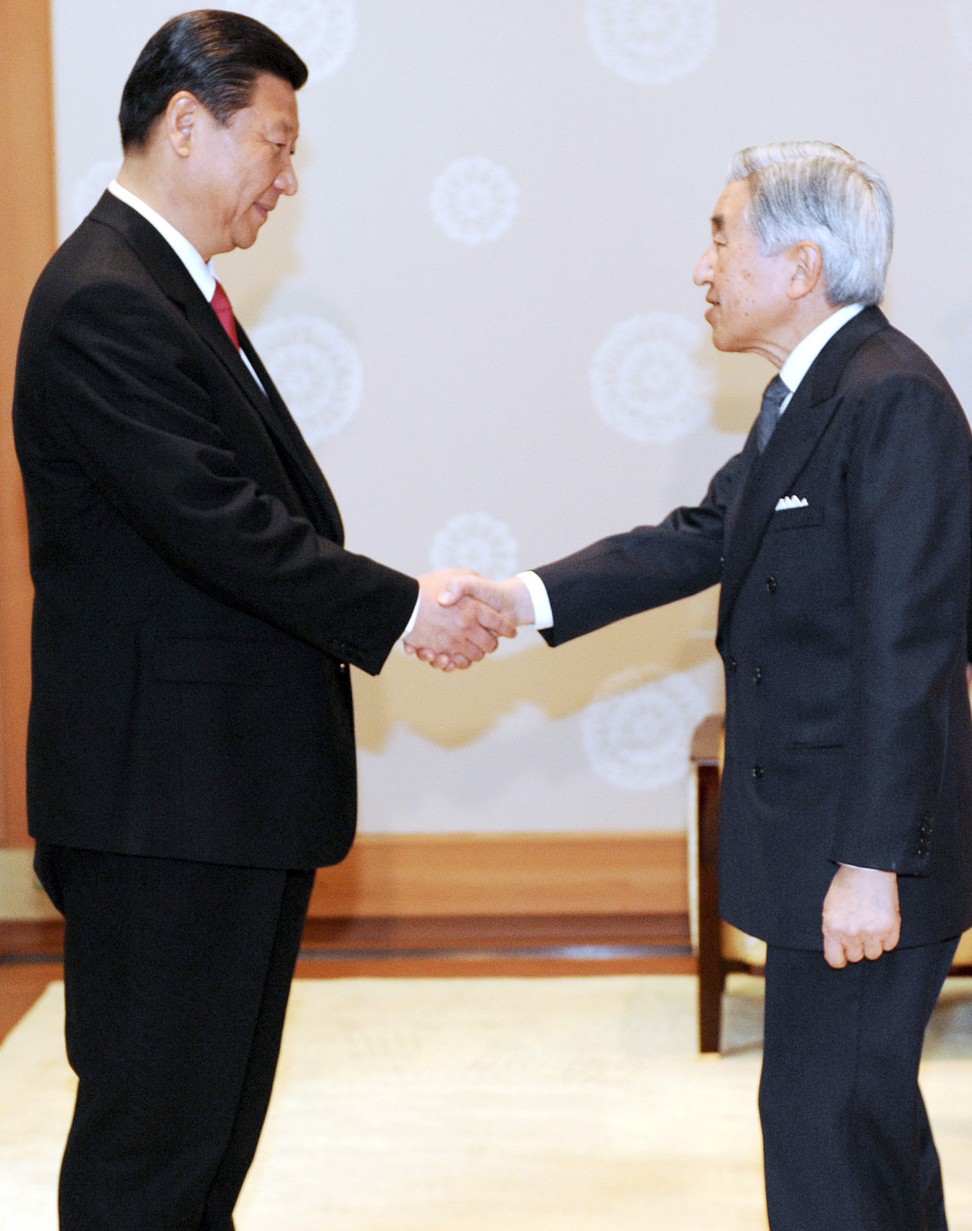
Xi Jinping, then Chinese Vice-President, meets Emperor Akihito in Tokyo in December 2009. Photo: Xinhua
Japan and China both claim the territorial rights over the Senkaku Islands – also known as the Diaoyu Islands – in the East China Sea.
In 2012, Japanese government purchased three of the disputed islands from private owners, which prompted large-scale protests in China. In the following year, Beijing set up the East China Sea Air Defense Identification Zone which included the islands, requiring all aircraft entering the zone to file a flight plan, further intensifying the conflict between the two countries.
Efforts this summer to intensify diplomacy “should bring greater stability to the East China Sea and may even lead to greater Sino-Japanese cooperation on regional issues like economic integration”, Zhang said.
“But Japan’s concern for a rising China and China’s expanding maritime activities in the East China Sea will continue,” Zhang added, noting that Japan has also expanded its military capabilities in disputed areas such as the South China Sea.
Chinese President Xi Jinping and Japanese Prime Minister Shinzo Abe are likely to continue their diplomacy during and after June’s G20 summit in Osaka. Photo: EPA
Source: SCMP
Posted in Abe administration, Akihito, Beijing, Centre for Asian Pacific Studies, Chinese President Xi Jinping, Chrysanthemum Throne, Diaoyu Islands dispute, East China Sea, East China Sea Air Defense Identification Zone, emperor emeritus, Emperor Naruhito, Great Hall of the People, Hong Kong, Japan’s new emperor, Japanese flag, Lingnan University, Osaka, Pacific Forum foreign policy research institute, Prime Minister Shinzō Abe, Pusan National University, Reiwa era, Ryo Hinata-Yamaguchi, Sino-Japanese relations, Uncategorized, Washington, Zhang Baohui |
Leave a Comment »
30/04/2019
SINGAPORE (Reuters) – Some 20 million barrels of Iranian oil sitting on China’s shores in the northeast port of Dalian for the past six months now appears stranded as the United States hardens its stance on importing crude from Tehran.
Iran sent the oil to China, its biggest customer, ahead of the reintroduction of U.S. sanctions last November, as it looked for alternative storage for a backlog of crude at home.
The oil is being held in so-called bonded storage tanks at the port, which means it has yet to clear Chinese customs. Despite a six-month waiver to the start of May that allowed China to continue some Iranian imports, shipping data shows little of this oil has been moved.
Traders and refinery sources pointed to uncertainty over the terms of the waiver and said independent refiners had been unable to secure payment or insurance channels, while state refiners struggled to find vessels.
The future of the crude, worth well over $1 billion at current prices, has become even more unclear after Washington last week increased its pressure on Iran, saying it would end all sanction exemptions at the start of May.
“No responsible Chinese company with any international exposure will have anything to do with Iran oil unless they are specifically told by the Chinese government to do so,” said Tilak Doshi of oil and gas consultancy Muse, Stancil & Co in Singapore.
Iran previously stored oil in 2014 at Dalian during the last round of sanctions that was later sold to buyers in South Korea and India. reut.rs/2yo9Se6
China last week formally complained to the United States over the unilateral Iran sanctions, but U.S. officials have said Washington is not considering a further short-term waiver or a wind-down period.
The 20 million barrels is equal to about a month’s worth of China’s imports from Iran over the past six months, or about two days of the country’s total imports.
Iran says it will continue to export oil in defiance of U.S. sanctions.
A senior official with the National Iranian Tanker Company (NITC), who spoke on condition of anonymity, told Reuters: “We will continue to sell our oil.”
“Iran is now desperate and will deal with anyone with steep discounts as long as they get paid somehow,” said Doshi.
SOME OIL TAKEN
Some Iranian oil sent to Dalian has moved, according to a ship tracking analyst at Refinitiv.
Dan, a supertanker owned by NITC moved 2 million barrels of oil from Dalian more than 1,000 km (620 miles) to the south to the Ningbo Shi Hua crude oil terminal in March, according to Refinitiv data.
Ningbo is home to Sinopec’s Zhenhai refinery, one of the country’s largest oil plants with a capacity of 500,000 barrels a day and a top processor of Iranian oil.
Sinopec declined to comment.
The Iranian tanker was chartered by state-run Chinese trader Zhuhai Zhenrong Corp, according to Refinitiv analyst Emma Li. The NITC official confirmed the oil was taken by Zhuhai Zhenrong.
Zhenrong was started in the 1990s and brokered the first oil supply deals between Iran and China. At that time, Iran was supplying oil to China to pay for arms supplied by Beijing during the 1980-88 Iran-Iraq war. Zhuhai Zhenrong still specializes mainly in buying Iranian oil.(reut.rs/2IHlvEx)
An official at the general manager’s office with Zhuhai Zhenrong’s office in Beijing said he could not immediately comment. The company did not reply to a fax seeking comment.
For now, more Iranian oil is heading to China, with the supertankers Stream and Dream II due to arrive in eastern China from Iran on May 5 and May 7, respectively, Refinitiv data showed.
Some of this crude may be from Chinese investments into Iranian oilfields, a sanctions grey area.
Whether China will keep buying oil from Iran remains unclear, but analysts at Fitch Solutions said in a note “there may be scope for imports via barter or non-compliance from … China.”
Muse, Stancil & Co’s Doshi said the only way to get the Iranian oil out of Dalian now was by cheating.
“Only rogue parties might try to cheat the system and try to pass the Iranian oil at Dalian as something else via fraudulent docs. But I doubt this is easy or can amount to much in terms of volume.”
(MAP: Iranian supertanker frees some oil from China storage in March, tmsnrt.rs/2W1FJvK)
Source: Reuters
Posted in Beijing, bonded storage tanks, China alert, Chinese customs, crude oil terminal, Dalian, Dan, Emma Li, insurance channels, Iranian crude, Iranian imports, Iranian oilfields, Muse, Stancil & Co, National Iranian Tanker Company (NITC), Ningbo Shi Hua, oil and gas consultancy, refinery sources, Refinitiv, Refinitiv analyst, Reuters, shipping data, Singapore, Sinopec, state-run Chinese trader, Stream and Dream II, supertanker, Tehran, Tilak Doshi, Uncategorized, United States, Washington, Zhuhai, Zhuhai Zhenrong, Zhuhai Zhenrong Corp |
Leave a Comment »
27/04/2019
- Foreign Minister Wang Yi tells French counterpart Jean-Yves Le Drian the two sides should ensure ties ‘continue to develop in a healthy way’
- Meeting comes after Paris angers Beijing by sending a warship through the sensitive Taiwan Strait
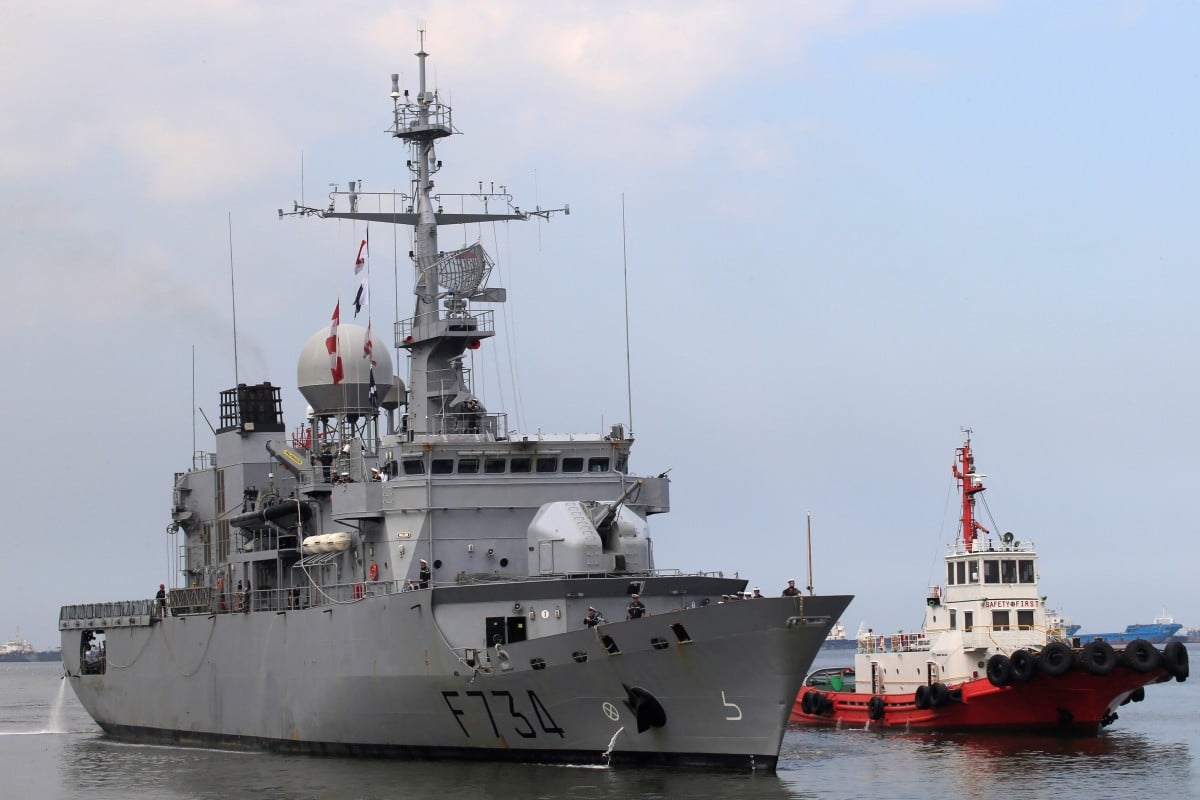
Paris upset Beijing earlier this month by sending its frigate Vendémiaire through the Taiwan Strait. Photo: Reuters
France and China should value their strong relationship and not take actions that disrupt it, China’s foreign minister told his French counterpart on Thursday, just days after
at Paris for sending a warship through the Taiwan Strait earlier this month.
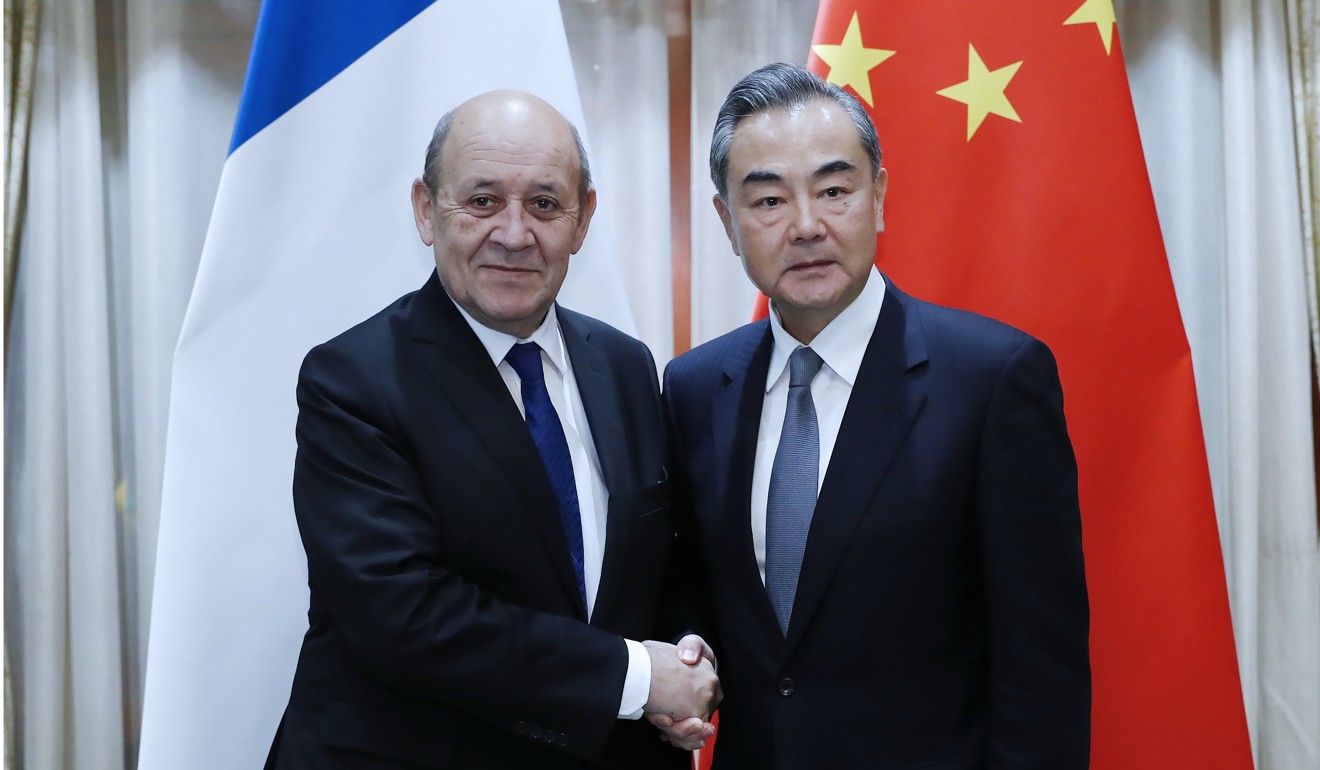
Speaking at a meeting on the sidelines of the Belt and Road Forum in Beijing, Wang Yi told Jean-Yves Le Drian that the two nations “should cherish their hard-won and good relations”.
“[We should] avoid unnecessary disruptions and ensure that bilateral relations continue to develop in a healthy and progressive way,” he was quoted as saying in a statement issued on Friday by the Chinese foreign ministry.
Le Drian responded by saying France was willing to cooperate with China to “maintain the growth momentum of bilateral relations”, according to the statement.
French Foreign Minister Jean-Yves Le Drian told his Chinese counterpart Wang Yi that Paris was willing to cooperate with Beijing. Photo: Xinhua
The
passed through the Taiwan Strait on April 6. It had been expected to take part in a naval parade on Tuesday to celebrate the 70th anniversary of China’s navy, but Beijing withdrew the invitation in response to the action.
The defence ministry in Paris said this week it had been “in close contact with the Chinese authorities” about the incident.
EU’s connectivity plan ‘more sustainable’ than belt and road
A spokesman for the European Union said the trading bloc was committed to a rules-based maritime order based on international law, including freedom of navigation, and that it was in regular contact with the member states.
Chinese academics said that after the transit by the French warship it was likely that more Western countries would make their presence known in the region and that Beijing should remain vigilant.
“France wants to show that as a great power it has a broader concern in Asia-Pacific beyond trade and other ‘soft’ fields,” said Shi Yinhong, an international relations professor at Renmin University of China in Beijing.
“And it will exert its right to free navigation in any international waters regardless of China’s position or sensitivities.”
The Taiwan Strait is about 160km (100 miles) wide and divides mainland China from Taiwan, which Beijing regards as a breakaway province awaiting reunification, by force if necessary. The US, meanwhile, is bound by law to help the self-ruled defend itself and frequently sends warships through the strait in a show of support.
Shi said that US President Donald Trump’s Indo-Pacific strategy, which regards China as a “strategic competitor”, might draw “opportunistic associates” – like France and Britain – into the region.
“Some other states could be encouraged by the French action to do the same,” he said. “But [they] may also be deterred by China’s probable military and diplomatic responses, which would be determined on a case-by-case basis.”
Putin gets behind Xi’s belt and road plan in face of US hostility
Zhu Feng, a professor of international relations at Nanjing University, said France’s conduct was intended to show the “shared concern of Western allies” regarding the security aspect of cross-strait relations.
“China must be vigilant to the new tendency [for nations] to internationalise the Taiwan Strait issue,” he said, though added that the transit of the French warship was “more of a symbolic gesture than actual action”.
Philippe Le Corre, a senior fellow at the Carnegie Endowment for International Peace in Washington and former special assistant for international affairs to the French defence minister, said the Taiwan Strait did not belong to any one nation and, therefore, ships were within their rights to sail through it without prior authorisation.
“From Paris’s point of view, like the rest of the EU, the principles of freedom of navigation are critical to the world economy and trade, therefore there is no reason why European navies or even commercial ships should not be allowed to cross the Taiwan Strait,” he said.
“This is EU policy, not just France or the UK. It has nothing to do with the US, it is international law.”
Source: SCMP
Posted in avoid causing unnecessary upset, Beijing, belt and road plan, China alert, European Union, foreign minister, France, Jean-Yves Le Drian, Nanjing University, Paris, Philippe Le Corre, professor of international relations, Putin, senior fellow at the Carnegie Endowment for International Peace, Taiwan Strait, Uncategorized, US hostility, Wang Yi, warship, Washington, Zhu Feng |
Leave a Comment »
25/04/2019
WASHINGTON (Reuters) – A French warship passed through the strategic Taiwan Strait this month, U.S. officials told Reuters, a rare voyage by a vessel of a European country that is likely to be welcomed by Washington but increase tension with Beijing.
The passage, which was confirmed by China, is a sign that U.S. allies are increasingly asserting freedom of navigation in international waterways near China. It could open the door for other allies, such as Japan and Australia, to consider similar operations.
The French operation comes amid increasing tensions between the United States and China. Taiwan is one of a growing number of flashpoints in the U.S.-China relationship, which also include a trade war, U.S. sanctions and China’s increasingly muscular military posture in the South China Sea, where the United States also conducts freedom of navigation patrols.
Two officials, speaking on condition of anonymity, said a French military vessel carried out the transit in the narrow waterway between China and Taiwan on April 6.
One of the officials identified the warship as the French frigate Vendemiaire and said it was shadowed by the Chinese military. The official was not aware of any previous French military passage through the Taiwan Strait.
The officials said that as a result of the passage, China notified France it was no longer invited to a naval parade to mark the 70 years since the founding of China’s Navy. Warships from India, Australia and several other nations participated.
China said on Thursday it had lodged “stern representations” with France for what it called an “illegal” passage.
“China’s military sent navy ships in accordance with the law and the rules to identify the French ship and warn it to leave,” defence ministry spokesman Ren Guoqiang told a regularly scheduled media briefing, while declining to say if the sailing had led to the withdrawal of France’s invitation to the parade of ships this week.
“China’s military will stay alert to firmly safeguard China’s sovereignty and security,” he said.
Colonel Patrik Steiger, the spokesman for France’s military chief of staff, declined to comment on an operational mission.
The U.S. officials did not speculate on the purpose of the passage or whether it was designed to assert freedom of navigation.
MOUNTING TENSIONS
The French strait passage comes against the backdrop of increasingly regular passages by U.S. warships through the strategic waterway. Last month, the United States sent Navy and Coast Guard ships through the Taiwan Strait.
The passages upset China, which claims self-ruled Taiwan as part of its territory. Beijing has been ramping up pressure to assert its sovereignty over the island.
Chen Chung-chi, spokesman for Taiwan’s defence ministry, told Reuters by phone the strait is part of busy international waters and it is “a necessity” for vessels from all countries to transit through it. He said Taiwan’s defence ministry will continue to monitor movement of foreign vessels in the region.
“This is an important development both because of the transit itself but also because it reflects a more geopolitical approach by France towards China and the broader Asia-Pacific,” said Abraham Denmark, a former U.S. deputy assistant secretary of defence for East Asia.
The transit is a sign that countries like France are not only looking at China through the lens of trade but from a military standpoint as well, Denmark said.
Last month, France and China signed deals worth billions of euros during a visit to Paris by Chinese President Xi Jinping. French President Emmanuel Macron wants to forge a united European front to confront Chinese advances in trade and technology.
Source: Reuters
Posted in Abraham Denmark, Australia, Beijing, Chen Chung-chi, China alert, Chinese advances in trade and technology, Chinese President Xi Jinping, Coast guard, Colonel Patrik Steiger, defence ministry spokesman, European country, founding of China’s Navy, France, freedom of navigation, French frigate, French President Emmanuel Macron, French warship, geopolitical approach, India alert, international waterways, military chief of staff, navy, participated, Ren Guoqiang, Reuters, ships, Taiwan Strait, Taiwan’s defence ministry, tensions, U.S. deputy assistant secretary of defence for East Asia, Uncategorized, united European front, United States, Vendemiaire, warships, Washington |
Leave a Comment »




 CHINDIA ALERT: You'll be living in their world, very soon