Chindia Alert: You’ll be Living in their World Very Soon
aims to alert you to the threats and opportunities that China and India present. China and India require serious attention; case of ‘hidden dragon and crouching tiger’.
Without this attention, governments, businesses and, indeed, individuals may find themselves at a great disadvantage sooner rather than later.
The POSTs (front webpages) are mainly 'cuttings' from reliable sources, updated continuously.
The PAGEs (see Tabs, above) attempt to make the information more meaningful by putting some structure to the information we have researched and assembled since 2006.
Image copyright BRENDAN SMIALOWSKIImage caption Kim Jong-un has not been seen in public for more than two weeks
Speculation and rumour about Kim Jong-un’s health may amount to nothing, but questions about who might succeed him in the short or long term will always be there. The BBC spoke to analysts about the contenders and whether history is on their side.
A male member of the Kim family has been in charge of North Korea ever since its founding by Kim Il-sung in 1948 – and the mythology of this family runs deep throughout society.
Propaganda about its greatness begins for citizens before they can even read: pre-schoolers sing a song called: “I want to see our leader Kim Jong-un.”
So how can you imagine a North Korea without this symbolic and political figure at the top? How would elites organise themselves, as well as society as a whole?
The easy answer is: we don’t know. More interestingly, they don’t know either. They have never had to do it.
Image copyrightXINHUAImage captionKim Il-sung is the founder of North Korea and his son Kim Jong-il took over
As Kim Jong-un was being prepared for power, they even began using the term “Paektu Bloodline” to help legitimise his rule. Paektu is the sacred and mythologised mountain where Kim Il-sung is said to have waged guerrilla war and where Kim Jong-il was reportedly born. Kim Jong-un still goes there when he wants to emphasise important policy decisions.
There has always been a Kim at the ideological heart of the country.
What would North Korea be like without such an heir? Kim Jong-un, 36, is believed to have children – but they are far too young. It is thought he has three children, the oldest being 10 and the youngest three. Kim Jong-un himself was considered young when he took power – he was 27.
It is likely that some sort of group leadership would emerge, perhaps as in Vietnam, that leans heavily on the founder’s teachings and legitimacy to boost their own standing.
Observers can track who holds certain key positions and can follow news and open-source intelligence about important institutions, but can’t really tell how factions are developing, nor who is holding power through personal rather than institutional bonds. Moreover, sometimes vice or deputy directors wield more real power than the titular heads of institutions. This makes all predictions extremely difficult.
The three remaining Kims
Image copyrightPATRICK SEMANSKY – POOL /GETTY IMAGESImage captionKim Yo-jong, as the only woman in the top leadership, has sparked fascination
The are three Kims who could potentially be involved in the political make-up of North Korea if Kim Jong-un were to disappear. They all face limitations in carrying on family rule.
The first is Kim Yo-jong, Kim Jong-un’s younger sister. She is said to have been a favourite of her father who commented on her precocity, her interest in politics from a young age. Her manner is efficient, mild and one suspects rather observant. Much has been made of her closeness to her brother. At the Singapore Trump-Kim summit she was famously on hand to pass him a pen to sign the agreement with, and at the next summit in Hanoi, was pictured peeking out from behind corners as her brother posed for statesman-like photos.
Yet she was not above a temporary demotion after the Hanoi summit – purportedly because of its failure although this will never be confirmed. She doesn’t sit on the top policy-making body, the State Affairs Commission, but is an alternate member of the Politburo and vice director of the Propaganda and Agitation Department (PAD) of the Workers’ Party of Korea. These may seem like incomprehensible acronyms but the PAD is a powerful organisation that ensures ideological loyalty in the system.
She is a woman, however, and this makes it hard to imagine her occupying the top position in such a deeply patriarchal country. North Korea is an extremely male state, in which gender carries rigid expectations. Being supreme leader, and certainly running the military, does not fit in the range of womanly duties.
The second is Kim Jong-chul. He is Kim Jong-un’s older brother, but has never appeared interested in politics or power. (He is known to be interested in Eric Clapton.) At most, he could be a symbolic link to the Kim family: perhaps made the head of a foundation and put forward to read the odd speech.
The final one is Kim Pyong-il, Kim Jong-il’s half-brother. His mother – Kim Jong-il’s stepmother – was angling to have him become Kim Il-sung’s successor. She failed and was sidelined by Kim Jong-il as he rose in influence. Kim Pyong-il was sent to Europe in 1979, where he has held various ambassadorships, returning to North Korea only last year. This means it is very unlikely he has the network to be a central player in elite politics in Pyongyang.
The second-most powerful man in North Korea right now
Image copyrightALEXANDER NEMENOV/AFP VIA GETTY IMAGESImage captionAs special envoy for Kim Jong-un Choe Ryong-hae (right) has met foreign dignitaries
There are other individuals who have been central in the Kim Jong-un era, but it is difficult to know who among them would form co-operative relationships and who would compete with one another.
One is Choe Ryong-hae. He has had his ups and downs under Kim Jong-un, but having weathered a few storms currently sits on the presidium of the politburo and is also first vice chairman of the State Affairs Commission. Last year he became the first new president in 20 years, replacing the aging Kim Yong-nam – so he is the person who represents the North at international engagements.
Choe has also held high positions in the military and the Organization and Guidance Department (OGD) of the Worker’s Party of Korea, responsible for enforcing loyalty throughout the regime. This is an extremely powerful organisation: it enforces the adherence of all citizens to North Korea’s ideology. He is probably the second most powerful man in North Korea.
The old spymasters and rising political grandees
Image copyrightOLIVIER DOULIERY-POOL/GETTY IMAGESImage captionKim Yong-chol travelled to Washington DC to meet Donald Trump
Another is Kim Yong-chol. This general paved the way for the Trump-Kim summits, meeting US Secretary of State Mike Pompeo several times. He has been head of the United Front Department (responsible for relations with South Korea) and the Reconnaissance General Bureau, the country’s main intelligence service. He seems to have suffered a demotion following the collapse talks with the United States, but it is unlikely this spymaster will remain obscure for long.
Yet another is Kim Jae-ryong. As well as being on the State Affairs Commission, he is Premier of the Cabinet, a moderately influential position. Relatively little is known about him, but his star has risen in the past years as others have fallen. He is known for managing industries and ran the most isolated province, home to key military-industrial sites, for several years. This may mean he has been closely involved in the nuclear program.
Jong Kyong-taek is responsible for the State Security Department, which investigates and punishes political crimes. It also helps physically protect the leadership. These are crucial responsibilities that help enforce stability in the system.
Hwang Pyong-so is another official who has held top military posts and has run the OGD in the Kim Jong-un era. Like Choe (and many others) he has been disciplined; he doesn’t seem to have been rehabilitated in the same way, however. Other 2010s foreign policy stalwarts Ri Yong-ho and Ri Su-yong have also seen roles diminish recently. They have been replaced by Ri Son-gwon and Kim Hyung-jun. The former is said to be an ally of Kim Yong-chol.
The military enforcers
A handful of top generals of the Korean People’s Army (KPA) would also certainly exert influence in any transition period. Currently, two men sit atop the General Political Bureau of the KPA, Kim Su-gil and Kim Won-hong. This bureau enforces political loyalty in the military, something that would be absolutely crucial during periods of uncertainty.
Kim Won-hong, helps illustrate how difficult it is to predict how power would be shared if Kim Jong-un were no longer there. Kim Won-hong and Hwang Pyong-so had been thought to be rivals, competing to influence Kim Jong-un at the other’s expense.
Amongst top elites, who would clash and who would ally? Would there be pro and anti-Kim Yo-jong factions? Would the fear of instability stop rivalries from getting out of hand? After all, it is in no elite politician’s interest to see the state collapse, opening the door for some kind of takeover by South Korea, or even China.
There is currently no perfect contender: his sister would have to overcome the sexism and the break from tradition of a male heir. Anybody else is not directly descended from that all-important Paektu bloodline. but in the end, they will all have to think of the unity of the state they have defied every international norm to preserve.
BRUSSELS (Reuters) – The euro zone’s trade surplus with the rest of the world grew in February, with a decline in imports from China as well as sharply lower energy needs because of mild winter weather.
The unadjusted goods trade surplus grew to 23.0 billion euros ($25.1 billion) in February, compared with 18.5 billion euros a year earlier. Exports rose by 1.6%, while imports fell by 1.0%.
For China, which already had widespread coronavirus restrictions in place in February, exports from the European Union as a whole were slightly lower than in February 2019. However, imports were down by 8.1%, according to data on Eurostat’s website.
Energy imports as a whole also declined by 9.6% in February, when comparing Jan-Feb data issued on Monday and January data from a month ago. That translated into 10.1% lower imports from Russia and 5.9% less from Norway.
The trade surplus with the United States, by contrast, grew by 21% in the month as exports increased and imports declined. The persistent surplus in goods has been a source of transatlantic tension.
On a seasonally adjusted basis the euro zone trade surplus also rose to 25.8 billion euros in February from 18.2 billion euros in January. Exports were 1.8% higher month-on-month and imports 2.3% lower.
China’s famed Yiwu International Trade Market, a barometer for the health of the nation’s exports, has been hammered by the economic fallout from Covid-19
Export orders have dried up amid sweeping containment measures in the US and Europe and restrictions on foreigners entering China have shut out international buyers
The coronavirus pandemic has severely dented wholesale trade at the Yiwu International Trade Market in China. Photo: SCMP
The Yiwu International Trade Market has always been renowned as a window into the vitality of Chinese manufacturing, crammed with stalls showcasing everything from flashlights to machine parts.
But today, as the coronavirus pandemic rips through the global economy, it offers a strikingly different picture – the dismal effect Covid-19 is having on the nation’s exports.
The usually bustling wholesale market, home to some 70,000 vendors supplying 1,700 different types of manufactured goods, is a shadow of its former self.
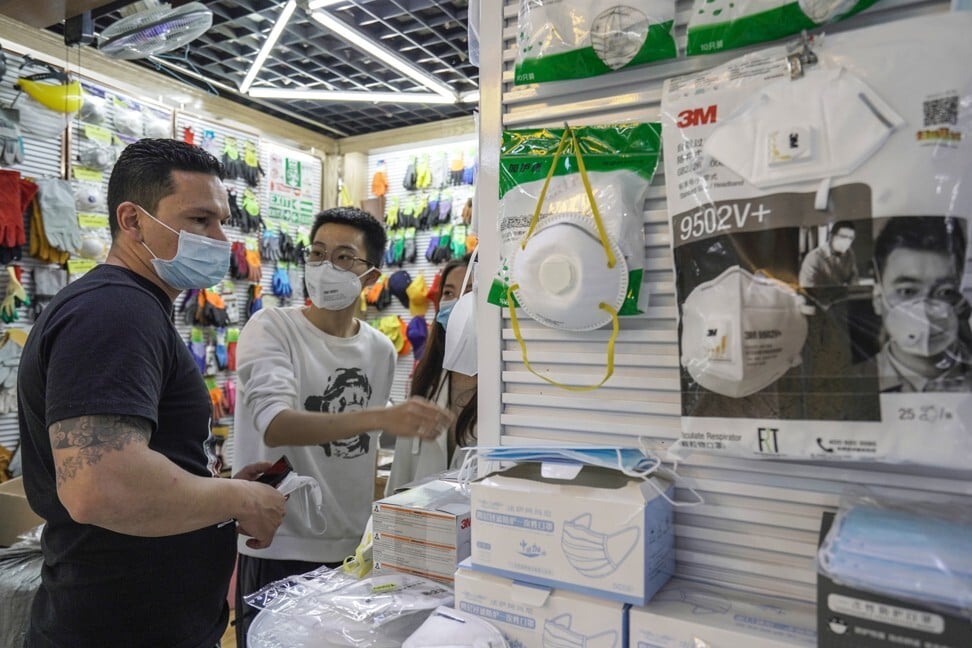
Only a handful of foreign buyers traipse through aisles of the sprawling 4-million-square-metre (43 million square feet) complex, while store owners – with no customers to tend to – sit hunched over their phones or talking in small groups.
A foreign buyer visits a stall selling face masks. Photo: Ren Wei
“We try to convince ourselves that the deep slump will not last long,” said the owner of Wetell Razor, Tong Ciying, at her empty store. “We cannot let complacency creep in, although the coronavirus has sharply hampered exports of Chinese products.”
Chinese exports plunged by 17.2 per cent in January and February combined compared to the same period a year earlier, according to the General Administration of Customs. The figure was a sharp drop from 7.9 per cent growth in December.
After riding out a supply shock that shut down most of its factories, China is now facing a second wave demand shock, as overseas export orders vanish amid sweeping containment measures to contain the outbreak around the globe.
Nowhere is that clearer to see than in Yiwu. The city of 1.2 million, which lies in the prosperous coastal province of Zhejiang, was catapulted into the international limelight as a showroom for Chinese manufacturing when the country joined the World Trade Organisation in 2001.
Coronavirus: Is the gig economy dead, and should the self-employed worry?
Before the pandemic, thousands of foreign buyers would flock to the mammoth trade market each day to source all manner of products before sending them home.
But the outbreak, which has claimed the lives of more than 113,000 people and infected more than 1.9 million around the world, is proving a major test for the market and the health of the trade dependent city.
Imports and exports via Yiwu last year were valued at 296.7 billion yuan (US$42.2 billion) – nearly double the city’s economic output.
Businesses, however, are facing a very different picture in 2020. Most traders at the market say they have lost at least half their business amid the pandemic, which was first detected in the central Chinese city of Wuhan last year.
Just take a look at the situation in Yiwu and you will understand the extent of the virus’ effect on China’s trade with foreign countries – Tianqing
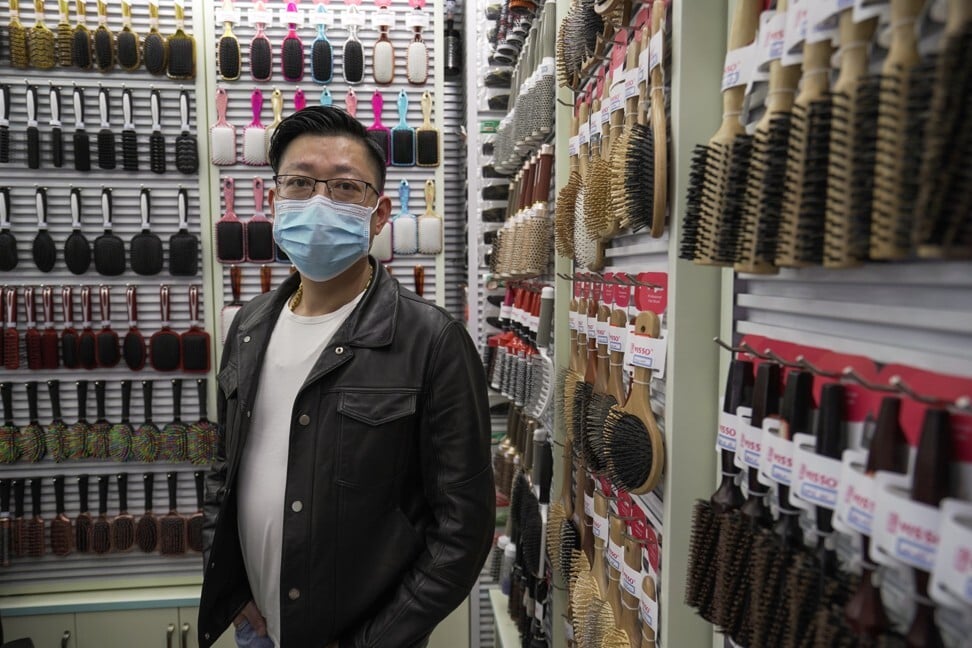
“Yiwu is the barometer for China’s exports,” said Jiang Tianqing, the owner of Beauty Shine Industry, a manufacturer of hair brushes. “Just take a look at the situation in Yiwu and you will understand the extent of the virus’ effect on China’s trade with foreign countries.”
Jiang said his business was only just hanging on thanks to a handful of loyal customers placing orders via WeChat.
“I assume it will be a drawn-out battle against the coronavirus,” he said. “We are aware of the fact that developed economies like the US and Europe have been severely affected.”
The Yiwu market reopened on February 18 after a one-month long hiatus following the Lunar New Year holiday and the government’s order to halt commercial activities to contain the spread of the outbreak.
Jiang Tianqing, owner of hair brush company Beauty Shine Industry. Photo: Ren Wei
But facing the threat of a spike in imported cases, Beijing banned foreigners from entering the country in late March – shutting out potential overseas buyers.
Despite the lack of business, local authorities have urged stall owners to keep their spaces open to display Yiwu’s pro-business attitude, owners said.
“For those bosses who just set up their shops here, it would be a do-or-die moment now since their revenue over the next few months will probably be zero,” said Tong. “I am lucky that my old customers are still making orders for my razors.”
The impact of the coronavirus is just the latest challenge for local merchants, who normally pay 200,000 yuan (US$28,000) per year for a 10-square-metre (108 square feet) stall at the market.
Traders were hard hit by the trade war between China and the United States when the Trump administration imposed a 25 per cent tariff on US$200 billion of Chinese imports last year.
At the time, some Chinese companies agreed to slash their prices to help American buyers digest the additional costs.
“But it is different this time,” said Jiang. “Pricing does not matter. Both buyers and sellers are eager to seal deals, but we are not able to overcome the barriers [to demand caused by the virus].”
Ma Jun, a manager with a LED light bulb trading company, said the only export destination for her company’s products was war-torn Yemen because it was the only country with ports still open.
It is a public health crisis that ravages not just our businesses, but the whole world economy – Dong Xin
Dong Xin, an entrepreneur selling stationery products, said he could not ship the few orders he had because “ocean carriers have stopped operations”.
“It is a public health crisis that ravages not just our businesses, but the whole world economy,” he said. “The only thing can do is to pray for an early end to the pandemic.”
Most wholesale traders in the Yiwu market run manufacturing businesses based outside the city, so a sharp fall in sales has a ripple effect on their factories, potentially resulting in massive job cuts.
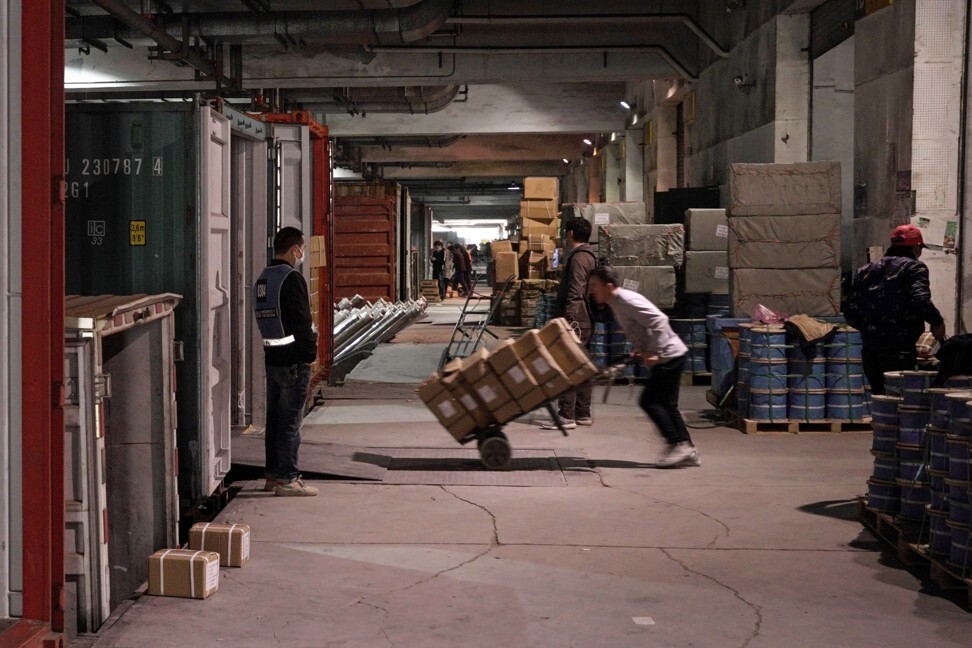
Workers pack containers at Yiwu Port, an inland port home to dozens of warehouses. Photo: Ren Wei
At Yiwu Port, an inland logistics hub full of warehouses where goods from the factories are unpacked and repacked for shipping abroad, container truck drivers joke about their job prospects.
“We used to commute between Shaoxing and here five times a week, and now it is down to twice a week,” said a driver surnamed Wang, describing the trip from his home to the shipping port, just over 100km away.
“At the end of the day, we may not be infected with the coronavirus, but our jobs will still be part of the cost of the fight against it.”
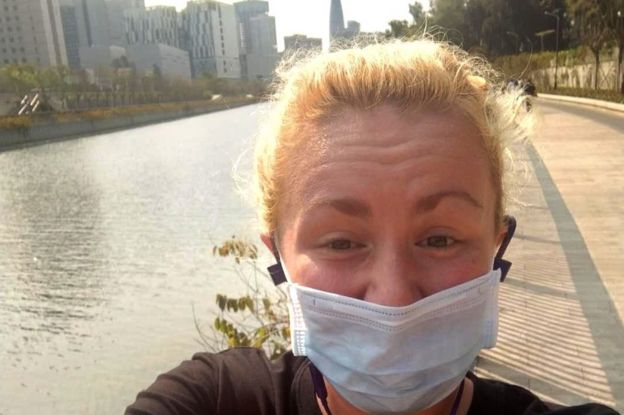
Image copyright JEN SMITHImage caption Jen Smith lives in Shenzhen, where it’s compulsory to wear a mask outside at all times
My Money is a series looking at how people spend their money – and the sometimes tough decisions they have to make. Here, Jen Smith, a children’s TV presenter from Shenzhen in southern China, takes us through a week in her life, as the country slowly emerges from the coronavirus pandemic.
Over to Jen…
Since being in lockdown I’ve been bingeing on Keeping Up With the Kardashians. It starts with one episode after dinner, blink, and suddenly it’s 3am. YouTube, Facebook, Google and Instagram are all banned here, so you’d think I’d be a binge-free socialite after a year and a half living in China. Well, those sites are banned unless you have a VPN – I pay $120 (£97) a year for mine, so Sunday was a late night, with a lie-in until 10.30 this morning.
I go for a run – mask and all, as it’s currently illegal to be outside without one. I make my coffee (bought in the UK), fruit smoothie (about 20 yuan, $2.82, £2.27) and cereal (80 yuan a packet) before cycling to work.
Today is a bit of a crazy day in the studio. I work as a children’s TV presenter. My company has profited from the lockdown as more children are watching the shows non-stop – meaning a rapid turnaround for us.
We shoot two shows from 2-6pm then “break” for a meeting. We discuss tomorrow’s shoot while I eat dinner – homemade aubergine curry. It is normal for the Chinese to eat breakfast, lunch and dinner at work. Normally the company gives all staff 25 yuan through a food-ordering app, and the whole company would eat together. However, because of the current social distancing, that social time is in the far distant past!
I make it home for 8pm, order some deep-fried cauliflower as a snack (45 yuan) and start the inevitable Kardashian binge.
Total spend: 65 yuan ($9.10, £7.37)
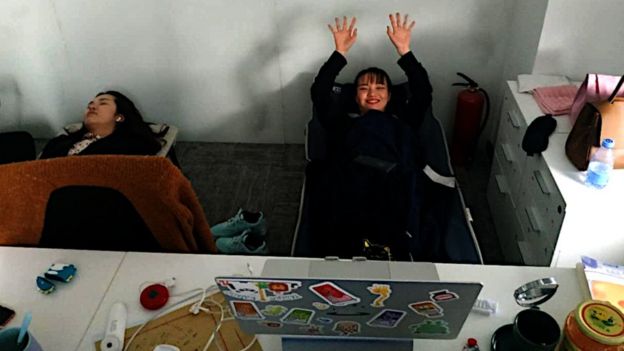
Image copyright JEN SMITHImage caption Workers often have a midday nap in the office
It’s a much earlier start (7.30am), but the same morning routine. On my cycle to work I notice that the traffic is almost back to normal – Shenzhen is inhabited by well over 12 million people, so as you can imagine rush hour is intense. This doesn’t change the fact that everywhere you go you have to scan a QR code – leaving my apartment, using the walkway by the river, and getting into the building I work in.
After a morning of shooting I eat homemade potato curry and settle down for a nap. Naptime is such a commonality in China that people store camp beds at the office. I order a coffee and banana chips (20 yuan) for a pick-me-up before the afternoon’s shooting.
It’s St Paddy’s Day so I head to the local pubs area, catch dinner at a French restaurant (222 yuan), then a few drinks (25 yuan – mainly bought by men at the bar for us) before a very tipsy cycle home.
Total spend: 242 yuan ($34, £25)
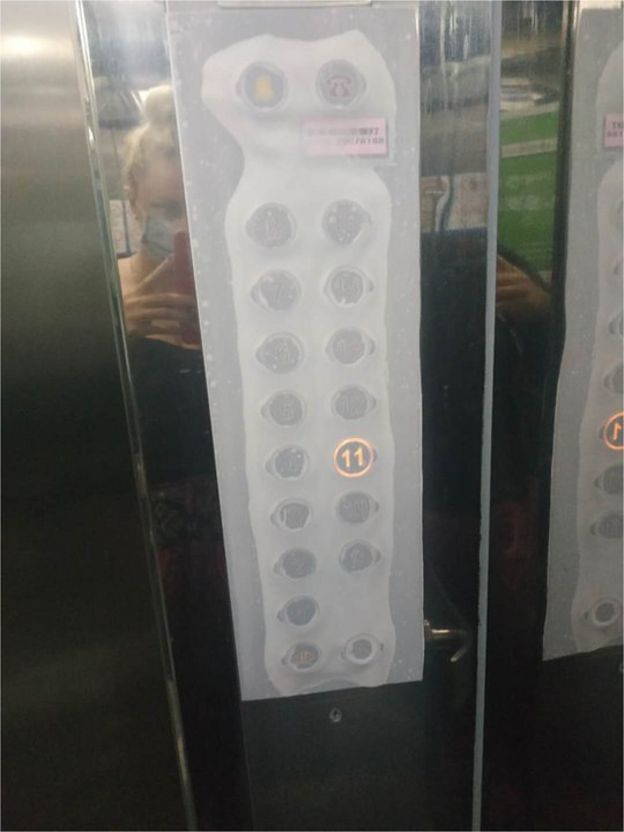
Image copyright JEN SMITHImage caption A disposable cover reduces the risk of transmitting the virus by touching lift buttons
The morning’s shoot (thankfully) was cancelled, so I nursed a hangover in bed until around 11am, at which point I had a phone meeting for a company that I do “plus-size” modelling for (for context I’m a UK size 12). I eat a bowl of cereal and order more cauliflower (45 yuan) while I watch a film.
At 2.30pm an intern picks me up, and we head to the government building to apply for a new work visa. Ironically, the image taken for my visa is Photoshopped to remove wrinkles, freckles and my frizzy hair. When I ask why this is being done for an identification document, the intern replies that the government wants it to be neat, and “the Chinese way” is to have altered photos.
I don’t argue, and have an interview before I hand in my passport. The whole process takes around two hours, so I order food to my house while on the way home (150 yuan for burger, salad and cake!) I take a taxi across town which ends up being 39.05 yuan.
The day starts at 8.30am with coffee and reading, before I get a manicure (280 yuan). My nail lady has been very worried about the state of my hands during the virus, so she spends a whopping two and a half hours treating them while I watch a film (0.99 yuan – bought by her). Because the manicure was so long I don’t have time to eat lunch before our fitness shoot, which runs from 2-5.30pm. I then have an appointment to sign into a building which I’ll shoot in tomorrow.
The building is near a supermarket called Ole (one of the only western supermarkets), and I pick up groceries for 183 yuan before heading home to cook, listen to podcasts and prep for the big day of shooting on Friday.
Total spend: 463 yuan ($64, £52.5)
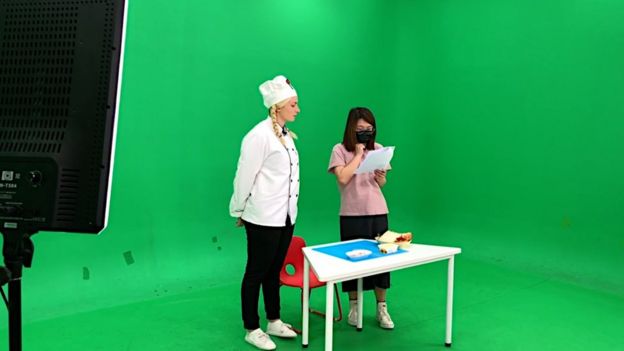
Image copyright JEN SMITHImage caption Jen filming in front of a green screen – a more colourful digital background will be added later in post-production
Fridays are generally my busiest day. The way the Chinese seem to function, is a boss will say “I want this done now” and then employees rush to finish it. Generally, they will write scripts on Monday and Tuesday, discuss Wednesday, then we shoot later in the week. The poor editors, despite mandatory office hours during the week, then have to work tirelessly through the weekend to achieve a Sunday evening deadline.
I start with mashed avocado and a hard-boiled egg before work. The morning shoot runs from 9.30-11.40am, and I have an early lunch – homemade curry again, before my regular nap time. The afternoon shoot is three hours, so I have time to pop home and shower before a live stream at 6pm. I take a taxi to and from the live stream which ends up being 28 yuan.
Total spend: 28 yuan ($3.92, £3.18)
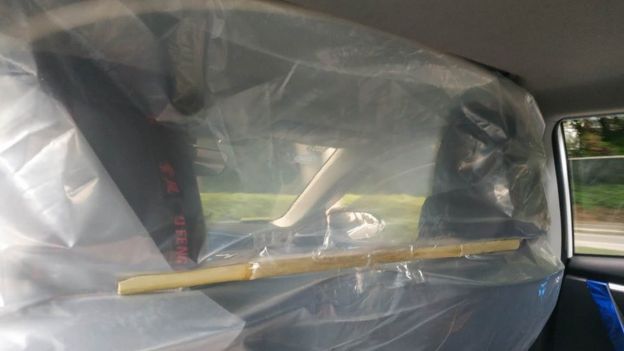
Image copyright JEN SMITHImage caption A taxi driver has improvised a screen to reduce the risk of picking up Covid-19 from a passenger
Finally the weekend! Although things are slowly getting better in China after the coronavirus outbreak, there’s still not too much to do. So I use this time to write, play my piano and generally chill inside. Around 3pm, I venture outside to the shops to pick up some snacks (159.60 yuan) before settling in to ring my family back in the UK with a homemade cocktail – a friend of mine in Canada is doing a daily live stream, “quarantinis” where he teaches you how to make cocktails!
What’s interesting is that a lot of people have started leaving their houses again, but it is still illegal to go outside without a mask on, and temperature checks are taken everywhere. I was even refused entry to a building due to being foreign. I imagine this is because recently the only new cases are being brought in by non-Chinese travelling back to China.
Total spend: 159.60 yuan ($22, £18)
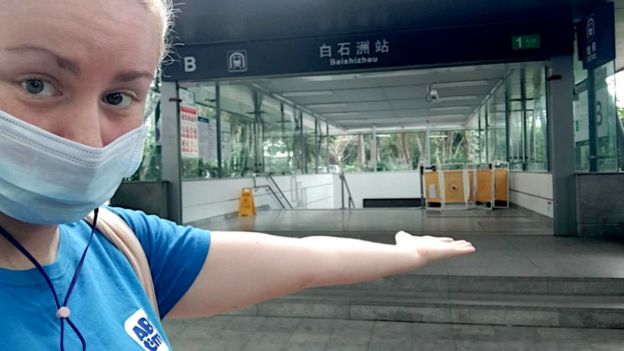
Image copyright JEN SMITHImage caption Shenzhen’s Metro system is still very quiet
It’s another slow day for me as many foreigners have not yet returned to China, so most of my friends are out of the country. I start the day by reviewing potential scripts.
This takes me to 1.30pm without realising I haven’t eaten. I decide to go for a quick run and I return to eat mashed avocado and a hard-boiled egg.
I home-bleach my hair with products bought in the UK, then head back to editing again. About half way through the afternoon I take a little break to practice Chinese. I use an app which is fantastic and free! Definitely worth everyone downloading this during social distancing so you can learn new skills!
For dinner I order online again, a three-dish meal for 160 yuan.


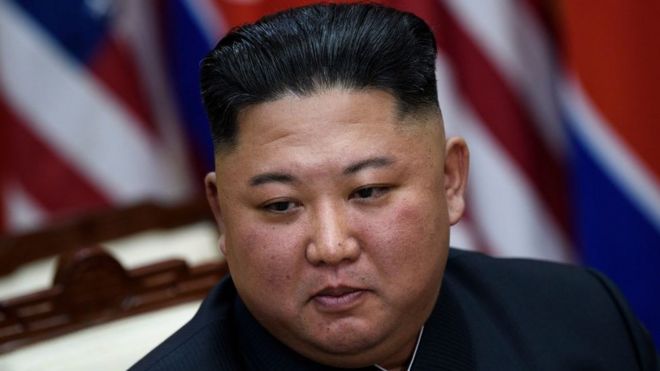 Image copyright BRENDAN SMIALOWSKI
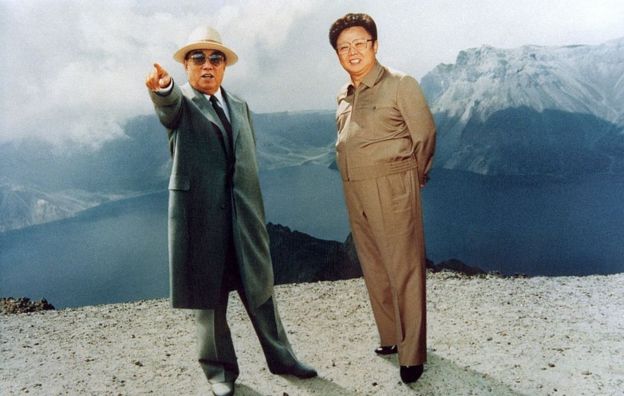 Image copyrightXINHUA
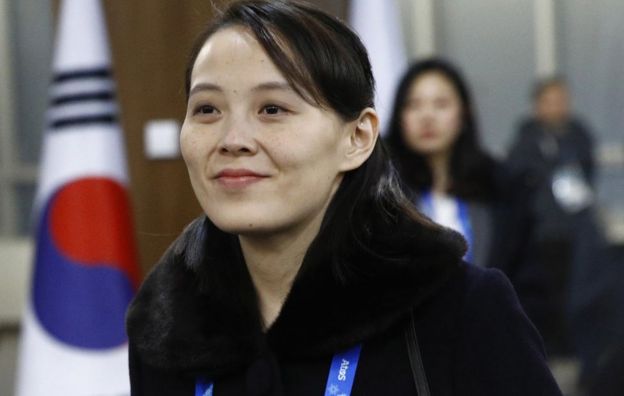 Image copyrightPATRICK SEMANSKY – POOL /GETTY IMAGES
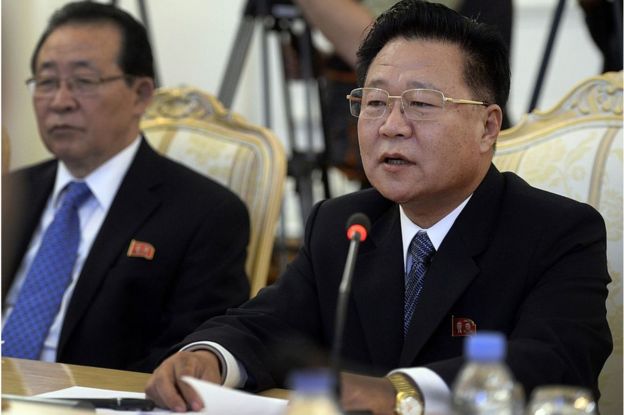 Image copyrightALEXANDER NEMENOV/AFP VIA GETTY IMAGES
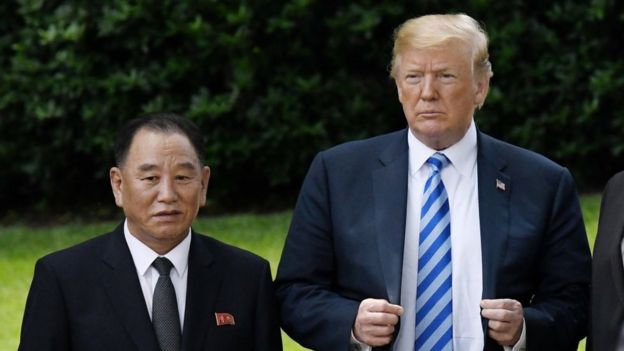 Image copyrightOLIVIER DOULIERY-POOL/GETTY IMAGES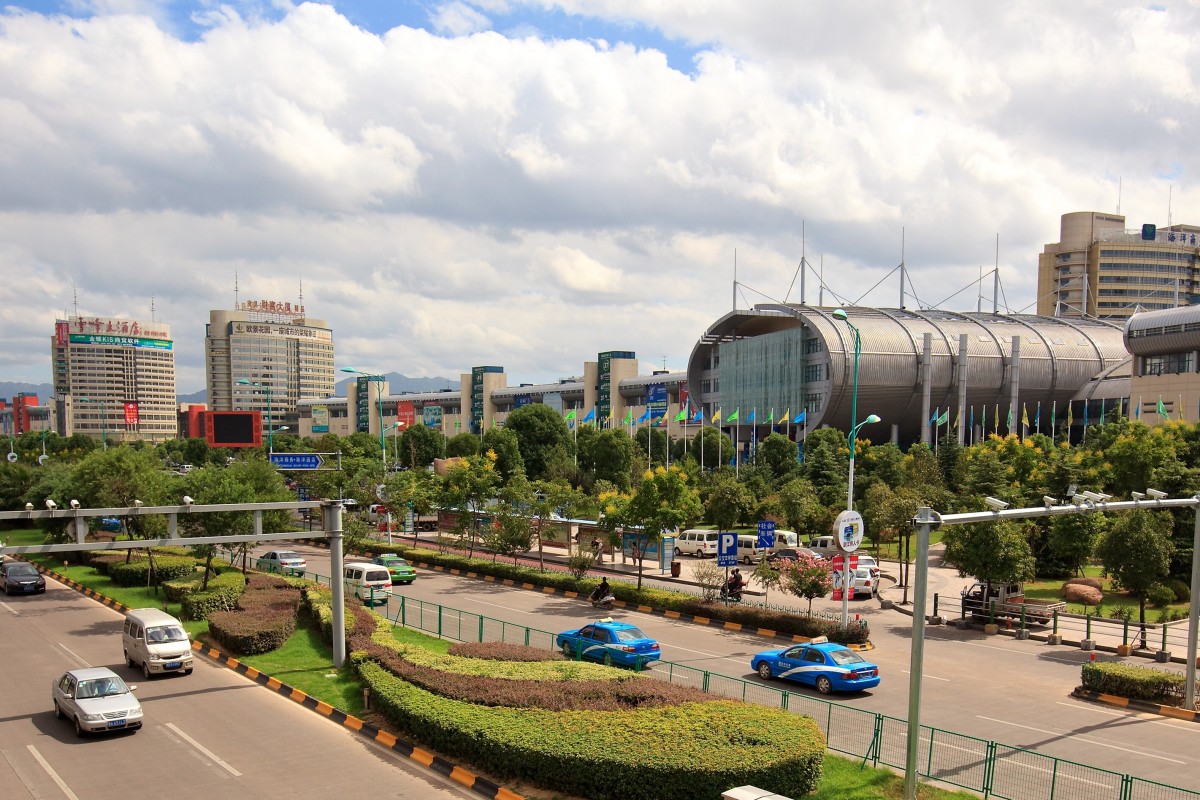









 CHINDIA ALERT: You'll be living in their world, very soon