Archive for ‘wildlife’

02/04/2020

Shenzhen becomes first Chinese city to ban eating cats and dogs

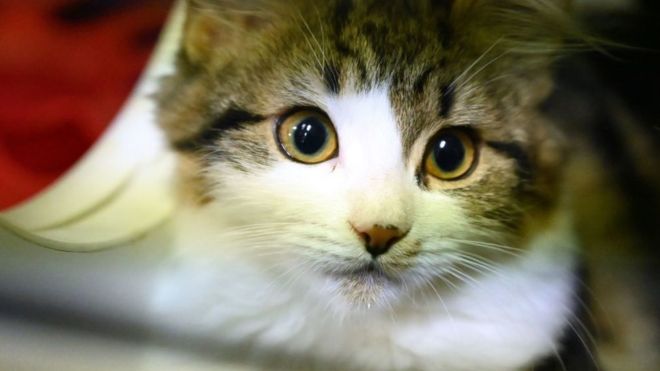
A cat waiting to be adopted looks out of its cage at the Royal Society for the Prevention of Cruelty to Animals (RSPCA)Image copyright GETTY IMAGES
Image caption Most Chinese people don’t actually consume dogs and cats and never plan to

Shenzhen has become the first Chinese city to ban the sale and consumption of dog and cat meat.

It comes after the coronavirus outbreak was linked to wildlife meat, prompting Chinese authorities to ban the trade and consumption of wild animals.

Shenzhen went a step further, extending the ban to dogs and cats. The new law will come into force on 1 May.

Thirty million dogs a year are killed across Asia for meat, says Humane Society International (HSI).

However, the practice of eating dog meat in China is not that common – the majority of Chinese people have never done so and say don’t want to.

“Dogs and cats as pets have established a much closer relationship with humans than all other animals, and banning the consumption of dogs and cats and other pets is a common practice in developed countries and in Hong Kong and Taiwan,” the Shenzhen city government said, according to a Reuters report.

“This ban also responds to the demand and spirit of human civilization.”

Animal advocacy organisation HSI praised the move.

“This really could be a watershed moment in efforts to end this brutal trade that kills an estimated 10 million dogs and 4 million cats in China every year,” said Dr Peter Li, China policy specialist for HSI.

However, at the same time as this ruling, China approved the use of bear bile to treat coronavirus patients.

Bear bile – a digestive fluid drained from living captive bears – has long been used in traditional Chinese medicine.

The active ingredient, ursodeoxycholic acid, is used to dissolve gallstones and treat liver disease. But there is no proof that it is effective against the coronavirus and the process is painful and distressing for the animals

Brian Daly, a spokesman for the Animals Asia Foundation, told AFP: “We shouldn’t be relying on wildlife products like bear bile as the solution to combat a deadly virus that appears to have originated from wildlife.”

Banner image reading 'more about coronavirus'
Banner

A wildlife market

In February, Chinese authorities banned the trade and consumption of wild animals.

The move came after it emerged that a market in Wuhan selling wild animals and wildlife meat could have been the starting point for the outbreak of the new coronavirus, providing the means for the virus to travel from animals to humans.

News of this led the Chinese government to crack down strongly on the trade and on the markets that sold such products.
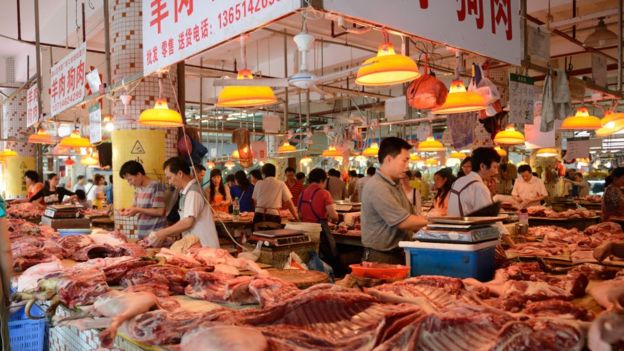
Covered market in ShenzhenImage copyright GETTY IMAGES
Image caption File photo of a wet market in China

There are now close to one million confirmed cases of the virus worldwide, and more than 47,000 deaths, according to a Johns Hopkins University tally.

In China alone, there are 81,589 confirmed cases and 3,318 deaths, said the National Health Commission.

Scientists and researchers are still no closer to finding out what the source of the virus is and how it could have spread to humans.

Source: The BBC

19/03/2020

Rich world pumps aid to fight coronavirus, epicentre Europe reeling

LONDON/BEIJING (Reuters) – The world’s wealthiest nations poured unprecedented aid into the traumatized global economy on Thursday as coronavirus cases ballooned in the current epicentre Europe even as they waned at the pandemic’s point of origin, China.

With almost 219,000 infections and more than 8,900 deaths so far, the epidemic has stunned the world and drawn comparisons with painful periods such as World War Two, the 2008 financial crisis and the 1918 Spanish flu.

“This is like an Egyptian plague,” said Argentinian hotelier Patricia Duran, who has seen bookings dry up for her two establishments near the famous Iguazu Falls.

“The hotels are empty – tourist activity has died.”

Tourism and airlines have been particularly battered, as the world’s citizens hunker down to minimize contact and curb the spread of the flu-like COVID-19. But few sectors have been spared by a crisis threatening lengthy global recession.

On markets, investors have dumped assets everywhere, many switching to U.S. dollars as a safe haven. Other currencies hit historic lows, with Britain’s pound near its weakest since 1985.

Policymakers in the United States, Europe and Asia have slashed interest rates and opened liquidity taps to try to stabilise economies hit by quarantined consumers, broken supply chains, disrupted transport and paralysed businesses.

The virus, thought to have originated from wildlife on mainland China late last year, has jumped to 172 other nations and territories with more than 20,000 new cases reported in the past 24 hours – a new daily record.

Cases in Germany, Iran and Spain rose to over 12,000 each. An official in Tehran tweeted that the coronavirus was killing one person every 10 minutes.

LONDON LOCKDOWN?

Britain, which had sought to take a gradual approach to containment, was closing dozens of underground stations in London and ordering schools shut from Friday.

Some 20,000 military personnel were on standby to help and Queen Elizabeth was due to leave Buckingham Palace in the capital for her ancient castle at Windsor. Britain has reported 104 deaths and 2,626 cases, but scientific advisers say the real number of infections may be more than 50,000.

Italian soldiers transported corpses overnight from an overwhelmed cemetery in Europe’s worst-hit nation where nearly 3,000 people have died. Germany’s military was also readying to help despite national sensitivities over its deployment dating back to the Nazi era.

Supermarkets in many countries were besieged with shoppers stocking up on food staples and hygiene products. Some rationed sales and fixed special hours for the elderly.

Solidarity projects were springing up in some of the world’s poorest corners. In Kenya’s Kibera slum, for example, volunteers with plastic drums and boxes of soap on motorbikes set up handwashing stations for people without clean water.

Russia reported its first coronavirus death on Thursday.

Amid the gloom, China provided a ray of hope, as it reported zero new local transmissions in a thumbs-up for its draconian containment policies since January. Imported cases, however, surged, accounting for all 34 new infections.

The United States, where President Donald Trump had initially played down the coronavirus threat, saw infections close in on 8,000 and deaths reach at least 151.

Trump has infuriated Beijing’s communist government by rebuking it for not acting faster and drawn accusations of racism by referring to the “Chinese virus”.

“EXTRAORDINARY TIMES”

In a bewildering raft of financial measures around the world, the European Central Bank launched new bond purchases worth 750 billion euros ($817 billion). That brought some relief to bond markets and also halted European shares’ slide, though equities remained shaky elsewhere.

“Extraordinary times require extraordinary action,” ECB President Christine Lagarde said, amid concerns that the strains could tear apart the euro zone as a single currency bloc.

The U.S. Federal Reserve rolled out its third emergency credit programme in two days, aimed at keeping the $3.8 trillion money market mutual fund industry functioning.

China was to unleash trillions of yuan of fiscal stimulus and South Korea pledged 50 trillion won ($39 billion).

The desperate state of industry was writ large in Detroit, where the big three automakers – Ford Motor Co (F.N), General Motors Co (GM.N) and Fiat Chrysler Automobiles NV (FCHA.MI) (FCAU.N) – were shutting U.S. plants, as well as factories in Canada and Mexico.

With some economists fearing prolonged pain akin to the 1930s Great Depression but others anticipating a post-virus bounceback, gloomy data and forecasts abounded.

In one of the most dire calls, J.P. Morgan economists forecast the Chinese economy to drop more than 40% this quarter and the U.S. economy to shrink 14% in the next.

There was a backlash against conspiracy theories and rumours circulating on social media, with Morocco arresting a woman who denied the disease existed.

And in Brazil, where President Jair Bolsonaro initially labelled the virus “a fantasy”, more members of the political elite fell ill. At night, housebound protesters banged pots and pans, shouting “Bolsonaro out!” from their windows.

Source: Reuters

24/02/2020

China’s legislature adopts decision on banning illegal trade, consumption of wildlife

BEIJING, Feb. 24 (Xinhua) — The Standing Committee of the National People’s Congress, or China’s top legislature, during a session Monday adopted a decision on thoroughly banning the illegal trading of wildlife and eliminating the consumption of wild animals to safeguard people’s lives and health.

The move aims to safeguard biological and ecological security and effectively prevent major public health risks, among other purposes.

The consumption of terrestrial wild animals “of important ecological, scientific and social value” that are under state protection, as well as other terrestrial wild animals, including those that are bred or reared in captivity, shall be thoroughly prohibited, according to the decision.

The hunting, trading and transportation of terrestrial wild animals that naturally grow and breed in the wild for the purpose of consumption shall also be completely prohibited.

The decision stipulates that illegal consumption and trade of wildlife shall be severely punished.

Those who, in violation of the law on the protection of wildlife and other relevant laws and regulations, hunt, trade, transport or eat wild animals shall be given heavier penalties on the basis of existing laws and regulations, according to the decision.

Acts of consuming wild animals illegally and of hunting, trading or transporting wild animals for the purpose of consumption, which are newly covered by the decision, shall entail punishment applicable to similar acts covered by China’s existing laws, including the law on the protection of wildlife.

The decision also stipulates that the use of wild animals for non-edible purposes, including scientific research, medical use and display, shall be subject to strict examination, approval and quarantine inspection procedures in accordance with relevant regulations.

The decision demands governments of various levels strengthen supervision and inspection, and strictly investigate and punish violations of this decision and relevant laws and regulations.

Illegal business sites and illegal business operators shall be banned or shut down in accordance with laws, according to the decision.

The decision takes effect on the day of its promulgation.

Source: Xinhua

24/01/2020

China shuts part of Great Wall as virus toll hits 26

BEIJING, China (Reuters) – China ramped up measures to contain a virus that has killed 26 people and infected more than 800, suspending public transport in 10 cities, shutting temples over the Lunar New Year and even closing the Forbidden City and part of the Great Wall.

The week-long holiday to welcome the Year of the Rat began on Friday, raising fears the infection rate could accelerate as hundreds of millions of people travel to their homes and abroad in what is usually a festive time of year.

The World Health Organisation (WHO) has declared the new coronavirus an emergency for China but stopped short of declaring the epidemic of international concern.

While most of the cases and all of the deaths have been in China, the virus has been detected in Thailand, Vietnam, Singapore, Japan, South Korea, Taiwan and the United States. It was likely Britain also had cases, a health official said.

The newly identified coronavirus has created alarm because it is too early to know just how dangerous it is and how easily it spreads between people.

Symptoms include fever, difficulty breathing and coughing.

Most of the fatalities have been elderly, many with pre-existing conditions, the WHO said.

Cases are likely to continue to rise in China but it is too soon to evaluate the severity of the virus, a WHO spokesman said on Friday.

As of Thursday, there were 830 confirmed cases and 26 people had died there, China’s National Health Commission said.

In Wuhan, where the outbreak began last month, pharmacies were running out of supplies and hospitals were flooded with nervous resident seeking medical checks.

“There’s so much news, so much data, every 10 minutes there’s an update, it’s frightening, especially for people like us in a severely hit area,” Lily Jin, 30, a resident of the city, told Reuters by phone.

GRAPHIC: The spread of a new coronavirus – here

Reuters Graphic

MORE RESTRICTIONS

While restrictions have already been put in place in cities across the country to curb the outbreak, China will take stricter and more targeted measures, state television reported citing a state council, or cabinet, meeting on Friday, but gave no further details.

“The spread of the virus has not been cut off … Local authorities should take more responsibility and have a stronger sense of urgency,” state broadcaster CCTV said.

Most cases have been in Wuhan, where the virus is believed to have originated in a market that traded illegally in wildlife. Preliminary research suggested it crossed to humans from snakes.

The city of 11 million people, and neighboring Huanggang, a city of about 7 million, were in virtual lockdown.

Nearly all flights at Wuhan’s airport had been canceled, and airports worldwide have stepped up the screening of passengers from China.

Checkpoints blocked the main roads leading out of town, and police checked incoming vehicles for wild animals.

Wuhan was rushing to build a 1,000-bed hospital for the infected by Monday, the official Changjiang Daily reported.

About 10 people got off a high-speed train that pulled into Wuhan on Friday afternoon but nobody got on before it resumed its journey. Although it stopped there, Wuhan had been removed from the train’s schedule.

“What choice do I have? It’s Chinese New Year. We have to see our family,” said a man getting off the train who gave his family name Hu.

CHINA EMERGENCY

The WHO said on Thursday it was a “bit too early” to designate the outbreak a public health emergency of international concern, which would require countries to step up their response.

Some experts believe the virus is not as dangerous as the one that caused the 2002-03 outbreak of Severe Acute Respiratory Syndrome, which also began in China and killed nearly 800 people, or the one that caused Middle East Respiratory Syndrome, which has killed more than 700 people since 2012.

There is no known vaccine or particular treatment.

“There is some work being done and there are some trials now for MERS (vaccines). And we may look at some point whether those treatments and vaccines would have some effect on this novel coronavirus,” WHO spokesman Tarik Jasarevic said on Friday.

Gilead Sciences Inc said it was assessing whether its experimental Ebola treatment could be used. Meanwhile, three research teams were starting work on vaccines, the Coalition for Epidemic Preparedness Innovations said.

In the meantime, Chinese authorities have imposed restrictions on movement and gatherings to try to stem the spread. It has advised people to avoid crowds and 10 cities in the central province of Hubei, where Wuhan is located, have suspended some transport, the Hubei Daily reported.

Some sections of the Great Wall near Beijing will be closed from Saturday, state media said.

Some temples have also closed, including Beijing’s Lama Temple where people make offerings for the new year, have also been closed as has the Forbidden City, the capital’s most famous tourist attraction.

Shanghai Disneyland will close from Saturday. The theme park has a 100,000 daily capacity and sold out during last year’s Lunar New Year holiday.

The virus is expected to dent China’s growth after months of economic worries over trade tensions with the United States, unnerving foreign companies doing business there.

Shares in luxury goods firms have suffered from the anticipated drop in demand from China, and on Friday French spirits group Remy Cointreau said it was “clearly concerned” about the potential impact.

Source: Reuters

11/06/2019

Aarey forest: The fight to save Mumbai’s last ‘green lung’

Aarey ForestImage copyright GETTY IMAGES
Image caption Aarey forest is in Mumbai city

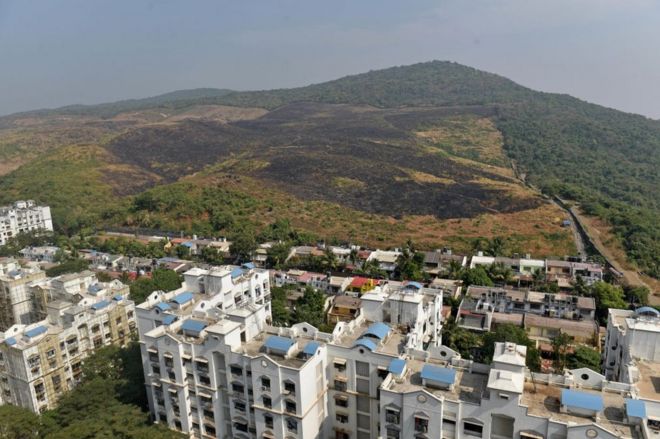
The Aarey forest, a verdant strip that lies at the heart of India’s bustling Mumbai city, is often referred to as its last green lung. But now, locals say, it’s under threat from encroachment. BBC Marathi’s Janhavee Moole reports.

As a child, Stalin Dayanand used to picnic in the Aarey forest.

“It was the only place where you could go and play, climb trees or just sit and eat under the shade of a tree and be close to nature,” says Stalin, who prefers to go by his first name.

Now the 54-year-old is the director of an NGO that works to protect forests and wetlands. He is fighting for Aarey.

On 6 June, the government cleared 40 hectares (99 acres) of the 1,300 hectare forest to build a zoo, complete with a night safari.

Another slice of it is being claimed by Mumbai’s new metro rail which is currently under construction. Thousands of trees will have to be felled to construct a new multi-level parking unit for the metro.

Media caption What happens if you ban plastic?

Stalin has petitioned India’s Supreme Court challenging the construction, but the case is still pending.

Locals and environmental activists like him are up in arms because they fear the government will eventually clear the way for private builders to encroach on the Sanjay Gandhi National Park, which lies to the north of Aarey. Spread over 104 sq km (40 sq miles), this protected area makes Mumbai one of the rare cities to have a jungle within its boundaries.

Their concern is partly fuelled by the fact that this is prime location in a city where land is scarce and real estate prices are among the most expensive in the world.

But officials dismiss these fears as unfounded and point out that the construction for the metro only requires 30 hectares of the 1,300 hectares that make up the Aarey forest.

“This is the most suitable land due to its size, shape and location,” says Ashwini Bhide, managing director of the Mumbai metro rail corporation.

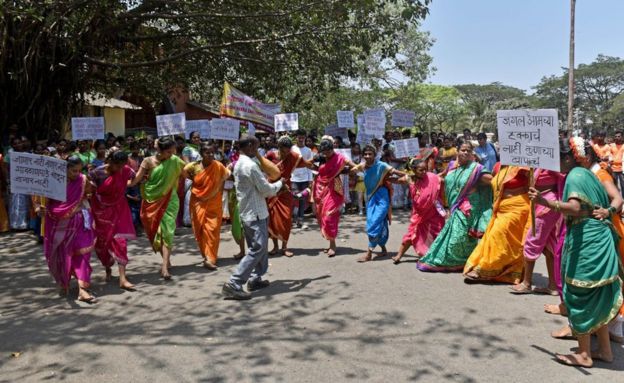
Residents of Aarey colony and Aam Aadmi Party members protest against cutting of trees to build a metro shed at Aarey Colony on 2 October 2018 in Mumbai, India.Image copyright GETTY IMAGES
Image caption Plans to fell trees in the forest have led to protests

She adds that the city badly needs a “mass rapid transport system”. India’s financial hub is congested and infamous for its crawling traffic jams and its local train system heavily overburdened.

Officials say that the metro will eventually carry around 1.7 million passengers every day and bring down the number of vehicles on the road by up to 650,000. The city’s current colonial-era railway system, which is effectively its lifeline, ferries some 7.5 million people between Mumbai’s suburbs and its heart on a daily basis.

But they have been up against the city’s residents, including activists and conservationists, ever since news emerged in 2014 that trees would be cut to make way for the metro.

Presentational grey line

Read more India stories

Presentational grey line

What makes the issue complicated is that the Aarey forest is the site of competing claims.

It’s locally known as the Aarey “milk colony” because most of the land was given to the department of dairy development in 1951. But they are allowed to grow cattle fodder only on a fraction of the land. The rest of it is densely forested and dotted with lakes, and the Mithi river flows through it.

Aarey is also home to tribal communities who live in settlements known as “padas”.

“We are not getting basic facilities here, and now metro authorities want to take away the jungle which belongs to us too,” says Asha Bhoye, who belongs to the Konkani tribe and lives in one of the 29 padas. Plans to relocate some of the tribal communities have also met with resistance and led to protests.

Stalin alleges that instead of declaring the Aarey forest a protected area, the state government has used the opportunity to parcel away pieces of it first to the dairy development department and now to other projects.

Aadivasi Halka Sanvardhan Samiti and Tribals of Aarey colony protesting to demand protection of Aare forest.Image copyright GETTY IMAGES
Image caption Tribals who live in Aarey demand that it be declared a protected area

“Aarey Forest is part of the same forest as Sanjay Gandhi National Park and we are fighting for the national park itself. In the name of public good, the land is being opened up for developers. It’s a systematic effort to destroy the forest.”

Activists fear that after the parking units are built, other projects will be permitted, further threatening the area’s ecology and wildlife, which includes leopards.

So locals have joined the fight enthusiastically, even leading hikes into the forest to raise awareness. “We bring people here, make them familiar with the forest – there are many species of spiders like trapdoor spiders, the site [of the parking unit] is a leopard site,” says Yash Marwa, a screenwriter who is among those campaigning for the forest.

“Mumbai needs to be liveable”, he adds. “We need to talk about good quality of air and life before talking about infrastructure and development.”

Stalin agrees, saying that “air quality and temperature seem to be last among people’s priorities.”

But he is determined to not give up.

“If I couldn’t do something for my city I’d consider I’ve failed myself.”

Source: The BBC

Law of Unintended Consequences

continuously updated blog about China & India

ChiaHou's Book Reviews

continuously updated blog about China & India

What's wrong with the world; and its economy

continuously updated blog about China & India