Archive for ‘World economy’

04/04/2020

China mourns thousands who died in country’s coronavirus epidemic

BEIJING/WUHAN, China (Reuters) – China on Saturday mourned the thousands of “martyrs” who have died in the new coronavirus outbreak, flying the national flag at half mast throughout the country and suspending all forms of entertainment.

The Chinese national flag flies at half-mast at Tiananmen Square in Beijing, as China holds a national mourning for those who died of the coronavirus disease (COVID-19), on the Qingming tomb sweeping festival, April 4, 2020. REUTERS/Carlos Garcia Rawlins

The day of mourning coincided with the start of the annual Qingming tomb-sweeping festival, when millions of Chinese families pay respects to their ancestors.

At 10 a.m. (0200 GMT) Beijing time, the country observed three minutes of silence to mourn those who died, including frontline medical workers and doctors. Cars, trains and ships sounded their horns and air raid sirens wailed.

In Zhongnanhai, the seat of political power in Beijing, President Xi Jinping and other Chinese leaders paid silent tribute in front of the national flag, with white flowers pinned to their chest as a mark of mourning, state media reported.

More than 3,300 people in mainland China have died in the epidemic, which first surfaced in the central province of Hubei late last year, according to statistics published by the National Health Commission.

In Wuhan, the capital of Hubei province and the epicentre of the outbreak, all traffic lights in urban areas turned red at 10 a.m. and all road traffic ceased for three minutes.

Some 2,567 people have died in Wuhan, a megacity of 11 million people located in the middle reaches of the Yangtze river. The Wuhan deaths account for more than 75% of the country’s fatalities.

Among those who died was Li Wenliang, a young doctor who tried to raise the alarm about the disease. Li was honoured by the Hubei government earlier this week, after initially being reprimanded by police in Wuhan for “spreading rumours”.

Gui Yihong, 27, who was among thousands of Wuhan locals who volunteered to deliver food supplies to hospitals during the city’s months-long lockdown, recalled the fear, frustration and pain at Wuhan Central Hospital, where Li worked.

“If you weren’t at the frontlines you wouldn’t be able to experience this,” said Gui, as he laid some flowers next to Wuhan’s 1954 flood memorial by the Yangtze.

“I had to (come) and bear witness. For the last 80 days we had fought between life and death, and finally gained victory. It was not easy at all to come by.”

While the worst was behind Wuhan, the virus has spread to all corners of the globe since January, sickening more than a million people, killing more than 55,000 and paralysing the world economy.

Wuhan banned all tomb-sweeping activities in its cemeteries until at least April 30, curtailing one of the most important dates in the traditional Chinese lunar new year calendar which usually sees millions of families travel to tend to their ancestral graves, offer flowers and burn incense.

They have also told residents, most stuck at home due to lockdown restrictions, to use online streaming services to watch cemetery staff carry out those tasks live.

ASYMPTOMATIC CASES

Online, celebrities including “X-Men: Days of Future Past” star Fan Bingbing swapped their glamorous social media profile pictures for sombre photos in grey or black, garnering millions of “likes” from fans.

Chinese gaming and social media giant Tencent (0700.HK) suspended all online games on Saturday.

As of Friday, the total number of confirmed cases across the country stood at 81,639, including 19 new infections, the National Health Commission said.

Eighteen of the new cases involved travellers arriving from abroad. The remaining one new infection was a local case in Wuhan, a patient who was previously asymptomatic.

Asymptomatic people exhibit few signs of infection such as fevers or coughs, and are not included in the tally of confirmed cases by Chinese authorities until they do.

However, they are still infectious, and the government has warned of possible local transmissions if such asymptomatic cases are not properly monitored.

China reported 64 new asymptomatic cases as of Friday, including 26 travellers arriving in the country from overseas. That takes the total number of asymptomatic people currently under medical observation to 1,030, including 729 in Hubei.

Source: Reuters
27/03/2020

Xi Focus: China underscores unity to save world economy from recession

BEIJING, March 27 (Xinhua) — As the novel coronavirus disease (COVID-19) makes social distancing and working from home the new normal, leaders of the Group of 20, home to almost two-thirds of the world’s population and about 86 percent of the gross world product, convened Thursday for a virtual summit that sent a clear message: We are in the same boat.

The G20 Extraordinary Virtual Leaders’ Summit on COVID-19 was the first of its kind in the history of G20, and also the first major multilateral event attended by President Xi Jinping since the outbreak of the COVID-19.

Speaking to his colleagues via video link from Beijing, Xi put forward four proposals to cope with a situation that is “disturbing and unsettling,” calling for an all-out global war against the COVID-19 outbreak and enhancing international macro-economic policy coordination to prevent a recession.

“At such a moment, it is imperative for the international community to strengthen confidence, act with unity and work together in a collective response,” Xi said. “We must comprehensively step up international cooperation and foster greater synergy so that humanity as one could win the battle against such a major infectious disease.”

In a demonstration of the need for greater global coordination and solidarity, the G20 members were joined by leaders from invited countries including hard-hit Spain as well as multiple international organizations including the United Nations (UN), the World Health Organization (WHO), the World Trade Organization (WTO), and the International Monetary Fund (IMF).

While previous G20 summits often discussed high-stake topics like economic recession and boosting development policy, Thursday’s emergency meeting came at a time when the world is grappling with a dicey pandemic and concerns are mounting over the “black swan” event that could derail the global economy.

As China’s epidemic prevention and control are continuously improving, and the trend of an accelerated restoration of normal production and life is being consolidated and expanded, his remarks at the G20 summit are timely and of critical importance for countries now fighting at the front lines of a battle to stem the pandemic and forestalling a recession.

UNITED WE STAND

The number of COVID-19 cases worldwide topped 462,684, with 20,834 deaths as of 10 a.m. Central European Time, Thursday, according to the data kept by the WHO. The economic toll is also climbing as more businesses and trade come to a grinding halt amid massive lockdowns.

“The COVID-19 pandemic is endangering countries rich and poor, large and small, strong and weak alike,” said Wei Jianguo, vice chairman of the China Center for International Economic Exchanges and former vice minister of Commerce. “We are now at a critical juncture of fighting the pandemic and stabilizing the global economy, and the international community expects the G20 to play a leading role.”

The significance and urgency of Thursday’s meeting hark back to scenarios in the depth of the global financial crisis in 2008 when meetings of G20 finance ministers and central bank governors were raised to the level of heads of state and government for better crisis coordination. What’s different is that grave challenges facing the world today have led to warnings of a downturn even worse than in 2008.

“This pandemic will inevitably have an enormous impact on the economy,” WTO Director-General Roberto Azevedo said in a video clip posted on the website of the organization. “Recent projections predict an economic downturn and job losses that are worse than the global financial crisis a dozen years ago.”

To prevent the world economy from falling into recession, Xi said countries need to leverage and coordinate their macro policies to counteract the negative impact as the outbreak has disrupted production and demand across the globe.

“We need to implement strong and effective fiscal and monetary policies to keep our exchange rates basically stable. We need to better coordinate financial regulation to keep global financial markets stable. We need to jointly keep the global industrial and supply chains stable,” he told the summit in a speech titled “Working Together to Defeat the COVID-19 Outbreak.”

Xi’s remarks on fighting as one echoed. IMF Managing Director Kristalina Georgieva said: “We project a contraction of global output in 2020, and recovery in 2021. How deep the contraction and how fast the recovery depends on the speed of containment of the pandemic and on how strong and coordinated our monetary and fiscal policy actions are.”

“We will get through this crisis together. Together we will lay the ground for a faster and stronger recovery,” she said in a statement released after the conference call.

The important lesson in international solidarity is often forgotten when things are going fine, William Jones, Washington bureau chief of the U.S. publication Executive Intelligence Review, told Xinhua in a recent interview.

“The experience with the COVID-19 will hopefully lead to more collaborative efforts between countries and strengthen the notion of a community with a shared destiny,” he said.

As China is a key driver of global economic growth, its economic performance bears great significance on the outlook of global recovery. In a strong morale and practical boost, Xi reaffirmed China would actively contribute to the global war against COVID-19 and a stable world economy.

“Guided by the vision of building a community with a shared future for mankind, China will be more than ready to share its good practices, conduct joint research and development of drugs and vaccines, and provide assistance where it can to countries hit by the growing outbreak,” Xi said.

Xi said China will contribute to a stable world economy by continuing to advance reform and opening-up, widen market access, improve the business environment and expand imports and outbound investment, and called on all G20 members to take collective actions — cutting tariffs, removing barriers, and facilitating the unfettered flow of trade.

The country is beefing up wider opening-up to foreign investment. Revision of the negative list on foreign investment is underway as part of the plan to improve business environment and expand the catalog of industries where foreign investment is encouraged.

New editions of the list will probably be released in May, expanding market access of the tertiary sector, such as health care, aged service, finance, transportation, logistics, tourism, education and training and value-added services of telecommunications, said Zhang Fei with the Chinese Academy of International Trade and Economic Cooperation.

Noting that a global solution is needed to address the global challenge brought about by the pandemic, Azevedo said cross-border trade and investment flows have a role to play in efforts to combat the COVID-19 pandemic and will be vital for fostering a stronger recovery once the medical emergency subsides.

“No country is self-sufficient, no matter how powerful or advanced it may be. Trade is what allows for the efficient production and supply of basic goods and services, medical supplies and equipment, food and energy that we all need,” he said.

Source: Xinhua

04/11/2019

Seven years on, still no RCEP trade deal, and India pulls out

  • Hopes were high a regional summit could finally wrap up negotiations on the Regional Comprehensive Economic Partnership
  • But despite claims of ‘significant progress’ in the 16-nation talks, India remains a stumbling block
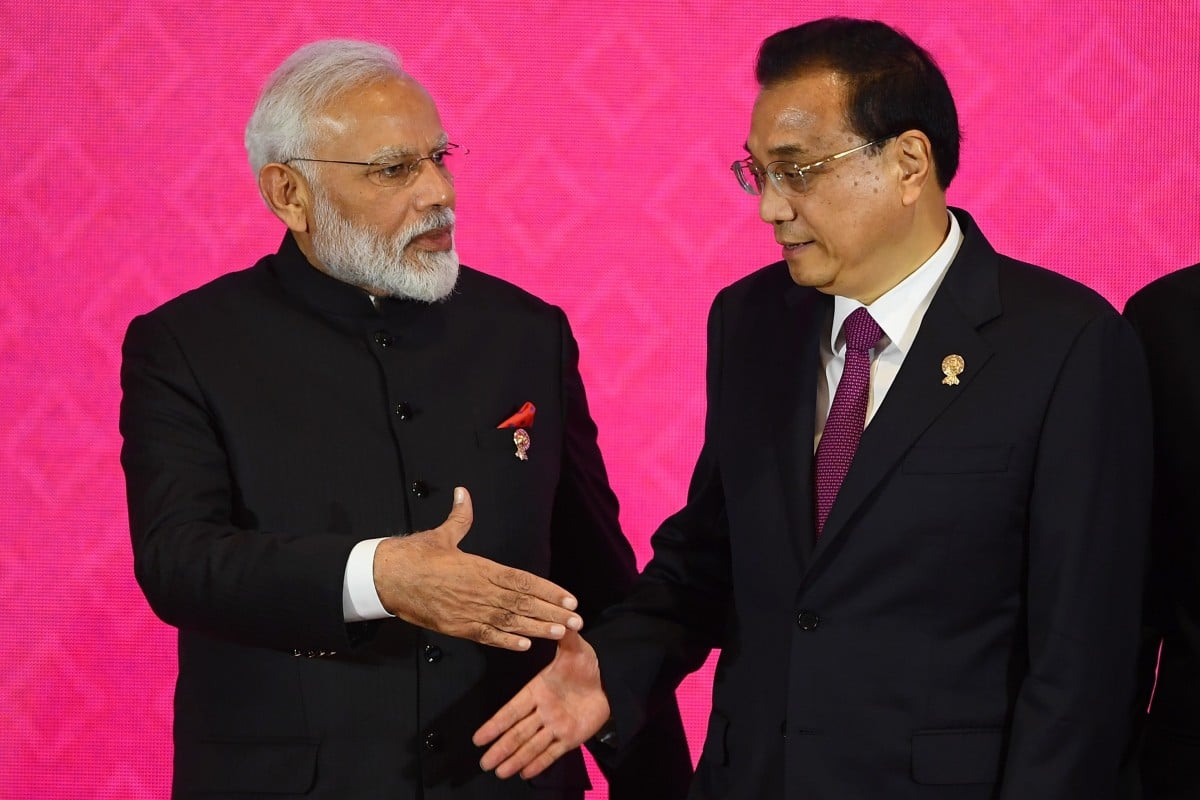
Indian Prime Minister Narendra Modi and China’s Premier Li Keqiang attend the Regional Comprehensive Economic Partnership Summit in Bangkok. Photo: AFP
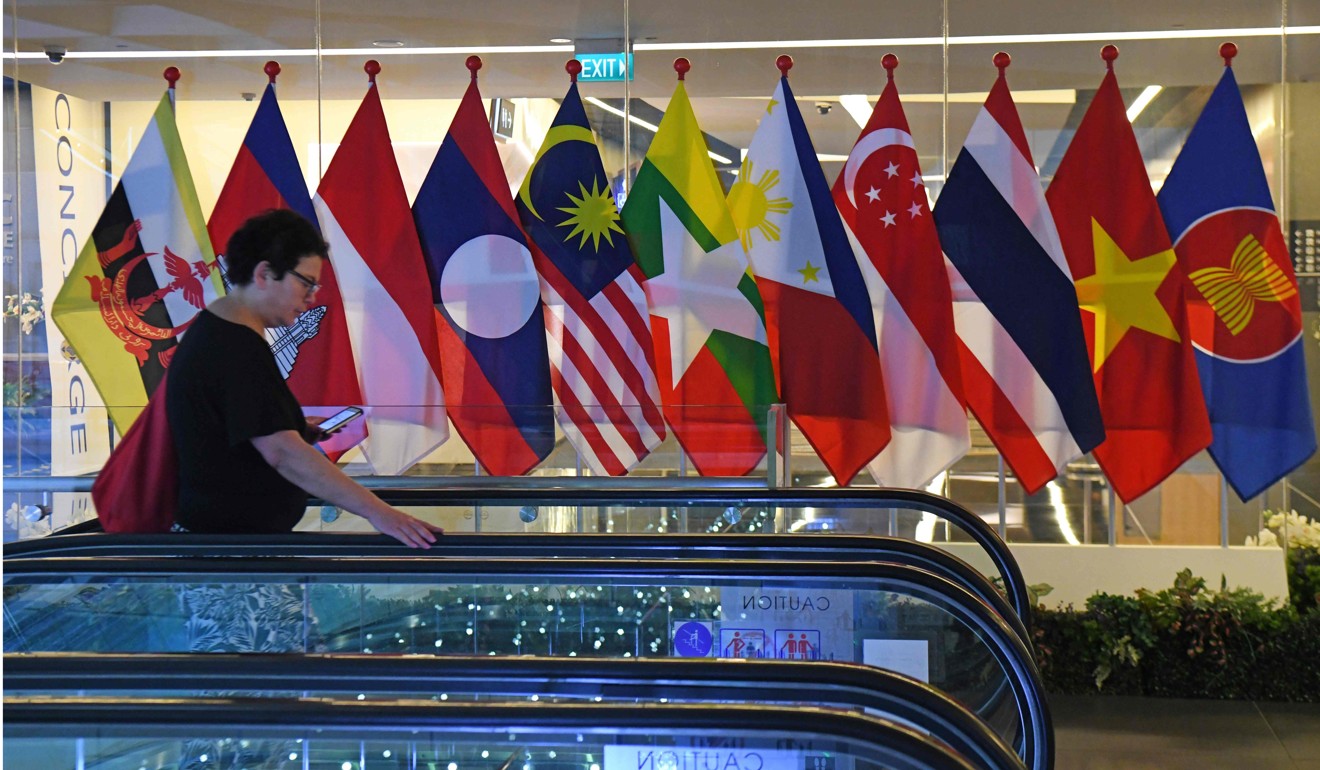
Fifteen of the countries involved in negotiating a mammoth 16-nation Asian trade pact were on Monday hoping to seal the deal after seven years of talks but faced a fresh setback as India signalled it was pulling out over terms that were against New Delhi’s interests.
A joint statement by all 16 states involved in the Regional Comprehensive Economic Partnership (RCEP) said 15 economies had “concluded text-based negotiations for all 20 chapters and essentially all their market access issues”, and would undertake legal scrubbing of the proposed pact before a formal signing in 2020.
But “India has significant outstanding issues, which remained unresolved”, the statement said.
“All RCEP participating countries will work together to resolve these outstanding issues in a mutually satisfactory way. India’s final decision will depend on satisfactory resolution of these issues.”
Multiple Indian media outlets reported that Prime Minister Narendra Modi had told a Monday evening meeting of leaders from the RCEP countries that “neither the talisman of [Mahatma Gandhi] nor my own conscience permit me to join the RCEP”.

“When I measure the RCEP agreement, with respect to the interest of Indians, I don’t get a positive answer,” he was quoted as saying.

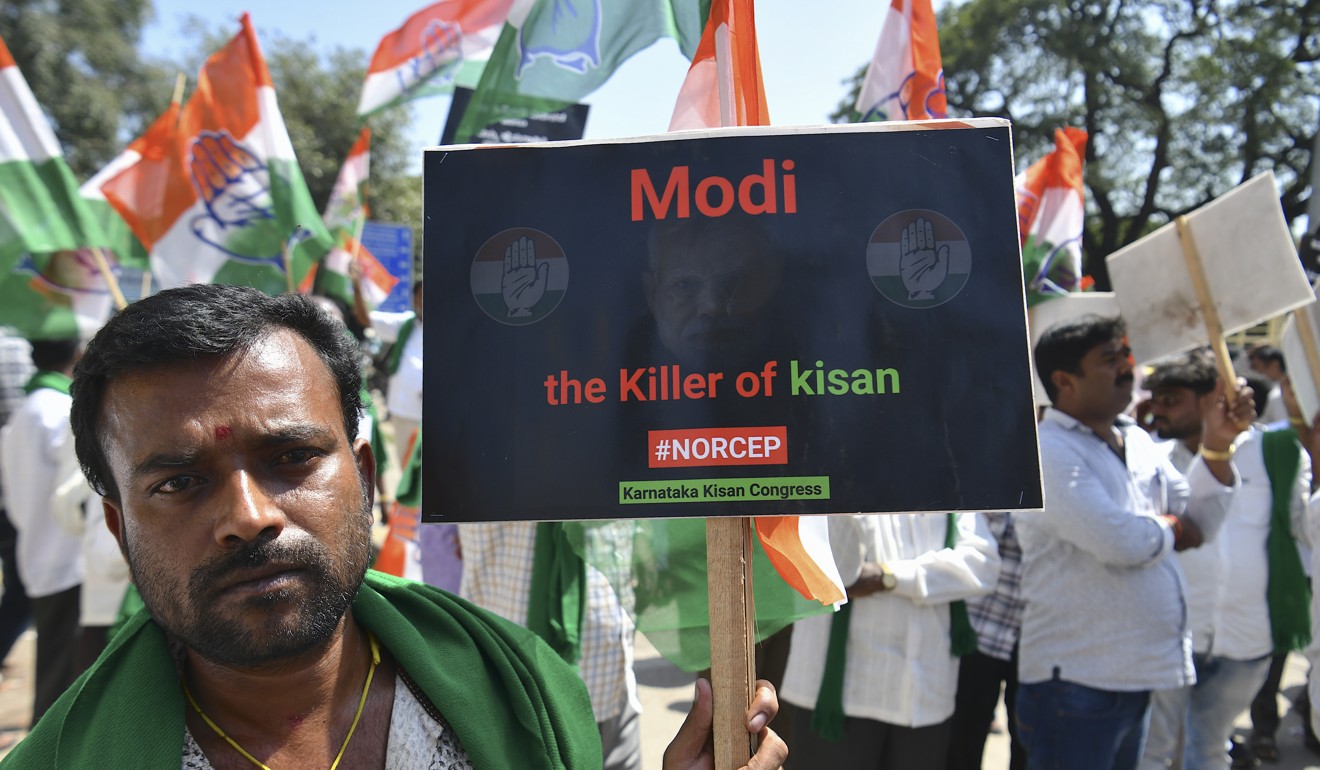
Indians protest against the Modi-led government’s backing of the Regional Comprehensive Economic Partnership. Photo: AFP

Henry Gao, a law professor at the Singapore Management University focusing on international trade law, said an RCEP without India would be “even more worthwhile” for the so-called RCEP-15.

He cited two reasons: India’s “low ambitions” for the pact, and the high level of integration among the countries of East and Southeast Asia which are part of the RCEP-15.

“A mega trade deal like RCEP will only further accelerate the integration process and greatly boost trade and economic growth in the region,” Gao said.

Explained: Regional Comprehensive Economic Partnership (RCEP)
Earlier expectations were that the joint statement would declare at least a “substantial conclusion”, “near conclusion” or “in principle conclusion” of the RCEP, which aims to create a free-trade zone spanning 39 per cent of the world economy.
The phrasing used to describe the progress of negotiations is being closely parsed because, since it requires endorsement from all RCEP countries, it accurately captures the sentiment of all the 16 negotiating teams.
Last year, Singapore, as chair of the Association of Southeast Asian Nations (Asean), pushed for a conclusion of the deal, but eventually the joint statement declared that only “substantial progress” had been made.
Asean countries plus six others are negotiating the trade pact. Photo: AFP

Indian media, citing government sources, said the pact’s inadequate protection against import surges, the possible circumvention of rules of origin, and a lack of “credible assurances” on market access and non-tariff barriers, proved too much for New Delhi to swallow.

India,

facing fierce domestic criticism for being in the pact despite opposition even from

Modi’s 

Hindu nationalist support base, last week piled on a fresh set of demands that other countries balked at, negotiators from Southeast Asian countries said over the weekend.

Furious efforts that continued up to Sunday night failed to bridge the gap between India and the 15 countries.
India’s concerns about RCEP remain the major obstacle to world’s largest trade deal

Indian critics of the RCEP say the deal will have a ruinous impact on the South Asian economy, which has trade deficits with the other 15 countries.

The biggest opposition has come from the country’s long protected industries, such as its dairy sector, which fears it could be wiped out by lower tariffs on Australian and New Zealand products that would result from the RCEP.

Indian government sources on Monday said the country had not made last-minute demands, but Southeast Asian negotiators said major demands were made as late as Thursday.

Gao, the Singapore-based law professor, said it “makes sense for India to stay out” as it would have faced “a lot of competition from Chinese manufactured products” if it were part of the deal.

“India could temporarily shield its firms from Chinese competition by staying out, but whether this will work in the long term is a different question,” he said.

Source: SCMP

Law of Unintended Consequences

continuously updated blog about China & India

ChiaHou's Book Reviews

continuously updated blog about China & India

What's wrong with the world; and its economy

continuously updated blog about China & India