Chindia Alert: You’ll be Living in their World Very Soon
aims to alert you to the threats and opportunities that China and India present. China and India require serious attention; case of ‘hidden dragon and crouching tiger’.
Without this attention, governments, businesses and, indeed, individuals may find themselves at a great disadvantage sooner rather than later.
The POSTs (front webpages) are mainly 'cuttings' from reliable sources, updated continuously.
The PAGEs (see Tabs, above) attempt to make the information more meaningful by putting some structure to the information we have researched and assembled since 2006.
The measures China has taken to stop the spread of the coronavirus are starting to have an impact, Mi Feng, a spokesman at the National Health Commission, said on Sunday.
In other developments:
The number of people who have tested positive on the Diamond Princess cruise ship, which is being held in quarantine in Japan, has risen to 355. The US and Canada are sending planes to evacuate their citizens
A Chinese tourist has died in France – the first fatality outside Asia
An 83-year-old American woman has tested positive after disembarking another cruise ship that was turned away by a number of countries before being allowed to dock in Cambodia
In the UK, all but one of nine people being treated have been discharged from hospital
On Saturday, World Health Organization (WHO) head Tedros Adhanom Ghebreyesus praised Beijing’s response to the outbreak.
“China has bought the world time. We don’t know how much time,” he said. “We’re encouraged that outside China, we have not yet seen widespread community transmission.”
How is China coping?
Tens of millions of Chinese still face heavy restrictions on their day-to-day life as part of the government’s efforts to halt the spread of the disease, which causes a disease named Covid-19.
Much of the response has focused on the hard-hit province of Hubei and its capital Wuhan, where the outbreak began. The city is all but sealed off from the rest of the country.
Foreign Minister Wang Yi said that along with a drop in infections within Hubei there had also been a rapid increase in the number of people who had recovered.
China’s central bank will also disinfect and store used banknotes before recirculating them in a bid to stop the virus spreading.
Media caption Medics in Wuhan resort to shaving their heads in a bid to prevent cross-infection of the coronavirus
In another development Chinese state media published a speech from earlier this month in which Chinese President Xi Jinping said he said he had given instructions on 7 January on containing the outbreak.
At the time, local officials in the city of Wuhan were downplaying the severity of the epidemic.
This would suggest senior leaders were aware of the potential dangers of the virus before the information was made public.
With the government facing criticism for its handling of the outbreak, analysts suggest the disclosure is an attempt to show the party leadership acted decisively from the start.
BEIJING, Feb. 12 (Xinhua) — A Chinese Foreign Ministry spokesperson on Wednesday said epidemic prevention and control goes beyond borders and stronger communication, coordination and cooperation is needed to win the fight against the novel coronavirus outbreak.
Spokesperson Geng Shuang made the remarks when commenting on reports that health ministers of the 27 European Union (EU) member states will hold a special meeting on the epidemic on Feb. 13 to coordinate action, and the EU will continue to offer assistance to China in combating the epidemic.
“We have noted relevant reports. The EU crisis management commissioner also stressed the importance for the entire international community to maintain solidarity and jointly respond to the virus,” said Geng.
He thanked the international community including the EU for their support and assistance to China in combating the epidemic.
Geng also stressed that China hoped relevant countries would remain cool-headed, make science-based assessments and rational responses, and heed recommendations of the World Health Organization (WHO).
“To defeat the virus as early as possible, China will continue to enhance communication and cooperation with the WHO and the world in an open, transparent and responsible manner,” he added.
on Wednesday said epidemic prevention and control goes beyond borders and stronger communication, coordination and cooperation is needed to win the fight against the novel coronavirus outbreak.
Spokesperson Geng Shuang made the remarks when commenting on reports that health ministers of the 27 European Union (EU) member states will hold a special meeting on the epidemic on Feb. 13 to coordinate action, and the EU will continue to offer assistance to China in combating the epidemic.
“We have noted relevant reports. The EU crisis management commissioner also stressed the importance for the entire international community to maintain solidarity and jointly respond to the virus,” said Geng.
He thanked the international community including the EU for their support and assistance to China in combating the epidemic.
Geng also stressed that China hoped relevant countries would remain cool-headed, make science-based assessments and rational responses, and heed recommendations of the World Health Organization (WHO).
“To defeat the virus as early as possible, China will continue to enhance communication and cooperation with the WHO and the world in an open, transparent and responsible manner,” he added.
Chinese President Xi Jinping, also general secretary of the Communist Party of China (CPC) Central Committee and chairman of the Central Military Commission, inspects the center for disease control and prevention of Chaoyang District in Beijing, capital of China, on Feb. 10, 2020. (Xinhua/Liu Bin)
WHO Spokesperson Fadela Chaib said that the visit has sent a very important signal to both China and the international community.
BEIJING, Feb. 12 (Xinhua) — The international community have spoke highly of Chinese President Xi Jinping’s inspection tour of the epidemic prevention and control work in Beijing, saying it has injected enormous confidence into the battle against the novel coronavirus pneumonia (NCP).
Xi, also general secretary of the Communist Party of China Central Committee and chairman of the Central Military Commission, visited a residential community, a hospital and a district center for disease control and prevention in Beijing on Monday.
The World Health Organization (WHO) has expressed firm support for China’s fight against the NCP and spoken highly of Xi’s field visit. WHO Spokesperson Fadela Chaib said that the visit has sent a very important signal to both China and the international community.
Chinese President Xi Jinping, also general secretary of the Communist Party of China (CPC) Central Committee and chairman of the Central Military Commission, inspects the novel coronavirus pneumonia prevention and control work in Beijing, capital of China, on Feb. 10, 2020. (Xinhua/Ju Peng)
Stephen Perry, chairman of Britain’s 48 Group Club, told Xinhua that through his inspection visit, Xi has shown his concern for the people and strong determination to fight against the epidemic.
The government has carried out anti-epidemic steps with great accuracy, and the whole population of China has united behind the government to carry out the steps necessary in different areas, Perry said.
Subhomoy Bhattacharjee, a consultant at India’s Research and Information System for Developing Countries based in India, said that Xi’s inspection visit has greatly encouraged the medical staff there and sent a positive signal to citizens and investors about the health of the society and economy.
Thai former Deputy Prime Minister Pinij Charusombat said that Xi’s field visit at this crucial moment has shown that the government truly put the people’s lives on top priority, sending out a message to the international community that the Chinese people united as one will get through the difficulties with joint efforts.
Chinese President Xi Jinping, also general secretary of the Communist Party of China (CPC) Central Committee and chairman of the Central Military Commission, checks the treatment of hospitalized patients at the monitoring center and talks to medical staff on duty via a video link at Beijing Ditan Hospital in Beijing, capital of China, on Feb. 10, 2020. (Xinhua/Ju Peng)
Oh Ei Sun, principal advisor for Malaysia’s Pacific Research Center, said Xi’s visit to the residential community has shown the Chinese government’s concern for the people, focus on the people’s voice and understanding of the people’s needs in the fight against epidemic.
Xi’s remarks during the inspection sent out a positive signal that scientific prevention and control measures and targeted policies are needed in the fight against the epidemic, Oh Ei Sun said.
Abdalmuhdi Abumotawi, director of Egypt’s Middle East Forum for Strategic Studies & National Security, said that as China has now entered a critical stage in the fight against the NCP epidemic, President Xi gave everyone more confidence by inspecting the relevant sites in Beijing.
The measures taken by the Chinese government and the response and interaction of the Chinese people confirm once again that China has the ability to eliminate the virus, the Egyptian expert added.
BEIJING/SINGAPORE (Reuters) – China reported on Wednesday its smallest number of coronavirus cases since January, lending weight to a prediction by its top medical adviser for the outbreak to end by April, but a global infectious diseases expert warned of the spread elsewhere.
Financial markets took heart from the outlook of the Chinese official, epidemiologist Zhong Nanshan, who said on Tuesday the number of new cases was falling in some provinces, and forecast the epidemic would peak this month, even as the death toll in China rose to more than 1,100 people.
World stocks, which had seen rounds of sell-offs over the virus, surged to record highs on hopes of a peak in cases. The Dow industrials, S&P 500 and Nasdaq all hit new highs, and Asian shares nudged higher on Wednesday.
But the World Health Organization (WHO) has warned that the epidemic poses a global threat akin to terrorism and one expert coordinating its response said while the outbreak may be peaking at its epicentre in China, it was likely to spread elsewhere in the world, where it had just begun.
RELATED COVERAGE
Chess, squabbles aboard cruise ship cast away by coronavirus fears
Singapore’s DBS evacuates 300 staff after employee contracts coronavirus
See more stories
“It has spread to other places where it’s the beginning of the outbreak,” the official, Dale Fisher, head of the Global Outbreak Alert and Response Network coordinated by the WHO, said in an interview in Singapore.
“In Singapore, we are at the beginning of the outbreak.”
Singapore has reported 47 cases and worry about the spread is growing. Its biggest bank, DBS (DBSM.SI), evacuated 300 staff from its head office on Wednesday after a confirmed coronavirus case in the building.
Hundreds of cases have been reported in dozens of other countries and territories around the world, but only two people have died outside mainland China – one in Hong Kong and another in the Philippines.
WHO chief Tedros Adhanom Ghebreyesus said on Tuesday the world had to “wake up and consider this enemy virus as public enemy number one” and the first vaccine was 18 months away.
In China, total infections have hit 44,653, health officials said, including 2,015 new confirmed cases on Tuesday. That was the lowest daily rise in new cases since Jan. 30.
The number of deaths on the mainland rose by 97 to 1,113 by the end of Tuesday.
But doubts have been aired on social media about how reliable the figures are, after the government last week amended guidelines on the classification of cases.
‘STAY HOPEFUL’
The biggest cluster of cases outside China is aboard the Diamond Princess cruise ship quarantined off Japan’s port of Yokohama, with about 3,700 people on board. Japanese officials on Wednesday said 39 more people had tested positive for the virus, taking the total to 175.
One of the new cases was a quarantine officer.
Thailand said it was barring passengers from another cruise ship, MS Westerdam, from disembarking, the latest country to turn it away amid fears of the coronavirus, despite no confirmed infections on board.
“We try to stay hopeful,” American passenger Angela Jones told Reuters in a video recording. “But each day, that becomes a little bit more difficult, when country after country rejects us.”
Echoing the comparison with the fight against terrorism, China’s state news agency Xinhua said late on Tuesday the epidemic was a “battle that has no gunpowder smoke but must be won”.
The epidemic was a big test of China’s governance and capabilities and some officials were still “dropping the ball” in places where it was most severe, it said, adding: “This is a wake-up call.”
The government of Hubei, the central province at the outbreak’s epicentre, dismissed the provincial health commission’s Communist Party boss, state media said on Tuesday, amid mounting public anger over the crisis.
China’s censors had allowed criticism of local officials but have begun cracking down on reporting of the outbreak, issuing reprimands to tech firms that gave free rein to online speech, Chinese journalists said.
The pathogen has been named COVID-19 – CO for corona, VI for virus, D for disease and 19 for the year it emerged. It is suspected to have come from a market that illegally traded wildlife in Hubei’s capital of Wuhan in December.
The city of 11 million people remains under virtual lockdown as part of China’s unprecedented measures to seal infected regions and limit transmission routes.
Travel restrictions that have paralysed the world’s second-biggest economy have left Wuhan and other Chinese cities resembling ghost towns.
Even if the epidemic ends soon, it has taken a toll of China’s economy, with companies laying off workers and needing loans running into billions of dollars to stay afloat. Supply chains for makers of items from cars to smartphones have broken down.
ANZ Bank said China’s first-quarter growth would probably slow to 3.2% to 4.0%, down from a projection of 5.0%.
The likely slowdown in China could shave 0.1 to 0.2 percentage points off both euro zone and British growth this year, credit rating agency S&P Global estimated.
BEIJING, Feb. 6 (Xinhua) — Suspending flights by some countries against the World Health Organization (WHO) recommendations will not help contain the epidemic, but sow panic among the public, a Chinese foreign ministry spokesperson said Thursday.
Spokeswoman Hua Chunying made the remarks at an online press briefing when asked to comment on some countries’ decisions to suspend flights after the novel coronavirus outbreak.
Hua said since the onset of the outbreak, the Chinese government has taken the most thorough and strict prevention and control measures, and such measures are showing positive effects.
The WHO lauded China’s strong measures and stressed many times that it disapproves of and even opposes imposing travel or trade restrictions on China, said Hua. The ICAO has also issued bulletins and encouraged all countries to follow WHO recommendations.
“We are dissatisfied with and oppose some countries going against the WHO’s professional recommendations and ICAO bulletins, and have lodged solemn representations with them,” she said.
Actions of those countries have gravely disrupted normal personnel exchanges, international cooperation and the order of international air transportation market, Hua said.
China urges the countries to think carefully and not to overreact nor restrict flights operated by airlines of both sides, keeping bilateral relations and cooperation in mind, she added.
“They should immediately correct their policies and wrongdoings in accordance with recommendations of the WHO and ICAO and take concrete actions to support China’s battle against the epidemic,” Hua said.
JIUJIANG, China (Reuters) – People are leaving and entering China’s Hubei province by foot over a bridge spanning the Yangtze river, despite a virtual lockdown on vehicle traffic due to a coronavirus epidemic that has killed more than 200 people.The Yangtze divides Jiujiang in Jiangxi province and Huanggang in neighbouring Hubei, one of the cities hardest hit by the coronavirus outbreak and now sealed off from the rest of China to try to contain it.
But the foot traffic over the Yangtze shows gaps in the lockdown, adding to doubts over its effectiveness and providing a glimpse of life inside the epicentre of what the World Health Organization (WHO) has called a global emergency.
Wu Minzhou, a 40-year-old business owner who was fishing near the bridge on the Jiangxi side, said he was worried about exceptions being made for people leaving Hubei.
“Because there’s an … incubation period at play here, if they head out, for example, to cities in the north of China, then it’s highly possible they will infect those areas too,” he said.
While vehicles are not allowed over the bridge, it is open to some pedestrians. Police explained that people were still entering Hubei and they could still get out, but only in “special circumstances”.
Those included people who were in Hubei but booked train tickets to leave from Jiujiang before the Lunar New Year.
“Everyone’s panicking right now, but I think things are not that bad,” migrant worker Guan, 45, told Reuters after crossing from Hubei.
A 40-year-old woman, who only gave her surname as Li, said she was heading back to her home in Huizhou, Guangdong province, with her son.
She had to show their train tickets at the checkpoint and get their temperatures taken on the Hubei side of the bridge before being allowed to make the long trek into Jiangxi.
Another man told Reuters that he had driven to the bridge from Jiujiang with his friend, who was going the other way home to Hubei, a province of about 60 million people.
“But once you get back you cannot come out again,” said the man, who gave his surname as Tian. “You have to stay there, stay at home. You can’t come out.”
The epidemic, believed to have originated in a seafood market in the Hubei provincial capital of Wuhan, prompted the WHO to declare a global emergency on Thursday, only the sixth time it has done so.
Trains and other public transportation have been suspended, roads have been sealed off and checkpoints established at tollgates around Wuhan. The special measures have been extended to other cities in Hubei province.
Though Jiujiang itself has not officially been locked down, its streets were mostly deserted and its tourist sites closed on what was officially the last day of China’s Lunar New Year celebrations on Thursday.
“This year … we are all just following what the government has asked us to do. That is, we’re at home almost all the time,” said local taxi driver Guo Dongbo, 59. “We don’t go out and nobody else is out on the streets either.”
In one of the residential areas of Jiujiang, a city of nearly five million people, a man carried a loudspeaker playing a recorded message ordering anyone who has been to Hubei recently to go and register with the local residents’ committee.
By Friday, the city had 42 confirmed cases of infection.
Elsewhere, shops were mostly shuttered, and the few restaurants that remained open were nearly empty.
“Normally at this time of year a lot of people come here. Now there’s nobody,” said a vegetarian restaurant owner near the Donglin Buddhist temple in Jiujiang.
Chinese President Xi Jinping meets with visiting World Health Organization (WHO) Director-General Tedros Adhanom Ghebreyesus at the Great Hall of the People in Beijing, capital of China, Jan. 28, 2020. (Xinhua/Ju Peng)
BEIJING, Jan. 28 (Xinhua) — Chinese President Xi Jinping said Tuesday that China has full confidence and capability to win the battle against the outbreak of pneumonia caused by the novel coronavirus (2019-nCoV).
Meeting with visiting World Health Organization (WHO) Director-General Tedros Adhanom Ghebreyesus at the Great Hall of the People in Beijing, Xi said the safety of people’s lives and their health always come first, and thus the prevention and control of the novel coronavirus outbreak is the country’s most important work for now.
The WHO is welcome to participate in the epidemic prevention and control, Xi said, stressing that China is ready to work with the WHO as well as the international community to safeguard regional and global public health security.
BEIJING (Reuters) – The death toll from China’s coronavirus outbreak jumped on Saturday to 41 as the Lunar New Year got off to a gloomy start, with Hong Kong declaring a virus emergency, scrapping celebrations, and restricting links to mainland China.
Australia on Saturday confirmed its first four cases, Malaysia confirmed three and France reported Europe’s first cases on Friday, as health authorities around the world scrambled to prevent a pandemic.
Hong Kong leader Carrie Lam on Saturday declared a virus emergency in the Asian financial hub, with five confirmed cases, immediately halting official visits to mainland China and scrapping official Lunar New Year celebrations.
Inbound and outbound flights and high speed rail trips between Hong Kong and Wuhan, the epicentre of the outbreak, would be halted, and schools, now on Lunar New Year holidays, would remain shut until Feb. 17. The territory was also treating 122 people suspected of having the disease.
RELATED COVERAGE
U.S. to evacuate its citizens from Wuhan, China – WSJ
China’s President Xi holds politburo meeting on curbing virus outbreak – state TV
The death toll in China rose to 41 on Saturday from 26 a day earlier and more than 1,300 people have been infected globally with a virus traced to a seafood market in the central city of Wuhan that was illegally selling wildlife.
Hu Yinghai, deputy director-general of the Civil Affairs Department in Hubei province, where Wuhan is located, made an appeal on Saturday for masks and protective suits. Hospitals in the city have made similar pleas.
“We are steadily pushing forward the disease control and prevention … But right now we are facing an extremely severe public health crisis,” he told a news briefing.
Vehicles carrying emergency supplies and medical staff for Wuhan would be exempted from tolls and given traffic priority, China’s transportation ministry said on Saturday.
Wuhan said it would ban non-essential vehicles from its downtown starting Sunday to control the spread of the virus, further paralysing a city of 11 million that has been on virtual lockdown since Thursday, with nearly all flights cancelled and checkpoints blocking the main roads leading out of town.
Authorities have since imposed transport restrictions on nearly all of Hubei province, which has a population of 59 million.
In Australia, three men, aged 53, 43 and 35 in New South Wales were in stable condition after they were confirmed to have the virus after returning from Wuhan earlier this month.
A Chinese national in his 50s, who had been in Wuhan, was also in stable condition in a Melbourne hospital after arriving from China on Jan. 19, Victoria Health officials said.
State-run China Global Television Network reported in a tweet on Saturday that a doctor who had been treating patients in Wuhan, 62-year-old Liang Wudong, had died from the virus.
Police officers stand guard in front of the closed gate of Lama Temple where a notice saying that the temple is closed for the safety concern following the outbreak of a new coronavirus is seen, in Beijing, China January 25, 2020. REUTERS/Carlos Garcia Rawlins
It was not immediately clear if his death was already counted in the official toll of 41, of which 39 were in the central province of Hubei, where Wuhan is located.
U.S. coffee chain Starbucks said on Saturday that it was closing all its outlets in Hubei province for the week-long Lunar New Year holiday, following a similar move by McDonald’s in five Hubei cities.
PROTECTIVE SUITS
In Beijing on Saturday, workers in white protective suits checked temperatures of passengers entering the subway at the central railway station, while some train services in eastern China’s Yangtze River Delta region were suspended, the local railway operator said.
The number of confirmed cases in China stands at 1,287. The virus has also been detected in Thailand, Vietnam, Singapore, Japan, South Korea, Taiwan, Nepal, and the United States.
The U.S. Centers for Disease Control and Prevention said on Friday it had 63 patients under investigation, with two confirmed cases. While China has called for transparency in managing the crisis, after cover-up of the 2002/2003 Severe Acute Respiratory Syndrome spread, officials in Wuhan have come in for criticism over their handling of the current outbreak.
In rare public dissent, a senior journalist at a Hubei provincial newspaper run by the ruling Communist Party on Friday called for a “immediate” change of leadership in Wuhan on the Twitter-like Weibo. The post was later removed.
REINFORCEMENTS TO WUHAN
The World Health Organization (WHO) declared the new coronavirus an “emergency in China” this week but stopped short of declaring it of international concern.
Human-to-human transmission has been observed in the virus.
China’s National Health Commission said it had formed six medical teams totalling 1,230 medical staff to help Wuhan.
Hubei province, where authorities are rushing to build a 1,000 bed hospital in six days to treat patients, announced on Saturday that there were 658 patients affected by the virus in treatment, 57 of whom were critically ill.
The newly-identified coronavirus has created alarm because there are still many unknowns surrounding it, such as how dangerous it is and how easily it spreads between people. It can cause pneumonia, which has been deadly in some cases.
Symptoms include fever, difficulty breathing and coughing. Most of the fatalities have been in elderly patients, many with pre-existing conditions, the WHO said.
NEW YEAR DISRUPTIONS
Airports around the world have stepped up screening of passengers from China, though some health officials and experts have questioned the effectiveness of such screenings.
There are fears the transmission could accelerate as hundreds of millions of Chinese travel during the week-long Lunar New Year holiday, which began on Saturday, although many have cancelled their plans, with airlines and railways in China providing free refunds.
The virus outbreak and efforts to contain it have put a dampener on what is ordinarily a festive time of year.
Sanya, a popular resort destination on the southern Chinese island of Hainan, announced that it was shutting all tourist sites, while the island’s capital city, Haikou, said visitors from Wuhan would be placed under 14-day quarantine in a hotel.
Shanghai Disneyland was closed from Saturday. The theme park has a 100,000 daily capacity and sold out during last year’s Lunar New Year holiday.
Beijing’s Lama Temple, where people traditionally make offerings for the new year, has also closed, as have some other temples.
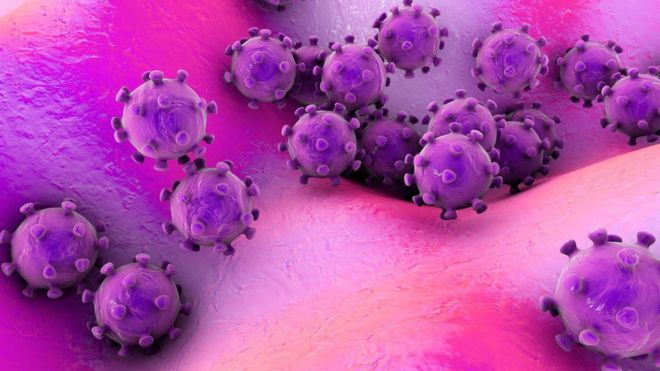
Image copyright GETTY IMAGESImage caption There were six coronaviruses known to infect people before the latest discovery
The number of people already infected by the mystery virus emerging in China is far greater than official figures suggest, scientists have told the BBC.
There have been more than 60 confirmed cases of the new coronavirus, but UK experts estimate a figure nearer 1,700.
Two people are known to have died from the respiratory illness, which appeared in Wuhan city in December.
“I am substantially more concerned than I was a week ago,” disease outbreak scientist Prof Neil Ferguson, said.
The work was conducted by the MRC Centre for Global Infectious Disease Analysis at Imperial College London, which advises bodies including the UK government and the World Health Organization (WHO).
Singapore and Hong Kong have been screening air passengers from Wuhan, and US authorities announced similar measures starting on Friday at three major airports in San Francisco, Los Angeles and New York.
How were the numbers calculated?
The crucial clue to the scale of the problem lies in the cases being detected in other countries.
While the outbreak is centred on the central Chinese city of Wuhan, there have been two cases in Thailand and one in Japan.
“That caused me to worry,” said Prof Ferguson.
He added: “For Wuhan to have exported three cases to other countries would imply there would have to be many more cases than have been reported.”
It is impossible to get the precise number, but outbreak modelling, which is based on the virus, the local population and flight data, can give an idea.
Wuhan International Airport serves a population of 19 million people, but only 3,400 a day travel internationally.
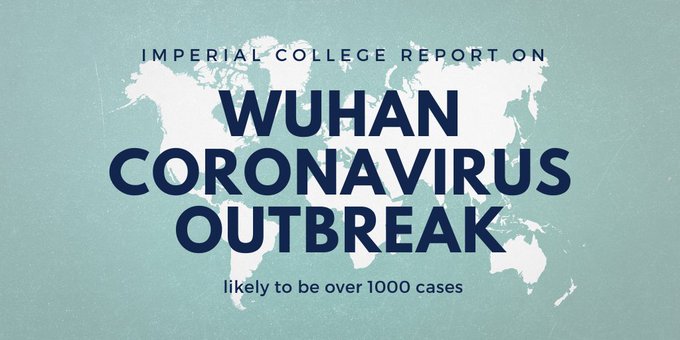
The detailed calculations, which have been posted online ahead of publication in a scientific journal, came up with a figure of 1,700 cases.
MRC Centre for Global Infectious Disease Analysis@MRC_Outbreak
Size of Wuhan outbreak of a novel #coronavirus estimated from the three cases detected outside China: Likely to be over 1000 cases. @imperialcollege @mrc_outbreaks report released today
Prof Ferguson said it was “too early to be alarmist” but he was “substantially more concerned” than a week ago.
Chinese officials say there have been no cases of the virus spreading from one person to another.
Instead they say the virus has crossed the species barrier and come from infected animals at a seafood and wildlife market in Wuhan.
Prof Ferguson argues: “People should be considering the possibility of substantial human-to-human transmission more seriously than they have so far.
“It would be unlikely in my mind, given what we know about coronaviruses, to have animal exposure, be the principal cause of such a number of human infections.”
Understanding how a novel virus is spreading is a crucial part of assessing its threat.
The WHO’s China office said the analysis was helpful and would help officials plan the response to the outbreak.
“Much remains to be understood about the new coronavirus,” it said. “Not enough is known to draw definitive conclusions about how it is transmitted, the clinical features of the disease, the extent to which it has spread, or its source, which remains unknown.”
Image copyright GETTY IMAGESImage caption The outbreak occurred in the city of Wuhan, south of Beijing
What is this virus?
Viral samples have been taken from patients and analysed in the laboratory.
At the mild end they cause the common cold, but severe acute respiratory syndrome (Sars) is a coronavirus that killed 774 of the 8,098 people infected in an outbreak that started in China in 2002.
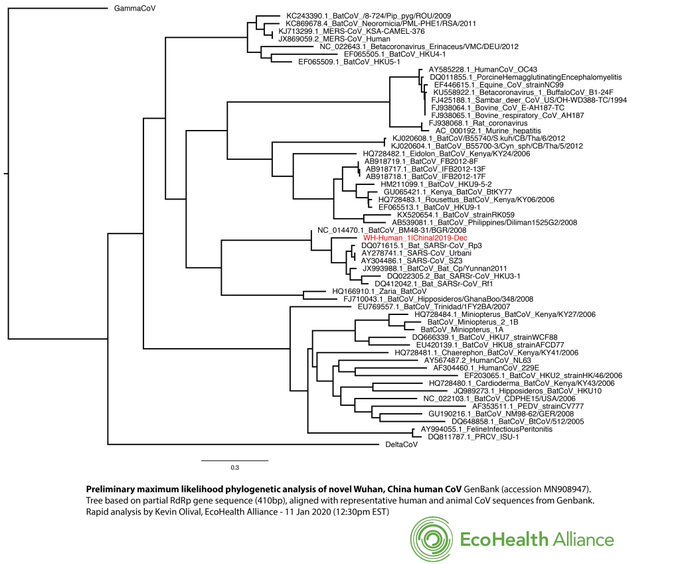
Analysis of the genetic code of the new virus shows it is more closely related to Sars than any other human coronavirus.
The virus has caused pneumonia in some patients and been fatal in two of them.
What do other experts say?
Dr Jeremy Farrar, director of the Wellcome medical research charity, said: “There is more to come from this epidemic.
“Uncertainty and gaps remain, but it’s clear that there is some level of person-to-person transmission.
Media caption Coronavirus feared to have infected more than initially thought, according to scientists
“We are starting to hear of more cases in China and other countries and it is likely, as this modelling shows, that there will be many more cases in a number of countries.”
Prof Jonathan Ball, from the University of Nottingham, said: “What’s really important is until there has been widespread laboratory testing it is very difficult to put a real number on the cases out there.
“But this is a figure we should take seriously until we know otherwise, 41 animal-to-human ‘spillovers’ is stretching it a bit and there probably is more underlying infection than has been detected so far.”


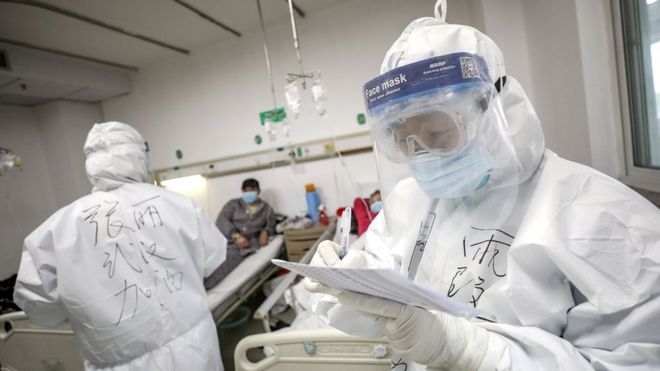 Image copyright REUTERS







 CHINDIA ALERT: You'll be living in their world, very soon