Archive for ‘World Health Organization’

14/02/2020

Coronavirus: New China figures highlight toll on medical staff

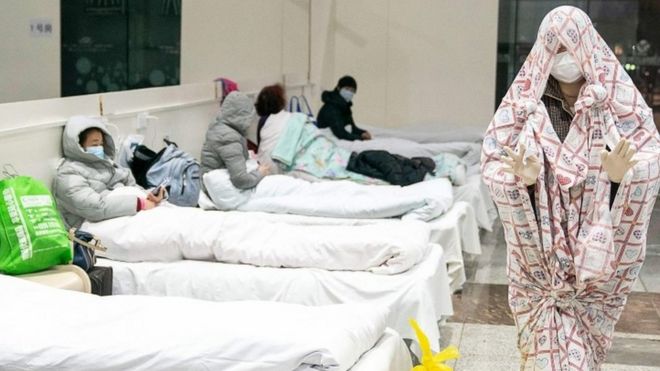
Exhibition hall converted to hospital in Wuhan - 5 FebruaryImage copyright AFP
Image caption Authorities in Wuhan have had to create extra hospital space to cope with large numbers of cases

Chinese officials have given figures for health workers infected with coronavirus, amid concerns about shortages of protective equipment.

Six health workers have died and 1,716 have been infected since the outbreak, they said.

The death a week ago of Doctor Li Wenliang, who tried to warn authorities early on about the virus, provoked a burst of public anger and grief.

More than 1,300 people are now known to have died from the virus.

The latest figures show 122 new deaths in China, bringing the toll to 1,381.

The total number of infections has jumped to 63,922 cases, according to the National Health Commission.

The World Health Organization said there was no major shift in the virus’s pattern of mortality or severity, despite a spike in cases in Hubei, the epicentre of the disease, on Tuesday.

Most of this was down to Hubei using a broader definition to diagnose people, said Mike Ryan, head of WHO’s health emergencies programme.

There was also no significant rise in cases outside China, the WHO said.

However, a cruise ship docked in Japan, the Diamond Princess, saw 44 new cases, bringing the total there to 218.

What is the situation with medical workers?

Zeng Yixin, vice minister of China’s National Health Commission, said 1,102 medical workers had been infected in Wuhan, where the outbreak began, and another 400 in other parts of Hubei province.

He said the number of infections among staff was increasing.

Media caption Medics in Wuhan resort to shaving their heads in a bid to prevent cross-infection of the coronavirus

“The duties of medical workers at the front are indeed extremely heavy; their working and resting circumstances are limited, the psychological pressures are great, and the risk of infection is high,” Mr Zeng said, quoted by Reuters.

Local authorities have struggled to provide protective equipment such as respiratory masks, goggles and protective suits in hospitals in the area.

One doctor told AFP news agency that he and 16 colleagues were showing possible symptoms of the virus.

Another medical worker said she and more than 100 other staff at her hospital had been quarantined. A further 30 had been confirmed to have been infected there out of a staff of 500 she told CNN.

On 7 February the plight of medical workers was highlighted by the death of Li Wenliang, a doctor at Wuhan Central Hospital who had tried to issue the first warning about the virus on 30 December.
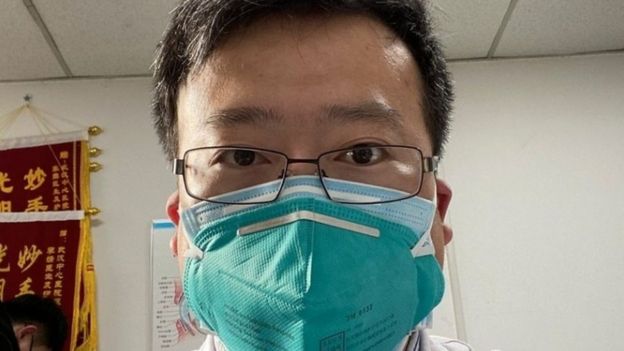
Li WenliangImage copyright LI WENLIANG
Image caption Li Wenliang contracted the virus while working at Wuhan Central Hospital

He had sent out a warning to fellow medics but police told him to stop “making false comments”.

A wave of anger and grief flooded Chinese social media site Weibo when news of Dr Li’s death broke.

Presentational grey line
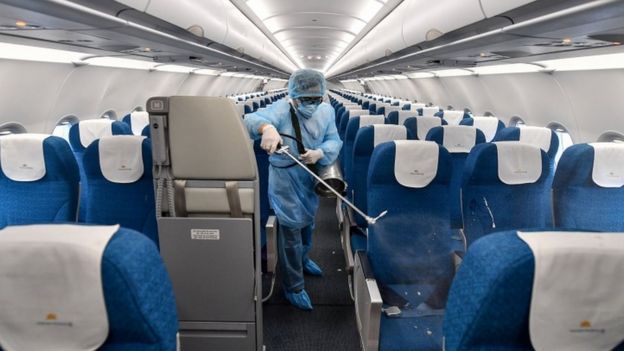
Member of Vietnam Airlines staff disinfects aircraft after flight - 4 FebruaryImage copyright AFP
Image caption Asian airlines have been hard hit by the virus outbreak

Economic impacts of the virus

  • Global airline revenue expected to fall by $4bn (£3.1bn) to $5bn this year
  • China’s car sales likely to fall more than 10% in first half of year, the China Association of Automobile Manufacturers tells Reuters
  • Singapore’s economy could fall into recession as a result of the outbreak, Prime Minister Lee Hsien Loong says
  • Malaysian finance minister says a stimulus package will be announced for aviation, retail and tourism industries
Presentational grey line

What is happening on the Diamond Princess?

The vessel is in quarantine in Yokohama, in southern Japan. Not all the 3,700 people on board have been tested yet.

People with the virus are taken to hospitals on land to be treated, while those on board are largely confined to their cabins.
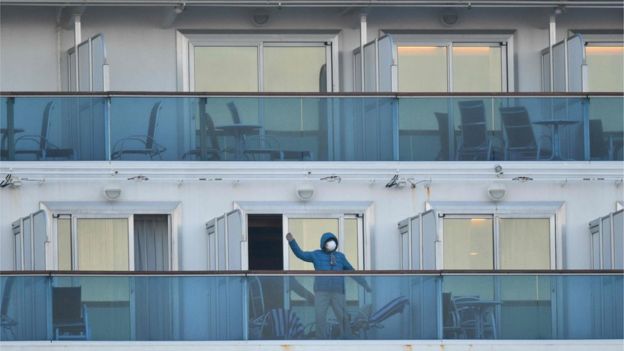
passenger on diamond princess cruise shipImage copyright AFP
Image caption The Diamond Princess has 3,700 people on board – not all of whom have been tested

However on Thursday Japan said it would allow those aged 80 or over who have tested negative for the coronavirus to disembark.

Health Minister Katsunobu Kato said they could be allowed off the ship as early as Friday but would have to stay in accommodation provided by the government, the Japan Times reported.

Meanwhile another cruise ship – the MS Westerdam, carrying more than 2,000 people – docked in Cambodia after being turned away by ports in Japan, Taiwan, Guam, the Philippines and Thailand despite having no sick patients on board.
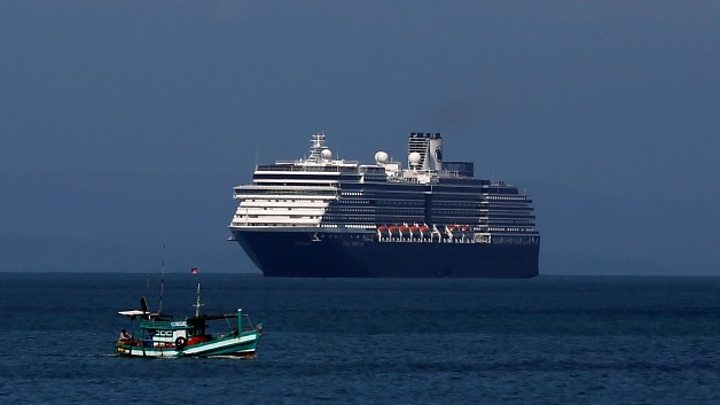

Media caption The Westerdam was finally able to dock in Sihanoukville, Cambodia
Presentational white space

In other developments:

  • Outside China there have now been two deaths and 456 cases in 24 countries
  • Singapore health ministry reports nine new cases, bringing the total number there to 67
  • In the UK, officials are attempting to trace the contacts of the latest person to be diagnosed with coronavirus. The woman, who flew into London Heathrow from China a few days ago, is the ninth case to be confirmed
  • Australia has extended its ban on people coming from mainland China for another week, to 22 February
  • China said it would stagger the return of children to school – several provinces have closed schools until the end of February
  • In Vietnam, which borders China, thousands of people in villages near the capital, Hanoi, have been put under quarantine after several cases were discovered. Vietnam has now confirmed at least 16 cases
  • The Red Cross has called for sanctions relief for North Korea, which would allow the aid agency to transfer funds to buy equipment. Testing kits and protective clothing are urgently needed to prepare for a possible outbreak, it says
  • British rap star Stormzy has postponed the Asian leg of his tour – he had been due to play in locations including Shanghai, Hong Kong, Singapore and Malaysia in March
  • A Russian woman – who was put into a coronavirus quarantine but escaped – is resisting attempts by officials to bring her back to hospital by force. Alla Ilyina, 32, has been refusing to open the door of her St Petersburg apartment to police
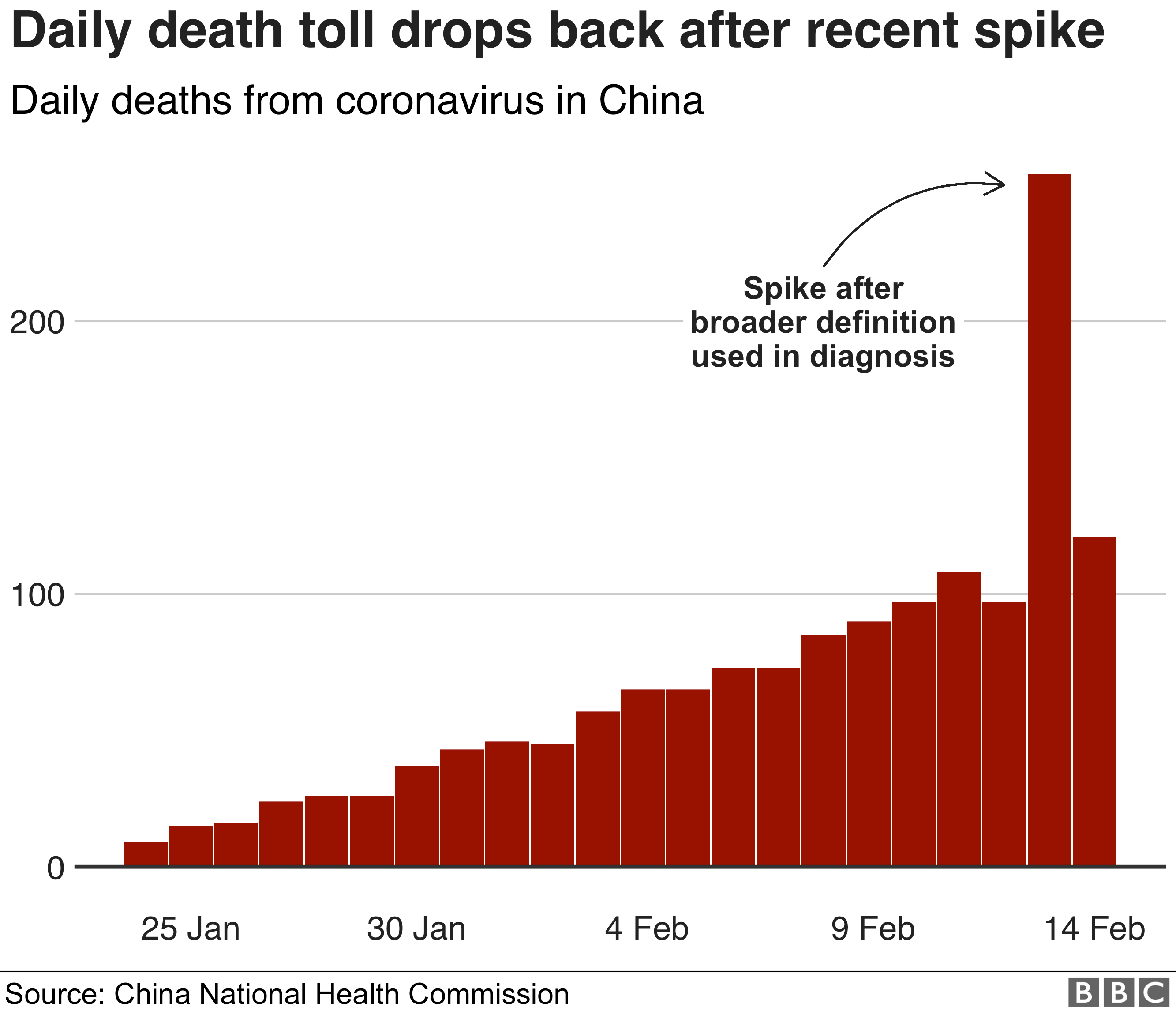
China death toll
Presentational white spaceSource: The BBC
12/02/2020

China appreciates BRICS statement supporting epidemic fight: FM spokesperson

BEIJING, Feb. 12 (Xinhua) — China highly appreciates a BRICS chairmanship statement in support of China’s fight against the novel coronavirus epidemic, Foreign Ministry Spokesperson Geng Shuang said Wednesday at an online press briefing.

Russia, holding this year’s chairmanship of the emerging-market bloc that groups Brazil, Russia, India, China and South Africa, on Tuesday issued the statement representing the BRICS countries to support the “firm commitment and decisive efforts of the Chinese government” to combat the epidemic.

The statement also called for international cooperation and coordination within the World Health Organization framework to protect regional and global public health security, and underlined the importance of avoiding discrimination, stigmatization and overreaction while responding to the outbreak.

Calling other BRICS countries as important partners for China, Geng said this statement delivered positive and constructive messages, voiced support for China’s efforts and called for greater international cooperation in safeguarding public health security.

“This demonstrates the BRICS spirit of helping each other during difficult times. It also epitomizes the support China has received from the international community. We highly appreciate it,” he said.

“We will continue to work with the international community including the BRICS countries to combat the epidemic and safeguard regional and global public health security,” said the spokesperson.

Source: Xinhua

01/02/2020

Coronavirus declared global health emergency by WHO

The new coronavirus has been declared a global emergency by the World Health Organization, as the outbreak continues to spread outside China.

“The main reason for this declaration is not what is happening in China but what is happening in other countries,” said WHO chief Tedros Adhanom Ghebreyesus.

The concern is that it could spread to countries with weaker health systems.

Meanwhile, the US has told its citizens not to travel to China.

The state department issued a level four warning – having previously urged Americans to “reconsider” travel to China – and said any citizens in China “should consider departing using commercial means”.

China has said it will send charter plans to bring back Hubei province residents who are overseas “as soon as possible”.

A foreign ministry spokesman said this was because of the “practical difficulties” Chinese citizens have faced abroad. Hubei is where the virus emerged.

At least 213 people in the China have died from the virus, mostly in Hubei, with almost 10,000 cases nationally.

The WHO said there had been 98 cases in 18 other countries, but no deaths.

Most international cases are in people who had been to Wuhan in Hubei.

However in eight cases – in Germany, Japan, Vietnam and the United States – patients were infected by people who had travelled to China.

People wearing masks

Getty Coronavirus outbreak outside China
  • 18 The number of countries with cases
  • 14 Cases in Thailand and Japan
  • 13 Singapore
  • 11 South Korea
  • 8 Australia and Malaysia
  • 5 France and USA

Source: WHO and local authorities

Speaking at a news conference in Geneva, Dr Tedros described the virus as an “unprecedented outbreak” that has been met with an “unprecedented response”.

He praised the “extraordinary measures” Chinese authorities had taken, and said there was no reason to limit trade or travel to China.

“Let me be clear, this declaration is not a vote of no confidence in China,” he said.

But various countries have taken steps to close borders or cancel flights, and companies like Google, Ikea, Starbucks and Tesla have closed their shops or stopped operations.

The US Commerce Secretary, Wilbur Ross, has said the outbreak could “accelerate the return of jobs to North America”.

Presentational grey line

Preparing other countries

Analysis box by James Gallagher, health and science correspondent

What happens if this virus finds its way into a country that cannot cope?

Many low- and middle-income countries simply lack the tools to spot or contain it. The fear is it could spread uncontrollably and that it may go unnoticed for some time.

Remember this is a disease which emerged only last month – and yet there are already almost 10,000 confirmed cases in China.

The 2014 Ebola outbreak in West Africa – the largest in human history – showed how easily poorer countries can be overwhelmed by such outbreaks.

And if novel coronavirus gets a significant foothold in such places, then it would be incredibly difficult to contain.

We are not at that stage yet – 99% of cases are in China and the WHO is convinced the country can control the outbreak there.

But declaring a global emergency allows the WHO to support lower- and middle-income countries to strengthen their disease surveillance – and prepare them for cases.

Presentational grey line

How unusual is this declaration?

The WHO declares a Public Health Emergency of International Concern when there is “an extraordinary event which is determined… to constitute a public health risk to other states through the international spread of disease”.

It has previously declared five global public health emergencies:

  • Swine flu, 2009 – The H1N1 virus spread across the world in 2009, with death toll estimates ranging from 123,000 to 575,400
  • Polio, 2014 – Although closer than ever to eradication in 2012, polio numbers rose in 2013
  • Zika, 2016 – The WHO declared Zika a public health emergency in 2016 after the disease spread rapidly through the Americas
  • Ebola, 2014 and 2019 – The first emergency over the virus lasted from August 2014 to March 2016 as almost 30,000 people were infected and more than 11,000 died in West Africa. A second emergency was declared last year as an outbreak spread in DR Congo

Media caption Inside the US laboratory developing a coronavirus vaccine

How is China handling the outbreak?

A confirmed case in Tibet means the virus has reached every region in mainland China. According to the country’s National Health Commission, 9,692 cases have tested positive.

The central province of Hubei, where nearly all deaths have occurred, is in a state of lockdown. The province of 60 million people is home to Wuhan, the heart of the outbreak.

The city has effectively been sealed off and China has put numerous transport restrictions in place to curb the spread of the virus.

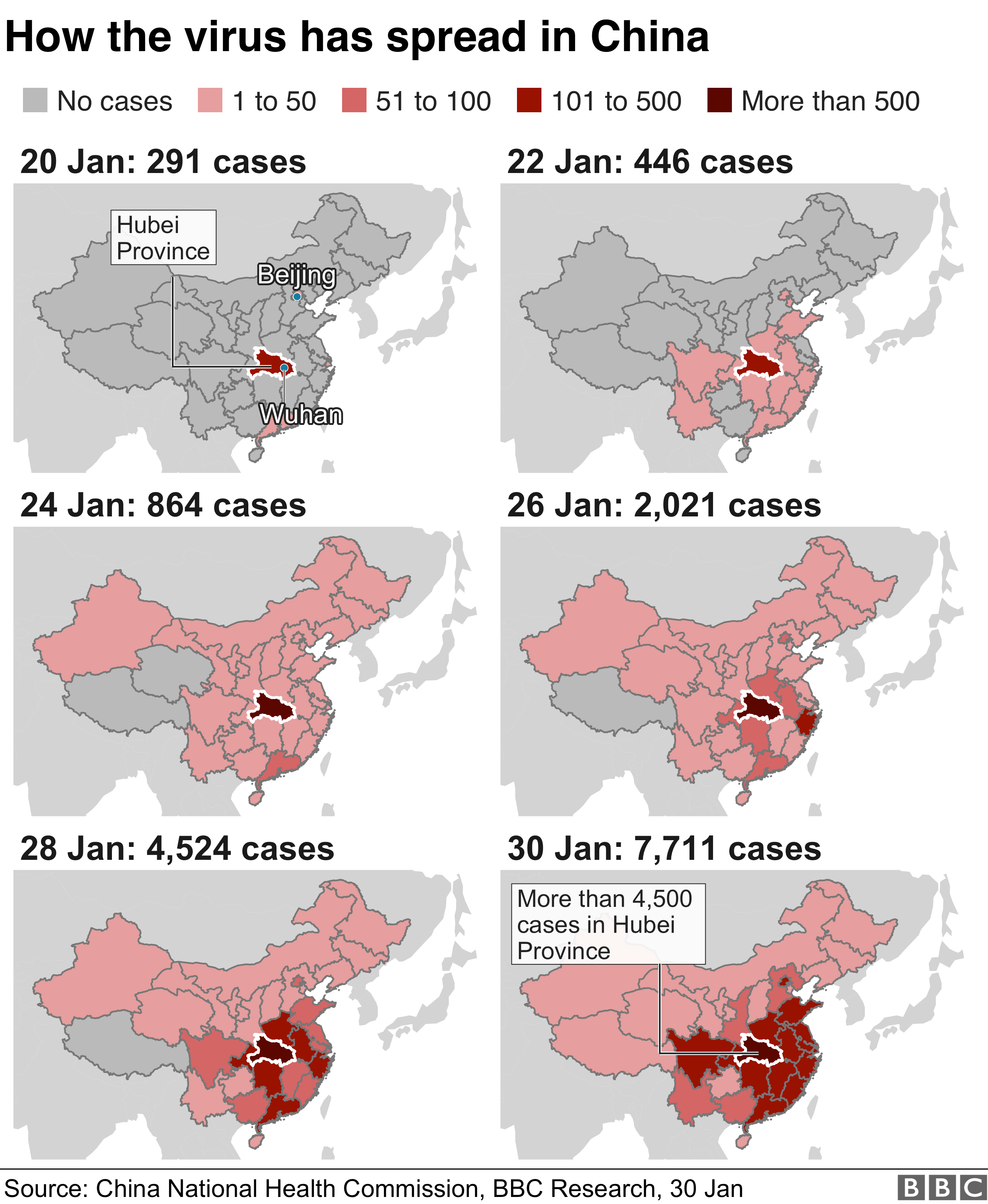
Coronavirus cases have spread to every province in China. There are now 7711 cases compared to 291 on 20 Jan. Hubei province has more than 4500 cases.
People who have been in Hubei are also being told to work from home until it is considered safe for them to return.

The virus is affecting China’s economy, the world’s second-largest, with a growing number of countries advising their citizens to avoid all non-essential travel to the country.

How is the world responding?

Voluntary evacuations of hundreds of foreign nationals from Wuhan are under way.

The UK, Australia, South Korea, Singapore and New Zealand are expected to quarantine all evacuees for two weeks to monitor them for symptoms and avoid contagion.

Australia plans to quarantine its evacuees on Christmas Island, 2,000km (1,200 miles) from the mainland in a detention centre that has been used to house asylum seekers.

In other recent developments:

  • Italy suspended flights to China after two Chinese tourists in Rome were diagnosed with the virus; earlier 6,000 people on board a cruise ship were temporarily barred from disembarking
  • In the US, Chicago health officials have reported the first US case of human-to-human transmission. Around 200 US citizens have been flown out of Wuhan and are being isolated at a Californian military base for at least 72 hours
  • Russia has decided to close its 4,300km (2,670-mile) far-eastern border with China
  • Two flights to Japan have already landed in Tokyo. Japan has now raised its infectious disease advisory level for China
  • Some 250 French nationals have been evacuated from Wuhan
  • India has confirmed its first case of the virus – a student in the southern state of Kerala who was studying in Wuhan
  • Israel has barred all flight connections with China
  • Papua New Guinea has banned all visitors from “Asian ports”
  • North Korea will suspend all flights and trains to and from China, said the British ambassador to North Korea

Source: The BBC

26/01/2020

Coronavirus: Chinese embassy in Paris finds woman who ‘cheated’ checks

Pictures posted by the woman on WeChatImage copyright WEIBO
Image caption She posted pictures of her meal on social media platform WeChat

The Chinese embassy in Paris has tracked down a woman from Wuhan who said she took tablets to pass airport health checks.

The woman boasted on social media that she had been suffering from a fever, but managed to reduce her symptoms with medicine.

She later posted pictures showing herself dining at what she claimed was a Michelin-starred restaurant in Lyon.

The embassy has now confirmed that her symptoms are under control.

The woman left Wuhan – where the new coronavirus emerged late last year – before flights were suspended, but when thermal scanning was in place.

Since yesterday, public transport has been shut down, with residents told not to leave the city.

At least 25 people with the virus have died. It was first reported to the World Health Organization 31 December.

The virus has spread to countries as far as South Korea, Japan and the US.

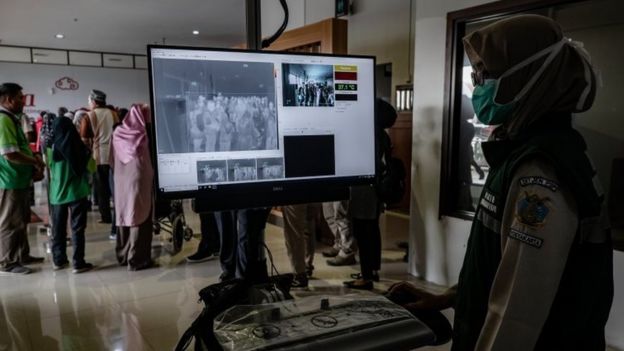
People have been thermally scanned when leaving Wuhan, and arriving at their destination. This picture was taken in Indonesia on ThursdayImage copyright GETTY IMAGES
Image caption People have been thermally scanned when leaving Wuhan, and arriving at their destination. This picture was taken in Indonesia on Thursday

The woman detailed her journey to Lyon on social media site WeChat.

“Finally I can have a good meal, I feel like I’ve been starving for two days. When you are in a gourmet city of course you have to eat Michelin [food],” she wrote.

“Just before I left, I had a low fever and cough. I was scared to death and rushed to eat [fever-reducing] medicine. I kept on checking my temperature. Luckily I managed to get it down and my exit was smooth.”

She also posted pictures of the meal she enjoyed. It is not clear exactly when she arrived.

Her post quickly went viral and she was widely criticised by other social media users.

The Chinese embassy in Paris said it had received calls and emails about the woman. It said she had taken antipyretics, and that it attached “great importance” to the case.

The embassy said it contacted her on Wednesday evening and asked her to refer herself to medical services.

On Thursday, in a new statement, the embassy said the woman’s temperature was under control, and that she had no more fever or cough symptoms.

It added that she did not require “further examinations” at this point.

Media caption Fears over coronavirus in China trigger face mask shortage

China has effectively quarantined nearly 20 million people in Hubei province. Other major cities in China like Beijing and Shanghai are also affected.

Authorities have cancelled all large-scale celebrations in Beijing. Temple fairs are banned, film releases postponed and the Forbidden City will be closed to the public.

All this comes as millions of Chinese people are travelling across the country for Lunar New Year.

Currently known as 2019-nCoV, the virus is understood to be a new strain of coronavirus not previously identified in humans.

Source: The BBC

12/07/2019

India air pollution: Will Gujarat’s ‘cap and trade’ programme work?

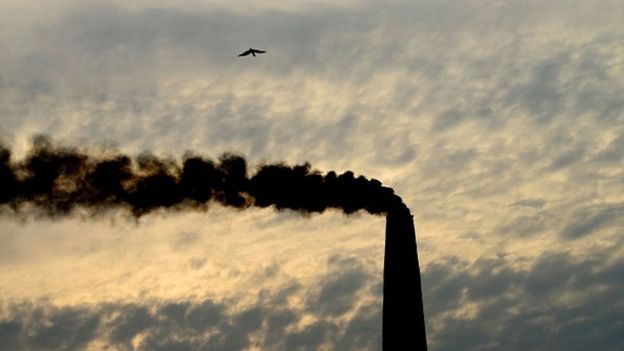
Air pollution in IndiaImage copyright AFP
Image caption Much of the air pollution is caused by factory emissions

Air pollution contributed to the deaths of at least 1.2 million Indians in 2017 – but a unique pilot scheme to combat air pollution in the western state of Gujarat could prove to be a model for the rest of the country. The BBC spoke to experts to find out more about the world’s first ever such experiment.

The concentration of tiny particulate matter (known as PM2.5) in India is eight times the World Health Organization’s standard.

These particles are so tiny that they can enter deep into the lungs and make people susceptible to respiratory and cardiovascular diseases, making them extremely deadly.

Air pollution in India is caused by fumes from cooking on wood or dung indoors in villages, and a combination of traffic exhaust, soot and construction dust and factory emissions in the cities.

Now Gujarat has launched the world’s first “cap and trading” programme to curb particulate air pollution.

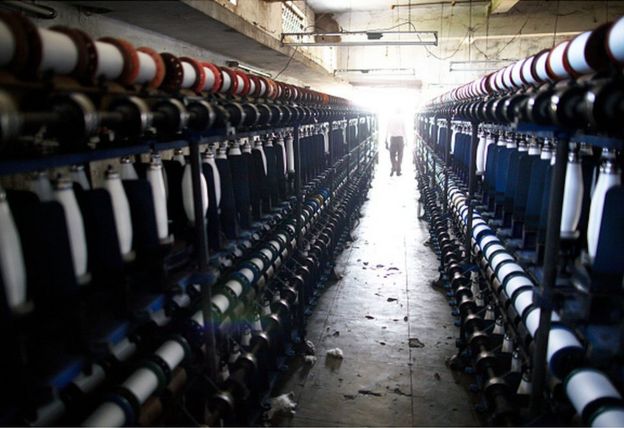
Textile factory in SuratImage copyright AFP
Image caption Surat is a dense industrial city where textile and dye factories are a major source of pollution

Put simply, the government sets a cap on emissions and allows factories to buy and sell permits to stay below the cap.

It is being launched in the dense, industrial city of Surat, where textile and dye factories are a major source of pollution. Since 2011, local pollution control authorities have been working on the impact of emissions trading in Surat, along with the University of Chicago and Harvard University.

How will this programme work?

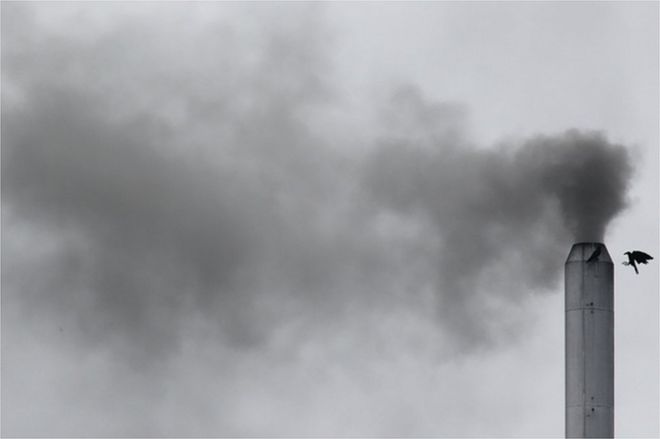
The basic commodity in the emissions trading system is particulate matter, which is emitted by industries through their smoke stacks.

Under the emissions trading system, industries must hold a permit for each unit of particulate that they emit, and must comply with the prescribed standard of 150 milligrams per cubic metre of particulate matter released in the atmosphere.

Although industries can trade permits among themselves, the total quantity of these permits are fixed, so that air pollution standards are met.

For example, an industry that finds it inexpensive to decrease emissions is likely to over-comply with the standards – this would allow them to sell its excess permits to another industry that finds it more expensive to decrease emissions.

Both industries benefit by reducing their total costs of compliance, while the total emissions are held constant.

Importantly, this trading system gives firms an incentive to find ways to reduce emissions because they are able to sell any extra reductions to other firms.

These incentives have been shown to prompt firms to innovate so that they find new and inexpensive ways to reduce their emissions.

This standard will be used to set the overall emissions from all the industries that are participating in the pilot programme.

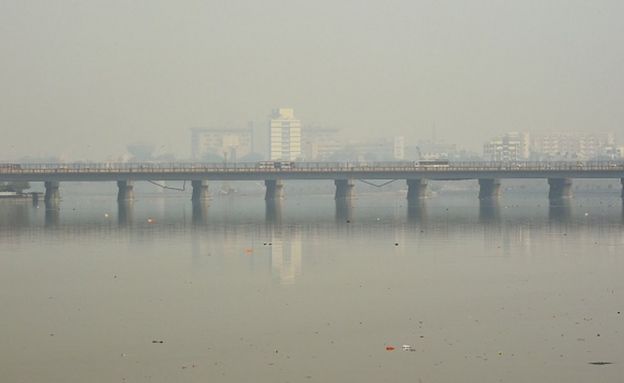
Traffic is pictured on a bridge over the Sabarmati River during heavy smog conditions in Ahmedabad on February 5, 2019.Image copyright AFP
Image caption Smoggy skies over the Sabarmati river in Gujarat

Why is this programme being implemented in Surat?

Michael Greenstone, economist and director of the Energy Policy Institute at Chicago (EPIC), says the programme in Surat is a result of a multi-year process that his institute has been working on with the Gujarat Pollution Control Board (GPCB) over the last four years.

In 2015, the environment ministry ordered 17 highly polluting industries – such as pulp and paper, distillery, sugar, tanneries, power plants, and iron and steel – to mandatorily install continuous emission monitoring system (CEMS) devices. They are a network of sensors installed in factories that send live readings of pollution emitted through their smoke stacks.

In the first phase of experiment, some 170 industries installed the devices, which cost anywhere between $2,500 and $7,000 (£2,000-£5,600).

“We worked with GPCB and the industries extensively on how to understand and use this data for regulation,” Dr Greenstone says.

Factory pollution in indiaImage copyright AFP
Image caption Highly polluting industries in India have been asked to install emission control systems

“In the Gujarat experiment, we are working with textile, paper and sugar manufacturing industries.”

Can this programme be scaled up in a country as vast as India?

The state’s pollution board set this up as a pilot so that whatever is learnt here can be applied to help the operation of the market, says Dr Greenstone.

If successful, there will be a strong case for expanding this regulatory approach to other parts of Gujarat and other states in India.

“Particulate air pollution is shortening lives in India, so if the pilot is successful there is a terrific opportunity for a win-win by scaling up emissions trading in order to reduce industries’ compliance costs and to improve air quality which would ultimately [improve] people’s health,” he adds.

Will this ambitious programme work?

Siddharth Singh, energy expert and author of The Great Smog of India, says the emissions trading scheme has the potential to work.

“Firstly, unlike in other countries, emission trading schemes are not a politically sensitive topic, so it could quietly be tested and scaled up if it proves to be successful. Secondly, India has some experience in running a similar scheme.”

India’s Bureau of Energy Efficiency has been running a programme to improve industrial energy efficiency. It targets some 500 large users of energy across India and encourages trade in energy efficiency certificates. This has led to decreased energy use and emissions, as well as cost savings.

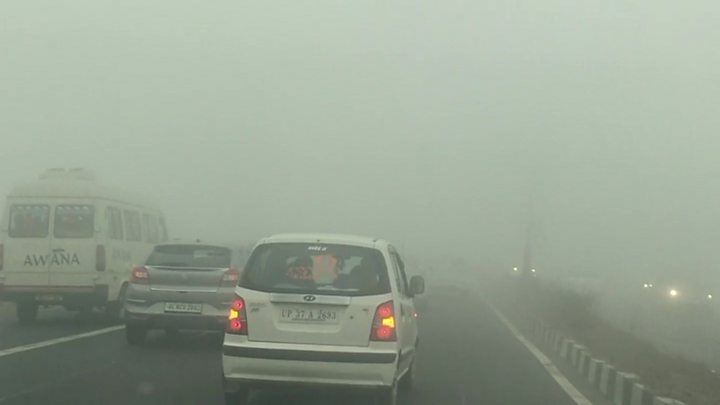
Media caption A hair-raising drive through the Delhi smog

“India is only testing the trading programme at the state level,” he adds.

“There is nothing to lose here, even if the pilot fails. But if it succeeds, it could be scaled up and prove to be a great policy tool to address particulate air pollution in India.”

Source: The BBC
Law of Unintended Consequences

continuously updated blog about China & India

ChiaHou's Book Reviews

continuously updated blog about China & India

What's wrong with the world; and its economy

continuously updated blog about China & India