Chindia Alert: You’ll be Living in their World Very Soon
aims to alert you to the threats and opportunities that China and India present. China and India require serious attention; case of ‘hidden dragon and crouching tiger’.
Without this attention, governments, businesses and, indeed, individuals may find themselves at a great disadvantage sooner rather than later.
The POSTs (front webpages) are mainly 'cuttings' from reliable sources, updated continuously.
The PAGEs (see Tabs, above) attempt to make the information more meaningful by putting some structure to the information we have researched and assembled since 2006.
MUNICH (Reuters) – One January lunchtime in a car parts company, a worker turned to a colleague and asked to borrow the salt.
As well as the saltshaker, in that instant, they shared the new coronavirus, scientists have since concluded.
That their exchange was documented at all is the result of intense scrutiny, part of a rare success story in the global fight against the virus.
The co-workers were early links in what was to be the first documented chain of multiple human-to-human transmissions outside Asia of COVID-19, the disease caused by the coronavirus.
They are based in Stockdorf, a German town of 4,000 near Munich in Bavaria, and they work at car parts supplier Webasto Group. The company was thrust under a global microscope after it disclosed that one of its employees, a Chinese woman, caught the virus and brought it to Webasto headquarters. There, it was passed to colleagues – including, scientists would learn, a person lunching in the canteen with whom the Chinese patient had no contact.
The Jan. 22 canteen scene was one of dozens of mundane incidents that scientists have logged in a medical manhunt to trace, test and isolate infected workers so that the regional government of Bavaria could stop the virus from spreading.
That hunt has helped Germany win crucial time to build its COVID-19 defences.
The time Germany bought may have saved lives, scientists say. Its first outbreak of locally transmitted COVID-19 began earlier than Italy’s, but Germany has had many fewer deaths. Italy’s first detected local transmission was on Feb. 21. By then Germany had kicked off a health ministry information campaign and a government strategy to tackle the virus which would hinge on widespread testing. In Germany so far, more than 2,100 people have died of COVID-19. In Italy, with a smaller population, the total exceeds 17,600.
“We learned that we must meticulously trace chains of infection in order to interrupt them,” Clemens Wendtner, the doctor who treated the Munich patients, told Reuters.
Wendtner teamed up with some of Germany’s top scientists to tackle what became known as the ‘Munich cluster,’ and they advised the Bavarian government on how to respond. Bavaria led the way with the lockdowns, which went nationwide on March 22.
Scientists including England’s Chief Medical Officer Chris Whitty have credited Germany’s early, widespread testing with slowing the spread of the virus. “‘We all know Germany got ahead in terms of its ability to do testing for the virus and there’s a lot to learn from that,’” he said on TV earlier this week.
Christian Drosten, the top virologist at Berlin’s Charite hospital, said Germany was helped by having a clear early cluster. “Because we had this Munich cohort right at the start … it became clear that with a big push we could inhibit this spreading further,” he said in a daily podcast for NDR radio on the coronavirus.
Drosten, who declined to be interviewed for this story, was one of more than 40 scientists involved in scrutiny of the cluster. Their work was documented in preliminary form in a working paper at the end of last month, intended for The Lancet. The paper, not yet peer-reviewed, was shared on the NDR site.
ELECTRONIC DIARIES
It was on Monday, Jan. 27, that Holger Engelmann, Webasto’s CEO, told the authorities that one of his employees had tested positive for the new coronavirus. The woman, who was based in Shanghai, had facilitated several days of workshops and attended meetings at Webasto’s HQ.
The woman’s parents, from Wuhan, had visited her before she travelled on Jan. 19 to Stockdorf, the paper said. While in Germany, she felt unusual chest and back aches and was tired for her whole stay. But she put the symptoms down to jet lag.
She became feverish on the return flight to China, tested positive after landing and was hospitalised. Her parents also later tested positive. She told her managers of the result and they emailed the CEO.
In Germany, Engelmann said he immediately set up a crisis team that alerted the medical authorities and started trying to trace staff members who had been in contact with their Chinese colleague.
The CEO himself was among them. “Just four or five days before I received the news, I had shaken hands with her,” he said.
Now known as Germany’s “Case #0,” the Shanghai patient is a “long-standing, proven employee from project management” who Engelmann knows personally, he told Reuters. The company has not revealed her identity or that of others involved, saying anonymity has encouraged staff to co-operate in Germany’s effort to contain the virus.
The task of finding who had contact with her was made easier by Webasto workers’ electronic calendars – for the most part, all the doctors needed was to look at staff appointments.
“It was a stroke of luck,” said Wendtner, the doctor who treated the Munich patients. “We got all the information we needed from the staff to reconstruct the chains of infection.”
For example, case #1 – the first person in Germany to be infected by the Chinese woman – sat next to her in a meeting in a small room on Jan. 20, the scientists wrote.
Where calendar data was incomplete, the scientists said, they were often able to use whole genome sequencing, which analyses differences in the genetic code of the virus from different patients, to map its spread.
By following all these links, they discovered that case #4 had been in contact several times with the Shanghai patient. Then case #4 sat back-to-back with a colleague in the canteen.
When that colleague turned to borrow the salt, the scientists deduced, the virus passed between them. The colleague became case #5.
Webasto said on Jan. 28 it was temporarily closing its Stockdorf site. Between Jan. 27 and Feb. 11, a total of 16 COVID-19 cases were identified in the Munich cluster. All but one were to develop symptoms.
All those who tested positive were sent to hospital so they could be observed and doctors could learn from the disease.
Bavaria closed down public life in mid-March. Germany has since closed schools, shops, restaurants, playgrounds and sports facilities, and many companies have shut to aid the cause.
HAMMER AND DANCE
This is not to say Germany has defeated COVID-19.
Its coronavirus death rate of 1.9%, based on data collated by Reuters, is the lowest among the countries most affected and compares with 12.6% in Italy. But experts say more deaths in Germany are inevitable.
“The death rate will rise,” said Lothar Wieler, president of Germany’s Robert Koch Institute for infectious diseases.
The difference between Germany and Italy is partly statistical: Germany’s rate seems so much lower because it has tested widely. Germany has carried out more than 1.3 million tests, according to the Robert Koch Institute. It is now carrying out up to 500,000 tests a week, Drosten said. Italy has conducted more than 807,000 tests since Feb. 21, according to its Civil Protection Agency. With a few local exceptions, Italy only tests people taken to hospital with clear and severe symptoms.
Germany’s government is using the weeks gained by the Munich experience to double the number of intensive care beds from about 28,000. The country already has Europe’s highest number of critical care beds per head of the population, according to a 2012 study.
Even that may not be enough, however. An Interior Ministry paper sent to other government departments on March 22 included a worst-case scenario with more than 1 million deaths.
Another scenario saw 12,000 deaths – with more testing after partial relaxation of restrictions. That scenario was dubbed “hammer and dance,” a term coined by blogger Tomas Pueyo. It refers to the ‘hammer’ of quick aggressive measures for some weeks, including heavy social distancing, followed by the ‘dance’ of calibrating such measures depending on the transmission rate.
The German government paper argued that in the ‘hammer and dance’ scenario, the use of big data and location tracking is inevitable. Such monitoring is already proving controversial in Germany, where memories of the East German Stasi secret police and its informants are still fresh in the minds of many.
A subsequent draft action plan compiled by the government proposes the rapid tracing of infection chains, mandatory mask-wearing in public and limits on gatherings to help enable a phased return to normal life after Germany’s lockdown. The government is backing the development of a smartphone app to help trace infections.
Germany has said it will re-evaluate the lockdown after the Easter holiday; for the car parts maker at the heart of its first outbreak, the immediate crisis is over. Webasto’s office has reopened.
All 16 people who caught COVID-19 there have recovered.
‘I felt excited and proud of myself,’ says restaurant owner and former volunteer ambulance driver Xiang Yafei
‘I didn’t feel afraid at all. In my mind, it’s already a successful vaccine,’ he says
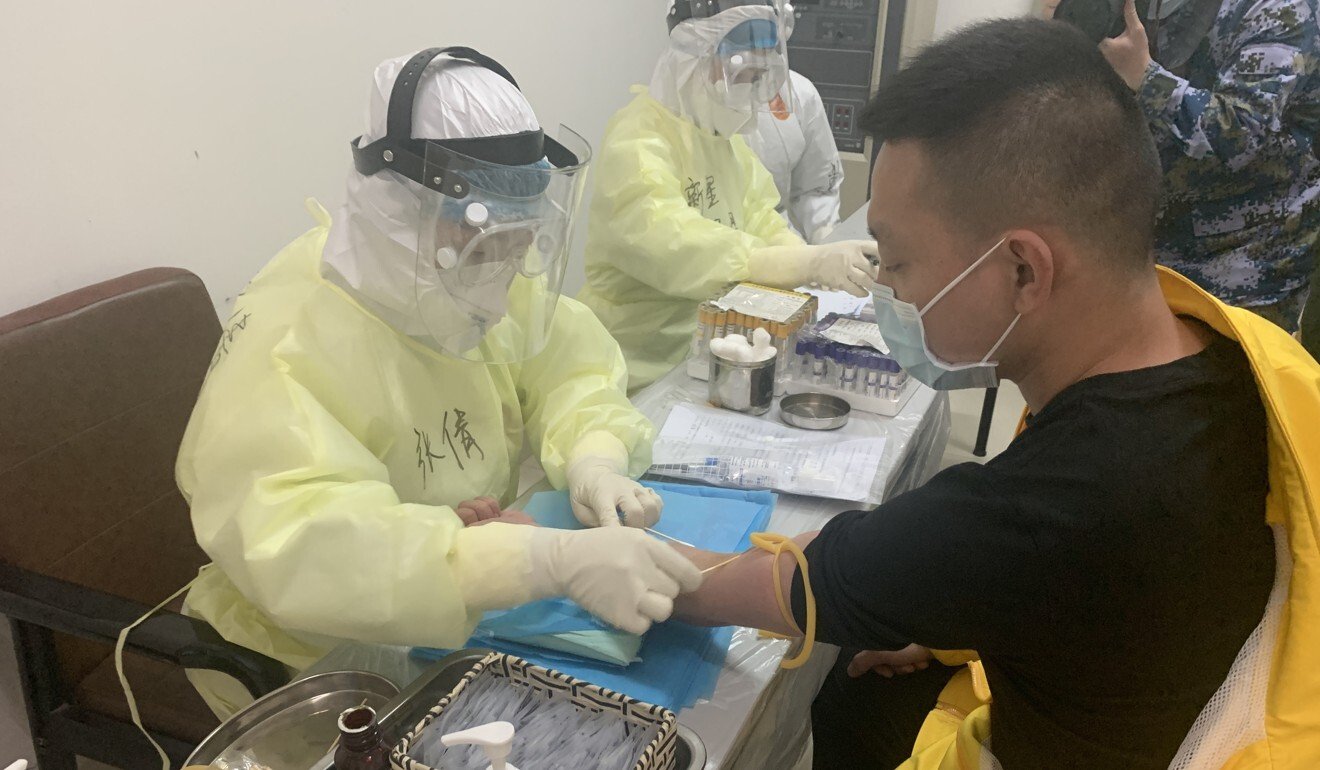
Wuhan restaurant owner Xiang Yafei says he wasn’t afraid to be a coronavirus vaccine guinea pig. Photo: Handout
With more than 1.5 million confirmed cases around the world and over 88,000 deaths, the race to develop a vaccine for the coronavirus is hotting up.
According to the World Health Organisation, about 35 companies and academic institutions are currently working on candidate products. Among the front-runners are China’s CanSino Biologics and Moderna Therapeutics in the United States, both of which have begun phase one clinical trials.
In China, those tests, which started on March 19, involve 108 volunteers from Wuhan, the city in which the virus that causes Covid-19 was first detected.
Among them is 30-year-old restaurant owner Xiang Yafei, who spoke to the South China Morning Post about his experiences so far.
Why did you apply to be a vaccine trial volunteer?
I had been doing various voluntary jobs since the end of January when Wuhan was put under lockdown. In the middle of March, one of my friends who knew about the vaccine study asked if I would be interested in joining.
At first I was afraid because there was uncertainty [about the vaccine]. I asked around and some of my friends said there was some risk to being a candidate as I’d be injected with some kinds of virus, but I felt better after I did some research about it online.
Before joining the clinical trials, Xiang worked as a volunteer ambulance driver. Photo: Handout
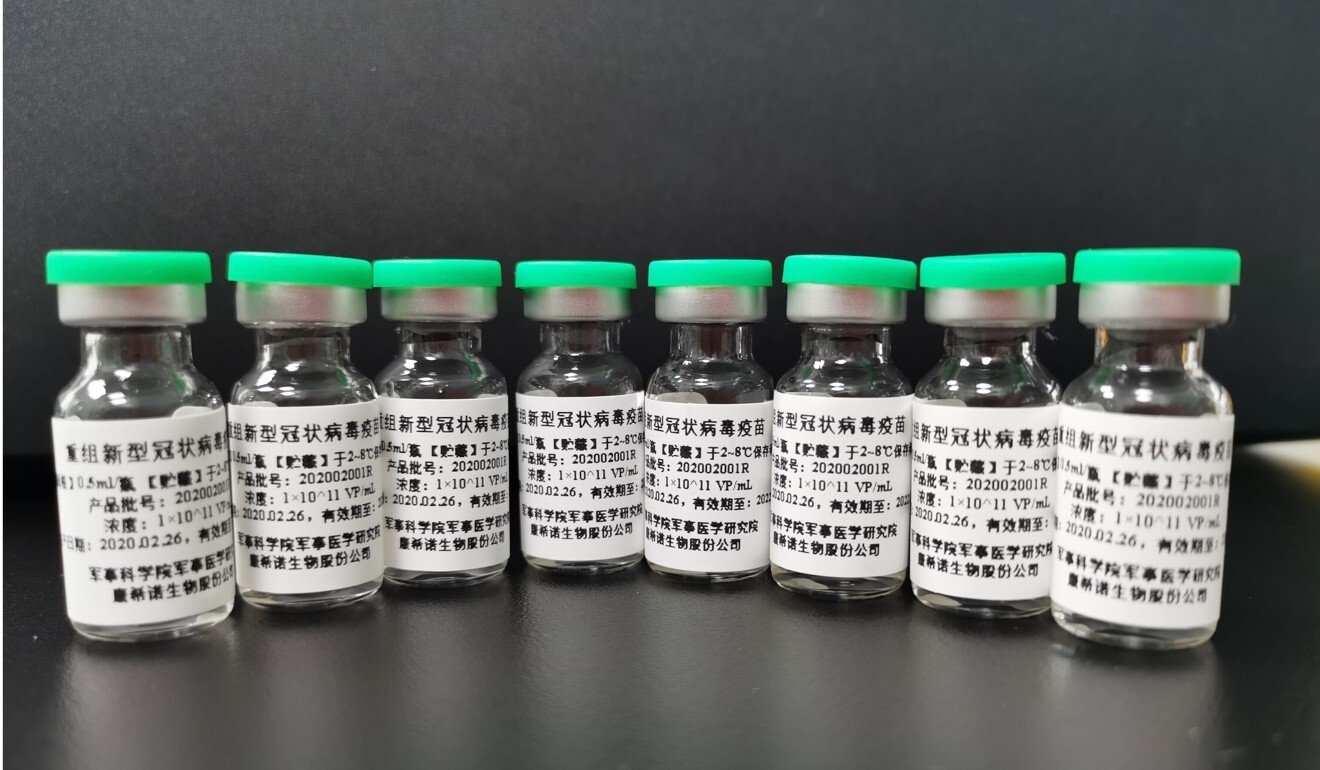
Also, because the vaccine was developed by the Academy of Military Medical Sciences [a research unit of the People’s Liberation Army] and CanSino, I thought its safety should be guaranteed, as I have confidence in the PLA because several of my relatives are former soldiers. So I agreed to join the trial but didn’t tell my parents because I didn’t want to worry them.
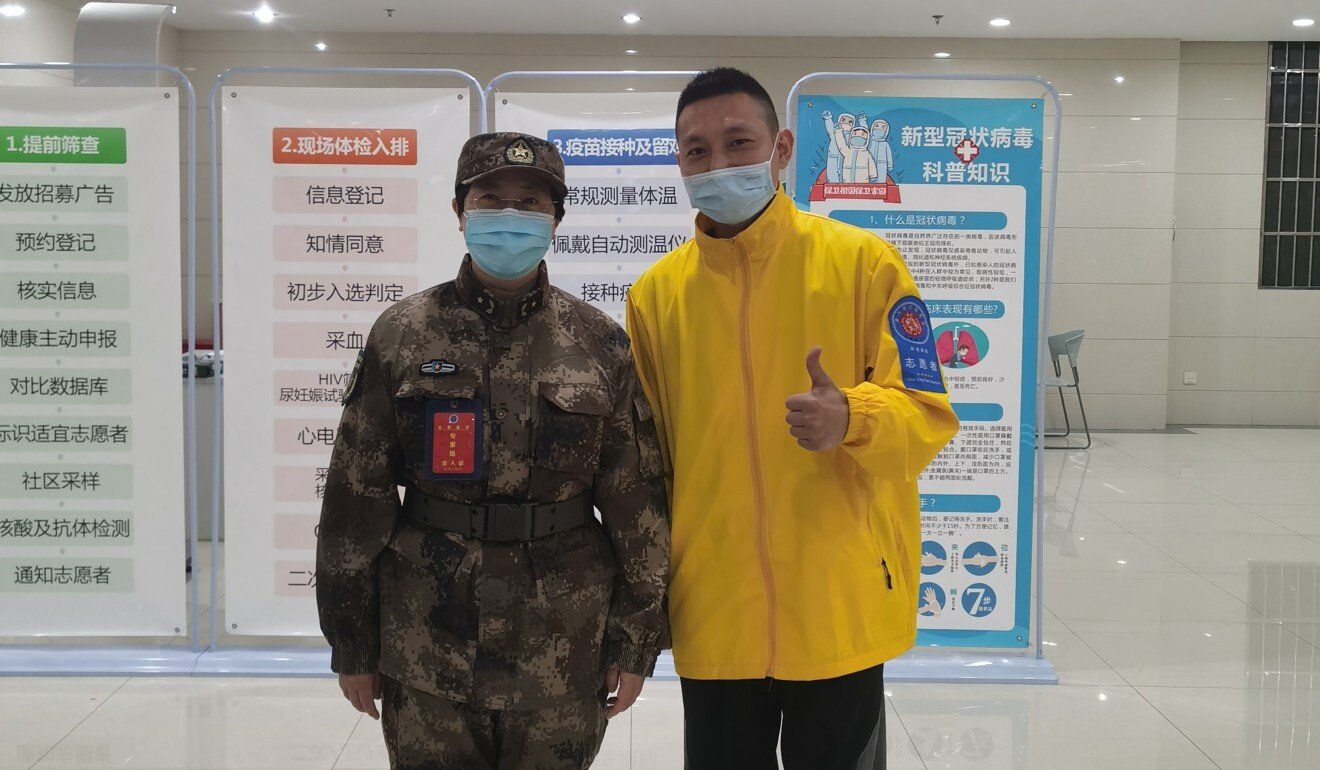
I went to the research team’s office on March 16 and filed my application – that was before they officially announced they were recruiting volunteers on the internet. While I was at the office, I was lucky to meet Major General Chen Wei, the team leader, who explained about the development of the vaccine and assured me that it wouldn’t damage my body. That boosted my confidence.
China ‘leads world in coronavirus research’, followed by US
8 Apr 2020
When did you receive your injection and how did you feel at that time?
I was given mine on the morning of March 19 and immediately put into quarantine for 14 days at a PLA facility. My number in the volunteer group is 006, meaning I was the sixth person to get the vaccine. Before the injection, I underwent a strict physical check-up. I later learned that more than 5,200 people had applied to be volunteers.
Receiving the vaccine was no different to any other injection I’d had before in my life. I didn’t feel any pain and it only lasted about 10 seconds.
But in my heart, I felt excited and proud of myself. I understand that the vaccine will be an important part in battling this coronavirus and testing it is part of the preparations before it can be put on the market.
Xiang (right) said team leader Chen Wei (left) told him about the development of the vaccine and assured him he would come to no harm. Photo: Handout
As volunteers, our job is to work together with the scientists. After all, academician Chen [the major general is also a member of the Chinese Academy of Engineering] and six members of her team have also been injected with the vaccine, and she was the first person to receive it.
They didn’t show any bad symptoms, so at that moment, I didn’t feel afraid at all. In my mind, it’s already a successful vaccine.
And how has your health been since receiving the vaccine?
I had a fever, 37.6 degrees, for the first two days. It was like catching a normal cold, with symptoms of fatigue and drowsiness. But from the third day, my condition improved and I was basically in good health.
The 108 volunteers are divided into three streams, with each receiving either a low, medium or high dose of the drug. I was in the low group so only got one dose. Volunteers in the medium group also got one and the high group were given two shots. As far as I know, everyone was fine after receiving their injections.
When will your trial result be available?
After my quarantine period ended on April 2, I was given a CAT scan and the researchers took a sample of my blood for testing. They said it would be two weeks before they could tell if there were coronavirus antibodies in my bloodstream.
I am not sure if they will tell me the result, but over the next five months I have to do four more blood tests to see if I have antibodies and how long they might remain in my blood.
What did you do to keep yourself entertained during the quarantine period?
It was just rest for me. Before then I’d been a volunteer ambulance driver in Wuhan, working every day taking coronavirus patients to hospital. I’d been really busy for more than a month, so the 14-day quarantine period gave me a chance to relax and catch up on some sleep.
I really enjoyed my time there thanks to the meals I was given, which were nutritious and varied.
The volunteers had to stay in their rooms and we were not allowed to visit each other. We were also told to check our temperature every day and to report any symptoms. I read books and exercised in my room. Some of the volunteers practised calligraphy, some played football with their toilet paper rolls, some jogged, some composed songs, and some made videos about their life in quarantine and uploaded the clips to social media. We did everything just in our own rooms.
Chinese firm CanSino Biologics is one of the front-runners in the race to develop a vaccine for the coronavirus. Photo: Handout
So what was it like working as an ambulance driver?
It was a race against time trying to get people to hospital as quickly as I could. But I felt a real sense of purpose.
At first, I didn’t want to do such work. I was scared because all the patients had been confirmed or were suspected of being infected, and they were contagious.
I was told that no one wanted to be an ambulance driver, but I had a licence to drive a minivan so I decided to do it. I think we young people should make a contribution to society, especially during this difficult time and in our home city and home province, so I applied.
Also, [each day at work] I took a gourd with me. It is called hulu in Mandarin and has auspicious implications in Chinese, as hu sounds similar to fu, which means good luck.
How was your restaurant business affected by the epidemic?
I lost about half a million yuan (US$70,000) because of it. I decided to shut my restaurant down on January 21, two days before the official lockdown, because there had been rumours it was coming and I wanted my workers to be able to leave Wuhan and return to their hometowns.
Right now I’m making preparations to reopen my restaurant, which means a lot of cleaning and disinfecting, and thinking about serving all my customers again.
So how did you feel when the lockdown was lifted on Wednesday?
The situation in Wuhan is getting better. We are proud of what we did for this city. We hope the coronavirus cases can drop to zero soon and our lives can get back to normal.
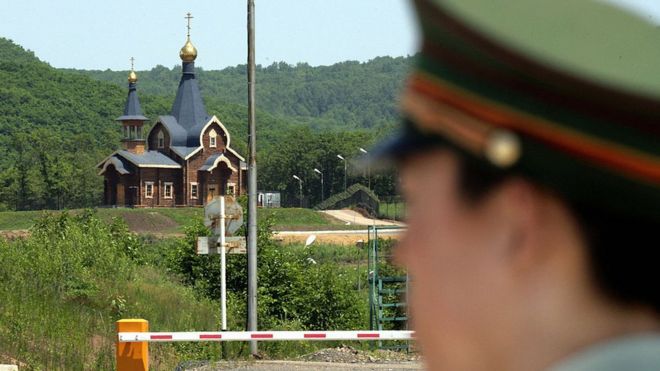
The patients were all returning Chinese citizens who had flown from Moscow to Vladivostok, a Russian city around 100 miles south.
All the new patients were taken to hospital, with two in a serious condition.
In addition, another 86 people in Suifenhe – who came via the same route – were classed as “asymptomatic” but positive for the virus, which China counts separately.
What has Suifenhe done?
The border was closed to people on Tuesday, the local government said, although cargo can continue. Russia closed its border with China in February.
People in the city have been told to stay at home, although the lockdown isn’t as severe as Hubei province experienced. One person per house can shop for essentials every three days.
At the same time, the new hospital – in an existing building – is due to open this weekend, intended for patients with mild symptoms.
“Of course I’m very scared,” one woman who runs a bakery shop told the BBC.
“We don’t leave the house now. Many people already left the city. But we can’t do that, because we have a shop need to take care of.”
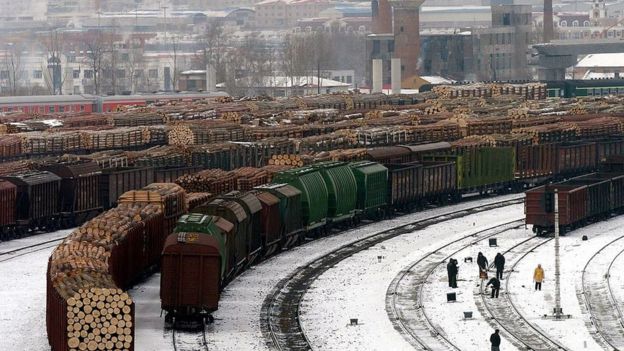
Image copyright SOVFOTOImage caption This picture from 2005 showed the extent of Russian timber exports passing through Suifenhe railway station
Meanwhile, a member of staff at a restaurant in the city said it was normally their high season, with around 1,000 customers a day.
Instead, they were told to close earlier this week, with “no idea” when they can open again.
But the staff member was not critical of the government. He said the lockdown made him feel “secure” – and that he was “very confident” the government would look after the situation.
What is the situation in the rest of China?
China’s recorded rate of Covid-19 infections has slowed dramatically in recent weeks.
On Wednesday, people were allowed to leave Wuhan – where the outbreak emerged – for the first time in 11 weeks if they were deemed virus-free.
There were 221 inbound and outbound flights, with more than 7,000 people leaving and 4,500 arriving. More than half a million used public transport, state media reported.
But although people from Wuhan can leave, they still face restrictions in other cities. In Beijing, for example, they will be tested upon arrival, according to local media.
Even if they pass, they will then be quarantined for 14 days – and tested again – before being released.
MILAN/DETROIT (Reuters) – Global automakers reeling from the COVID-19 pandemic are accelerating efforts to restart factories from Wuhan to Maranello to Michigan, using safety protocols developed for China and U.S. ventilator production operations launched in recent weeks.
Certain safety measures differ from manufacturer to manufacturer. Italian sports car maker Ferrari NV (RACE.MI) said on Wednesday it would offer voluntary blood tests to employees who wanted to know if they had been exposed to the virus.
General Motors Co’s (GM.N) head of workplace safety, Jim Glynn, told Reuters on Wednesday GM is not persuaded blood tests are useful. But Glynn said GM has studied and adapted measures taken by Amazon.com Inc (AMZN.O) to protect warehouse workers, such as temperature screening to catch employees with fevers before they enter the workplace.
Auto manufacturers and suppliers are converging on a consensus that temperature screening, daily health questionnaires, assembly lines redesigned to keep workers 3 to 6 feet (0.9 m to 1.8 m) apart, and lots and lots of masks and gloves can enable large-scale factories to operate safely.
“We know the protocols to keep people safe,” Gerald Johnson, GM’s executive vice president for global manufacturing, told Reuters in an interview. GM has relaunched vehicle plants in China and kept factories running in South Korea, he said.
GM has not said when it will reopen assembly plants in the United States. Other automakers are putting dates out in public, even though health officials and federal and state policymakers are wary of lifting lockdowns too soon.
“You see vehicle manufacturers … putting a stake in the ground,” said Brian Collie, head of Boston Consulting Group’s automotive practice. By setting a public date to restart production, they signal suppliers to get ready to ramp up, he said.
The COVID-19 pandemic has thrown the global auto industry into the worst tailspin since the 2008-2009 financial crisis. Consumer demand for vehicles has collapsed as governments have enforced lockdowns in China, and then in Europe and the United States. For the Detroit automakers and their suppliers, the shutdown of profitable truck and sport utility vehicle plants in North America has choked off cash flow.
In Europe, major automakers have said they hope to begin building vehicles again in mid-to-late April. In the United States, several big automakers, including Fiat Chrysler Automobiles NV (FCHA.MI) (FCAU.N), Honda Motor Co Ltd (7267.T) and Toyota Motor Corp (7203.T), are aiming to restart production during the first week of May.
Fiat Chrysler (FCA) and unions are discussing plans for beefed-up health measures at Italian plants to pave the way for production to restart as soon as the government eases a national lockdown due to expire on April 13, unions said on Wednesday.
Among the proposals from Fiat Chrysler’s Italian unions: move meals to the end of shifts, allowing employees to chose to avoid canteens, eat their food elsewhere and leave half an hour earlier without losing pay.
FCA did not comment on specific measures.
In the United States, some non-union automakers have also said they hope to restart vehicle plants as soon as next week.
Tire maker Bridgestone said on Wednesday it plans to restart U.S. production on April 13.
But the Trump administration has said people should continue to practice social distancing until April 30.
VENTILATOR ASSEMBLY
For the Detroit automakers, the United Auto Workers union will play a key role in deciding when and how plants will restart.
UAW President Rory Gamble said in a statement on Wednesday the union is in “deep discussions with all three companies to plan ahead over the implementation of CDC [Centers for Disease Control and Prevention] safety standards and using all available technologies to protect all UAW members, their families and the public.”
Among the union’s concerns is that members who report being ill can take time away from work without penalty, Gamble added.
The UAW has supported GM and Ford Motor Co’s (F.N) efforts to launch production of ventilators in U.S. plants – operations that have allowed the companies and the union to road-test safety measures at small scale.
At GM’s ventilator assembly plant in Kokomo, Indiana, workers and managers have been fine-tuning details such as when employees are handed masks, and when they step in front of a temperature screening device.
At first, ventilator assemblers in training at Kokomo walked down a hall before getting a mask, said Debby Hollis, one of the UAW-represented workers. Last week, she said, “They met us at the door and had us get in the masks there.”
GENEVA (Reuters) – World Health Organization officials on Wednesday denied that the body was “China-centric” and said that the acute phase of a pandemic was not the time to cut funding, after U.S. President Donald Trump said he may put contributions on hold.
The United States is the top donor to the Geneva-based body which Trump said had issued bad advice during the new coronavirus outbreak.
RELATED COVERAGE
WHO head dismisses suggestions he’s too close to China
U.S. contributions to WHO in 2019 exceeded $400 million, almost double the 2nd largest country donor, according to figures from the U.S. State Department. China contributed $44 million, it said.
“We are still in the acute phase of a pandemic so now is not the time to cut back on funding,” Dr Hans Kluge, WHO regional director for Europe, told a virtual briefing when asked about Trump’s remarks.
Trump told a news conference on Tuesday that the United States was “going to put a hold on money spent to the WHO,” however, he appeared to backtrack later when in response to questions he said: “We’re going to look at it.”
It was not immediately clear how Trump could “block” funding for the organization. Under U.S. law, Congress, not the president, decides how federal funds are spent.
Dr Bruce Aylward, senior advisor to the WHO Director-General, also defended the U.N. agency’s relationship with China, saying its work with Beijing authorities was important to understand the outbreak which began in Wuhan in December.
“It was absolutely critical in the early part of this outbreak to have full access to everything possible, to get on the ground and work with the Chinese to understand this,” he told reporters.
“This is what we did with every other hard-hit country like Spain and had nothing to do with China specifically.”
Aylward, who led a WHO expert mission to China in February, defended WHO recommendations to keep borders open, saying that China had worked “very hard” to identify and detect early cases and their contacts and ensure they did not travel.
“China worked very, hard very early on, once it understood what it was dealing with, to try and identify and detect all potential cases to make sure that they got tested to trace all the close contacts and make sure they were quarantined so they actually knew where the virus was, where the risk was,” he said.
“Then they made it very clear that these people would not and could not travel within the country, let alone internationally,” he added.
WHO Director-General Tedros Adhanom Ghebreyesus has been lavish in his praise of China from early in the outbreak, praising President Xi Jinping’s “rare leadership”.
David Heymann, a professor at the London School of Hygiene & Tropical Medicine who led WHO’s response to the 2003 SARS outbreak, said that any U.S. funding cut would be a huge blow.
“If the WHO loses its funding it cannot continue to do its work. It works on a shoe-string budget already,” Heymann said in London. “Of course it would be disastrous for the WHO to lose funding.”
Most of the relief fund earmarked to subsidise employees’ wages in affected industries
Lam and ministers slash their salaries following controversy over chief executive’s pay
Many businesses have been forced to close because of the coronavirus outbreak. Photo: Winson Wong
More than 1 million Hong Kong workers will have part of their wages paid for by the government under a HK$137.5 billion package of measures to help businesses and residents struggling during the Covid-19 crisis, while the city’s leader and her ministers have vowed to take a pay cut, the Post has learned.
Revealing the massive relief fund on Wednesday, Chief Executive Carrie Lam Cheng Yuet-ngor said HK$80 billion would go towards the wage scheme, targeting coronavirus-hit industries over six months with individual payments capped at 50 per cent of salaries, up to HK$9,000 a month. The employers receiving the lifeline must pledge not to lay off workers, she added.
Hong Kong records 25 new cases, including two-month-old baby; tally at 960
8 Apr 2020
Lam said the package, together with other recent pledges of financial relief, would cost a total of HK$287.5 billion, causing the budget deficit to surge from HK$139.1 billion this financial year to HK$276.6 billion, which is equivalent to 9.5 per cent of gross domestic product.
The relief deal is equivalent in size to 4.6 per cent of the city’s GDP.
Meanwhile, Lam’s monthly salary will fall to HK$390,000 after rising to HK$434,000 last July.
Lam and her 16 ministers had voluntarily agreed to a 10 per cent pay reduction for a year, the chief executive told the press conference.
The HK$137.5 billion deal – which was given the green light by her Executive Council earlier in the day – aims to safeguard employment and ease the woes of businesses, with the number of confirmed Covid-19 cases in the city reaching 960 on Wednesday.
A source said: “The scheme is aimed at coping with the economic hardship brought by the pandemic in the next six months. More than 1 million employees from various sectors, on top of those directly affected by the government’s social-distancing measures, will benefit.”
Staff affected by the latest social-distancing rules – including businesses forced to close – will benefit from the wage scheme, along with employees in sectors such as tourism and construction, two other sources said.
Some businesses set to benefit would be those related to education, such as tutorial centres, school bus operators and PE coaches contracted from outside, according to one.
‘Lost faith’: EU’s top scientist quits over Covid-19 response
8 Apr 2020
“The government is drawing reference from the British government’s recent practice of paying 80 per cent of salaries of employees in affected industries, although the percentage and cap are lower in Hong Kong,” one source said.
In an unprecedented step announced last month, the UK government said the state would pay grants covering up to 80 per cent of salaries if companies kept workers on the payroll rather than laying them off.
In Singapore, the government has offered to pay 75 per cent of workers’ April wages, capped at S$4,600 (HK$25,000) per person.
The Japanese government on Tuesday approved its largest-ever economic relief package, which includes grants of up to 2 million yen (US$18,350), for small and medium-sized businesses whose revenues had more than halved.
Hongkonger recalls weeks of lockdown in Wuhan, China, the first epicentre of the Covid-19 pandemic
With the Hong Kong government sitting on reserves of more than HK$1.1 trillion, the Professional Commons think tank said the authorities should spend HK$200 billion on businesses and workers, including handing HK$7,500 a month over six months to sacked staff and covering 80 per cent of salaries up to a monthly maximum of HK$25,000 for workers at struggling firms and the self-employed.
Wuhan, where the first cases of the novel coronavirus were detected, is ending a 76-day lockdown
A day before the lockdown was fully lifted, Tencent announces a slew of initiatives focused on helping to revive the digital industry in the city
Passengers leaving Wuhan city are pictured at the Hankou Railway Station in Wuhan city, central China’s Hubei province, on Wednesday morning, April 08, 2020. Photo: SCMP/Simon Song
A day before China lifted a months-long lockdown of Wuhan city, the initial epicentre of the coronavirus pandemic, Chinese internet giant Tencent Holdings pledged to invest in digital government, online education and artificial intelligence (AI) in the city, among other fields.
“During the epidemic, Tencent has been supporting Hubei and Wuhan’s fight against the virus through funds and technology,” the company best known for its gaming business said in a statement posted on Tuesday on WeChat. “In the future, we will also fully support Wuhan’s post-pandemic reconstruction and continue to support the development of Wuhan’s digital industry.”
China’s major tech companies have played a big role in the fight against the coronavirus, and are now playing their part in the economic recovery of Wuhan and other areas that have suffered under extended travel restrictions and business closures.
and Pinduoduo each announced their own initiatives to help revive sales of farm goods from Hubei as the province emerges from its months-long lockdown.
Popular mobile payments app Alipay also created a dedicated section for Wuhan merchants to allow users to buy from merchants in the city, and offered loans to small local merchants in need of financial support, according to an Alipay statement. Alipay is operated by Ant Financial, an affiliate of Alibaba, which owns the South China Morning Post.
How tech has helped China in its public health battle with coronavirus
23 Mar 2020
Wuhan, an industrial powerhouse for the steel, semiconductors and automotive sectors, is emerging from an unprecedented lockdown which began on January 23 and prevented people from moving in and out of the city.
Since restrictions began easing gradually in late March, business activity has shown signs of recovery: Tencent’s mobile payment platform WeChat Pay recorded a 162 per cent increase in offline transactions in a 10-day period from March 25, compared to the same period the previous month, according to a separate statement by Tencent on Wednesday.
Searches for “work resumption certificates” – which businesses need to submit to local authorities to prove their staff can safely restart work – also increased 320 per cent on Baidu, China’s biggest search engine, in the past month, Baidu said in a report on Wednesday.
Tencent declined to provide specific details regarding the size of its latest investment in Wuhan or a timeline for its implementation, but said in the statement that it will involve closer cooperation with city authorities in the areas of digital government, education, smart mobility, AI and cybersecurity to help the city with its digital industries.
Among these initiatives, it will push ahead with a plan to build a headquarters focusing on digital industries in Wuhan, specifically digitalisation for the government and smart city initiatives.
It will also establish a base in Wuhan for its online education initiatives, set up an AI lab and cybersecurity academy and build a school focusing on smart mobility in collaboration with Chinese carmaker Dongfeng Motor Corporation, the company said in the statement.
BEIJING (Reuters) – As the world grapples with the escalating coronavirus pandemic, China reopened the city of Wuhan on Wednesday, allowing its 11 million residents to leave for the first time in over two months, a milestone in its effort to combat the outbreak.
But while the operation to contain Wuhan’s coronavirus outbreak has been hailed as a success by China and many international health experts, it didn’t come easy.
Using virus , official reports and over a dozen interviews with officials, residents and scientists in Wuhan, Reuters has compiled a comprehensive account of how the military-style quarantine of the city unfolded.
SCIENTIST TOUR
Wuhan health authorities reported the first case of what turned out to be the new coronavirus in December, and the first known death linked to the virus in early January.
City officials insisted the situation was under control for the first two weeks of January, downplaying the possibility of human-to-human transmission as they focused on a seafood and wildlife market where the outbreak was believed to have started.
But troubling signs were emerging.
Hospital respiratory wards began reaching capacity by around Jan 12, and some people were being turned away, a half dozen Wuhan residents told Reuters.
But at least up to Jan. 16, Wuhan’s government said that no new cases of the disease had occurred for about two weeks, and the city continued as normal. Diners packed restaurants, shoppers flocked to commercial districts, and travellers headed to train stations and airports for their Lunar New Year holidays.
Minimal measures were put in place to take the temperatures of residents in public places, or encourage them to wear protective masks, residents said.
“We ordinary people did not know that we needed to take protective measures,” said Wang Wenjun, whose uncle died of the coronavirus on Jan 31.
But that changed after Jan 18, when a team of scientists sent by the central government in Beijing arrived in Wuhan.
Leading the group was 83-year-old Zhong Nanshan, an epidemiologist credited with raising the alarm in China about the spread of another coronavirus, SARS, in 2003. Over two days, the team investigated the source and scale of Wuhan’s outbreak, inspecting the seafood and wildlife market and other sites.
As the scientists toured Wuhan, their mood darkened as the scale of the crisis became clear, said a source familiar with the trip.
A day before the scientists arrived, four new cases were confirmed in Wuhan, none of which had apparent links to the market.
That cast doubt over local authorities’ previous assertions that there was no substantial evidence of human-to-human transmission, which would have required them to impose drastic containment measures on the city.
The scientists’ visit was the third by an expert group since the end of December as suspicion in Beijing grew that the virus was transmissible and local officials had concealed the challenges they faced containing the disease, according to an academic on the Jan 18 trip and a scientist who visited on Jan 2. Another trip took place on Jan 8.
During the Jan 18 visit, the team made several discoveries that had been previously undisclosed to the public by local officials.
Over a dozen healthcare workers had been infected, efforts to track close contacts with other confirmed cases had dwindled, and hospitals had not conducted a single test before Jan. 16, Zhong and other experts on the team announced a few days after their trip to Wuhan.
On Jan 19, the group of about a half dozen scientists returned to Beijing, where they reported their findings to the National Health Commission, which formulates China’s health policy.
The experts recommended that Wuhan be put under quarantine and that hospital capacity be rapidly expanded, according to two sources who were briefed on the discussions. Zhong himself had suggested the lockdown measures, they said. Zhong and the commission did not respond to requests for comment.
One of the sources said the proposal was initially rejected by Wuhan government officials because they feared the economic impact, but they were overruled by the central authorities.
On the evening of Jan 20, the central government set up a taskforce in Wuhan to spearhead the fight against the epidemic.
The lockdown of Wuhan had been put in motion.
Ye Qing, deputy chief of the statistics bureau in Hubei province, where Wuhan is located, said it was only when Zhong announced his findings that he began to realize the seriousness of this epidemic.
Wuhan officials, he said, reacted far too late. “If the government had sent out a notice, if they had asked everyone to wear masks, to do temperature checks, maybe a lot fewer people would have died.”
He added: “It’s a painful lesson with blood and tears.”
Later tracing of virus patients showed that people confirmed to have the virus travelled from Wuhan to at least 25 provinces, municipalities and administrative regions across China before the lockdown plan went into action.
The Wuhan government and the National Health Commission in Beijing did not respond to requests for comment.
LOCKDOWN
The ripple effects of events in Beijing were soon felt in Wuhan.
On Jan 22, senior officials in Wuhan received a written government notice telling them not to leave the city, or report their whereabouts if they had, according to two local government sources.
The directive offered no further details, but at about 8 p.m. that night, some officials received notice by telephone that the city would be shut off the next morning, the sources said.
The lockdown was publicly announced at 2 a.m., sending thousands of Wuhan residents scrambling to find a way out.
But access into and out of the city was quickly closed off, with public transportation shut down and the use of private cars banned. Residents were soon after restricted to their homes.
Having seized control of the crisis, Beijing also removed a number of key officials from Wuhan and Hubei province.
Wuhan’s mayor, Zhou Xianwang, who kept his job, made a frank admission in an interview with state media a few days later that party-reporting mechanisms had stifled early action.
“Information should have been released more quickly,” he said. The process had been slowed by officials in Wuhan being “obliged to seek permission” before fully disclosing information to the public, he said.
‘NEW NORMAL’
Almost two months after the lockdown was imposed, China has started allowing residents to leave the city, as well as permitting domestic flights and inter-city trains. Wuhan has reported just one new case in the past week, and around 93% of all cases have recovered, according to official data.
As other countries consider Wuhan-style quarantines, those numbers have come under increased scrutiny, however. U.S. President Donald Trump said last week that China’s numbers were “on the light side,” drawing the ire of Beijing.
China has also only just begun reporting data on asymptomatic cases – those in which carriers can transmit the disease without feeling symptoms – in the past week. That followed a public backlash on social media in China that the key numbers had been omitted from the official tally, raising concerns that such cases could lead to a second wave of infections.
Xue Lan, a professor at Tsinghua University who is a member of a government coronavirus task force, said precautions put in place for the lockdown – like social distancing – would likely become a part of life in the future in China.
“From now on our social lives will enter a new normal,” Xue said.
Buying and paying for meals and supplies online was already second nature for many Chinese before the Covid-19 lockdown
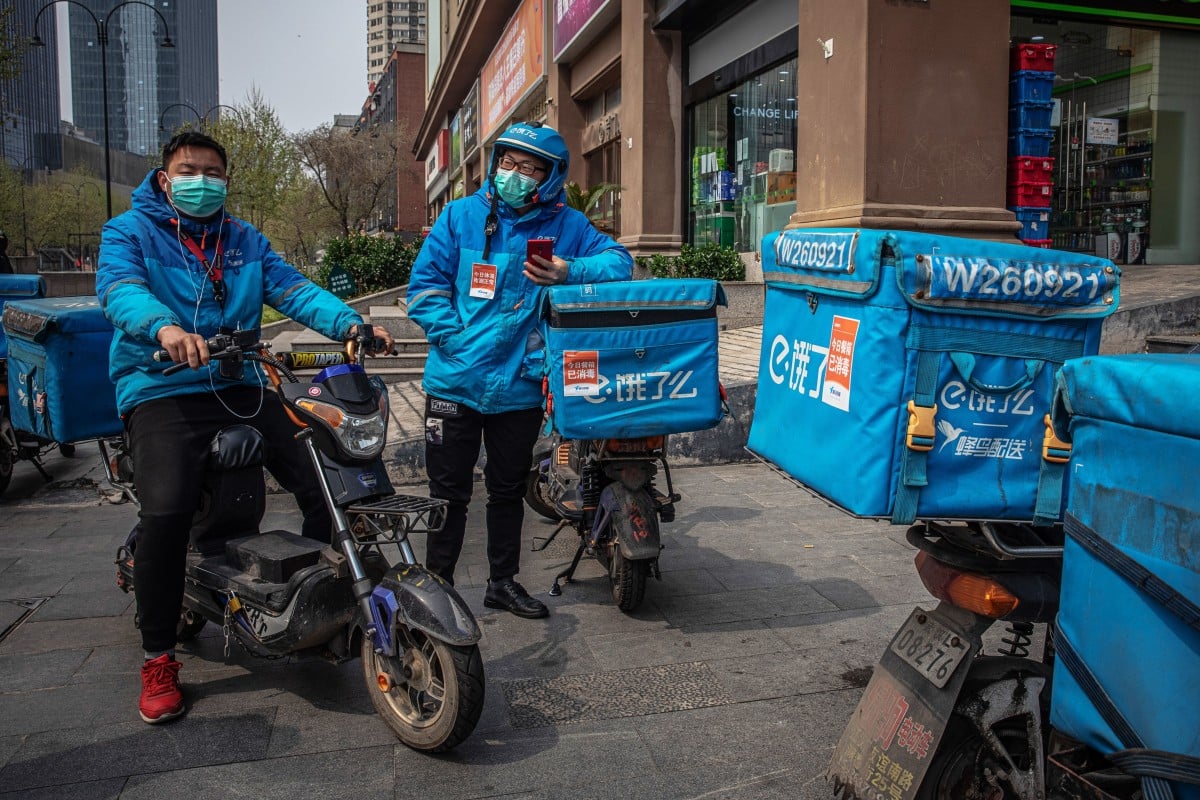
The supply and delivery networks that were already in place were able to work with the authorities in cities like Wuhan
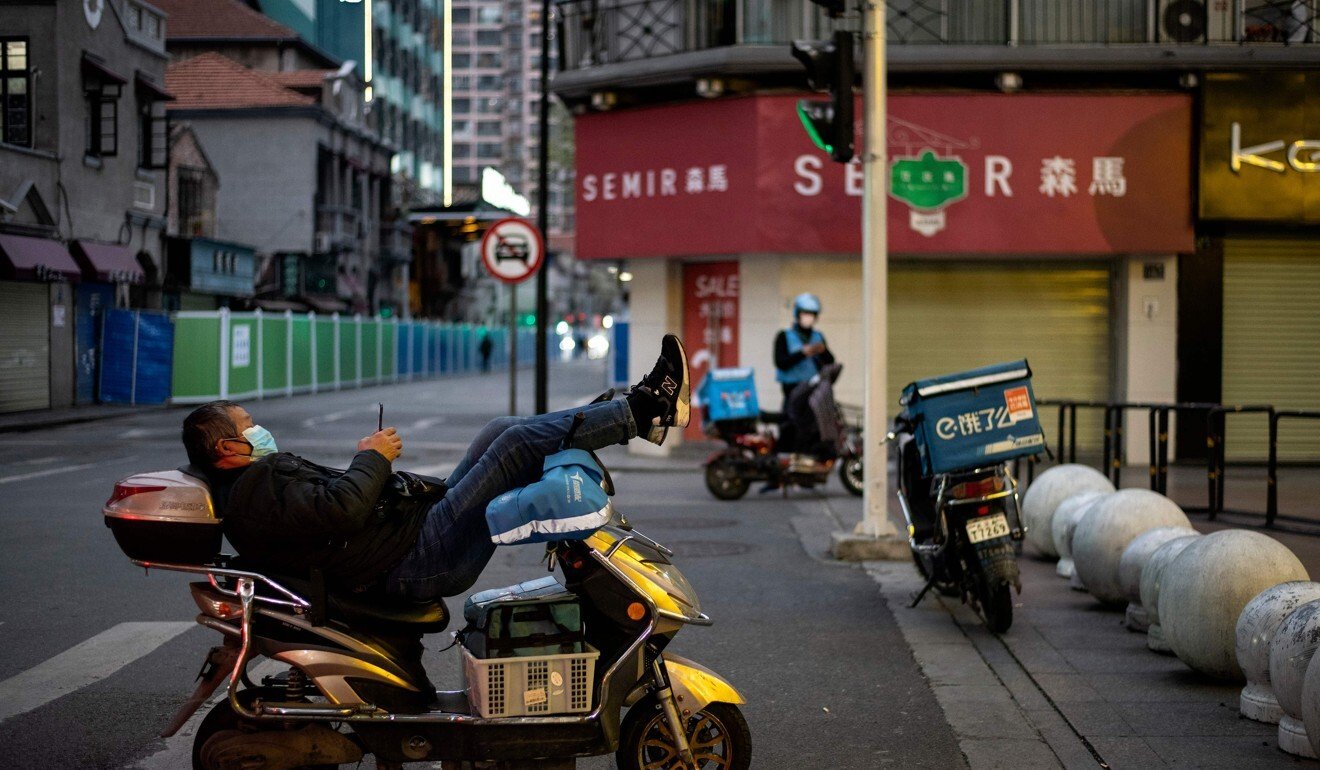
China’s established home delivery system played an important role in getting food and other necessities to residents during the Wuhan lockdown. Photo: EPA-EFE
When Liu Yilin, a retired middle schoolteacher in Wuhan, first heard rumours of a
and shoppers flooded to the markets and malls to snap up supplies.
But as time went on and with residents banned from leaving their homes, he became increasingly concerned about getting hold of fresh supplies of vegetables, fruit and meat until the nation’s vast network of delivery drivers came to the rescue.
“It was such a relief that several necessity purchasing groups organised by community workers and volunteers suddenly emerged on WeChat [a leading social media app] days after the lockdown,” Liu said. “China’s powerful home delivery service makes life much easier at a time of crisis.”
Hu Xingdou, a Beijing-based independent political economist said: “Home delivery played a very important role amid the coronavirus outbreak. To some extent, it prevented people from starving especially in cases when local governments took extreme measures to isolate people.”
According to Liu, people in Wuhan during the lockdown had to stay within their residential communities, with community workers guarding the exits.
Human contact was limited to the internet. Residents placed orders online with farmers, small merchants or supermarkets to buy daily necessities, and community workers helped distribute the goods from deliverymen.
Every morning, Liu passed a piece of paper with his name, phone number and order number to a community worker who would collect the items from a courier at the gate of the residential area.
Thanks to a high population density in urban areas, affluent labour force and people’s openness to digital life, China has built a well-developed home delivery network.
Extensive funding from technology companies has been invested in hardware infrastructure, software to improve logistics and big data and cloud computing to help predict consumers’ behaviour.
Mark Greeven, professor of innovation and strategy at IMD Business School in Lausanne, Switzerland, said: “Whether it is delivery of products, air parcels or fresh food or even medicine or materials for medical use, China has a very well developed system. Much better developed than I think almost any other places in the world.
“Well before the crisis, China had started to embrace digital technology in daily life whether it is in consumption, business, government and smart cities and use of third party payments. All of these things have been in place for a long time and the crisis tested its agility and capability to deal with peak demand.”
China’s e-commerce giants help revive sales of farm goods from Hubei
3 Apr 2020
According to e-commerce giant JD.com, demands for e-commerce and delivery services spiked during the outbreak of Covid-19, the illness caused by the new coronavirus.
It sold around 220 million items between January 20 and February 28, mainly grains and dairy products with the value of beef orders trebling and chicken deliveries quadrupling compared with a year ago.
Tang Yishen, head of JD Fresh, its fresh foods subsidiary, said: “The surge of online demand for fresh merchandise shows the pandemic helped e-commerce providers further penetrate into the life of customers. It also helped upstream farm producers to know and trust us.”
Meituan Dianping, a leading e-commerce platform, said its grocery retail service Meituan Instashopping reported a 400 per cent growth in sales from a year ago in February from local supermarkets.
The most popular items ordered between January 26 and February 8 were face masks, disinfectant, tangerines, packed fresh-cut fruits and potatoes.
The food delivery service Ele.me said that, between January 21 and February 8, deliveries of frozen food surged more than 600 per cent year on year, followed by a nearly 500 per cent growth in delivery of pet-care products. Fresh food deliveries rose by 181 per cent while drink and snack deliveries climbed by 101 per cent and 82 per cent, respectively. Ele.me is owned by Alibaba, the parent company of the South China Morning Post.
Chinese hotpot restaurant chain adapts as coronavirus fears push communal meals off the menu
E-commerce providers used the opportunity to show goodwill and improve their relationship with customers and partners, analysts say.
Sofya Bakhta, marketing strategy analyst at the Shanghai-based Daxue Consulting, said the food delivery sector had made significant headway in reducing physical contact during the outbreak.
Delivery staff left orders in front of buildings, in lifts or temporary shelters as instructed by the clients as most properties no longer allowed them inside.
Some companies also adopted more hi-tech strategies.
In Beijing, Meituan used self-driving vehicles to deliver meals to contactless pickup stations. It also offered cardboard boxes to be used as shields aimed at preventing the spread of droplets among its clients while they ate in their workplaces. In Shanghai, Ele.me employed delivery drones to serve people under quarantine in the most affected regions.
Some companies even “shared” employees to meet the growing labour demand in the food delivery industry that could not be satisfied with their ordinary workforce, Bakhta said.
More employees from restaurants, general retail and other service businesses were “loaned” to food delivery companies, which faced manpower shortages during the outbreak, according to Sandy Shen, senior research director at global consultancy Gartner.
“These arrangements not only ensured the continuity of the delivery service but also helped businesses to retain employees during the shutdown,” she said.
A delivery man takes a break between orders in Wuhan, central China, during the lockdown. Photo: AFP
Mo Xinsheng became one such “on-loan” worker after customers stopped coming to the Beijing restaurant where he worked as a kitchen assistant.
“I wanted to earn some money and meanwhile help people who are trapped at home,” said Mo, who was hired as a delivery man.
But before he could start work he had to go through lengthy health checks before he was allowed into residential compounds.
He also had to work long hours battling the wind and cold of a Beijing winter and carrying heavy loads.
“I work about 10 hours every day just to earn several thousand yuan [several hundred US dollars] a month,” he said.
“Sometimes I almost couldn’t breathe while my hands were fully loaded with packages of rice, oil and other things.
“But I know I’m doing an important job, especially at a time of crisis,” Mo said, “It was not until then that I realised people have become so reliant on the home delivery system.”
Woman uses remote control car to buy steamed buns amid coronavirus outbreak in China
The delivery system has been improved by an effective combination of private sector innovation and public sector coordination, said Li Chen, assistant professor at the Centre for China Studies at Chinese University of Hong Kong.
“[In China,] government units and the Communist Party grass roots organisations have maintained fairly strong mobilisation capabilities to cope with emergencies, which has worked well in the crisis,” he said.
However, Liu, the Wuhan resident, said prices had gone up and vegetables were three times more expensive than they had been over Lunar New Year in 2019.
“There were few varieties that we could choose from, apart from potatoes, cabbage and carrots,” he said.
“But I’m not complaining. It’s good we can still get fresh vegetables at a difficult time. Isn’t it? After all, we are just ordinary people,” he said.
BEIJING (Reuters) – Mainland China reported no coronavirus deaths for the first time since the pandemic began, and a drop in new cases, a day before the central city of Wuhan, where the virus emerged late in December, is set to lift its lockdown.
China had 32 new infections by Monday, down from 39 a day earlier, the National Health Commission said.
For the first time since the commission began publishing nationwide data in late January, Hubei’s provincial capital of Wuhan saw no new deaths, joining the rest of mainland China, which has recorded none since March 31.
Wuhan, a city of 11 million that reported only two new infections in the past fortnight is due to allow residents to leave the city on Wednesday, for the first time since it was locked down on Jan. 23 to curb the spread of the virus.
With mainland China well past February’s peak of infections, authorities have turned their attention to imported cases and asymptomatic patients, who show no symptoms but can still pass on the virus.
Total infections in mainland China stood at 81,740 on Monday with 3,331 deaths, the commission said. It reported 30 new asymptomatic cases, nine involving incoming travellers. Of the new asymptomatic cases, 18 were in Hubei.
By the end of Monday, 1,033 asymptomatic patients were under medical observation.
TIGHTER LAND BORDERS
Overseas arrivals made up all 32 of the new cases with symptoms, down from 38 a day earlier. Total imported infections stand at 983, the commission said.
China faces the “dual risks” of imported infections and domestic cluster outbreaks, a commission spokesman told a briefing on Tuesday.
The northeast province of Heilongjiang reported 20 new cases, all in Chinese citizens returning from neighbouring Russia. It had reported 20 new infections on Sunday, all also cases imported from Russia.
On Tuesday, the Chinese consulate in the Russian city of Vladivostok near the border with China said it strongly reminded Chinese nationals not to return home through the border port of Suifenhe, which is to be closed to all arrivals from Tuesday.
China has shut its borders to foreigners as the virus spread globally, though most imported cases have involved Chinese nationals returning from overseas.
The number of inbound travellers through airports is fewer than 3,000 a day, down from about 25,000 in late March, before China slashed the number of international flights.
It also started testing all international arrivals for the virus this month.






 CHINDIA ALERT: You'll be living in their world, very soon