Archive for ‘Wuhan’

01/04/2020

TikTok, a Chinese soft-power time bomb in US living rooms?

  • The coronavirus has fuelled explosive growth of the app, which now has 800 million users, few of whom will know it is owned by China’s ByteDance
  • While videos of dancing teens may seem benign, there are growing fears in America it could be a Trojan Horse for mass surveillance by Beijing
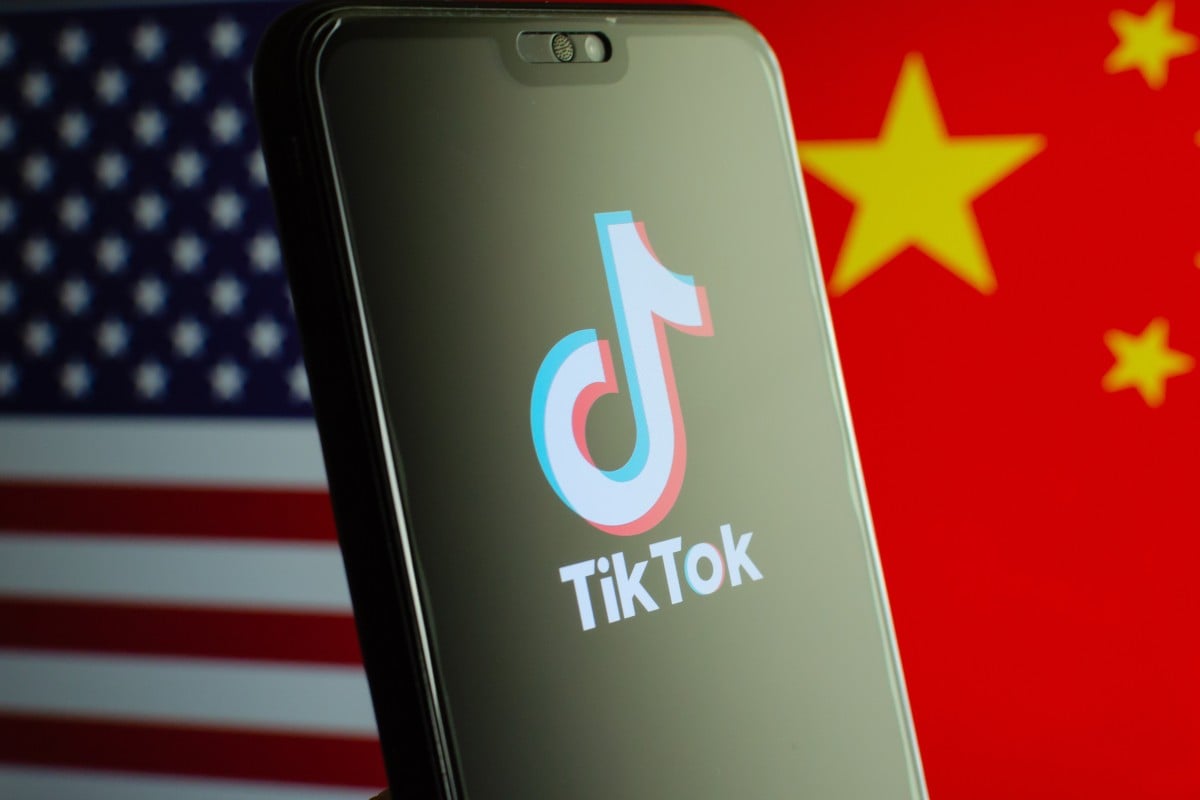
TikTok is seen by some as the latest front in the US-China tech war. Photo: Shutterstock
Your average, not-so-hip adult would have probably drawn a blank at the mention of

TikTok

not long ago – unless they have a child addicted to the wildly popular app, on which users make and share short, amusing videos.

It has grown explosively since its 2016 launch, with 800 million monthly active users now – 300 million of them outside China in places such as India (120 million) and the 
United States

(37 million). And many have no idea it is owned by a Chinese company, ByteDance.

The first Chinese app to mount a real global challenge to Facebook and Instagram, it is seen as one of the shiniest new weapons in the US-China technology war. And a boost, perhaps, to Chinese soft power.
TikTok, the missing link between Hong Kong and Indian protesters?
9 Feb 2020
It experienced a growth spurt in 2019 that analysts predicted would slow a little this year. That, however, was before the coronavirus, which seems to be giving the app a bump, especially beyond its core teenage fan base.
As pandemic fears rise and millions are stuck indoors, major Hollywood celebrities such as Jennifer Lopez, 50, have taken to posting their own all-singing, all-dancing videos, which then go viral on other media platforms.
Even the World Health Organisation has jumped on the bandwagon, joining the app in late February to share public health advice.
The TikTok logo on a smartphone. Photo: Getty Images
But to some, the growth of TikTok is far from benign.

Privacy advocates and several US congressmen want to rein in the app over concerns it may censor and monitor content for the Chinese government, and be used for misinformation and election interference. This despite the fact that TikTok keeps its servers outside China and swears it will not hand over user data.

Are these fears justified – or fuelled by political and anticompetitive motives?

Thinkers such as Yuval Noah Harari warn that the coronavirus pandemic could be a watershed in the history of mass surveillance.
But Eric Harwit, a professor of Asian studies at the University of Hawaii, does not buy such arguments against TikTok, especially given that 60 per cent of its US users are aged 16 to 24.

“ByteDance has done a pretty good job of having a firewall between TikTok and the Chinese version of it, Douyin.

TikTok, iPhone: all you need to escape Mumbai’s slums – for 15 seconds

1 Nov 2019

“Also, many users in the US are teens and they’re not a particularly useful source of national security information.

“So I’d say the concerns are motivated more by a general fear of any kind of Chinese telecommunication application rather than actual attempts to siphon off valuable US intelligence information.

“And Facebook and other American companies have similar products,” Harwit points out. “US government officials will always want to protect American commercial interests.”

Sarah Cook, a China analyst for Freedom House – the US government-funded think tank – disagrees.

“We have concerns about how Facebook and Twitter deal with information affecting electoral politics, and that’s magnified if you’re talking about a Chinese company that now has a user base that rivals theirs.”

Chinese officials, she argues, have shown a willingness to censor and manipulate information well beyond their country’s borders – for instance, regarding the scale of the initial outbreak in Wuhan, an obfuscation that may have exacerbated its impact abroad.

“For those who think Chinese government censorship is only Chinese people’s problem, this pandemic shows how much that’s not the case.

“And even if it’s not happening right now with TikTok, the concern is that Chinese companies are beholden to their government, whether they want to be or not.

“I’m not saying block TikTok entirely,” she says. “It’s a question of looking at it in a democratic system and deciding on reasonable oversight and safeguards to protect users and information flows when that time comes.”

When it comes to expanding China’s cultural influence, though, neither Cook nor Harwit believes the app is especially effective.

Most people are oblivious to its Chinese origins, which the user experience does not reflect in any way. So there is no goodwill-generating soft power of the sort wielded by, say, 

South Korea

through the K-pop industry.

If anything, TikTok often promotes the increasingly homogenous, Western-leaning culture seen on many globally popular social media apps.
So says Morten Bay, a lecturer in digital and social media at the University of Southern California’s Annenberg School for Communication and Journalism.
“A semi-Western culture, with small variations of local culture, is becoming the norm on social media. And Chinese soft power is difficult to assert because there’s no value difference.”
And even if Chinese tech companies keep taking bigger bites of the Western market, he is sceptical of China’s “ability to leverage that for soft power in a geopolitical sense”.

“Because there is a very big apparatus pushing against China in that regard. As soon as TikTok started gaining traction in the US, people came out against it, trying to make everyone aware of the privacy and geopolitical issues.

The #KaunsiBadiBaatHai campaign on TikTok aims to raise awareness about women's safety issues in India. Image: TikTok
The #KaunsiBadiBaatHai campaign on TikTok aims to raise awareness about women’s safety issues in India. Image: TikTok
“So China faces a lot of resistance,” Bay concludes. “And I’m not sure a social media platform on its own can do much about that.”
Still, if you had to back a horse in this race, TikTok would be it, says Zhang Mengmeng.

When she and her colleagues from global industry analysis firm Counterpoint Research visited the company, they were impressed by its research and development capabilities.

“Because they’re a very young company, their pace for incubating new projects is a lot faster, especially compared to successful but older internet companies in China which have been around for 15 to 20 years.

Indian invasion of Chinese social media apps sparks fear and loathing in New Delhi

28 Apr 2019

“They have lots of little start-up projects within the company and their organisational structure is very flat – it doesn’t matter what your age is, if you have a good idea, you get promoted very quickly.”

TikTok’s rise is also emblematic of a broader role reversal in the US-China tech war, she believes.

“Before, the US was more advanced in terms of internet development and China seemed to just copy its new ideas. Now, this is reversing. There are so many people in China using the internet that start-ups there can test ideas very easily.

“So now it seems like a lot of US companies are trying to see what ideas are coming out of China.” 

Source: SCMP

30/03/2020

Drop in China’s new coronavirus cases; none in Wuhan for sixth day

WUHAN, China (Reuters) – China reported a drop in new coronavirus infections for a fourth day as drastic curbs on international travellers reined in the number of imported cases, while policymakers turned their efforts to healing the world’s second-largest economy.

The city of Wuhan, at the centre of the outbreak, reported no new cases for a sixth day, as businesses reopened and residents set about reclaiming a more normal life after a lockdown for almost two months.

Smartly turned out staff waited in masks and gloves to greet customers at entrances to the newly-reopened Wuhan International Plaza, home to boutiques of luxury brands such as Cartier and Louis Vuitton.

“The Wuhan International Plaza is very representative (of the city),” said Zhang Yu, 29. “So its reopening really makes me feel this city is coming back to life.”

Sunday’s figure of 31 new cases, including one locally transmitted infection, was down from 45 the previous day, the National Health Commission said.

As infections fall, policymakers are scrambling to revitalise an economy nearly paralysed by months-long curbs to control the spread of the flu-like disease.

On Monday, the central bank unexpectedly cut the interest rate on reverse repurchase agreements by 20 basis points, the largest in nearly five years.

The government is pushing businesses and factories to reopen, as it rolls out fiscal and monetary stimulus to spur recovery from what is feared to be an outright economic contraction in the quarter to March.

China’s exports and imports could worsen as the pandemic spreads, depressing demand both at home and abroad, Xin Guobin, the vice minister of industry and information technology, said on Monday.

The country has extended loans of 200 billion yuan (22.75 billion pounds) to 5,000 businesses, from 300 billion allocated to help companies as they resume work, Xin said.

Authorities in Ningbo said they would encourage national banks to offer preferential credit of up to 100 billion yuan to the eastern port city’s larger export firms. The city government will subsidize such loans, it said in a notice.

VIRUS CONCERNS

While new infections have fallen sharply from February’s peak, authorities worry about a second wave triggered by returning Chinese, many of them students.

China cut international flights massively from Sunday for an indefinite period, after it began denying entry to almost all foreigners a day earlier.

Average daily arrivals at airports this week are expected to be about 4,000, down from 25,000 last week, an official of the Civil Aviation Administration of China told a news conference in Beijing on Monday.

The return to work has also prompted concern about potential domestic infections, especially over carriers who exhibit no, or very mild, symptoms of the highly contagious virus.

Northwestern Gansu province reported a new case of a traveller from the central province of Hubei, who drove back with a virus-free health code, national health authorities said.

Hubei authorities say 4.6 million people in the province returned to work by Saturday, with 2.8 million of them heading for other parts of China.

Most of the departing migrant workers went to the southern provinces of Guangdong and Fujian, the eastern provinces of Zhejiang and Jiangsu, and northeast China.

In Hubei’s capital of Wuhan, more retail complexes and shopping streets reopened.

Electric carmaker Tesla Inc has also reopened a showroom in Wuhan, a company executive said on Weibo.

Shoppers queued 1-1/2 metres (5 ft) apart for temperature checks at Wuhan International Plaza, while flashing “green” mobile telephone codes attesting to a clean bill of health.

To be cleared to resume work, Wuhan residents have been asked to take nucleic acid tests twice.

“Being able to be healthy and leave the house, and meet other colleagues who are also healthy is a very happy thing,” said Wang Xueman, a cosmetics sales representative.

Source: Reuters

29/03/2020

Coronavirus: Xi Jinping’s visit to Zhejiang sends ‘clear message’ it’s time to get the economy back on its feet, state media says

  • Chinese president is fighting ‘two tough battles’ to reboot industry and defeat Covid-19, Xinhua says
  • Choice of industrial powerhouse for official visit shows the importance Xi gives to reviving the economy, observers say
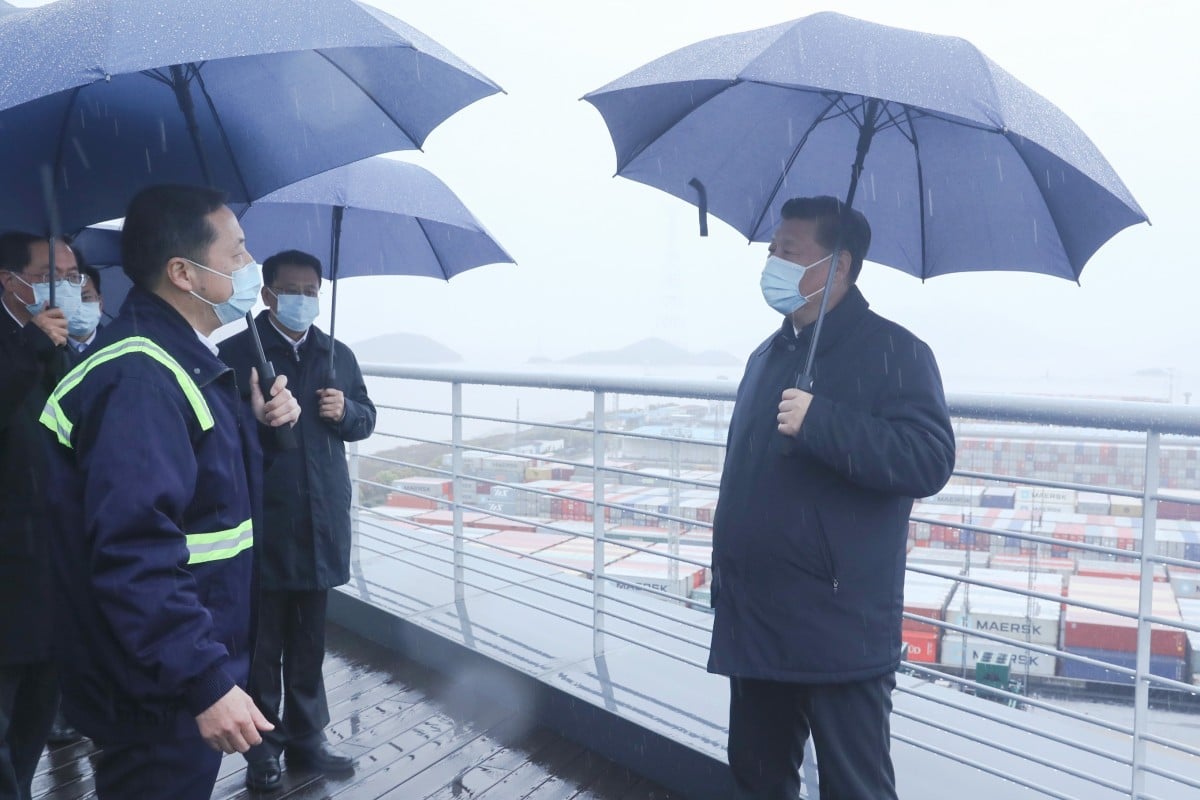
Chinese President Xi Jinping chats to workers and officials at Ningbo port in east China on Sunday. Photo: Xinhua
Chinese President Xi Jinping

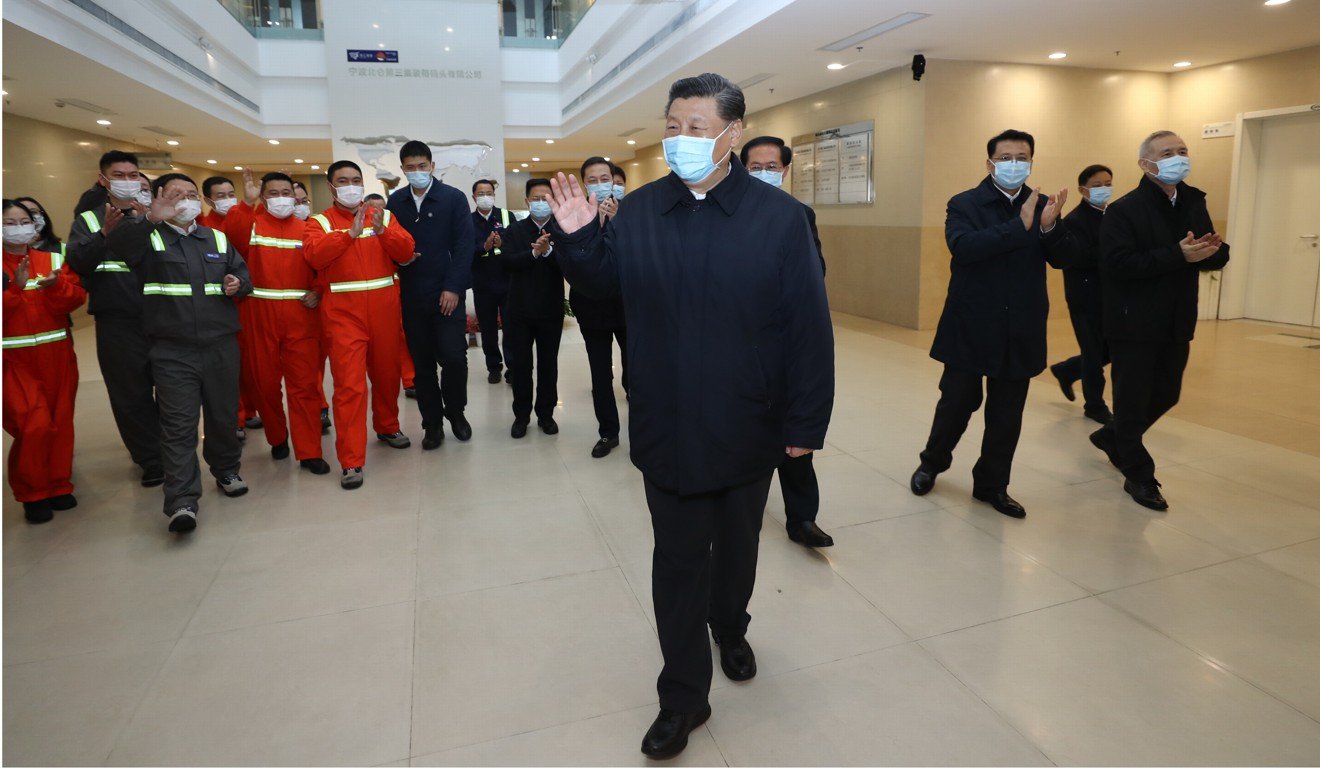
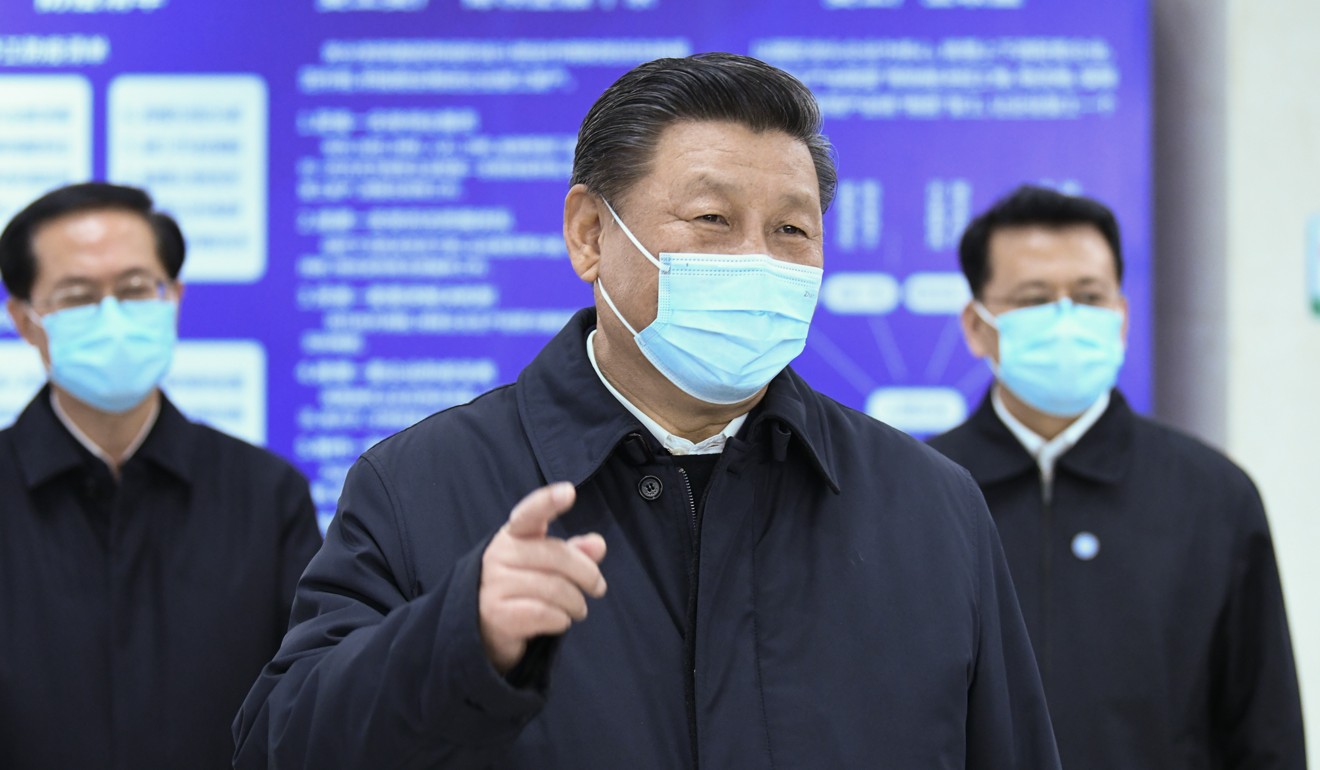
visited the industrial powerhouse of Zhejiang province on Sunday in a move state media described as a clear message the country was ready to get the economy back on track amid the “new normal” of dealing with the coronavirus.

The trip, to Ningbo – one of the world’s busiest ports and a trade hub for eastern China – was Xi’s first outside Beijing since he visited Wuhan, the initial epicentre of the Covid-19 outbreak, earlier in the month.

As well as a visiting the port, he spoke to workers at an industrial zone for car part manufacturers, where he learned about the latest efforts to restart production, Xinhua said in a brief report.

The visit came after two months of almost total lockdown in many parts of the country that disrupted businesses, transport and people’s daily lives, and ground the economy to a near standstill.

While local transmissions of the coronavirus in China appear to be under control, Beijing has implemented strict measures to prevent imported cases, including slashing international flights and banning most foreigners from entering the country.

In a separate report, Xinhua said Xi’s visit sent “a clear message” that China was resuming its industrial production and social activities, and described the fight against the coronavirus as the “new normal”.

Reviving the economy and battling a deadly disease were Xi’s “two tough battles”, it said.

Xi’s choice of destination was a clear message that restarting the economy is a top priority. Photo: Xinhua
Zhejiang is something of a power base for Xi, who spent nearly five years there during his climb through the ranks of the Communist Party.

One of the country’s biggest trading hubs, the province generated 3 trillion yuan (US$423.2 billion) in foreign trade last year, or more than 13 per cent of the national total, according to official figures.

“It’s a highly export-oriented economy … which has made it crucial not only to China’s development plan but also to safeguarding the stability of the global supply chain,” Xinhua said.

Observers said Xi’s visit was evidence of Beijing’s determination to get the economy back up and running as soon as possible.

Zhao Xijun, an economics professor at Renmin University, said Ningbo was a key part of the export economy and a base for many local and foreign entrepreneurs.

“It is a clear signal that China, after getting domestic infections under control, is now prioritising economic growth,” he said.

“It also shows the country will keep developing its economy and opening up its markets.”

But hopes of a quick recovery for the Chinese economy have been dashed by the spread of the coronavirus across Europe and the United States, causing a sharp decline in demand for Chinese goods.

Xi spent five years in Zhejiang while climbing the ranks of the Communist Party. Photo: Xinhua
In a meeting on Friday, the Communist Party’s Politburo said it would step up macroeconomic policy adjustments and pursue a more proactive fiscal policy while optimising measures to control the coronavirus to speed up the restoration of production, doing whatever it could to “minimise the losses caused by the epidemic”.

“China has successfully reopened much of its economy from the extremes of the coronavirus lockdown, but now faces a new problem: an impending collapse in demand for its exports as its customers go into lockdowns of their own,” Gavekal Dragnomics said in a research report.

“That shock to industry and manufacturing employment means that China will not enjoy the hoped-for V-shaped recovery in growth.”

Source: SCMP

29/03/2020

China’s Wuhan reopens subway, railway station

CHINA-WUHAN-SUBWAY SERVICE-RESUMPTION (CN)

Passengers walk on the platform of the subway station connected with Hankou Railway Station in Wuhan, central China’s Hubei Province, March 28, 2020. Wuhan, a central Chinese city once at the epicenter of the COVID-19 epidemic, on Saturday resumed its subway service following more than two months of suspension due to the epidemic. Passengers for six metro lines in the capital of Hubei Province are asked to scan their health QR codes with real name information and check body temperature before entering the metro stations and wear face masks during the whole journey. (Xinhua/Xiao Yijiu)

WUHAN, March 28 (Xinhua) — Wuhan, a central Chinese city once at the epicenter of the COVID-19 outbreak, on Saturday reopened its subway and railway station following more than two months of suspension due to the epidemic.

“We clearly remember that the metro service had been suspended for 65 days,” said Li Wei, a staff worker of the Wuhan metro service operator. “I was startled when I first saw the news of shutting down the metro system as I never expected such scenario to happen one day.”

“We are excited and happy today to resume the service to serve the Wuhan residents again,” Li said.

Passengers for six metro lines in the capital of Hubei Province are asked to scan their health QR codes with real name information and check body temperature before entering the metro stations and wear face masks during the whole journey. Many were seen even wearing rubber gloves and hats that can cover the face.

The subway service operator has installed 200 infrared intelligent temperature monitoring equipment at 182 subway stations that are back to service in the initial period.

Inside the subway carriages, there are yellow signs that ask passengers to sit with an empty seat between two of them and security guards who tell people to wear masks during the whole of their trips, not to assemble and scan trip-tracking codes when getting off the subway.

The trip tracking is designed to aid the epidemic prevention and control work. To reduce potential cross-infection, the subway carriages will also be disinfected partly every day and entirely every five days.

“We are finally back. I can go to work next Monday,” said a subway passenger surnamed Yang, who just arrived in Wuhan Saturday with another two family members carrying eggs, preserved meat and vegetables from Sichuan Province.

On Saturday, the Wuhan railway station resumed the arrival service as the epidemic waned. More than 12,000 Hubei passengers returned to Wuhan by high-speed trains from all over the country on Saturday, greeted by applauses and flowers at the station.

“I earlier booked the railway ticket for Feb. 14, but the railway service was halted due to the epidemic,” said a passenger surnamed Zhang. Although the arrival was delayed by one and a half months, he felt safe and relieved to see the epidemic situation under control in his hometown, Zhang said.

“Wandering outside for such a long time, I have anticipated the return to home all the time,” Zhang said. “I finally feel at ease and calm after I step on the land of Wuhan.

“Source: Xinhua

29/03/2020

Coronavirus: pathogen could have been spreading in humans for decades, study says

  • Virus may have jumped from animal to humans long before the first detection in Wuhan, according to research by an international team of scientists
  • Findings significantly reduce the possibility of the virus having a laboratory origin, director of the US National Institute of Health says
An international team of scientists say the coronavirus may have jumped from animal to humans long before the first detection in China. Photo: AP
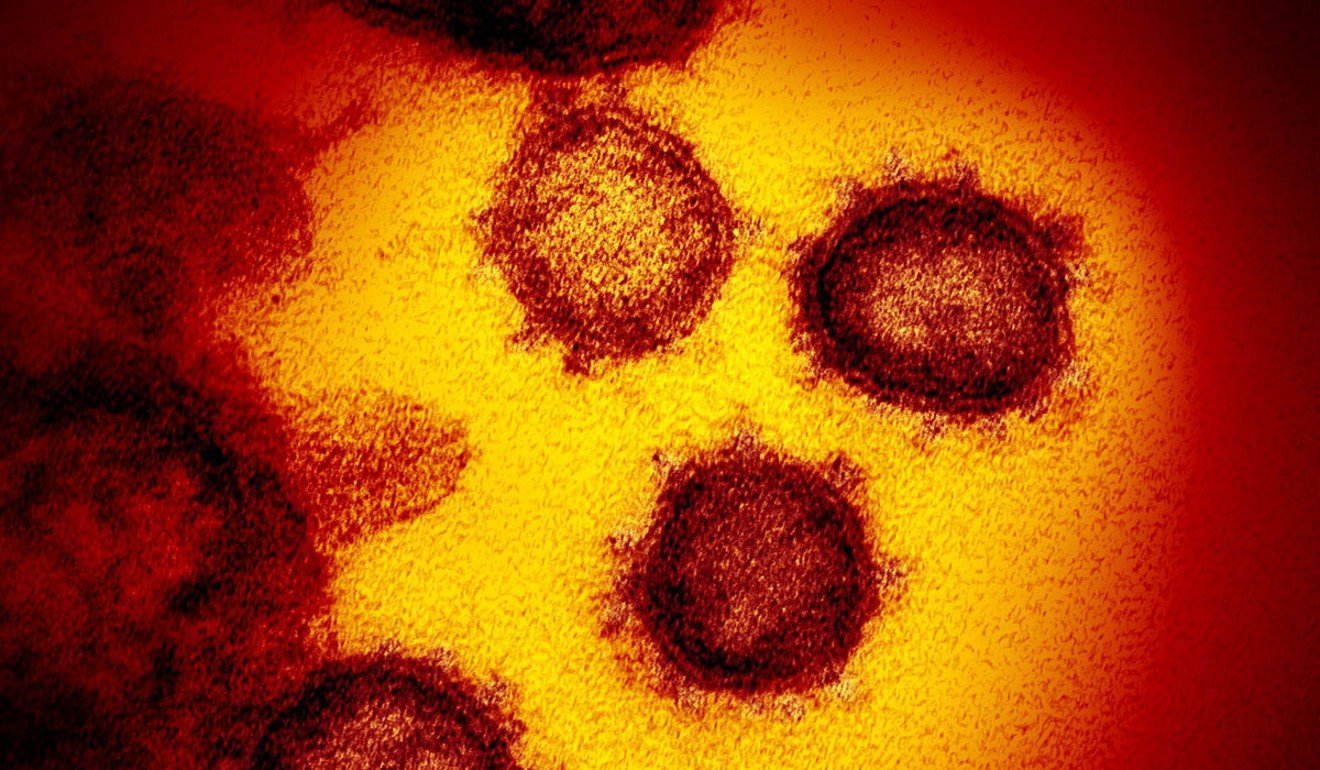
The coronavirus that causes Covid-19 might have been quietly spreading among humans for years or even decades before the sudden outbreak that sparked a global health crisis, according to an investigation by some of the world’s top virus hunters.
Researchers from the United States, Britain and Australia looked at piles of data released by scientists around the world for clues about the virus’ evolutionary past, and found it might have made the jump from animal to humans long before the first detection in the central China city of Wuhan.
Though there could be other possibilities, the scientists said the coronavirus carried a unique mutation that was not found in suspected animal hosts, but was likely to occur during repeated, small-cluster infections in humans.

The study, conducted by Kristian Andersen from the Scripps Research Institute in California, Andrew Rambaut from the University of Edinburgh in Scotland, Ian Lipkin from Columbia University in New York, Edward Holmes from the University of Sydney, and Robert Garry from Tulane University in New Orleans, was published in the scientific journal Nature Medicine on March 17.

Dr Francis Collins, director of the US National Institute of Health, who was not involved in the research, said the study suggested a possible scenario in which the coronavirus crossed from animals into humans before it became capable of causing disease in people.

“Then, as a result of gradual evolutionary changes over years or perhaps decades, the virus eventually gained the ability to spread from human to human and cause serious, often life-threatening disease,” he said in an article published on the institute’s website on Thursday.

In December, doctors in Wuhan began noticing a surge in the number of people suffering from a mysterious pneumonia. Tests for flu and other pathogens returned negative. An unknown strain was isolated, and a team from the Wuhan Institute of Virology led by Shi Zhengli traced its origin to a bat virus found in a mountain cave close to the China-Myanmar border.

The two viruses shared more than 96 per cent of their genes, but the bat virus could not infect humans. It lacked a spike protein to bind with receptors in human cells.

Coronaviruses with a similar spike protein were later discovered in Malayan pangolins
by separate teams from Guangzhou and Hong Kong, which led some researchers to believe that a recombination of genomes had occurred between the bat and pangolin viruses.
Doctors in Wuhan began noticing a surge in the number of people suffering from a mysterious pneumonia in December. Photo: Handout
But the new strain, or SARS-Cov-2, had a mutation in its genes known as a polybasic cleavage site that was unseen in any coronaviruses found in bats or pangolins, according to Andersen and his colleagues.

This mutation, according to separate studies by researchers from China, France and the US, could produce a unique structure in the virus’ spike protein to interact with furin, a widely distributed enzyme in the human body. That could then trigger a fusion of the viral envelope and human cell membrane when they came into contact with one another.

Some human viruses including HIV and Ebola have the same furin-like cleavage site, which makes them contagious.

It is possible that the mutation happened naturally to the virus on animal hosts. Sars (severe acute respiratory syndrome) and Mers (Middle East respiratory syndrome), for instance, were believed to have been direct descendants of species found in masked civets and camels, which had a 99 per cent genetic similarity.

There was, however, no such direct evidence for the novel coronavirus, according to the international team. The gap between human and animal types was too large, they said, so they proposed another alternative.

“It is possible that a progenitor of SARS-CoV-2 jumped into humans, acquiring the genomic features described above through adaptation during undetected human-to-human transmission,” they said in the paper.

“Once acquired, these adaptations would enable the pandemic to take off and produce a sufficiently large cluster of cases to trigger the surveillance system that detected it.”

They said also that the most powerful computer models based on current knowledge about the coronavirus could not generate such a strange but highly efficient spike protein structure to bind with host cells.

The study had significantly reduced, if not ruled out, the possibility of a laboratory origin, Collins said.

“In fact, any bioengineer trying to design a coronavirus that threatened human health probably would never have chosen this particular conformation for a spike protein,” he said.

The findings by Western scientists echoed the mainstream opinion among Chinese researchers.

Zhong Nanshan, who advises Beijing on outbreak containment policies, had said on numerous occasions that there was growing scientific evidence to suggest the origin of the virus might not have been in China.

“The occurrence of Covid-19 in Wuhan does not mean it originated in Wuhan,” he said last week.

A doctor working in a public hospital treating Covid-19 patients in Beijing said numerous cases of mysterious pneumonia outbreaks had been reported by health professionals in several countries last year.

Re-examining the records and samples of these patients could reveal more clues about the history of this worsening pandemic, said the doctor, who asked not to be named due to the political sensitivity of the issue.

“There will be a day when the whole thing comes to light.”

Source: SCMP

29/03/2020

China guards against second wave of coronavirus coming from abroad

WUHAN, China (Reuters) – The growing number of imported coronavirus cases in China risked fanning a second wave of infections at a time when “domestic transmission has basically been stopped”, a spokesman for the National Health Commission said on Sunday.

“China already has an accumulated total of 693 cases entering from overseas, which means the possibility of a new round of infections remains relatively big,” Mi Feng, the spokesman, said.

In the last seven days, China has reported 313 imported cases of coronavirus but only 6 confirmed cases of domestic transmission, the commission’s data showed.

There were 45 new coronavirus cases reported in the mainland for Saturday, down from 54 on the previous day, with all but one involving travelers from overseas.

Most of those imported cases have involved Chinese returning home from abroad.

Airlines have been ordered to sharply cut international flights from Sunday. And restrictions on foreigners entering the country went into effect on Saturday.

Five more people died on Saturday, all of them in Wuhan, the industrial central city where the epidemic began in December. But Wuhan, the capital of Hubei province, has reported only one new case on the last 10 days.

A total of 3,300 people have now died in mainland China, with a reported 81,439 infections.

Saturday marked the fourth consecutive day that Hubei province recorded no new confirmed cases. The sole case of domestically transmitted coronavirus was recorded in Henan province, bordering Hubei.

With traffic restrictions in the province lifted, Wuhan is also gradually reopening borders and restarting some local transportation services.

“It’s much better now, there was so much panic back then. There weren’t any people on the street. Nothing. How scary the epidemic situation was,” a man, who gave his surname as Hu, told Reuters as he ventured out to buy groceries in Wuhan.

“Now, it is under control. Now, it’s great, right?”

All airports in Hubei resumed some domestic flights on Sunday, with the exception of Wuhan’s Tianhe airport, which will open to domestic flights on April 8. Flights from Hubei to Beijing remain suspended.

A train arrived in Wuhan on Saturday for the first time since the city was placed in lockdown two months ago. Greeting the train, Hubei Communist Party Secretary Ying Yong described Wuhan as “a city full of hope” and said the heroism and hard work of its people had “basically cut off transmission” of the virus.

More than 60,000 people entered Wuhan on Saturday after rail services were officially restarted, with more than 260 trains arriving or travelling through, the People’s Daily reported on Sunday.

On Sunday, streets and metro trains were still largely empty amid a cold rainy day. Flashing signs on the Wuhan Metro, which resumed operations on Saturday, said its cars would keep passenger capacity at less than 30%.

The Hubei government on Sunday said on its official WeChat account that a number of malls in Wuhan, as well as the Chu River and Han Street shopping belt, will be allowed to resume operations on March 30.

Concerns have been raised that a large number of undiagnosed asymptomatic patients could return to circulation once transport restrictions are eased.

China’s top medical adviser, Zhong Nanshan, played down that risk in comments to state broadcaster CCTV on Sunday. Zhong said asymptomatic patients were usually found by tracing the contacts of confirmed cases, which had so far shown no sign of rebounding.

With the world’s second-biggest economy expected to shrink for the first time in four decades this quarter, China is set to unleash hundreds of billions of dollars in stimulus.

The ruling Communist Party’s Politburo called on Friday for a bigger budget deficit, the issuance of more local and national bonds, and steps to guide interest rates lower, delay loan repayments, reduce supply-chain bottlenecks and boost consumption.

Source: Reuters

28/03/2020

Except Wuhan, Hubei removes all outbound traffic highway checkpoints

WUHAN, March 28 (Xinhua) — Central China’s Hubei Province had removed all 1,450 highway checkpoints, except 51 others in its capital city of Wuhan, to resume outbound traffic as of Friday, the provincial headquarters for epidemic prevention and control said Saturday.

The virus-hit province lifted outbound travel restrictions in all areas except Wuhan on March 25, with all checkpoints at expressway exits, national and provincial-level highways removed within two days.

All remaining checkpoints in Wuhan will be removed on April 8, when the hardest-hit Chinese city in the COVID-19 outbreak plans to lift outbound travel curbs after over two months of lockdown.

Source: Xinhua

27/03/2020

Coronavirus travel: China bars foreign visitors as imported cases rise

A queue at a fever clinic in Hubei province on FridayImage copyright AFP / GETTY
Image caption A queue at a fever clinic in Hubei province on Friday

China has announced a temporary ban on all foreign visitors, even if they have visas or residence permits.

The country is also limiting Chinese and foreign airlines to one flight per week, and flights must not be more than 75% full.

Although China reported its first locally-transmitted coronavirus case for three days on Friday, almost all its new cases now come from abroad.

There were 55 new cases across China on Thursday – 54 of them from overseas.

What are the new rules?

The Chinese Foreign Ministry said it was “suspending the entry of foreign nationals” because of the “rapid spread of Covid-19 across the world”.

The suspension applies to people with visas and residence passes, but not to diplomats or those with C visas (usually aircraft crew).

People with “emergency humanitarian needs” or those working in certain fields can apply for exceptions.

Although the rules seem dramatic, many foreign airlines had already stopped flying to China – and a number of cities already had restrictions for arrivals.

Last month, for example, Beijing ordered everyone returning to the city into a 14-day quarantine.

What is the coronavirus situation in China?

Although the virus emerged in China, it now has fewer cases than the US and fewer deaths than Italy and Spain.

There have been 81,340 confirmed cases in China and 3,292 deaths, the National Health Commission said on Friday.

In total, 565 of those confirmed cases were classed as “imported” – either foreigners coming into China, or returning Chinese nationals.

In Hubei – the province where the outbreak began – there were no new confirmed or suspected cases on Thursday.

The lockdown in provincial capital Wuhan, which began in January, will be eased on 8 April.

Media caption Stephen McDonell met people in Beijing heading out after the lockdown

Source: The BBC

26/03/2020

Over 800 people stranded in Hubei return to Beijing

CHINA-BEIJING-HUBEI-STRANDED PEOPLE-RETURN (CN)

People returning from Hubei arrive at the Beijing West Railway Station in Beijing, capital of China, March 25, 2020. The first batch of over 800 people stranded in virus-hit Hubei Province has arrived in Beijing Wednesday afternoon after Hubei lifted outbound travel restrictions in all areas except the capital city Wuhan starting from Wednesday. (Xinhua/Zhang Chenlin)

BEIJING, March 25 (Xinhua) — The first batch of over 800 people stranded in virus-hit Hubei Province has arrived in Beijing Wednesday afternoon after Hubei lifted outbound travel restrictions in all areas except the capital city Wuhan starting from Wednesday.

The transport of the people was carried out in a well-organized and spot-to-spot way, said Chen Bei, deputy secretary-general of the Beijing municipal government, at a press conference Wednesday.

There are still more than 20,000 teachers and students from Beijing schools and universities stranded in Hubei, according to Chen.

Chen said those who have a fixed residence in Beijing can apply to return to their homes while those who do not still need to wait for further arrangements after the announcement of school and university reopening.

Source: Xinhua

25/03/2020

Xinhua Headlines: A reviving Wuhan with the pace of spring

People enjoy sunset on a plank road at the East Lake in Wuhan, capital of central China’s Hubei Province, March 18, 2020. (Xinhua/Shen Bohan)

Arduous efforts have been made since Wuhan was locked down and the efforts have paid off, with the outbreak of the COVID-19 gradually brought under control in this once hardest-hit Chinese city. With sacrifices and persistence, a bright dawn is finally around the corner.

WUHAN, March 24 (Xinhua) — Xia Yongli starts a workday at dawn by having his temperature taken, disinfecting his bus and going through safety checks before hitting the road at 7:00 a.m. sharp.

Over the past eight weeks, the bus driver in the central Chinese city of Wuhan had not driven his familiar route, which is 14 km long and usually takes 40 minutes. Instead, he has been shuttling medics and delivering supplies to shops and supermarkets.

The city, with a population of over 10 million, pressed a “pause” button on Jan. 23 to contain the spread of the rampaging coronavirus behind the COVID-19 epidemic, with all public transport and outbound channels shut down and all residents staying indoors.

The streets of Wuhan are no longer bustling. Shopping blocks, pedestrian streets and other popular places where local people would stroll around are largely left to still figure sculptures.

Arduous efforts have been made since Wuhan was locked down and the efforts have paid off, with the outbreak of the COVID-19 gradually brought under control. Once hardest-hit, Wuhan only had one newly confirmed COVID-19 case reported for six consecutive days between March 18 and 23.

Wuhan had reported a total of 50,006 confirmed cases by March 23, and 43,214 patients had been cured and discharged from hospitals.

With sacrifices and persistence, a bright dawn is finally around the corner. People will be allowed to leave the city and the province from April 8, local authorities said Tuesday.

A staff member conducts disinfection at a subway station in Wuhan, central China’s Hubei Province, March 23, 2020. (Xinhua/Shen Bohan)

To reduce the risk of imported cases, all personnel coming to Wuhan from overseas have to be brought under closed-loop management, with timely quarantine and epidemiological surveys conducted, said Ying Yong, secretary of Hubei Provincial Committee of the Communist Party of China.

“Wuhan had pressed the pause button and is currently in urgent need of restoring its urban functions with safe and ordered operations,” Ying said.

More than 110 bus routes citywide have conducted no-load test runs. Disinfection has been carried out at local metro and railway stations. Checkpoints for epidemic control, 27 on cross-river bridges and nearly 80 others in main urban areas, have been removed.

Infrared thermometers have been installed at subway entrances, with posters of QR codes for real-name registration inside the stations and carriages.

Staff members conduct disinfection on a subway train in Wuhan, central China’s Hubei Province, March 23, 2020. (Xinhua/Xiao Yijiu)

“The traffic on the road is coming back,” said Hu Lijun, general manager of the Wuhan Zhengyuan Gaoli Optical Co., Ltd., a photoelectric encoder manufacturer, whose production capacity has been restored by 80 percent.

Traffic flow at highway exits is also increasing by about 10 percent per day due to a growing number of people returned as Wuhan speeds up resumption of work and production.

There were health staff, community workers and police in each lane at toll-gate checkpoints, scanning health codes and taking body temperatures of the returning workers, disinfecting their vehicles and making registrations.

“Drivers had to queue up at the highway exits in the past to spend five minutes filling a registration form,” said Dong Hongxiang, a police officer, noting that registration time has been cut short now by using PDA scanners.

On March 21, a special train arrived in Wuhan with 1,013 passengers on board, all of whom were employees of Dongfeng Honda, a local joint venture. They were picked up at the train station and sent directly to the factory or their residences.

Workers are busy on the production lines at the workshop of Dongfeng Passenger Vehicle Company in Wuhan, central China’s Hubei Province, March 24, 2020. (Xinhua/Xiao Yijiu)

Wuhan-based enterprises that are important to the national and global industry chains and those closely related to people’s livelihood are allowed to continue operation or resume work, said Cao Guangjing, deputy governor of Hubei.

Hubei serves as one of China’s major auto producers and phosphate fertilizers. Cao said that relevant companies play significant role in the production chains. Their resumption of operation counts.

Preferential measures have been taken to support restart of engine in the city. The State Grid Wuhan electric power company has rolled out new policies to cut or exempt electricity bills for local enterprises, an estimated reduction of 389 million yuan (about 55 million U.S. dollars) by the end of June.

People have also started to venture out, although they cannot go as far or wherever they want.

Wang Tan, a Wuhan resident, stepped out of his home for the first time in two months to get some medicine for his father-in-law at a nearby pharmacy Monday morning.

With a health code on WeChat, Wang said he could visit convenience stores, green groceries and drug stores close to his home and have some free time outdoors inside his residential community, which has been clear of COVID-19 cases for 14 days in a row.

The Guoxinyuan community in Jiang’an District has been epidemic-free for 26 consecutive days. There were kids skipping ropes and the gray-haired doing exercises in open public areas. People observed social distancing while reclaiming a long-lost conversation.

“The public space in our community is quite small, thus no more than 80 people are allowed to have outdoor activities at one time,” said Wei Jilai, who heads the neighborhood committee.

A woman purchases daily necessities at a convenience store in Wuhan, central China’s Hubei Province, March 19, 2020. (Xinhua/Shen Bohan)

As the epidemic recedes, more than 21,000 medical staff from across the country who had fought on the frontline in Wuhan and other places in Hubei are returning home. Before departure, some visited East Lake, one of the well-known tourist attractions in Wuhan, having group photos before cherry trees in blossom to mark the unforgettable days in the city.

Some are leaving, while others stand their ground. Ma Xin, vice president of the Huashan Hospital affiliated to Fudan University in Shanghai, stayed at Wuhan’s Tongji Hospital with his team, treating severe and critically ill patients.

“Most of them have underlying diseases and have to be treated for their complications,” Ma said, stressing that vigilance is still needed at present, especially against imported cases and relapse.

Source: Xinhua

Law of Unintended Consequences

continuously updated blog about China & India

ChiaHou's Book Reviews

continuously updated blog about China & India

What's wrong with the world; and its economy

continuously updated blog about China & India