Archive for ‘Xi JinPing’

05/09/2019

China, DPRK pledge to further promote bilateral cooperation

DPRK-PYONGYANG-CHINA-WANG YI-RI SU YONG-MEETING

Chinese State Councilor and Foreign Minister Wang Yi (2nd L) meets with Ri Su Yong (2nd R), member of the Political Bureau and vice-chairman of the Central Committee of the Workers’ Party of Korea (WPK) of the Democratic People’s Republic of Korea (DPRK), also the director of the International Department of the WPK Central Committee, in Pyongyang, DPRK, Sept. 4, 2019. (Xinhua/Cheng Dayu)

PYONGYANG, Sept. 4 (Xinhua) — China and the Democratic People’s Republic of Korea (DPRK) pledged on Wednesday to promote friendly cooperation between the two countries.

This year marks the 70th anniversary of the establishment of diplomatic relations between China and the DPRK, which is of great importance for both countries, visiting Chinese State Councilor and Foreign Minister Wang Yi said in a meeting here with Ri Su Yong, member of the Political Bureau and vice-chairman of the Central Committee of the Workers’ Party of Korea (WPK) of the DPRK.

Despite changes in the international arena, the traditional friendship forged by the leaders of the former generations of both countries has withstood the test of time and become a shared asset of the two countries, said Wang.

General Secretary of the Communist Party of China (CPC) Central Committee Xi Jinping and top DPRK leader Kim Jong Un have injected fresh vitality into the relations between the two parties and the two countries, Wang said.

“We should abide by the important consensus reached by the top leaders of the two countries, shoulder the responsibility to maintain, consolidate and advance the traditional China-DPRK friendship, and promote friendly cooperation between the two countries in various fields,” he added.

Under Kim’s leadership, the WPK has created a new strategic line which is in accordance with the fundamental interests of the country, the nation and the people of the DPRK, said Wang, noting that he believes that the DPRK will overcome all difficulties and achieve its strategic goal.

Speaking of China’s development, Wang said that socialism with Chinese characteristics has achieved great success and revealed promising prospects.

History will prove that China’s development and rejuvenation are an irresistable trend that cannot be stopped, he said, adding that China and the DPRK should conduct more communication and exchanges, understand each other, trust each other and support each other in safeguarding their mutual interests and legitimate rights.

Ri, also the director of the International Department of the WPK Central Committee, said that Kim and Xi have met many times in recent years and charted the course for the development of bilateral relations.

Wang’s visit to the DPRK on the occasion of the 70th anniversary of the establishment of diplomatic ties between the two countries is of great significance for the implementation of the consensus reached by the top leaders of the two countries, he said.

The DPRK is willing to join China in strengthening exchanges at different levels and push forward the practical and friendly cooperation between the two sides, he said.

Extending his congratulations on China’s achievements and the 70th anniversary of the founding of the People’s Republic of China, Ri said that the DPRK side will continue to firmly support the policies and measures of the CPC and the Chinese government on issues concerning China’s core interests, including the issues of Hong Kong and Taiwan.

The two sides also exchanged in-depth views on the Korean Peninsula situation.

Source: Xinhua

27/08/2019

Seminar on Xi’s expositions on historical sciences held in Beijing

CHINA-BEIJING-HUANG KUNMING-SEMINAR (CN)

Huang Kunming, a member of the Political Bureau of the Communist Party of China (CPC) Central Committee and head of the Publicity Department of the CPC Central Committee, addresses a seminar on expositions on historical sciences made by Xi Jinping, general secretary of the CPC Central Committee, in Beijing, capital of China, Aug. 26, 2019. (Xinhua/Yao Dawei)

BEIJING, Aug. 26 (Xinhua) — A seminar on expositions on historical sciences made by Xi Jinping, general secretary of the Communist Party of China (CPC) Central Committee, was held Monday in Beijing.

Xi’s expositions on historical sciences, which embody a deep understanding of history and historical sciences by contemporary Chinese Communists, are an important guideline to be followed by China’s historical research in the new era, said Huang Kunming, a member of the Political Bureau of the CPC Central Committee and head of the Publicity Department of the CPC Central Committee, when addressing the seminar.

He said Marxism should be firmly upheld to offer guidance and called for efforts to facilitate the building of discipline, and academic and discourse systems of history research with Chinese characteristics.

Huang stressed the importance of combining research and education, taking a clear-cut stand to oppose historical nihilism, and guiding people to establish a correct view of the history, nation, country, and culture.

The seminar, hosted by the Chinese history research institute under the Chinese Academy of Social Sciences, was attended by over 150 historians from across the country.

Source: Xinhua

31/07/2019

Xi signs orders to honor soldier, three military units

CHINA-BEIJING-CMC-SOLDIER-MILITARY UNITS-HONOR-CEREMONY (CN)

Xi Jinping (C), chairman of the Central Military Commission (CMC), poses for a group photo with a soldier and representatives of three military units during a CMC ceremony in Beijing, capital of China, July 31, 2019. Xi has signed orders to honor a soldier and three military units. At the ceremony on Wednesday, Xi hung a medal around the neck of Du Fuguo, who was awarded the title “Heroic Demining Soldier”, and presented him with a certificate, and went on to confer honorary banners to representatives of the three units. (Xinhua/Li Gang)

BEIJING, July 31 (Xinhua) — Xi Jinping, chairman of the Central Military Commission (CMC), has signed orders to honor a soldier and three military units.

The title “Heroic Demining Soldier” was awarded to Du Fuguo, who in an operation last year lost his eyesight and both hands trying to protect his fellow soldiers from a landmine explosion.

The three military units honored are an air force group, an astronautical ground station and a scientific research office.

At a CMC ceremony on Wednesday, Xi hung a medal around Du’s neck and presented him with a certificate, and went on to confer honorary banners to representatives of the three units.

Xi took a group photo with them.

Source: Xinhua

06/07/2019

China Focus: Tea seedling donation seeds new prospect for poverty alleviation

BEIJING, July 6 (Xinhua) — Valuable tea plants are flourishing on around 67 hectares of tea farms in Qingchuan County of southwest China’s Sichuan Province, bringing new hope to impoverished locals.

“Tea plants are growing so well that I believe our lives will be better and better in the future,” said Jiao Yuan’en, a 66-year-old local villager, in the upbeat mood.

Jiao’s tea plants are grown from seedlings donated by tea farmers, thousands of miles away in Anji of eastern Zhejiang Province, as a gift to help alleviate poverty.

In April 2018, 20 tea farmers from Huangdu village of Anji, a well-known tea planting area, wrote a letter to Xi Jinping, general secretary of the Communist Party of China Central Committee, proposing to donate 15 million tea seedlings to poor areas.

Responding to their letter, Xi praised their move and called on Party members to share the Party’s burdens and encourage those who get rich first to help latecomers in the battle against poverty.

With Xi paying close attention to this project, the State Council Leading Group Office of Poverty Alleviation and Development chose 34 impoverished villages in provinces of Guizhou, Hunan and Sichuan to receive the seedlings.

By the end of March this year, a total of 16.65 million seedlings from Huangdu village were planted in around 358 hectares of land, involving 1,862 needy households, and more than 95 percent of the seedlings have survived.

In Guizhou, the donated tea seedlings helped inspire other locals to engage in tea planting, and in Hunan, tea farms were incorporated into local tourism.

The kind-hearted action from Anji farmers is expected to help 5,839 villagers improve their livelihood and lift them out of poverty when the tea plants are ripe for harvest in the spring of 2020.

China aims to lift all rural residents living below the current poverty line out of poverty by the year 2020.

Source: Xinhua

03/06/2019

Inside China’s state-owned industrial park in Vietnam, Beijing’s image trumps trade war profits

  • China-Vietnam (Shenzhen-Haiphong) Economic and Trade Cooperation Zone is only Chinese state-owned industrial park in Vietnam
  • Venture has attracted increasing interest since start of US-China trade war, but operators say first duty is to support Xi Jinping’s trade initiative
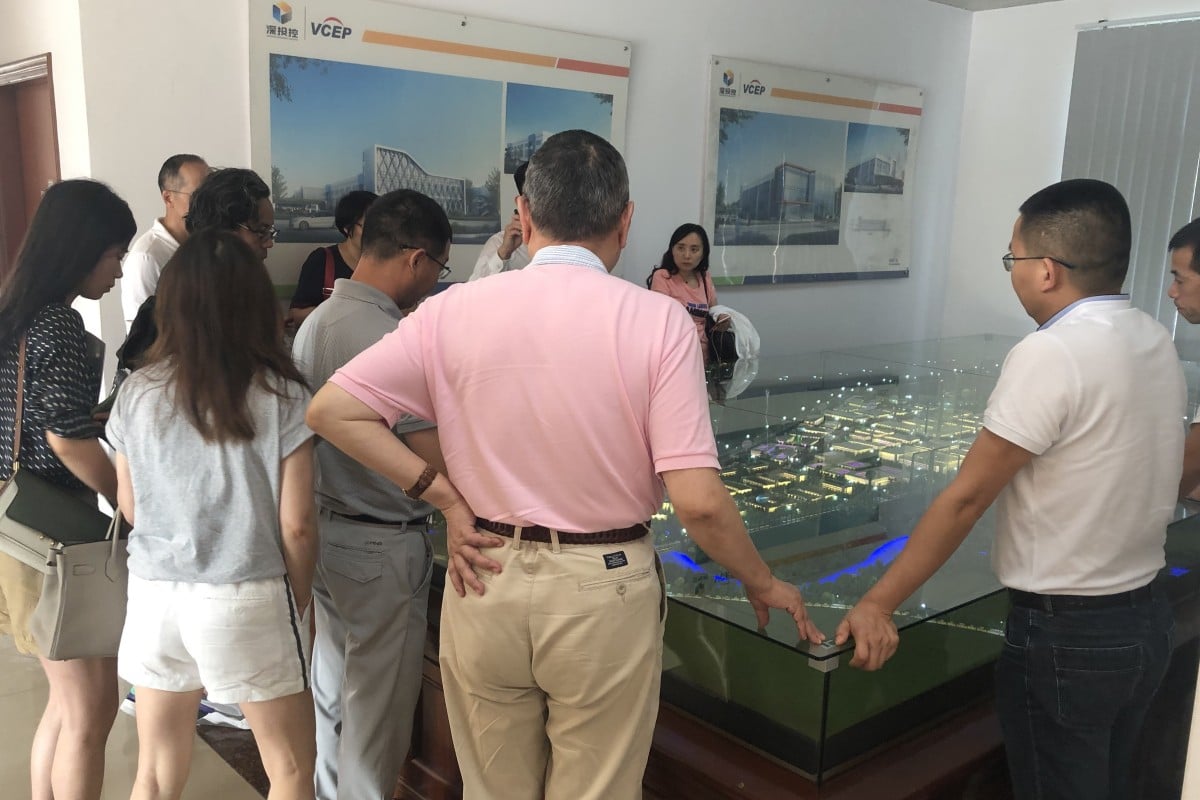
A total of 16 of the 21 Chinese companies that have relocated to the China-Vietnam (Shenzhen-Haiphong) Economic and Trade Cooperation Zone did so after the start of the US-China trade war. Photo: Cissy Zhou
Until the middle of 2018, business was slow for the only Chinese state-owned industrial park in Vietnam, located in the northeastern manufacturing hub of Haiphong and wholly-owned by the Shenzhen city government.
US President Donald Trump’s tariffs on Chinese goods enacted last year changed that, with 16 of the 21 Chinese companies that have relocated to the China-Vietnam
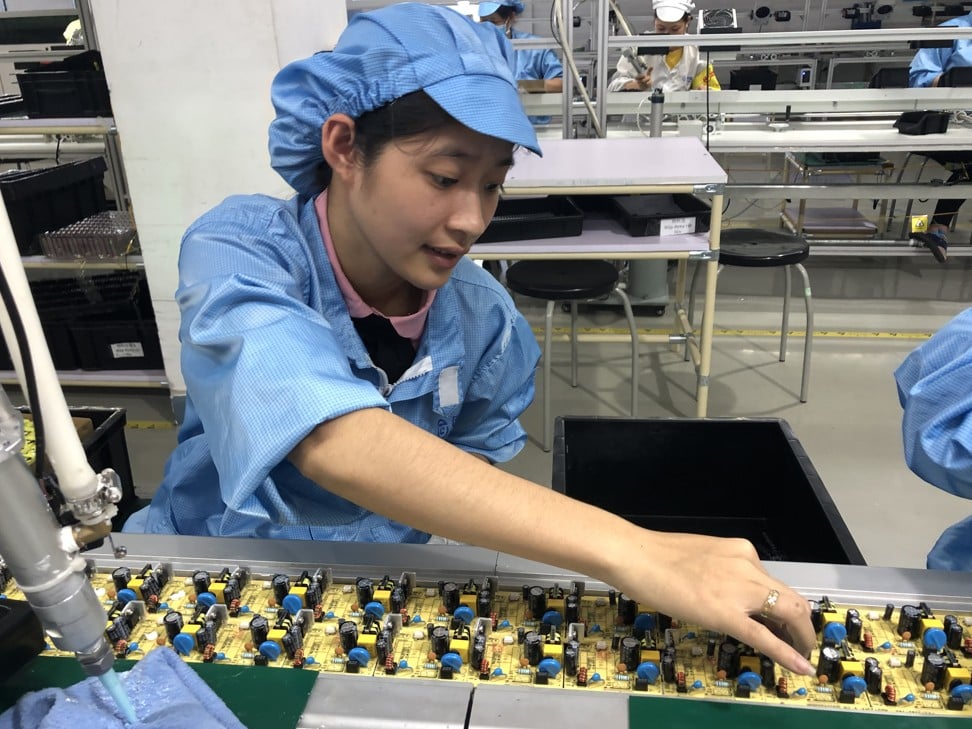
(Shenzhen-Haiphong) Economic and Trade Cooperation Zone – many of them electronic device manufacturers – having done so since the start of the trade war.
However, profit-making was never the top priority for the park’s operators, which took over the reins from private investors after a series anti-Chinese riots raged through southern and central Vietnam in May 2014 forced the owners to abandon the project.
Protesters set fire to other industrial parks and factories and attacked Chinese workers, killing more than 20 people and injuring more than 100.

While any commercial organisation would be thrilled at the rush of manufacturing firms into Vietnam, for the park’s operators, the first duty is to showcase the Chinese government’s top international economic cooperation project, the Belt and Road Initiative.

[They] requested that we make this industrial park a showcase for the Belt and Road Initiative, so that when our top leaders pay state visits to Vietnam, they can come to our park Chen Xu

The Shenzhen arm of the State-owned Assets Control and Supervision Commission (SASAC), which oversees all city owned companies “has requested that we make this industrial park a showcase for the Belt and Road Initiative, so that when our top leaders pay state visits to Vietnam, they can come to our park”, Chen Xu, vice general manager at the Vietnam-China Economic and Trade Cooperation Park (VCEP), told the South China Morning Post.
The Chinese industrial enclave in Vietnam is part of a largely untold story of the trade war. The common narrative is that Chinese and international firms are fleeing China to avoid paying tariffs, setting up in low-cost hubs in Vietnam and elsewhere in Southeast Asia, but the picture is more nuanced than that.

In Haiphong, a part of the Chinese government is actively encouraging firms to come to Vietnam, armed with US$200 million in investment capital and with a vision of creating 30,000 jobs by the time the entire three-phase project is completed in 2022.

The then-private VCEP project was suspended after the 2014 riots, and after the local government in Vietnam said it would reclaim the land unless it resumed, the Shenzhen government “decided to fully take over the project”, according to VCEP general manager Zhang Xiaotao.

Newcomers must now buy land from the park and build their facilities themselves as the original buildings have already been rented out. Photo: Cissy Zhou

“Our evaluation then was that we could not make a profit out of this project. Then why did we still take it over? We have to serve the Belt and Road Initiative, as it is a national strategy,” Zhang added. “In fact, we surrender part of our profit [because] we sell the land [in the park] at a lower price and with better facilities than in neighbouring industrial parks. We are still in the red based upon the current land price. Our bosses understand the situation and ask us at least not to lose money.

“To make a profit is of course the priority of any company. But we are different, we are not a pure commercial project.”

Furthermore, it is a commonly held assumption that China is only open to losing low-end, labour intensive and high-polluting industry, as it looks to upgrade its manufacturing profile domestically. And while there is certainly truth to that as examples of low-value Chinese manufacturing plants litter Vietnam, VCEP is keen to avoid that persona.

Because of the need to maintain a relatively high-profile, the park does not welcome labour-intensive manufacturers such as shoes factories, because “it is bad for our image”, Chen said. Instead, it is focused on hi-tech engineering – exactly the kind of industry China is desperate to nurture on its own soil. In this sense, the Shenzhen-Haiphong facility represents something of a paradox.

With 1,500 people currently employed, it is some way from reaching its 30,000 goal, but the number of Chinese manufacturers wanting to set up factories in the park is now about eight times what it was before the trade war started last July, according to both Chen and Zhang. Newcomers must now buy land from the park and build their facilities themselves as the original buildings have already been rented out.

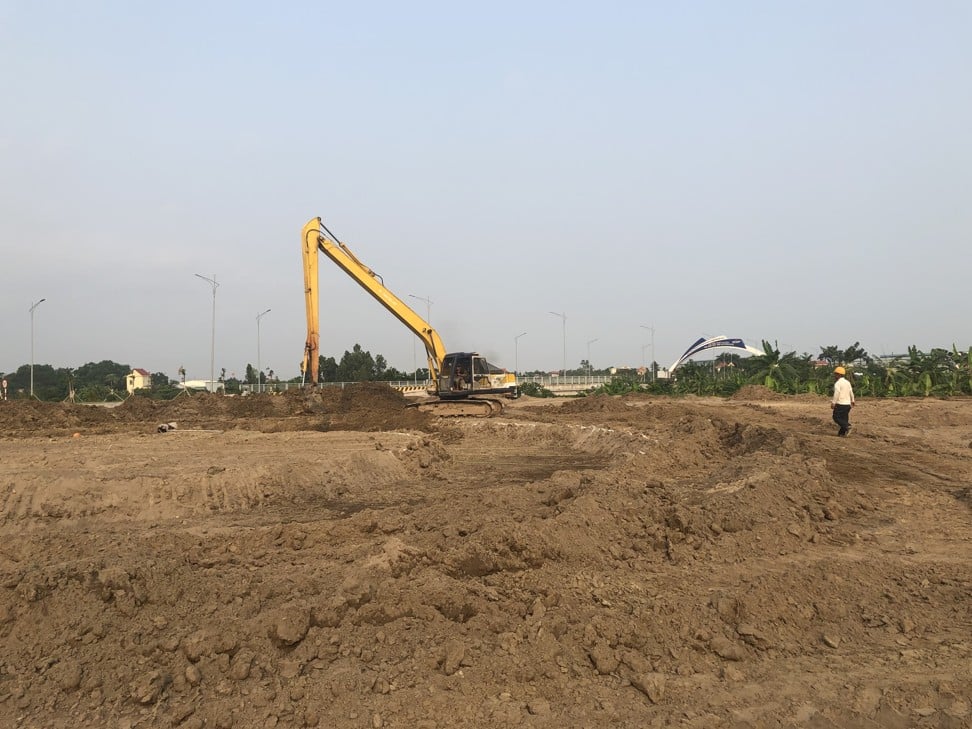
The relatively poor state of the surrounding infrastructure has also led VCEP to spend 30 million yuan (US$4.3 million) on a new road and bridge linking the park to the national highway in Haiphong.

“We could not wait for the Vietnamese government to build the infrastructure. They don’t have the money and their efficiency is low, so we built it ourselves,” said Li Meng, a member of VCEP’s Strategic Investment Department, who said it took less than nine months to finish the project.

The cost of the bridge was more than triple what it would have cost in China as “the efficiency is much lower here and we needed to import a lot of material from China due to lack of material in Vietnam”, Li added

“Every inch of the road and the bridge linking the national highway in Haiphong to VCEP is paved with renminbi.”

The Vietnam-China Economic and Trade Cooperation Park has a vision of creating 30,000 jobs by the time the entire three-phase project is completed in 2022. Photo: Cissy Zhou

TP-Link, the Shenzhen-based Chinese manufacturer of computer networking products, has rented a plant in the park and will start testing its equipment in July. The company, the world’s largest provider of consumer Wi-fi networking devices, has bought an additional 140,000 square metres of land in the park to expand production.

When TP-Link bought the land in late-2018, the price was between US$75 to US$80 per square metre, Chen said. Now, six months later, the price has risen to US$90 per square metre. This is indicative of the huge spike in interest in manufacturing in Vietnam caused by the trade war. Data from Vietnam’s Foreign Investment Agency shows that Vietnam attracted US$16.74 billion in foreign capital over the first five months of 2019, a year-on-year increase of 69.1 per cent. Of this, 72 per cent was invested in the processing and manufacturing sectors.

“Chinese local governments are, of course, unhappy with the increasing number of manufacturers who are relocating to Vietnam, but President Xi has clearly put forward the Belt and Road Initiative, which local governments cannot disturb. So local governments are not encouraging manufacturers to relocate, but they dare not try to stop them,” said vice-general manager Chen.

The Chinese inflow has also met with opposition in Vietnam, although far from the scale of the deadly riots of 2014.

“Some local [Vietnamese] media have been demonising China, with local prime time TV news talking about fake Chinese meat and poisoned food and hyping these cases. High-ranking Chinese officials have asked the Vietnamese government to guide public opinion in the right direction,” Chen added.

General manager Zhang added that the Vietnamese authorities have also become more sensitive to investment from China, a view reflected by Lam Thanh Ha, a senior lecturer at the Diplomatic Academy of Vietnam university which operates under the management of Vietnam’s Ministry of Foreign Affairs. “Overreliance on foreign cash in general and Chinese capital in particular may pose risks for Vietnam in terms of exchange rate fluctuations and external influences,” Ha warned.

“As production is generally dependent on transnational supply chains, foreign enterprises in Vietnam are often deeply engaged in both import and export processes, leaving the Vietnamese economy vulnerable to global economic conditions,” Ha added.

In a 

commentary published

by the Post earlier in May, Ha warned that Vietnam should avoid “becoming China’s dirty industrial backyard”, although Zhang had the opposite view.

“We are not shifting all our low-end industries to Vietnam, which would be irresponsible. China is trying to help Vietnam with sincerity, even if we don’t make a profit, we still want to proceed with the project,” he said.
Source: SCMP
21/05/2019

Xi visits village of old revolutionary base

CHINA-JIANGXI-XI JINPING-OLD REVOLUTIONARY BASE (CN)

Chinese President Xi Jinping, also general secretary of the Communist Party of China Central Committee and chairman of the Central Military Commission, visits Tantou Village in Yudu County, Ganzhou City, during an inspection tour of east China’s Jiangxi Province on May 20, 2019. At the home of veteran Sun Guanfa, a descendant of a Red Army martyr, Xi chatted with Sun’s family. (Xinhua/Ju Peng)

NANCHANG, May 20 (Xinhua) — Xi Jinping, general secretary of the Communist Party of China Central Committee, visited Tantou Village in Yudu County, Ganzhou City, during an inspection tour of east China’s Jiangxi Province on Monday afternoon.

At the home of veteran Sun Guanfa, a descendant of a Red Army martyr, Xi chatted with Sun’s family and local officials, and learned in detail about the production developments and life improvements of people in the old revolutionary base.

Source: Xinhua

13/05/2019

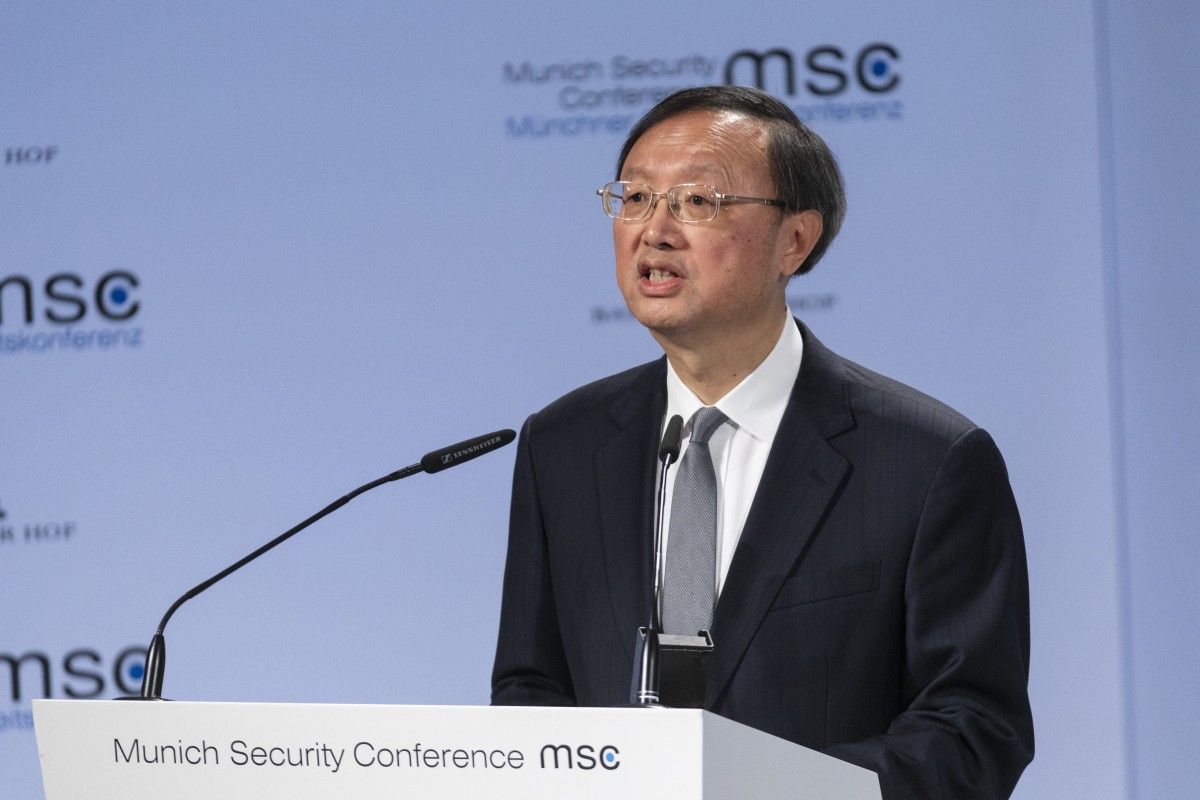
China’s top diplomat Yang Jiechi to visit Japan ahead of possible Xi Jinping trip

  • Three-day visit comes ahead of Chinese President’s planned attendance at G20 summit in Osaka next month
Yang Jiechi’s three-day visit to Japan starts on Thursday. Photo: Bloomberg
China’s top diplomat Yang Jiechi will visit Japan for three days from Thursday, the Chinese Foreign Ministry said on Monday.
The visit is likely to work out details of President Xi Jinping’s planned visit to Japan for this year’s summit of the Group of 20 major economies in Osaka in late June, sources familiar with bilateral relations had said last week.
Yang, a member of the Political Bureau of the Chinese Communist Party’s Central Committee, is likely to meet the country’s national security adviser Shotaro Yachi on Thursday and Prime Minister Shinzo Abe the following day, according to the sources.
Xi’s visit, if it goes ahead, would be his first since he came to power in 2013 and the first by a Chinese head of state since Hu Jintao in November 2010.
Yang and Yachi will also hold the sixth China-Japan high-level political dialogue.
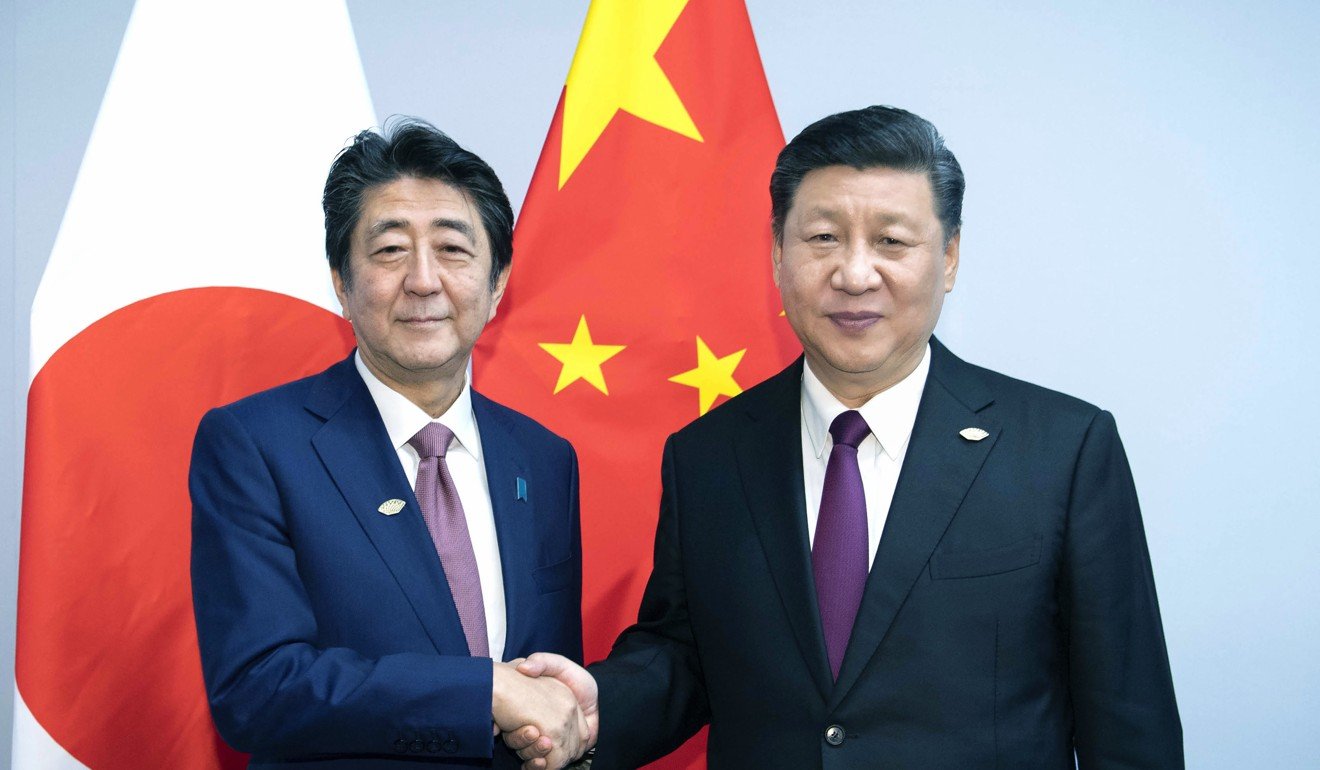
Chinese President Xi Jinping and Japanese Prime Minister Shinzo Abe pictured at the G20 summit in Argentina last year. Photo: AP

At this dialogue, which is an annual consultation plan agreed on by the two sides, the two sides will exchange views on China-Japan relations and issues of common concern, Chinese Foreign Ministry spokesperson Geng Shuang said at a regular press briefing.

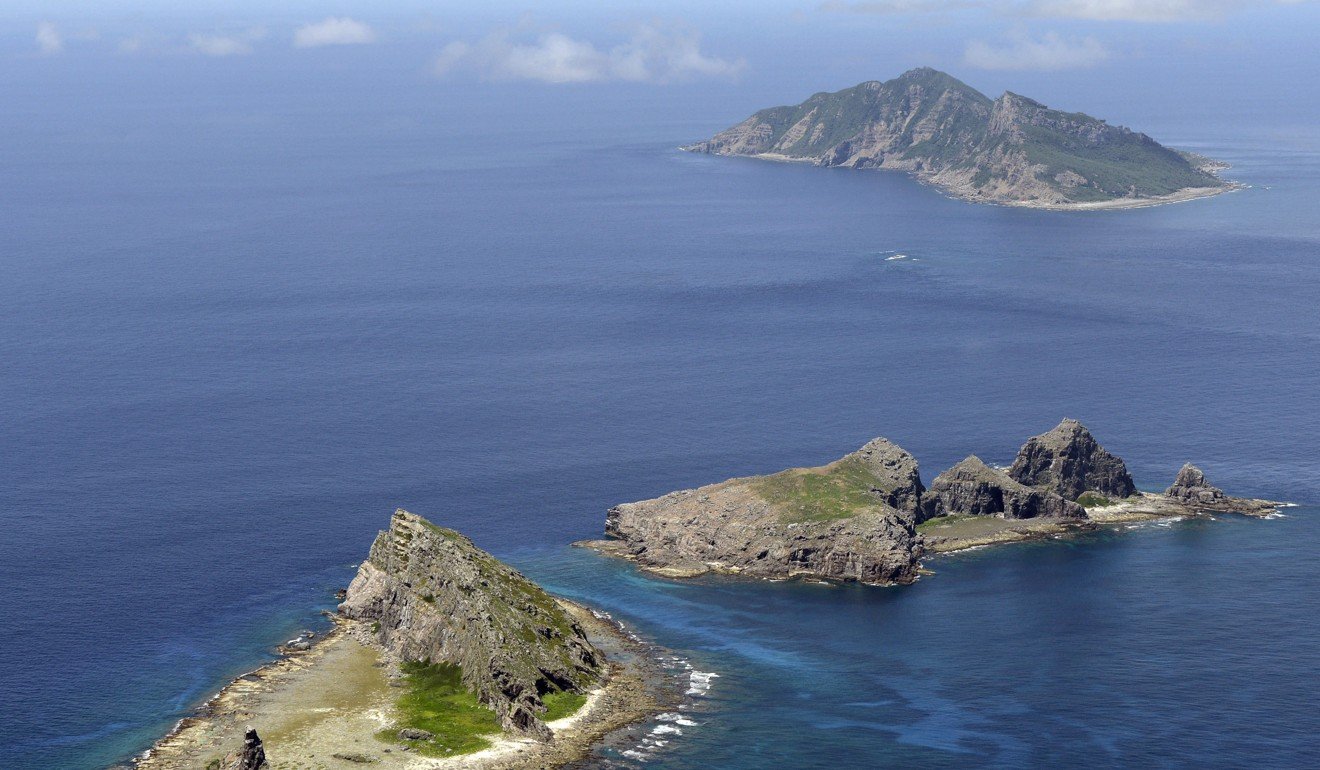
For years, the two neighbours have been mired in a territorial dispute over the Senkaku Islands in the East China Sea. The group of uninhabited islets, which are called Diaoyu in Chinese, are controlled by Japan but claimed by China.

But Sino-Japanese ties have been markedly improving recently, with 2018 – the 40th anniversary of the signing and entering into force of the bilateral Treaty of Peace and Friendship – serving as an incentive to forge better relations.

The dispute over the Senkaku – or Diaoyu – Islands is a long-standing barrier to better relations. Photo: Kyodo

In an interview with Japanese media, Chinese vice foreign minister Kong Xuanyou said the relationship between China and Japan has just returned to normal after going through ups and downs over the years, and both sides need to treasure the development.

“China is willing to work with Japan to further promote China-Japan relations,” he was quoted as saying in a Chinese foreign ministry transcript.

Kong also rejected suggestions that ties between China and Japan have become closer because of the China-US trade war – which pushed Beijing to seek support from its neighbours.

“Putting the relations between China, Japan and the US at opposite from each other is a zero-sum game and cold war mentality. China does not agree with it,” he said. “The friendly relationship among these two nations can be developed in parallel. This is welcomed by the region and the world”.

Source: SCMP

07/05/2019

Special Report – How a Chinese venture in Venezuela made millions while locals grew hungry

TUCUPITA, Venezuela (Reuters) – The project was meant to feed millions.

In Delta Amacuro, a remote Venezuelan state on the Caribbean Sea, a Chinese construction giant struck a bold agreement with the late President Hugo Chavez. The state-run firm would build new bridges and roads, a food laboratory, and the largest rice-processing plant in Latin America.

The 2010 pact, with China CAMC Engineering Co Ltd , would develop rice paddies twice the size of Manhattan and create jobs for the area’s 110,000 residents, according to a copy of the contract seen by Reuters.

The underdeveloped state was an ideal locale to demonstrate the Socialist Venezuelan government’s commitment to empower the poor. And the deal would show how Chavez and his eventual hand-picked successor, President Nicolas Maduro, could work with China and other allies to develop areas beyond Venezuela’s bounteous oil beds.

“Rice Power! Agricultural power!” Chavez tweeted at the time.

Nine years later, locals are hungry. Few jobs have materialized and the plant is only half-built, running at less than one percent its projected output. It hasn’t yielded a single grain of locally grown rice, according to a dozen people involved in or familiar with the development.

Yet CAMC and a select few Venezuelan partners prospered.

Venezuela paid CAMC at least $100 million (76 million pounds) for the stalled development, according to project contracts and sealed court documents from an investigation by prosecutors in Europe.

The thousands of pages of court papers, reviewed by Reuters, were filed in Andorra, the European principality where prosecutors allege Venezuelans involved in the project sought to launder kickbacks paid to them for helping secure the contract. The material on the China deal, reported here for the first time, includes confidential testimony, wiretap transcripts, bank records and other documents.

Last September, an Andorran high court judge alleged in an indictment that CAMC paid over $100 million in bribes to various Venezuelan intermediaries to secure the rice project and at least four other agricultural contracts.

The indictment charged 12 Venezuelans with crimes including money laundering and conspiracy to launder money. Among those indicted was Diego Salazar, a cousin of a former oil minister who, investigators say, enabled the contracts. Also indicted was the top representative in China at the time of state-run oil company Petroleos de Venezuela SA, or PDVSA.

Sixteen people of other nationalities were also charged and at least four other Venezuelans, one of whom was formerly ambassador in Beijing and is now the country’s top diplomat in London, are under investigation, according to the documents.

The indictment, the names of those charged, and their association with Chinese companies were reported last year by El Pais, the Spanish newspaper. A Reuters review of the case files, which are still under seal in Andorra, gleans how CAMC and other Chinese companies forged ties with many of those charged and paid to win projects the companies often didn’t complete.

The result, according to prosecutors, was a far-reaching culture of kickbacks, paid through offshore accounts, in which well-connected Venezuelan intermediaries milked and ultimately crippled projects that were meant to develop neglected corners of the country.

Among other findings reported here for the first time:

• CAMC agreed to at least five agricultural projects in Venezuela, valued at about $3 billion, that it never completed.

• The company, according to contracts and project documents reviewed by Reuters, received at least half the value of the $200 million contract for the rice project and at least 40 percent of the contract value for the other four developments – a combined total of at least $1.4 billion for work it never finished.

• CAMC paid over $100 million in fees to intermediaries; prosecutors say those payments were kickbacks that helped the company win contracts in Venezuela.

Neither CAMC nor any of its executives were charged in the indictment.

In a statement, the Beijing-based company told Reuters the details and assertions in the case files include “a large number of inaccuracies,” but didn’t elaborate. The company didn’t respond to requests to speak with CAMC executives mentioned in the documents. Reuters couldn’t reach those executives independently.

“Our company operates in Venezuela in adherence to the idea of integrity and strives to complete every construction project with the best technology and management,” the statement said.

China’s Foreign Ministry, in a statement to Reuters, said “reports” about alleged bribery by Chinese companies in Venezuela “obviously distorted and exaggerated facts, with a hidden agenda.” It didn’t specify to what agenda it was referring. Cooperation between the two countries will continue, the statement read, “based on equal, mutually beneficial, and commercial principles.”

Venezuela’s Information Ministry, responsible for government communications, and oil giant PDVSA, a partner in many of the contracts cited in the court case, didn’t respond to Reuters inquiries.
It isn’t clear when any of those charged could face trial. Enric Gimenez, a lawyer in Andorra for Salazar, the Venezuelan who prosecutors say brokered many of the contracts, told Reuters his client is innocent of the charges there.
The leftist regime founded by Chavez and now led by Maduro is facing its most serious threat yet. Opposition lawmakers, with the support of most Western democracies, say Maduro’s re-election last year was illegal and that Juan Guaido, head of the National Assembly, is the country’s rightful leader.
Last week, in a failed uprising, Guaido unsuccessfully sought to rally Venezuela’s military, the lynchpin of support for the unpopular government, against Maduro.
The political crisis was prompted by an economic meltdown of hyperinflation, mass unemployment and an exodus of desperate citizens. Venezuelans suffer regular shortages of food, power and water – basics that were meant to improve through projects like the one in Delta Amacuro.
The dire scarcities and dysfunctional projects, the opposition alleges, illustrate how corruption and crony capitalism helped impoverish the once-prosperous country and many of its 30 million people.
After an ambitious 2007 agreement between China and Venezuela, Chinese companies were announced as partners in billions of dollars’ worth of infrastructure and other projects. Since then, China invested over $50 billion in Venezuela, mostly in the form of oil-for-loan agreements, government figures show.
In a 2017 speech, Maduro said 790 projects with Chinese companies had been contracted in sectors ranging from oil to housing to telecommunications. Of those, he said, 495 were complete. Some developments have stalled because of graft, people familiar with the projects said; others were derailed by incompetence and a lack of supervision.
In Delta Amacuro, even government officials say a mixture of both ruined the rice project. “The government abandoned it,” says Victor Meza, state coordinator for Venezuela’s rural development agency, which worked with CAMC. “Everything was lost. Everything was stolen.”
Prosecutors in Andorra, where secretive banking laws long made it a tax haven, launched their investigation into Venezuelan laundering amid a broader effort to clean up the local financial sector.
The indictment is part of a much larger case in which the prosecutors allege Venezuelan officials between 2009 and 2014 received more than $2 billion worth of “illegal commissions” from contractors, state companies, and other sources, often for enabling transactions with the government.
The payments, the indictment alleges, passed through accounts held at Banca Privada D’Andorra, a local bank known as BPA.
Andorra’s government, after the United States accused BPA of money laundering, took over the bank in 2015. Courts there since then have charged 25 former BPA employees with money laundering in a series of cases, including the one probing the Venezuela contracts. A spokeswoman for Andorra’s government declined to comment for this article.
In addition to the agricultural projects by CAMC, the Andorrans examined two power-plant projects by the company and four other power plants built by Sinohydro Corp, another state-owned Chinese engineering firm. None of those plants ever became fully operational, leaving towns near them subject to regular blackouts.
Sinohydro wasn’t charged in the indictment. The company didn’t respond to calls, emails and faxes seeking comment.
During a recent visit by Reuters to Delta Amacuro, the CAMC rice plant remained unfinished. Only one of its 10 silos, half full, held any grain. Some machinery was running, but processing rice imported from Brazil. The nearby paddies lay fallow, the laboratory incomplete, the roads and bridges unbuilt.

“WE DON’T PRODUCE ANYTHING”

Tucupita, a town of 86,000 residents, is Delta Amacuro’s capital. It hugs the banks of the Cano Manamo, an offshoot of the Orinoco, one of South America’s biggest rivers. Once, Tucupita was a stop for vessels shipping goods from inland factories to buyers in the Caribbean and beyond.

In 1965, the government dammed the Cano Manamo. Boat traffic stopped, fresh water receded and seawater seeped inland, degrading soils. By the time Chavez became president in 1999, little farming remained.

“When I was a kid, there was rice everywhere,” recalled Rogelio Rodriguez, a local agronomist. “Now we don’t produce anything.”

In 2009, Chavez and Xi Jinping, China’s vice president at the time, expanded a joint fund the countries had created with the 2007 development agreement. “Aren’t we grateful to China?” Chavez said at a ceremony with Xi at the presidential palace in Caracas, Venezuela’s capital.

Promising to supply Beijing with oil “for the next 500 years,” Chavez pointed toward Delta Amacuro on a map. “Look, Xi,” he said, announcing an effort to rehabilitate the region.

In attendance were CAMC Chairman Luo Yan and Rafael Ramirez, a Chavez confidante who ran PDVSA and the oil ministry for a decade.
Soon, businesses jostled to get in on the development.
Diego Salazar, a cousin of Ramirez, was well-positioned.
Salazar’s father was a communist guerrilla and author who later became a legislator and Chavez ally. His family ties and connections to lawmakers gave the younger Salazar a valuable address book he wielded at a consulting firm he operated in Caracas.
The firm, Inverdt, was owned by a Panama-based holding company he had established called Highland Assets, according to testimony Salazar gave investigators in Andorra when they first began probing his BPA account. From an office a few blocks from PDVSA headquarters, he met often with Ramirez and other top officials, according to people familiar with his activities.
Ramirez left the ministry in 2014 and was Venezuela’s ambassador to the United Nations until 2017. Since then, Maduro has publicly accused him of unspecified corruption, but Ramirez wasn’t indicted in Andorra and hasn’t formally been charged with any crime in Venezuela. He now lives abroad as an opponent of the government. Ramirez didn’t respond to Reuters emails seeking comment and couldn’t be reached otherwise.
At the time of the ceremony with Xi, Chavez was making PDVSA a hub for a growing array of developments, many of them unrelated to oil. A newly created unit known as PDVSA Agricola, for instance, was tasked with boosting food supply.
The diversification made PDVSA the conduit through which contracts, and a growing sum of money administered by Venezuela’s national development bank, were awarded.
By 2010, the filings say, the bank had received $32 billion from the China Development Bank and another $6 billion from an infrastructure fund created by Chavez.
China Development Bank didn’t respond to Reuters requests for comment.

Salazar began reaching out to Chinese executives, offering his services, as a well-connected consultant, to help broker business in Venezuela. He travelled to China monthly and began paying Venezuelan officials there to forge ties with companies including CAMC.

“My work was to convince them, through meetings, trips, and promotion, to sign contracts,” Salazar told Andorran investigators.

People familiar with the case said Salazar and his alleged associates, before the indictment, agreed to testify in Andorra because they hoped to clear their names.

In his testimony, Salazar told the Andorran investigators he chose BPA as an offshore bank because he knew other wealthy Venezuelans had done so. Nestled in a quiet valley of the Pyrenees, BPA had a reputation as a discrete money manager for clients from high-risk countries.

After Andorra submitted information requests for its case to Caracas, a Venezuelan court in 2017 ordered Salazar arrested on suspicion of corruption, money laundering and conspiracy.

Citing the Andorran probe, the Venezuelan arrest order said Salazar sought to “give legal appearance to funds originating from numerous contracts with Venezuelan state institutions.” A trial date hasn’t been set and Salazar remains jailed in Caracas. A lawyer for Salazar in Venezuela denied the charges before the court.

Gimenez, Salazar’s lawyer in Andorra, in an email to Reuters said Chinese authorities decided which companies would receive funds and that neither Salazar nor his alleged intermediaries could sway that. Inverdt, Salazar’s consulting firm, offered “professional” and “technical” services to many Chinese companies, Gimenez wrote in the email, and that “only a handful of those companies were chosen to carry out works.”

One of Salazar’s intermediaries, the indictment alleged, was Francisco Jimenez, a career engineer who was PDVSA’s envoy in Beijing and who the Andorrans indicted along with Salazar. Salazar first contacted him during a trip to China in 2010, according to testimony Jimenez gave in Andorra.

That March, Jimenez signed a “strategic alliance” with Salazar to promote Inverdt in China. Under the terms of their contract, reviewed by Reuters, Salazar agreed to pay Jimenez $7.38 million in a BPA account that Inverdt helped open. Bank records in the case files show Jimenez later received another $7 million.

Jimenez, who now lives in Panama, didn’t respond to phone calls or text messages from Reuters. Salvador Capdevila, his lawyer in Andorra, declined to comment.

Another official who prosecutors say helped Salazar was Rocio Maneiro, Venezuela’s ambassador to China and now the country’s ambassador to Britain.

Maneiro wasn’t charged in the Andorran indictment; numerous court documents, including a filing by prosecutors in relation to her testimony, refer to her as “under investigation” for payments they say she received from Salazar and for her alleged role helping him make contacts with Chinese companies.

In 2010, bank records contained in the court documents show, Salazar made a transfer of $30,000 to a Chinese account in her name, citing “services provided by Mrs. Maneiro.”

Later, Salazar made deposits totalling $13 million into a BPA account owned by a Panama-based company that Maneiro, in a disclosure document linked to the account, said belonged to her. An internal report from BPA’s anti-money laundering committee, reviewed by Reuters, also listed Maneiro as its owner.

Maneiro, through a lawyer and in a text message to Reuters, denied helping Salazar and receiving payments from him. “Those are assertions with no basis,” she wrote in the message. She told an Andorran judge that the signature on the form about the Panamanian company is forged.

The court has ordered an analysis of the signature.

“A BRIEFCASE FULL OF CONTRACTS”

By early 2010, Salazar’s outreach bore fruit.

Sinohydro, the engineering firm, that March signed a $316 million contract with PDVSA to build a power plant near the city of Maracay.

In the contract, Sinohydro agreed to pay Salazar a 10 percent fee for helping it “gain a favourable and positive position to pursue the contract.” Bank records in the case files show the company paid $49 million into Salazar’s BPA account and another $72 million after Sinohydro secured additional power plant contracts from PDVSA.

Sinohydro eventually built four plants, but none met full contract specifications, engineers say. The plant near Maracay, for example, was meant to generate as much as 382 megawatts, the contract shows. Instead, the plant is producing no more than 140 megawatts, according to Jose Aguilar, a former director at Venezuela’s state power company.

Soon, Salazar’s company was earning over $100 million a year, according to testimony by him and several aides. “He had a briefcase full of contracts,” Luis Mariano Rodriguez, a Salazar deputy also charged in the indictment, told Andorran investigators.

“We made deals with every company possible,” he added. “Some of these companies never actually carried out the projects.”

Reuters was unable to reach Rodriguez, who like Salazar has been charged with money laundering and conspiracy to launder. Gimenez, Salazar’s attorney in Andorra, also represents Rodriguez, and in the email said that Rodriguez, too, is innocent.

As money poured in, Salazar splurged, paying tens of thousands of dollars for hotel stays and spending millions on gifts. For $1 million, he bought 83 Rolex and Cartier watches at a Caracas jeweller, according to an invoice in the filings. In a Rodriguez email to BPA justifying the purchase, he said the watches were “gifted to relatives and friends.”

In April 2010, Andorran police began investigating Salazar. French investigators had asked them about a recent transaction: From his BPA account, Salazar had transferred $99,980 to a Paris hotel employee as a “tip for providing services.” It’s not clear what those services were.

By May, talks for the rice project began.

That month, Rodriguez met with Wang Hong, a CAMC vice president, in Caracas, according to a contract the men signed. In the contract, they agreed that CAMC would pay Salazar’s company 10 percent of the value of the rice contract to help it “win.”

Within months, PDVSA Agricola awarded CAMC the contract, valuing the rice development at $200 million. CAMC signed another agreement with Salazar for help securing additional projects. That June, CAMC made the first of several deposits totalling $112 million to Salazar’s BPA account, bank records show.

Workers broke ground in Delta Amacuro.

By 2012, project documents show, CAMC had received $100 million from the Venezuelan development bank for the undertaking, half that agreed upon. The company shipped excavators, steamrollers and other equipment from China.

But progress was slow.

An excavator bogged down in mud and stayed there. Chinese foremen spoke little Spanish and struggled with local crews, according to engineers who worked on the project.

That November, an Andorran court, on suspicion of money laundering, froze BPA accounts of Salazar, his aide Rodriguez and six other Venezuelans. In 2013, the prosecutors began a years-long effort to interview Salazar and others.

In 2015, the U.S. Treasury Department began pressuring Andorra over alleged money laundering. In a report at the time, the Treasury wrote that BPA facilitated laundering of money from Russia, China and Venezuela.

That March, the Andorran government took over BPA.

Oil prices, which had recently exceeded $100 per barrel, that year fell by more than half. Venezuela’s economy foundered.

CAMC pulled its team of 40 employees from the rice site, people involved in the project said. Locals looted scrap abandoned by CAMC. Jobless workers sold leftover cables and lightbulbs, former managers said.

Still, Maduro has sought to make something of the unfinished project.

In February, Agriculture Minister Wilmar Castro inaugurated the “Hugo Chavez” plant, snipping a ribbon in front of rice sacks emblazoned with Venezuelan and Chinese flags. No one from CAMC attended, according to a person present at the ceremony.

Instead of machinery able to process 18 tonnes each hour, workers are packing imported rice by hand. “There’s not a gram of rice growing anywhere here,” said Mariano Montilla, a 47-year-old local who lives off the few crops he can coax from nearby scrubland.

“It seemed like a revolutionary idea,” he said of Chavez’s initial promise. “Now we’re starving.”

Source: Reuters

Law of Unintended Consequences

continuously updated blog about China & India

ChiaHou's Book Reviews

continuously updated blog about China & India

What's wrong with the world; and its economy

continuously updated blog about China & India