Archive for ‘Xiaomi’

12/03/2020

Coronavirus: China’s mask-making juggernaut cranks into gear, sparking fears of over reliance on world’s workshop

  • China is now making more than 100 million masks a day, up from 20 million before the coronavirus outbreak, and may start to export more to other countries
  • Mask shortages elsewhere once more raise the debate about an over-reliance on China, with critics pointing to a lack of US industrial policy
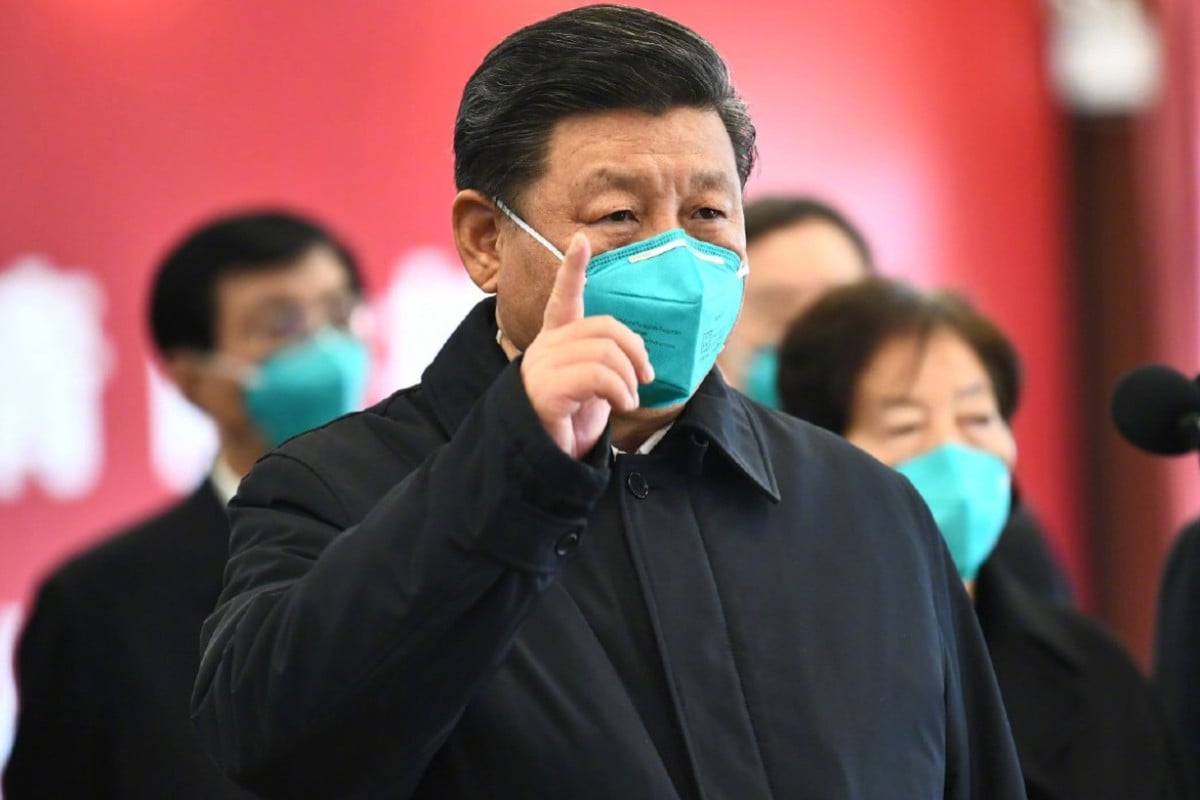
China was producing 116 million masks per day of February 29, including a mix of disposable and high-end masks like the American-designed N95 model worn by President Xi Jinping on his trip on Tuesday to Wuhan. Photo: Xinhua

The Liu family factory has been making diapers and baby products in the Chinese city of Quanzhou for over 10 years, but in February, for the first time, it started making face masks, as demand soared spectacularly due to the coronavirus outbreak.

The business – which employs 100 people in the Southeastern Fujian province – has added two production lines to make up to 200,000 masks a day.
And while the decision was primarily commercial, “encouragement” from the Chinese government – in the form of subsidies, lower taxes, interest-free loans, fast-track approvals for expansion and help alleviating labour shortages – made the decision an obvious one, said Mr Liu who preferred only to give his family name.
“The government is advocating an expansion in production,” Liu said. “With faster approvals, producers need to prioritise the government’s needs over exports.”
WHO declares coronavirus crisis a pandemic
The factory is one of thousands of refitted pop-ups around China making masks and other protective equipment for the first time, part of a massive industrial drive to respond to the spread of the coronavirus.
Before the outbreak, China already made about half the world’s supply of masks, at a rate of 20 million units a day. That rose to 116 million as of February 29, according to China’s state planning agency, a mix of disposable and high-end masks like the American-designed N95 model worn by President Xi Jinping on his trip on Tuesday to Wuhan, the epicentre of the outbreak.

This exponential jump is the result of a wartime-like shift in industrial policy, with Beijing directing its powerful state-owned enterprises to lead the nationwide mask-making effort, and the country’s sprawling manufacturing engine following their lead.

For me, this is the big advantage of China, the speed Thomas Schmitz

“For me, this is the big advantage of China, the speed,” said Thomas Schmitz, president of the China branch of Austrian engineering giant Andritz, which has seen a big uptick in demand for its wet wipe-making machines in recent weeks, also due to the virus. “When you need to run, people know how to run, and this is something which has been lost in other countries since their industrial heydays.”

Chinese oil and gas major Sinopec upped production of mask raw materials such as polypropylene and polyvinyl chloride in January. This week, it set up two production lines in Beijing to produce melt-blown non-woven fabric, intended to make four tonnes of the fabric each day, which can then be used to produce 1.2 million N95 respirators or six million surgical masks a day.

The maker of China’s new J-20 stealth fighter jet, Chengdu Aircraft Industry Group, repurposed part of its factory to design a mask production line, according to local media reports. The Sichuan Daily said 258 of the company’s engineers spent three days fast-tracking development of an assembly line with more than 1,200 components.

Coronavirus: From mysterious origins to a global threat
More than 2,500 companies in China have reportedly started making masks, among them 700 technology companies including iPhone assembler Foxconn and smartphone makers Xiaomi and Oppo, in an extraordinary mobilisation of resources.

The result resembles “the war effort” in the middle of the last century in the United States and western Europe, but arguably no other nation could undergo such a transformation so quickly today.

It is a reminder of what can happen in a centrally-planned economy with a strong manufacturing base, but also brings into sharp focus some of the geopolitical issues which have characterised China’s at-times difficult relationship with the rest of the world, particularly the European Union and US, over the past couple of years.

China’s dominance in manufacturing has become all the more evident as the rest of the world scrambles to shore up their own dwindling medical supplies, leading many to wonder why the world is so dependent on it for vital supplies.

The lesson for Washington is not that we need to emulate the Chinese economic model, but rather that we need to better steward the industrial base in key sectors Rush Doshi

The Italian government, which is dealing with the highest number of coronavirus cases and deaths after China, is to take shipment of 1,000 ventilators, 2 million masks, 100,000 respirators, 200,000 protective suits and 50,000 testing kits from China.
Italian foreign minister Luigi Di Maio said after a phone call with Chinese counterpart Wang Yi, they had agreed the export deal in the same week that European neighbours France and Germany banned masks from being exported because of low domestic supplies.
The Italy export deal showed that “China is emerging as a global public goods provider as the US proves unable and unwilling to lead,” said Rush Doshi, the director of the China Strategy Initiative at the Washington-based Brookings Institute think tank.
“China’s ability to produce what is needed to fight coronavirus is not simply a product of its economic model – it’s also a product of its industrial capacity,” Doshi said. “The US once had this capacity too, but it has lost important parts of it. The lesson for Washington is not that we need to emulate the Chinese economic model, but rather that we need to better steward the industrial base in key sectors.”

The frustration is felt acutely by Michael Einhorn, president of medical equipment distributor Dealmed-Park Surgical in New York, who has been trying to source stock from China for weeks, “but cannot get straight answers” from vendors.

Unaware that Wuhan was still under heavy economic lockdown,
 Einhorn said he placed an order with a private seller in China’s virus-stricken city last week, but that the goods had not been shipped.
“Everyone is running out here, people are panicking in hospitals and we want to be able to help our most important customers,” Einhorn said. “We are dealing with hospitals that do not have products, how in the United States of America in 2020 did this happen?”
With the number of confirmed coronavirus cases in China falling daily, it is not inconceivable that the sort of export deal struck with Italian leaders becomes commonplace, although for now, it deal can be chalked up as a significant public relations coup for Beijing.

The World Medical Association is unable to specify how many masks are required to supply frontline medical staff in virus-hit areas, but said that “this crisis should be a wake up call for politicians and societies to make the necessary investment in emergency preparedness and to look into the vulnerability of our supply chains”.

Australian-listed manufacturer Eagle Health announced on Friday that it had installed production lines at its Xiamen factory in southern China to make 300 million masks a year and said it had already received orders from China and would be securing further larger orders internationally.

The group, which normally makes products including amino acids, protein supplements and lozenges in China, said it would prioritise meeting the large domestic demand, but was aware of an impending global shortage.

Eagle Health has already commenced production of its first order of 3.2 million medical masks for the Yiling Hospital Management Group in China, a process which will take 10 days. It has other smaller orders from Chinese government agencies and expects to receive more orders outside China.

The decision to make more masks came from increased demand. These are opportunities. The global demand for high quality masks will be significant Xu Gang

“The decision to make more masks came from increased demand. These are opportunities,” said chief executive Xu Gang. “The global demand for high quality masks will be significant. Imagine when the schools open. The situation will take some time to peak.”
Last week, the Australian Dental Association said supplies of masks at many practices were expected to run out within four weeks. The Australian government has since arranged a supply of 54 million masks for both the dental and medical industries.
At the same time, the US only has 1 per cent of the 3.5 billion masks it would need to counter a serious outbreak, Bloomberg reported.
While China has no quota on the volume of masks that had to be hived off for local consumption, the government has said domestic demand needs to be prioritised.

Businesses are free to export but overseas demand has yet to explode like it has in China, said Fujian factory owner Liu.

Wendy Min, sales director of Pluscare, a manufacturer based near the virus’ epicentre in Hubei province, said her company is making 200,000 masks per day, much of which are sold to the government, with exports still restricted by partial lockdown of workers and cargo transport.

“We previously exported to Europe, South America and other parts of Asia,” Min said. “But at the moment we can’t export. We are trying to discuss this with the government, but we cannot wait any more – we have to export soon.”

Min said that while she was receiving countless cold calls up until last week from people in China looking for masks, these have stopped, perhaps unsurprising given the abundance in supplies becoming available.

An influx of Chinese-made masks, though, is likely to be welcomed in other virus-stricken parts of the world.

Self-quarantine of all international travellers to Beijing as China fights import of coronavirus
Miguel Luiz Gricheno, CEO of Brazilian mask manufacturer Destra, said that his company is making 30,000 masks a day, but cannot meet local demand due to a lack of supplies, including the non-woven fabric from which masks are made.
“In disposable masks, most Brazilian companies are paralysed due to the lack of raw materials,” Gricheno said. “With the arrival of the coronavirus in Brazil, the demand has increased a lot but the main raw material comes from abroad.”
However, a short-term supply fix will not answer underlying questions about how so many countries found themselves in such dire straits, meaning the geopolitical fallout of the coronavirus will be extensive.
Decades of weak industrial policy helped elect US President Donald Trump, who said he would bring manufacturing jobs back to America at China’s expense. While he has waged a bruising two-year trade war with China in response, the current situation shows just how difficult it will be to change the global manufacturing processes, which are so heavily controlled by China.

One of the great flaws of globalisation is that everyone wanted things cheaper, but did you compromise your health care infrastructure in the process? Stephen Roach

“In the guise of trying to improve efficiency and create value for price-sensitive consumers, we’ve created a global production network that is very difficult to unwind,” said Stephen Roach, a professor of economics at Yale University and a veteran China watcher. “One of the great flaws of globalisation is that everyone wanted things cheaper, but did you compromise your health care infrastructure in the process.
Reuters reported that Trump is considering invoking the emergency provisions of the Defence Production Act, which would allow the government to instruct companies to alter production to help address the domestic shortage of medical supplies like masks. If a company is producing 20 per cent N95 masks and 80 per cent standard masks, the White House could order them to rejig the ratio, an unnamed official said.
The New York Times reported on Wednesday that the White House is preparing an executive order that would allow the government to buy medical supplies from overseas in the hope that it will incentivise companies to make them within the US.

But these changes still do not give Trump the sort of sweeping powers enjoyed by Chinese counterpart Xi.

“When you have a pluralistic, democratic situation that Trump is overseeing, it becomes more unwieldy” to take the steps necessary to address a crisis situation, said Harry Broadman, chair of the emerging markets practise at the Berkeley Research Group and a senior US government official in the 1980s and 1990s.

“That is why I think Trump looks at Xi with envy, because he doesn’t have to deal with a disparity of views or democratic interests,” Broadman said. “I think Trump is at heart a bilateral guy, as you saw with the phase one [US-China] trade deal and the state-to-state purchases. That is why he likes dealing with [Russian President Vladimir] Putin and Xi, because each of them can move mountains. I think Trump is very envious of that ability.”

Source: SCMP

11/10/2019

Spotlight: Film, yoga, smartphone industries enhance China-India links

INDIA-CHINA-FILM-YOGA-SMARTPHONE

 People practice yoga at a park in New Delhi, India, June 21, 2019. TO GO WITH: Spotlight: Film, yoga, smartphone industries enhance China-India links (Xinhua/Zhang Naijie)

by Xinhua writers Chen Jian, Zhao Xu, Zhang Xingjun

CHENNAI, India, Oct. 11 (Xinhua) — “I would like to see a lot of collaboration between creative people from China and India, making stories that people from both countries would love to see,” said Bollywood star Aamir Khan before a film-promotion trip to China in early 2018.

As one of the most recognized Indian actors in China, Khan’s biographical sports film “Dangal” raked in nearly 1.3 billion yuan (190 million U.S. dollars) in the Chinese box office in 2017, making it the highest-grossing Indian film of all time in China.

Inspired by the real journey of an Indian wrestler, Khan acted the part of a strict father who turned his daughters into world-class athletes.

From “Dangal” and “Secret Superstar” to “Hichki” and “Thugs of Hindostan,” Bollywood hits have been immensely popular among Chinese moviegoers in recent years. Older generations were impressed by Indian films like “Awara” (1951) and “Caravan” (1971), which featured spectacular song-and-dance scenes.

Khan, who has visited China several times, said he felt Chinese and Indian people have many things in common. For example, both peoples attach great importance to family, he told Xinhua.

“Many people get to know a certain country through watching their movies. Through my work, quite a few foreign viewers start to know the sorrows and happiness of ordinary Indian people,” Khan said, adding that artists can help people with different cultural backgrounds understand each other.

Bollywood actress Rani Mukerji, whose Hindi comedy-drama film “Hichki” was screened in China last year, said Chinese audience watching her film with Chinese subtitles reacted similarly to Indian fans.

“You realize that you don’t have to know the language to connect with the film. I think that’s what makes movies so, so special … If the emotions are universal, it can connect anywhere,” she told Xinhua in an interview earlier this year.

In “Hichki,” Mukerji played the leading role of an aspiring teacher with Tourette Syndrome, who must prove herself by educating a group of underprivileged students.

Taking note of Bollywood’s developed industrial system and China’s huge film market, the Indian actress is also looking forward to India-China film co-productions.

“I am actually very keen to do India-China co-productions where I can be part of a Chinese film or Chinese actors can be part of Indian films,” she said.

YOGA IN CHINA

Before Yu Songsong, a young man from southwest China’s Guizhou Province, started to practice yoga, he knew little about India, where the practice originated.

Having spent the last six years learning yoga, he is attracted by the yoga culture and eager to travel to India.

Yu used to suffer from an emotional disorder. “It was yoga that turned me around. I was no longer lost. I’ve found a direction for my life,” he said.

Yu started to practice yoga when he was a freshman and became a vegetarian. “The physical and mental practices relieved me of psychological distress,” he said.

Through yoga, Yu is engaging in a comparative study in the philosophies of China and India, two ancient civilizations in the world.

“In the class, we discuss and compare the traditional Chinese theory that ‘man is an integral part of nature’ and the Indian idea that ‘the Buddha and I are one.’ Through this, we explore the similarities that underline the culture and civilizations of the two countries,” he said.

The China-India Yoga College, established at Kunming’s Yunnan Minzu University in June 2015, is China’s first yoga college. Fifty branches are planned to be opened in China’s major cities in the next three to five years, and are attracting batches of Indian yoga teachers to China, with 38-year-old Subbulakshmi Velusamy being one of them.

Velusamy arrived in Kunming in late 2015 and quickly adapted to the climate and life there. She said the local diet is light, which is very palatable to yoga practitioners and vegetarians.

Velusamy said teaching yoga in Yunnan was a wonderful experience as the Chinese people around her were very helpful and kind.

“They often chat with me after class and invite me to parties,” she told Xinhua in an earlier interview.

Velusamy said she was eager to learn about the ancient Chinese civilization. At the same time she introduced yoga to more Chinese as a unique and valuable Indian cultural asset.

Indian Prime Minister Narendra Modi has played a significant role in spreading yoga at home and abroad. He was instrumental in urging the United Nations to mark June 21 as International Yoga Day.

“Beyond exercise and health, yoga is about life, self-awareness and a connection with your soul. So I expect my students to understand their consciousness in today’s technologically-driven world,” said Rama Rathore, a yoga trainer in New Delhi.

CHINESE SMARTPHONE BRANDS

Smartphones are becoming easily available to everyone thanks to their affordable prices. With the exploding growth of Internet data usage and its access across the country, millions of Indians are now connected with the world thanks to their smartphones.

“It is the people’s window to the world and the growth opportunity in this sector is huge,” said Saifi Ali, a head researcher associated with a leading telecom operator located in Gurgaon on the outskirts of New Delhi.

“India has overtaken the United States in the smartphone market,” he said.

Meanwhile, Chinese smartphone brands, such as Xiaomi, Oppo and Vivo, have been successful in India’s fast growing market, according to global market research firm Canalys.

Xiaomi has been the leading smartphone brand in India for eight consecutive quarters, with a 28.3-percent market share for the second quarter of this year.

Xiaomi has become the first brand in India to sell more than 100 million smartphones within a span of five years, since the company began operations in the country in 2014.

Jobs and technical training provided by the Chinese companies have helped many Indian workers to enhance their technical skills and earn good money.

Neeraj Sharma, 25, is an Indian employee at MCM, a Noida-based Chinese company of smart terminal equipment. Sharma said he has learned a lot from the company and his technical skills have also improved.

“From here I started learning practical knowledge. Everything I know about the technology we are using here for SMT (Surface Mount Technology) and also in assembly is from this company. I started from the very lowest designation and right now I am working as a floor-in-charge there,” he told Xinhua in a recent interview.

Thanks to his stable income from MCM, Sharma, who is from the northern Uttar Pradesh state, has fulfilled his dream of buying a house in Noida, outside New Delhi.

“I came here, so at that time I had planned to buy a house here for my family. Right now I have already bought a small house. Maybe further in the future I will have a flat,” he said.

Source: Xinhua

04/10/2019

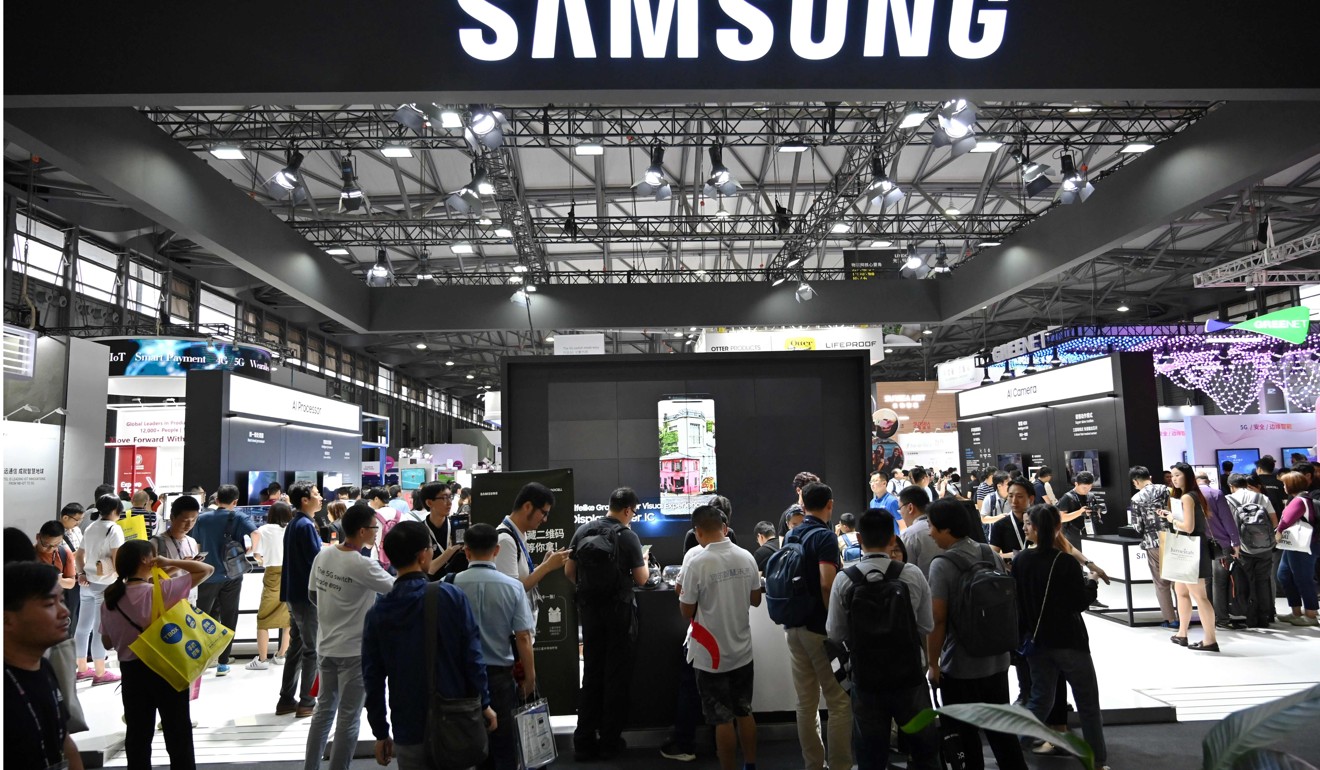
South Korea’s Samsung closes its last smartphone factory in China

  • ‘Difficult decision to cease operations’ at plant in Huizhou taken to ‘enhance efficiency’, company says
  • Firm’s market share in China has dwindled to near insignificance as competitors like Huawei and Xiaomi have taken upper hand
Samsung said operations at its last factory in China ended last month. Photo: Reuters
Samsung Electronics

said on Friday it has ended the production of smartphones in its last factory in China.

Operations at the plant in the south China city of Huizhou, Guangdong province, ended last month, it said in an email.
The company made “the difficult decision to cease operations of Samsung Electronics Huizhou” in order “to enhance efficiency” in its manufacturing, it said.
Samsung’s market share in China has dwindled to near insignificance as competitors like Huawei and Xiaomi have taken the upper hand. It once had 15 per cent of China’s smartphone market.
Samsung once had a 15 per cent share of China’s smartphone market. Photo: AFP
The South Korean giant has moved a large share of its smartphone production to Vietnam and closed a factory in northeastern China’s Tianjin last year.

“The production equipment will be reallocated to other global manufacturing sites depending on our global production strategy based on market needs,” the statement said.

Samsung is the world’s biggest manufacturer of semiconductors and smartphones and a major producer of display screens. But the flagship of South Korea’s largest conglomerate is currently weathering a spell of slack demand for computer chips.

Like other South Korean electronics makers, it also is facing the impact of tightened Japanese controls on exports of hi-tech materials used in semiconductors and displays.

On Wednesday, Sony said it was closing its Beijing smartphone plant and would only make smartphones in Thailand.

But Apple still makes major products in China.

“In China, people buy low-priced smartphones from domestic brands and high-end phones from Apple or Huawei,” Park Sung-soon, an analyst at Cape Investment & Securities, said.

“Samsung has little hope there to revive its share.”

Samsung’s factory in Huizhou was built in 1992, according to the company. South Korean media said it employed 6,000 workers and produced 63 million units in 2017.

Samsung manufactured 394 million handsets around the world in 2107, according to its annual report.

Source: Reuters

29/07/2019

How a wave of Chinese money is powering Indian start-ups

  • China last year poured US$2.5 billion into firms in India, which is a healthy breeding ground for up-and-coming tech outfits
  • Active cooperation between these investors and entrepreneurs holds a multitude of benefits for both sides, according to industry pundits
Chinese venture capitalists are injecting funds into a variety of cash-hungry Indian businesses. Photo: Shutterstock
Chinese President Xi Jinping and

Indian Prime Minister Narendra Modi

look set for another informal summit in October, and a key item on the agenda will be

the flow of money between their nations

.

Indian start-ups have become a major target for

deep-pocketed Chinese investors

, who have been looking to emulate their United States counterparts such as Tiger Global and Sequoia Capital that dominate the sector.

On top of this, a slowdown in start-up deals in China has nudged the country’s investors to look beyond their borders, and

India

’s affordable labour market and strong economic growth provide a healthy breeding ground for young tech outfits.

Can Bollywood be the bridge that binds India and China?
Led by heavyweights such as Shunwei Capital, Fosun International, Tencent Holdings, Xiaomi and Alibaba Group Holding – which owns the South China Morning Post –

Chinese venture capitalists

have been injecting funds into a variety of cash-hungry Indian businesses.

For many of these start-ups, the knowledge and technology of Chinese investors act as the backbone of their business Ntasha B, Venture Gurukool

Beneficiaries have included advertising firm Media.net, e-commerce operator Snapdeal, digital payment provider Paytm, online travel firm MakeMyTrip, messaging platform Hike, health tech start-up Practo and news aggregator Dailyhunt.

“For many of these

start-ups

, the knowledge and technology of Chinese investors act as the backbone of their business, along with the operational expertise of Indians in the domestic market,” said Ntasha B, co-founder of Venture Gurukool, a mentoring platform for start-ups which works closely with Indian diplomatic missions in China.

Chinese President Xi Jinping and Indian Prime Minister Narendra Modi are set to meet again in October. Photo: Xinhua

She added that Chinese investors usually had a hands-on approach and were a bit inflexible, unlike their American counterparts, who gave some elbow room in hiring local teams.

A senior executive with an Indian start-up, who did not wish to be identified, said it was sometimes straightforward to convince Chinese investors as they could relate to Indian business models and requirements that were dissimilar to those from the Western world.

The world’s second-largest economy invested nearly US$2.5 billion in Indian start-ups last year, a figure that has touched almost US$1 billion so far this year, according to finance research firm Venture Intelligence. The number of such deals jumped from just one in 2013 to 27 last year.

What does Amazon’s China departure mean for its Indian e-commerce battle?

Indian start-ups are estimated to have raised US$3.9 billion from around the globe in the first six months of this year, and the inflow from Chinese behemoths played a key role in pushing them to turn east to source funding.

“What’s more interesting about [Chinese investors’] strategy is that they’re paying more attention to rural India. If you look at the companies they’ve invested in, a fair amount of their businesses target the rural segment,” said Sandeep Murthy, managing partner at venture capital firm Lightbox Ventures, which keeps a close watch on Chinese investments. He said the brisk economic activities in India’s tier two and tier three towns are more attractive to Chinese investors than India’s urban centres.

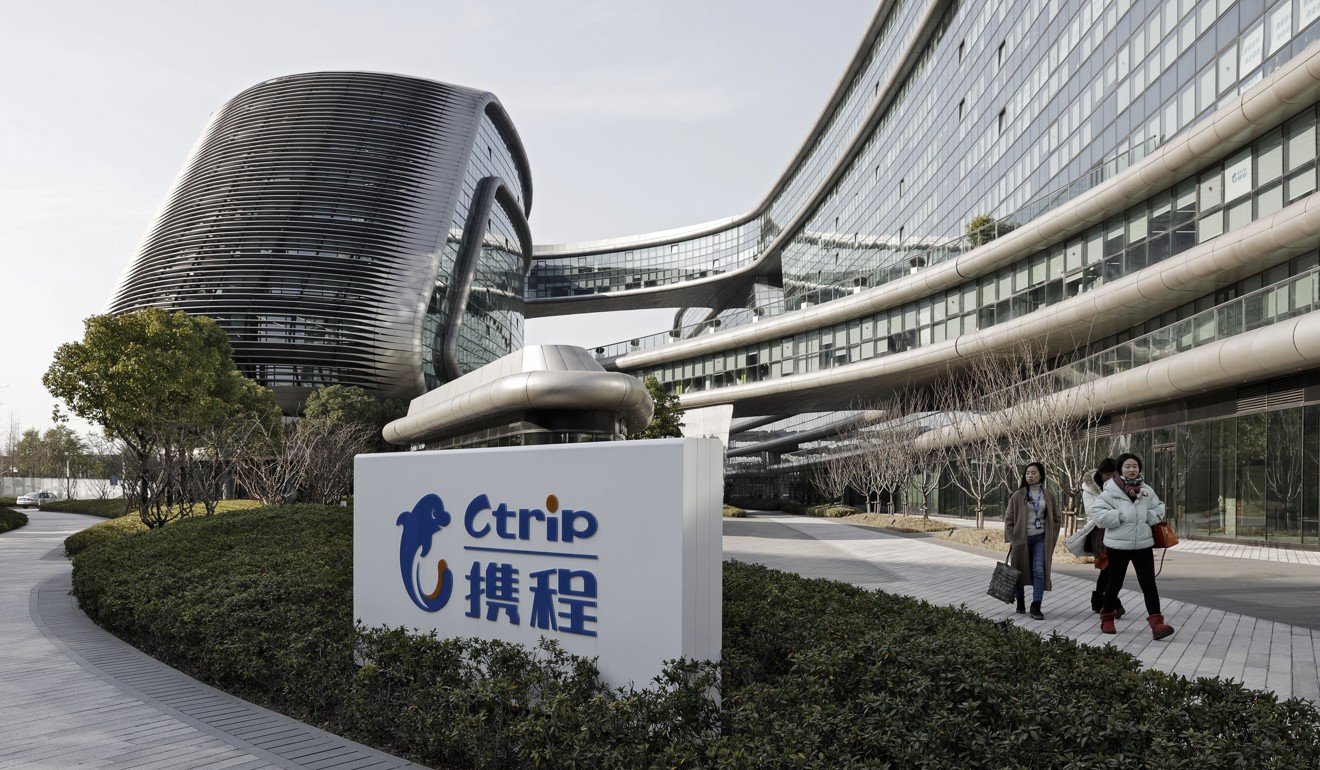
Ctrip, China’s largest online travel agency, is drawn to the size and rapid advancement of the Indian market. Photo: Bloomberg

WHY INDIA?

For Ctrip – China’s largest online travel agency, which in April took a 49 per cent stake in MakeMyTrip – the appeal of India was its whirlwind technological advancement and the disposable income of its massive young population.

“[MakeMyTrip has] achieved fast growth in the online travel market and is becoming well recognised in the Indian market. Their comprehensive products and services, management team and the opportunities in India result in our confidence that they will continue to succeed,” said Wei Yuan Min, a member of Ctrip’s global team. Behind the US and China, India houses the world’s third-largest start-up ecosystem in terms of the number of companies. As for the number of unicorns – start-ups valued at over US$1 billion – India ranks third, offering a vibrant habitat for entrepreneurial ventures. The country is home to 32 such firms, with the addition of nearly half a dozen so far this year and 15 last year.

In India, one man took on Chinese firm ByteDance to shut down TikTok – and he wants to do it again

New Delhi expects there to be 12,000 tech start-ups in the country by next year, up from 7,200 last year. There were 1,200 new tech firms in the sector last year, according to industry body Nasscom.

One of those capitalising on this opportunity is the Beijing-headquartered technology company Xiaomi, which last year promised to pump US$1 billion into 100 Indian start-ups over the next five years. Most of these Indian firms are involved in businesses that are ancillary to Xiaomi’s key operations.

Chinese firm Xiaomi is banking on Indian start-ups to strengthen its own products. Photo: Reuters

“These start-ups help us in building a stronger product offering,” a Xiaomi spokesperson said. “The idea is to invest in start-ups which can further boost the mobile ecosystem in India. They could be into mobile gaming, service providers, value-added services or servicing the mobile industry.”

Xiaomi has been rapidly expanding its businesses in India, selling smartphones, television sets, security cameras, speakers, power banks, and more. India was the first market outside China where Xiaomi introduced its television sets.

Asked which sector would be Xiaomi’s focus for investment in the coming years, the spokesperson said the company was looking to focus on hardware-related start-ups in the ecosystem which could offer “robust solutions” to its Indian requirements.

Amazon, Uber and Google struggled in China, but Indian hotel chain Oyo is succeeding.

Here’s why

While hopes for India’s start-up sector are high, there have been some disappointments. There were reports this month that Alibaba, a major shareholder in Paytm, was unhappy with the Indian firm’s performance, pressuring it to realign its strategies and looking unlikely to provide fresh capital.

Paytm, a digital-payment-system unicorn, launched its own e-commerce Paytm Mall in 2016 when Walmart-backed Flipkart and Amazon were dominating the market.

However, the venture has yet to take off and is burning through cash.

Paytm refused to comment on the matter.

Paytm has attracted investment from Alibaba, but its Paytm Mall venture is struggling. Photo: Bloomberg

NEW REVENUE STREAMS

Chinese firms’ coordinated effort to enter the Indian start-up scene has made it easy for Indian ventures to access new sources of revenue. For instance, the state-run Industrial and Commercial Bank of China (ICBC), the country’s largest lender, launched an India-specific investment fund for Chinese investors in May last year.

Several Chinese venture capitalists are also providing platforms for entrepreneurs through fellowship schemes. Four Indian ventures – Zefo, Healthy Buddha, NowFloats and Grozip – took part in one such fellowship initiative run by Alibaba last year.

Gold, jewels, ‘Islamic’ finance: how India’s I Monetary Advisory built a US$365 million Ponzi scheme

India has warmly welcomed these initiatives. Amitabh Kant, chief executive of state-backed policy think tank Niti Aayog and a close aide of Modi, has publicly said China should become the topmost investor in its neighbour.

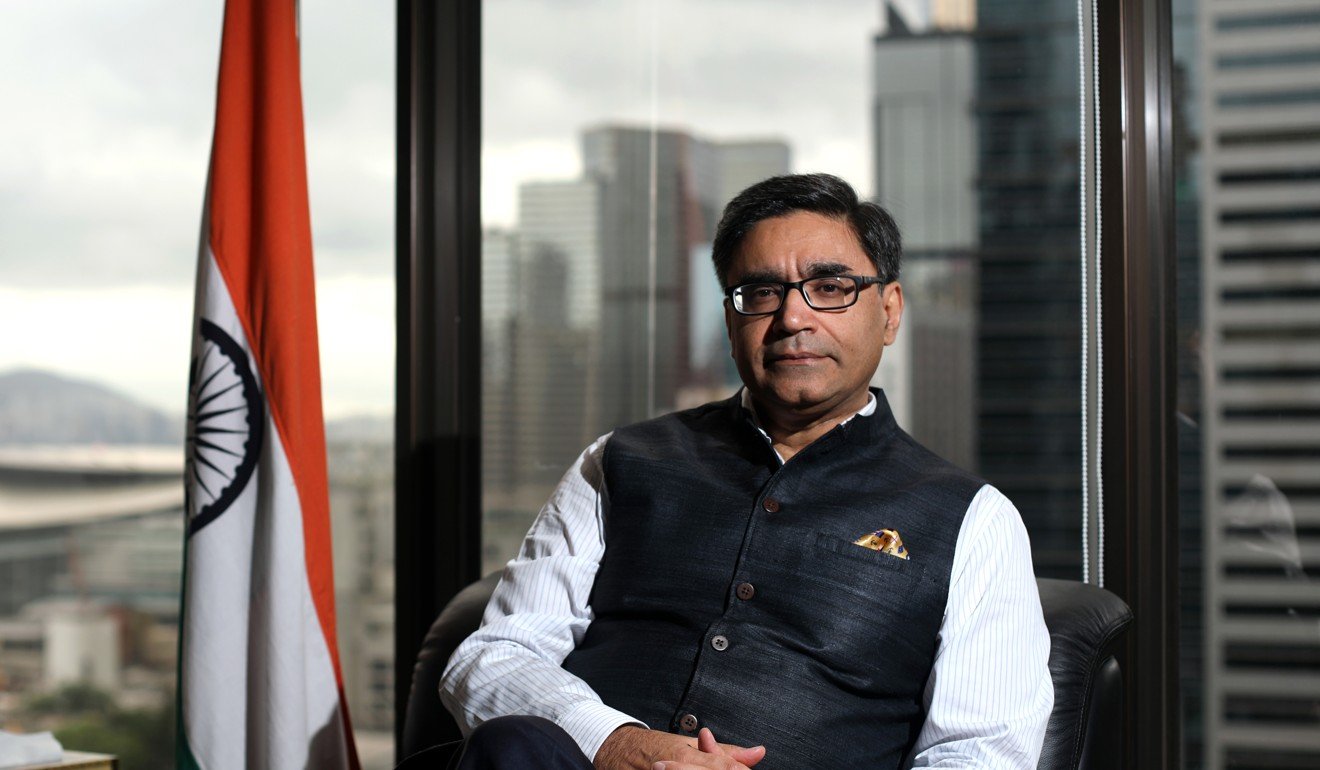
Vikram Misri, India’s ambassador to China, has also been pushing for increased economic cooperation and Chinese investment since he took charge in January, despite expressing concerns over New Delhi’s widening trade deficit with Beijing.

Vikram Misri, India’s ambassador to China, is looking for more economic cooperation between the two countries. Photo: Xiaomei Chen

The increased Chinese investment in Indian ventures has coincided with the Modi administration’s 2015 launch of the Startup India initiative, an umbrella scheme aimed at easing related activities through measures such as tax exemptions and simplified paperwork.

Industry pundits say active cooperation between Chinese investors and Indian entrepreneurs holds a multitude of benefits for both sides.

“The cooperation gives Chinese investors global scale and opportunity to diversify their investments,” said Neil Shah, partner and research director at the technology market research firm Counterpoint.

The cooperation gives Chinese investors global scale and opportunity to diversify their investmentsNeil Shah, Counterpoint

“For Indian start-ups, this gives cross-border learning, guidance from their global investors on dos and don’ts, tactical and long-term strategy, how to create value, run operations efficiently as well as expand beyond India.”
Nilaya Varma, partner and leader of markets enablement at KPMG India, said there was a cultural shift happening in the country where young Indians brimming with ideas wanted to pursue their dreams rather than work for someone else. This brought out the entrepreneurial spirit of this generation, he said.
“The knowledge, concepts, ideas and innovations of the small start-ups in India will have a global appeal. So it makes a lot of sense for Chinese big players to invest here,” he said. 
Source: SCMP
04/07/2019

China’s top talent now wants to work for rising domestic tech stars, not big brand multinationals

  • China’s talent is turning away from multinationals and towards domestic tech champions in the search for a more fulfilling career
  • Change in sentiment comes amid raging US-China tech war and perceptions of ‘bamboo ceiling’ in the West
An increasing number of Chinese jobseekers are looking towards domestic tech firms. Image: SCMP
Molly Liu left her hometown Beijing to pursue a master’s degree in the United States in the 1990s.
After graduation, she fought hard to win an entry-level position at a US-based consultancy and after a period was later sent back to China to help the company’s expansion.
In the land of opportunity, the ambitious US firm showered her with avenues to pursue her career and she ended up working in Hong Kong as well as being one of the first people on the ground for the consultancy in Shanghai, Beijing, Taipei and Singapore.
Times have changed, though. Recently, her only son, Ben Zhang, turned down a hard-to-get job offer from a Boeing subsidiary in the US after gaining a master’s degree in computer science from Carnegie Mellon University in Pittsburgh, Pennsylvania.
Chinese students educated in the US are now looking more at jobs in China. Photo: SCMP

He decided to return to Beijing in 2018 and now works as a product manager at Chinese smartphone maker Xiaomi. He is convinced that the start-up turned tech major can offer him the same sort of opportunities today that the US tech consultancy offered his mother in the 1990s.

This family story about the career choices of two different generations of US-educated Chinese students reflects a wider trend. Once upon a time, US corporations could cherry-pick top Chinese talent from American universities with the promise of large salaries, generous benefits and the chance to work at market-leading organisations.

Today, China’s cutting-edge technology companies – often referred to as China Tech Corporation (CTC) – are the most sought-after employers among many Chinese students, who want more than just a cushy life.

This marks another blow for multinational corporations (MNCs) already struggling to do business in China amid a myriad of restrictions and growing hostility towards them as the US-China trade and tech war gathers pace.

“What I look for in a job is not money. My parents are not counting on me to support them,” says 28-year-old Zhang, whose team in Xiaomi is working on a wide array of connected devices, from televisions to lamps to smart locks. “What I care about most is personal improvement and access to the best resources a company can offer.”

“In Boeing, I could probably work on a new product once every two to three years. But at Xiaomi, every three months, we can roll out a new product,” he added. “You can bring so many things into people’s everyday lives in China, like using your voice to control a TV or an air conditioner – things you can only imagine in the US.”

Zhang is not alone and many Chinese today perceive a “bamboo ceiling” in the US, where they are more often seen as engineers rather than executives.

One Chinese executive who now oversees the technology unit of a listed finance and insurance firm in China said that he used to lead a team of 20 engineers at one of the world’s most valuable tech companies in Silicon Valley.

“My job was to keep optimising the performance of a product [in Silicon Valley],” he said.

“But within three years in China, I was promoted to the chief scientist of our entire company, leading a team of 1,000,” said the man, who asked to remain anonymous as some of his family still reside in the US.

How Trump’s assault on Huawei is forcing the world to contemplate a digital iron curtain

According to an April survey by professional networking site LinkedIn, an increasing number of Chinese jobseekers share Zhang’s outlook. LinkedIn compiled a list of the top 25 most desired employers in China, and about 60 per cent were local Chinese companies, with 13 of them internet firms.

CTC bagged four of the top five spots, with e-commerce giant Alibaba, search giant operator Baidu and Bytedance – which operates short video hit TikTok – taking the lead.

Tesla ranked sixth behind its Chinese challenger Nio. Amazon, the only other foreign company in the top ten, ranked eighth.

Alibaba is the owner of the South China Morning Post.

Li Qiang, executive vice-president of Zhaopin, one of China’s largest online recruiters, described the rising status of CTC among jobseekers as “the dawning of a new era”.

“Nowadays, there is nothing a multinational can offer that a domestic firm cannot, be it a compensation package or the chance to be part of international expansion,” said Beijing-based Li.

“Jobseekers are not particularly looking for domestic firms or multinational firms. They are after good firms and most of the good firms in China these days happen to be domestic tech firms,” said Li.

Li’s comments reflect the wider opportunities within the domestic economy for Chinese jobseekers today, after the rise of many successful private-sector companies and a thriving start-up scene over the past 10 years, meaning it’s not just a one-way street to a state-owned enterprise (SOE) any longer.

A survey by Zhaopin in late 2018 found that 28 per cent of Chinese university students said MNCs were their employer of choice, down from 33.6 per cent in 2017.

Even on pay and benefits, CTC is catching up with multinationals. Zhang said Xiaomi matched the offer from the Boeing unit in the US and many leading tech firms offer benefits such as gym memberships and childcare facilities.

And the rags-to-riches stories of many leading China tech entrepreneurs, some of whom have become billionaires, continue to grab media attention and inspire the younger generation.

To be sure, Chinese students would still rather work for an MNC than an SOE – but the rise of CTC can be seen in company rankings and in the total number of CTC companies in the top employer list, according to Zhaopin.

For a growing number of Chinese students, the doors to America are closing

William Wu, China country manager of global employer brand consultancy Universum, said that the one element Chinese jobseekers pay most attention to these days is whether or not a job can be “a good reference point for a future career”. And a growing number of private Chinese companies now have global brand recognition.

A recent survey by Universum shows that Apple and Siemens were the only two Western names in the top 10 ideal employers for Chinese students in the engineering sector this year, while there were four foreign firms in the top 10 list in 2017.

Huawei Technologies, the Chinese telecoms giant that has been put on a US trade blacklist after the Trump administration said it was a national security risk, ranked top in the Universum list. Xiaomi, the smartphone maker Ben Zhang works for, ranked second while Apple, one of the most valuable tech firms in the US, ranked seventh.

It seems that China’s rising clout in the world is now an attractive factor for jobseekers.

“Every engineer would like to see the technology they’ve worked on have the potential to change the world one day,” said Li Yan, head of multimedia understanding at Chinese short video major Kuaishou. “In the old times Chinese companies were at the bottom of the global value chain, now they are climbing up, providing more opportunities for talent to create world-changing products.”

At Beijing-based Kuaishou, Li’s 100-strong artificial intelligence algorithm team – many of whom joined from Microsoft Asia Research – is working to make machines understand content better than humans by studying the millions of user-generated videos on the company’s platform every day.

CTC companies do have a strong home advantage, with big Western firms having to navigate a myriad of restrictions.

For example, the “Great Firewall” lets Chinese authorities control the content and information reaching the country’s 800 million-plus internet population. Western firms also face other forms of red tape, such as having to form joint ventures with local partners.

Amazon earlier this year announced the close of its China marketplace, giving up the brutal fight with Chinese online shopping giants such as Alibaba to capture domestic e-commerce market share. Oracle China reportedly laid off 900 people in March as it winds down its research and development center in the country.

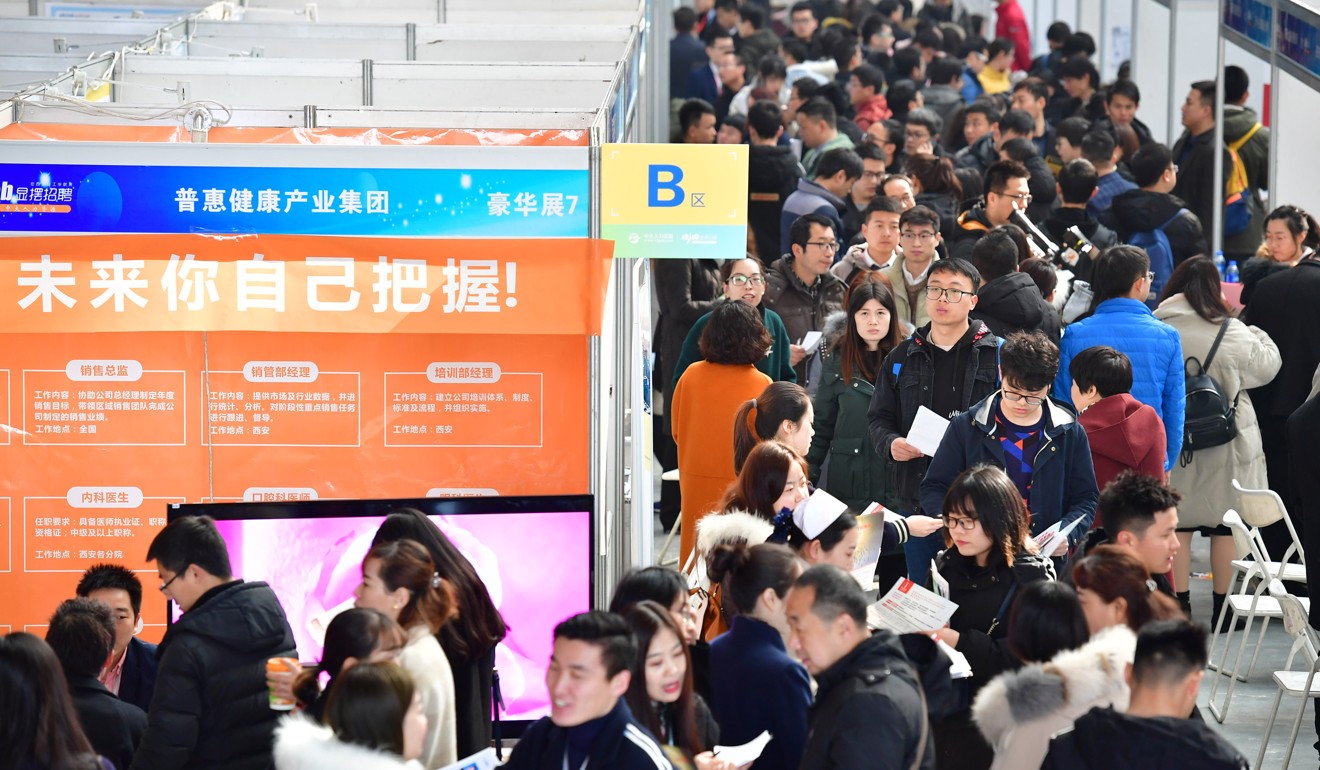
Job applicants visit a provincial job fair at Qujiang International Conference and Exhibition Center in Xian, northwest China's Shaanxi Province in February. Photo: Xinhua
Job applicants visit a provincial job fair at Qujiang International Conference and Exhibition Center in Xian, northwest China’s Shaanxi Province in February. Photo: Xinhua

Oracle has never confirmed the number of lay-offs but said the job cuts formed part of an overall global strategy transformation.

However, there has been little sympathy for those losing their jobs in China, judging by social media posts.

Some people posted that those working for big US tech firms are not “wolf” enough compared with counterparts who work for local tech firms, referring to the long work-hours culture of the domestic tech scene.

A viral story titled “Why there should be no pity for the sacked Oracle China employees” said the company was Beijing’s biggest nursery because of the flexible “work from home” culture and generous compensation package offered to employees.

Oracle said to begin mass lay-offs in China as part of global move to cloud services

“They had every chance to join rising domestic internet firms. But they settled for high salary and low work pressure, which eventually made them frogs in boiling water. Why pity them?” said the article, adding that the earlier people give up on the “glory” of working for MNCs, the quicker they will benefit.

Not all Chinese workers would agree, and there has been a recent backlash against the “996” culture within China’s tech sector, where people routinely work from 9am to 9pm, six days a week.

With geopolitical uncertainty growing day by day, though, many Chinese are asking why leave the family behind for an uncertain fate overseas?

A survey done by consultancy BCG and The Network in 2018 showed that only one in three China residents was willing to move abroad for work, down from 61 per cent in 2014. The country is also the 20th most popular destination worldwide to relocate for a job, compared with 29th in the 2014.

“One of my graduate classmates in the US just gave up a six-digit package at Oracle and joined drone maker DJI in Shenzhen,” said Ben Zhang. “I asked what prompted his return to China. He sent me the viral article and asked, ‘who wants a life that one can see the end of from the very beginning?’”

Source: SCMP

25/02/2019

Huawei says Trump ‘clear and correct’ on 5G as trade deadline looms

(This Feb. 24 story corrects paragraph 12 to show Huawei was world’s third-largest smartphone vendor last year, not second largest)

BARCELONA (Reuters) – China’s Huawei welcomed comments from President Donald Trump about the future of U.S. mobile communications on Sunday and asserted its position as a world-leading smartphone producer as Washington and Beijing seek a trade war ceasefire.


At the center of the imbroglio is Huawei Technologies, accused by Washington of sanctions busting, intellectual property theft and facilitating Chinese state espionage operations.

Speaking ahead of the mobile industry’s biggest global event which begins in Barcelona on Monday, Huawei Chairman Guo Ping reiterated his company’s position that it has never and would never allow any country to spy through its equipment.

Guo, who holds Huawei’s rotating chairmanship, said Trump’s recent assertion that the United States needed to get ahead in mobile communications through competition rather than seeking to block technology was “clear and correct”.


Trump’s tweets on Thursday did not specifically mention Huawei, the world’s largest producer of mobile network equipment, but appeared to soften earlier U.S. statements that it should be barred from Western networks on security grounds.

“I have noticed the president’s Twitter, he said that the U.S. needs faster and smarter 5G, or even 6G in the future, and he has realized that the U.S. is lagging behind in this respect, and I think his message is clear and correct,” Guo said, speaking through an interpreter.

He said the United States did not represent the whole world and called for equipment makers, network operators and governments to work together to devise trustworthy standards to manage cyber security risks.

The Huawei logo is displayed ahead of the Mobile World Congress (MWC 19) in Barcelona, Spain, February 24, 2019. REUTERS/Sergio Perez

“We need to have unified standard that should be verifiable. It should not be based on politics,” Guo said.

FOLDING PHONE, RIGID PRICE TAG

Huawei also sought to reaffirm its position as one of the world’s leading technology companies, unveiling a folding 5G smartphone to an audience of media and analysts in Barcelona.

Huawei, the world’s third-largest smartphone vendor after Samsung and Apple, said it had taken the lead in developing phones for 5G – which promises super-fast internet speeds – because it was also involved in developing the networks.

Folding phones?
Makers pray you’ll want one
The new Huawei Mate X will have two back-to-back screens which unfold to become an eight-inch tablet display, and goes on sale later this year priced at 2,299 euros ($2,607), setting a new upper limit for consumer smartphones.
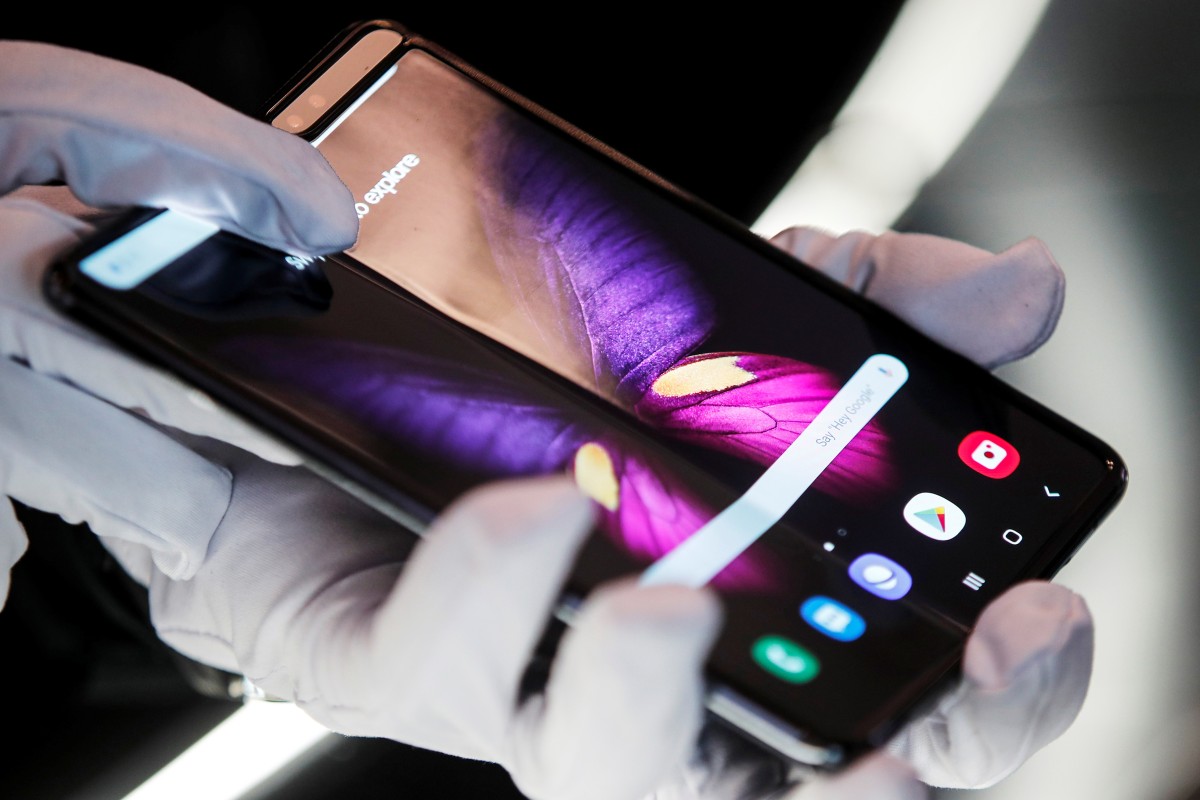
Samsung had unveiled its own folding smartphone last week, priced at nearly $2,000, as part of a bid to top the technology of Chinese rivals and Apple Inc.
Thomas Husson, principal analyst at Forrester Research, said the Mate X showed Huawei was an innovative technology company and no longer trailing American and Korean competitors.
“The fact that Huawei is not just a network equipment provider but also a smartphone manufacturer … gives them a competitive advantage for 5G. It is also a double-edge sword as some argue the security risks are higher,” Husson said.
China’s Xiaomi, the world’s fourth-largest smartphone maker, also unveiled a 5G handset on Sunday, but without the folding screen or high price tags touted by the Huawei and Samsung devices. Xiaomi’s offering will start at 599 euros ($679) when it hits the market in May.
Source: Reuters
Law of Unintended Consequences

continuously updated blog about China & India

ChiaHou's Book Reviews

continuously updated blog about China & India

What's wrong with the world; and its economy

continuously updated blog about China & India