Chindia Alert: You’ll be Living in their World Very Soon
aims to alert you to the threats and opportunities that China and India present. China and India require serious attention; case of ‘hidden dragon and crouching tiger’.
Without this attention, governments, businesses and, indeed, individuals may find themselves at a great disadvantage sooner rather than later.
The POSTs (front webpages) are mainly 'cuttings' from reliable sources, updated continuously.
The PAGEs (see Tabs, above) attempt to make the information more meaningful by putting some structure to the information we have researched and assembled since 2006.
Image copyright AFPImage caption Past detainees claim they were forced to work making toys and household goods
China is to end a punishment system for prostitution that allowed police to hold sex workers and their clients in custody for up to two years at so-called education centres.
Detainees were forced to work, allegedly making toys and household goods.
The detention system will come to an end on 29 December. Those still in custody will be released, according to Xinhua, China’s state media.
Prostitution remains illegal in China.
It carries punishments of up to 15 days in detention and fines of up to 5,000 yuan (£546).
China’s state media claims the “custody and education” system has helped to maintain a “good social atmosphere and public order” since it was introduced more than 20 years ago.
It added that over time, the system has become less and less appropriate.
The report included interviews with 30 female sex workers from two cities.
It claimed detainees were unable to learn new skills during detention that could help them after their release. The report added that the detainees typically undertake manual labour.
It said: “All of the sex workers we interviewed returned to the sex trade immediately after release.”
A 2013 report by Human Rights Watch interviewed 140 sex workers, clients, police and specialists and found that many sex workers were beaten by police in an attempt to coerce confessions.
One worker claimed she had been deceived into signing a confession.
“The police told me it was fine, all I needed to do was sign my name and they would release me after four or five days,” she said.
“Instead, I was locked up in [a] Custody and Education centre for six months.”
Shen Tingting, director of Asia Catalyst, said the move to abolish forced labour detention centres is positive but only a small step towards safeguarding the rights of sex workers.
“Chinese law and policies focus on prohibition and cracking down on sex work, rather than providing a framework to ensure the health and safety of sex work as a profession,” she said.
In 2013, China announced it had abolished its system of “re-education through labour camps” for petty criminals.
That decision came after several high-profile miscarriages of justice, including a case where a mother was sent to a labour camp after demanding justice for her daughter who had been raped.
However, the abolition did not extend to the “custody and education” system affecting sex workers and their clients.
China isn’t totally abandoning the idea of re-education. Authorities in the country claim a number of camps in the north-west region of Xinjiang are voluntary education camps that help to combat extremism.
However rights groups claim many Chinese Uighur people have been rounded up into the camps and made to criticise or denounce their faith.
Chinese President Xi Jinping holds a welcome ceremony for President of the Federated States of Micronesia David W. Panuelo before their talks at the Great Hall of the People in Beijing, capital of China, Dec. 13, 2019. (Xinhua/Wang Ye)
BEIJING, Dec. 13 (Xinhua) — Chinese President Xi Jinping on Friday held talks with visiting President of the Federated States of Micronesia David W. Panuelo, calling for joint efforts to advance bilateral ties and better benefit the two peoples.
The two sides should maintain exchanges at all levels, expand communication and exchanges between governmental departments and legislatures, and enhance mutual political trust, Xi said.
Xi welcomed Panuelo’s visit to China as the two countries celebrate their 30th anniversary of the establishment of diplomatic ties, and spoke highly of Panuelo’s commitment to developing bilateral ties and firmly upholding the one-China principle.
China sticks to the path of peaceful development, maintains that all countries, no matter big or small, are always equal, firmly opposes unilateralism and hegemony, and advocates that all countries should work jointly to build a community with a shared future for humanity, he said.
For the past 30 years since the establishment of diplomatic ties, the two countries have respected, trusted and supported each other, and carried out pragmatic cooperation on the basis of equality and mutual benefit, advancing bilateral ties and bringing tangible benefits to the two peoples, Xi noted.
China respects the Micronesian side’s right to take the development path that best suits its national conditions and supports Micronesia’s efforts in maintaining national independence and boosting development, Xi said.
He called on the two sides to complement each others’ advantages and further expand cooperation in such fields as trade, investment, agriculture, fisheries, infrastructure construction and tourism under the framework of the Belt and Road Initiative.
He also welcomed Micronesia to export more products with competitive advantages like tuna to China, make full use of the policies and measures China has announced on cooperation with and support for island countries, and carry out more pragmatic cooperation projects benefiting people’s livelihoods.
“China is willing to offer economic and technical assistance to Micronesia within its own capacity,” he said.
The two sides should take the signing of the visa exemption deal for those holding diplomatic and service passports as well as passports for public affairs as an opportunity to enhance people-to-people exchanges, deepen traditional friendship, and achieve more practical results on local cooperation, Xi said.
He also called on the two sides to strengthen communication and continue to step up coordination on major issues including climate change and marine affairs.
Panuelo said the Micronesian side spoke highly of Xi’s proposal of building a community with a shared future for humanity, which would play an important role in promoting world peace and stability.
Micronesia, as a small country, is appreciative of the equal treatment and respect offered by China, he said, noting that China was the first country to provide support to Micronesia’s national independence and liberation movement as well as assistance to its national development.
He reiterated Micronesia’s stance on abiding by the one-China principle and maintained that Hong Kong, Xinjiang and Tibet affairs are China’s internal affairs and brook no outside interference.
“I have had a personal experience of China’s time-honored history and remarkable development achievement during my visit,” he said, expressing his delight over China’s achievements and confidence in China’s bright future.
Hailing the two countries’ cooperation for the past 30 years, Panuelo pledged to further expand cooperation in economy and trade, infrastructure construction, agriculture, education, and jointly build the Belt and Road.
The Micronesian side spoke highly of China’s important role in global issues like tackling climate change, Panuelo said, hoping to continue strengthening coordination and cooperation with China and playing an active role in promoting ties between China and Pacific island countries.
The two heads of state witnessed the signing of several bilateral cooperation deals after their talks.
Panuelo is on a state visit to China from Dec. 11 to 18.
The Battle of Triangle Hill is known in China as a victory against foreign aggressors
Film’s timing linked to deteriorating relations between Beijing and Washington on multiple fronts
A scene from the 1956 Chinese film Shang Gan Ling, about the Korean war Battle for Triangle Hill, subject of a new film which is about to go into production in China. Photo: Handout
One of the bloodiest battles of the Korean war is the subject of a film that will soon start production in China, in a move which is being linked to surging Chinese nationalism amid poor relations between Beijing and Washington.
The film, based on the Battle of Triangle Hill – also known as the Shang Gan Ling campaign in China – was given the green light by state regulator the China Film Administration in July, but was not reported by Chinese official media until last week.
Hou Jianwei, one of China’s best known war novelists, has been signed on as screenwriter for the film, to be produced by Ao Bo Film Zhejiang which confirmed on microblogging platform Weibo that production was already in “active preparation”.
“More than 100,000 people from the People’s Voluntary Army and forces from the US and South Korea took part in the 43-day fighting, and over 2.4 million shells of ammunition were fired. The battle was unprecedentedly fierce and 40,000 lives were lost,” the film company said in its most recent Weibo post.
“With a multitude of heroes, our army built up an impenetrable barrier in the East.”
China invokes Korean war talks as reason not to bow to US in trade dispute
News of the film has coincided with mounting confrontations between Beijing and Washington on multiple fronts ranging from trade and technology, to Hong Kong and Xinjiang.
Korean war-themed productions have long been a taboo subject for China’s heavily censored film industry, partly because of Beijing’s complicated relations with the US and North Korea.
But the 1950-53 war, in which China and North Korea battled Western forces led by the US, has increasingly become a tool to rally public opinion behind Beijing’s ongoing trade war with the US. Study Times, a Central Party School publication, for example, has directly likened the trade war to the end of the Korean conflict, saying China was determined to oppose US bullying as trade negotiations entered their 17th month.
While Beijing has never given an official account of its decision to join the Korean war, it is often portrayed as a necessary intervention to shield China from US aggression.
The Battle of Triangle Hill has often been presented in China’s official media as a victory by the “volunteers” of the People’s Liberation Army over foreign aggressors.
News of the production has raised avid discussion on Chinese social media, with many seeing the new film as part of China’s efforts to reinforce surging Chinese nationalism in the face of growing pressure from the West.
“Isn’t the approval [to make the film] a strong signal to the West that we are now a strong power?” one Weibo microblogger wrote.
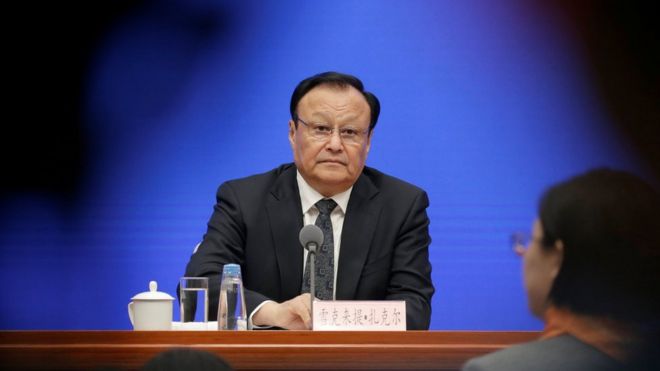
Mr Zakir told reporters in the Chinese capital on Monday that everyone in the centres had completed their courses and – with the “help of the government”- had “realised stable employment [and] improved their quality of life”.
He said that, in future, training would be based on “independent will” and people would have “the freedom to come and go”.
Media caption The BBC’s John Sudworth meets Uighur parents in Turkey who say their children are missing in China
BBC China correspondent John Sudworth points out it is not possible to verify the claims, as access for journalists is tightly controlled and it’s impossible to contact local residents without placing them at risk of detention.
In recent months, independent reports have suggested that some camp inmates are being released, only to face house arrest, other restrictions on their movement or forced labour in factories.
What could be behind the move?
Pressure has been increasing on Beijing in recent months.
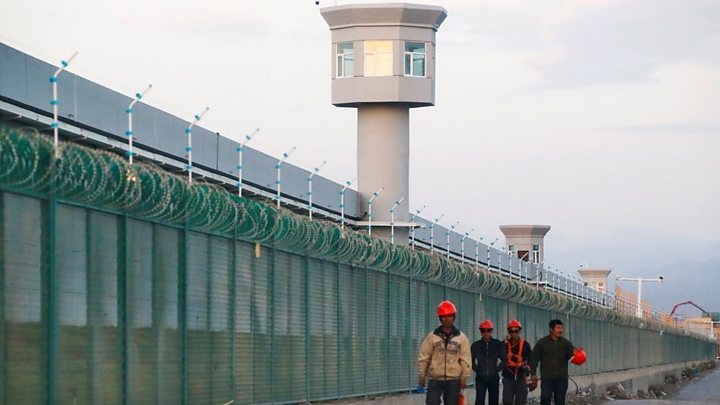
A number of high-profile media reports based on leaks to the New York Times and the International Consortium of Investigative Journalists (ICIJ) have shone a spotlight on what is happening at the network of centres, which are believed to hold more than a million people, mainly Uighur Muslims and other minorities.
The bill still needs approval from the Senate and from President Donald Trump.
However, Mr Zakir used the press conference to dismiss the numbers detained as “pure fabrication”, reiterating Beijing’s argument that the centres were needed to combat violent religious extremism.
Media caption“An electric baton to the back of the head” – a former inmate described conditions at a secret camp to the BBC
“When the lives of people of all ethnic groups in Xinjiang were seriously threatened by terrorism, the US turned a deaf ear,” Mr Zakir said at a press briefing.
“Now that Xinjiang society is steadily developing and people of all ethnicities are living and working in peace, the US feels uneasy, and attacks and smears Xinjiang.”
What’s going on in Xinjiang?
Reports of widespread detentions first began to emerge in 2018, when a UN human rights committee was told there were credible allegations that China had “turned the Uighur autonomous region into something that resembles a massive internment camp”.
Rights groups also say there’s growing evidence of oppressive surveillance against people living in the region.
The Chinese authorities said the “vocational training centres” were being used to combat violent religious extremism. However, evidence showed many people were being detained for simply expressing their faith, by praying or wearing a veil, or for having overseas connections to places like Turkey.
Records seen by the BBC show China has deliberately been separating Muslim children from their families.
This is an attempt to “raise a new generation cut off from original roots, religious beliefs and their own language”, Dr Adrian Zenz, a German researcher, told BBC News earlier this year.
“I believe the evidence points to what we must call cultural genocide.”
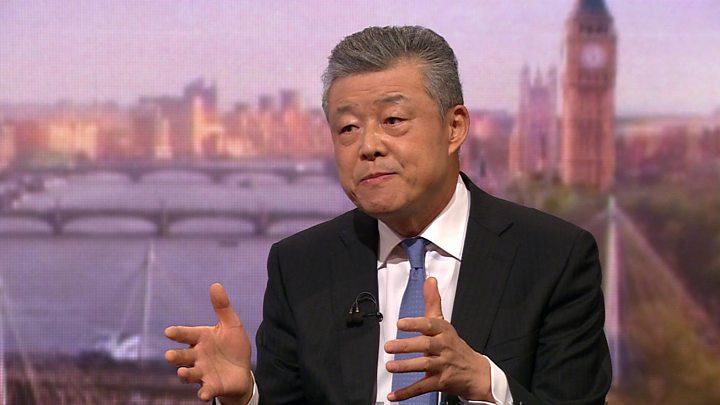
China’s ambassador to the UK said the allegations were “lies”.
Media caption Chinese Ambassador Liu Xiaoming dismisses evidence of a separation campaign in Xinjiang
URUMQI, Dec. 8 (Xinhua) — Rich in resources but remote, Xinjiang in China’s far west has become a magnet for investors for its unique position on the Silk Road.
In a workshop of the Amer International Group in Urumqi, capital of Xinjiang Uygur Autonomous Region, workers are busy adjusting and packing laptops.
Recently, Amer sent the first batch of 2,000 laptops it produced for the German company TrekStor to the European market via China-Europe freight trains.
Headquartered in the southern Chinese city of Shenzhen, Amer invested 20 billion yuan (around 2.8 billion U.S. dollars) to build an industrial park in Xinjiang in 2018. So far, the industrial park has produced and exported around 1.5 million mobile phones, according to Wang Wenyin, the founder and chairman of Amer International Group.
“We saw Xinjiang’s geographical advantages, so we established the industrial park and cooperated with our counterparts in South and Central Asia in the fields of smartphones and IT high-end manufacturing,” Wang said.
Amer International Group is among a growing number of enterprises that have been attracted by Xinjiang in recent years, as trains and planes have made Xinjiang better connected than ever before.
As China’s key trade gateway to Central and West Asia, the remote region’s position as the heart of the Belt and Road Initiative is unmistakable. In 2013, China proposed the BRI, which opened up new space for the world economy, spurring trade and economic growth and stimulating investment and creating jobs worldwide.
Urumqi Customs saw the number of China-Europe freight trains skyrocket to 5,743 in the first 10 months this year, up 53.68 percent year on year, outnumbering the total of 2018.
To attract more investors, the local government has gone to great lengths creating a more friendly business environment, such as cutting the time required for starting a business and lowering the entry threshold for products.
Up to now, Xinjiang has had more than 1.8 million market entities including 359,000 enterprises, up 18 percent year on year.
Foreign and domestic business giants including German chemical giant BASF and China’s real estate conglomerates Wanda Group have also invested in the region.
Lai Naixiang, head of Kashgar Oumeisheng Energy Technology, a home appliance manufacturer, moved his business from Shenzhen to Kashgar in southern Xinjiang in 2017.
“We chose to settle in Kashgar because of the great market potential in adjacent Central Asian countries as well as Xinjiang’s lower electricity prices and preferential tax policy,” he said.
Last year, the company exported electric kettles worth more than 16 million yuan to Kyrgyzstan and Tajikistan.
Foreign trade in Xinjiang has seen booming growth. The region recorded around 131.5 billion yuan in imports and exports in the first 10 months of this year, up 28 percent year on year.
In the first 10 months, Kazakhstan topped the list of Xinjiang’s major trade partners, with trade volume between the two growing by 28.2 percent to 60.2 billion yuan.
Xinjiang’s trade with Kyrgyzstan, Australia, Pakistan, Britain, Argentina and Vietnam also showed fast growth, according to the local customs authorities.
“With further Belt and Road construction, Xinjiang will get more impetus in economic and social development. I see great potential in the region,” Wang said.
KABUL, Dec. 5 (Xinhua) — Two Afghan journalists who visited China recently affirmed that Muslims in the country’s northwestern Xinjiang Uygur Autonomous Region enjoy religious and social freedom.
“I visited Xinjiang earlier this year. Our visiting team has learned that Muslims in Xinjiang benefit from all religious beliefs with no restrictions. They have mosques and perform their religious obligations freely, including offering prayers,” Mansoor Ahmad Faizy, editor-in-chief of the Afghanistan Times, told Xinhua on Wednesday.
Faizy described the tour as a great opportunity to obtain a deep and comprehensive understanding about the life of locals in Xinjiang.
“The people are satisfied with China’s policy, particularly with regard to Xinjiang’s ethnic Muslims,” he said.
Regarding the region’s re-education centers, Faizy said, “We have visited a center that provides education for people who were reportedly influenced by extremists.”
Different from reports found in Western media, Faizy said the students he encountered were provided with professional vocational training, as well as classes in legal knowledge and Mandarin.
“What we (witnessed) in the re-education center was very different from what we heard. The students had a friendly atmosphere, the students were learning … and they could contact their families freely,” he said.
Extremism and terrorism have become a problem in Afghanistan, as well as other countries in the region, in recent years, he said.
Every country has the right to take measures to fight terrorism and extremism, Faizy noted.
Hujjatullah Zia, a local researcher and columnist for Daily Outlook Afghanistan, echoed Faizy’s view.
“After our tour of Xinjiang and after talking with Muslims living in the region, my group and I learned that the Muslims living in Xinjiang were satisfied with the policies of the central government, as they were enjoying all religious freedom and social activities,” he told Xinhua.
Talking about his visit to re-education centers for local youth, Zia said that he “did not witness any violence or mistreatment … local officials and teachers were friendly with the students in the re-education centers.”
“They will become professional workers in (the) future, as they are learning a lot of professions. I think they will make a good life (for themselves) after rejoining the society,” he said.
What’s more, he believes that more should be done in Afghanistan to raise public awareness of the true situation for Muslims in China.
“I think the Afghan media should help the Afghan people know and respect the policies of China with regard to ethnic minority groups and their religions,” he added.
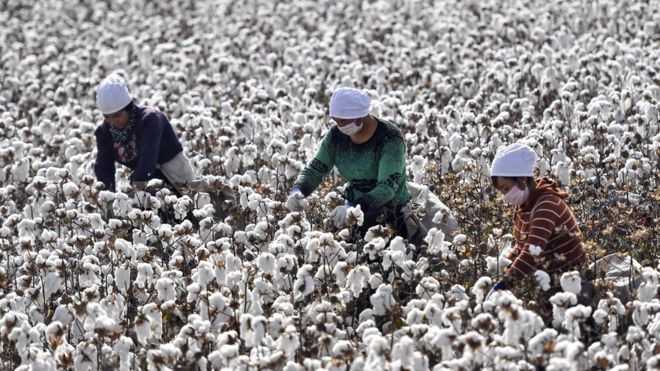
Global retailers are facing scrutiny over cotton supplies sourced from Xinjiang, a Chinese region plagued by allegations of human rights abuses.
China is one of the world’s top cotton producers and most of its crop is grown in Xinjiang.
Rights groups say Xinjiang’s Uighur minority are being persecuted and recruited for forced labour.
Many brands are thought to indirectly source cotton products from the Xinjiang region in China’s far west.
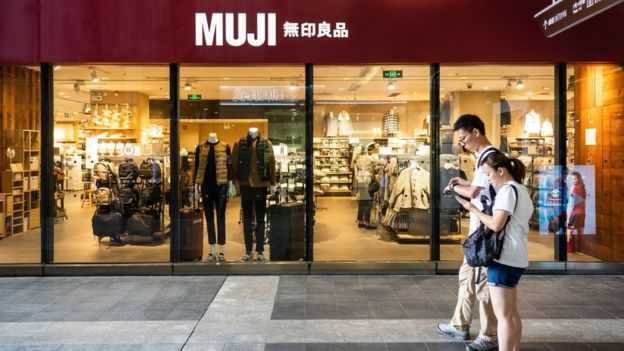
Japanese retailers Muji and Uniqlo attracted attention recently after a report highlighted the brands used the Xinjiang-origin of their cotton as a selling point in advertisements.
“You can’t be sure that you don’t have coerced labour in your supply chain if you do cotton business in China,” said Nathan Ruser, researcher at the Australian Strategic Policy Institute.
“Xinjiang labour and what is almost certainly coerced labour is very deeply entrenched into the supply chain that exists in Xinjiang.”
What is happening in Xinjiang?
UN experts and human rights groups say China is holding more than a million Uighurs and other ethnic minorities in vast detention camps.
Rights groups also say people in camps are made to learn Mandarin Chinese, swear loyalty to President Xi Jinping, and criticise or renounce their faith.
China says those people are attending “vocational training centres” which are giving them jobs and helping them integrate into Chinese society, in the name of preventing terrorism.
What is produced in Xinjiang?
The Xinjiang region is a key hub of Chinese cotton production.
Last year, 84% of Chinese cotton came from Xinjiang, the report said.
That has raised concerns over whether forced labour has been used in the production of cotton from the region.
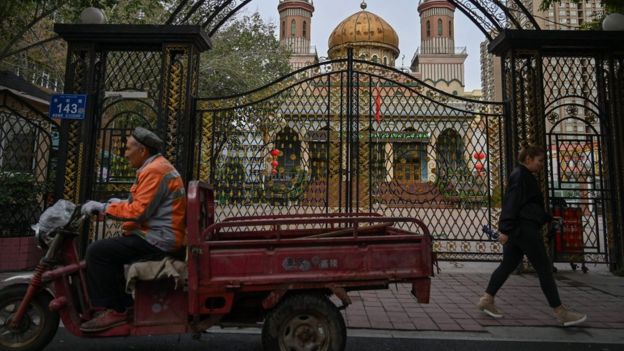
Image copyright GETTY IMAGESImage caption The Uighurs are mostly Muslims, and number about 11 million in China’s Xinjiang region
Nury Turkel, chairman of the Uighur Human Rights Project in Washington, said the Uighurs were being “detained and tormented” and “swept into a vast system of forced labor” in Xinjiang.
In testimony to US congress, he said it was becoming “increasingly hard to ignore the fact” that the goods manufactured in the region have “a high likelihood” of being produced with forced labour.
Which brands use Xinjiang cotton?
Amy Lehr, director of CSIS Human Rights Initiative, said in many cases Western companies aren’t buying directly from factories in Xinjiang.
“Rather, the products may go through several stages of transformation after leaving Xinjiang before they are sent to large Western brands,” she said.
Some, like Muji, are very open about sourcing material from Xinjiang.
“Uniqlo does not have any production partners located in the Xinjiang region. Moreover, Uniqlo production partners must commit to our strict company code of conduct.
“To the best of our knowledge, this means our cotton comes only from ethical sources,” the spokesperson told the BBC.
Many of the companies looked into the allegations, including those without clear links to the Huafu mill.
In a statement to the BBC, Adidas said: “While we do not have a contractual relationship with Huafu Fashion Co., or any direct leverage with this business entity or its subsidiary, we are currently investigating these claims.”
“We advised our material suppliers to place no orders with Huafu until we have completed those investigations,” the Adidas spokesperson said.
Esprit, which also does not source cotton directly from Xinjiang, said it had made several inquiries earlier this year.
“We concluded that a very small amount of cotton from a Huafu factory in Xinjiang was used in a limited number of Esprit garments,” the firm said in a statement.
The company has instructed all suppliers to not source Huafu yarn from Aksu, the statement said.
H&M said it does not have “a direct or indirect business relationship” with any garment manufacturer in the Xinjiang region.
“We have an indirect business relationship with Huafu’s spinning unit in Shanyu, which is not located in the Xinjiang region, and according to our data, the vast majority of the yarn used for our garment manufacturing comes from this spinning unit,” a spokesperson for H&M said.
“Since we have an indirect business relationship with the yarn supplier Huafu, we also asked for access to their spinning facilities in Aksu. Our investigations showed no evidence of forced labor.”
BEIJING, Oct. 30 (Xinhua) — China on Wednesday urged countries including the United States and Britain to stop distorting facts on Xinjiang-related issues and make real and concrete efforts to support the healthy development of the international human rights cause.
Foreign Ministry spokesperson Geng Shuang made the remarks at a press briefing when he was asked to comment on what happened during the dialogue between the Third Committee of the United Nations General Assembly and the Committee on the Elimination of Racial Discrimination.
On Oct. 29, a few Western countries including the United States and Britain delivered a common speech during the dialogue, criticizing China’s Xinjiang policy, while more than 60 others countries also made common speeches supporting China’s position on Xinjiang, praising China’s great progress in human rights protection and opposing interference in China’s domestic affairs under the name of human rights.
“The anti-China show put on by a handful of Western countries was a disgraceful failure,” Geng said.
He said the vocational and educational training institutions in Xinjiang were set up as preventive measures to combat terrorism and radicalization, which have turned the security situation around.
For three years, not a single violent or terrorist incident has taken place in Xinjiang, and the region now enjoys social stability and unity among all ethnic groups, said Geng, adding that people there are now living a happy life with a stronger sense of fulfillment and security, while their rights to life, health and development are also significantly improved.
“We urge countries like the United States and Britain to stop calling white black and standing on the opposite of facts,” Geng said.
Geng noted that in March this year, the 46th session of the Council of Foreign Ministers of the Organization of Islamic Cooperation (OIC) adopted a resolution, which spoke highly of and fully recognized the efforts China has made for Chinese Muslims.
In July, ambassadors from more than 50 countries to the UN office at Geneva co-signed a letter to the president of the UN Human Rights Council and High Commissioner for Human Rights, praising China for its respect and protection of human rights in fighting terrorism and deradicalization.
“These events fully indicated to us what is the overwhelming opinion of the international society. Tarnishing China will not get support and is completely futile,” Geng said.
As countries like the United States and Britain have disgraceful human rights records, they have no right to judge other countries and should seriously reflect on themselves, said Geng, adding that China urges those countries to stop politicizing and using double standards on human rights issues, and stop interfering in other countries’ domestic affairs under the pretext of human rights.
URUMQI, Oct. 3 (Xinhua) — The Tarim oilfield branch of PetroChina, China’s largest oil and gas producer, said Thursday that they discovered a huge gas field with an estimated reserve of 115.3 billion cubic meters in Xinjiang’s Tarim Basin.
Tian Jun, the company’s vice general manager, said they completed a successful test of a well in the gas field, with a daily output of 418,200 cubic meters of natural gas and 115.15 cubic meters of gas condensate.
The gas field has been estimated to contain 115.3 billion cubic meters of natural gas and 21.66 million tonnes of gas condensate, Tian said, adding that the field is expected to start production in November.
The Tarim oilfield provides natural gas to a total of 15 provincial-level regions in northern and eastern China via the country’s West-to-East gas pipelines.
Train trips, Xinjiang and chartered flights among the growing holiday trends, travel agents say
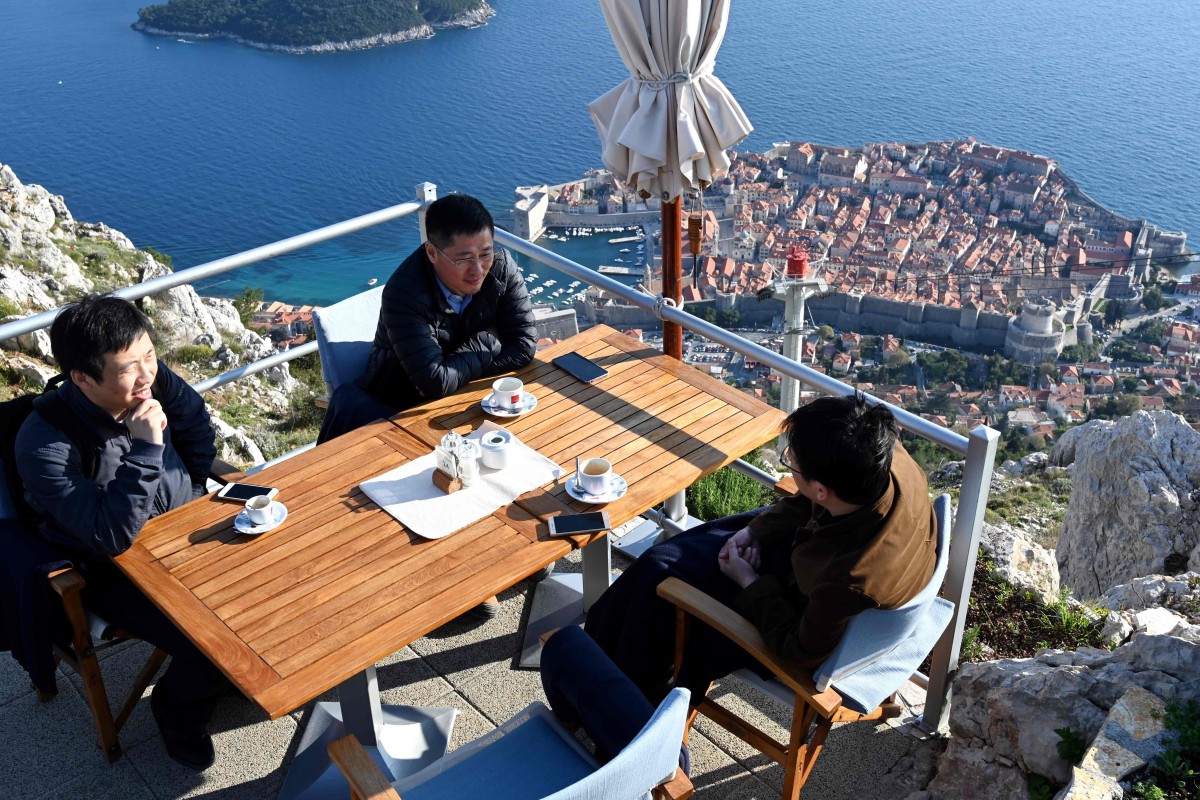
Destinations such as Dubrovnik, Croatia, are becoming more popular among mainland Chinese tourists, according to one of China’ s biggest travel services. Photo: AFP
Chartered flights and niche destinations such as Croatia and Malta are growing in popularity as Hong Kong falls out of favour for mainland Chinese holidaymakers over the National Day “golden week” break.
Japan has overtaken Thailand as the most searched overseas destination on the website of travel agency Ctrip, followed by Malaysia, the United States, Singapore, Australia, Macau, France, Italy and Russia.
Within the mainland places such as Beijing and Shanghai continued to be among the most popular searches but Urumqi, capital of Xinjiang Uygur autonomous region, is a fast-growing term, especially among people in Shanghai and Guangzhou.
“It could be that tourists want to see autumn leaves,” a Ctrip spokesman told the South China Morning Post.
October 1 marks the start of a week-long break on the mainland when millions of Chinese take the chance to travel. This year, an estimated 800 million people are expected to go on trips in China or overseas, about 10 per cent more than last year.
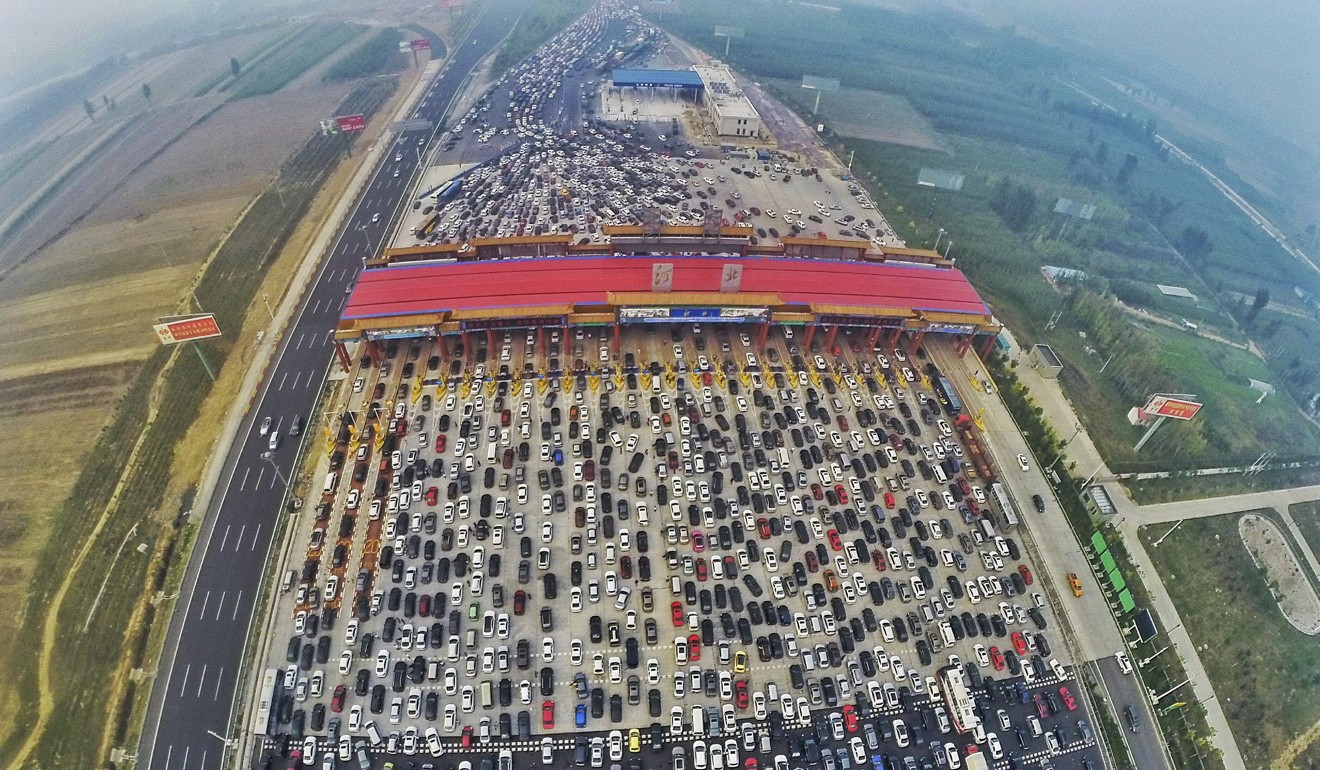
The country’s motorways are expected to be jammed from about 2pm on Monday, reaching a peak at around midnight, and again from 10am Tuesday, according to web mapping service Tencent Map.
China’s highways can expect heavy traffic as travellers head out for the holiday. Photo: Reuters
Ctrip said people heading overseas were increasingly seeking out new destinations, with bookings to places such as the Czech Republic, Austria, Croatia, Malta and Cambodia growing by 45 per cent this year.
“As Chinese people travel outside the country more and their experience of travel grows, many are more willing to go to smaller eastern European countries, such as the Czech Republic,” the spokesman said.
“Popular movies also have a strong influence. Many young people are willing to travel to see where films are shot, such as Croatia, one of the locations for Game of Thrones.”
Other noticeable trends this year include more people travelling with pets, by train and on chartered flights. The site said it sold 60 per cent more European train tickets and 10 times the number of train tickets for Japan for this golden week compared to last year.
The most popular routes in Asia were Tokyo to Kyoto in Japan, and Seoul to Busan in South Korea.
Hong Kong protests leave ‘golden week’ tourist boom in tatters as visitor arrivals during Chinese holiday period are set to be slashed by a third
Thousands of users also chose chartered flights, a service Ctrip introduced in September.
Ji Yu, head of chartered flights for Ctrip said most people thought chartered flights or helicopters were something only millionaires could afford, but in the internet age, they had become cheaper and more accessible.
“In the internet era, consumer needs vary from person to person, especially in terms of travel. There are products on the market to satisfy each customer’s personal needs.”
Among the more popular chartered routes were from Beijing or Shanghai to Tokyo, Bangkok, the Maldives and London.
More people are also going away for longer. Digital travel services giant Qunar said that 80 per cent of the travellers booking flights or hotels through its services were heading off for more than five days. And of those 41 per cent were travelling for more than a week.
Meanwhile, trips to Hong Kong have fallen substantially, with just 15 group tours expected to enter the city each day, down from 110 last year, according to the Travel Industry Council of Hong Kong.
Efforts to promote Hong Kong attractions have also increased in Shenzhen in recent weeks, with advertising videos scenic spots, popular restaurants and malls in Hong Kong playing on cross-border buses. Passengers can also get discounts to some stores and services with their tickets.


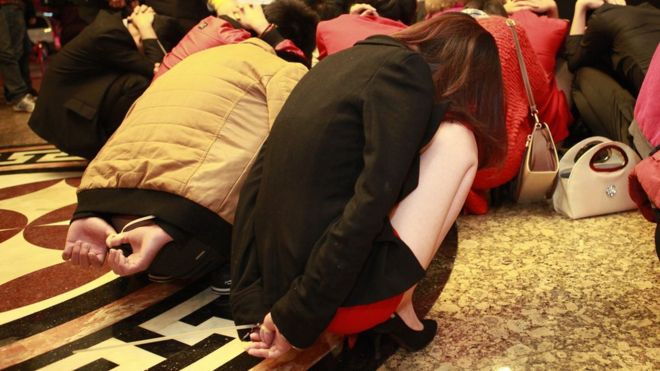 Image copyright AFP




 CHINDIA ALERT: You'll be living in their world, very soon