Chindia Alert: You’ll be Living in their World Very Soon
aims to alert you to the threats and opportunities that China and India present. China and India require serious attention; case of ‘hidden dragon and crouching tiger’.
Without this attention, governments, businesses and, indeed, individuals may find themselves at a great disadvantage sooner rather than later.
The POSTs (front webpages) are mainly 'cuttings' from reliable sources, updated continuously.
The PAGEs (see Tabs, above) attempt to make the information more meaningful by putting some structure to the information we have researched and assembled since 2006.
– The last nine poverty-stricken county-level regions in east China’s Anhui Province have been removed from the country’s list of impoverished counties.
– This marks that all county-level regions in the Yangtze River Delta, consisting of Shanghai and the provinces of Jiangsu, Zhejiang and Anhui, have been officially lifted out of poverty for the first time in history.
HEFEI, April 29 (Xinhua) — Sitting in front of his smartphone, Zhang Chuanfeng touts dried sweet potatoes to viewers on China’s popular video-sharing app Douyin, also known as TikTok.
“These are made from sweet potatoes I grew myself. They are sweet and have an excellent texture,” said Zhang while livestreaming in Tangjiahui Township of Jinzhai County in east China’s Anhui Province. Tucked away in the boundless Dabie Mountains, the township used to have the biggest poor population in the county.
Aerial photo taken on April 16, 2020 shows residential buildings in Dawan Village of Jinzhai County, east China’s Anhui Province. (Xinhua/Liu Junxi)
Jinzhai County is among the last nine county-level regions in Anhui that have been removed from the country’s list of impoverished counties, according to an announcement issued by the provincial government Wednesday. They are also the last group of county-level regions that bid farewell to poverty in the Yangtze River Delta.
E-COMMERCE
Zhang might seem like a typical e-commerce businessman reaping success in China’s booming livestreaming industry. But his road to success has been a lot bumpier: he suffers from dwarfism.
A little more than 1.4 meters tall, Zhang has a babyface, making him “look like a junior school student,” he said. But the man, 38, is the father of a nine-year-old boy.
For Zhang, life was tough before 2014. “Nobody wanted me because of my ‘disabilities’ when I went out to look for jobs,” he said. “I was turned down again and again.”
Zhang was put on the government’s poverty list in 2014 as China implemented targeted poverty-relief measures. With the help of local officials, he got a bank loan of 10,000 yuan (about 1,400 U.S. dollars) and bought 22 lambs. He tended the animals whole-heartedly and seized every opportunity to learn how to raise them more professionally.
Zhang Chuanfeng feeds his lambs in Zhufan Village of Jinzhai County, east China’s Anhui Province, April 26, 2017. (Xinhua/Zhang Duan)
Within a year, the number of his lambs expanded to hundreds. In 2016, Zhang’s earnings exceeded 100,000 yuan, more than enough for him to cast off poverty.
Riding on this success, Zhang began to seek new opportunities. He rented a shop and started selling products online to embrace an e-commerce strategy the local government introduced in 2017.
More than 100 online shops, including Zhang’s, in the county have helped more than 7,000 poverty-stricken households sell about 73 million yuan worth of local specialties since 2018. Zhang alone earned 500,000 yuan from a sales revenue of 5 million yuan last year.
A villager arranges local specialties for sale at Dawan Village of Jinzhai County, east China’s Anhui Province, April 17, 2020. (Xinhua/Liu Junxi)
WICKERWORK SUCCESS
About 100 km north of Jinzhai lies Funan, a place that used to be vulnerable to constant floods.
Zhang Chaoling, who lives by the Huaihe River in Funan County, had to flee her hometown at a young age due to floods, but has flourished on a willow plantation along the river later.
“The land is largely covered by silt following continual flooding in the past. It is an ideal place to plant willows and make wickerwork,” Zhang said.
Zhang left her hometown for Guangzhou in 1993 and found a job in a garment factory. A few years later, she founded a trading company with her husband in Guangzhou, selling wickerwork products from her hometown to other countries.
Zhang returned to her hometown and set up a wickerwork production base in 2011. Funan is famous for its delicate wickerwork. Skilled craftsmen traditionally use local willow as a raw material to weave products such as baskets, furniture and home decorations.
A villager arranges wickerwork products in Funan County, east China’s Anhui Province, April 15, 2020. (Photo by Zhou Mu/Xinhua)
“The flood is well controlled now. I remember the last huge flood came in 2007,” Zhang said.
Taking advantage of the fertile land along the Huaihe River, she plants over 130 hectares of willow trees and employs hundreds of locals mostly in their 50s and 60s.
“I can process 100 to 150 kg of willow twigs per day, from which I make around 80 yuan,” said Geng Shifen, who peels willow twigs with a clamp next to the plantation.
A total of 130,000 people are engaged in the wickerwork industry in Funan, creating an output of nearly 9 billion yuan in 2019, and helping 15,000 locals shake off poverty, local statistics showed.
POVERTY REDUCTION FEAT
The Anhui provincial government Wednesday announced that its last nine county-level regions including Jinzhai and Funan are removed from the country’s list of impoverished counties.
This marks that all 31 impoverished county-level regions in Anhui have shaken off poverty, echoing China’s efforts to eradicate absolute poverty by the end of 2020.
With the announcement, all county-level regions in the Yangtze River Delta have been officially lifted out of poverty for the first time in history.
A bus runs on a rural road in Jinzhai County, east China’s Anhui Province, April 17, 2020. (Xinhua/Liu Junxi)
Covering a 358,000-square-km expanse, the Yangtze River Delta, consisting of Shanghai and the provinces of Jiangsu, Zhejiang and Anhui, is one of the most populated and economically dynamic areas in China, contributing one-fourth of the country’s GDP.
Anhui had a population of 63.65 million as of 2019, official data showed. The poor population in the province had decreased from 4.84 million in 2014 to 87,000 in 2019, and the poverty headcount ratio had been reduced from 9.1 percent to 0.16 percent during the period, according to the provincial poverty relief office.
A county can be removed from the list if its impoverished population drops to less than 2 percent, according to a national mechanism established in April 2016 to eliminate poverty in affected regions. The ratio can be loosened to 3 percent in the western region.
By the end of 2019, 5.51 million people in China were still living in poverty.
“We will continue our work to prevent people from returning to poverty, and help the remaining poor population shake off poverty by all means,” said Jiang Hong, director of the Anhui provincial poverty relief office.
BEIJING (Reuters) – The death toll from China’s coronavirus outbreak jumped on Saturday to 41 as the Lunar New Year got off to a gloomy start, with Hong Kong declaring a virus emergency, scrapping celebrations, and restricting links to mainland China.
Australia on Saturday confirmed its first four cases, Malaysia confirmed three and France reported Europe’s first cases on Friday, as health authorities around the world scrambled to prevent a pandemic.
Hong Kong leader Carrie Lam on Saturday declared a virus emergency in the Asian financial hub, with five confirmed cases, immediately halting official visits to mainland China and scrapping official Lunar New Year celebrations.
Inbound and outbound flights and high speed rail trips between Hong Kong and Wuhan, the epicentre of the outbreak, would be halted, and schools, now on Lunar New Year holidays, would remain shut until Feb. 17. The territory was also treating 122 people suspected of having the disease.
RELATED COVERAGE
U.S. to evacuate its citizens from Wuhan, China – WSJ
China’s President Xi holds politburo meeting on curbing virus outbreak – state TV
The death toll in China rose to 41 on Saturday from 26 a day earlier and more than 1,300 people have been infected globally with a virus traced to a seafood market in the central city of Wuhan that was illegally selling wildlife.
Hu Yinghai, deputy director-general of the Civil Affairs Department in Hubei province, where Wuhan is located, made an appeal on Saturday for masks and protective suits. Hospitals in the city have made similar pleas.
“We are steadily pushing forward the disease control and prevention … But right now we are facing an extremely severe public health crisis,” he told a news briefing.
Vehicles carrying emergency supplies and medical staff for Wuhan would be exempted from tolls and given traffic priority, China’s transportation ministry said on Saturday.
Wuhan said it would ban non-essential vehicles from its downtown starting Sunday to control the spread of the virus, further paralysing a city of 11 million that has been on virtual lockdown since Thursday, with nearly all flights cancelled and checkpoints blocking the main roads leading out of town.
Authorities have since imposed transport restrictions on nearly all of Hubei province, which has a population of 59 million.
In Australia, three men, aged 53, 43 and 35 in New South Wales were in stable condition after they were confirmed to have the virus after returning from Wuhan earlier this month.
A Chinese national in his 50s, who had been in Wuhan, was also in stable condition in a Melbourne hospital after arriving from China on Jan. 19, Victoria Health officials said.
State-run China Global Television Network reported in a tweet on Saturday that a doctor who had been treating patients in Wuhan, 62-year-old Liang Wudong, had died from the virus.
Police officers stand guard in front of the closed gate of Lama Temple where a notice saying that the temple is closed for the safety concern following the outbreak of a new coronavirus is seen, in Beijing, China January 25, 2020. REUTERS/Carlos Garcia Rawlins
It was not immediately clear if his death was already counted in the official toll of 41, of which 39 were in the central province of Hubei, where Wuhan is located.
U.S. coffee chain Starbucks said on Saturday that it was closing all its outlets in Hubei province for the week-long Lunar New Year holiday, following a similar move by McDonald’s in five Hubei cities.
PROTECTIVE SUITS
In Beijing on Saturday, workers in white protective suits checked temperatures of passengers entering the subway at the central railway station, while some train services in eastern China’s Yangtze River Delta region were suspended, the local railway operator said.
The number of confirmed cases in China stands at 1,287. The virus has also been detected in Thailand, Vietnam, Singapore, Japan, South Korea, Taiwan, Nepal, and the United States.
The U.S. Centers for Disease Control and Prevention said on Friday it had 63 patients under investigation, with two confirmed cases. While China has called for transparency in managing the crisis, after cover-up of the 2002/2003 Severe Acute Respiratory Syndrome spread, officials in Wuhan have come in for criticism over their handling of the current outbreak.
In rare public dissent, a senior journalist at a Hubei provincial newspaper run by the ruling Communist Party on Friday called for a “immediate” change of leadership in Wuhan on the Twitter-like Weibo. The post was later removed.
REINFORCEMENTS TO WUHAN
The World Health Organization (WHO) declared the new coronavirus an “emergency in China” this week but stopped short of declaring it of international concern.
Human-to-human transmission has been observed in the virus.
China’s National Health Commission said it had formed six medical teams totalling 1,230 medical staff to help Wuhan.
Hubei province, where authorities are rushing to build a 1,000 bed hospital in six days to treat patients, announced on Saturday that there were 658 patients affected by the virus in treatment, 57 of whom were critically ill.
The newly-identified coronavirus has created alarm because there are still many unknowns surrounding it, such as how dangerous it is and how easily it spreads between people. It can cause pneumonia, which has been deadly in some cases.
Symptoms include fever, difficulty breathing and coughing. Most of the fatalities have been in elderly patients, many with pre-existing conditions, the WHO said.
NEW YEAR DISRUPTIONS
Airports around the world have stepped up screening of passengers from China, though some health officials and experts have questioned the effectiveness of such screenings.
There are fears the transmission could accelerate as hundreds of millions of Chinese travel during the week-long Lunar New Year holiday, which began on Saturday, although many have cancelled their plans, with airlines and railways in China providing free refunds.
The virus outbreak and efforts to contain it have put a dampener on what is ordinarily a festive time of year.
Sanya, a popular resort destination on the southern Chinese island of Hainan, announced that it was shutting all tourist sites, while the island’s capital city, Haikou, said visitors from Wuhan would be placed under 14-day quarantine in a hotel.
Shanghai Disneyland was closed from Saturday. The theme park has a 100,000 daily capacity and sold out during last year’s Lunar New Year holiday.
Beijing’s Lama Temple, where people traditionally make offerings for the new year, has also closed, as have some other temples.
Li Keqiang tells senior officials to step up efforts to channel water from Yangtze River to arid regions
Impact of pollution and rising population has prompted increased efforts to improve efficiency and supply
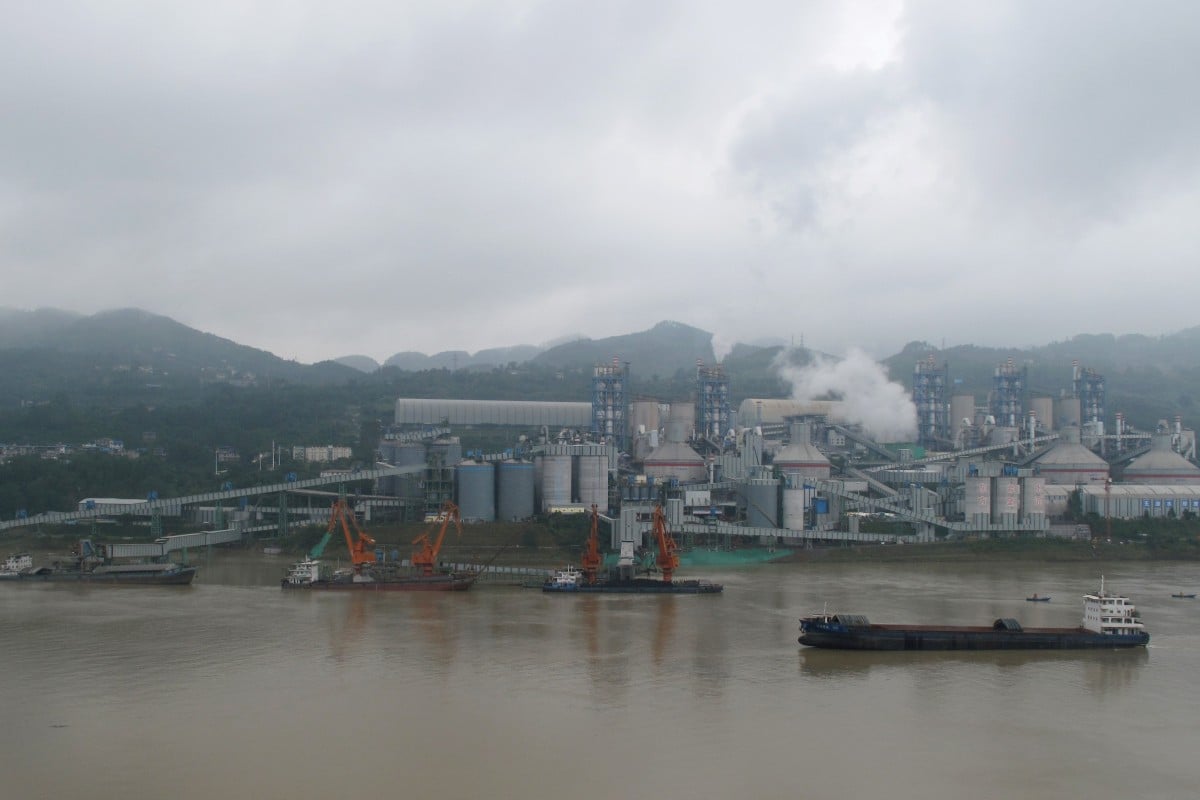
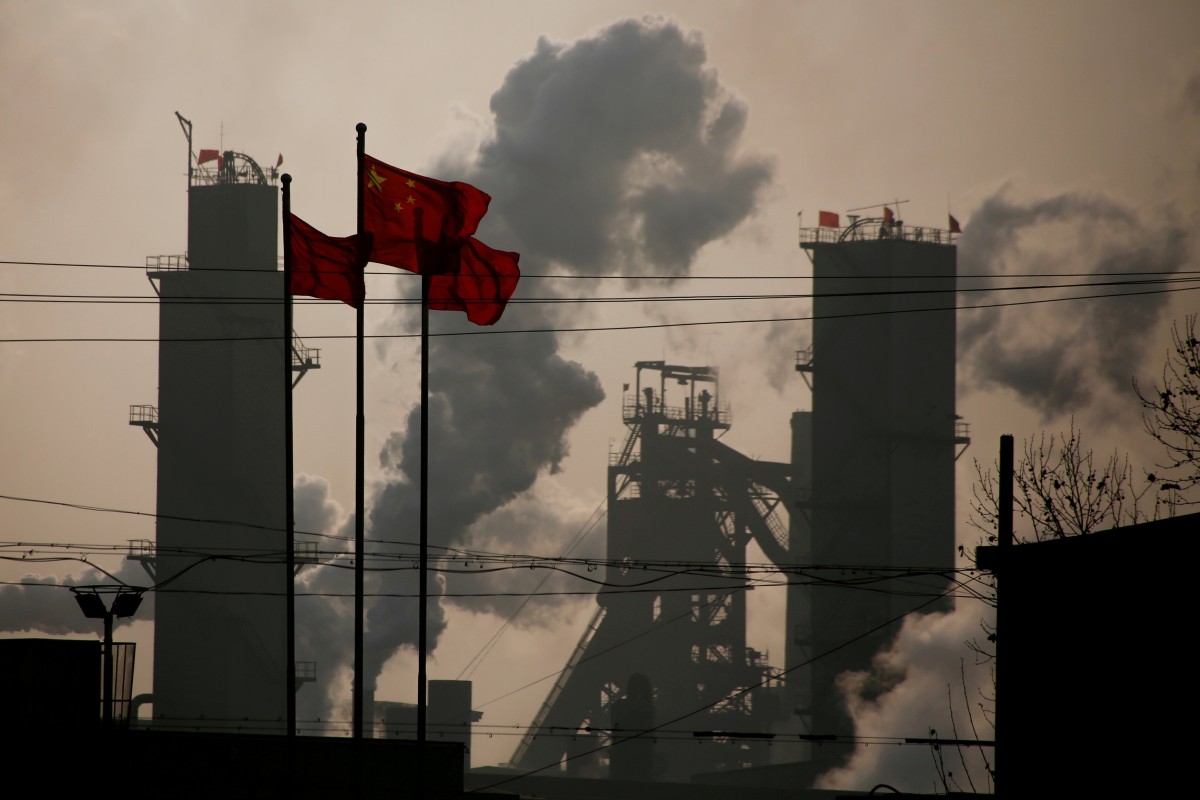
A cement plant on the banks of the Yangtze in Chongqing. The authorities are now trying to stop further development along the river. Photo: Reuters
China needs to divert more water to its arid northern regions and invest more in water infrastructure as shortages get worse because of pollution, overexploitation and rising population levels, Premier Li Keqiang has said.
China’s per capita water supplies are around a quarter of the global average. With demand still rising, the government has sought to make more of scarce supplies by rehabilitating contaminated sources and improving efficiency.
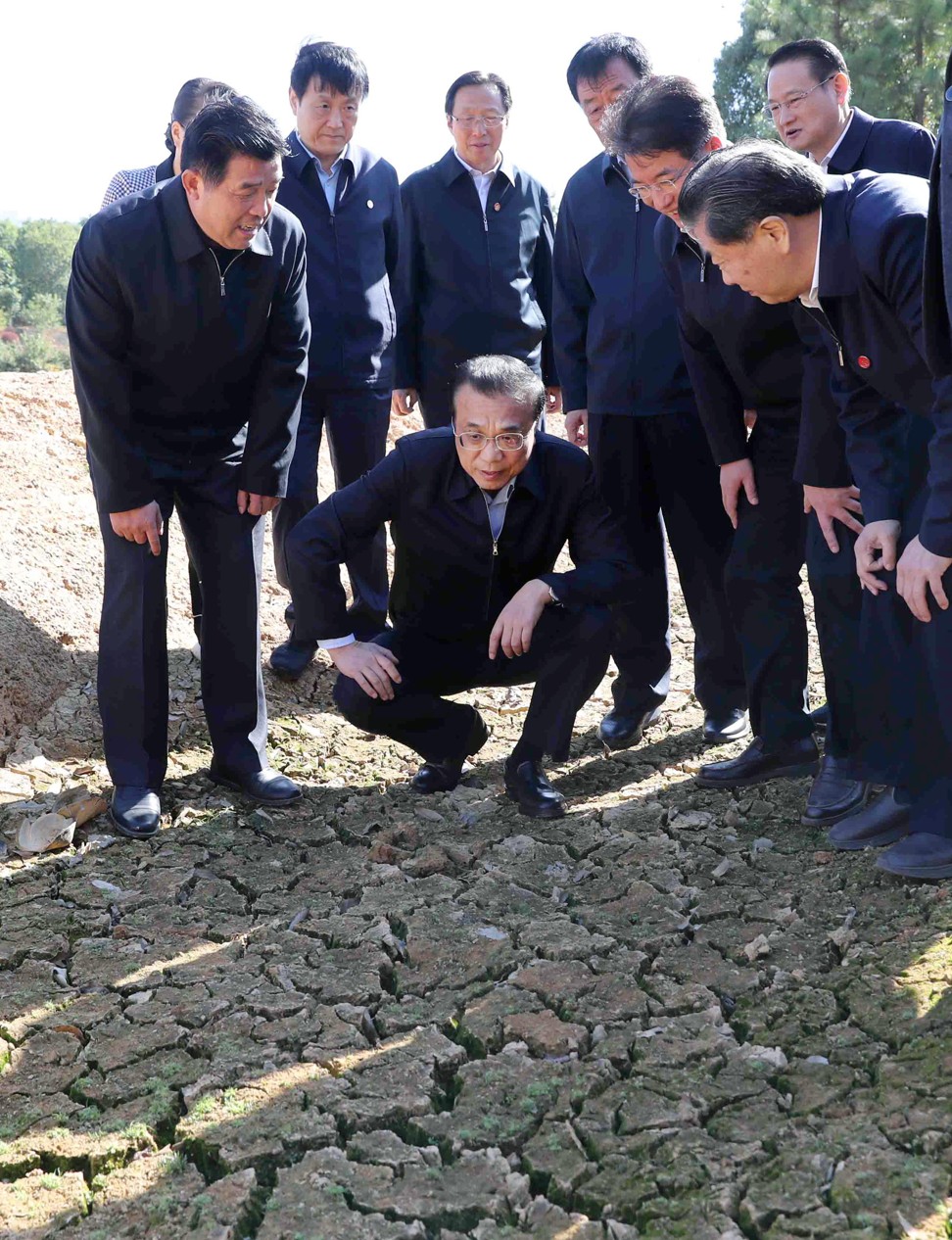
Water remained one of China’s major growth bottlenecks, and persistent droughts this year underlined the need to build new infrastructure, Li told a meeting of senior Communist Party officials on Monday. An account of the meeting was published by China’s official government website.
Local government bonds should be “tilted” in the direction of water infrastructure, he said, and innovative financing tools were also needed.
He also called for research into new pricing policies to encourage conservation.
Li said China’s water supply problems had been improved considerably as a result of the South-North Water Diversion Project, a plan to divert billions of cubic metres of water to the north by building channels connecting the Yangtze and Yellow rivers.
World ‘woefully unprepared’ for climate change’s effects on drinking water supplies drawn from mountains
He said opening up more channels to deliver water to regions north of the Yangtze River Delta would support economic and social development and optimise China’s national development strategy, according to a summary of the meeting on the government website.
China is in the middle of a wide-reaching programme to clean up the Yangtze River, its biggest waterway, and put an end to major development along its banks.
Chinese Premier Li Keqiang inspects an empty reservoir during a visit to Jiangxi province last week. Photo: Xinhua
Local governments have been under pressure to dismantle dams, relocate factories and even ban fishing and farming in ecologically fragile regions.
But experts say the ongoing campaign to divert the course of the Yangtze to other regions is still causing long-term damage to the river’s environmental health.
Many cities that had polluted their own water sources had drawn replacement supplies from the Yangtze, exceeding the river’s environmental capacity, said Ma Jun, founder of the Institute of Public and Environmental Affairs, which monitors water pollution.
Beijing already relied on diversion channels from the Yangtze to supply 70 per cent of its water, but had done little to improve conservation or reduce per capita consumption, which was higher than many Western countries, he said.
“[Diversion] has caused so much suffering and needs so many dams to keep up supply, and that has impacted biodiversity,” he said.
French leader calls for restraint and says he raised the topic ‘on several occasions’ during his visit
Two sides find common ground on need to defend free trade and fight climate change as Donald Trump starts process of pulling US out of Paris Climate Agreement
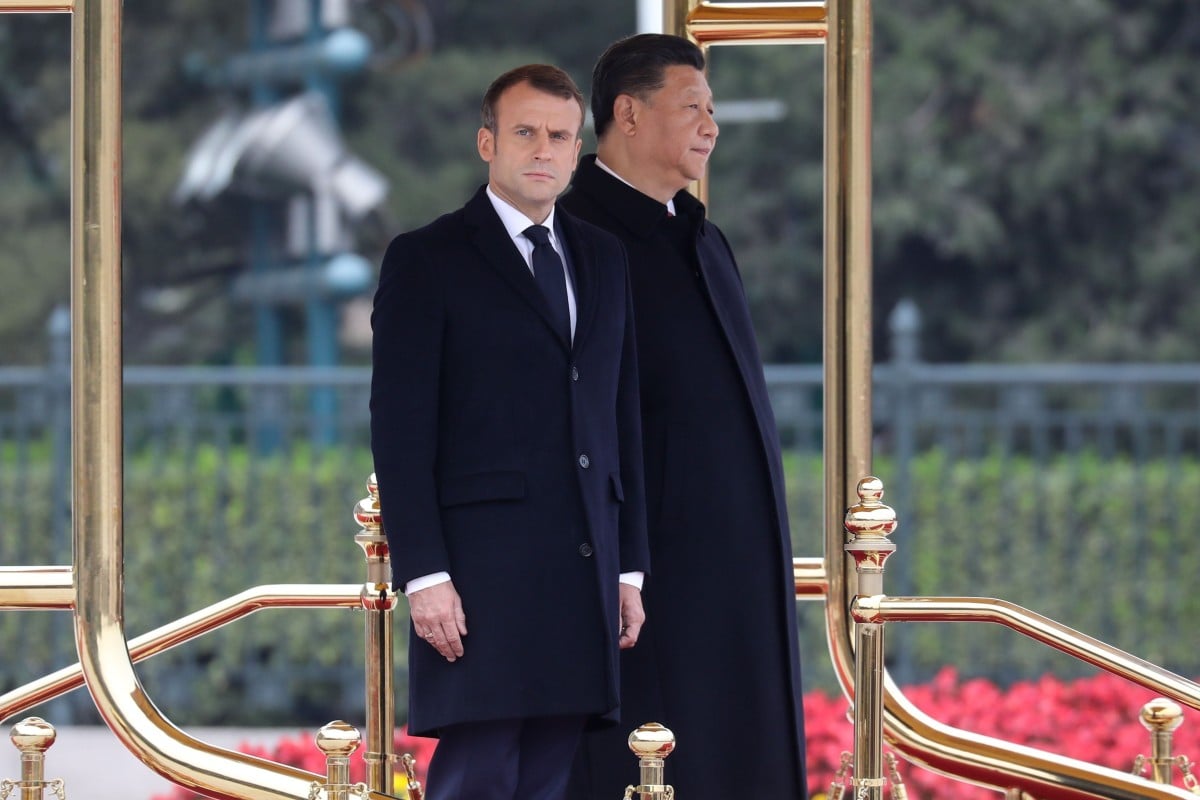
Xi Jinping and Emmanuel Macron at a welcome ceremony ahead of their talks in Beijing on Wednesday. Photo: AFP
French President Emmanuel Macron said he raised human rights and the Hong Kong situation during his talks with his Chinese counterpart Xi Jinping on Wednesday.
Macron’s visit to China concluded with pledges to work together on climate change, but the French leader also said he also called for a de-escalation of the situation in the city through dialogue after months of protests.
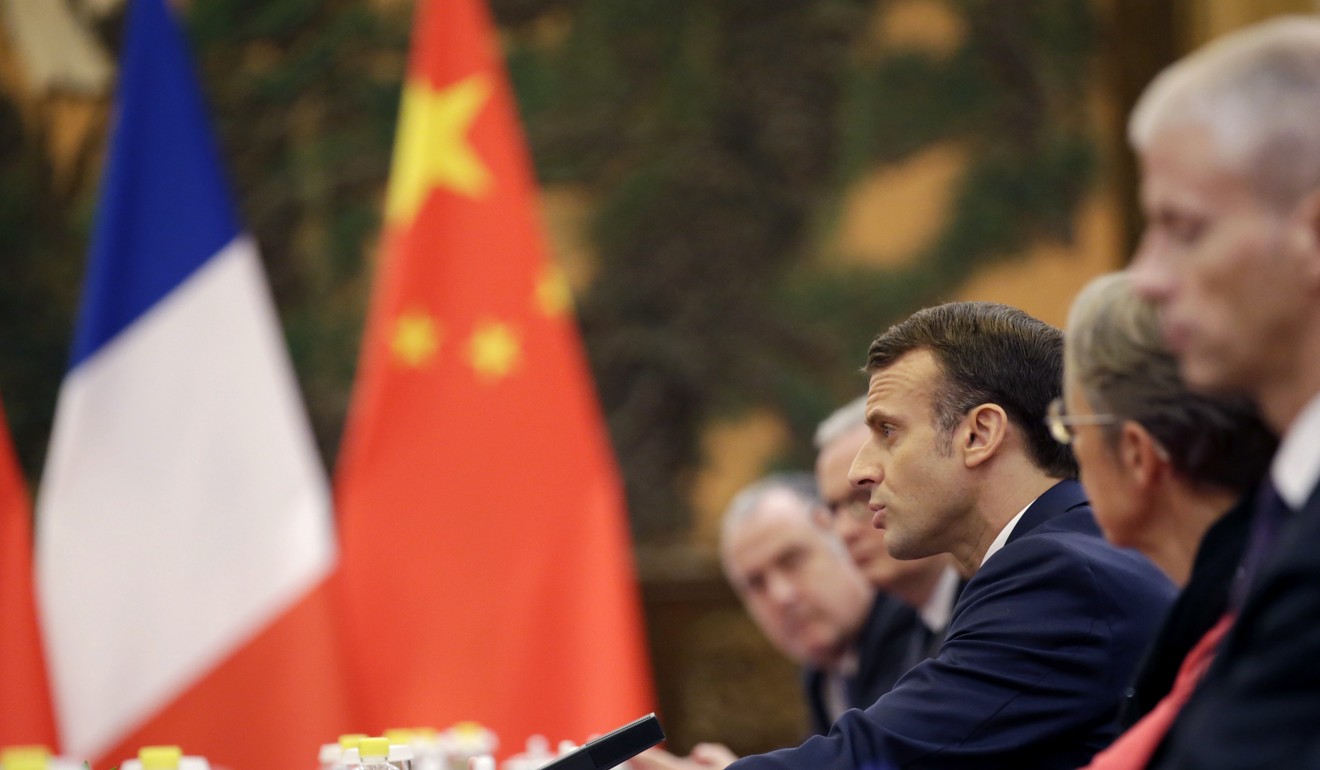
Macron, who had promised to raise “taboo” topics during the visit, told a press conference: “I obviously raised this with President Xi Jinping on several occasions.
“We have repeatedly called on the parties involved to [engage in] dialogue, to show restraint, to de-escalate.”
The discussion followed Xi’s meeting with Hong Kong’s embattled Chief Executive Carrie Lam Cheng Yuet-ngor in Shanghai on Monday, where he expressed “high trust” in her and “fully affirmed” support for her response to the unrest that has gripped the city since June.
Earlier the French and Chinese leaders had restated their commitment to protect free trade and pledged their continued support for the Paris Agreement as the United States begins the process of formally withdrawing from the global climate deal.
Macron expressed “regret” over “some countries’ negative attitude” towards environmental protection and the fight against climate change and pledged to work with China to halt the loss of biodiversity.
The French president’s office also released a statement on Wednesday that reaffirmed France and China’s joint support for the “irreversible” Paris Agreement.
Macron points to common ground with China on tariffs and climate action
With the European Union, China and Russia backing the pact, he added, “the isolated choice of one or another is not enough to change the course of the world. It only leads to marginalisation.”
The two countries also agreed to work together to develop joint nuclear power projects and signed a series of contracts worth US$15 billion.
The deals covered aeronautics, energy and agriculture, including approval for 20 French companies to export poultry, beef and pork to China.
An additional action plan released after the talks said French utility giant EDF and China General Nuclear Power should be encouraged to cooperate on projects in China or third countries, citing the joint efforts by the two companies to build nuclear reactors at the Hinkley Point C station in Britain as an example.
The two sides also committed to signing a contract for the construction of a nuclear fuel recycling plant in China, which would involve French energy giant Orano, by January 31.
Xi took what appeared to be a veiled swipe at the United States, which is still embroiled in a protracted trade war and other confrontations with Beijing.
“We advocate for mutual respect and equal treatment, and are opposed to the law of the jungle and acts of intimidation,” Xi said.
“We advocate for openness, inclusion and for mutually beneficial cooperation, and are opposed to protectionism and a zero-sum game.”
Macron said China and the European Union should work in partnership as the world became more unstable, calling on the two sides to further open up market access.
“We call again for trade multilateralism to respond to distortions that have appeared in the global economy, which have led to a profound rise in inequalities and imbalances that explain the surge of challenges to the international systems,” he said.
“China and Europe also share the same views that the trade war only leads to loss.”
Macron kicks off China visit with deal to protect wine and cheese from counterfeiting
Chinese state news agency Xinhua said the two countries agreed to work together to push forward with plans to assemble Airbus’s A350 model in China.
Meanwhile, Beijing Gas Group and French utility firm Engie will collaborate on a liquefied natural gas terminal and storage in the northern city of Tianjin, while France’s Total will set up a joint venture with China’s Shenergy Group to distribute liquid nitrogen gas by truck in the Yangtze River Delta.
The two countries also agreed to reach an agreement by the end of January 2020 on the cost and location of a nuclear fuel reprocessing facility to be built by Orano, formerly known as Areva.
Wu Libo a professor and director of the Centre for Energy Economics and Strategies Studies at Fudan University, said there was “great potential” for further cooperation between the two countries on nuclear energy.
“France has many useful experiences in the operation and management of nuclear power plants and its plants have long-term safe and stable operation records,” she said.
The two sides agreed to work together on joint nuclear power projects. Photo: AP
Jiang Kejun, a senior researcher at the Energy Research Institute of China’s National Development and Reform Commission, said China’s cooperation with France would add credibility to potential third-country projects.
“China has advanced third-generation technology but it’s still a new member in the nuclear power market, while France has developed nuclear energy for a long time, and its EPR reactors – a technology designed and developed in France – are in business operation,” he said.
Jiang said possible markets for the joint projects included Argentina and India, while some Middle Eastern states – such as Saudi Arabia and Qatar – had expressed interest in nuclear energy.
China’s ambassador hits out at Macron’s team for backing ‘hypocritical’ EU stance on Hong Kong
Tong Jiadong, professor of international trade at Nankai University, said that the deals between the two sides helped show that France and China could work together to counteract US unilateralism.
“Objectively speaking, this will form, or at least imply, an opposition to US unilateralism,” Tong said. “China hopes the cooperation between these two countries produces demonstrable effects for other EU member states.”
Ding Chun, a professor of European Studies at Fudan University, said he did not think the EU wanted to “choose a side” between the US and China.
But Ding continued: “If we are talking about free trade and multilateralism, there’s no doubt that the EU and China share a common view and can balance Donald Trump’s unilateralism.”
Kremlin says project highlights the growing closeness between the two countries
Military observers argue cooperation between the two sides helps provide counterbalance to American military might
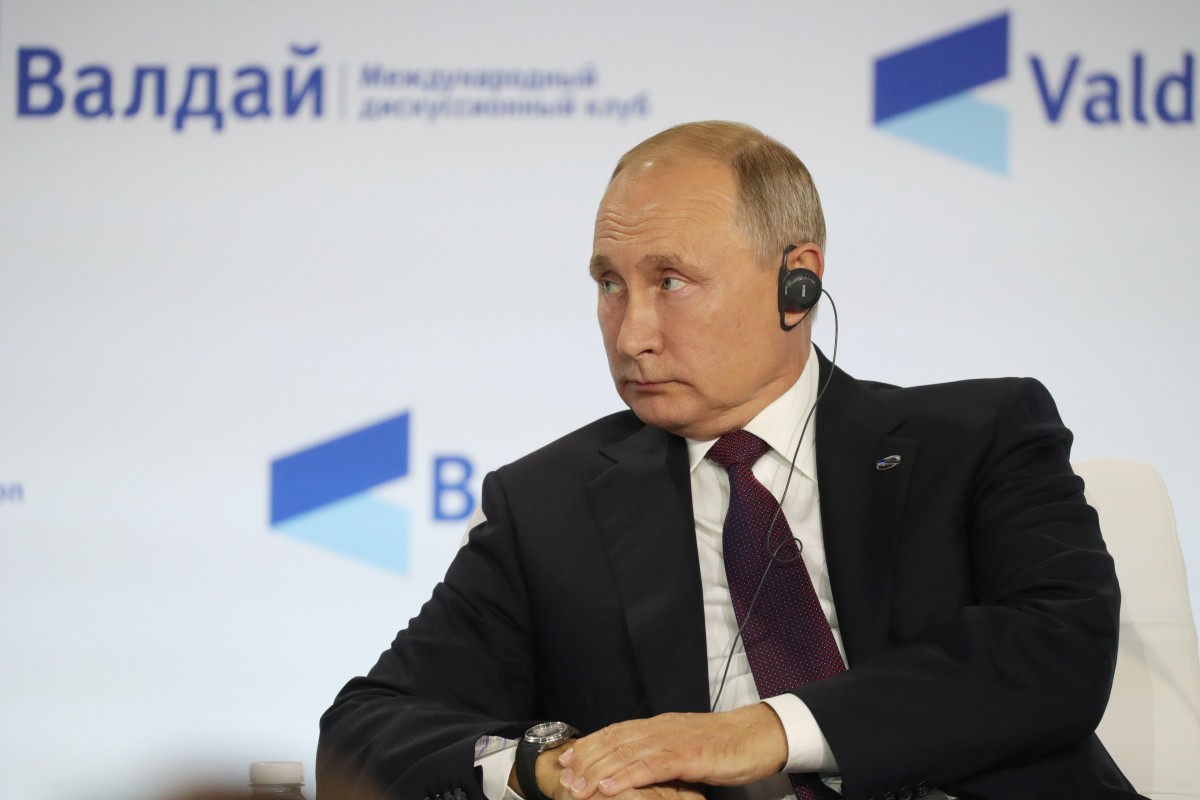
Vladimir Putin disclosed the project at a forum in Sochi. Photo: Sputnik/AFP
Russia is helping China to build an early warning system to counter missile attacks, Vladimir Putin said on Thursday.
Speaking at an international affairs conference in the resort town of Sochi, he said Moscow was helping China increase its missile defence capability, Russian state-owned news agency Sputnik reported.
“This is a very serious endeavour that will fundamentally and radically increase the defence capability of the People’s Republic of China because only the United States and Russia have such a system at present,” the Russian leader said.
Kremlin spokesman Dmitry Peskov declined to say when the system would be operational, but told reporters on a conference call that the move highlighted Russia’s close ties with China.
“Russia has special relations with China of advanced partnership … including the most sensitive [areas] linked to military-technical cooperation and security and defence capabilities,” Peskov said.
Macau-based military observer Antony Wong Dong said Putin’s remarks indicated that military cooperation between Beijing and Moscow may have evolved from the previous “model alliance” to a “real alliance” with the US as their common target.
“Such changes will likely further fuel the strategic arms race, which is already evident from the missile tests [that we have witnessed] and the recent military parade,” said Wong in a reference to the grand parade held in Beijing on Tuesday when China celebrated the 70th anniversary of the founding of the People’s Republic.
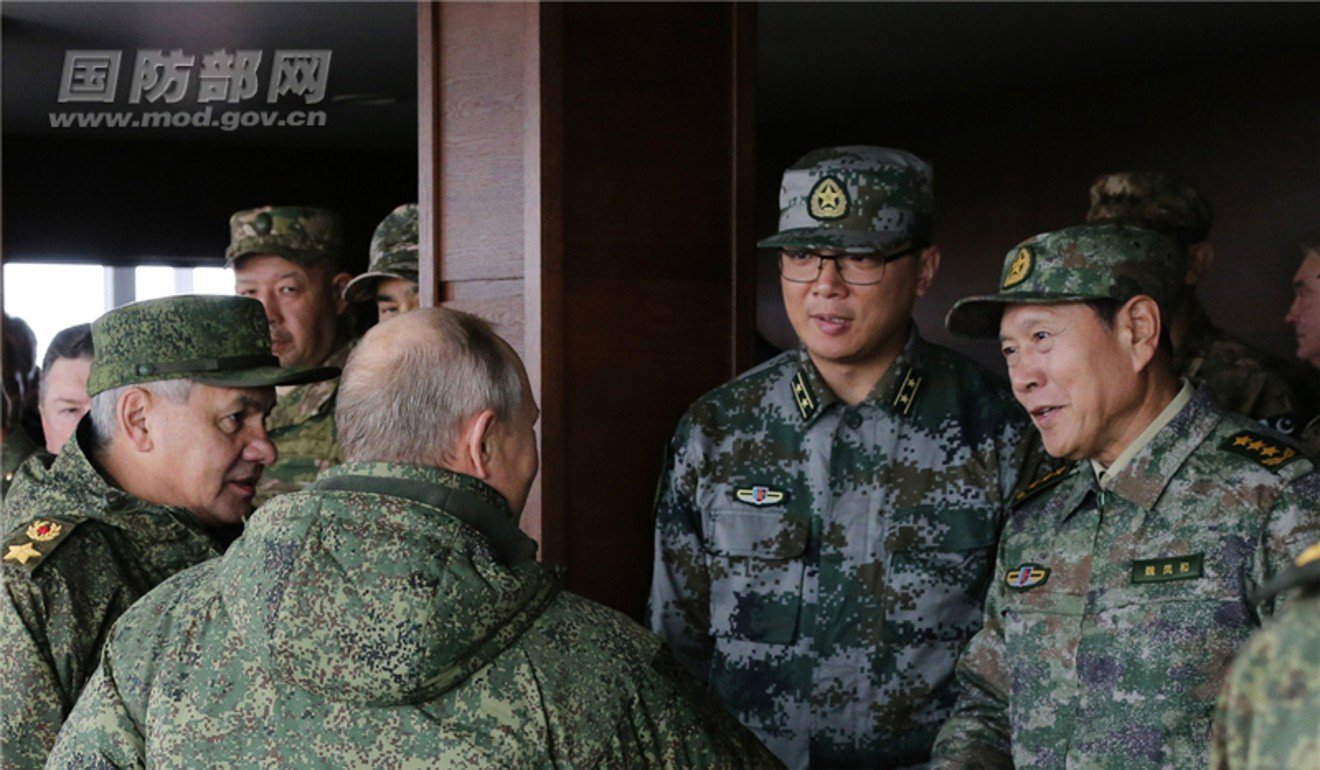
Russian President Vladimir Putin welcomes China’s defence minister Wei Fenghe (right) to a base in Orenburg at the start of a joint exercise. Photo: Handout
Hong Kong-based military analyst Song Zhongping said the system would help Beijing and Moscow set up a joint early ballistic missile network to counter “American global hegemony”.
“If the US wants to attack China [with its ICBMs], their missiles are likely to be launched from the Arctic, and that will be covered by Russia’s early warning system, and that means Moscow will have the capability to alert Beijing,” said Song who added that the Chinese military could provide reciprocal help to Russia.
Beijing-based military expert Zhou Chenming said Putin’s remarks served as a veiled warning to US President Donald Trump who has taken the unilateral step of withdrawing from the Intermediate Range Nuclear Forces Treaty, a cold war-era pact signed between the US and Russia in 1987.
“Joint cooperation will help both Russia and China to save costs because early warning ballistic missile systems are very expensive,” Zhou said,
However, he said Moscow was unlikely to share its most advanced technologies with China.
“For example, Russia’s missile defence system just covers Moscow and St Petersburg, so China’s network will properly just cover Beijing, Tianjin, Hebei province, the Yangtze River Delta area, the Greater Bay Area in South China, as well as a number of key cities in the centre.”
Putin also told the forum that the two countries would continue to work together on space exploration.
Last month, the Ministry of Defence of the Russian Federation announced that Moscow and Beijing have developed a plan for cooperation between military departments for next year and 2021.
Last month 1,600 members of the Chinese military arrived at a Russian training base in the Orenburg oblast for a large-scale joint training exercise.
BEIJING, Aug. 6 (Xinhua) — China on Tuesday announced the expanding of its Shanghai free trade zone (FTZ) in its latest major strategic move for further opening-up.
The addition of the Lingang area is a major strategic decision made by the Communist Party of China Central Committee to further opening up, Vice Commerce Minister Wang Shouwen told a press conference Tuesday.
It also demonstrates China’s clear stand to adhere to all-round opening up in the new era and an important measure taken to actively lead the healthy development of economic globalization, Wang said.
The new Lingang section will match the standard of the most competitive free trade zones worldwide and implement opening-up policies and systems with strong global market competitiveness, according to an overall plan for the new Lingang area of the China (Shanghai) Pilot Free Trade Zone issued by the State Council, or the cabinet.
Lingang, with a start-up area of 119.5 square kilometers, will facilitate overseas investment and capital flows and realize the free flow of goods, according to the plan.
Aerial photo taken on June 27, 2019 shows the Lingang area in Shanghai, east China. (Xinhua/Fang Zhe)
“The new area is not just a simple expansion of the existing free trade zone and a copy of existing policies. It is comprehensive, profound and fundamental institutional innovation and reform,” Chen Yin, executive vice mayor of Shanghai, told the press briefing.
The Shanghai FTZ had an area of 28.78 square kilometers when it was established in September 2013 and expanded to 120.72 square kilometers in December 2014.
Over the past years, the Shanghai FTZ has made remarkable progress in its bold exploration in sectors like investment, trade and finance and contributed precious experience to the all-around deepening of reforms and high-level opening-up, said Wang.
SPECIAL ZONE
The area will be built into a special economic function zone with global influence and competitiveness, to better serve the country’s overall opening-up strategy, the plan says.
“The status as a special economic function zone means that it is not adding more facilitation but moving toward real investment and trade liberalization,” said Shen Yuliang, a researcher with the Institute of World Economics under the Shanghai Academy of Social Sciences.
By 2025, the Lingang area will have a relatively mature institutional system of investment and trade liberalization and facilitation. By 2035, it will be built into a special economic function zone with strong global market influence and competitiveness, becoming an important platform for the country to integrate into economic globalization.
The area, administered like a special economic zone, will establish an institutional system with its focus on investment and trade liberalization and set up an open industrial system with global competitiveness, according to the plan.
Aerial photo taken on June 27, 2019 shows new cars wating for shipment at a port in the Lingang area in Shanghai, east China. (Xinhua/Fang Zhe)
It will strive to become a business cluster for international business, cross-border financial services, frontier technology research and development and cross-border services trade, and speed up the industrial upgrading of existing companies.
The Yangshan comprehensive bonded area will be set up there, and the area will also pilot free capital inflows and outflows and free capital conversion.
Income tax shall be levied at a reduced rate of 15 percent within five years from its establishment for qualified enterprises engaged in manufacturing and R&D in key fields including integrated circuits, artificial intelligence, biomedicine and civil aviation, says the plan.
Shanghai will also set up a fund of 100 billion yuan (14.2 billion U.S. dollars) in five years to support the development of the new area, said Chen.
OPENING-UP, INNOVATION LEADER
The plan says the new area will be granted greater administration power for self-development, self-reform and self-innovation, and regularly promote its experience to spearhead a new round of reform and opening-up of the Yangtze River Delta.
Apart from serving the Belt and Road Initiative and the Yangtze River Economic Belt, the new area is also designed to promote the coordinated development, reform and opening-up of the Yangtze River Delta, said Wang.
The Lingang area, home to Tesla’s gigafactory, has become a cluster of high-end industries after more than a decade of development, and it now emphasizes the development of key industries like integrated circuits, AI, biomedicine and civil aviation.
Aerial photo taken on July 25, 2018 shows Phase IV of the Yangshan Deep Water Port of east China’s Shanghai. (Xinhua/Ding Ting)
China’s economy faces complicated external situations and to improve industrial competitiveness and move up the value chain, the boost of scientific and technological innovation capacity is the only way, said Yin Chen, secretary general of the Shanghai Free Trade Zone Comprehensive Research Institute with Fudan University.
With more openness, the new area can boost Shanghai’s high-end resources allocation ability and better represent the country to take part in global cooperation and competition, said Yin.
BOON FOR BUSINESSES
The addition of the new area to the FTZ is a boon for both domestic and foreign businesses.
“The new tax policy support will help speed up the commercialization of autonomous driving,”said Xue Jiancong, vice president of TuSimple, an AI company registered in Lingang that received the country’s first open road testing license for trucks.
“We hope that the new policies will help promote the free flow of auto parts,”said Song Feng, president of Caterpillar Remanufacturing Services (Shanghai) Co., Ltd., citing current restrictions on imports of old machinery parts.
Yu Bo, a tax partner at accounting firm PwC, said China has been rolling out institutional reforms over the past years to allow domestic institutions in alignment with international standards.
China, among the top three investment destinations with the biggest development potential for business executives worldwide in an PwC survey, should continue to improve the business environment for foreign investment and conduct more institutional reforms to promote the higher-level opening-up, said Yu.
BEIJING, June 23 (Xinhua) — Air quality improved in Chinese cities in the first five months of 2019, according to the Ministry of Ecology and Environment (MEE).
Some 337 Chinese cities enjoyed good air quality on 80.3 percent of days from January to May this year, up 0.6 percentage points from the same period last year. Nearly 120 cities met the air quality standards, including 20 cities joining this year, data of MEE showed.
The average PM2.5 density, a key indicator of air pollution remained unchanged at 44 micrograms per cubic meter over the period and the average density of PM10 and sulfur dioxide fell 2.6 percent and 13.3 percent respectively year on year.
Haikou, Lhasa and Shenzhen ranked top three on the list of 168 cities’ air quality in the first five months while cities in the provinces of Hebei, Henan and Shanxi lagged behind.
Several regions saw a decrease in PM2.5 in May 2019, with that in Beijing-Tianjin-Hebei region and Yangtze River Delta down 16.7 percent and 8.6 percent year on year respectively.
China pledged to coordinate its efforts on environmental protection and economic development in 2019.
The country vowed to reduce imports of solid waste and push for better air quality with better regional coordination and heavy-polluter revamps, according to the ministry.
Heavy industry among companies fined up to US$1 million amid fears economic slowdown is undermining war on pollution
Environment ministry fines business for exceeding limits and says some regions have used slowing economy as excuse to backslide on curbs
Pollution levels in some parts of China worsened this winter. Photo: Reuters
China has publicly accused dozens of firms, including some of its largest state enterprises, of exceeding pollution limits and breaching monitoring standards, as concerns grow that the slowing economy is undermining a five-year war on pollution.
In lists published by the Ministry of Ecology and Environment over the past week, subsidiaries of state giants such as China Baowu Steel Group and the Aluminium Corporation of China were cited and fined for breaching emissions standards among other violations.
China has been stepping up its supervision capabilities and has plugged thousands of factories into a real-time emissions monitoring system, but enforcement remains one of its biggest challenges.
The ministry has continued to warn that China’s slowing economy had given some regions an excuse to “loosen their grip” on environmental protection.
In the first quarter of this year, air quality in smog-prone northern regions fell compared with last year, and some regions also saw pollution readings in major lakes and rivers rise over the period.
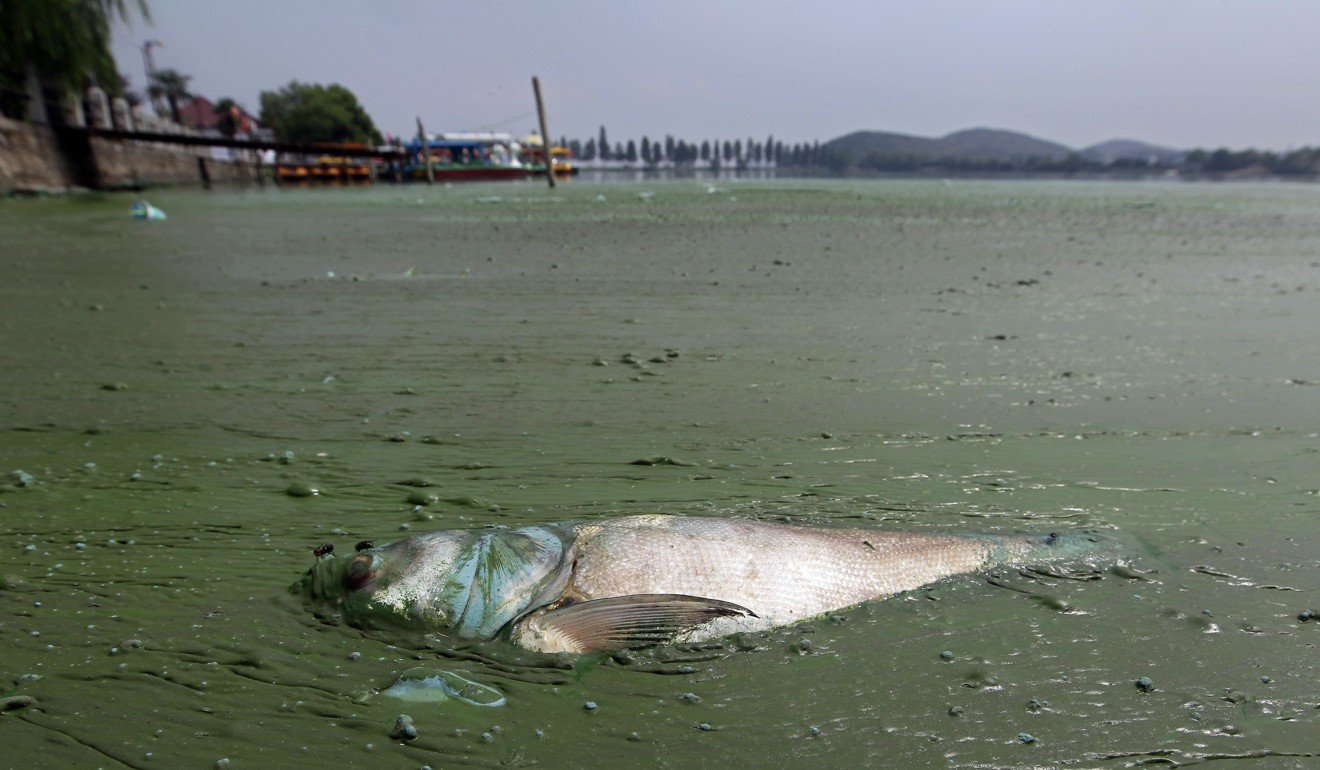
Pollution levels in some lakes or rivers have also worsened. Photo: Reuters
A notice published last Friday said as many as 82 Chinese enterprises exceeded waste water emissions standards in the fourth quarter of 2018, including 44 sewage treatment plants and six waste water treatment facilities.
A unit of the Aluminium Corporation of China in Shanxi province was named as one of five “serious offenders”.
China’s green efforts hit by fake data and grass-roots corruption
It said the unit had exceeded emissions restrictions for a total of 92 days during the period. The firm did not respond to requests for comment.
As well as being fined, the companies cited were told to restrict operations until problems were resolved.
China has a five-year plan for fighting pollution. Photo: Simon Song
The biggest fine was meted out to a waste water treatment plant in Liaoning province, which was ordered to pay 7.2 million yuan (US$1 million).
In a separate review of monitoring standards in the Yangtze River Delta and the Fenwei plain regions, the ministry identified more than 300 firms for equipment quality violations and exceeding waste water discharge restrictions. It found only 22 per cent of equipment was of the required standard.
The list included a special steel producing unit of Baosteel, China’s biggest steelmaker. Baosteel did not respond to a request to comment.
Chinese President Xi Jinping, also general secretary of the Communist Party of China (CPC) Central Committee and chairman of the Central Military Commission, joins deliberation with deputies from Gansu Province at the second session of the 13th National People’s Congress in Beijing, capital of China, March 7, 2019. (Xinhua/Ju Peng)
BEIJING, March 7 (Xinhua) — Chinese President Xi Jinping on Thursday called for perseverance in the fight against poverty as there are only two years left for the country to meet its goal of eradicating extreme poverty by 2020.
“There should be no retreat until a complete victory is won,” said Xi, also general secretary of the Communist Party of China (CPC) Central Committee and chairman of the Central Military Commission.
He made the remarks when deliberating with deputies from Gansu Province at the second session of the 13th National People’s Congress (NPC), China’s national legislature.
Decisive progress has been achieved in the country’s tough fight against poverty over the past years, marking a new chapter in the poverty reduction history of mankind, said Xi, stressing that the goal to eradicate extreme poverty must be achieved on time.
He warned that the tasks ahead remain arduous and hard as those still in poverty are the worst stricken.
Explaining the criteria of lifting people out of poverty, Xi said they should no longer need to worry about food and clothing while enjoying access to compulsory education, basic medical care and safe housing.
The practices of formalities for formalities’ sake and bureaucratism hamper the effective advancement of poverty reduction, he said, stressing a firm hand in rectifying malpractices in poverty relief.
Xi asked Party committees and governments at all levels to shoulder their responsibilities in the critical battle against poverty.
He ordered efforts to redress undesirable conduct of officials in a timely manner, as well as special campaigns to target corruption and bad conduct in poverty reduction.
Li Keqiang, Li Zhanshu, Wang Yang, Wang Huning, Zhao Leji and Han Zheng — members of the Standing Committee of the Political Bureau of the CPC Central Committee — on Thursday also separately joined deliberation with NPC deputies.
Premier Li Keqiang spoke of the need to replace old growth drivers with new ones and improve people’s wellbeing to advance high-quality development.
NPC Standing Committee Chairman Li Zhanshu called for efforts to adhere to green, high-quality development and link poverty alleviation with rural vitalization strategy.
Wang Yang, chairman of the National Committee of the Chinese People’s Political Consultative Conference, urged high-quality poverty alleviation work to make sure that nobody is left behind in the course of building a moderately prosperous society in all respects.
Wang Huning, a member of the Secretariat of the CPC Central Committee, said he expects Shanghai to continue to lead the reform and opening-up and to elevate the coordinated development of the Yangtze River Delta to a higher level.
Zhao Leji, secretary of the CPC Central Commission for Discipline Inspection, spoke of the need for Tianjin to take advantage of the period of strategic opportunity, enhance the capacity of innovation, and focus on developing real economy.
Vice Premier Han Zheng stressed the full implementation of the national strategy of the coordinated development of the Yangtze River Delta.






 CHINDIA ALERT: You'll be living in their world, very soon