Archive for ‘Yemen’

13/04/2020

Coronavirus: China’s export showroom Yiwu grinds to a near halt as global pandemic restrictions bite

  • China’s famed Yiwu International Trade Market, a barometer for the health of the nation’s exports, has been hammered by the economic fallout from Covid-19
  • Export orders have dried up amid sweeping containment measures in the US and Europe and restrictions on foreigners entering China have shut out international buyers
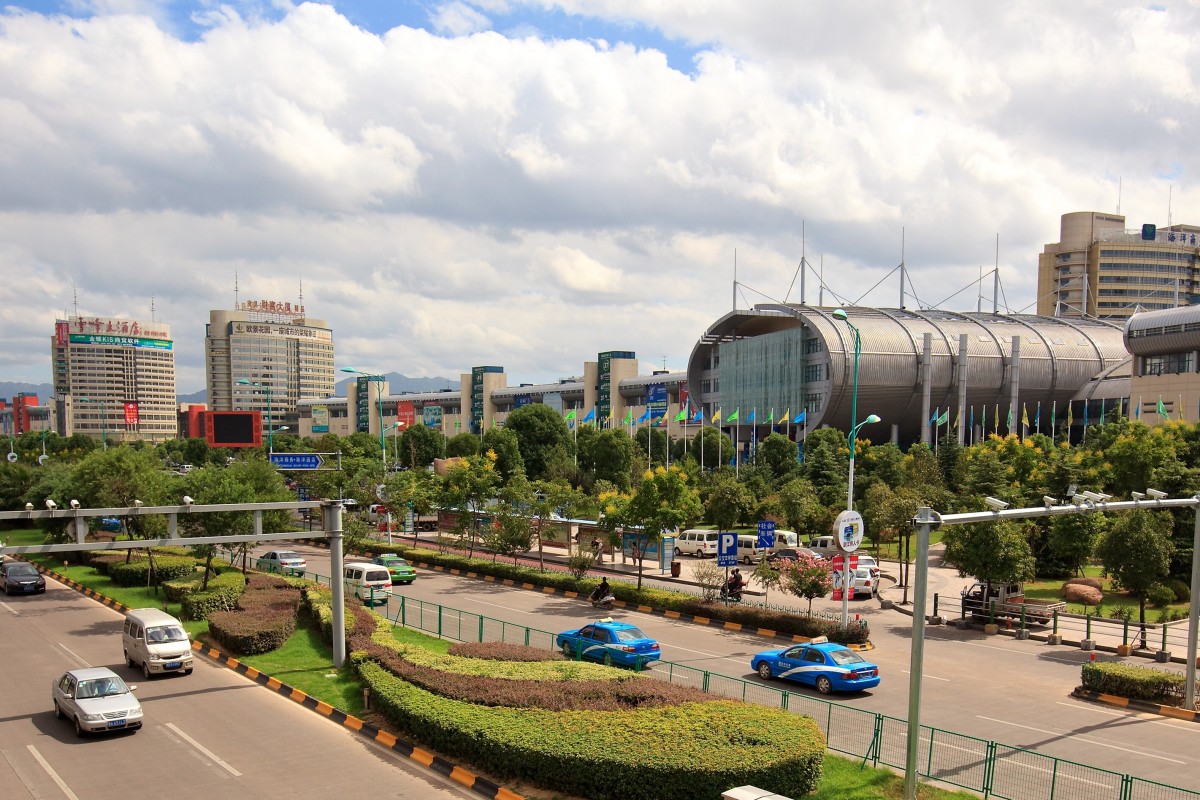
The coronavirus pandemic has severely dented wholesale trade at the Yiwu International Trade Market in China. Photo: SCMP

The Yiwu International Trade Market has always been renowned as a window into the vitality of Chinese manufacturing, crammed with stalls showcasing everything from flashlights to machine parts.

But today, as the coronavirus pandemic rips through the global economy, it offers a strikingly different picture – the dismal effect Covid-19 is having on the nation’s exports.

The usually bustling wholesale market, home to some 70,000 vendors supplying 1,700 different types of manufactured goods, is a shadow of its former self.

Only a handful of foreign buyers traipse through aisles of the sprawling 4-million-square-metre (43 million square feet) complex, while store owners – with no customers to tend to – sit hunched over their phones or talking in small groups.
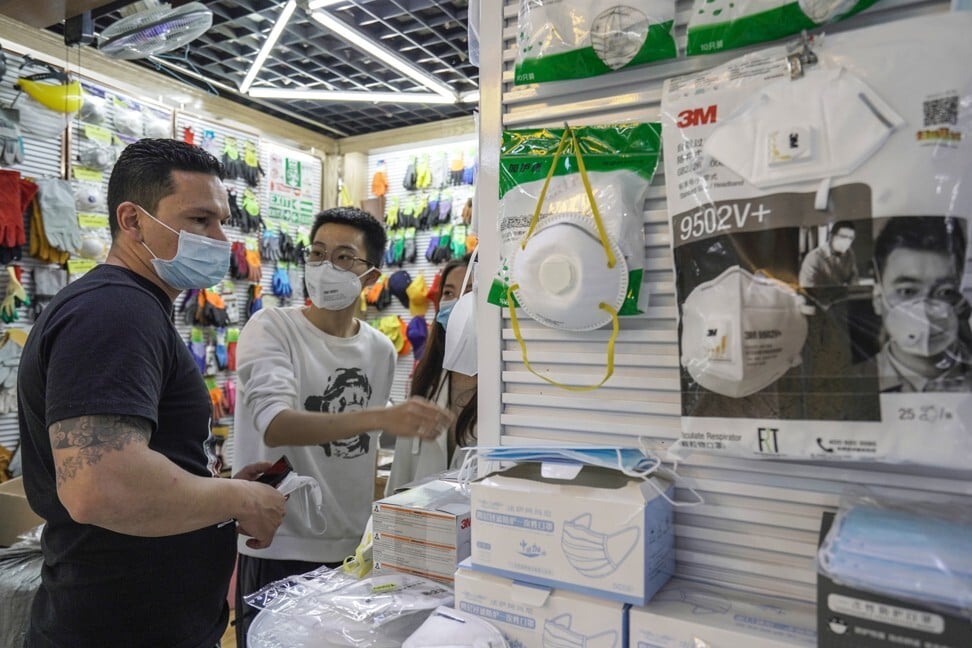
A foreign buyer visits a stall selling face masks. Photo: Ren Wei
“We try to convince ourselves that the deep slump will not last long,” said the owner of Wetell Razor, Tong Ciying, at her empty store. “We cannot let complacency creep in, although the coronavirus has sharply hampered exports of Chinese products.”
Chinese exports plunged by 17.2 per cent in January and February combined compared to the same period a year earlier, according to the General Administration of Customs. The figure was a sharp drop from 7.9 per cent growth in December.
After riding out a supply shock that shut down most of its factories, China is now facing a second wave demand shock, as overseas export orders vanish amid sweeping containment measures to contain the outbreak around the globe.

Nowhere is that clearer to see than in Yiwu. The city of 1.2 million, which lies in the prosperous coastal province of Zhejiang, was catapulted into the international limelight as a showroom for Chinese manufacturing when the country joined the World Trade Organisation in 2001.

Coronavirus: Is the gig economy dead, and should the self-employed worry?
Before the pandemic, thousands of foreign buyers would flock to the mammoth trade market each day to source all manner of products before sending them home.

But the outbreak, which has claimed the lives of more than 113,000 people and infected more than 1.9 million around the world, is proving a major test for the market and the health of the trade dependent city.

Imports and exports via Yiwu last year were valued at 296.7 billion yuan (US$42.2 billion) – nearly double the city’s economic output.

Businesses, however, are facing a very different picture in 2020. Most traders at the market say they have lost at least half their business amid the pandemic, which was first detected in the central Chinese city of Wuhan last year.

Just take a look at the situation in Yiwu and you will understand the extent of the virus’ effect on China’s trade with foreign countries – Tianqing

“Yiwu is the barometer for China’s exports,” said Jiang Tianqing, the owner of Beauty Shine Industry, a manufacturer of hair brushes. “Just take a look at the situation in Yiwu and you will understand the extent of the virus’ effect on China’s trade with foreign countries.”

Jiang said his business was only just hanging on thanks to a handful of loyal customers placing orders via WeChat.

“I assume it will be a drawn-out battle against the coronavirus,” he said. “We are aware of the fact that developed economies like the US and Europe have been severely affected.”

The Yiwu market reopened on February 18 after a one-month long hiatus following the Lunar New Year holiday and the government’s order to halt commercial activities to contain the spread of the outbreak.
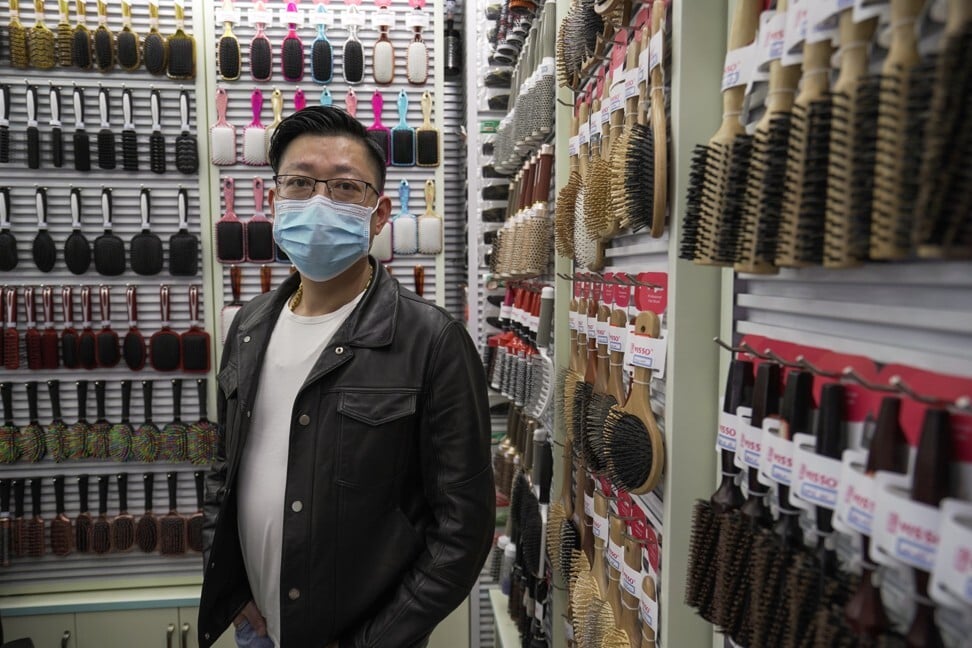
Jiang Tianqing, owner of hair brush company Beauty Shine Industry. Photo: Ren Wei
But facing the threat of a spike in imported cases, Beijing banned foreigners from entering the country in late March – shutting out potential overseas buyers.
Despite the lack of business, local authorities have urged stall owners to keep their spaces open to display Yiwu’s pro-business attitude, owners said.
“For those bosses who just set up their shops here, it would be a do-or-die moment now since their revenue over the next few months will probably be zero,” said Tong. “I am lucky that my old customers are still making orders for my razors.”
The impact of the coronavirus is just the latest challenge for local merchants, who normally pay 200,000 yuan (US$28,000) per year for a 10-square-metre (108 square feet) stall at the market.
Traders were hard hit by the trade war between China and the United States when the Trump administration imposed a 25 per cent tariff on US$200 billion of Chinese imports last year.
At the time, some Chinese companies agreed to slash their prices to help American buyers digest the additional costs.
“But it is different this time,” said Jiang. “Pricing does not matter. Both buyers and sellers are eager to seal deals, but we are not able to overcome the barriers [to demand caused by the virus].”
Even when businesses can secure orders, it is a struggle to deliver them
.

Ma Jun, a manager with a LED light bulb trading company, said the only export destination for her company’s products was war-torn Yemen because it was the only country with ports still open.

It is a public health crisis that ravages not just our businesses, but the whole world economy – Dong Xin

Dong Xin, an entrepreneur selling stationery products, said he could not ship the few orders he had because “ocean carriers have stopped operations”.
“It is a public health crisis that ravages not just our businesses, but the whole world economy,” he said. “The only thing can do is to pray for an early end to the pandemic.”

Most wholesale traders in the Yiwu market run manufacturing businesses based outside the city, so a sharp fall in sales has a ripple effect on their factories, potentially resulting in massive job cuts.
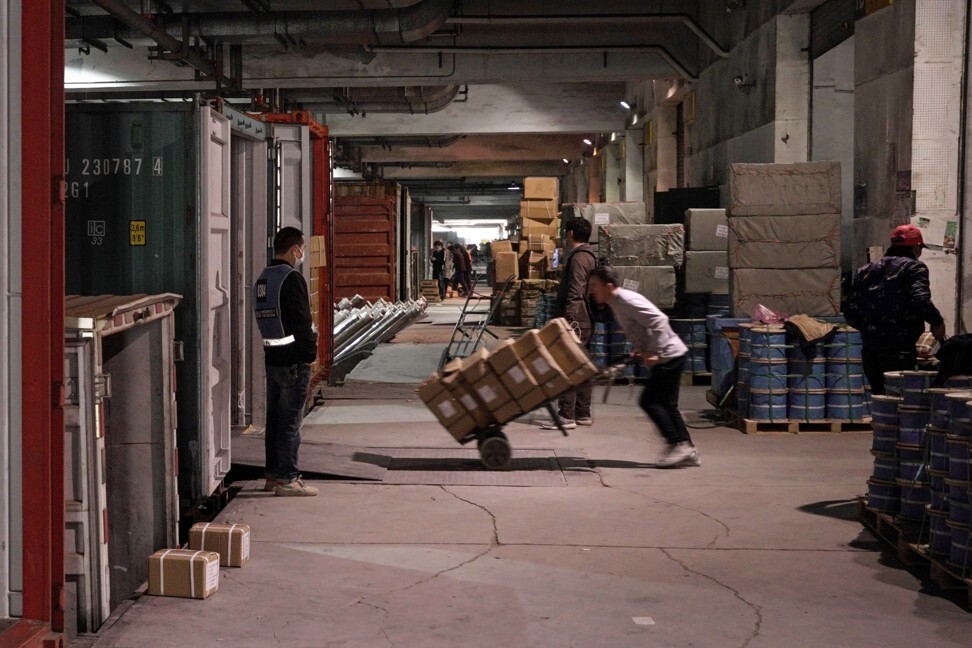
Workers pack containers at Yiwu Port, an inland port home to dozens of warehouses. Photo: Ren Wei
At Yiwu Port, an inland logistics hub full of warehouses where goods from the factories are unpacked and repacked for shipping abroad, container truck drivers joke about their job prospects.
“We used to commute between Shaoxing and here five times a week, and now it is down to twice a week,” said a driver surnamed Wang, describing the trip from his home to the shipping port, just over 100km away.
“At the end of the day, we may not be infected with the coronavirus, but our jobs will still be part of the cost of the fight against it.”
Source: SCMP
20/02/2019

Chinese envoy urges pushing Yemeni parties to sustain effective political dialogue

UN-SECURITY COUNCIL-MEETING-YEMEN

Chinese Permanent Representative to the United Nations Ma Zhaoxu (C, Front) addresses a Security Council meeting on the situation in Yemen, at the UN headquarters in New York, on Feb. 19, 2019. The first redeployment of forces in Hodeidah of Yemen could possibly begin later Tuesday, UN Special Envoy to Yemen Martin Griffiths told the Security Council via video link from Amman on Tuesday. (Xinhua/Li Muzi)

UNITED NATIONS, Feb. 19 (Xinhua) — A Chinese envoy on Tuesday urged the international community to push the Yemeni parties to sustain effective political dialogue.

“We should push the Yemeni parties to sustain effective political dialogue and negotiation,” Ma Zhaoxu, China’s permanent representative to the United Nations, said at a Security Council meeting on the situation in Yemen.

“We need to insist on the role of the United Nations as the main channel,” he said.

“Under the leadership of the Redeployment Coordination Committee, political will is to be turned into real action,” the Chinese ambassador said.

“We hope to see an early launch of the next round of peace talks under the leadership of special envoy (Martin) Griffiths, so as to reach a settlement that balances and takes into account of the interests of all parties and help resume peace, stability, and normal order in Yemen,” he said.

Noting that the international community “is paying close attention to” the issue of Yemen and is having a lot of expectations for the resumption of peace and stability in Yemen, Ma said that the Stockholm Agreement “has brought about hope of peace for the Yemeni people.”

“The Security Council should have a timely understanding of the implementation of the agreement by all parties and the challenges they are facing, and continue to play a positive role on the issue of Yemen,” the Chinese envoy added.

Ma told the Security Council that all Yemeni parties “are abiding by the ceasefire agreement in general,” adding that the Redeployment Coordination Committee under the auspices of the United Nations and with the participation of all Yemeni parties, is conducting its work “in an orderly fashion and has arrived at a consensus” on the first phase arrangement on Sunday.

Speaking of the challenges, the Chinese envoy said that the practical difficulties in implementing the agreement cannot be underestimated.

“Fighting is going on in Hodeidah and its surrounding areas. The two parties still have differences on the list of prisoners and the issue of task,” he said.

“The humanitarian situation in Yemen is dire,” Ma noted.

The envoy urged parties concerned to continue with the implementation of the Stockholm Agreement.

“The Yemeni parties should effectively implement the agreement, address their differences through dialogue, and increase their consensus,” he said.

“Efforts should be made to accelerate the deployment of the UN mission in Yemen to assist and monitor the implementation of the agreement,” said the ambassador.

Noting that the Security Council should take full account of, and respect the opinions of the country in question and the countries in the region, Ma said that the council should “continue to stay united.”

He also called for vigorous effort to ease the humanitarian situation in Yemen, stressing that the international community should provide food, medicine and funds “in a targeted fashion” to support the economic improvement and price stabilization in Yemen to satisfy the basic needs of livelihood for the Yemeni people.

UN Special Envoy to Yemen Griffiths told the Security Council via video link from Amman that Yemen’s government and Houthi rebels had agreed to pull back from the rebel-held ports of Saleef and Ras Issa followed by a redeployment from Hodeidah port, also held by the Houthis, and critical parts of the city.

Source: Xinhua

Law of Unintended Consequences

continuously updated blog about China & India

ChiaHou's Book Reviews

continuously updated blog about China & India

What's wrong with the world; and its economy

continuously updated blog about China & India