Archive for ‘Yichang’

17/09/2019

China gripped after sighting of its own ‘Loch Ness Monster’

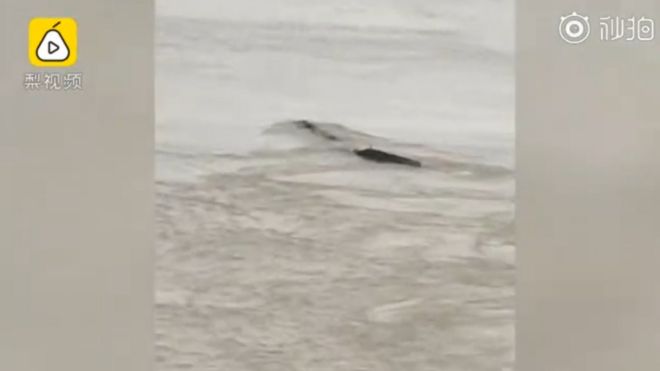
Footage showed a long black creatureImage copyright PEAR VIDEO
Image caption Grainy footage showed something that appeared to have a tail slithering back and forth in the water

Something is lurking in the deep in China’s famous Yangtze River – and social media discussion is rife over what it might be.

On Friday, footage appeared on China’s popular Sina Weibo microblog of what appeared to be a long, black creature, manoeuvring through the waters, and it has dominated online discussion ever since.

Footage has quickly racked up millions of views, and theories are rife.

Specialists have weighed in – but some think there may be a simple, and less murky, explanation.

Excitement over footage

A video filmed off the coast of the city of Yichang in western Hubei province, close to the Three Gorges Dam, captured the unusual scene.

The video has racked up more than six million views and hundreds of thousands of likes after being shared by the popular Pear Video, and shows what looks like a giant eel or snake slithering along the surface of the water.

Locals are filmed watching the creature from the shore – and social media users have similarly been captivated over theories about what the creature might be.

Many have posted using the hashtag #ThreeGorgesMonsterPhotos, and specialists have begun to weigh in with their thoughts.

In an interview with Pear Video, Professor Wang Chunfang from the Huazhong Agricultural University dismissed the idea of it being a new species, saying it was likely a simple “water snake”.

Some users said that “external factors such as pollution” could have a role to play in a sea snake growing to an extraordinary size. But not everyone was convinced.

Separate footage has led some users to question whether the unidentified object is actually a living creature at all.
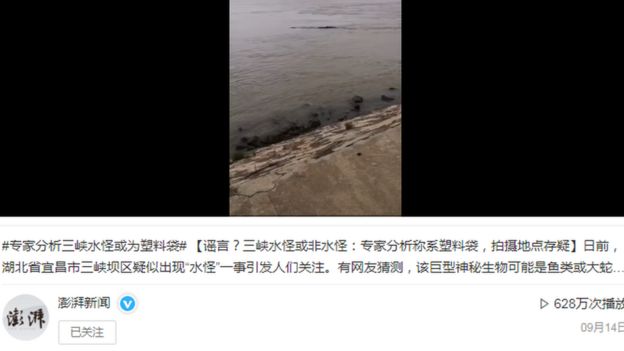
Different footage of China's 'Loch Ness'Image copyright THE PAPER
Image caption Millions have watched footage of the item, but some think it might be a piece of simple rubbish

Popular news website The Paper shared separate footage of something long and black moving in the water that appeared to be less animated.

It asked if the whole thing was simply “a rumour” – and interviewed a biologist, Ding Li, who said that the object was neither a fish nor a snake, but simply “a floating object”.

A picture has since gone viral showing a long piece of black cloth washed up on some rocks, fuelling discussion this might have been the mysterious object.
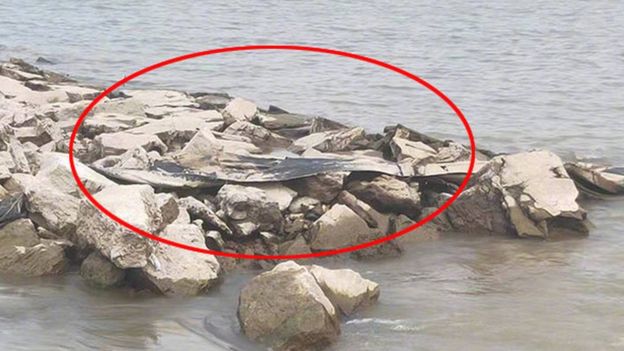
Could the item have been a piece of black cloth?Image copyright THE PAPER
Image caption The appearance of some cloth washed up on some rocks has got users asking if they were mistaken

Both have led to jokes about whether the local government was trying to attract tourism to the area, given the millions of dollars involved in building and maintaining the Three Gorges Dam.

Others have made jokes about the quality of the footage, despite the rapid development in China of high quality smartphones.

Some joked that the user obviously didn’t have a Huawei phone. Another said: “Monsters always appear only when there are few pixels.”

So what does live in the Yangtze?
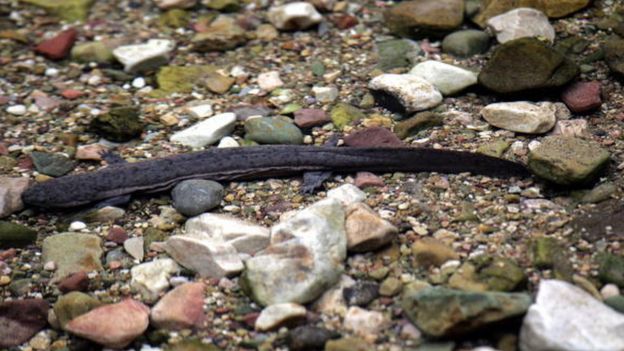
A baby Giant Chinese salamanderImage copyright AFP
Image caption Giant Chinese salamanders live in the Yangtze river. They can grow to 1.8 metres in length

The Yangtze River is the longest river in Asia, and at 3,900 miles in length (6,300km), is the third longest in the world.

But pollution has severely affected the river in recent years, meaning that its ecosystem has become narrower, rather than wider.

The largest creature thought to exist in the waters at present is the Chinese giant salamander, which can reach some 1.8m in length.

This species is critically endangered, largely as a result of pollution.
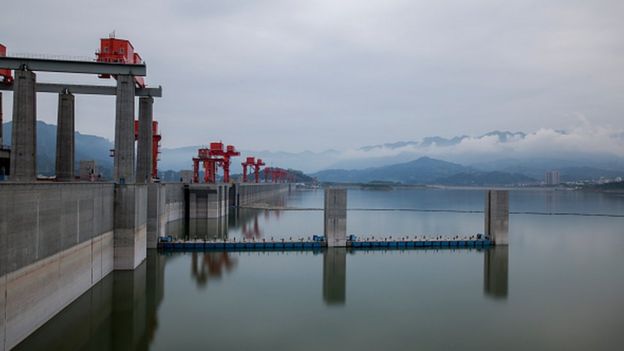
The Three Gorges Dam is the world's latest hydroelectric damImage copyright ZHANG PENG/GETTY IMAGES
Image caption The Three Gorges Dam is the world’s latest hydroelectric dam

China’s other ‘Nessies’

China is no stranger to conspiracy theories about mythical creatures lurking in the deep.

Since 1987, questions have been asked about whether a “Lake Monster” exists in the Kanas Lake in north-western Xinjiang, following numerous reports of sightings.

However, specialists believe that this is a giant taimen, a species of salmon that can grow to 180cm long, the official China Daily said.

More recently, in August 2017, footage went viral showing an unusual water creature seemingly raising its head in the waters of Luoping County in Southwest Yunnan province.

Officials, however, dismissed the “monster” as either an alligator, or a piece of floating rubbish.

Source: The BBC
04/06/2019

No time to waste in saving the world’s rivers from drying up – especially in China

  • Brahma Chellaney writes that excessive damming and drastic overuse of water resources are causing the world’s major waterways to run dry
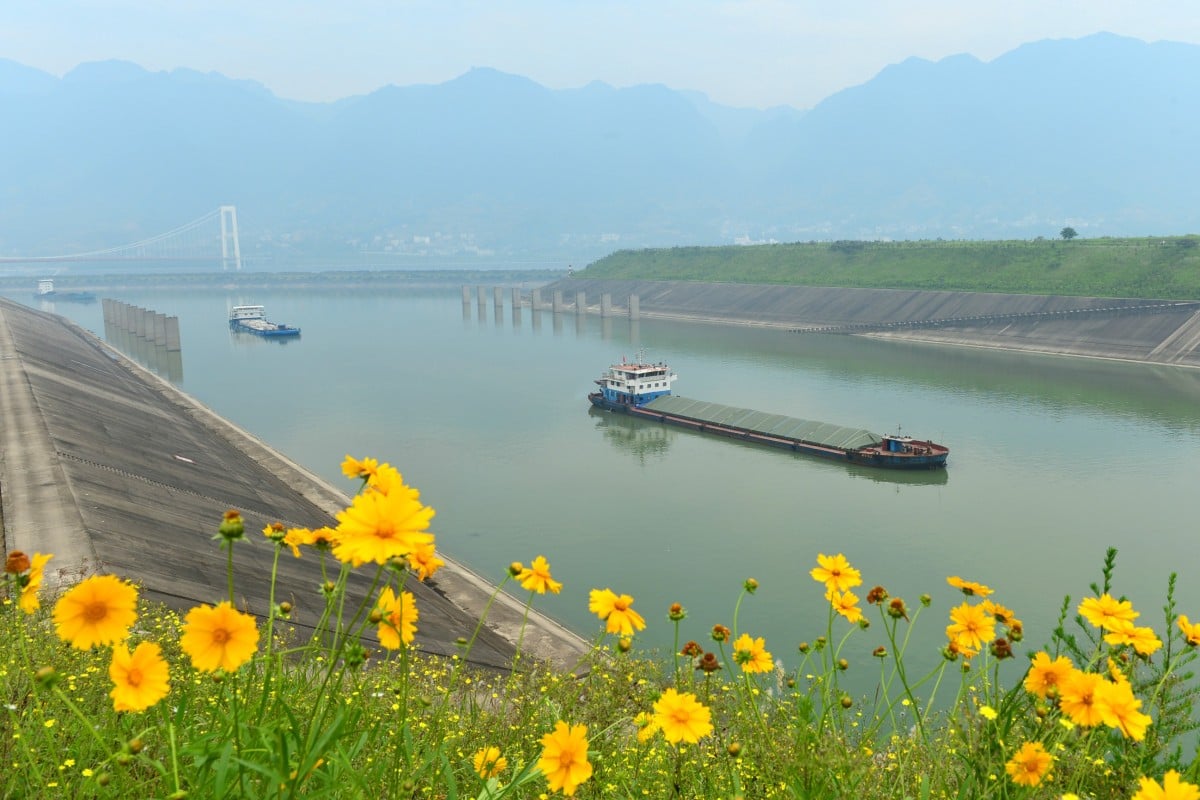
Vessels head for the lock of the Three Gorges Dam in Yichang, in central China's Hubei province. Sediment build-up in the dam’s reservoir stems from silt flow disruption in the Yangtze River, Brahma Chellaney writes. Photo: Xinhua
Vessels head for the lock of the Three Gorges Dam in Yichang, in central China’s Hubei province. Sediment build-up in the dam’s reservoir stems from silt flow disruption in the Yangtze River, Brahma Chellaney writes. Photo: Xinhua
Thanks to excessive damming and drastic overuse of water resources, an increasing number of major rivers across the world are drying up before reaching the sea.
Nowhere is this more evident than in China, where the old saying, “Follow the river and it will eventually lead you to a sea,” is no longer wholly true.
While a number of smaller rivers in China have simply disappeared, the Yellow River – the cradle of the Chinese civilisation – now tends to run dry before reaching the sea.
This has prompted Chinese scientists to embark on a controversial rainmaking project to help increase the Yellow’s flow. By sucking moisture from the air, however, the project could potentially affect monsoon rains elsewhere.
For large sections of the world’s population, major river systems serve as lifelines. The rivers not only supply the most essential of all natural resources – water – but also sustain biodiversity, which in turn supports human beings.
Yet an increasing number of rivers, not just in China, are drying up before reaching the sea.
A major new United Nations study published early this month offers grim conclusions: human actions are irremediably altering rivers and other ecosystems and driving increasing numbers of plant and animal species to extinction.

“Nature across the globe has now been significantly altered,” according to the study’s summary of findings.

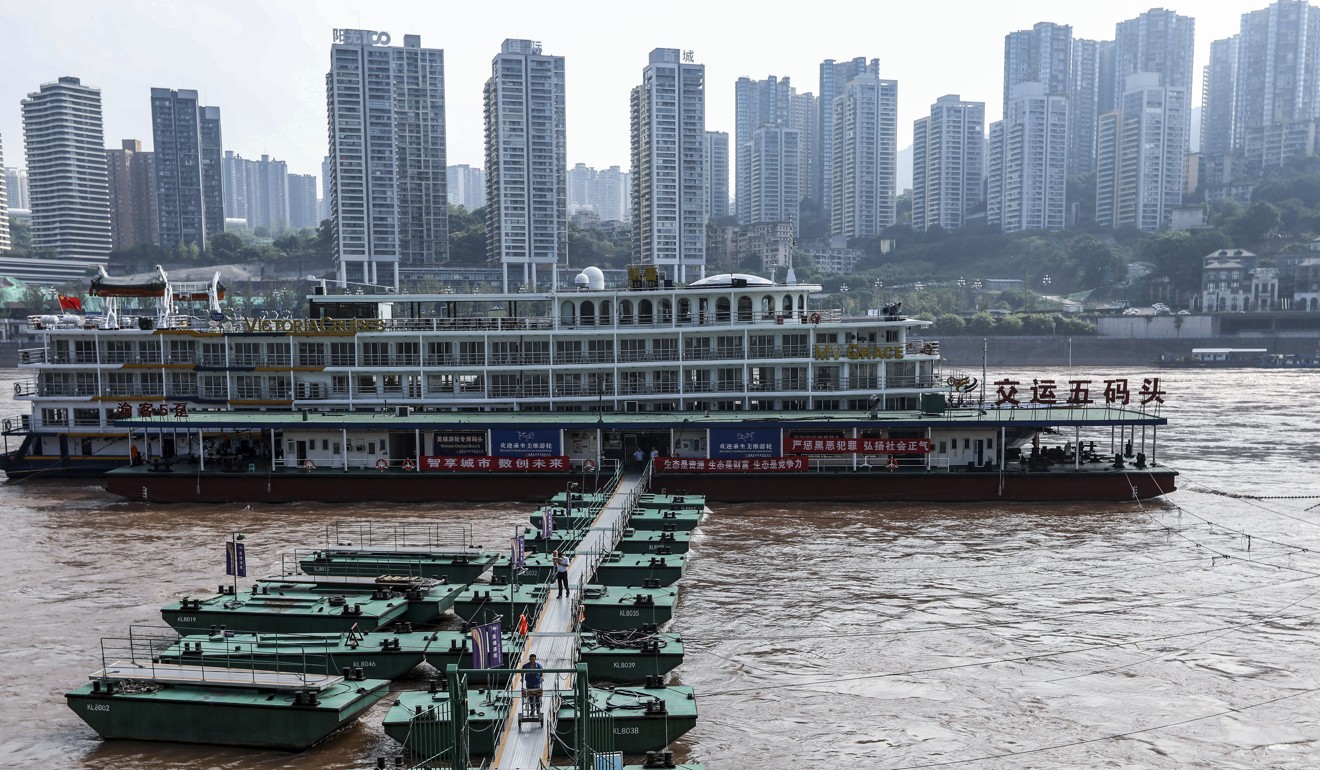
The Yangtze and Jialing rivers come together in the southwestern city of Chongqing. Photo: Simon Song

Water sustains life and livelihoods and enables economic development.

If the world is to avert a thirsty future and contain the risks of greater intrastate and interstate water conflict, it must protect freshwater ecosystems, which harbour the greatest concentration of species.

The Mekong is mighty no more: book charts river’s demise

Yet, according to another study published in Nature this month humans have modified the flows of most long rivers, other than those found in the remote regions of the

Amazon and Congo basins and the Arctic.

Consequently, only a little more than one-third of the world’s 246 long rivers are still free-flowing, meaning they remain free from dams, levees and other man-made water-diversion structures that leave them increasingly fragmented.

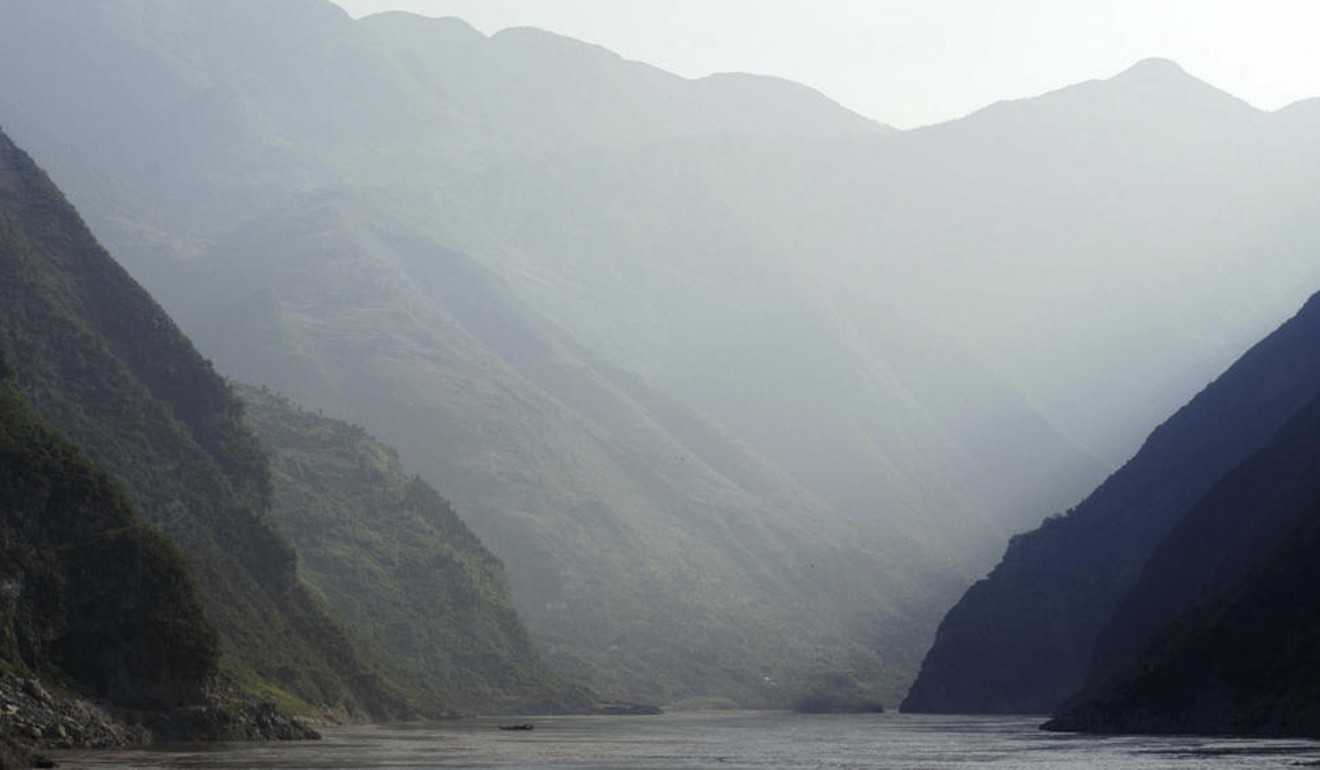
Humans have modified the flows of most long rivers, including the Yangtze, home to some of China’s most spectacular natural scenery. Photo: WWF

Such fragmentation is affecting river hydrology, flow of nutrient-rich sediment from the mountains where rivers originate, riparian vegetation, migration of fish and quality of water.

Take the Colorado River, one of the world’s most diverted and dammed rivers. Broken up by more than 100 dams and thousands of kilometres of diversion canals, the Colorado has not reached the sea since 1998.

Sinking sands along the Mekong River leave Vietnamese homeless

The river, which originates in the Rocky Mountains and is the lifeblood for the southwestern United States, used to empty into the Sea of Cortez in Mexico.

But now, owing to the upstream diversion of 9.3 billion cubic metres (328.4 billion cubic feet) of water annually, the Colorado’s flow into its delta has been reduced to a trickle.

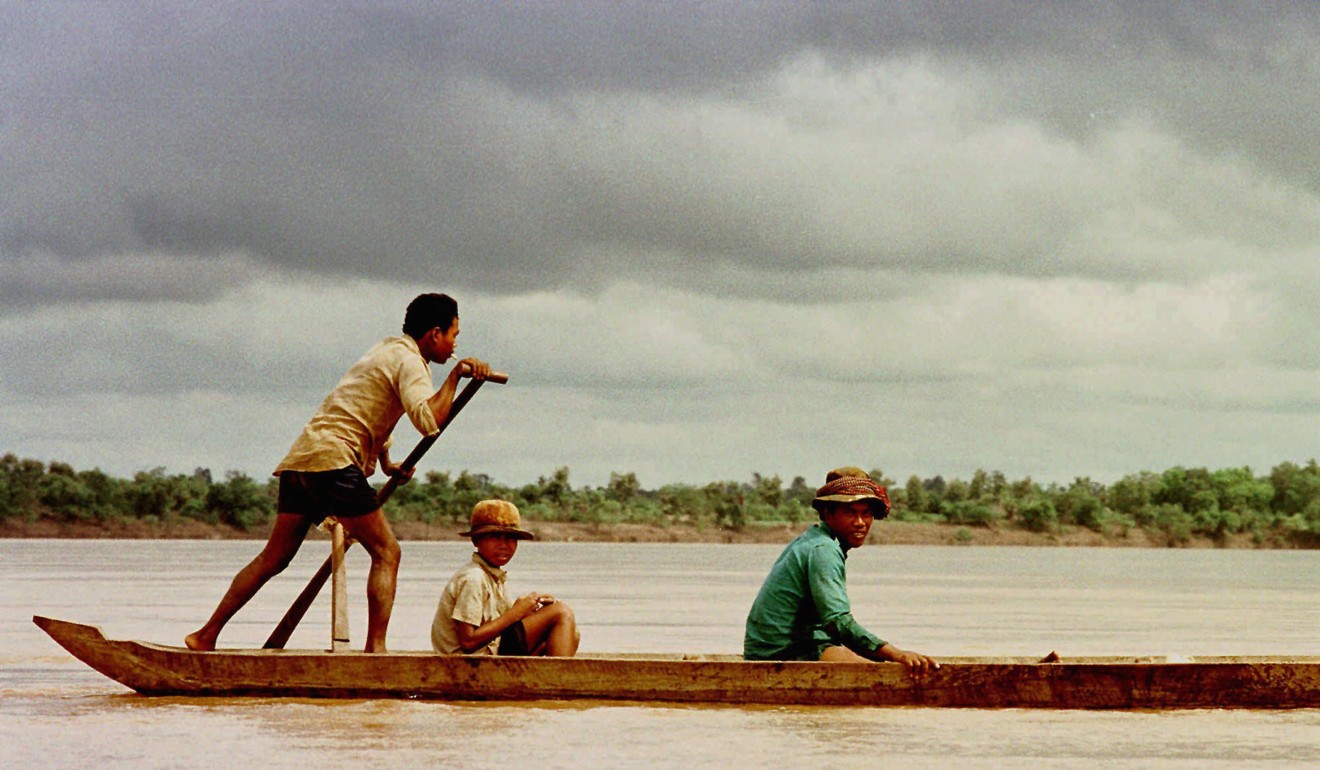
Altering the flow characteristics of rivers poses a serious problem for sustainable development, because they affect the ecosystem services on which both humans and wildlife depend. Photo: AP

Other major rivers that run dry before reaching the sea include the Amu Darya and the Syr Darya, the two lifelines of Central Asia; the Euphrates and the Tigris in the Middle East; and the Rio Grande, which marks the border between Texas and Mexico before heading to the Gulf of Mexico.

The overused Murray in Australia and Indus in Pakistan are at risk of meeting the same fate.

Are China’s Mekong dams washing away Cambodian livelihoods?

More fundamentally, altered flow characteristics of rivers are among the most serious problems for sustainable development, because they seriously affect the ecosystem services on which both humans and wildlife depend.

Free-flowing rivers, while supporting a wealth of biodiversity, allow billions of fish – the main source of protein for the poor – to trek through their waters and breed copiously.

Urgent action is needed to save the world’s rivers, including improving agricultural practices, which account for the bulk of freshwater withdrawals

Free-flowing rivers also deliver nutrient-rich silt crucial to agriculture, fisheries and marine life.

Such high-quality sediment helps to naturally re-fertilise overworked soils in the plains, sustain freshwater species and, after rivers empty into seas or oceans, underpin the aquatic food chain supporting marine life.

China’s hyperactive dam building illustrates the high costs of river fragmentation. No country in history has built more dams than China. In fact, China today boasts more large dams than the rest of the world combined.

China’s chain of dams and reservoirs on each of its long rivers impedes the downstream flow of sediment, thereby denying essential nutrients to agricultural land and aquatic species.

A case in point is China’s Three Gorges Dam – the world’s largest – which has a problematic build-up of sediment in its own massive reservoir because it has disrupted silt flows in the Yangtze River.

Likewise, China’s cascade of eight giant dams on the Mekong, just before the river enters Southeast Asia, is affecting the quality and quantity of flows in the delta, in Vietnam.

Yangtze dams may spell end to sturgeon in a decade
Undeterred, China is building or planning another 20 dams on the Mekong.
How the drying up of rivers affects seas and oceans is apparent from the Aral Sea, which has shrunk 74 per cent in area and 90 per cent in volume, with its salinity growing nine-fold.
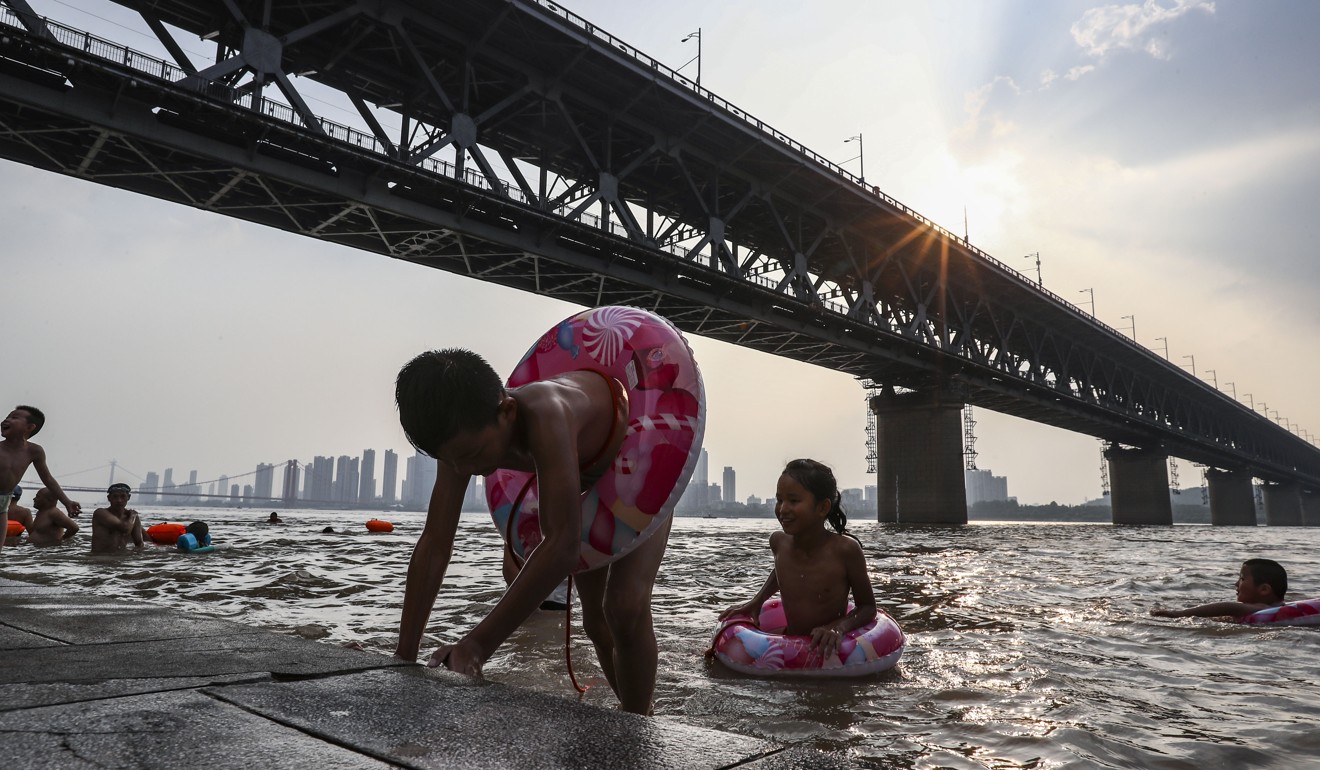
People beat the heat by cooling off in the Yangtze River in Wuhan, in central China’s Hubei province. Photo: Nora Tam

This change is the result of the Aral Sea’s principal water sources, the Amu Darya and Syr Darya, being so overexploited for irrigation that they are drying up before reaching what was once the world’s fourth-largest inland lake.

Compounding the challenges is the increasing pollution of rivers. Aquatic ecosystems have lost half of their biodiversity since the mid-1970s alone.

Chinese court jails nine for dumping toxic waste in Yangtze

Urgent action is needed to save the world’s rivers. This includes action on several fronts, including improving practices in agriculture, which accounts for the bulk of the world’s freshwater withdrawals.

Without embracing integrated water resource management and other sustainable practices, the world risks a parched future.

Source: SCMP

Law of Unintended Consequences

continuously updated blog about China & India

ChiaHou's Book Reviews

continuously updated blog about China & India

What's wrong with the world; and its economy

continuously updated blog about China & India