Archive for ‘Yunnan Province’

30/05/2019

Rotten review of pomelo in China leads to nuisance calls and texts

  • Were buyer’s details leaked online?
  • Police and e-commerce giant JD.com launch joint investigation
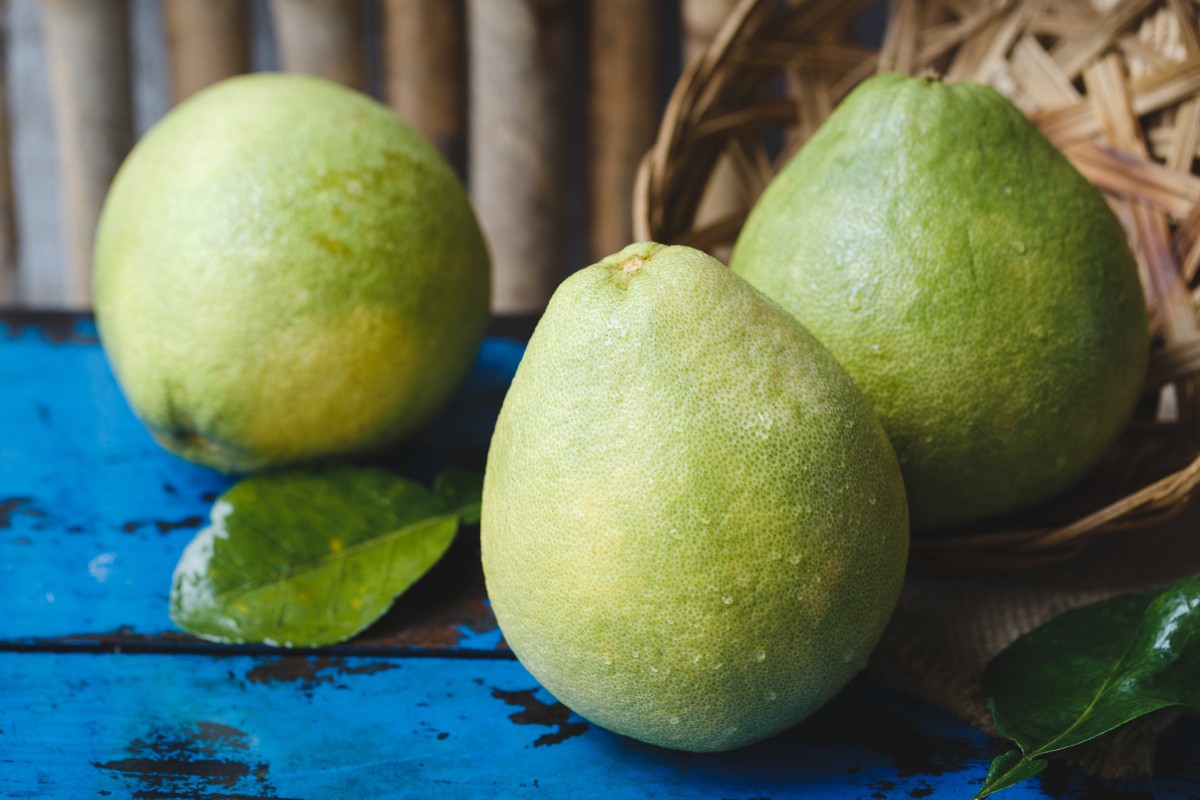
A woman in China was subjected to nuisance and calls texts after leaving a negative review about some fruit which she bought online. Photo: Shutterstock

A woman in southwest China was inundated with nuisance calls and texts after leaving a bad review with an online fruit seller.

Chinese e-commerce platform JD.com has launched a joint investigation with the police to determine whether the woman’s personal details were leaked online, according to online news portal The Paper on Thursday.

The woman, surnamed Pang, from Kunming in Yunnan province, said she started receiving the harassing phone calls and texts soon after writing a negative review for two boxes of pomelos – an Asian citrus – she ordered from a JD.com vendor last week.

Pang wrote the negative review when the number of pomelos delivered to her on Monday was fewer than the description in the online listing. After checking with her that the fruit was not damaged, the seller wrote: “Then you can’t leave a negative comment.
Why are you not responding? What the?”
Twelve minutes after she reported this interaction to JD.com customer services, the nuisance calls began. Pang told The Paper she suspected her personal information had been leaked.
JD.com said on Tuesday that the customer had been fully refunded for the price of the item, and that the mismatch between the description and the delivery was due to an omission by the seller. The e-commerce platform said it would deal with the merchant in accordance with its guidelines.

Pang said the vendor had contacted her on Wednesday to apologise for the poor customer service but had denied any involvement with the nuisance calls and texts. The seller also denied sharing her personal information with third parties.

Pang said she would seek legal advice to protect her consumer rights.

Source: SCMP

23/05/2019

China Focus: China honors amputee demining soldier

BEIJING, May 22 (Xinhua) — Du Fuguo, a soldier who lost his eyes and arms in an explosion during a mine clearance operation, was honored by the Publicity Department of the Communist Party of China Central Committee on Wednesday.

Du, who was a demining soldier of the People’s Liberation Army (PLA), was awarded the title “role model of our times” at a ceremony in Beijing.

Du’s family members and fellow soldiers, as well as representatives from all walks of life, attended the award ceremony.

The 28-year-old soldier was seriously injured in the landmine explosion trying to protect his fellow soldier during the operation in southwest China’s Yunnan Province in October last year.

Du would have finished his military service in December 2018, just two months after the explosion.

In 2015, Du and over 400 fellow soldiers started clearing mines in the border area in Yunnan, where over 100 minefields were located.

“I couldn’t stay calm after getting to know the villagers living in the area suffered three explosions within 10 years,” said Du, who volunteered to participate in the demining operations in 2015.

Du’s father wished to become a solider at an early age, which was not fulfilled, while Du Fuguo joined the PLA in 2010.

“I am reflecting what kind of life is truly meaningful and valuable, and the only standard is what has been done for the country and for the people,” Du wrote in his application submitted for mine clearance operations.

“When the people are in need and the country is calling upon us, there is not even half a step that I can retreat,” he responded when being told mine clearance was dangerous.

A minefield Du worked has deterred local people from growing crops and picking tea. They beat gongs and sounded drums to welcome the arrival of the mine clearance group.

Over the past three years, Du has entered minefields over 1,000 times, defusing more than 2,400 mines and bombs.

“I feel like it is my destiny to carry out this mission and there was a voice calling me to clear the mines,” he wrote in his application.

While various equipment has been developed for mine clearance, it is believed that manual demining remains the most efficient method, albeit the most dangerous.

The explosion happened in an afternoon when Du and a fellow soldier tried to defuse a bomb, but it suddenly exploded and Du quickly protected his colleague who was left with only bruises.

“Step back and I’ll do the job,” Du said before he started the defusing work in which he lost his forearms and eyes.

One month later, in November last year, Du’s team members confirmed that the minefield where the explosion took place was safe to be used as farmland, meaning that the three-year demining operation had finished.

In the area where Du was injured, people have named tea picked this year as “Fuguo.” They are hoping that Du could come back to have a taste of his eponymous tea.

“Despite my lost hands, I have legs to continue chasing after dreams; despite my lost sight, as long as the sun can rise in my heart, my world remains blazing with color,” Du said.

Source: Xinhua

07/04/2019

China’s NPC delegation visits Armenia

ARMENIA-YEREVAN-CHINA-SHEN YUEYUE-VISIT

Shen Yueyue (R), vice chairwoman of the Standing Committee of the National People’s Congress (NPC) of China, meets with Armenian President Armen Sarkissian in Yerevan, Armenia, on April 4, 2019. (Xinhua/Li Ming)

YEREVAN, April 6 (Xinhua) — A delegation led by Shen Yueyue, vice chairwoman of the Standing Committee of the National People’s Congress (NPC) of China, wrapped up a three-day visit to Armenia on Saturday.

During the visit at the invitation of the National Assembly of Armenia from Thursday to Saturday, Shen met respectively with Armenian President Armen Sarkissian, Prime Minister Nikol Pashinyan, President of the National Assembly Ararat Mirzoyan and held talks with Vice President of the National Assembly Lena Nazaryan.

In recent years, China and Armenia both witnessed a healthy and steady growth of friendly ties, and closer cooperation in such areas as economy, trade, infrastructure, and people-to-people exchanges, Shen said during her meetings with the Armenian top leaders.

China respects Armenian people’s independent choice of development path, highly appreciates Armenia’s firm support on issues concerning China’s core interest and major concerns, and will join hands with Armenia to take the opportunity of jointly building the Belt and Road to deepen practical cooperation in all fields, so as to benefit peoples of the two countries, Shen said.

Shen also called on the legislative bodies of both countries to keep close contact and deepen cooperation, and to make positive contributions to the continuous advancement and further development of the bilateral ties.

The National Assembly and government of Armenia would firmly adhere to the one-China Policy and thanked China for its support to the economic and social development of Armenia in all these years.

They are willing to deepen cooperation with China in jointly developing the Belt and Road, further promote exchanges between parliaments at all levels and lift the bilateral ties to a new level.

Source: Xinhua

18/03/2019

Across China: Top tourist city strengthens cultural protection

KUNMING, March 17 (Xinhua) — Every day, He Runyuan explains what happiness is to hundreds of tourists.

“Dongba symbols are used by China’s Naxi ethnic minority and one of the world’s only remaining pictographs. For them, happiness is a steaming hot pot of food,” He said. “As in the past, having a hot meal means everything.”

In a traditional Naxi costume of goatskin vest and a white robe, 42-year-old He guides tourists to learn the Naxi scripts, history, culture and tradition in his center of Naxi Dongba pictographs and paintings in the Old Town in the city of Lijiang, southwest China’s Yunnan Province.

“Peak seasons such as national holidays and summer and winter vacations see around 5,000 visitors a day,” he said.

“After explaining the symbols, I will ask the tourists to pick one they like and try to write it down,” he added.

As a Naxi minority, He grew up in the Old Town, a UNESCO World Heritage Site with an 800-year history, which attracted more than 14 million tourists last year.

He has been learning Naxi painting and pictographs for about 30 years. “With a population of more than 300,000, less than 700 Naxi people now understand Dongba pictographs, and only a dozen can do traditional Naxi paintings,” he said.

“I think it’s my responsibility to pass down our culture and let more people know about it, which is so vivid and charming,” he said, adding that most Naxi people live in Lijiang. “That’s why I came back here after graduation. The origin of Naxi culture is here.”

His devotion of cultural protection is greatly supported by the local government which entrusted He to open the experience center in 2016 in the busiest area of the Old Town and gives him 400,000 yuan (about 59,600 U.S. dollars) a year for daily maintenance and other expenses.

“The local government offered us this two-story cultural courtyard with traditional Naxi characteristics as our center, covering about 300 square meters. We have separated it into several rooms for exhibitions and classrooms,” he said.

He and four other Naxi guides work 14 hours a day. “During peak seasons, we can barely take a sip of water,” he said.

“It’s hard, but it’s worth it. We are so proud of what we are doing,” he said.

By the end of last year, there were 17 free cultural courtyards in the Old Town of Lijiang, including He’s. With the support of the local government, a further 12 are expected to open to the public this year.

“I think the courtyard is a window for promoting the culture of Lijiang, as well as an important base for visitors to learn and try by themselves to have a more comprehensive understanding of our culture,” he said.

He’s experience center has also cooperated with travel agencies, summer camps and schools to offer free training classes on Naxi culture, receiving more than 7,000 students each year.

“Without the courtyard, nothing would even be close to possible,” he said.

To prevent the ancient Chinese city from over commercialization after years of tourism development, the local government has set up a specialized annual fund of 10 million yuan for cultural protection in the Old Town.

“Lijiang has long been China’s name card to the world with the Old Town as its core. For sustainable development, we must spare no effort in protecting our culture and make it one of the most attractive parts of the city,” said He Tang with the protection and administrative bureau of Lijiang Old Town.

All the buildings in the Old Town are required to maintain traditional ethnic characteristics. Dancing halls, Internet bars, and among others that are inconsistent with the ancient Old Town have all been closed.

A total of 299 traditional houses and 236 yards have so far been restored and renovated by the local government and the Global Heritage Fund.

“We also invite folk artists and culture inheritors to show their skills in the Old Town to get more tourists involved. On traditional festivals, we hold grand celebrations in the Old Town.” He Tang said.

More than 90 sets of books telling stories of Lijiang and the culture of Naxi have also been published.

“Our life is limited, but so long as everyone makes even an effort, the life of a culture can exist forever,” He Runyuan said.

Source: Xinhua

10/03/2019

China’s wealthy families are turning to long holidays abroad as their efforts emigrate overseas are halted

  • Foreign lifestyle experiences are becoming more popular as citizens seek to escape pollution, food and medicine safety worries and authoritarian government controls
  • Citizens encountering more barriers to their dreams of travelling abroad, with severe limits on moving money overseas and restrictions on visiting foreign countries
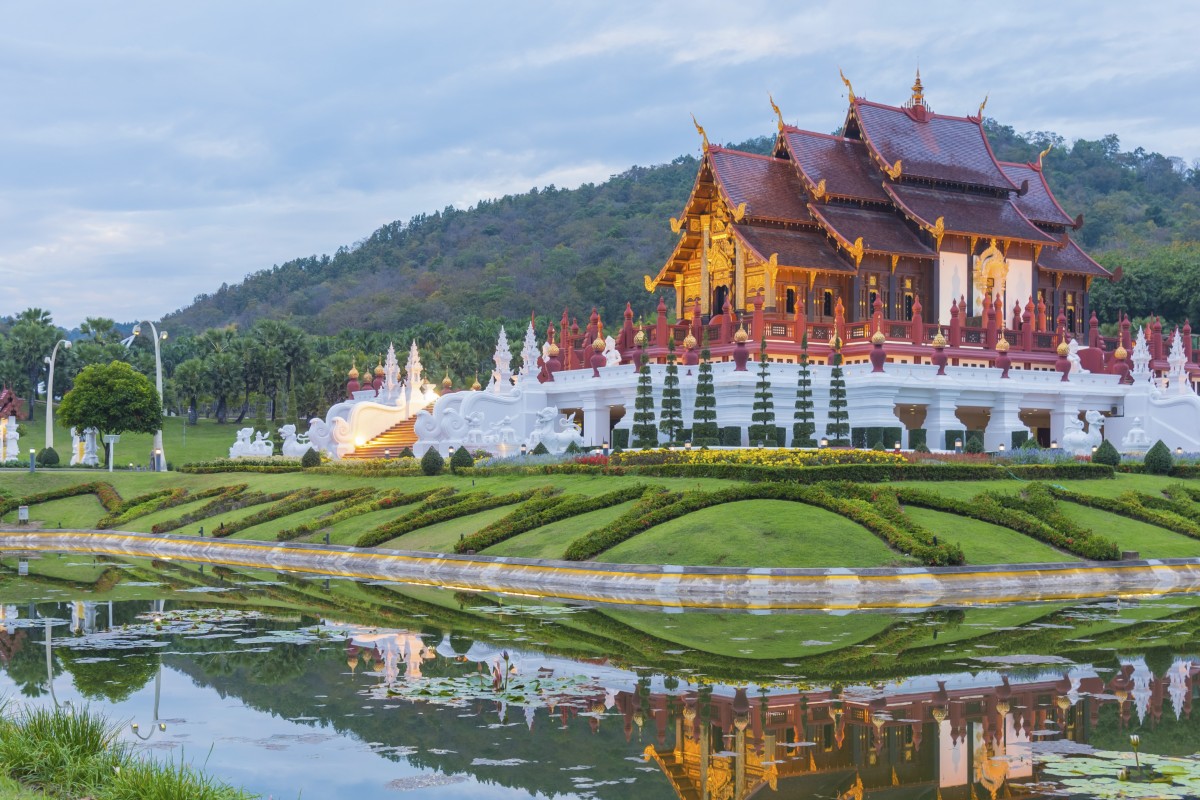
Thailand, including the likes of Chiang Mai, the United States, Australia, Canada, New Zealand are popular destinations for Chinese families. Photo: Shutteratock

Xu Zhangle and her husband and their two children are a typical middle-class couple from Shenzhen, and along with 60 other Chinese families, they are going on an extended holiday to Thailand in July, where they hope to enjoy an immigrant-like life experience.

The family have paid a travel agent around 50,000 yuan (US$7,473) for the stay in Chiang Mai in the mountainous north of the country, including transport, a three-week summer camp for their daughters at a local international school, rent for a serviced apartment and daily expenses.

Zhangle loves Chiang Mai’s relaxed lifestyle and easy atmosphere and wants to live as a local for a month or even longer, instead of having to rush through a short-term holiday.

“It would not be just [tourist] travelling but rather a life away from the mainland.” she said.

Recently, upper middle-class citizens have increased their efforts to safeguard their wealth and achieve more freedom by spending more time abroad.

They have invested considerable amounts of money in overseas properties and applied for long-stay visas, although many of their attempts have ended in failure.

Chinese citizens are encountering more barriers to their dreams of travelling abroad, with severe limits on moving money overseas and restrictions on visiting foreign countries.

Still, growing anxieties about air pollution, food and medicine safety and an increasingly authoritarian political climate are pushing middle class families to look for new ways to circumvent the obstacles so they can live outside China.

Among the options, there is growing demand for sojourns abroad of a month or more, to enjoy a foreign lifestyle for a brief period to make up for the fact that their emigration dreams may have stalled.

“I think this is becoming a trend. Chinese middle-class families are facing increasing difficulties to emigrate and own homes overseas. On the other hand, they still yearn for more freedom, for a better quality of life than what is found in first-tier cities in China.

They are eager to seek alternatives to give themselves and their children a global lifestyle,” said Cai Mingdong, founder of Zhejiang Newway, an online tour and education operator in Ningbo, south of Shanghai.

“First, the availability of multiple-entry tourist visas and the sharp drop in air ticket prices have made it convenient and practical to stay abroad for from a few weeks to up to three months each year.”

Blacklist labels millions of Chinese citizens and businesses untrustworthy

Now, many well-to-do Chinese middle class families can get a tourist visa for five or even 10 years that allows them to stay in a number of countries — including the United States, Australia, Canada, New Zealand and other Asian countries — for up to six months at a time.

“In 2011, a round-trip air ticket from Shanghai to New Zealand cost 14,000 yuan (US$2,000), but now is about 4,000 (US$598),” added Cai.

This opens up the possibility for many middle-class families who are not eligible to emigrate, to live abroad for short periods of time.

Many wealthy Chinese middle class families can get a tourist visa for five or even 10 years that allows them to stay in several countries including the United States, Australia, Canada, New Zealand and other Asian countries, for up to six months at a time. Photo: AP

Chinese tourists made more than 140 million trips outside the country in 2018, a 13.5 per cent increase from the previous year, spending an estimated US$120 billion, according to the China Tourism Academy, an official research institute under the Ministry of Culture and Tourism.

“In [the Thai cities of] Bangkok and Chiang Mai, there are more and more Chinese who stay there to experience the local lifestyle, which is different from theirs in China. The life there is very different from that in China,” said Owen Zhu, who now lives in the Bangkok condo he bought last year.

“The freedom, culture and community are diversified. The quality of air, food and services are much higher than in first-tier cities in China, but the prices are more affordable.

“In Bangkok, in many international apartment complexes where foreigners live, the monthly rent for a one-bedroom [apartment] is about 2,000 (US$298) to 3,000 yuan.”

China’s richest regions are also home to the most blacklisted firms
A one-bedroom apartment in Shenzhen in southern China is twice as expensive, with rents continuing to rise rapidly.

There are global goods, and it is easy to socialise with different people from around the world,” Zhu added

“Many Chinese people around me, really, come to Thailand to live for a while and go back to China, but then come back again after a few months.”

Both Cai and Zhu said they discovered the new phenomenon among China’s middle class and decided it was a business opportunity.

Growing anxieties about air pollution, food and medicine safety and an increasingly authoritarian political climate are pushing middle class families to look for new ways to circumvent the obstacles so they can live outside China. Photo: AP

Zhu is in the process of registering a company in Bangkok and plans to build an online platform to service the needs of Chinese citizens living abroad who do not own property or have immigration status, especially members of the LGBT community.

Cai said dozens of Chinese families in the Yangtze River Delta had paid him to send their children to schools in New Zealand or Europe for around three or four weeks in the middle of the school year, while the parents rent villas in the area, with New Zealand and Toronto in Canada among the most popular destinations.

Last year, Zheng Feng, a single mother and freelance writer from Beijing, rented a small villa in Australia for a month for them, a friend and their children to escape Beijing’s pollution and experience life overseas.

“To be honest, I don’t have enough money to invest in a property or a green card in Australia. But it’s very affordable for me and my son to pay about 30,000 yuan (US$4,484) to live abroad for one or two months.” Zheng said.

China says 2018 growth was worth more than Australia’s whole GDP

Zheng will join the Xu family in Chiang Mai later this year and she is also planning a similar trip to England next year.

Zheng’s friend, Alice Yu, invested in an American EB-5 investor visa a few years ago, and plans to make one or two month-long trips abroad each year until her family is finally able to move to the United States.

Demand for the EB-5 investor visa in China seems to be waning given heightened uncertainty about the future of the programme and US immigration law in general under US President Donald Trump.

Approval for the visa can now take up to 10 years, resulting in a huge backlog that has further dampened interest and led to a significant dip in investment inflows into the US from foreign individuals.

A one-bedroom apartment in Bangkok can cost around bout 2,000 (US$298) to 3,000 yuan a month. Photo: AFP

“Maybe it will soon become standard for a real Chinese middle-class family to have the time and money to enjoy a long stay at a countryside villa overseas,” said Yu.

“Regardless of whether we can get a long-term visa for the United States, I want my children grow up in a global lifestyle and with more freedom than just growing up on the mainland. So do all wealthy and middle class Chinese families, I think.”

Karen Gao’s son started studying at an international school in Chiang Mai in June, at the cost of about 70,000 yuan (US$10,462) a year, after she quit her job as a public relations manager in Shenzhen and moved to Thailand on a tourist visa.

For better or worse? China’s complicated employment explained

“A few months each year for good air, good food and no censorship and internet control, but cheaper living costs compared to Beijing, it sounds like a really good deal to go,” said Gao, who has now been offered a guardian visa to accompany her son, who has already been given a student visa.

“In Shenzhen, I wasn’t able to get him into school because I had no [local] residence permit.

“It would be the best choice for us because we feel so uncertain and worried about investing and living in the mainland.”

Last year, Gao, like thousands of other private investors mostly middle class people living in first-tier cities, suffered significant losses when their investments in hotels and inns in Dali, Yunnan province, were demolished amid the local government’s campaign to curb pollution and improve the environment around Lake Erhai.

“We were robbed by the officials without proper compensation,” Gao said.

Source: SCMP

26/02/2019

Chinese vice premier stresses environmental protection, support for real economy

CHINA-YUNNAN-HAN ZHENG-INSPECTION (CN)

Chinese Vice Premier Han Zheng (2nd R), also a member of the Standing Committee of the Political Bureau of the Communist Party of China Central Committee, inquires about production of Yunan Baiyao Group in southwest China’s Yunnan Province, Feb. 26, 2019. Han Zheng made an inspection tour to southwest Yunnan Province from Sunday to Tuesday, where he examined protection of Erhai Lake and visited local companies. (Xinhua/Wang Ye)

KUNMING, Feb. 26 (Xinhua) — Chinese Vice Premier Han Zheng has called for continued efforts on environmental protection and support for the real economy to ensure a good start for this year’s economic and social development.

Han, also a member of the Standing Committee of the Political Bureau of the Communist Party of China Central Committee, made the remarks during an inspection tour to southwest Yunnan Province from Sunday to Tuesday, where he examined protection of Erhai Lake and visited local companies.

Efforts should be made to ensure sustainable and healthy development of the economy and maintain overall social stability, Han said.

He recognized the outcomes the country has achieved in the protection and pollution treatment of the lake, and urged consistent efforts to win the lake’s pollution battle.

During a tour to a biotech company, Han urged it to use the unique natural resources of the province and independent innovation to explore the global market.

He also underlined efforts to push forward state-owned enterprise (SOE) reform, foster internationally competitive national brands, increase input in research and development, and enhance mixed ownership reform of SOEs.

Source: Xinhua

Law of Unintended Consequences

continuously updated blog about China & India

ChiaHou's Book Reviews

continuously updated blog about China & India

What's wrong with the world; and its economy

continuously updated blog about China & India