27/06/2019
- Joyce Msuya of the UN Environment Programme is full of praise for Beijing’s success in tackling air pollution but says there is work still to be done
- Commitment to environmental protection seen at home must be extended to infrastructure projects developed overseas, she says
Joyce Msuya, acting head of the UN Environment Programme, says bad infrastructure can have a negative environmental impact. Photo: Simon Song
The United Nations’ environment chief has appealed to China to apply the same environmental standards to infrastructure projects it develops overseas under its Belt and Road Initiative as it does to those built on its own soil.
“We know from history, bad infrastructure can lead to negative environmental impact,” said Joyce Msuya, acting executive director of the UN Environment Programme. “Given China’s record on and interest in environmental protection, we hope and expect they will apply the same spirit as they invest in developing countries.”
While acknowledging the value of infrastructure building in developing nations, Msuya said it was equally important to consider the environmental implications of
“We are interested in working with member countries that have been beneficiaries [of Chinese investment] to see what concerns, if any, what risks, if any, they see,” she said in an interview on the sidelines of an event in Hangzhou, capital of east China’s Zhejiang province, to mark World Environment Day, which fell on Wednesday.
Scores of countries are involved in Beijing’s multibillion-dollar belt and road plan in one way or another, but as it has expanded so too have the concerns over its environmental impact.
In late 2017, the WWF issued a report claiming that the development of two motorway projects in Myanmar would have a negative environmental impact on about half of its population.
China ‘facing uphill struggle’ in fight against pollution
On China’s efforts to tackle pollution at home, Msuya said that although the move towards a greener economy might require communities to make sacrifices in the short term, these would be outweighed by the long-term benefits.
China has been fighting a “war on pollution” since 2013 but as
have grown so too have concerns that industry unfriendly environmental efforts might be relegated to the back burner. The nation’s gross domestic product grew by just 6.6 per cent in 2018, its slowest rate since 1990, and for the past year it has been embroiled in a stinging trade war with the United States.
China has been fighting a “war on pollution” since 2013. Photo: Simon Song
Msuya said that while Beijing had done a good job in improving air quality, it still had some way to go on issues like water, soil and noise pollution.
“China is quite diverse, with many provinces … so the scale of the challenge of dealing with pollution is more complex,” she said. “[But] by building on its experience of cleaning the air, I have full confidence in the Chinese government.”
Pollution in northern China up 16 per cent in January as industrial activity spikes
According to a report issued by Beijing on Wednesday, average levels of PM2.5 – the tiny airborne particles that are particularly harmful to health – in more than 70 cities across
China fell by an average of 42 per cent in the five years through 2018.
Smog levels in the Chinese capital fell 43 per cent in the period, but the average reading in the city last year was still more than five times the World Health Organisation’s recommended safe level.
Air quality was the main theme of the Hangzhou event.
Msuya has first-hand experience of Beijing’s air quality having worked in the city as the World Bank Group’s regional coordinator for East Asia and the Pacific between 2011 and 2014.
“When I moved to Beijing in 2011, I honestly didn’t know how bad the air pollution was.
My son was six at the time and I always made sure he wore a mask when he went out to play,” she said.
“Fast forward to now, and China has shown us that the problem of air pollution can be tackled if everyone participates.”
Source: SCMP
Posted in air pollution, belt and road plan, belt and road projects, China alert, green and clean, Hangzhou, infrastructure projects, mask, UN Environment Programme, UN’s environment chief, Uncategorized, United States, urges, World Environment Day, WWF, Zhejiang, zhejiang province |
Leave a Comment »
27/06/2019
- Customs authority at southern port of Sanshan brings forward deadline for scrap cargoes to arrive
- Capacity has been ‘seriously exceeded’ and there are temporary controls on how many boats can dock
China is restricting imports of scrap metal as part of its efforts to reduce pollution. Photo: Reuters
The port of Sanshan in southern China’s Guangdong province stopped accepting scrap metal shipments on Thursday after an excessive build-up of stockpiles caused by importers racing to bring in cargoes ahead of new rules starting next week.
China, the world’s biggest metals consumer, is restricting imports of eight types of scrap metal, including high-grade copper scrap, from July 1 in a
to reduce pollution in the country.
Because scrap stockpiles at the port have grown too large, customs decided to bring forward the deadline for scrap cargoes to arrive at Sanshan from June 29 to June 26, according to a notice from the Sanshan port authority sent to customers and reviewed by Reuters.
Shipments arriving from June 27 could not be accepted, said the notice, whose authenticity was confirmed by a port official who asked to remain unidentified.
Sanshan’s import capacity had “already been seriously exceeded” and there were temporary controls on the number of boats allowed to dock, the official added.
It was not immediately clear when shipments would be able to resume. Firms that have received quotas from China’s Ministry of Ecology and Environment will still be allowed to import the soon-to-be-restricted metal after July 1, but no quotas have been issued so far for Guangdong and its key scrap hub of Foshan.
The Sanshan port official said cargoes declared to customs before July 1 would be able to pass.
The environment ministry last week released the first batch of quotas, which for copper scrap totalled around 240,000 tonnes, mostly for companies in Zhejiang, another of China’s metal recycling centres.
China to issue scrap metal import licences as restrictions tighten
The port of Sanshan, which is near Foshan and under the jurisdiction of Guangzhou customs, is one of only 18 seaports in China authorised to handle solid waste imports.
Guangzhou customs did not immediately respond to a faxed request for comment.
Source: SCMP
Posted in Chinese port, Foshan, Guangdong, halts, high-grade copper scrap, imports, Ministry of Ecology and Environment (MEE), mount, Sanshan, scrap metal, stockpiles, Uncategorized, Zhejiang |
Leave a Comment »
05/06/2019
BEIJING, June 5 (Xinhua) — A national WeChat mini-program was launched Wednesday to enable users to enjoy over 200 e-government services via the cross-region and cross-department digital platform.
The mini-program, a small application embedded within China’s popular social media platform WeChat, connects users with services offered by six government agencies including the National Development and Reform Commission and the Ministry of Commerce, according to a statement from WeChat’s developer Tencent.
Individual users can search information about their education and traffic violation record, among others, while enterprises can apply for certain licenses and certificates online via the mini-program.
The mini-program is also connected with local government online service platforms in several provinces including Guangdong and Zhejiang, while more local e-government services will be connected in the future, the statement said.
E-government services via apps and mini-programs are increasingly popular in China amid national and local efforts to cut administrative red tape to benefit residents and businesses alike.
A total of 30 provincial-level regions have established integrated e-government platforms that incorporate the services of provincial, city and county governments, according to a report released in May.
In 2018, the number of real-name users on provincial e-government platforms reached 145 million, an increase of 38 million over the previous year, the report showed.
Source: Xinhua
Posted in e-government platforms, e-government services, Guangdong, launched, mini-program, Ministry of Commerce (MOC)., National, National Development and Reform Commission (NDRC), promote, TENCENT, Uncategorized, WeChat, Zhejiang |
Leave a Comment »
07/03/2019
- Mainland has overestimated its nominal and real growth rates by about 2 full percentage points on average between 2008 to 2016
- Calculations suggest that the current nominal size of the economy is about 18 per cent lower than the official level of US$13.4 trillion at the end of 2018
The paper, “A Forensic Examination of China’s National Account”, was submitted to the “Brookings Papers on Economic Activity”, a journal published by the US-based Brookings Institute. Photo: EPA
China has overestimated its nominal and real growth rates by about 2 full percentage points on average between 2008 to 2016, with the miscalculation increasing each year, according to a new study published on Thursday.
The results indicate that the actual size of China’s economy at the end of 2018 was well below the government’s official estimate.
It also raises questions not only about the quality of economic data from the world’s second largest economy, but also the willingness of the government to take the steps necessary to accurately report information.
Using the study’s findings and applying them to government figures starting with the level of nominal gross domestic product (GDP) at the end of 2007 and the growth rate for 2008, calculations by the South China Morning Post show that the current nominal size of the Chinese economy is about 18 per cent lower than the official level of 90 trillion yuan (US$13.4 trillion) at the end of 2018.
The calculation assumes that the government’s official 2017 and 2018 nominal growth rates are overestimated by 2 percentage points, as suggested by the study.
Overestimates of growth in 2007 and previous years would further reduce the current size of the Chinese economy.
SCMP calculations show the adjusted nominal GDP level in China is about US$11.5 trillion using current exchange rates, still more than twice the size of Japan’s economy at US$5.16 trillion, but well below the economy of the United States at US$20 trillion.
The
paper, “A Forensic Examination of China’s National Account”,
was submitted to the “Brookings Papers on Economic Activity”, a journal published by the US-based think tank Brookings Institute twice a year on macroeconomic issues that are influencing the public policy debate. It will be formally presented in Washington on Thursday.
“Our estimates suggest that the extent by which local governments exaggerate local GDP accelerated after 2008, but the magnitude of the adjustment by the NBS did not change in tandem,” the authors said.
The study focuses primarily on nominal, non-inflation adjusted growth.
The paper comes at a sensitive time for Chinese policymakers, who are battling a slowing economy due to their campaign to reduce debt and risky lending as well as the effect of the trade war with the United States. The inflation-adjusted growth rate of 6.6 per cent last year was the slowest since 1990.
On Tuesday,
the government announced that it had lowered its growth target for 2019 to a range of 6 to 6.5 per cent, down from “about 6.5 per cent” last year due to the multiple headwinds the economy is facing. The government also announced new tax cuts and additional government spending to help stabilise growth.
The paper’s four authors – Chen Wei, Chen Xilu and Michael Song from the Chinese University of Hong Kong and Chang-Tai Hsieh from the University of Chicago – used a mix of economic indicators that are less likely to have been manipulated by authorities to prove that the National Bureau of Statistics (NBS) have not done enough to correct the errors in the data collected from provincial governments over the past decade.
Our estimates suggest that the extent by which local governments exaggerate local GDP accelerated after 2008, but the magnitude of the adjustment by the NBS did not change in tandem.Report authors
It has long been believed that local Chinese officials inflate figures reflecting their economic performance, which is closely tied to their opportunity for promotion. Since 2003, the NBS has produced a national gross domestic product (GDP) figure that is lower than aggregate provincial data after examining other data such as the census and land sales.
Local statistics bureaus generally overstate industrial output as a portion of overall production as well as the size of investment within overall expenditures, the two different approaches to calculating GDP, according to the paper. The methods of data collection are often the cause, for example, calculations of investment spending have been based purely on government reports on specific projects rather than on the financial statements of the investing firms involved.
One method that the authors used to probe the accuracy of the NBS’s adjustments was comparing the growth of official GDP with the growth of revenue from value-added tax (VAT), which taxes the value added to a product at each stage of production.
Local governments have fewer incentives to manipulate VAT revenue, since a large portion of it is eventually transferred to the central government, therefore overstating VAT would only increase fiscal revenue losses.
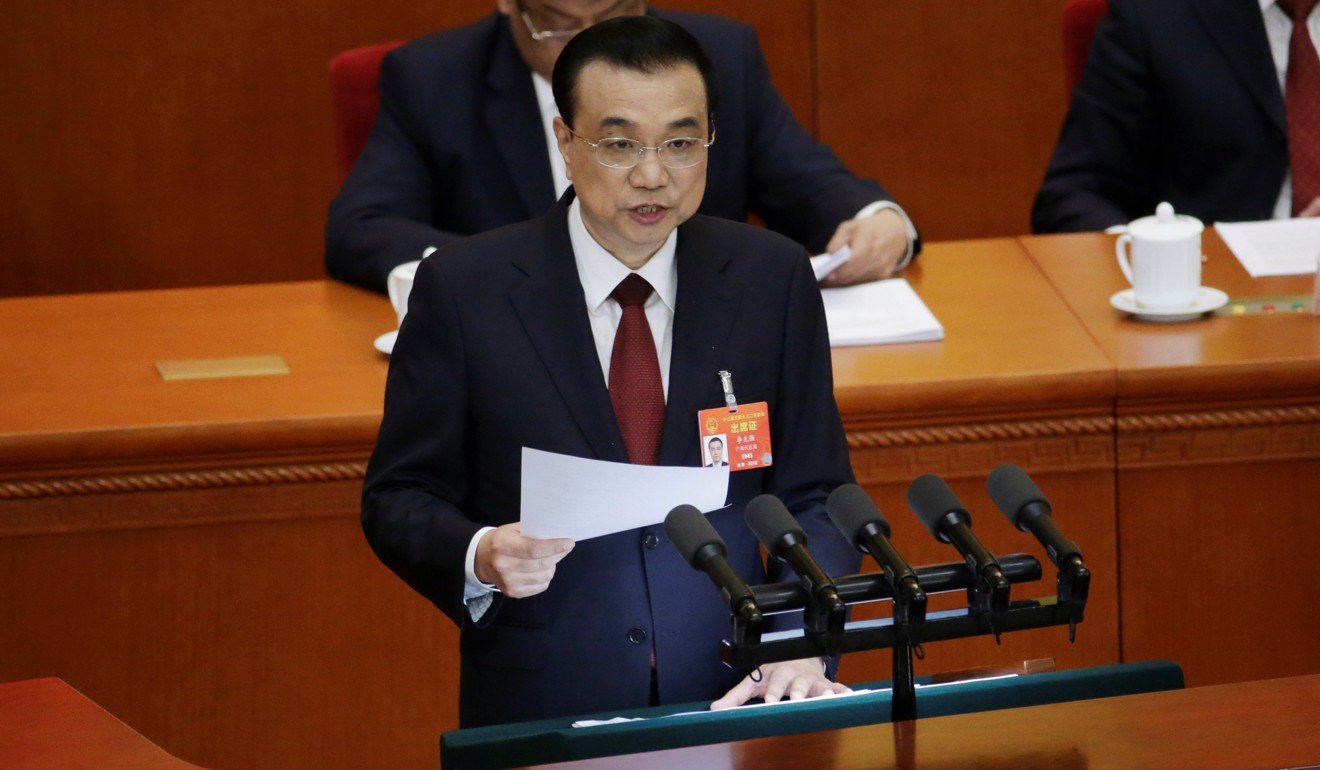
Premier Li Keqiang confirmed China had lowered its growth target for 2019 to a range of 6 to 6.5 per cent at the National People’s Congress on Tuesday. Photo:
Share:
The authors found that since 2008, the official growth rate for industry and other sectors exceeded their corresponding VAT growth rate, with the gap widening over the past decade, indicating that the government was overstating official GDP.
In other words, the overstatement of official growth has worsened since 2008 and NBS’s corrections have been increasingly inadequate to offset bottom-up data exaggerations.
A similar conclusion was drawn when the authors examined and adjusted the official GDP growth data with a set of alternative indicators, including satellite images showing lights at night, national tax revenue, electricity consumption, railway cargo traffic, as well as imports and exports that are less likely to be over-reported, although these proxies did not fully capture the growing importance of the service sector in the economy in recent years.
Among all 31 Chinese provinces, Guangdong, Zhejiang, Beijing, and Shanghai appeared to have the highest data quality, based on the economists’ own calculations that were privately confirmed by NBS officials. The worst performing provinces included Tianjin, Liaoning and Inner Mongolia, all of which have been exposed as having exaggerated economic data in recent years.
The economists suggested that the problem is that much of the underlying data needed to project GDP is outside the NBS’s control, even though the agency has been trying hard to collect local data itself. At the same time, the NBS is also in a weak political position to confront local political leaders to demand better data collection.
Although the NBS adjusts downwards local statistics, it does not report the adjusted local statistics, perhaps out of a desire to not confront powerful local leaders.Report authors
“Although the NBS adjusts downwards local statistics, it does not report the adjusted local statistics, perhaps out of a desire to not confront powerful local leaders,” the authors said.
Since September, the NBS has named and shamed local governments on its website for manipulating data, but it remains to be seen if local governments fall in line.
In a post in January, the NBS said it had passed 14 cases of data falsification on to local governments before February 2018 but that it had not been updated even though local officials are required by law to punish those responsible for manipulating data within six months after receiving a notice of a violation.
The NBS’s ability to fix China’s GDP data problem is bound by its limited political power, the authors indicated.
“There are three problems with China’s GDP. One is that it doesn’t necessarily measure the right thing. Two is statistical bias in the way data is collected. Three is really a macro policy problem by the government which should write down all the bad debt,” said Michael Pettis, professor of finance at Peking University.
“The NBS is only trying to fix the second problem.”
Source: SCMP
Posted in A Forensic Examination of China’s National Accoun, Beijing, census and land sale, Chang-Tai Hsieh, Chen Wei, Chen Xilu, China alert, Chinese province, Chinese University of Hong Kong, economic indicators, economic performance, electricity consumption, exaggerated, fiscal revenue losses, GDP data, Guangdong, Imports and exports, industrial output, inflate figures, Inner Mongolia, Liaoning, lights at night, Local statistics bureaus, mainland, Michael Pettis, Michael Song, National Bureau of Statistics (NBS), National People’s Congress, national tax revenue, nine years, nominal and real growth rates, overestimated, Peking University, percentage points, Premier Li Keqiang, professor of finance, provincial data, railway cargo traffic, Shanghai, south china morning post, The government, Tianjin, Uncategorized, University of Chicago, US-based Brookings Institute, value-added tax (VAT), Zhejiang |
Leave a Comment »
22/02/2019
- Firms in Jiangsu and Guangdong provinces top the list of new additions to blacklist in 2018
- Bogus advertising, illegal activities in property industry, substandard health care products and P2P lending fraud are typical cases
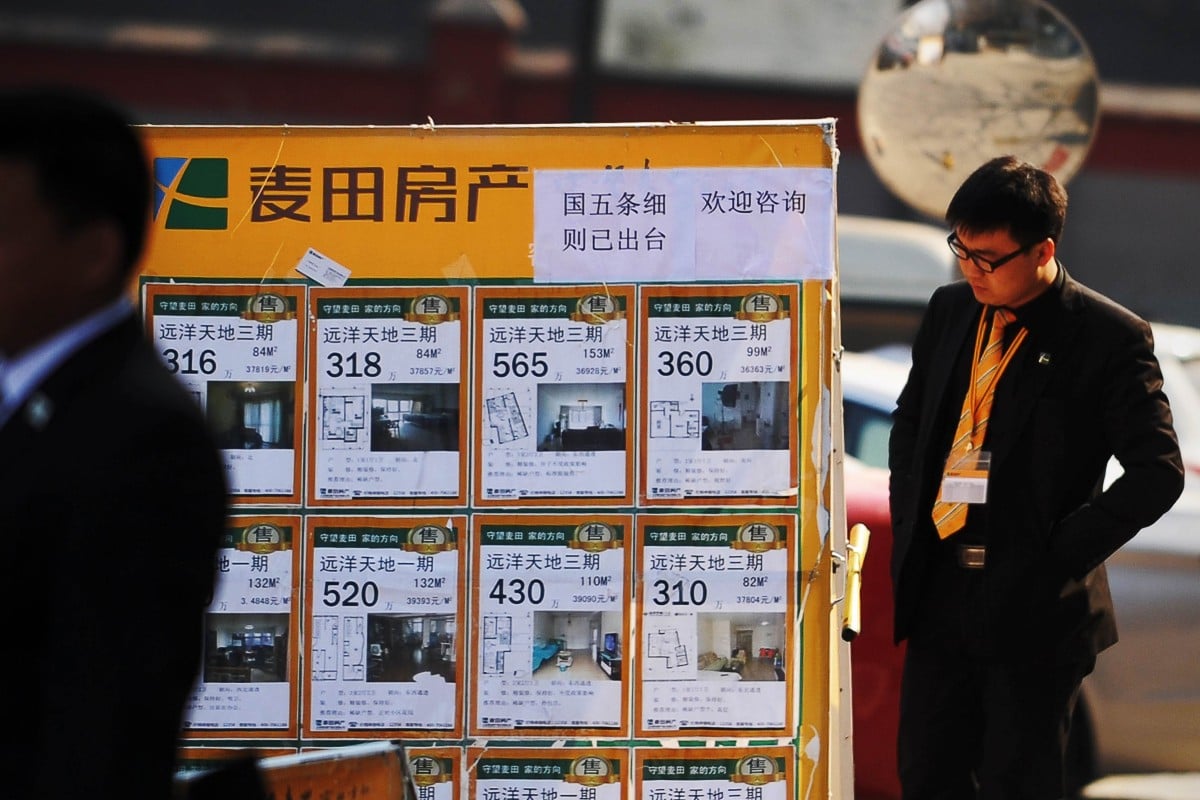
A real property agent checks a property advertising board in Beijing. According to a report by the Chinese government, property brokerages are among the country’s least scrupulous group of firms. Photo: Agence France-Presse
China’s wealthiest regions also have the largest number of untrustworthy businesses, according to the government’s social credit system, which rates citizens and companies based on their behaviour.
Jiangsu, the country’s second largest provincial economy – 9.26 trillion yuan (US$1.37 trillion) – accounted for 16.7 per cent of the discredited businesses that were added to the national blacklist last year, more than any other region.
According to a report compiled by the National Public Credit Information Centre that is backed by China’s state planner, the National Development and Reform Commission, Guangdong is next in line.
Guangdong is China’s most prosperous province, Guangdong, but is also home to 12.77 per cent of the total 3.59 million blacklisted firms. The southern province had a gross domestic product of 9.73 trillion yuan last year.
In third spot was Zhejiang, the prosperous province just south of Shanghai, while the capital city of Beijing was ranked fifth. These places together contributed slightly more than 30 per cent of China’s gross domestic product (GDP) last year.
By naming and shaming the millions of Chinese businesses and individuals on the annual blacklist, Beijing hopes to boost “trustworthiness” in Chinese society. Under the system, each of its 1.4 billion citizens is expected to receive a personal trustworthiness score.
“In more developed coastal provinces, businesses have long operated in the grey area between emerging China and established Hong Kong,” said Brock Silvers, managing director of Kaiyuan Capital, a Shanghai-based financial advisory firm.
Silvers said the situation evoked the Chinese saying: “Heaven is high and the Emperor is far away”, which alludes to local officials’ tendency to disregard central government’s directives.
While it was previously not such a faux pas to engage in “untrustworthy” behaviour in attaining economic development, things are now different.
China’s social credit system shows its teeth, banning millions from taking flights, trains
“The ability to cut corners in search of profit isn’t as prized in China’s modern economy, and many of those old traits can now lead companies to be added to Beijing’s blacklist,” Silvers said.
Among the firms named in the hall of shame is Chuangyue Energy Group, from northwest Xinjiang, which topped the list of new cases involving at least 500 million yuan in fraudulent activity.
Chuangyue and its legal representative Qin Yong were reprimanded by the Shenzhen Stock Exchange in 2016 for failing to disclose transactions on time. The transaction involved changes to the shareholding structure of a listed firm in which Chuangyue held interest in, state media reported.
Also on the list was property developer Zhonghong Holding, which was delisted from the Shenzhen exchange late-last year after its shares fell below the par value of 1 yuan for 20 consecutive days.
Zhonghong had posted massive losses, failed to repay loans and halted development projects during 2018.
A typical area of fraud cited in the report was bogus advertising, with the biggest number of discredited companies located Shanghai, China’s most commercial city.
Property brokerage was a hotbed industry for fraudsters. The report named and shamed two agents in Wuhan, An Yi Real Estate Brokerage and Hong Run De Real Estate Brokerage, which Chinese netizens described as “black brokers”.
In one case, Hong Run De subdivided one flat to lease without the owner’s knowledge and consent. To terminate the contract, the owner had to pay “compensation” of 30,000 yuan before they could reclaim the flat.
Other dodgy sectors were health care product makers and peer-to-peer (P2P) lending platforms.
Quanjian Group, a maker of herbal medicines, was accused of making false marketing claims about the benefits of a product that a four-year-old cancer patient drank.
Health care companies are among the worst performing in China, according to a report on the country’s social credit index. Photo: Agence France-Presse
Share:
Changsheng Bio-Technology, the major Chinese manufacturer of rabies vaccines, was fined US$1.3 billion in October after it was found to have fabricated records.
A total of 1,282 P2P operators, more than half located in Zhejiang, Guangdong and Shanghai, were placed on the blacklist because they could not repay investors, or were involved in illegal fundraising.
While more individuals and companies were added to the blacklist, others were also removed – 2.17 million. Those removed had paid taxes owed or fines imposed.
Source: SCMP
Posted in An Yi Real Estate Brokerage, Beijing, black broker, Brock Silvers, cancer patient, Changsheng Bio-Technology, China alert, Chinese manufacturer, Chuangyue Energy Group, dodgy firms, faux pas, Guangdong, Heaven is high and the Emperor is far away, herbal medicines, Hong Run De Real Estate Brokerage, Jiangsu, Kaiyuan Capital, National Public Credit Information Centre, netizens, Qin Yong, Quanjian Group, rabies vaccines, richest provinces, Shanghai, Shenzhen, social credit system, Stock exchange, Uncategorized, Wuhan, Xinjiang, Zhejiang, Zhonghong Holding |
Leave a Comment »
18/02/2019
Aerial photo shows members of a rural female dancing team performing wooden-bench dragon dance to celebrate the upcoming Chinese Lantern Festival, which falls on Feb. 19 this year, at Yaokou Village of Huyuan Township in Hangzhou, capital city of east China’s Zhejiang Province, on Feb. 17, 2019.
Yaokou Village is famous for its wooden-bench dragon dance, which is originated from the Qing Dynasty (1644-1911). The wooden-bench dragon is 130 meters long with 58 wooden benches linked together, on which various lantern decorations are installed. People dressed in traditional costumes would dance the wooden-bench dragon at major festival events to pray for good luck in a new year. (Xinhua/Xu Yu)
Source: Xinhua
Posted in China alert, dragon dance, good luck, Hangzhou, Huyuan Township, Lantern Festival, New Year, traditional costumes, Uncategorized, Yaokou Village, Zhejiang |
Leave a Comment »
10/02/2019
- Manager of private tuition centre in eastern city of Hangzhou says demand from parents has been ‘overwhelming’
PUBLISHED : Sunday, 10 February, 2019, 6:12pm
UPDATED : Sunday, 10 February, 2019, 6:12pm
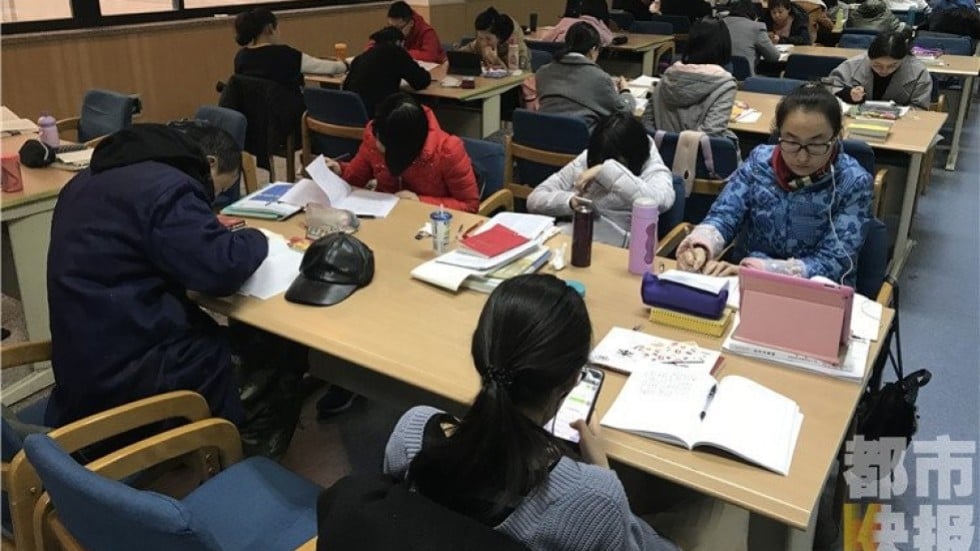
While most schoolchildren in the east China city of Hangzhou spent last week’s Lunar New Year holiday visiting relatives and opening cash-filled red envelopes, others found themselves taking extra lessons at a privately run tuition centre.
The manager of the company, surnamed Wong, said business had been brisk over the holiday period.
“Usually students have a week’s break for Lunar New Year, but not those who are sitting the gaokao,” he said, using the informal name for the National Higher Education Entrance Examination.
Demand for extra tuition from parents whose children were preparing for the test had been “overwhelming”, he said.
The cost of lessons during the holiday period was 250 yuan (US$37) per hour, Wong said, adding that most students had four lessons a day.
Chinese schoolchildren get a month’s holiday in the winter, which incorporates the national Lunar New Year break.
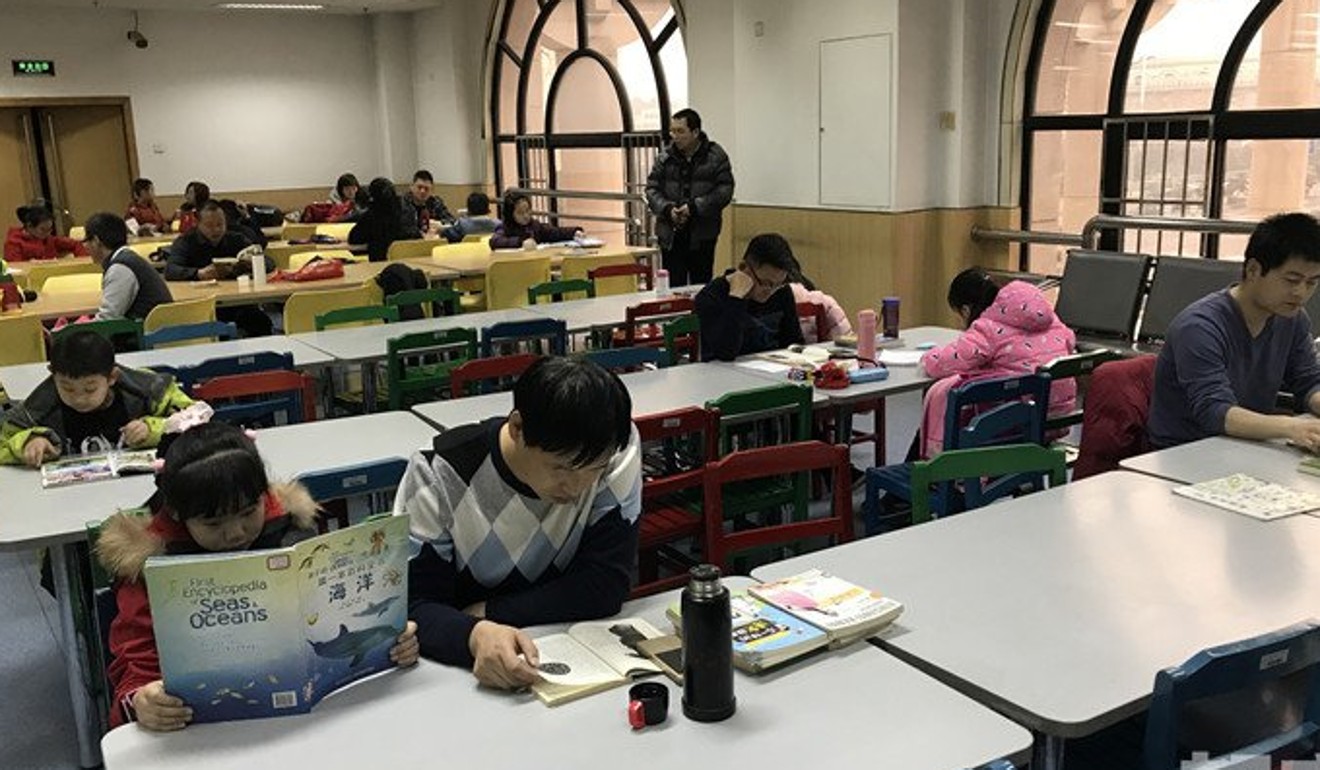
Wong’s centre does not just cater for older children. According to a report by local newspaper Metro Express, a woman surnamed Lu paid for her son, who goes to primary school, to have extra lessons in mathematics and science.
“Many children spend their whole winter holiday studying,” she said, but added that she had allowed her son to have last week off.
Another woman was quoted in the report as saying she had signed her child, who also goes to primary school, up for nine classes.
There are no laws against the operation of private tuition centres in China but they are governed by certain regulations. For instance, they cannot recruit people whose primary job is as a teacher and they are not allowed to teach classes beyond what the children have already learned in school.
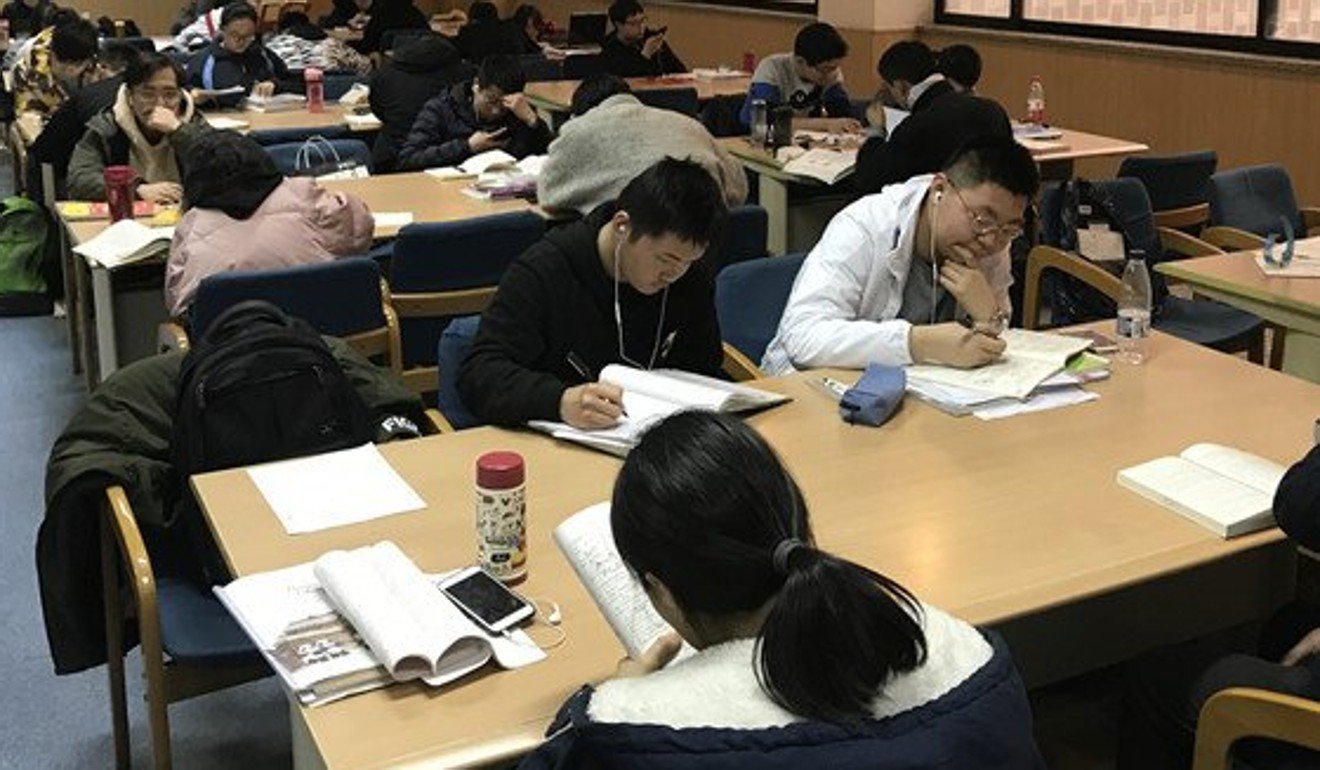
China’s education ministry last year launched a review of more than 400,000 tuition centres and found problems of one sort or another at 65 per cent of them.
In the wake of that assessment, authorities in the cities of Beijing, Tianjin and Shanghai, and the provinces of Shanxi, Liaoning and Zhejiang said they had rectified the problem. Hangzhou is the capital of Zhejiang.
According to a report by Xinhua, a secondary school student from Shanghai, nicknamed Xiao Ma, said she had to get up at 6.30am every day during the winter holiday to get to her extra lessons by 8.30am.
“I don’t ask for a lot,” she said. “I just wish there were a few days when I could get a bit more sleep and have time to see my friends.”
Source: SCMP
Posted in children, China alert, class, College entrance exam, Hangzhou, parents, tuition centres, Uncategorized, winter holiday, Zhejiang |
Leave a Comment »








 CHINDIA ALERT: You'll be living in their world, very soon
COMMENTS: