Chindia Alert: You’ll be Living in their World Very Soon
aims to alert you to the threats and opportunities that China and India present. China and India require serious attention; case of ‘hidden dragon and crouching tiger’.
Without this attention, governments, businesses and, indeed, individuals may find themselves at a great disadvantage sooner rather than later.
The POSTs (front webpages) are mainly 'cuttings' from reliable sources, updated continuously.
The PAGEs (see Tabs, above) attempt to make the information more meaningful by putting some structure to the information we have researched and assembled since 2006.
Chinese Premier Li Keqiang meets with a business delegation from the United States, which is led by Chairman of the U.S.-China Business Council (USCBC) Evan Greenberg, at the Great Hall of the People in Beijing, capital of China, Oct. 17, 2019. (Xinhua/Yin Bogu)
BEIJING, Oct. 17 (Xinhua) — Chinese Premier Li Keqiang met with a business delegation from the United States on Thursday, which was led by Chairman of the U.S.-China Business Council (USCBC) Evan Greenberg.
Li said that as China and the United States are respectively the world’s largest developing country and the largest developed country, the healthy and stable development of the Sino-U.S. relations will benefit the two sides and the world.
Li called on the two sides to focus on coordination, cooperation and stability, take a long-term perspective and remain down-to-earth, and resolve relevant issues through dialogue and consultation on the basis of equality and mutual respect, so as to advance bilateral economic and trade ties on the right track.
Li expressed the hope that people of U.S. industrial and commercial circles, including those from the USCBC, will continue to play a positive role in promoting the development of bilateral relations and enhancing mutual understanding between the two peoples, he said.
China’s door of opening-up will not be closed, but will only open wider, Li said.
Enterprises from all countries, including the United States, are welcome to expand investment in and cooperation with China to achieve mutual benefit, said Li.
The U.S. delegates said the U.S. business community hopes to maintain contacts with China, does not want to see decoupling between the two countries, and also does not want to see trade wars or imposition of additional tariffs.
They expressed the hope that both sides will seize the opportunities and reach a substantive agreement through negotiations and consultations, so that enterprises from both countries can engage in healthy competition and achieve common development in a fair and determined environment.
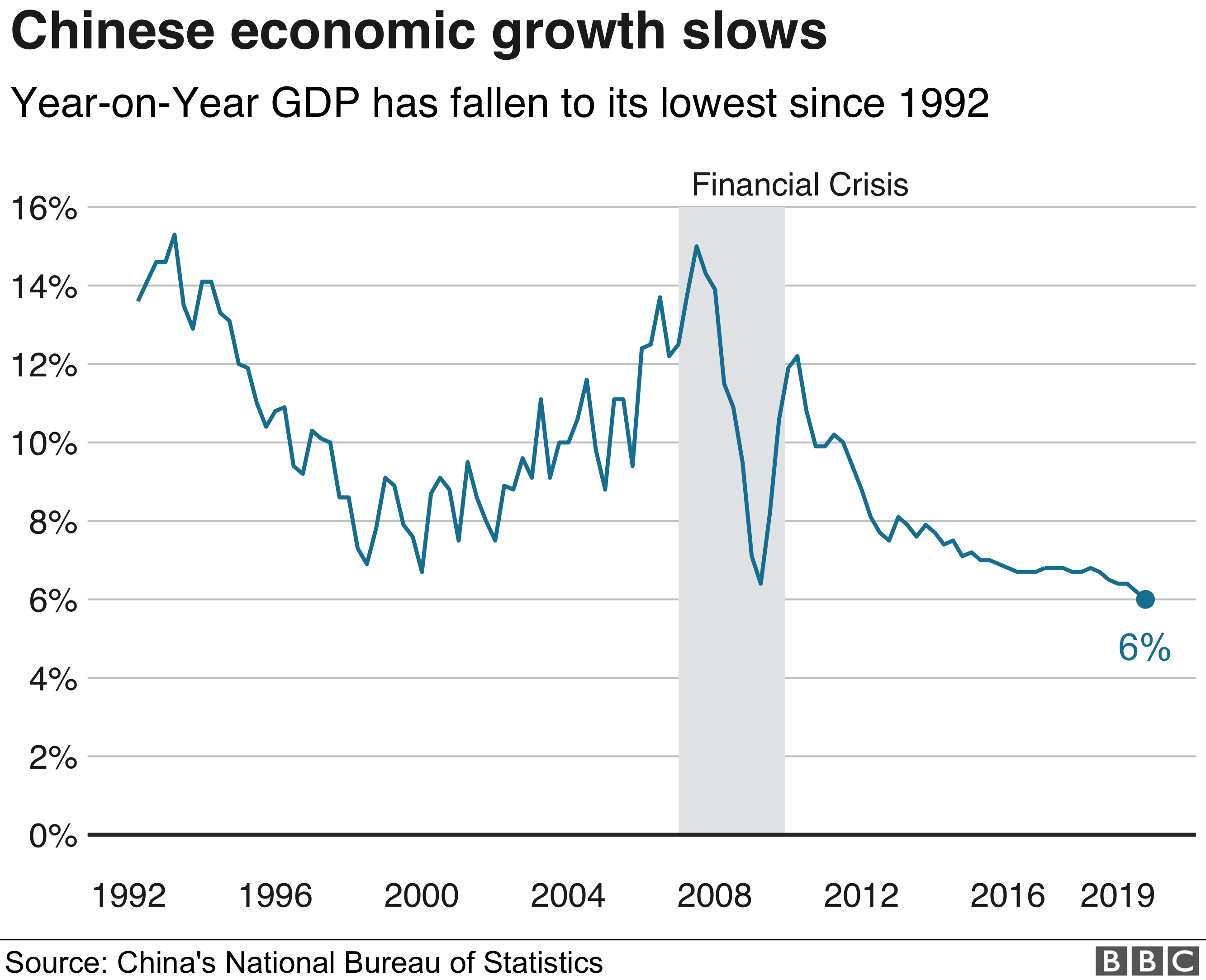
China’s economy grew at a slower pace than expected in the third quarter as it struggled with a US-led trade war and softer domestic demand.
In the three months to September, the economy expanded 6% from a year earlier, official figures showed.
The result fell just short of expectations for 6.1% growth for the period.
The slowdown comes despite government efforts to support the economy, including measures such as tax cuts.
The latest figures mark a further loss of momentum in the world’s second largest economy, which had already seen growth languishing at its slowest pace in around three decades.
The rate remained within the government’s target range for annual growth of between 6% and 6.5%.
The strength of the Chinese economy is closely watched as slowing growth can have far-reaching consequences for the global economy.
The country has become a key engine of growth in recent decades. Its healthy demand for a range of products, from commodities to machinery, has supported growth around the world.
Some analysts worry that a sharp slowdown in China could hurt an already sluggish world economy and increase the risk of a recession.
Julian Evans-Pritchard, senior China economist at Capital Economics, said pressure on the Chinese economy “should intensify in the coming months”.
He said more intervention by policymakers to support the economy was likely “but it will take time for this to put a floor beneath economic growth”.
What challenges does China face?
China has been fighting a trade war with the US for the past year, which has created uncertainty for businesses and consumers.
At the same time, it faces domestic challenges including a swine fever outbreak that has fuelled inflation and hit consumer spending.
Image copyright GETTY IMAGESImage caption China accounted for 16% of global gross domestic product in 2018, according to the McKinsey Global Institute
This week the International Monetary Fund trimmed its 2019 growth forecast for China to 6.1% from 6.2% due to the long-running trade dispute and slowing domestic demand.
But there have been some signs of progress toward resolving the trade battle, with the US and China reaching a “phase one deal” earlier this month.
Any analysis of China’s economic data has to come with a caveat: Many economists believe the actual figures are much lower than what we are told, but it’s the trajectory of growth and signalling from the government that you should pay attention to.
The fact that the growth figures have come in below market expectations indicate that China’s economy is hurting more than many thought.
There were signs from China that these numbers were going to be worrying. Earlier this week, Premier Li Keqiang made the unusual move to warn local officials that they must do “everything” to make sure they hit growth targets for this year.
China’s economy is being hit on three fronts: The US-led trade war, slowing demand at home and rising domestic challenges including the outbreak of swine fever that has dealt a huge blow to its pork farmers. It’s also pushed up prices for consumers.
China’s slowdown is nothing new. But these challenges pose new headaches for policymakers who are trying to manage the slowdown. The country’s political stability depends on economic security – and over the last forty years, that’s what the Communist Party has delivered. They’re under pressure to keep that contract.
Image copyright GETTY IMAGESImage caption The US says Huawei equipment has back doors that would enable Chinese surveillance
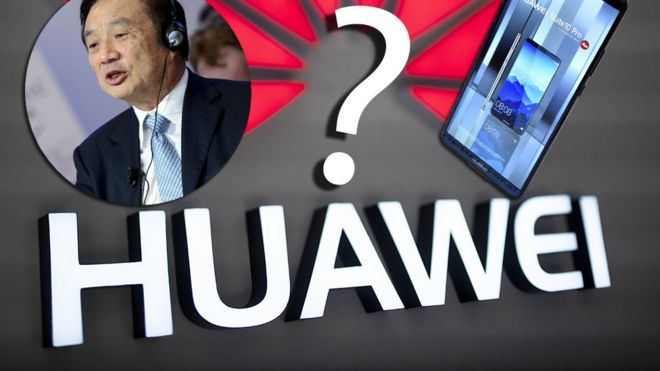
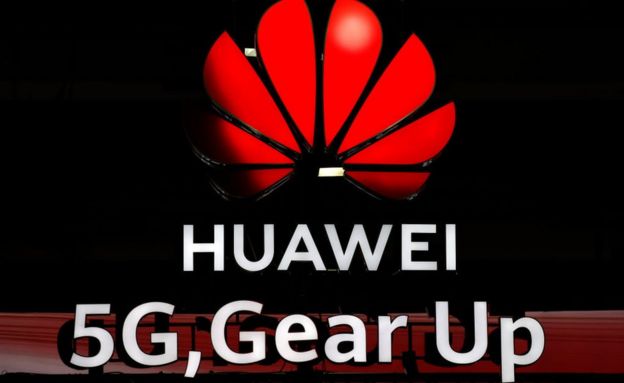
Chinese tech giant Huawei, which has been banned from selling 5G equipment to US telecom companies, is making an aggressive push to market itself in India.
“It’s been squeezed out of countries by a few governments already, and so a possible contract with India for 5G would be especially important,” Arun Sukumar, a tech analyst at the Observer Research Foundation, told the BBC.
“It’s worth noting that even though Huawei is comfortable at the moment, it will need to continue to invest across the world and into new markets in order to stay afloat – and what’s a bigger market than India?”
Huawei has also been banned in Australia, and several other countries are considering following suit.
The US says Huawei equipment contains back doors that would enable Chinese surveillance.
But the company has repeatedly denied claims that the use of its products poses security risks, and says it is independent from the Chinese government.
The size of India’s wireless market – dwarfed only by China – make it a vital market for any company, but the troubles Huawei is facing at present make could make India critical to its future.
The US has been pressurising India and its other allies to boycott the company and has not ruled out punitive measures against those who fail to do so.
US Commerce Secretary Wilbur Ross said during a visit to Delhi that the US hoped that its “geopolitical partner India does not inadvertently subject itself to untoward security risk”.
Jay Chen, CEO of Huawei India, told the BBC’s Devina Gupta that the company was even willing to sign an undertaking with the Indian government, promising that its equipment would contain no back doors as alleged by the US.
“We have read in the media that the US government is trying to lobby with the Indian government but I still believe that we should focus on what we can do and try our best,” he said.
Image copyright GETTY IMAGESImage caption The company provides technology infrastructure to launch 5G networks
India has not commented on US charges against Huawei and has invited it to participate in its upcoming 5G spectrum trials, although a date for this has not been announced yet.
Mr Sukumar told the BBC that to exclude Huawei from the 5G process could actually prove detrimental to India.
“No more than five companies have the infrastructure to launch 5G, and Huawei’s infrastructure is more affordable than other Western ones like Nokia and Erikson. India’s telecom industry is already struggling, so to ally with Huawei – which could provide the service at the lowest rate – is very attractive,” he said.
India does not have a homegrown alternative to Huawei’s technology – and the company is well aware of this.
NEW DELHI (Reuters) – Tens of thousands of runners have signed up for the Indian capital’s half marathon and other races on Sunday, officials said, despite the air quality hitting dangerous levels in one of the most heavily polluted cities in the world.
New Delhi’s air quality index was around 300 on Thursday, classified as very poor and meaning prolonged exposure can cause respiratory illness.
Delhi Chief Minister Arvind Kejriwal, who has described the city as a “gas chamber” in winter, has ordered emergency measures, including restricting the number of private vehicles on the roads under an “odd-even” scheme based on number plates.
Race organisers said pollution was a worry but they would take steps to reduce the impact on runners. Hours ahead of and throughout the race, the course will be sprayed with water.
“The air quality is a concern and will remain a concern, there is no question about it,” said Vivek Singh, joint managing director of Procam International that conducts the race sponsored by telecom operator Bharti Airtel.
“The measures that we take for those few hours to give our runners a good experience have worked in the past.”
The race has been moved this year to avoid a sharp rise in pollutants during Diwali, the Hindu festival of lights, when hundreds of thousands of firecrackers are lit.
But farmers burning crop stubble in the states north of Delhi have turned the air over Delhi toxic. The forecast for the next few days and into Sunday is “very poor”.
A record 40,633 people have signed up for the 21-km, 10-km and a 5-km races. Last year there were 34,916 runners, many of whom wore masks.
A former Olympic gold medallist, Carmelita Jeter of the United States, is the international event ambassador.
Doctors have advised citizens to restrict their outdoor activities and said runners must be made aware of the risks they are taking.
“Just two weeks before the odd-even scheme comes into play, how have the civic authorities allowed more than 30,000 people to expose themselves to toxic air?” asked said Desh Deepak, senior chest physician at the city’s Ram Manohar Lohia Hospital.
Vice Premier Han Zheng, also a member of the Standing Committee of the Political Bureau of the Communist Party of China Central Committee, learns about applications of smart robot and 5G technology in fields like remote driving, education and tourism, at an experience park in southwest China’s Chongqing Municipality, Oct. 15, 2019. Han made a research trip to Chongqing on Monday and Tuesday. (Xinhua/Liu Weibing)
CHONGQING, Oct. 16 (Xinhua) — Vice Premier Han Zheng has called on southwest China’s Chongqing Municipality to promote high-quality development and continue to break new ground in all areas.
Han, also a member of the Standing Committee of the Political Bureau of the Communist Party of China Central Committee, made the remarks during a research trip to Chongqing on Monday and Tuesday.
Chongqing should play a key role in advancing the large-scale development of the western region, promoting the joint construction of the Belt and Road Initiative and the green development of the Yangtze River Economic Belt.
During his visit to an auto research and development center and a new-energy vehicle (NEV) manufacturer, Han stressed more input in research to make breakthroughs in key auto parts, and called for the building of homegrown auto brands, wider application of NEVs in urban public transport and the sustainable development of the industry.
Efforts should be made to foster intelligent industries, popularize intelligent technologies and knowledge, and develop intelligent economy, he added.
In his visit to a semi-conductor firm, Han encouraged local companies to enhance their competitiveness and asked local authorities to further improve the business environment.
Chinese President Xi Jinping meets with former New Zealand Prime Minister John Key at the Great Hall of the People in Beijing, capital of China, on Oct. 16, 2019. (Xinhua/Pang Xinglei)
BEIJING, Oct. 16 (Xinhua) — Chinese President Xi Jinping on Wednesday met with former New Zealand Prime Minister John Key at the Great Hall of the People in Beijing.
Noting that the situation in the world today has undergone profound and complicated changes, Xi said China has become even more willing to cooperate with other countries under the new situation.
China sticks to the path of peaceful development, said Xi, adding that China’s door “will be open even wider to the world.”
Xi said China welcomes all countries and their companies to grasp the opportunity provided by China’s development to better realize mutual benefit.
Speaking highly of Key’s active contribution to the China-New Zealand relations in his capacity as prime minister, Xi said he hopes that Key can continue to help enhance the friendship between the two peoples.
Key voiced warm congratulations on the 70th anniversary of the founding of the People’s Republic of China.
China’s development is an opportunity for the whole world, Key said.
He said he will continue to play an active role in promoting the understanding and cooperation between the two countries.
Key was New Zealand’s prime minister from 2008 to 2016.
Soldiers from 140 countries are expected to take part in 10-day sporting event in Wuhan, Hubei province
It coincides with the Xiangshan Forum, where Beijing may seek to reinforce its position on issues like the South China Sea and US arms sales to Taiwan
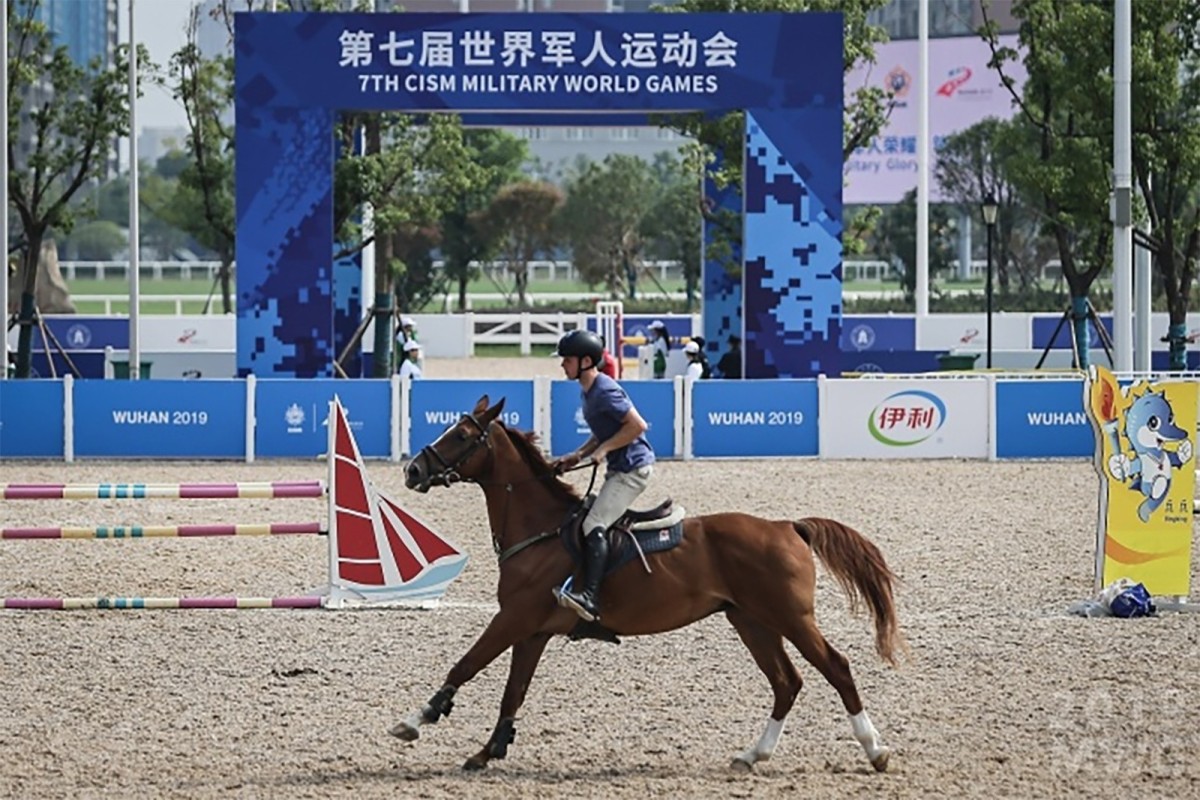
More than 100 horses have arrived in Wuhan for the equestrian and modern pentathlon events of the Military World Games, which begin on Friday. Photo: Handout
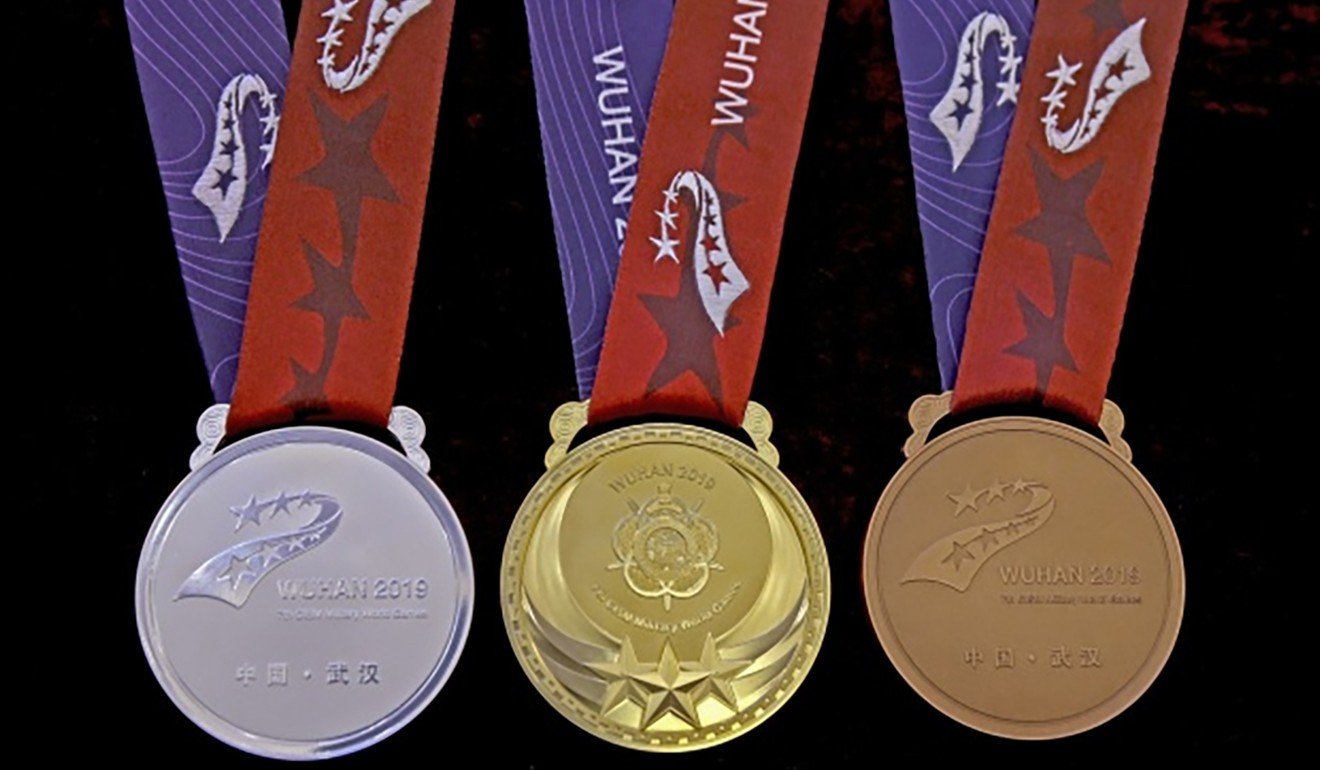
President Xi Jinping is expected to open the Military World Games in central China on Friday, setting the stage for a People’s Liberation Army charm offensive as it seeks to strengthen ties with foreign forces and exert its influence.
China is hosting the 10-day sporting event in Wuhan, Hubei province, and soldiers from 140 countries are expected to take part. It will coincide with the three-day Xiangshan Forum – China’s equivalent of the Shangri-La Dialogue in Singapore – to be held on the outskirts of Beijing from Sunday.
It comes after China staged a lavish military parade in Beijing to celebrate the 70th anniversary of the People’s Republic on October 1, showcasing some of the PLA’s most advanced weapon systems and strategic weaponry.
A Chinese military insider on Tuesday said Xi was expected to kick off the games in Wuhan – a symbolic move by the president as he seeks to boost the PLA’s international profile.
China has built a new athletes’ village in Wuhan that can accommodate 10,000 people. Photo: Handout
“[China sees] the Military World Games as a platform to promote international military diplomacy and an opportunity for the PLA to build its international image through sporting events,” the insider said.
It will be the first time China hosts the Military World Games, which is the second-biggest multi-sport event after the Olympics and is also held every four years.
To host the mega event, China has built a new athletes’ village in Wuhan that can accommodate the 10,000 military athletes who will compete. This year’s games will have the largest number of events ever, with badminton, table tennis, tennis and men’s gymnastics included for the first time.
The US Armed Forces will send about 300 athletes to Wuhan, according to state-run Xinhua. One of them is Mark Juliano, an archer and taekwondo player, who told the news agency: “You developed world-class venues and I can’t wait to experience the games.”
The Chinese president has high hopes for the PLA athletes at this year’s Military World Games, according to an insider. Photo: Handout
The military insider said Xi had high hopes that the PLA would win gold in some of the events.
“The Russians are known to be very good at some sports but the PLA has yet to earn a reputation in any particular sport,” the insider said. “Xi hopes that the home ground advantage will give the PLA the edge this time.”
Another Beijing-based military source said the top brass had put great emphasis on the success of three events this year – the National Day parade, Military World Games and the Xiangshan Dialogue.
The source said it would be the biggest Xiangshan Forum since China began holding the event more than a decade ago, and dozens of senior foreign defence officials and military leaders invited to the games in Wuhan would also take part in the forum.
How robots are revolutionising China’s firework factories
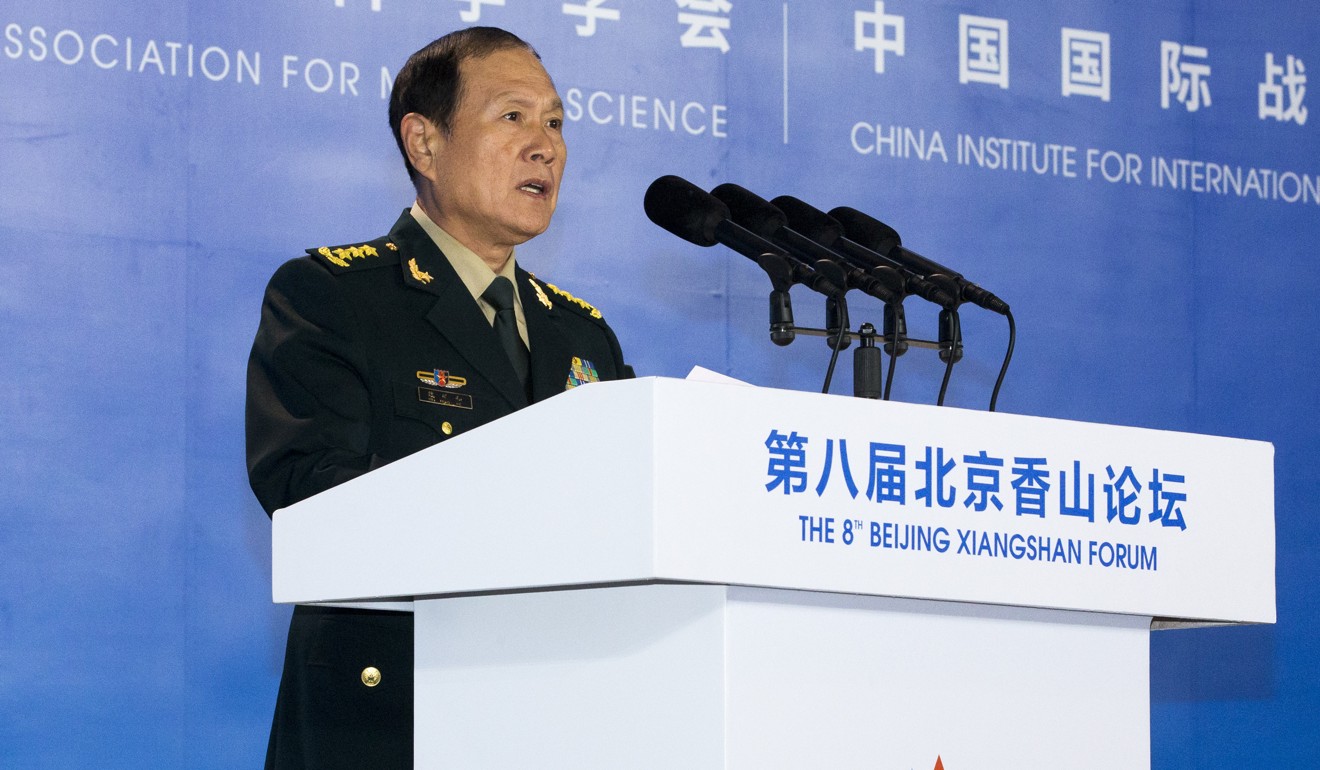
Set up in 2006, China uses the forum to play host to foreign military experts and leaders and discuss security and defence issues in the Asia-Pacific region. It is widely seen as an effort by Beijing to compete with the Asia Security Forum in Singapore, also known as the Shangri-La Dialogue after the hotel where it is staged.
The theme of this year’s Xiangshan Forum is “Maintaining international order and promoting peace in the Asia-Pacific”. Military observers said Beijing was likely to use it as an opportunity to reinforce its position on issues like the South China Sea and US arms sales to Taiwan.
Defence Minister Wei Fenghe criticised the US for damaging ties with China at last year’s Xiangshan Forum. Photo: Xinhua
Yao Yunzhu, a retired PLA major general and a delegate at the forum, said this year’s event would give the PLA an opportunity to explain its strategy to foreign militaries, including the US.
“The relationship between the PLA and its American counterpart has been stable over the past year despite tensions between Beijing and Washington over issues such as trade,” Yao said.
“But that military relationship has been stable thanks to the efforts of the two militaries to keep their communication open, as well as improving their crisis management mechanism,” she added.
Another forum delegate, Zhu Feng, dean of the international relations school at Nanjing University, said smaller countries in the region would use the forum to raise their concerns over the impact of tensions between China and the US on the region’s long-term stability.
Fly-past will begin with helicopters and feature the country’s new generation warplanes
A People’s Liberation Army Air Force officer will lead the squadron in a KJ-2000 and become the first serving commander to fly in a National Day parade
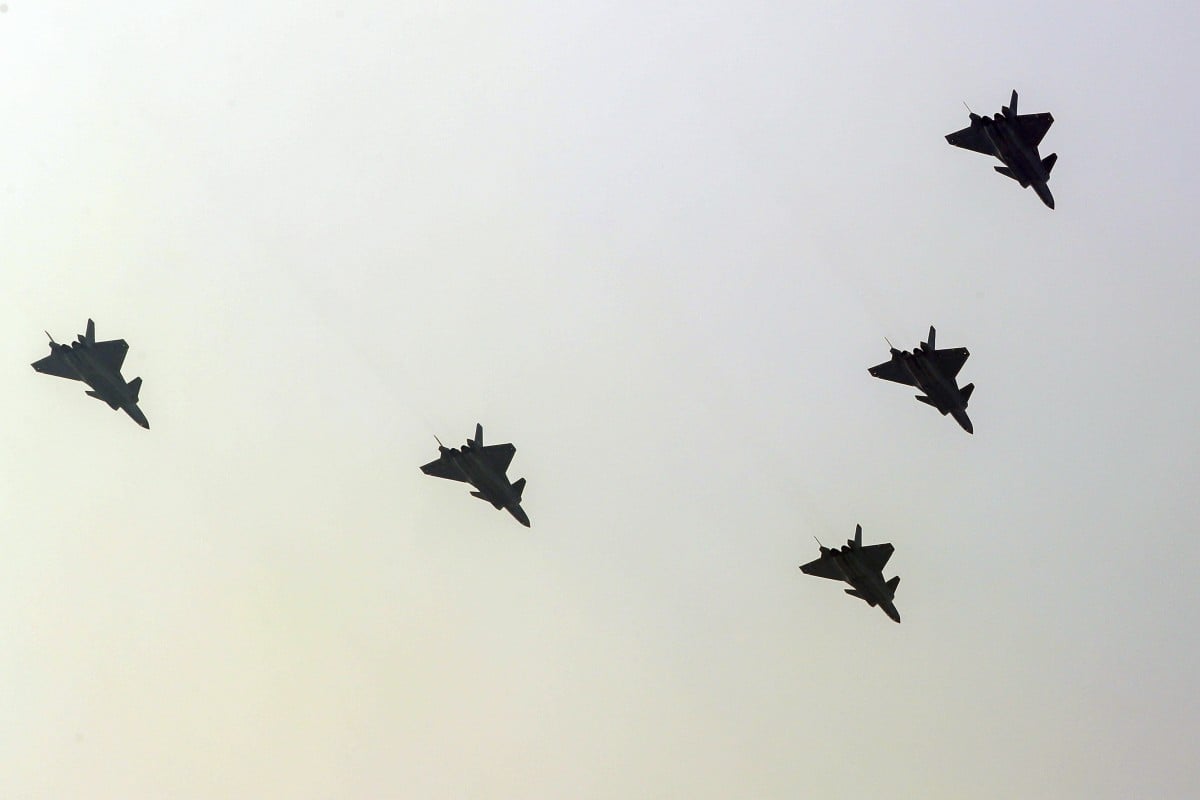
J-20 stealth fighter jets will be featured in Tuesday’s National Day parade in Beijing. Photo: AP
China will assemble the biggest squadron of its most advanced military aircraft for the National Day parade in the capital next week.
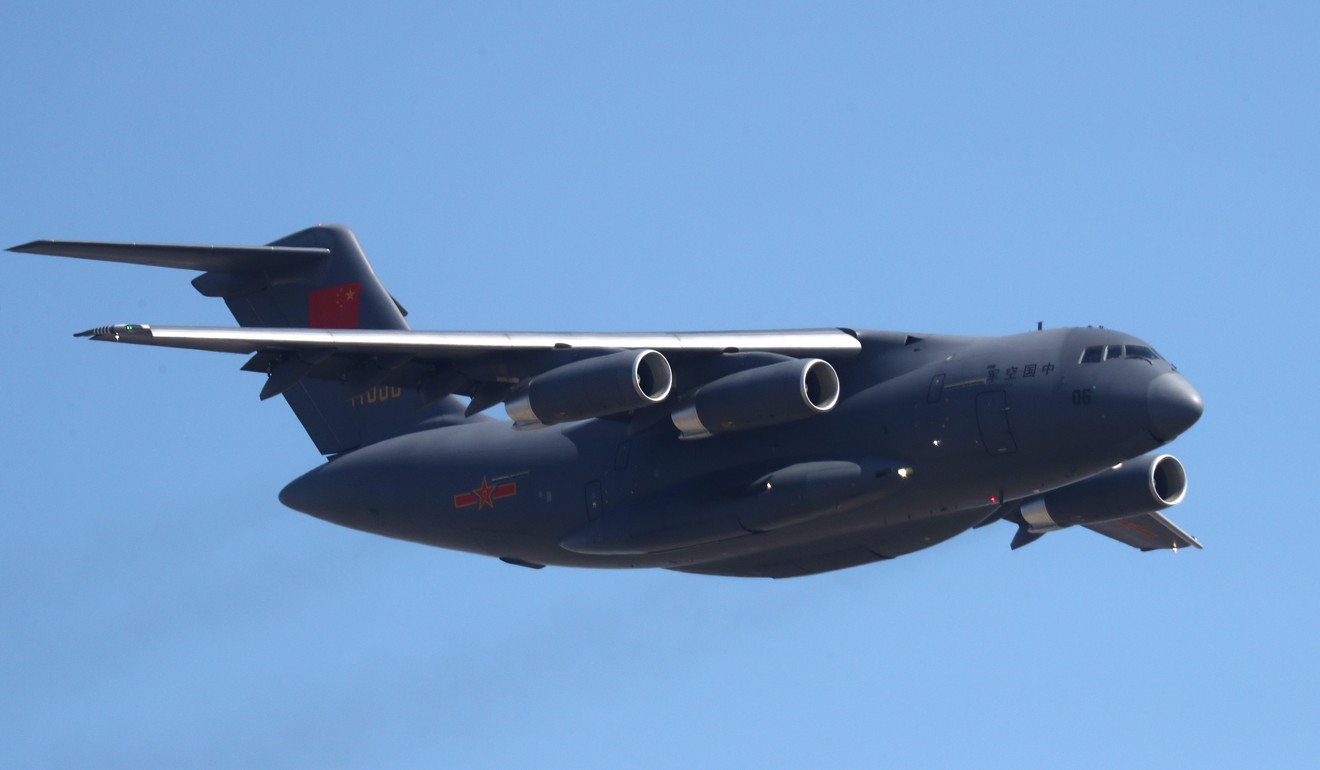
Three types of the new generation “20” series warplanes – five J-20 stealth fighter jets, three Y-20 transport planes and six Z-20 helicopters – will join airborne squadrons in the parade, according to a fly-past schedule obtained by the South China Morning Post.
“This year will be the biggest parade to have so many ‘20’ series advanced aircraft flying together,” a military insider said, referring to aircraft developed since 2000.
The J-20 is the country’s first stealth fighter; the Y-20 is China’s first heavy airlifter; and the Z-20 is a medium-lift utility helicopter comparable to the American Black Hawk.
The appearance of all three types of warplanes indicates that each one has entered production.
The H-20 subsonic stealth bomber, China’s answer to the US Air Force’s B-21 Raider, is also part of the “20” series will not make an appearance because it might need at least five more years of development.
The military insider involved in preparations for the parade, said People’s Liberation Army Air Force Commander Ding Laihang would lead the squadron in a KJ-2000 early warning aircraft.
Chinese fighter jets seen in skies over Beijing as preparations for National Day parade step up
“Ding will fly the KJ-2000 over Tiananmen Square for inspection by President Xi Jinping,” the source said, adding that Ding would be the first serving commander to fly in a National Day parade.
“The arrangement is similar to 2015 when [then] Russian Air Force commander Viktor Bondarev flew a Tu-160 strategic bomber over Moscow’s Red Square to mark the 70th anniversary of the end of the second world war.”
The KJ-2000 is the most advanced active early warning aircraft in the PLA Air Force, but it is based on the Russian Ilyushin aircraft.
The Y-20 transport aircraft will be among the new generation of planes taking part in the parade. Photo: Dickson Lee
According to the schedule, 167 aircraft will take part in the fly-past, starting with a helicopter carrying a national flag.
Eight Z-10 attack and 12 Z-19 reconnaissance helicopters will follow in formation, creating the number 70 in the sky to mark the 70th anniversary of the founding of the People’s Republic.
A source close to the navy said Z-8 multi-role and Z-19 reconnaissance helicopters be among the aircraft deployed to the Type 075 amphibious helicopter dock launched on Wednesday.
China says National Day military parade ‘won’t disappoint’ in scale or advanced weapons
A total of 44 fighter jets representing five key battle warplanes – the J-20, the J-16 fighter-bomber, the J-15 carrier-based fighter jet, the J-11 and the J-10 – will participate in the event.
But the J-8 fighter jet was not on the schedule, confirming that the first interceptor built in China has been formally retired.
Various H-6 series bombers will also make an appearance, including the H-6K and H-6N strategic bombers, as well as HU-6 refuelling plane based on the H-6 platform.
H-6K long-range bombers have been sent to the Taiwan Strait as part of “encirclement” patrols close to the self-ruled island in recent years.
Meanwhile the modified H-6N strategic bomber is designed to be armed with the Changjian-10 land-attack subsonic cruise missile, which has an operational range of more than 1,500km (932 miles).
Macau-based military observer Antony Wong Dong said that by adding more functions, the H-6 series of bombers was showing the world China had modified its combat capacity.
Wong also said the appearance of three types of training planes – the JL-8, JL-9 and JL-10 – was notable.
“It indicates that the Chinese air force had build up a systematic and comprehensive training system to train more pilots,” he said.
Country’s first home-grown carrier may soon be ready for service but observers warn a few glitches may still need to be ironed out
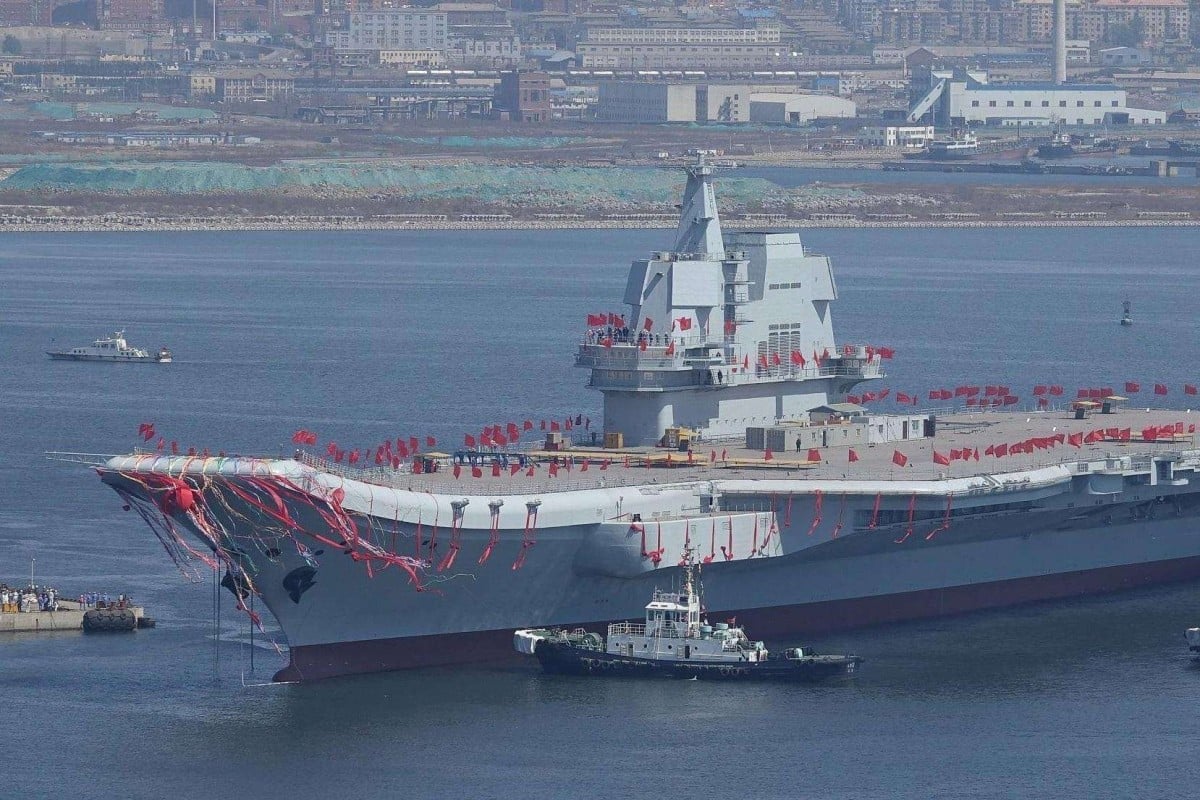
The Type 001A will be China’s second carrier and the first home-grown one. Photo:ifeng
China’s first home-grown aircraft carrier, Type 001A, will be commissioned within months, according to military observers.
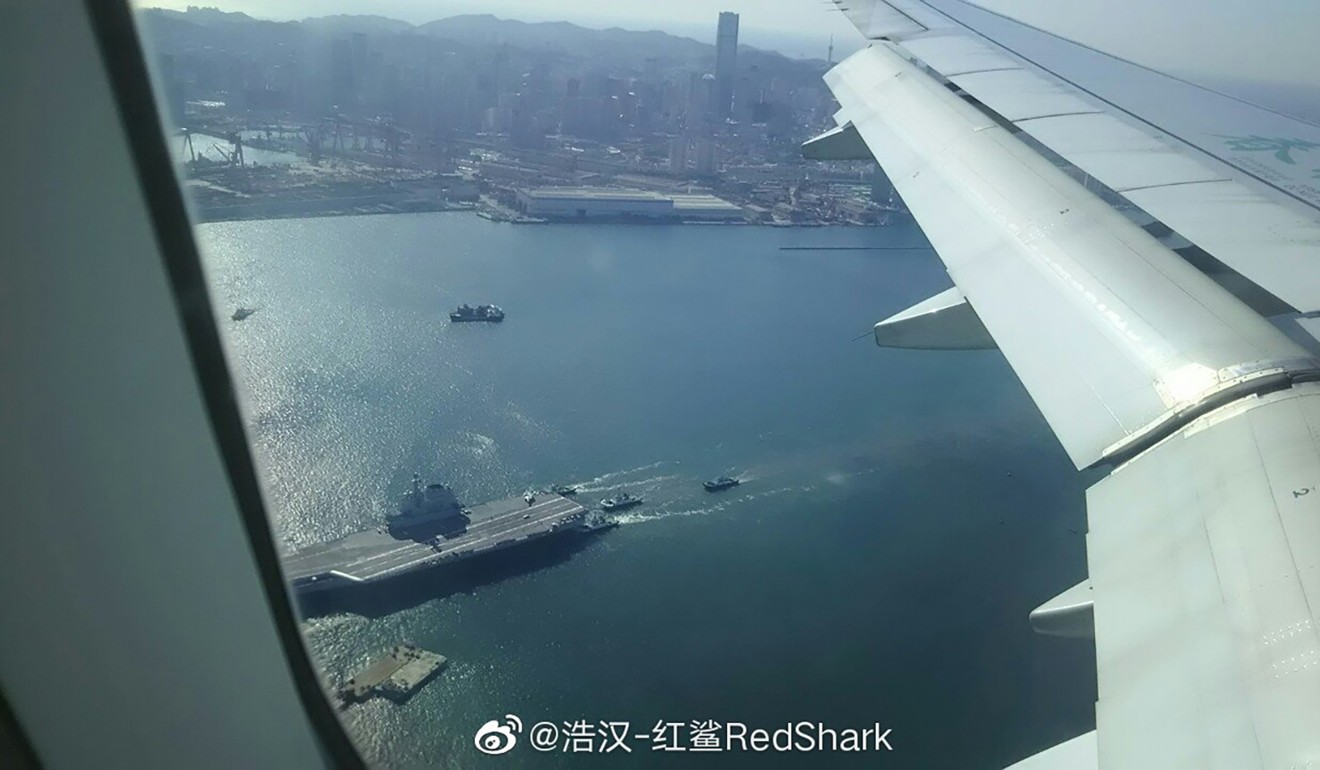
The ship appeared to have set off on its eighth sea trial on Tuesday after photographs taken by a plane flying over a restricted area showed a carrier, with a warplane on deck, leaving the Dalian Shipyard, where the carrier is being built.
The timing coincided with a notice issued by China’s Maritime Safety Administration, saying an area of the Bohai Sea, near the yard would be cordoned off for military activities.
While the commissioning would mark an advance in China’s naval capacity, some analysts noted that the trial phase was taking longer than expected.
A photo shows a carrier leaving the Dalian shipyard on Tuesday. Photo: Weibo
Global Times, a tabloid affiliated to Communist Party mouthpiece People’s Daily, quoted naval observer Li Jie as saying that the Type 001A was likely to be undertaking its eighth sea trial after solving problems discovered in the previous trials.
Zhou Chenming, a Beijing based military expert, said that the Type 001A’s commissioning had already been postponed and the major problem now was a lack of shipborne aircraft and problems with the flight control system.
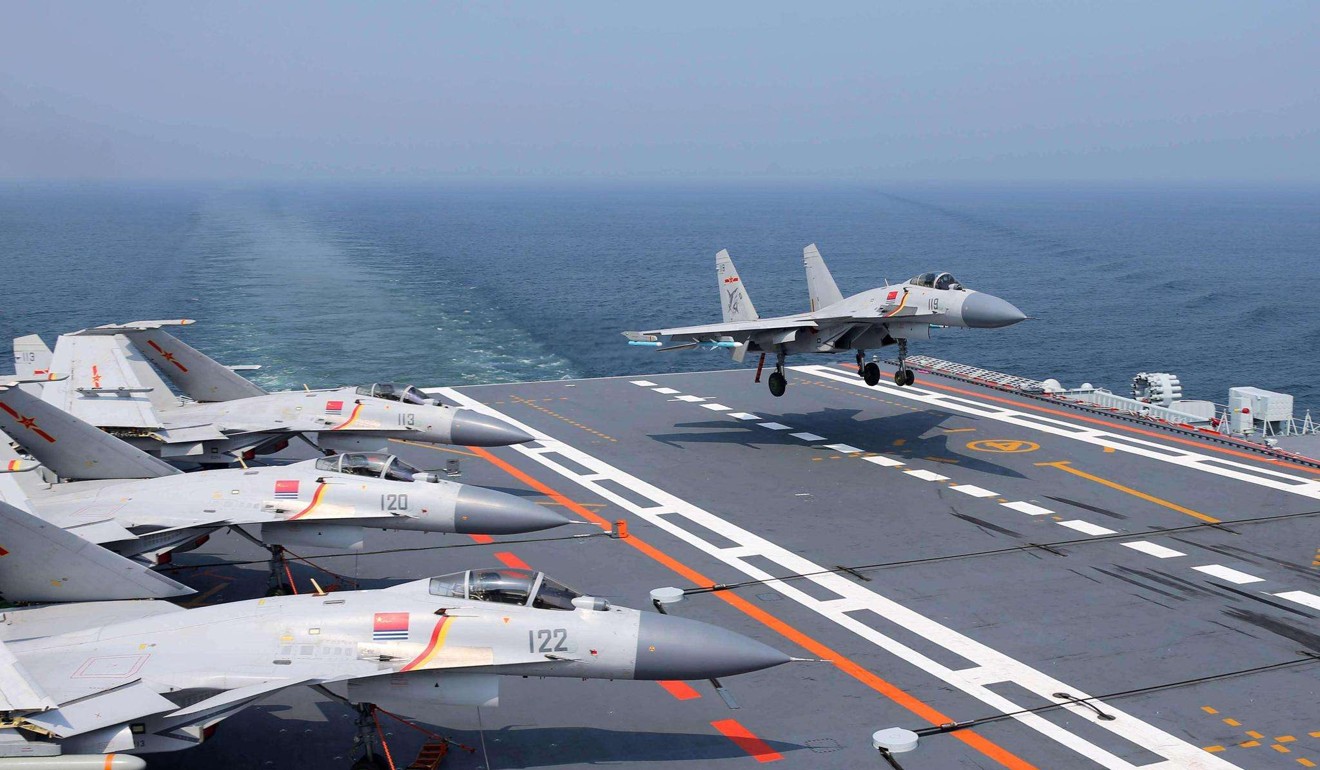
Zhou said the control system worked with J-15 fighters, which will be the primary jets used on the ship, but “is not yet compatible with other aircraft, which hinders the aircraft carrier’s final commissioning”.
Once commissioned, the ship will join the country’s first carrier, the Liaoning, at sea, boosting the country’s naval capacity.
Collin Koh, a research fellow at the Institute of Defence and Strategic Studies from Singapore’s Nanyang Technological University, said: “With two aircraft carriers, the PLA Navy will have greater chances to hone its carrier capabilities – conducting more missions, training, and all of these contributing to the accumulation of expertise and know-how.
“This means qualitatively improving [its] carrier capability, including human capital.
“For long-term strategic significance, it means an expanding power projection capability of the PLAN that allows it to promote presence in regions where Beijing asserts national interests.”
Once ready the ship will carry 32 J-15 fighters. Photo:ifeng
The Type 001A’s trial phase has taken longer than some military observers had expected. The aircraft carrier set out for its first sea trial in May 2018, some 17 months ago.
By comparison, the Liaoning, a former Soviet Kuznetsov-class vessel underwent 10 sea trials over a 13-month period before it was commissioned.
BEIJING (Reuters) – China’s commerce ministry said on Thursday that China hoped to reach a phased agreement with the United States over trade as early as possible, and make progress on canceling tariffs on each others’ goods.
A phased agreement would help restore market confidence and reduce uncertainty, Gao Feng, spokesman at the ministry, told reporters, adding that both sides were maintaining close communication.
On Oct. 11, U.S. President Donald Trump outlined the first phase of a deal to end the trade war with China and suspended a threatened tariff hike, but officials on both sides said much more work needed to be done before an accord could be agreed.
Trump had originally planned to proceed with a hike in tariffs to 30% from 25% on about $250 billion worth of Chinese goods last week. But the U.S. administration has yet to make a decision on how to address planned 10% tariffs on roughly $156 billion of Chinese goods due to take effect on Dec. 15.
U.S. and Chinese trade negotiators are working on nailing down a Phase 1 trade deal text for their presidents to sign next month, U.S. Treasury Secretary Steven Mnuchin said on Wednesday.
Mnuchin said the Trump administration’s “objective” was for the agreement to be signed between the presidents of the two countries at a Nov. 16-17 summit of Asia-Pacific Economic Cooperation countries in Santiago, Chile.
Working-level representatives from both countries are working on specifics of an agreement now, Gao said.
In recent days, there have been positive signs from China.
China’s securities regulator on Friday unveiled a firm timetable for scrapping foreign ownership limits in futures, securities and mutual fund companies for the first time.
Increasing foreign access to the sector is among the U.S. demands at the trade talks.
A day before, the U.S. Department of Agriculture confirmed net sales of 142,172 tonnes of U.S. pork to China in the week ended Oct. 3, the largest weekly sale to the world’s top pork market on record.
Trump said China had agreed to make purchases of $40 billion to $50 billion in U.S. agricultural goods. Mnuchin said the purchases would be scaled up to that amount annually.
On Wednesday, Chinese Premier Li Keqiang said China will remove business restrictions on foreign banks, brokerages and fund management firms, without giving details.








 CHINDIA ALERT: You'll be living in their world, very soon