Chindia Alert: You’ll be Living in their World Very Soon
aims to alert you to the threats and opportunities that China and India present. China and India require serious attention; case of ‘hidden dragon and crouching tiger’.
Without this attention, governments, businesses and, indeed, individuals may find themselves at a great disadvantage sooner rather than later.
The POSTs (front webpages) are mainly 'cuttings' from reliable sources, updated continuously.
The PAGEs (see Tabs, above) attempt to make the information more meaningful by putting some structure to the information we have researched and assembled since 2006.
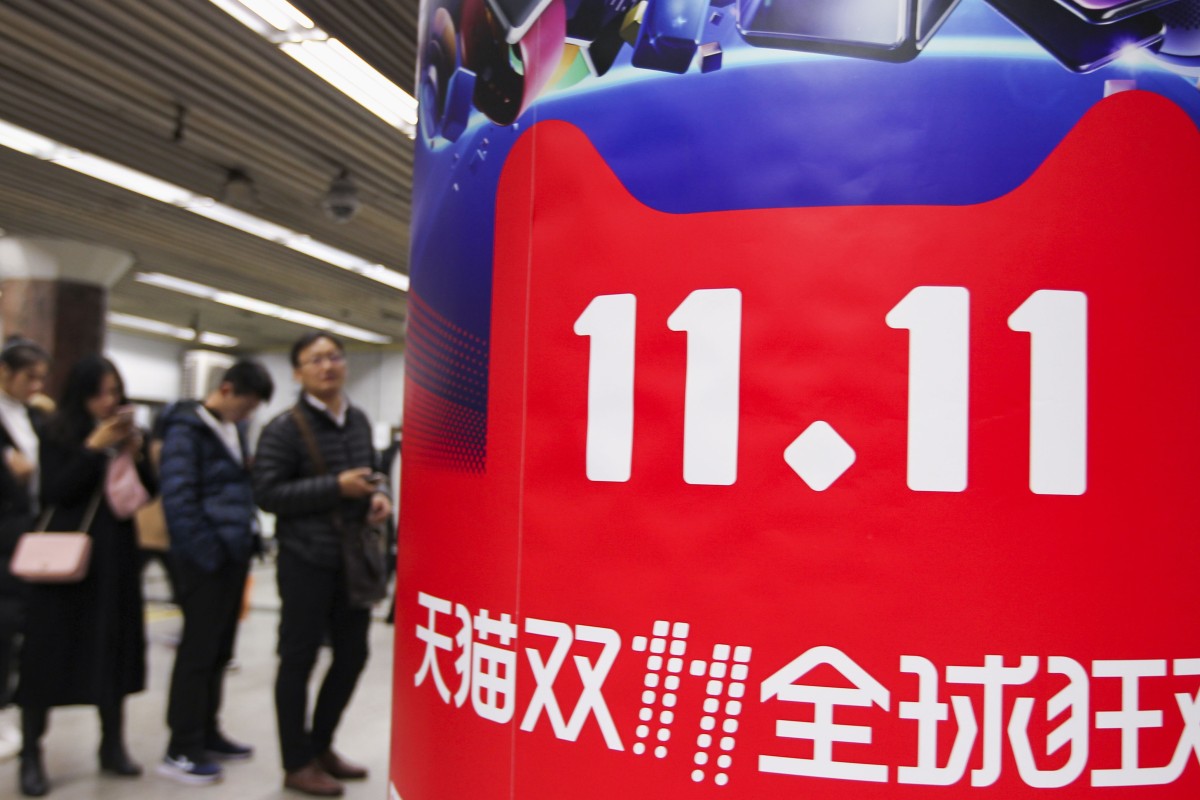
‘Forbes’ magazine reported that China’s central bank will launch its own sovereign digital currency to coincide with the Singles’ Day online shopping festival
The People’s Bank of China is seeking to address financial risks and counter the current dominance of the US dollar
The Singles’ Day is a holiday celebrated in China on November 11 and has become the largest online shopping day in the world. Photo: Simon Song
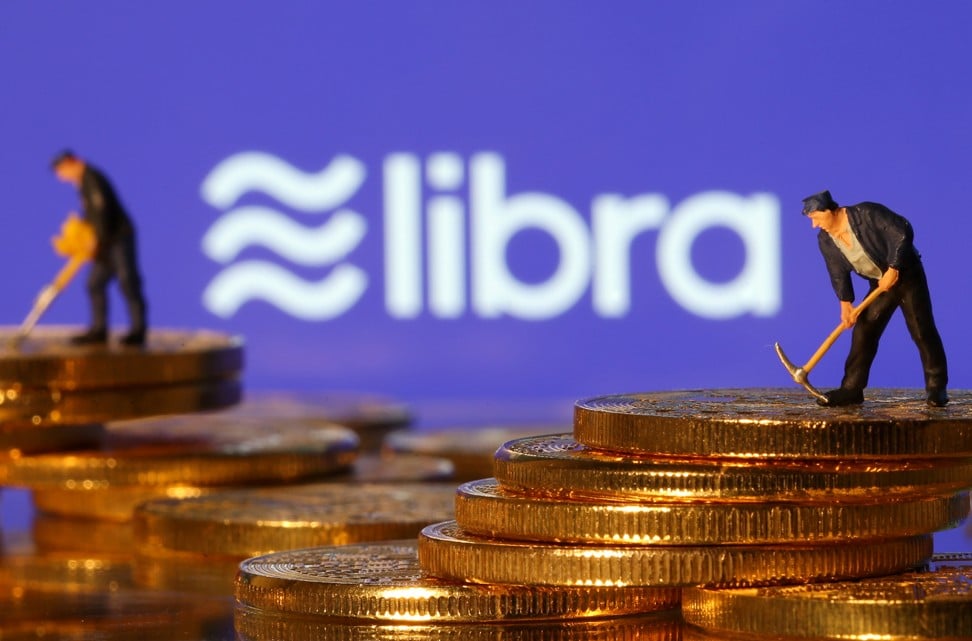
China’s desire to launch the world’s first government-backed digital currency could see the possible rival to Facebook’s Libra be launched in time for November’s Singles’ Day online shopping festival despite a Chinese media report playing down the timing as “inaccurate speculation”.
Several central bank officials have publicly spoken out over the past several weeks about the need for China to launch its own digital currency since Facebook unveiled its plans for Libra, and the People’s Bank of China (PBOC) appear to be making rapid progress ahead of an expected launch.
Forbes magazine reported this week, citing a source who previously worked for the Chinese government, that China’s central bank could launch the digital currency as soon as November 11 as its bids to address financial risks and to counter the current dominance of the US dollar.
The PBOC did not respond to a faxed request for comment on the Forbes story, although Sina.com said that the report was “inaccurate speculation” citing an unnamed source close to the central bank.
China’s central bank is expected to distribute its digital currency through the big four state-owned banks – the Industrial and Commercial Bank of China, China Construction Bank, the Agricultural Bank of China, and the Bank of China – and mobile payments systems Alipay and WeChat Pay, as well as UnionPay, the state-supported credit card provider, according to the Forbes report. Alibaba is the owner of the South China Morning Post.
Ma Changchun, deputy chief of the Payment and Settlement Division of the PBOC, said at the start of August that a digital currency prototype existed and that the central banks’ Digital Money Research Group had already fully adopted blockchain architecture to ensure its use in retail transactions.
“The People’s Bank digital currency can now be said to be ready,” said Ma on August 11.
The People’s Bank digital currency can now be said to be ready Ma Changchun
Former central bank governor Zhou Xiaochuan said last month that, in addition to central banks, “commercial entities” should be allowed to issue banknotes backed by their own private currency assets, although he did not elaborate on what kind of “commercial entities” might be appropriate to issue a digital currency in China.
China is also ready to make Shenzhen a pilot zone for digital currency as part of plans for the city to become a socialist model city, according to a statement summarising a meeting between the Shenzhen party secretary Wang Weizhong and central bank governor Yi Gang released on Thursday.
The PBOC implemented a blanket crackdown in China on trading of cryptocurrency, including bitcoin, which are not backed by any government, viewing them as risks to China’s financial stability and security. At the same time, in 2014 the central bank created its own academy to study digital currencies and the related blockchain technology.
Neil Woodfine, director of marketing at blockchain start-up Blockstream, said a digital currency created by the PBOC would be “just like cash” and “would be fully controlled by the central bank.”
“If it’s digital instead of physical, they can close accounts and monitor all activities [in the entire financial system]. Commercial bank deposits are difficult for them to monitor, control or pull information out of for verification because the numbers are in each bank’s data centre,” Woodfine said.
Wang Xin, director of the central bank’s research bureau, said last month that
to create its own digital currency have pushed Beijing to speed up its own digital currency plan as Libra could potentially pose a challenge to Chinese cross-border payments, monetary policy and even financial sovereignty.
Leonhard Weese, the president of the Bitcoin Association of Hong Kong, said that a government-backed digital currency may enhance the PBOC’s control of China’s monetary system, cutting reliance on commercial banks to transmit changes in monetary policy.
“It would be similar to just killing the commercial banks,” Weese said.
which would be a non-sovereign digital currency controlled by a Swiss-based company, has come under intense scrutiny by regulators and central banks worldwide. Last month, the Group of Seven industrialised nations, known as the G7, called for urgent regulatory measures and other types of action to address serious concerns over Libra.
Central banks, however, have expressed interest in launching their own digital currencies to counter the US dollar and to gain more control of their own monetary systems.
Mark Carney, governor of the Bank of England, argued last week that the US dollar, the current dominant reserve currency, could be replaced by a global digital alternative to tackle ultra-low interest rates.
Facebook’s Libra, which is expected to be launched next year, will be pegged to a basket of convertible currencies – so it could serve as a stable online currency – while its payments will be endorsed by Visa and Mastercard. Photo: Reuters
A digital currency “could dampen the domineering influence of the US dollar on global trade”, Carney said last week at the US Federal Reserve’s annual conference, adding that a digital currency has the edge to counter shocks emanating from the US through trade and exchange rates.
Daniel Wang, chief executive and co-founder of blockchain start-up Loopring, said that a Chinese government-backed digital currency may provide a new way for the yuan to compete globally.
“If the central bank wants to increase the global competitiveness of the yuan through its digital currency, only an open and standard-based competitor carries any hope,” said Wang.
A digital yuan would “remain a sovereign currency under a centralised sovereign,” continuing to require the trust from users in the Chinese central bank and government institutions behind it, Wang added.
Alfred Schipke, senior resident representative for China at the International Monetary Fund (IMF), said that the bank is “open” to digital currencies, including the one being developed by China’s central bank.
The IMF in principle is looking at these things favourably. It’s a two-way process where we learn from China, which is often at the forefront of development. Alfred Schipke
“We don’t have a specific view on a particular currency, we haven’t looked at the details of the latest proposals from China,” Schipke said on Thursday. “The IMF in principle is looking at these things favourably. It’s a two-way process where we learn from China, which is often at the forefront of development.”
Blockstream’s Woodfine said that Beijing’s move also reflects a growing concerns among central banks that a financial disaster is on the horizon.
The 30-year US Treasury bond yield fell to an all-time low 1.976 per cent on Thursday, while yields around the world also plunged to multi-year or record low, triggering rising fears over a global recession.
Central banks around have also been driving down interest rates, with the PBOC recently unveiling a key interest rate reform that effectively cuts borrowing costs for companies to boost its slowing economy.
“We’ll see a move by governments and central banks to take back control over the financial system and use that power to direct their economies, continuing to pump money into the system to keep it afloat,” Woodfine added.
“A digital currency would be the perfect channel for helicopter money,” he said in reference to the idea that a central bank could stimulate the economy by giving out large quantities of money to the public, as if dumped from the sky. “They can send out free money to consumers.”
BEIJING (Reuters) – China will exempt Tesla Inc’s (TSLA.O) electric vehicles (EV) from purchase tax, the Ministry of Industry and Information Technology (MIIT) said on its website.
China currently levies a 10% purchase tax on the sale of each vehicle. The move could reduce the cost of buying a Tesla car by up to 99,000 yuan ($13,957.82), according to a post on Tesla’s social media WeChat account.
Tesla’s pre-market share price jumped more than 5% after the announcement.
Sixteen variants – all the Tesla models sold in the country – are listed on the document issued by MIIT, including Model S, X and 3. No reason was given for the decision to exclude the cars from the tax.
The U.S. EV maker is building a plant in Shanghai, the firm’s first overseas factory.
It is due to start production by the end of the year and Tesla has said it should be able to build 3,000 Model 3 vehicles a week in its initial phases.
The plant is slated to have annual output capacity of 250,000 vehicles after production of the Model Y is added.
US retailer Costco was forced to close early on its opening day in China, after the store was swamped with shoppers.
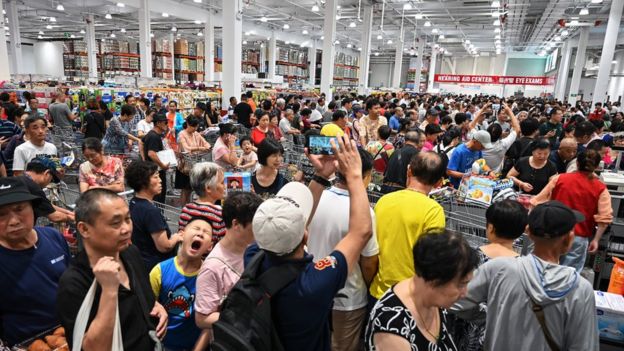
Buyers battled long queues and traffic chaos, before the Shanghai store was shut hours early due to “overcrowding”.
Costco’s push into China comes as other foreign retailers have struggled to compete with local rivals.
It also comes at a time of rising tensions between the US and China over trade.
Costco is a discount warehouse store that sells a range of goods, from fresh foods to household electronics.
Some customers spent two hours lining up to pay for their purchases, while some had to wait three hours for parking, state news agency Xinhua reported.
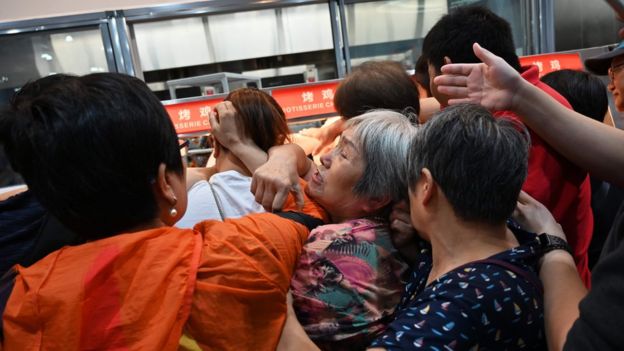
Image copyright AFPImage caption Images from the store show customers caught up in heavy crowds
One video showed people pushing through heavy crowds to get their hands on roast chickens.
“Due to overcrowding in the market, and in order to provide you with a better shopping experience, Costco will temporarily close on the afternoon of August 27. Please avoid coming,” the retailer in a notice on its official app, according to AFP.
Image copyright GETTY IMAGESImage caption Some customers reportedly spent two hours lining up to pay for their goods
Costco has had an online presence in China since 2014, through a partnership with e-commerce giant Alibaba.
The firm’s first store in the country comes as other international retailers battle tough competition in China.
Earlier this year, Amazon said it was downsizing its operations in China and France’s Carrefour agreed to sell 80% of its China business to local retailer Suning.com after a series of losses.
The world’s two largest economies have been fighting a trade war for the past year, and tensions have escalated with the threat of more tariffs from both sides.
Gao Feng, spokesperson for China’s Ministry of Commerce (MOC), gestures at a press conference in Beijing, capital of China, Aug. 29, 2019. (Xinhua/Pan Xu)
BEIJING, Aug. 29 (Xinhua) — The economic and trade negotiation teams of China and the United States have maintained effective communication and are discussing to have a meeting in the United States in September, the Ministry of Commerce (MOC) said Thursday.
“It is of great importance right now to create the necessary conditions for the two sides to continue consultations,” MOC spokesperson Gao Feng said at a press conference.
If the Chinese team visits the United States for consultations next month, both sides should make joint efforts and create conditions to push for progress in their negotiations, Gao said.
He said China is lodging solemn representations with the United States over the latter’s decision to raise the additional tariffs on 550 billion U.S. dollars worth of Chinese imports.
“We hope the United States can meet China halfway and properly solve the economic and trade disputes between the two countries on the basis of equality and mutual respect,” Gao said.
Chinese President Xi Jinping meets with Philippine President Rodrigo Duterte at the Diaoyutai State Guesthouse in Beijing, capital of China, Aug. 29, 2019. (Xinhua/Pang Xinglei)
BEIJING, Aug. 29 (Xinhua) — Chinese President Xi Jinping on Thursday met with Philippine President Rodrigo Duterte at the Diaoyutai State Guesthouse in Beijing, and the two leaders expressed their readiness to push forward ties.
“Under the two sides’ joint efforts, bilateral ties smoothly realized taking an upturn and scoring consolidation and uplift, and continuously achieved tangible outcomes, during President Duterte’s administration over the past three years,” said Xi, expressing welcome for Duterte’s visit.
“At present, the international and regional situations are undergoing profound and complex changes. However, peace, development, cooperation and mutual benefit are still an irresistible trend of the times,” said Xi.
Xi said he is willing to work with Duterte to continue to grasp the trend of the times from a strategic and long-term perspective, leading the sound development of bilateral ties. “This will not only benefit the two countries and their peoples, but will also add positive energy to regional peace and stability.”
Xi said it is necessary to continue to promote the synergy between the Belt and Road Initiative and the Philippine “Build, Build, Build” program, and implement major cooperative projects in such areas as infrastructure construction, industrial parks, telecommunications and energy.
“China is willing to import more high-quality fruits and agricultural products from the Philippines, and will send experts to the Philippines to teach agricultural and fishery technology,” said Xi.
On issues such as human rights, China will continue to firmly support the Philippines’ efforts to safeguard national sovereignty and resist external interference, said the Chinese president.
On the South China Sea issue, Xi said China and the Philippines have been maintaining effective communication.
He said the two sides should set aside disputes, eliminate external interference, and concentrate on conducting cooperation, making pragmatic efforts and seeking development.
Xi said “as long as the two sides handle the South China Sea issue properly, the atmosphere of bilateral ties will be sound, the foundation of the relationship will be stable, and regional peace and stability will have an important guarantee.”
Both sides can take a “bigger step” in the joint development of offshore oil and gas, said Xi.
“The Code of Conduct (COC) in the South China Sea is a pioneering undertaking in establishing rules and regulations in the South China Sea, and China and the Philippines should be committed to promoting the adoption of the COC at an early date,” said Xi, stressing an early adoption will demonstrate the firm position and positive stance of China and the Philippines to jointly safeguard the long-term stability of the region.
Duterte expressed congratulations on the 70th anniversary of the founding of the People’s Republic of China, saying that China’s successful development experience is worth learning from.
“I cherish the close friendship with President Xi,” he said, adding that China means a lot to the Philippines and developing bilateral ties is a project lasting for generations.
He pledged to meet with Xi frequently, strengthen communication, and jointly promote the sound development of the two countries’ ties so as to achieve win-win benefits.
Duterte expressed his hope that China will continue to help the Philippines in economic development and infrastructure construction, and thanked China for support in his country’s human rights cause, post-quake reconstruction, and anti-terrorism and anti-narcotics endeavors.
Facts have proven that China is a sincere friend to the Philippines, he said, adding that the Philippines fully respects China’s laws and the right to maintain law-based governance on the Hong Kong issue, he said.
Duterte expressed his view that the path to peacefully resolving the South China Sea disputes is through cooperation, rather than confrontation.
Maintaining friendly cooperation as well as peace and stability is in the interests of all the parties in the region, he said, while pledging to speed up joint maritime oil and gas exploration with China.
As the country coordinator for China-ASEAN relations, the Philippines is committed to advancing an early adoption of the Code of Conduct (COC) in the South China Sea with relevant parties, Duterte said.
After the meeting, the two heads of state witnessed a ceremony for the exchange of bilateral cooperation deals.
The two sides also announced the setting up of an intergovernmental joint steering committee and a working group between relevant enterprises on oil and gas cooperation so as to promote substantial progress in the joint exploration of oil and gas.
Duterte is on a visit to China from Aug. 28 to Sept. 1, at the invitation of Xi. He will also attend the opening ceremony of the 2019 International Basketball Federation (FIBA) World Cup in Beijing.Source: Xinhua
Chinese President Xi Jinping meets with visiting Uzbek Prime Minister Abdulla Aripov at the Great Hall of the People in Beijing, capital of China, Aug. 28, 2019. (Xinhua/Yao Dawei)
BEIJING, Aug. 28 (Xinhua) — Chinese President Xi Jinping met with visiting Uzbek Prime Minister Abdulla Aripov here on Wednesday, calling on the two countries to jointly push forward the high-quality construction of the Belt and Road.
Xi asked Aripov to convey his sincere regards to Uzbek President Shavkat Mirziyoyev.
The key to the constant leap-forward development of China-Uzbekistan relations is that both sides always adhere to the spirit of good-neighborliness, mutual benefit and mutual assistance, according to Xi.
Xi stressed that he attaches great importance to the development of the China-Uzbekistan comprehensive strategic partnership, which is in line with the fundamental interests of the two countries and their peoples.
Hailing the achievements of the fifth meeting of the China-Uzbekistan intergovernmental committee of cooperation, Xi said that the cooperation goals set by the two sides will certainly be realized as long as the bilateral relationship stays on the right track.
Xi called on both countries to further promote the high-quality construction of the Belt and Road, enhance synergy between national development strategies, strengthen connectivity through cross-border roads and railways, expand cooperation in trade, investment, high and new technology, energy and other fields, as well as foster new highlight in people-to-people and cultural exchanges.
China is willing to increase imports of Uzbek quality agricultural products, Xi said, adding that Uzbekistan is welcome to attend the second China International Import Expo as guest of honor later this year.
In addition, Xi said that the two sides should work together to combat the “three evil forces” of terrorism, separatism and extremism, fight against drug trafficking and other transnational organized crimes.
The rejuvenation of the Chinese nation is to seek happiness for the Chinese people and will also benefit world peace and human progress, Xi said, stressing that China will absolutely not follow the old path of “a strong country must seek hegemony.”
China is ready to enhance coordination with Uzbekistan on international affairs, safeguard common interests of the two countries, uphold multilateralism and promote democracy in international relations, Xi said.
He also called on the two countries to work with other members of the Shanghai Cooperation Organization (SCO) to raise the awareness of a community with a shared future and lift cooperation in various fields, so as to promote further development of the SCO and benefit peoples of various countries in the region.
Aripov conveyed President Mirziyoyev’s sincere greetings and lofty respect to President Xi and his warm congratulations on the 70th anniversary of the founding of the People’s Republic of China.
President Mirziyoyev sincerely hopes China will achieve greater prosperity and early national rejuvenation under the leadership of President Xi, according to Aripov.
Calling China “the closest and most reliable neighbor and partner” of Uzbekistan, Aripov said that Uzbekistan will work with China to firmly implement the important consensus reached by the two heads of state.
Mirziyoyev has appointed a special agency to synergize development strategies with the Chinese side, actively promote cooperation with China on the construction of the Belt and Road, and expand people-to-people and cultural exchanges, according to Aripov.
Uzbekistan firmly supports China in safeguarding its sovereignty, security and unity, and will continue to actively work with China to combat the “three evil forces” of terrorism, separatism and extremism, said Aripov.
Aripov is paying an official visit to China from Tuesday to Thursday at the invitation of Chinese Premier Li Keqiang.
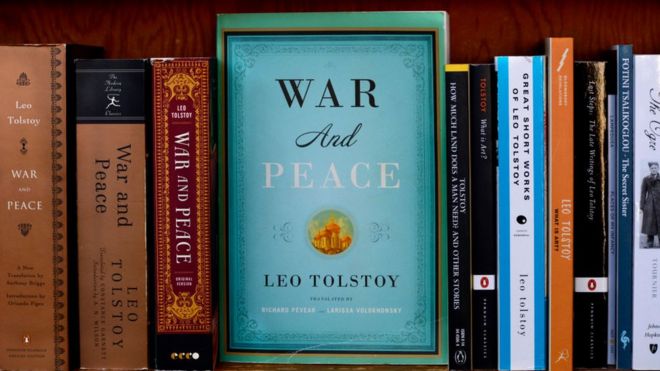
Leo Tolstoy’s War and Peace is in the news in India after a judge asked an activist to explain why he had a book “about war in another country”.
Vernon Gonsalves had appeared in the high court in Mumbai city on Wednesday for a hearing on his bail plea.
The judge’s question sparked a flurry of tweets, with users both outraged and bemused by it.
Five activists, including Mr Gonsalves, were arrested in August 2018 in connection with caste-based violence.
Police raided and searched their homes at the time and submitted a list of books, documents and other belongings to the court. The public prosecutor told the court that police had found “incriminating evidence” in Mr Gonsalves’ home, including “books and CDs with objectionable titles”.
“Why were you having these books and CDs at your home? You will have to explain this to the court,” the judge told Mr Gonsalves.
Police said that all five activists incited Dalits (formerly untouchables) at a large public rally on 31 December 2017, leading to violent clashes that left one person dead. They accused them of “radicalising youth” and taking part in “unlawful activities” which led to violence and showed “intolerance to the present political system”.
The arrests had been criticised by many at the time who saw them as an attack on free speech, and even a “witch hunt” against those who challenged the governing Bharatiya Janata Party (BJP).
So the judge’s question quickly made news and War and Peace was soon trending on Twitter.
The tweets ranged from jokes to shock over the state of India’s judiciary.
Others wondered how they would fare in a courtroom given what’s on their bookshelf, and some have issued a call out asking people to share books from their own “subversive” collection.
NEW DELHI (Reuters) – India is set to impose a nationwide ban on plastic bags, cups and straws on Oct. 2, officials said, in its most sweeping measure yet to stamp out single-use plastics from cities and villages that rank among the world’s most polluted.
Prime Minister Narendra Modi, who is leading efforts to scrap such plastics by 2022, is set to launch the campaign with a ban on as many as six items on Oct. 2, the birth anniversary of independence leader Mahatma Gandhi, two officials said.
These include plastic bags, cups, plates, small bottles, straws and certain types of sachets, said the officials, who asked not to be identified, in line with government policy.
“The ban will be comprehensive and will cover manufacturing, usage and import of such items,” one official said.
India’s environment and housing ministries, the two main ministries leading the drive, did not respond to emails from Reuters to seek comment.
In an Independence Day speech on Aug. 15, Modi had urged people and government agencies to “take the first big step” on Oct. 2 towards freeing India of single-use plastic.
Concerns are growing worldwide about plastic pollution, with a particular focus on the oceans, where nearly 50% of single-use plastic products end up, killing marine life and entering the human food chain, studies show.
The European Union plans to ban single-use plastic items such as straws, forks, knives and cotton buds by 2021.
China’s commercial hub of Shanghai is gradually reining in use of single-use plastics in catering, and its island province of Hainan has already vowed to completely eliminate single-use plastic by 2025.
India lacks an organized system for management of plastic waste, leading to widespread littering across its towns and cities.
The ban on the first six items of single-use plastics will clip 5% to 10% from India’s annual consumption of about 14 million tonnes of plastic, the first official said.
Penalties for violations of the ban will probably take effect after an initial six-month period to allow people time to adopt alternatives, officials said.
Some Indian states have already outlawed polythene bags.
The federal government also plans tougher environmental standards for plastic products and will insist on the use of recyclable plastic only, the first source said.
It will also ask e-commerce companies to cut back on plastic packaging that makes up nearly 40% of India’s annual plastic consumption, officials say.
Cheap smartphones and a surge in the number of internet users have boosted orders for e-commerce companies, such as Amazon.com Inc (AMZN.O) and Walmart Inc’s (WMT.N) Flipkart, which wrap their wares – from books and medicines to cigarettes and cosmetics – in plastic, pushing up consumption.
Chinese Premier Li Keqiang (L) holds a welcoming ceremony for visiting Uzbek Prime Minister Abdulla Aripov before their talks in Beijing, capital of China, Aug. 27, 2019. (Xinhua/Yin Bogu)
BEIJING, Aug. 27 (Xinhua) — Chinese Premier Li Keqiang held talks Tuesday with visiting Uzbek Prime Minister Abdulla Aripov, and the two sides agreed to cement cooperation.
Li said China attaches great importance to China-Uzbekistan relations and is willing to maintain close high-level exchanges with Uzbekistan, promote trade and investment liberalization and facilitation, and strengthen communication and coordination in international and regional affairs.
Li said China is ready to seek synergy between the Belt and Road Initiative and Uzbekistan’s development strategy, deepen cooperation in production capacity, interconnection and agriculture, and make efforts to ensure the stability of energy cooperation.
He expected the two sides to promote cooperation in culture, tourism and higher education, so as to consolidate the people-to-people foundation of bilateral ties.
China is willing to continue to expand the scale of bilateral trade, import Uzbek products that meet the needs of the Chinese market, and support capable Chinese companies investing in Uzbekistan in accordance with market rules, Li said, hoping Uzbekistan will create a good business environment.
Aripov said Uzbekistan is ready to continue to participate in the Belt and Road Initiative, deepen cooperation in various fields, and welcome Chinese enterprises to expand investment in Uzbekistan, so as to push bilateral relations to a higher level.
The two leaders witnessed the signing of a series of cooperation documents after the talks.
Military insiders say the aircraft appears to have beaten the FC-31 in the race to become the PLA Navy’s fighter of the future
A military source close said it would be almost impossible to develop both aircraft over the next few years given the risk of an economic downturn
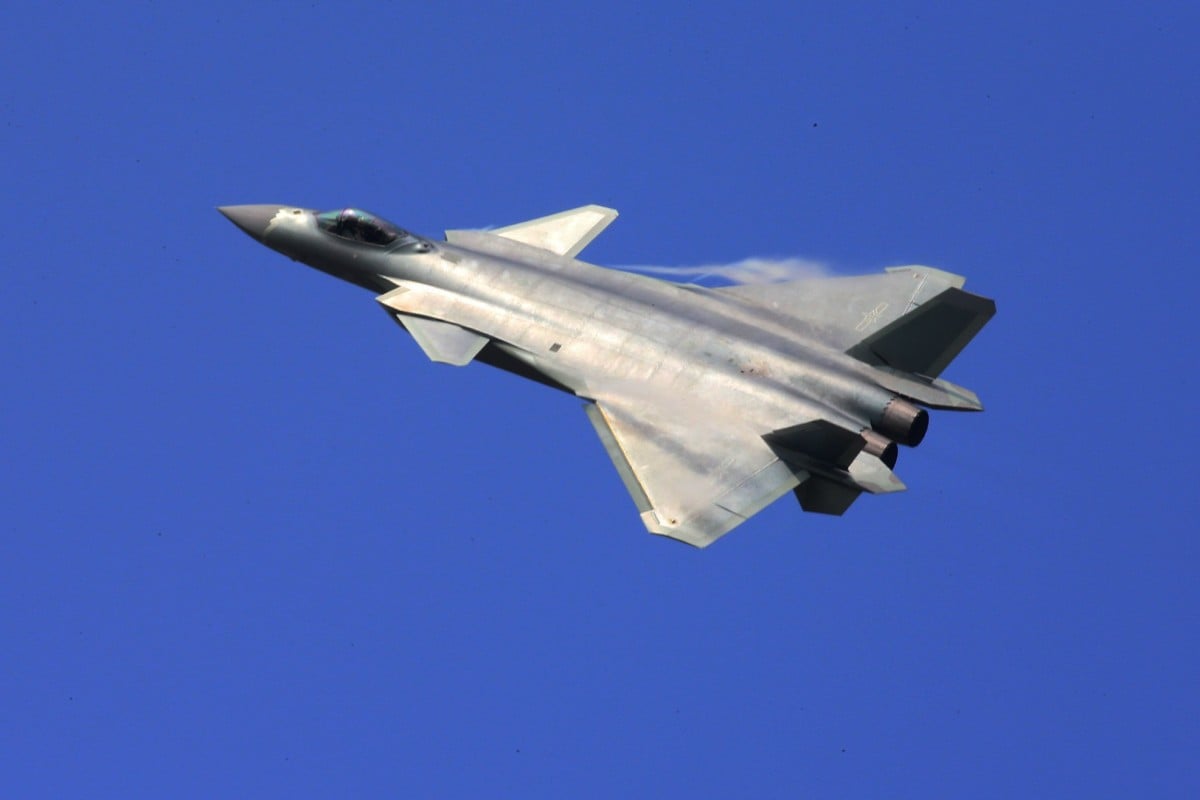
The J-20 stealth fighter is likely to be modified to serve on China’s next generation aircraft carriers. Photo: Xinhua
China’s military is likely to pick the country’s first active stealth fighter, the J-20, for its next generation aircraft carriers, according to military sources and a recent report on state media.
A military insider told the South China Morning Post that the Central Military Commission, the People’s Liberation Army’s top decision-making body, now favoured adapting the J-20 for its new carriers.
“The Chengdu Aerospace Corporation will announce some new products, which will include a new version of their J-20. You can guess what type it will be,” the military insider, who requested anonymity because of the sensitivity of the subject, said.
The FC-31 was independently developed by CAC’s sister company Shenyang Aircraft Corporation (SAC), which also produced the J-15 – the jets currently in use on the country’s only active aircraft carrier, the Liaoning.
Both aerospace firms are subsidiaries of the state-owned giant Aviation Industry Corporation of China, which specialises in designing and developing military aircraft, and were set up to ensure benign competition between manufacturers.
However, the SAC has faced criticism from some military leaders and experts for being too conservative and failing to innovate because of its bureaucratic structure.
A recent programme aired by the state broadcaster China Central Television also suggests the J-20 will be chosen.
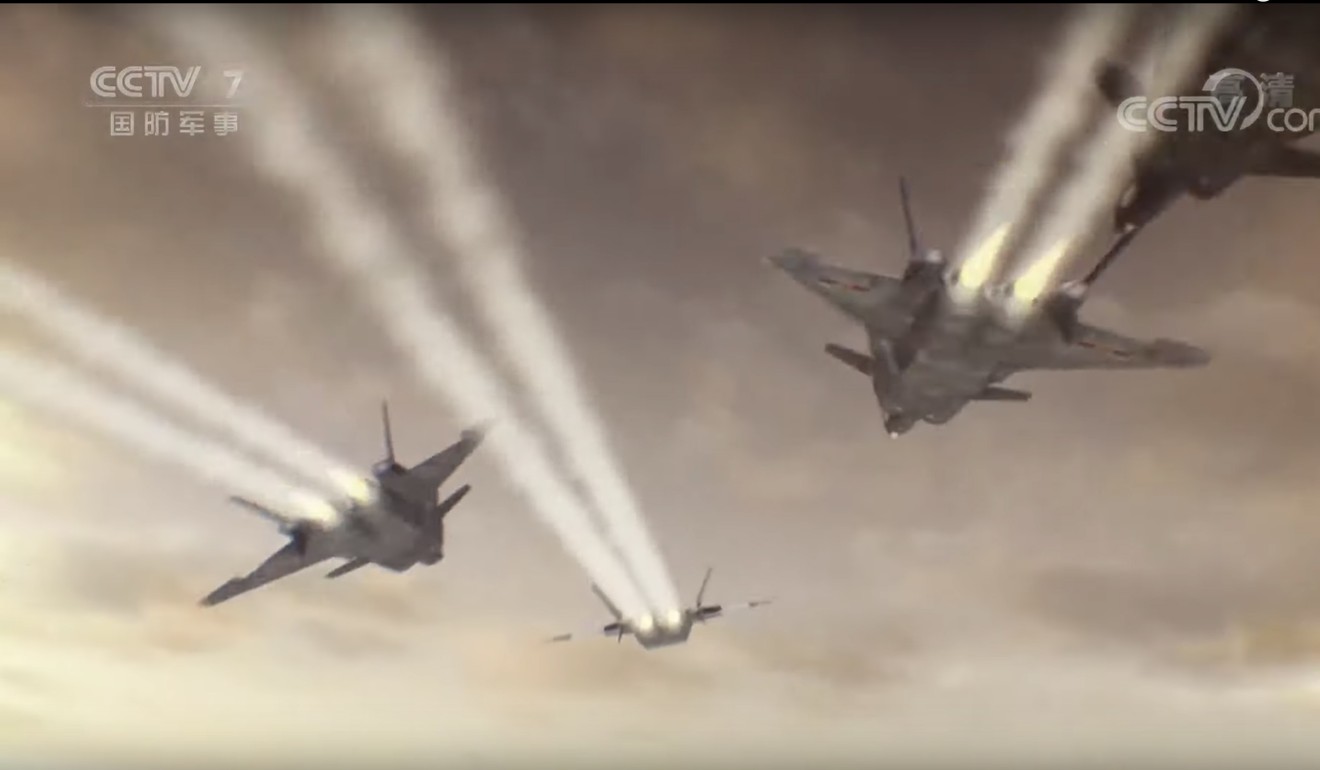
An episode of Military Documentary shown on August 16 reported how the PLA Navy was selecting candidates for pilot training and illustrated the feature with a mock-up of jets that looked like J-20s taking off from a carrier.
Ground-based J-20s – also known as Powerful Dragons – entered service with the PLA Air Force in 2017.
as China stepped up its efforts to counter the deployment of American F-22s and F-35s in the Asia-Pacific region.
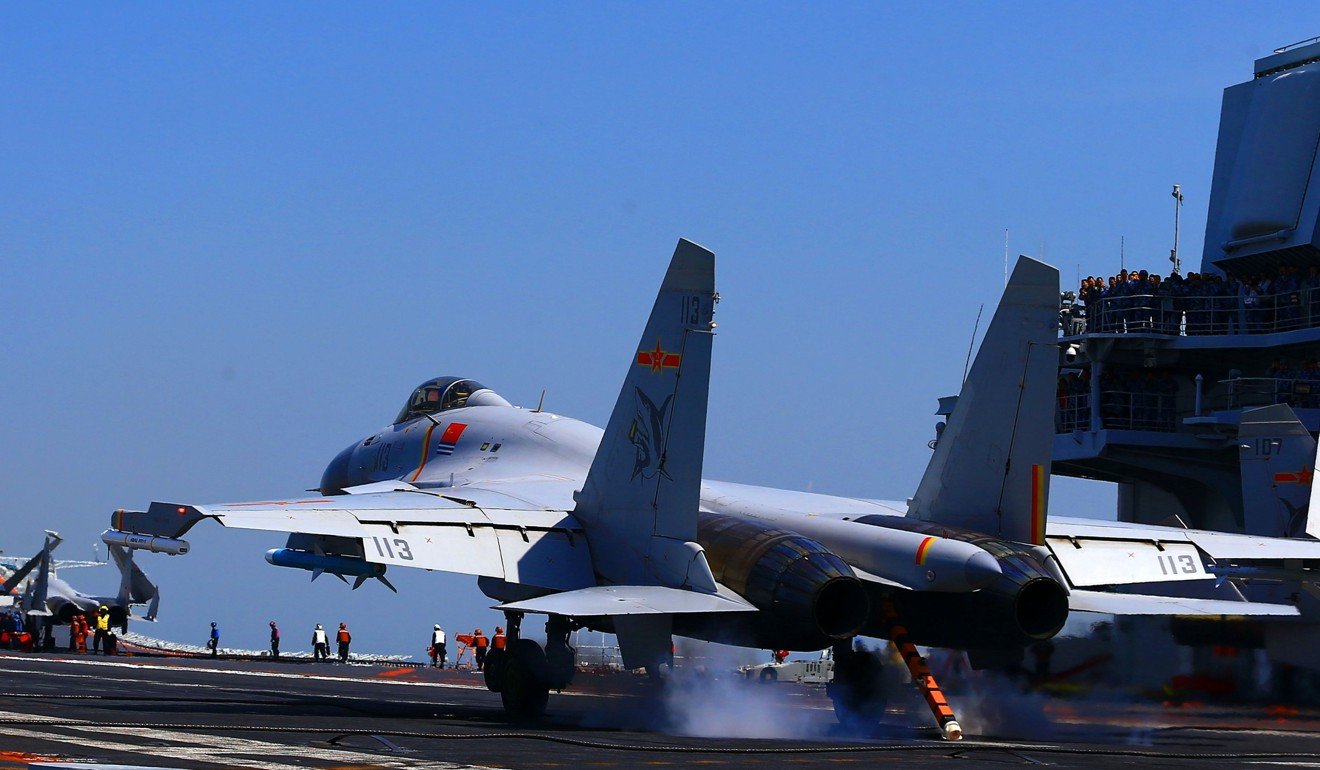
A J-15 fighter lands on the Liaoning. Photo: AFP
If the selection of the J-20 is confirmed it will mark the end of a lengthy debate between its supporters and advocates of the FC-31 as to which would make a better carrier-based fighter.
Those who favoured the J-20 said it was more advanced and reliable than the FC-31, but its supporters said it was more light and nimble.
“Both the J-20 and FC-31 have their advantages. The size of the J-20 is similar to the J-15 since both are powerful heavy fighters,” Song Zhongping, a military commentator for Hong Kong-based Phoenix Television, said.
Song said the lighter FC-31 could be developed into a medium-sized carrier fighter that would complement the J-20 in future.
But another military source close to the PLA Navy said it would be almost impossible to develop both aircraft over the next few years given the risk of an economic downturn as the trade war with the US continues to escalate.
A video simulation broadcast on state television earlier this month showed fighters that resembled the J-20 taking off from a carrier. Photo: CCTV
The source said China’s next generation aircraft carriers would be with equipped electromagnetic catapults similar to those used on the US Navy’s Ford-class supercarriers.
These enable the use of heavier fighters because they are more powerful than the older diesel systems used on older carriers.
“The key problem of the J-20 is not weight, but length. If it wants to be a carrier-based fighter jet, it needs to be made shorter.”
Military insiders have previously said that CAC engineers are working to produce a shorter version of the J-20 that will work with the new launch system.
At present both the J-20 and F-31 still rely on Russian engines. The WS-15 engine that has been purpose built for the J-20 has undergone hundreds of hours of testing but has yet to meet reliability targets while the F-31 prototype does not have a purpose-built engine.
China’s navy plans to build at least four carrier battle groups by 2030, three of which will be active at any given time.
Military analysts say China will need at least a decade to develop its new generation carrier-based fighters, so the J-15 will remain in service for at least a decade, if not two.
The J-15 made its maiden flight in 2009 and has been in service since 2012. They are the only fighters based on the Liaoning and will be used by its sister ship the Type 001A when it enters service, probably later this year.







 CHINDIA ALERT: You'll be living in their world, very soon