People drive kartings at a resort during the International Labor Day holiday in Anshan, northeast China’s Liaoning Province, May 2, 2020. (Xinhua/Yao Jianfeng)
Source: Xinhua
continuously updated blog about China & India

You will be living in their world, very soon

Beware the Waking Dragon
People drive kartings at a resort during the International Labor Day holiday in Anshan, northeast China’s Liaoning Province, May 2, 2020. (Xinhua/Yao Jianfeng)
Source: Xinhua
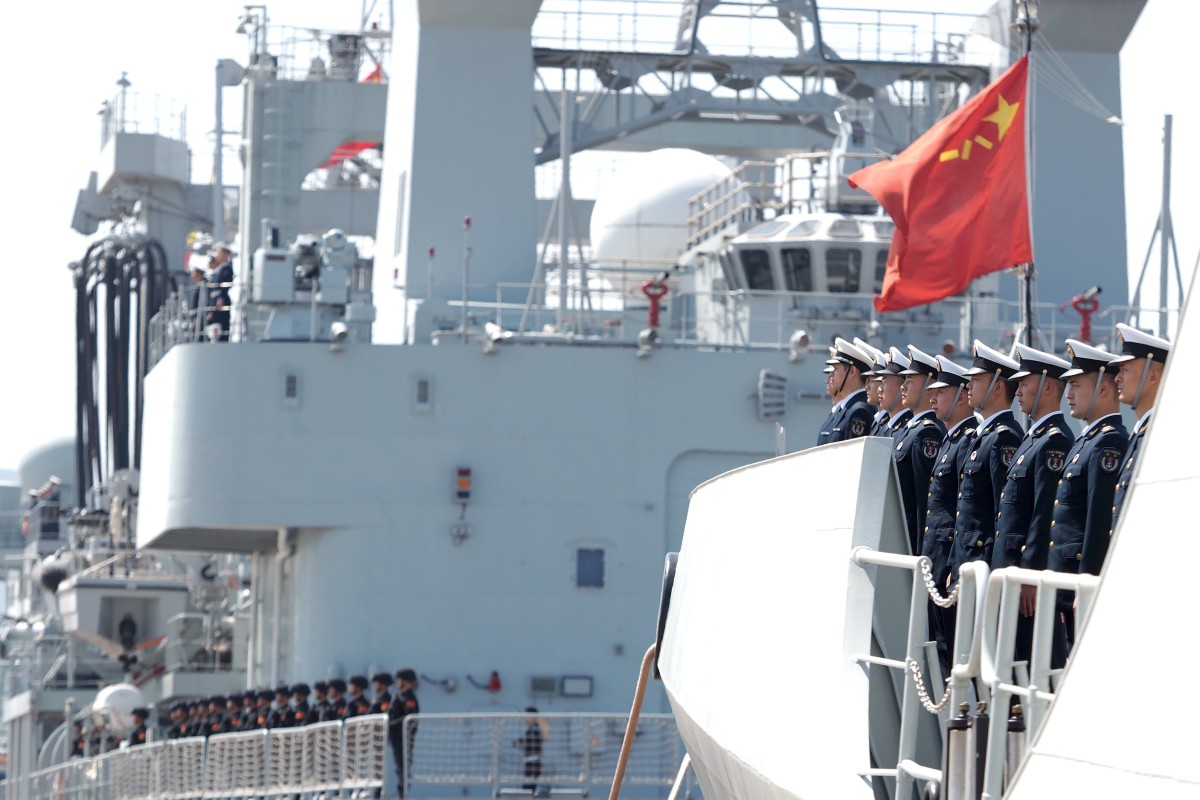
China has said its military expenditure has always been kept below 2 per cent of its GDP over the past 30 years, although its official figures have long been described by Western observers as opaque, with significant omissions of important items.
John Lee, adjunct professor at the University of Sydney and senior fellow at the Hudson Institute in Washington, estimated that this year the Chinese defence budget would remain roughly the same or increase modestly, in line with growth levels of recent years.
“In the current environment, Beijing is keen to emphasise that China has recovered substantially from Covid-19 and that its power trajectory is unaffected by recent events,” Lee said. “At the same time, it would be aware of the anger towards the Communist Party for allowing the virus to become a pandemic.
“Regardless of what the reality might be, I would be surprised if there were a dramatic increase or a significant cut.”
The Chinese government may focus more on job creation, social welfare and poverty alleviation, but not at the expense of military investment, according to Collin Koh, research fellow from the S Rajaratnam School of International Studies at Singapore’s Nanyang Technological University in Singapore.
“I tend to think it will be more or less the same,” Koh said. “To reduce [the budget] may send the wrong signal to would-be adversaries, both domestic and external: that Beijing has lost the will to keep up its military modernisation to assert core national interests.”
PLA flexes military muscle near Taiwan ‘in show of Covid-19 control’

The People’s Liberation Army (PLA) began a massive – and costly – reform in 2015, with a personnel reshuffle, change in structure, upgraded equipment and enhanced training to better resemble battle scenarios. That was supposed to be complete this year.
Given the deteriorating relationship with the United States and rising tensions in the Taiwan Strait and South China Sea, the PLA faces challenges requiring a steady increase in investment, according to Hong Kong-based military commentator Song Zhongping.

But a slight increase in budget would be sufficient to meet defence needs and maintain a deterrence against potential threats, including preventing self-ruled Taiwan taking the opportunity to declare independence, naval expert Li Jie said.
Beijing views Taiwan as a breakaway province to be reunified with the mainland, by force if necessary. Its relationship with Taipei has been strained, and dialogue halted, since Tsai Ing-wen, of the pro-independence Democratic Progressive Party, was elected the island’s president in 2016. Tsai was re-elected for a second term in January.
Li estimated that the budget would probably be kept at the same level or show a “slight” increase from last year.
“It would feed the ‘China threat’ theory and raise international concerns if the Chinese government expands military spending too much,” he said.
Source: SCMP
BEIJING (Reuters) – General Motors’ sales in China saw double-digit year-on-year growth in April, its two local ventures said on Sunday, as the world’s biggest auto market recovers from the coronavirus.
GM’s (GM.N) joint venture with SAIC Motor Corp (600104.SS), which manufactures Buick, Chevrolet and Cadillac vehicles, said its sales in China grew 13.6% compared to a year earlier. It said it had sold 111,155 units in April, including exported cars.
Meanwhile, SGMW, a separate GM venture with SAIC and Guangxi Automobile Group which produces no-frills minivans and has started to make higher-end cars, said its sales jumped 13.5% to over 127,000 units last month.
U.S. automaker GM, which is China’s second biggest foreign car company after Volkswagen (VOWG_p.DE), said its sales in China fell 43.3% in the first three months of 2020 compared with the same period last year.
To attract customers, GM and SAIC have hired social media celebrities to promote its new models and are offering free medical masks to customers.
China’s biggest automaker SAIC, which sold more than 6 million cars last year, said its sales rose 0.5% compared to the same period last year. As well as the GM venture, it also builds its own brand cars and operates a venture with Volkswagen.
Source: Reuters
BEIJING, May 2 (Xinhua) — A Chinese health official on Saturday urged people to wear masks correctly and avoid travel during peak hours over coronavirus concerns in the May Day holiday.
Travelers are encouraged to reserve visiting slots in advance, and pay attention to their temperatures, said Mi Feng, a spokesperson for the National Health Commission, at a press conference in Beijing.
Some tourist attractions have seen large crowds of tourists not wearing masks Friday, the first day of the five-day May Day holiday, Mi said.
China recorded more than 23 million domestic tourist trips Friday, with the domestic tourism revenue reaching over 9.7 billion yuan (about 1.38 billion U.S. dollars), according to the Ministry of Culture and Tourism.
This year’s May Day holiday runs from May 1 to 5.
Source: Xinhua
BEIJING, May 2 (Xinhua) — A total of 35 parks and scenic spots in Beijing with large passenger flows require online reservations during the May Day holiday, Beijing Gardening and Greening Bureau said Friday.
Besides making reservations on the online platforms of these attractions, visitors can also book the tickets on the official website of Beijing Gardening and Greening Bureau and its official account on WeChat and microblog Sina Weibo.
Parks and scenic spots will embrace a peak of passenger flows during the holiday from May 1 to 5, according to Ye Xiangyang, director of the park management office of the bureau.
Online reservations can help control passenger flow effectively, ensuring the stable order of these popular sites and the health of visitors, Ye said.
Parks in the capital will limit real-time tourist numbers to no more than 30 percent of their maximum tourist capacity during the holiday for the safety of visitors amid the COVID-19 epidemic.
Beijing has lowered its emergency response to the COVID-19 epidemic from the top level to the second level starting Thursday.
Source: Xinhua
SHANGHAI, May 2 (Xinhua) — Shanghai’s 130 main tourist attractions have received over 1 million visitors in the first two days of the five-day May Day holiday.
The scenic sites received 456,000 visitors on Friday and 633,000 more on Saturday, marking a growing travel and leisure demand, according to the Shanghai Municipal Administration of Culture and Tourism.
The city requires reservations for tours of all tourist attractions to prevent crowding while tourist sites should not exceed 30 percent of their daily or real-time visitor capacity.
Tourists are also required to wear face masks, show their health QR codes and have their body temperatures taken for their safety.
“I feel safe and confident with the new reservation measures,” said Li Zhi, who has booked tours to the Zhujiajiao ancient town and Shanghai Oriental Land.
Under the reservation system, tourist sites are also better prepared to prevent crowding and provide better tour experiences to customers, according to Huang Ying with Shanghai Oriental Land.
Source: Xinhua
 Aerial photo taken on May 2, 2020 shows villagers planting rice seedlings in a terraced field in Gongxian County, southwest China’s Sichuan Province. (Xinhua/Jiang Hongjing)
Source: Xinhua
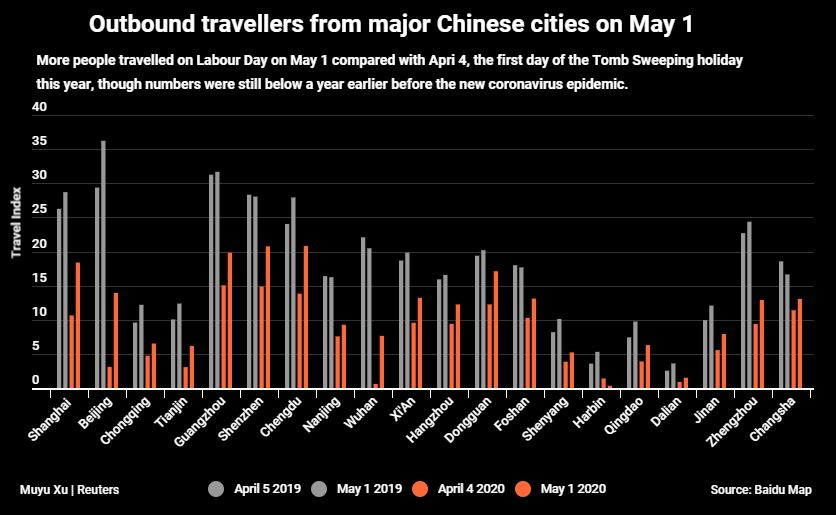
BEIJING (Reuters) – China’s most populous cities saw a spike in outbound travellers, tourists and day-trippers on May 1, first day of a long holiday weekend, led by Wuhan, epicentre of the coronavirus epidemic that first struck the country late last year.
The number of people travelling outside their home cities jumped nearly 50% at the start of the Labour Day weekend, compared with the first day of the Tomb Sweeping holiday on April 4, according to Reuters calculations on data from China’s internet giant Baidu Inc (BIDU.O).
The increase in outbound travel during the five-day holiday, one of China’s peak tourism periods each year, would help lift the travel and hospitality sectors that have been hit hard by disruption from the coronavirus pandemic.
The spike in tourism was led by increases in travellers from Wuhan, Beijing, Dalian, Tianjin and Jinan, with China having eased curbs on travel and relaxed rules on quarantine amid dwindling cases of the coronavirus.
(Graphic: Outbound travellers from major Chinese cities on May 1 IMAGE: here)
Hundreds of sightseeing spots have also been reopened, including the Forbidden City in Beijing, as authorities sought to revive and repair local economies.
The country recorded more than 23 million domestic tourists on May 1, according to China’s culture and tourism ministry.
The Ministry of Transportation expects 23.36 million travellers a day during the period, up from 19.9 million per day during the April 4-6 Tomb Sweeping holiday.
But that estimation would still be far below the 67.13 million travellers per day during the 2019 Labour Day holiday.
The expected drop is partly because China has capped visitors to tourist spots at 30% of capacity to adhere to social distancing rules.
At the West Lake in the eastern city of Hangzhou, the most popular sightseeing spot during the holiday according to Baidu, 183,700 visitors were recorded on May 1, less than a third of the numbers last year.
Some tourists also stayed closer to home, and others avoided areas such as Heilongjiang province that are still battling local virus clusters.
Hubei province, where the epidemic first emerged, was also not a favourite.
Hubei’s tourism department said its 22 reopened tourist sites saw 109,664 visitors on May 1, down 87% from a year ago, while tourism revenue plunged 95% to 6.79 million yuan ($961,729).
China reported one new coronavirus case for May 1, down from 12 a day earlier, and no new deaths, data from the country’s health authority showed on Saturday.
Source: Reuters
BEIJING, May 2 (Xinhua) — The number of China-Europe freight trains hit a record monthly high of 979 in April, up 46 percent year on year, the China State Railway Group said Saturday.
A total of 88,000 TEUs (20-foot equivalent units) of cargo were transported by the trains, up 50 percent from a year earlier.
From January to April, a total of 2,920 China-Europe freight trains transported cargo of 262,000 TEUs, up 24 percent and 27 percent from a year earlier, respectively.
The number of departing trains rose 36 percent year on year to 1,638 during the first four months, while the number of returning trains climbed 11 percent to 1,282.
China-Europe cargo train services have become an important logistics channel to ensure smooth trade as air, sea and road transportation have been severely affected by the novel coronavirus epidemic, the company said.
The freight trains have also been playing a crucial role in helping with the fight against the pandemic in Europe as massive quantities of medical supplies were sent by them.
From March 21 to the end of April, anti-epidemic supplies totaling 660,000 items and weighing 3,142 tonnes were sent by the freight trains to European countries such as Italy, Germany, Spain and the Czech Republic.
Source: Xinhua

continuously updated blog about China & India
continuously updated blog about China & India
continuously updated blog about China & India
 CHINDIA ALERT: You'll be living in their world, very soon