
13/12/2018

Can South China Sea conflict between Washington and Beijing be avoided?

This story is part of an ongoing series on US-China relations produced jointly by theSouth China Morning Post and POLITICO, with reporting from Asia and the United States.

Rising tensions over Beijing’s accelerating military build-up in the South China Sea are stoking fears of a major-power clash between China and the United States – fuelling urgent calls for new security talks before the two nations stumble into a shooting war.

But the worries come amid a dearth of official dialogue between two of the world’s largest militaries, and as US leaders espouse an increasingly harder line against China’s actions.

The US and its allies have stepped up naval and air patrols over the sea and cancelled joint exercises with Beijing, while China is considering requiring all aircraft flying over the area to first identify themselves – a step that many nations would consider threatening.

Military experts say the showdown could easily spin out of control.

“Chinese colleagues have said to me explicitly that if the US continues to sail through and overfly what they see as their waters, China will eventually shoot down the offending aircraft,” said Matthew Kroenig, a former CIA analyst and Pentagon strategist.

“Maybe that’s just a bluff, but if China shot down a US plane, that would be a scenario ripe for escalation. It’s hard to see President Trump or any other US leader backing down from that.”

US military leaders insist they’re determined to avoid that. Navy Admiral Phil Davidson, the US commander of the Indo-Pacific Command, told POLITICO he’s eager to open a new dialogue with his Chinese counterparts, contending that “a military-to-military relationship is quite important.”

“I have yet to meet the [chief of defence] or the minister of defence in China,” he said. “I hope to visit early next year.”

Marine General Joseph Dunford, the chairman of the US Joint Chiefs of Staff, says establishing more channels for the militaries to avoid conflict is one of his top priorities as Washington and Beijing also tussle over issues such as trade and North Korea’s nuclear program. “Competition does not necessarily lead to conflict,” he said at a recent security forum in Canada.

On the other hand, the US is trying to send Chinese leaders a pointed message by sending an increased number of military patrols through the disputed waters, Dunford said in an interview with POLITICO.

“What we are doing is preserving the principle of open access to the global commons,” Dunford said. And he said nations “violating international norms, standards and the law” should know they are “going to pay a cost that is higher than whatever they hope to gain.”

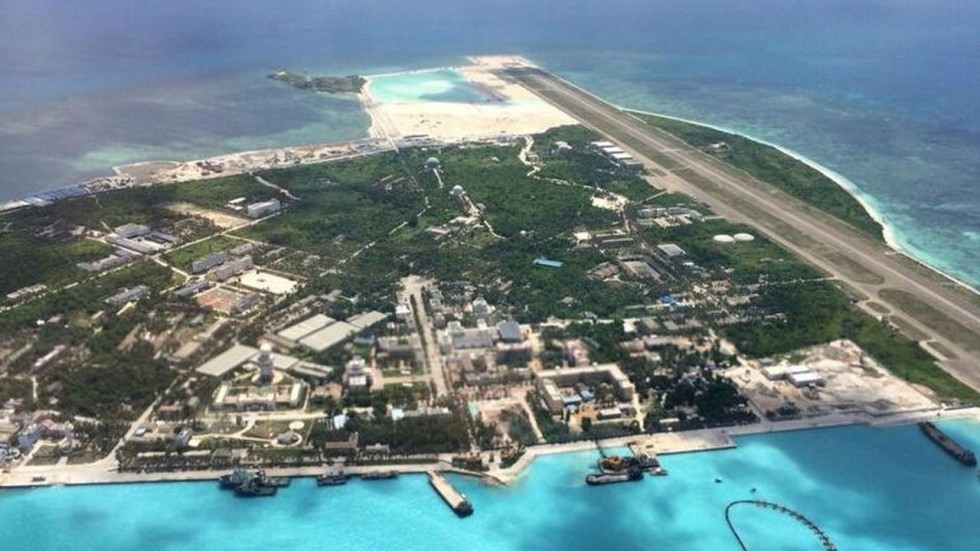
Similarly, Beijing’s leaders are not backing down from their military expansion in the vast South China Sea, which stretches more than 1.3 million square miles with trillions of dollars worth of trade transiting annually. Those waters near the Spratly Islands chain where China seized reefs and began building artificial islands during the second term of the Obama administration.

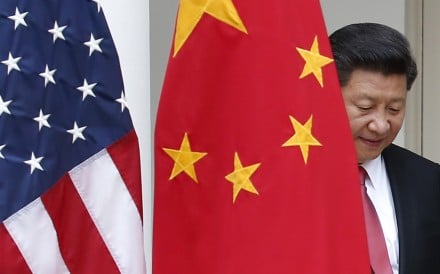
Despite public assurances from President Xi Jinping that the features would not be militarised, China recently deployed surface-to-air missiles and other weapons and equipment. Earlier this year, satellite images showed that Beijing has built at least four airstrips suitable for military aircraft on Woody Island, as well as the reefs in the archipelago known as Fiery Cross, Mischief and Subi.

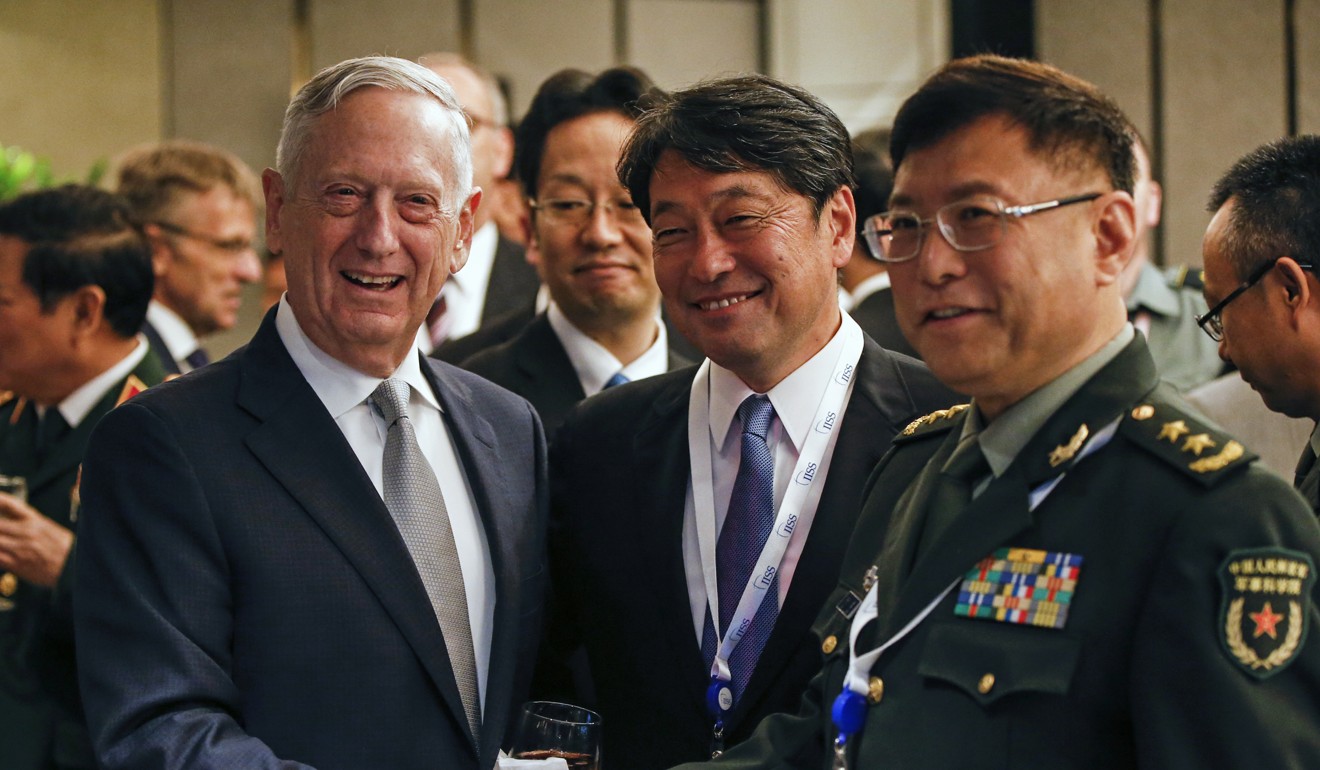
China has telegraphed steps to further solidify its claims in the waters. In June, Chinese Lieutenant General He Lei acknowledged during the Shangri-La defence summit in Singapore that China is deploying troops and weapons on both natural and man-made islands in the Paracel and Spratly archipelagos.

Chinese military sources from a state-owned firm specialising in radar systems to detect stealth aircraft for the PLA said the People’s Liberation Army’s Air Force and Strategic Support Force have also placed sophisticated radar systems in the South China Sea.

“Since the US has kept sending spy aircraft to do the close-in reconnaissance activities near China’s territory waters in the South China Sea, it’s necessary to deploy a sophisticated radar system to the artificial islands to detect the US aircraft,” one of the sources from the firm said.

Lieutenant General He Lei, who led the Chinese military delegation to the Shanghai-La Dialogue, said that “deploying troops and weapons on islands in the South China Sea is within China’s sovereign right to do and allowed by international law.”
The US and other countries have condemned the expansion as a violation of international law. And, in recent months, top American military officials have dropped some of their usual diplomatic language.

US Defence Secretary James Mattis revoked China’s invitation to participate in an annual military exercise this fall, then cancelled a trip to Beijing planned for October.

“If you’d asked me two months ago, I’d have said we are still attempting to maintain a cooperative stance,” the retired four-star general said at the Shangri-La summit. “But then you look at what President Xi said in the Rose Garden of the White House in 2015, that they would not militarise the Spratlys, and then we watched what happened four weeks ago, it was time to say there’s a consequence to this.”

During his trip to Vietnam in October, Mattis said Washington was highly concerned about China’s “predatory” behaviour and militarisation of the South China Sea.

“We remain highly concerned with the continued militarisation of features in the South China Sea,” he said, saying that this continued to happen despite a pledge by President Xi Jinping not to do so.

Davidson, the top American commander in the Asia-Pacific, expressed alarm recently at China’s “secretly deployed anti-ship missiles, electronic jammers and surface-to-air missiles.”

“So what was a great wall of sand just three years ago,” Davidson added, “is now a great wall of SAMs in the South China Sea, giving [the People’s Republic of China] the potential to exert national control over international waters in the South China Sea.”

The US and its allies have also launched “freedom of navigation” operations in the region. In September, two pairs of US Air Force B-52 bombers flew over the disputed area – one pair over the South China Sea and one over the East China Sea. A week later, the destroyer USS Decatur came within 12 nautical miles of two of the disputed reefs, prompting manoeuvres by a Chinese destroyer that the Pentagon called “unsafe” and “unprofessional.”

Australia, Japan, France, Canada and New Zealand are among the allies taking part in the patrols.

But the growing prominence of those other military forces has caused China to “push back more, and that heightens the risk that you could have an inadvertent crisis,” said Lindsey Ford of the Asia Society, who is also a former senior adviser to the US assistant secretary of Defence for Asian and Pacific security affairs.

China’s interest is not simply to exert political or economic influence in the region, said Kroenig, the former CIA analyst. Its activities are also defensive in nature, he believes.

China, like the Soviet Union during the cold war, is not confident that its nuclear ballistic missile submarines could survive in the open ocean during a conflict with the United States, he said – because waters closer to Chinese territory are too shallow. So it hopes to use the South China Sea as an operating area for its subs.

“That’s a strategic military purpose on top of the political purpose,” said Kroenig. “I’ve had a Chinese colleague say to me: ‘You guys don’t really care about these territorial claims in the South China Sea. You’re trying to deny our nuclear deterrent.’”

Now, Chinese military experts say, Beijing is considering establishing an “air defence identification zone”, which would require all aircraft over the area to declare their identity and destination.

The rationale is ostensibly peaceful in nature: Chinese officials maintain it would help prevent disasters such as the 2014 disappearance of Malaysia Airlines flight MH370.

But a zone Beijing established in the East China Sea in 2013 drew a joint rebuke from Japan and the Association of Southeast Asian Nations, which considered it threatening.

The resistance from other nations “implied that such a move constituted a security challenge”, said Collin Koh Swee Lean, an analyst at the S. Rajaratnam School of International Studies in Singapore.

Koh warned that the air traffic proposal could derail regional talks about establishing a code of conduct to avoid confrontations in the area. He also predicted that the US might feel compelled to ramp up its military presence in response – a view echoed by Zhou Chenming, a military expert based in Beijing.

Further fuelling tensions in the South China Sea is the growing role of China’s so-called Maritime Militia, a naval paramilitary force that operates disguised as fishing or other civilian vessels. Vice-President Mike Pence recently criticised the forces as extra-legal, and the rules for approaching them are ill-defined.

“Should we treat them as military vessels and expect them to behave that way?” asked the Asia Society’s Ford. “China is exploiting a loophole. Pence’s recent remarks calling out the Maritime Militia explicitly suggest the US is refining its thinking about how to approach that loophole.”

For now, senior American military leaders are expressing confidence that US forces can continue to aggressively promote their freedom of navigation mission without sparking a violent confrontation.

“I think one of the unfortunate things is the focus on two destroyers passing in the daylight,” Davidson told POLITICO. “That is not what the issue is about in the South China Sea. It is about trade, commerce, financial markets moving their information around the globe – every airline that flies over the top.”

Others worry that the longer the United States and China up the ante the more likely things could spin out of control.

13/12/2018

Winners decided for China’s 2018 national science and technology awards

BEIJING, Dec. 12 (Xinhua) — China has decided the winners for the 2018 national science and technology awards at an executive meeting of the State Council presided by Premier Li Keqiang on Wednesday.

The list of winners and awards are yet to be released.

According to the meeting, the purpose of the awards is to inspire more domestic technicians, especially younger ones, to engage in the study of cutting-edge technologies, make breakthroughs in essential technologies, expand international cooperation and to have science and technology better serve and support economic development and the improvement of people’s livelihood.

A grand ceremony was held in Beijing in January, where 271 projects and nine scientists won the national prizes last year. There were also seven foreign scientists who won international science and technology cooperation awards.

13/12/2018

China-Qatar visa exemption agreement to take effect later this month

CHINA-BEIJING-WANG YI-QATAR-DEPUTY PM-STRATEGIC DIALOGUE MECHANISM-MEETING (CN)

Chinese State Councilor and Foreign Minister Wang Yi (R) and Sheikh Mohammed bin Abdulrahman Al Thani, deputy prime minister and minister of foreign affairs of Qatar, co-chair the first meeting of a China-Qatar inter-governmental strategic dialogue mechanism in Beijing, capital of China, Dec. 12, 2018. (Xinhua/Ding Haitao)

BEIJING, Dec. 12 (Xinhua) — An agreement on mutual exemption of visas between China and Qatar will take effect from Dec. 21, the two countries announced Wednesday in Beijing.

The announcement came as State Councilor and Foreign Minister Wang Yi and Sheikh Mohammed bin Abdulrahman Al Thani, deputy prime minister and minister of foreign affairs of Qatar, co-chaired the first meeting of a China-Qatar inter-governmental strategic dialogue mechanism in Beijing.

The two sides hope to take this opportunity to bolster cooperation in tourism and expand people-to-people exchanges.

This year marks the 30th anniversary of the establishment of diplomatic relations between China and Qatar. Wang said it is of great importance to initiate an inter-governmental strategic dialogue mechanism between the two countries.

“China stands ready to work with Qatar to push bilateral ties towards another 30 years of faster development,” said Wang. He proposed the two sides use the opportunity of jointly pursuing the Belt and Road Initiative to synergize their development strategies and carry out win-win cooperation in in fields including energy, high and new technology, investment, finance.

Wang also introduced the measures taken and results achieved by Xinjiang Uygur Autonomous Region in combating violence, terrorism and extremism.

While calling terrorism a common threat to humanity, Mohammed said Qatar supports the measures taken by China in safeguarding national security and stability, and stands ready to strengthen cooperation in security and anti-terrorism.

13/12/2018

Xi holds talks with Ecuadorean president, eyeing steady development of bilateral ties

CHINA-BEIJING-XI JINPING-ECUADOR-PRESIDENT-TALKS (CN)

Chinese President Xi Jinping (L, front) holds a welcoming ceremony for Ecuadorean President Lenin Moreno Garces ahead of their talks at the Great Hall of the People in Beijing, capital of China, Dec. 12, 2018. (Xinhua/Li Tao)

BEIJING, Dec. 12 (Xinhua) — President Xi Jinping on Wednesday held talks with Ecuadorean President Lenin Moreno at the Great Hall of the People in Beijing, calling for the healthy and steady development of the bilateral ties.

Recalling his state visit to the South American country in 2016, Xi said the healthy and steady development of China-Ecuador ties goes with not only the fundamental interests of the two countries and peoples but also the trend of peace, development and win-win cooperation.

During the 2016 visit, the two countries established a comprehensive strategic partnership, ushering in a new chapter for the bilateral relationship, Xi said.

Xi said he appreciates President Moreno’s commitment to deepening the friendly cooperation between the two countries since Moreno took office last year.

Xi stressed that the two sides should increase interactions to intensify their strategic communication and coordination and exchange experience on governance, so as to enhance mutual understanding and support for each other’s path of development and continue backing each other firmly on issues involving their core interests and major concerns.

Noting that Ecuador’s participation in the construction of the Belt and Road is welcomed by the Chinese side, Xi expects the two sides to jointly promote cooperation in areas such as infrastructure, production capacity, agriculture, information technology, new energy and environmental protection.

“China welcomes Ecuador to actively explore the Chinese market and share opportunities brought by China’s development,” Xi said.

China’s financing cooperation with Ecuador is conducted on the basis of equality, mutual benefit and business principles, without attaching any political condition, said Xi.

Noting that the Chinese government requires Chinese enterprises in Ecuador to abide by local laws and regulations and run business fairly in the market, Xi expects the Ecuador side to create a good investment environment and protect their legitimate rights and interests.

He called for closer people-to-people and technology exchanges, urging both sides to carry out law enforcement cooperation to guarantee normal exchanges of personnel, economy and trade.

Xi also said China will continue to support Ecuador’s post-earthquake reconstruction and its disaster prevention work.

China and Ecuador have same or similar positions on major international and regional issues, said Xi, calling on the two sides to collaborate closely to safeguard multilateralism, promote reform of the global governance system and defend the legitimate rights and interests of developing countries.

Moreno expressed gratitude for China’s assistance on Ecuador’s economic and social development, especially for the help offered after Ecuador was hit by an earthquake in 2016.

Moreno said Ecuador is ready to actively take part in the Belt and Road Initiative and expand bilateral cooperation in various fields.

He welcomed and appreciated China’s financing cooperation with Ecuador and expects to expand exports to China. Moreno also expressed the will to enhance coordination and collaboration with China in multilateral affairs such as UN Sustainable Development Goals.

After the talks, the two leaders witnessed the signing of several cooperation documents, including a memorandum of understanding on jointly promoting the construction of the Belt and Road.

13/12/2018

Submit China encourages mechanized agriculture with new measure

CHINA-MECHANIZED AGRICULTURE (CN)

A reaper harvests wheat in Pingyi County of Linyi City, east China’s Shandong Province, May 30, 2018. China has decided to boost mechanized farming and the upgrading of agricultural machinery, according to the State Council’s executive meeting chaired by Premier Li Keqiang on Wednesday. The meeting said that quickening the work as required by the country’s rural vitalization strategy would provide essential support for China to achieve agricultural modernization, allow farmers to increase their income and further expand the domestic market. (Xinhua/Wu Jiquan)

BEIJING, Dec. 12 (Xinhua) — China has decided to boost mechanized farming and the upgrading of agricultural machinery, according to the State Council’s executive meeting chaired by Premier Li Keqiang on Wednesday.

The meeting said that quickening the work as required by the country’s rural vitalization strategy would provide essential support for China to achieve agricultural modernization, allow farmers to increase their income and further expand the domestic market.

The work must be advanced to meet the needs of developing scale farming appropriately. During the process, farmers’ wishes must be respected while the roles of the market are exploited. Grassroots creativity must be valued so that the work can proceed smoothly, it said.

The meeting also listed several crops whose production and harvest could depend more on mechanized farming. They are rice, wheat, corn, potato, oilseed rape, cotton and sugarcane.

In the meeting, it was said that farmers engaged in mechanized farming would be subsidized equally no matter if the machinery they purchase is from Chinese or foreign brands.

Financial institutions were encouraged to use mortgage loans to finance such purchases while local governments were called on to support the work through financial discounts.

The meeting stressed that advanced agricultural machinery and mechanized farming techniques should be further promoted.

It also urged enterprises to quicken innovation on agricultural equipment, double their efforts to develop complete sets of equipment and improve the quality of farming equipment suitable for major cash crops.

It said that small plots of farmland could be consolidated when possible so as to broaden the use of farming equipment and that various cooperatives need to be established to facilitate the sharing of agricultural machinery.

It was stated in the meeting that smart farming based on the application of modern information and communication technologies shall be advanced.

13/12/2018

Xi reiterates China’s adherence to multilateralism, opening-up

CHINA-BEIJING-XI JINPING-FORUM-FOREIGN DELEGATES-MEETING (CN)Chinese President Xi Jinping (C, front row) poses for a group photo with foreign delegates attending the just concluded 2018 Imperial Springs International Forum held in Guangzhou, ahead of a meeting with them at the Great Hall of the People in Beijing, capital of China, Dec. 12, 2018. (Xinhua/Wang Ye)

BEIJING, Dec. 12 (Xinhua) — President Xi Jinping reiterated on Wednesday that China will adhere to the path of multilateralism and open its door wider to the world.

Xi made the remarks when meeting with foreign delegates attending the just concluded 2018 Imperial Springs International Forum held in Guangzhou, south China’s Guangdong Province.

He briefed the delegates on achievements of China’s reform and opening-up during the past 40 years and important measures of a new round of opening-up at a higher level, expounded on China’s relations with the world, and listened to the delegates’ remarks.

Xi said this year’s Imperial Springs International Forum coincides with the 40th anniversary of China’s reform and opening-up.

The forum, held on Dec. 10 in southern China’s Guangzhou, gathered some 200 former world leaders, renowned scholars and business elites to discuss the theme of advancing reform and opening-up, promoting win-win cooperation.

“The past 40 years have witnessed tremendous achievements in China’s development and remarkable improvement of people’s livelihood, from shortage to abundance, from poverty to moderate prosperity,” Xi said.

China’s reform and opening-up drive is people-oriented, Xi stressed, adding that a distinctive feature of the country’s economy in the new era is the shift from rapid growth to high-quality development, from quantitative expansion to qualitative growth.

“For more balanced and full development, we must further deepen reform and expand opening-up,” said the Chinese president.

During the Boao Forum for Asia annual conference in April, Xi announced a series of measures to expand the country’s opening-up, including substantially easing market access, creating a more attractive investment environment, strengthening intellectual property protection and actively expanding imports.

At the opening ceremony of the first China International Import Expo in Shanghai, Xi announced new measures to further expand opening-up.

“China will adhere to the path of multilateralism, and open the door wider to the world,” Xi said.

Saying China’s economy has maintained overall stability and steady progress, Xi noted that the goal of “making people well-off” pushes the important potential for the country to achieve further growth.

With the increasing income, Chinese people’s pursuit of a high-quality life will bring about greater consumer demand, Xi said. “We are firmly confident in the long-term positive fundamentals of China’s economic development, as well as in the mid- to high-speed economic growth bringing the economy to a medium-to-high level.”

Noting that China’s role as an active defender and contributor to international rules has been acknowledged by the international community, Xi said China’s reform and opening-up is all-round, and the country’s development is an opportunity for the whole world.

“The practice of China’s reform and opening-up has fully proven that only by win-win cooperation can a country achieve long-term development,” he said.

Xi stressed that the Belt and Road Initiative, which originates from China and belongs to the world, is aimed at building a new platform for win-win cooperation for the international community.

He reiterates the principle of extensive consultation, joint contribution and shared benefits in promoting cooperation under the Belt and Road Initiative.

“China’s overseas investment and cooperation in capacity building and infrastructure construction have driven industrialization of the countries concerned and promoted local people’s livelihood and economic and social development,” said Xi.

Xi said the Chinese side sincerely hopes that all countries will join the Belt and Road partnership and deliver more benefits for all people.

He said China’s efforts to promote and build a new type of international relations and a community with a shared future for humanity are also aimed at achieving win-win cooperation among all countries.

Noting that China’s reform and opening-up has left a glorious chapter in history, Xi said the policy will also enable China to score new achievements in the next 40 years that will deeply impress the world.

The foreign delegates, including former Latvian President Vaira Vike-Freiberga, said that China’s reform and opening-up have brought about tremendous changes in China and had a major positive impact on the world.

They advocated developing inter-state ties on the basis of enhancing mutual trust and win-win cooperation, urging all sides to maintain world peace, promote common growth and oppose unilateralism, isolationism and protectionism.

The foreign delegates also praised the Belt and Road Initiative, saying it yielded tangible benefits for many countries.

12/12/2018

Why India is furious about a set of stamps

The foreign ministers of India and Pakistan were supposed to meet this week on the sidelines of the UN General Assembly in New York.

The meeting was agreed more than a week ago, raising hopes of movement towards a more cordial relationship between the two nuclear-armed foes, and possibly even fresh peace talks.

After all, the neighbours hadn’t met at such a senior level since 2014.

But within 24 hours, the briefly open door was slammed shut when India called off the meeting. Pakistan’s “evil agenda” had been exposed and “the true face” of new Prime Minister Imran Khan had been “revealed to the world”, a spokesman said.

Why? Well, part of the reason was a set of stamps.

What do the stamps show?

The stamps carry 20 different images of what Pakistan calls “atrocities in Indian-occupied Kashmir”.

They include images of victims of alleged chemical weapons, pellet guns, “fake police encounters” and “braid chopping”, scenes of general abuse and pictures of Kashmiri protests.

One stamp carries a picture of Burhan Wani, a popular Kashmiri militant leader killed in 2016, and describes him as a “freedom icon”.

Wani, who was linked to the Hizbul Mujahideen militant group, was killed in a gunfight with Indian forces in 2016.

His death sparked widespread protests in the region that still continue.

Another stamp shows a Kashmiri protester, Farooq Ahmed Dar, tied to the front bumper of a military jeep purportedly as a “human shield” against stone-throwing and gun-firing protesters.

A line in Urdu text running down the left side of the stamps reads: “Kashmir will become Pakistan.”

This contrasts with a 1960 commemorative stamp which showed a Pakistani map, with Kashmir shown in a different colour and a more neutral text line saying: “Jammu & Kashmir; Final Status Not Yet Determined.”

India and Pakistan have fought two wars over the Himalayan Muslim-majority territory, which both claim in full but control in part. India accuses Pakistan of harbouring and supporting cross-border militants who are active in Indian-administered Kashmir – an allegation Pakistan denies.

What has been the response?

India cited the issue of stamps as one of two reasons why it called off the meeting at the UN.

The other was the killing of an Indian border guard and three Kashmiri policemen by suspected militants.

In a statement, a spokesman for India’s Ministry of External Affairs said: “The latest brutal killings of our security personnel by Pakistan-based entities and the recent release of a series of 20 postage stamps by Pakistan glorifying a terrorist and terrorism confirm that Pakistan will not mend its ways.”

Pakistan’s Foreign Office responded on the same day, saying: “By falsely raising the canard of terrorism, India can neither hide its unspeakable crimes against the Kashmiri people nor can it delegitimise their indigenous struggle for their inalienable right to self determination.”

The meeting was proposed by Pakistan’s newly elected Prime Minister Imran Khan and was agreed to by India.

The “normalisation” process between the two countries, started in 2010, broke down in 2014 due to increased militant attacks in Indian-administered Kashmir.

Who commissioned the stamps?

A top official of Pakistan Post, who spoke on the condition of anonymity, told the BBC that anyone could propose a commemorative postal stamp.

“Once it is cleared by Pakistan Post, it needs to be approved by the communications ministry, and also by the foreign ministry if it has a bearing on Pakistan’s foreign relations. The final approval is given by the prime minister’s office.”

But he was reluctant to identify the source of this particular idea.

Interestingly, though, as Pakistan Post officials admit, the idea was floated and implemented during the caretaker government, which took charge of day-to-day affairs of the state ahead of the election which Mr Khan’s PTI party won.

The stamps were issued on 24 July, a day ahead of the general elections, and some 25 days before the new prime minister was sworn in. Observers speculate that the idea must have come from state institutions with a hawkish stand on relations with India.

The two elected governments since 2008 have both pushed for normalisation of ties with India. Both have come under pressure either directly from the militaryor from political groups suspected of having support from the military intelligence network.

The last government of Prime Minister Nawaz Sharif fell out with the military over its alleged support for militant networks operating in India and Afghanistan, as was revealed by a report in the Dawn newspaper. Sharif was ousted in what was seen by many as an unfair trial, described by some as part of a “creeping coup against democracy”.

The military has also been blamed for “managing” the July elections. It denies all these accusations but critics say its huge business and financial interests hinge on painting India as a mortal enemy.

They say the stamps were issued at a time when the military dominated the political scene.

How have the stamps been selling?

Philatelists in Pakistan say the Kashmir commemoration postage stamps have sold well overseas, with one sheet of 20 stamps selling for nearly $6.

In Islamabad, a Pakistan Post official said they had sold more than 300 sheets in recent days at the official rate of about $1.30 apiece.

Only 20,000 sheets have been issued, most of which have already sold out, after the spat over the stamps hit the headlines.

12/12/2018

The blind Indian cyclist conquering the Himalayas

Divyanshu Ganatra, who lives in the western Indian city of Pune, lost his eyesight at 19 due to a disease called glaucoma.

But he is determined not to let his disability get in the way of his love for sports, including cycling in the Himalayas.

12/12/2018

India’s Modi seen forgiving farm loans as he seeks to win back rural voters

NEW DELHI/MUMBAI (Reuters) – Indian Prime Minister Narendra Modi’s government is likely to announce loan waivers worth billions of dollars to woo millions of farmers ahead of a general election, government sources said, after his ruling party suffered a rural drubbing in state polls.

Modi’s Hindu nationalist Bharatiya Janata Party (BJP) lost power to the opposition Congress in three big heartland states, where agriculture is still a mainstay, according to vote counting on Tuesday.

To claw back support among India’s 263 million farmers and their many millions of dependents, Modi’s administration would soon start working out the details of a plan allocating money to write off farm loans, government sources said.

With a national election due by May 2019, Modi and the BJP have run out of time to announce other easy, popular measures such as raising the support, or guaranteed, prices for staples such as rice and wheat, farm analysts said.

“Elections are round the corner and you know that you’ve failed to fix the problems being faced by these farmers, so you will soon go to town promising agri-loan waivers,” said Ashok Gulati, a farm economist who advised India’s last government on crop prices.

The plan could see as much as 4 trillion rupees (£44.39 billion) in loans written off, the government sources and analysts said.

Farm loan waivers would be the biggest help the government has ever provided to farmers, said the officials, who did not wish to be identified in line with government policy.

The previous Congress party-led coalition government announced farm loan waivers worth nearly 720 billions rupees in 2008, helping it return to power with a bigger mandate in 2009.

ANGRY FARMERS

Economists caution that farm loans waivers would widen a fiscal deficit the government has aimed to cap at 3.3 percent of its gross domestic product (GDP), or 6.24 trillion rupees.

Even without the farm loan waiver, some credit rating agencies have estimated the country’s fiscal deficit at 6.67 trillion – or 3.5 percent of GDP, on muted tax collections.

The loan waiver also risks deepening the malaise at public sector banks saddled with most of India’s $150 billion in stressed loans.

If the government finds very limited fiscal space, it could go for loan waivers only in a few geographies that have suffered extreme weather conditions, sources and analysts said.

The results announced on Tuesday were from elections that took place over the past few weeks in Rajasthan, Chhattisgarh and Madhya Pradesh, three large states in the Hindi-speaking northern belt that is the BJP’s traditional stronghold.

The BJP lost power in Madhya Pradesh after holding power there for 15 years.

“Tuesday’s election result clearly demonstrates farmers’ anger against Modi and his administration,” said Dharmendra Malik, a farm leader from Uttar Pradesh, India’s most populous state that borders all three.

The last time a BJP government lost power, in 2004, it was largely because rural voters abandoned the party.

“Farmers very well know that the state governments don’t have the financial war chest to write off agricultural loans, so it’s only Modi’s government which can waive loans,” Malik said.

Although farm loan waivers are a populist move, debt write-offs help only relatively well-off farmers with larger plots of land. India’s small farmers – 80 percent of the total – often cannot borrow from banks and turn instead to local money lenders who charge exorbitant interest of 25-50 percent.

Both the BJP and Congress have promised farm loan waivers in a number of state elections in the past few years. About seven state governments have promised to write off farm loans worth 1.8 trillion rupees.

Low food prices, export curbs, anti-inflation policies that keep rural incomes low and a broad shift from subsidies to investment spending under the pro-business Modi have all infuriated and demoralised farmers.

Both India’s capital New Delhi and Mumbai, the country’s financial hub, have been recent targets of protests by farmers, mirroring rising anger in the countryside where more than two-thirds of India’s 1.3 billion people live.

Other than writing off crop loans, the government would also try to step up purchases of farmers’ produce, government sources said, without giving details.

Mahesh Salve, a wheat farmer from Madhya Pradesh, said he was counting on farm loan waivers.

“I will vote for the party that will write off our loans,” said Salve.

12/12/2018

India’s Modi suffers biggest state election loss, boosting opposition

NEW DELHI (Reuters) – India’s ruling party lost power in three key states on Tuesday, dealing Prime Minister Narendra Modi his biggest defeat since he took office in 2014 and boosting the opposition ahead of national polls next year.

The results in the heartland rural states of Rajasthan, Chhattisgarh and Madhya Pradesh could force the federal government run by Modi’s Hindu nationalist Bharatiya Janata Party (BJP) to raise spending in the countryside, where more than two-thirds of India’s 1.3 billion people live.

Political analysts said the BJP’s defeat would underscore rural dismay with the government and could help unite the opposition led by the Congress party. Modi is personally popular but has been criticised for failing to deliver jobs for young people and better conditions for farmers.

Reacting late on Tuesday to the results, Modi wrote on Twitter: “Victory and defeat are an integral part of life. Today’s results will further our resolve to serve people and work even harder for the development of India.”

The results came as a shot in the arm for Rahul Gandhi, president of the left-of-centre Congress, who is trying to forge a broad alliance with regional groups and present Modi with his most serious challenge yet in a general election that must be held by May.

Congress has ruled India for most of its post-independence era after 1947 but was decimated by Modi’s BJP in national polls in 2014. Since then, it had struggled to make major inroads, even in state polls.

Gandhi, the fourth generation scion of the Nehru-Gandhi dynasty, has sought to build a coalition of regional groups.

On Tuesday, celebrations erupted outside the Congress party headquarters in New Delhi, with supporters dancing, setting off fircrackers and brandishing posters praising Gandhi.

“We are going to provide the states with a vision and a government they can be proud of,” Gandhi told reporters.

“There is a feeling among people that the promises made by the prime minister … have not been fulfilled.”

In Chhattisgarh, Congress was ahead in 68 of the 90 seats at stake, with the BJP on 16, according to data from the Election Commission. In Rajasthan, the Congress was leading in 99 of the 199 seats contested, against 73 for the ruling BJP.

CONGRESS CONFIDENT

In Madhya Pradesh, the most important of the five states that have held assembly elections in recent weeks, Congress was leading with 113 seats while the BJP had 110 out of 230.

Slideshow (9 Images)

Regional parties were leading in two smaller states that also voted, Telangana in the south and Mizoram in the northeast.

Congress said it was confident it could form governments in all three big states. The BJP previously ruled all three, for three terms in two of them.

The BJP said the state results would not necessarily dictate what happens in next year’s general election.

Investors said the BJP had not fared as badly as feared, and nationally would still likely have an edge over an opposition coalition in the general election.

“A disappointing set of state election results … suggests that the ruling national party has lost some goodwill,” London-based economic research consultancy, Capital Economics, said in a note.

“That said, we maintain our view that the BJP will secure victory in the general election, which would allow PM Modi to get his reform agenda back on track after a lacklustre 2018.”

Markets recovered from sharp early losses and ended marginally higher, though the central bank governor’s sudden resignation on Monday kept investors nervous.

A lawmaker for the BJP said it had erred in focusing its campaign on partisan themes, such as the building of a Hindu temple at a site disputed by Muslims, instead of offering jobs and growth.

“We forgot the issue of development that Modi took up in 2014,” said Sanjay Kakade.

Law of Unintended Consequences

continuously updated blog about China & India

ChiaHou's Book Reviews

continuously updated blog about China & India

What's wrong with the world; and its economy

continuously updated blog about China & India