04/12/2018

China, Nepal agree to complete ongoing bilateral projects in a timely manner

KATHMANDU, Dec. 3 (Xinhua) — Officials from Nepal and China on Monday agreed to complete ongoing bilateral economic and development cooperation projects in a timely manner, the Ministry of Foreign Affairs said here.

The consensus was reached during the first meeting of ‘Mechanism for Facilitation on the Implementation of China-Nepal Cooperation Programs and Projects in Nepal’ held at the Ministry of Foreign Affairs in Kathmandu, the ministry said in a press statement.

“The meeting made a comprehensive review of the progress made in programs and projects related to reconstruction, infrastructure, energy and airport, among others,” the ministry said in the statement.

The meeting dwelled on the progress made on the China-supported several ongoing projects in Nepal, including Pokhara International Airport, Koteshwor-Kalanki section of Ring Road, reconstruction of Bashantapur Durbar Square in Kathmandu and schools in different parts of the country, among others, officials of the ministry who participated in the meeting told Xinhua Monday evening.

The two sides agreed to take appropriate measures to ensure smooth and timely implementation of the programs and projects through joint efforts, according to the officials.

During the meeting, leaders of the both sides expressed happiness over convening of the first meeting of the mechanism and emphasized on the timely completion of all bilateral economic and development cooperation projects.

The Nepali side in the meeting comprised of senior officials of the ministries and relevant agencies responsible for implementation of the Nepal-China programs and projects while the Chinese side included senior officials of the Embassy of China and project implementing agencies.

The meeting was co-chaired by Foreign Secretary of Nepal Shanker Das Bairagi and Chinese Ambassador to Nepal Yu Hong.

Nepal and China established the joint oversight mechanism to resolve issues and expedite the projects developed with Chinese involvement during Nepalese Prime Minister KP Sharma Oli’s visit to China in June this year.

04/12/2018

Red Cross Society of China moves to reform

BEIJING, Dec. 3 (Xinhua) — A reform plan of the Red Cross Society of China (RCSC), approved recently, is expected to make the organization more effective, an RCSC official told Xinhua Monday.

Under new circumstances, the mission and targets of the RCSC have undergone profound changes, and demand and approaches for humanitarian services are bound to transform, the official said.

The world also places more expectation on China to play a bigger role in global affairs, and building of a community with a shared future for humanity offers the RCSC a broader field to play a role in, and places higher demands on its capacity and vigor, according to the official.

Only through exploring mechanisms of more efficiency, transparency and standardization, as well as solving problems that affect the Red Cross work can the RCSC better perform its duties, the unidentified official said.

The reforms include pushing forward innovation in administrative organizations, human resources and operation of the RCSC, in order to led Red Cross societies at all levels become more closely linked to the public and have more transparency and credibility, the official said.

“All sectors of the society will be encouraged to take part in our activities,” said the official.

The official said the RCSC would stay people-focused as it worked on emergency rescue, humanitarian aid, voluntary blood donation and organ donation.

The RCSC has also agreed to improve its information disclosure by posting receipts and disbursements of funds and goods on a unified information platform, accepting public supervision.

04/12/2018

China, Turkey eye closer parliamentary exchanges

CHINA-BEIJING-LI ZHANSHU-TURKEY-BINALI YILDIRIM-TALKS (CN)

 Li Zhanshu (R), chairman of China’s National People’s Congress Standing Committee, holds talks with Speaker of the Grand National Assembly of Turkey Binali Yildirim at the Great Hall of the People in Beijing, capital of China, Dec. 3, 2018. (Xinhua/Pang Xinglei)

BEIJING, Dec. 3 (Xinhua) — China and Turkey on Monday vowed to strengthen parliamentary exchanges and cooperation to strengthen bilateral ties.

The pledge came as China’s top legislator Li Zhanshu held talks with Binali Yildirim, speaker of the Grand National Assembly of Turkey, in Beijing.

Bonded by the ancient Silk Road in the past, China and Turkey are more closely connected today by the Belt and Road Initiative, said Li, chairman of China’s National People’s Congress Standing Committee, adding that the two countries were at a similar development stage, shared common interests, and had great cooperation potential.

Li said the leaders of the two countries had met twice this year, reaching important consensus on developing bilateral relations and on major international and regional issues, and making strategic planning and top-level design for promoting bilateral ties in a new era.

He said that China had always viewed the two countries’ strategic cooperative relationship from a strategic and long-term perspective, and hoped to deepen mutual trust and beneficial cooperation to lift bilateral ties to a new level.

“The Chinese NPC is ready to work with the Grand National Assembly of Turkey to enhance exchanges and cooperation, and make it a priority to implement the consensus reached by the two countries’ leaders,” Li said.

Li suggested the two sides carry out friendly exchanges and provide legal protection for bilateral cooperation, to improve the development of the China-Turkey strategic cooperative relationship.

Yildirim said the two countries had broad prospects for cooperation in many areas, including on co-building the Belt and Road, as well as in trade, railways, tourism and anti-terrorism.

“Turkey firmly adheres to the one-China policy and supports China in combating terrorism,” he said. “The two parliaments should strengthen friendly exchanges, support pragmatic cooperation in all fields, and add impetus to the development of bilateral ties.”

04/12/2018

China, Panama agree to further promote ties

Chinese President Xi Jinping (L) holds talks with his Panamanian counterpart Juan Carlos Varela in Panama City, Panama, on Dec. 3, 2018. (Xinhua/Li Xueren)

PANAMA CITY, Dec. 3 (Xinhua) — Visiting Chinese President Xi Jinping on Monday reached extensive consensus with his Panamanian counterpart, Juan Carlos Varela, on further promoting bilateral relations.

Xi arrived here on Sunday for a state visit to Panama, the first of its kind since China and the Central American country established diplomatic relations in June 2017.

During their talks on Monday, the two leaders spoke highly of the momentum of bilateral relations and cooperation results since the forging of diplomatic ties.

Xi hailed the strong start of bilateral relations highlighted by the exchange of visits of the two presidents and the deepening of mutual political trust.

He also lauded the rapid development of bilateral cooperation in various fields and the achievements made so far led by the joint construction of the Belt and Road Initiative.

Facts have proven and will continue to prove that the establishment of diplomatic relations is an absolutely correct decision and will benefit the two peoples.

Cementing and developing the China-Panama friendly relations is China’s unwavering diplomatic principle regardless of the changes in international situations, the Chinese president stressed.

China supports Panama’s efforts in safeguarding the country’s security and stability, improving its people’s livelihood and increasing its international influence, and in playing a bigger role in promoting regional economic integrity and connectivity, Xi said.

The two countries also issued a joint press communique on Monday to advance the development of their ties.

Chinese President Xi Jinping (L) holds talks with his Panamanian counterpart Juan Carlos Varela in Panama City, Panama, on Dec. 3, 2018. (Xinhua/Li Xueren)

PANAMA CITY, Dec. 3 (Xinhua) — Visiting Chinese President Xi Jinping on Monday reached extensive consensus with his Panamanian counterpart, Juan Carlos Varela, on further promoting bilateral relations.

Xi arrived here on Sunday for a state visit to Panama, the first of its kind since China and the Central American country established diplomatic relations in June 2017.

During their talks on Monday, the two leaders spoke highly of the momentum of bilateral relations and cooperation results since the forging of diplomatic ties.

Xi hailed the strong start of bilateral relations highlighted by the exchange of visits of the two presidents and the deepening of mutual political trust.

He also lauded the rapid development of bilateral cooperation in various fields and the achievements made so far led by the joint construction of the Belt and Road Initiative.

Facts have proven and will continue to prove that the establishment of diplomatic relations is an absolutely correct decision and will benefit the two peoples.

Cementing and developing the China-Panama friendly relations is China’s unwavering diplomatic principle regardless of the changes in international situations, the Chinese president stressed.

China supports Panama’s efforts in safeguarding the country’s security and stability, improving its people’s livelihood and increasing its international influence, and in playing a bigger role in promoting regional economic integrity and connectivity, Xi said.

The two countries also issued a joint press communique on Monday to advance the development of their ties.

04/12/2018

Portugal welcomes China’s money as its influence worries EU partners

Portugal welcomes China’s money as its influence worries EU partners

  • Xi Jinping’s visit to Lisbon follows EU countries’ agreement on regulation of foreign investment, particularly from China
  • EU-IMF bailout of Portugal in 2011 prompted privatisations that brought flood of Chinese investment
PUBLISHED : Tuesday, 04 December, 2018, 5:56pm
UPDATED : Tuesday, 04 December, 2018, 6:09pm

Fresh from a visit to Spain last week, Xi’s two-day stay in Portugal will include a meeting with President Marcelo Rebelo de Sousa and the signing of cooperation agreements.

One of them will bring the Portuguese port of Sines, in the southwest, into China’s “Belt and Road Initiative”, a strategy that offers loans to build railways, roads and ports across Asia, Europe and Africa.

In an opinion editorial published on Sunday in Portuguese newspapers, Xi stressed the importance of China’s relationship with Portugal as part of a broader network of trade links.

But China’s growing influence in Europe, welcomed by Greece and several eastern European countries, is viewed warily by others on the continent

At the initiative of France and Germany, EU countries last week agreed a framework regulating foreign investment, particularly from China.

Portuguese Prime Minister Antonio Costa said on Friday that Lisbon did not back the idea and was relieved that the final accord provided for only an advisory role on the part of the European Commission.

Foreign investment does not worry Portugal, and the EU should not “take the path of protectionism” in the face of globalisation, he said.

Portugal, one of western Europe’s poorest countries, was open to Chinese investment after being hit hard by the 2008 global financial crisis.

Its 78 billion euro (US$89 billion) EU-IMF rescue package in 2011 came with required austerity policies – and a wide-ranging privatisation programme that opened the doors to Chinese investment.

Chinese investment accounted for 3.6 per cent of Portugal’s GDP between 2010 and 2016, according to figures from Spain’s ESADE business school.

China now owns a 28 per cent stake in Portuguese energy utility EDP, the country’s largest firm, via China Three Gorges and China’s state-owned international investment company CNIC.

It also has a stake in Portugal’s biggest private bank, BCP, and its leading insurance company, Fidelidade.

Perhaps the most contentious issue is China Three Gorges’ bid to take a controlling stake in EDP, of which it is already the main stakeholder. The 9 billion euro operation was launched in May.

But although it has been welcomed by the Portuguese government, it still risks falling foul of barriers imposed by regulators in around 15 countries where EDP operates, including the United States.

Luis Castro Henriques, head of Portugal’s trade and investment agency Aicep, says Chinese investment in Portugal has been good for the country.

China has risen to Portugal’s 11th-largest trade partner in the decade since 2008, when it was 28th on the list.

“We want now to attract large-scale industrial investment, notably in the automobile and agro-food sectors,” Castro Henriques said.

03/12/2018

IIT-K scientists develop material to help soldiers avoid detection by enemy

IIT-K,soldier,detect
The project was supported by DRDO, department of science and technology, and IIT-K.(Picture for representation)

The project was supported by the Defence Research Development Organisation, the department of science and technology, and IIT-K. It was carried out by Kumar Vaibhav Srivastava of the electrical engineering department and J Ramkumar of the mechanical engineering department of the institute.

They said the material can be used as uniforms for personnel and skirting or covering ground vehicles to avoid their detection by the enemy’s advanced battlefield radars, motion-detecting ground sensors and thermal imaging systems. The material is flexible and can be customised for different climates, they added.

“In a major achievement, we have designed and produced micro-structured infra-red metamaterials with processes that can be readily scaled for mass production to cover large area surfaces. These infra-red metamaterials are applied on any given surface to reduce the thermal emission to create infra-red stealth,” professor S Anantha Ramakrishna of the department of physics at IIT-K said.

Transparent meta-material absorbers have also been developed for vehicular windshields or a canopy of slow aircraft like helicopters.

“We are also in the process of developing robust meta-materials for radar stealth which can be applied on high-speed aircraft and switchable meta-materials for active camouflage applications,” Ramakrishna said.

He said at the beginning of the 21st century, new composite micro-structured materials called meta-materials were found to have very unexpected properties due to their specific structure that caused resonant interactions with electromagnetic waves.

Ramakrishna said they began working on defence applications of metamaterials, which will reduce radar detection in most radar bands, around 2010.

“Stealth fighter aircraft were already in use but they used very different concepts and heavy ceramic ferrites for achieving stealth. Meta-material based absorbers held the promise of lightweight, ultra-thin and flexible materials that could be applied literally on any surface to give the required properties at radar frequencies, infra-red frequencies or even optical frequencies,” he said.

The professor said they have also been able to realise metamaterials for infra-red light that will enable forces to completely control the emission of infra-red light from surfaces, which can be used for infra-red stealth.

“Laboratory level development of demonstrations has been completed and now we are proceeding for field testing,” he said.

03/12/2018

Air pollution: NGT slaps 25 crore fine on Delhi government

The green panel said that even after more than four-and-a-half years, the complaint of the aggrieved parties is that the pollution caused by the unregulated handling of plastic continues to remain unabated.

It had asked the chief secretary to hold a joint meeting with the persons considered responsible for compliance. (File photo: PTI)

The National Green Tribunal Monday asked the Delhi government to deposit Rs 25 crore with the Central Pollution Control Board (CPCB) for their failure to curb the problem of pollution in the city.

A bench headed by NGT Chairperson Justice Adarsh Kumar Goel also asked the AAP government to furnish a performance guarantee of Rs 25 crore with the apex pollution monitoring body to ensure that there is no further lapse in this regard.

It said despite its clear directions, there is hardly any action for compliance of orders of the tribunal and pollution continues unabated in blatant violation of law and under the nose of the authorities “who have hardly done anything concrete except furnishing excuses and helplessness”.

The green panel said that even after more than four-and-a-half years, the complaint of the aggrieved parties is that the pollution caused by the unregulated handling of plastic continues to remain unabated.

The tribunal was hearing pleas filed by Mundka village resident Satish Kumar and Tikri-Kalan native Mahavir Singh alleging pollution caused by burning of plastic, leather, rubber, motor engine oil and other waste materials and continuous operation of illegal industrial units dealing with such articles on agricultural lands in Mundka and Neelwal villages.

The tribunal had earlier directed the Delhi chief secretary to co-ordinate with the concerned municipal authorities, police authorities and other officers responsible for compliance of orders of this tribunal already passed referred to ensure compliance at the ground-level forthwith.

It had asked the chief secretary to hold a joint meeting with the persons considered responsible for compliance and till the orders remain un-complied, continue to hold such meetings at least once a month.

“It will be open to the chief secretary to seek feedback from concerned inhabitants about the ground situation,” the NGT had said.

Get live Stock Prices from BSE and NSE and latest NAV, portfolio of Mutual Funds, calculate your tax by Income Tax Calculator, know market’s Top GainersTop Losers & Best Equity Funds. Like us on Facebook and follow us on Twitter.

03/12/2018

Slowing Growth, Below Par GST Collections, Fiscal Deficit New Headache for Govt

Slowing Growth, Below Par GST Collections, Fiscal Deficit New Headache for Govt

(Image for representational purpose)
New Delhi: Three separate economic data points released last week could create a new headache for the government, which is still putting out the fires it ignited by releasing the GDP back series data in the same week.

Economic growth is a major worry particularly now, since there has already been intense politics over the rate of growth during the two terms of the UPA government (through the back series data) versus the present regime, very close to the 2019 Lok Sabha elections. And with the fate of the ruling BJP hanging in balance as crucial state polls are at various stages of completion, the narrative of robust economic growth during the current government’s last few months in office becomes even more crucial.

But this, a benign narrative about having ushered in robust economic growth, is not easy to craft. First, the November gross GST collections came in, showing that the anecdotal Rs 1 lakh crore monthly collection mark has been missed again. The Finance Ministry put out a statement which showed that collections totalled Rs 97,637 crore last month.

The second pain point emerged when it became known that GDP growth slowed down in the second quarter versus the April-June period and after galloping for four consecutive quarters. India remains among the fastest growing economies in the world and several external factors were to blame for this state of affairs but the data on Q2 growth has been used by analysts to predict that economic growth in the second half of the fiscal year – October to March – will be even slower than the first half.

And finally, the fiscal deficit number released by the government for April-October also proved worrisome, as the country has already breached the target set out for the entire fiscal in these seven months.

Of course, not every chance of things improving in the coming months can be ruled out. The Centre could dip into the states’ share in GST collections, it could postpone certain expenditure items, overall tax collections could surprise or there could be a last minute burst of activity on disinvestment.

Any or all of these actions could make the government remain within its fiscal deficit target. As ratings agency Care Ratings pointed out, the government meeting the fiscal deficit target of 3.3% for the year would be contingent on:

—Realisation of disinvestment target of Rs 80,000 crore (less than a sixth has been achieved till now)

—Higher GST collections. The collections so far have been lower than the target for 5 out of the total 7 months.

—The government has lowered gross borrowings by Rs 70,000 crore which will enable it to maintain the fiscal deficit target of 3.3%

But till all of the above happen, the narrative of robust growth under the present regime remains weak. The September quarter GDP growth stood at 7.1% versus 8.6% in the June quarter. The government described the numbers as “reasonable”, saying GDP growth in the first six months was at 7.6% and GVA (Gross value Added) at 7.4%.

“Growth in the second quarter is on higher base compared to the growth of the first quarter. Manufacturing growth on a base of 7.1% in Q2 2017-18 has been 7.4% in Q2 2018-19. Construction sector has grown by 7.8%. The Gross Fixed Capital Formation as a ratio of GDP has increased by almost 1.3 percentage points over Q2 of last year. Exports for Q2 have grown by 13.4%. The government consumption for the quarter has also significantly increased by 12.7%…. The Indian economy is on track to maintain a high growth rate in the current global environment.”

Ratings agency India Ratings noted that the Q2 GDP and GVA growth numbers were marginally lower than its expectations but “on the whole, second quarter GDP numbers do not ring in any alarm or indicate any serious deviation from the expected growth numbers. No doubt the sudden spurt in crude oil prices and depreciation in rupee had somewhat destabilising impact on the economy lately but over the past month they have corrected equally fast. India Ratings therefore believes that the FY19 may still end up with a GDP growth of 7.3%.”

And Care Ratings lowered growth forecast for the fiscal to 7.4% from 7.5% earlier due to “subdued pickup in economic activity in the second quarter and given the constraints in the financial system that would have a bearing on overall economic growth in the remainder of the financial year”.

As for GST collections, they tot up to Rs 7.76 lakh crore between April and November or a shortfall of about Rs 24,000 crore, averaging at about Rs 97,000 crore each month against Rs 1 lakh crore target. Achieving the revenue collection target is crucial as it has a direct bearing on the fiscal deficit. In the last eight months, tax mop-up has crossed Rs 1 lakh crore only twice — in April and October.

So with GDP growth cooling off, GST collections remaining below par and fiscal deficit remaining a worry, all eyes will be on the rabbits the Finance Minister produces from his hat in the interim Budget. If the ruling dispensation does not fare well in the state polls, perhaps a slew of fiscal sops cannot be ruled out. ​

(Author is a senior journalist. All views expressed are personal)

03/12/2018

Kerala, which aims to become digitally literate by 2020, still doesn’t have an online RTI facility

A website with the domain, rti.kerala.gov.in, that looked like it’s managed by the Kerala government, displayed the message, “This site is currently under maintenance. We should be back shortly.”

Only a few states in India such as Maharashtra and Odisha have set up portals to accept RTI inquiries.

By 2020, Kerala wants to be a fully ‘digitally-literate’ state in India. An ambitious policy framework, envisaged by the previous Congress-led government, involved several key objectives such as making digital infrastructure of the government accessible to the public and sustaining economic growth through digital knowledge initiatives. The present Left government has continued on that path by launching a unified governance app called ‘m-Kerala’ and making efforts to turn government schools digital.

However, sadly, Kerala still does not have an online facility through which the public can file Right to Information (RTI) applications. Only a few states in India such as Maharashtra and Odisha have set up portals to accept RTI inquiries apart from the nodal website that takes in queries regarding departments and ministeries under the central government. Since 2005, when the RTI came into effect, the Department of Personnel and Training (DoPT) of the Centre has sent circulars to state governments to set up individual portals to accept RTI queries.

A website with the domain, rti.kerala.gov.in, that looked like it’s managed by the Kerala government, displayed the message, “This site is currently under maintenance. We should be back shortly.”

Indianexpress.com spoke with at least 10 officials of general administration, information and public relations and the state information commission to inquire whether the website belonged to the government and if yes, why it was down. Not a single official could say who managed the website.

03/12/2018

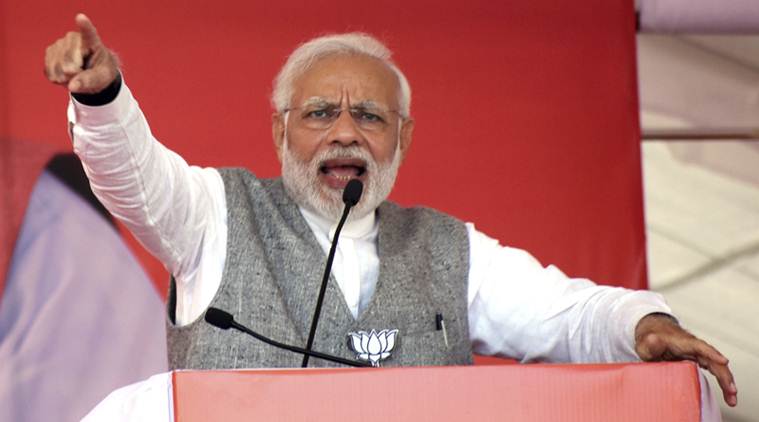
Nehru wore rose on his suit, but was ignorant of farmers’ woes: PM Modi

“He (Nehru) used to wear rose and had the knowledge of gardens but did not know about farmers or farming, due to which the community faced hardship,” PM Modi was quoted as saying without naming the first Prime Minister.

Nehru wore rose on his suit, had knowledge of gardening but was ignorant of farmers' woes: PM Modi
PM Modi also stated that Nehru had objections about President Rajendra Prasad’s visit for the consecration of Somnath temple which was destroyed by foreign invaders and ‘renovated’ by Sardar Vallabhbhai Patel. (PTI File photo)

Campaigning for the upcoming assembly elections in Rajasthan, Prime Minister Narendra Modi on Monday resorted to ‘kaamdaar-naamdar’ (worker-dynast) jibe in his attack on Congress party which had earlier questioned his knowledge on Hinduism. The prime minister also invoked the first prime minister Jawahar Lal Nehru while talking about the agrarian distress in the country.

Without naming Nehru, Modi said a leader wore a rose and had knowledge of gardening but didn’t know about farming, which he held as the reason behind farmers’ distress. “He (Nehru) used to wear rose and had the knowledge of gardens but did not know about farmers or farming, due to which the community faced hardship,” PM Modi was quoted as saying by PTI.

He also claimed that Nehru had objections about President Rajendra Prasad’s visit for the consecration of Somnath temple which was destroyed by foreign invaders and ‘renovated’ by Sardar Vallabhbhai Patel.

Modi also stated that he is a petty “kaamdaar” who never made the claim of having complete knowledge of Hinduism, nevertheless, the “naamdaar” has the right to speak. He also asked the Congress party about the source of its expertise on religion. PM Modi has often labelled the Congress president to be a dynast or “naamdaar” on multiple occasions previously.

Law of Unintended Consequences

continuously updated blog about China & India

ChiaHou's Book Reviews

continuously updated blog about China & India

What's wrong with the world; and its economy

continuously updated blog about China & India