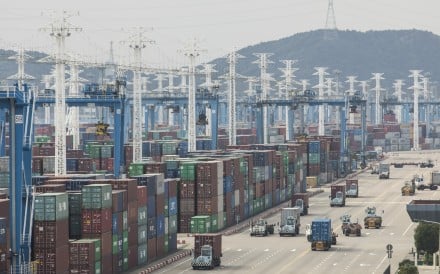
02/12/2018

The staggering rise of India’s super-rich

India’s new billionaires have accumulated more money, more quickly, than plutocrats in almost any country in history. By 

On 3 May, at around 4.45pm, a short, trim Indian man walked quickly down London’s Old Compton Street, his head bowed as if trying not to be seen. From his seat by the window of a nearby noodle bar, Anuvab Pal recognised him instantly. “He is tiny, and his face had been all over every newspaper in India,” Pal recalled. “I knew it was him.”

Few in Britain would have given the passing figure a second look. And that, in a way, was the point. The man pacing through Soho on that Wednesday night was Nirav Modi: Indian jeweller, billionaire and international fugitive.

In February, Modi had fled his home country after an alleged $1.8bn fraud case in which the tycoon was accused of abusing a system that allowed his business to obtain cash advances illegally from one of India’s largest banks. Since then, his whereabouts had been a mystery. Indian newspapers speculated that he might be holed up in Hong Kong or New York. Indian courts issued warrants for his arrest, and the police tried, ineffectually, to track him down.

It was only by chance that Pal spotted him. A standup comic normally based in Mumbai, he happened to be in London for a run of gigs. “My ritual was to go to the same noodle bar, have a meal, and then head to the theatre,” Pal said. “I always sat by the window. And then suddenly Modi walks past. He was unshaven, and had those Apple earphones, the wireless ones. He looked like he was in a hurry.”

It was another month before the press finally caught up with Modi, as reports of his whereabouts emerged in June, along with the suggestion that he was planning to claim political asylum in the UK. (Modi denies wrongdoing, and did not respond to requests for comment.) In the process, Modi also gained entry into one of London’s more notorious fraternities: the small club of Indian billionaires who seem to end up in the British capital following scandals back at home.

The most prominent among these émigré moguls is India’s “King of Good Times”, Vijay Mallya, the one-time aviation magnate and brewer, who transformed Kingfisher beer into a global brand. A few years ago, Mallya was one of India’s most celebrated industrialists, famous for his mullet haircut and flamboyant lifestyle. But in early 2016, Indian authorities filed charges relating to the collapse of his Kingfisher airline, which went bust in spectacular fashion in 2012, leaving behind mountainous debts and irate, unpaid staff. And so, facing allegations of financial irregularities and of refusing to repay outstanding loans, Mallya quietly boarded a plane for Britain, too.

Like Modi, Mallya denies wrongdoing. Last month he released a long statement accusing India’s government of conducting a witch-hunt against him. And to the extent that this claim has some merit, it is because Indian prime minister Narendra Modi (no relation to Nirav Modi) has of late been under great pressure to bring supposedly errant tycoons such as Mallya to book.

Men like Mallya and Modi were members of India’s expanding billionaire class, of whom there are now 119 members, according to Forbes magazine.Last year their collective worth amounted to $440bn – more than in any other country, bar the US and China. By contrast, the average person in India earns barely $1,700 a year. Given its early stage of economic development, India’s new hyper-wealthy elite have accumulated more money, more quickly, than their plutocratic peers in almost any country in history.
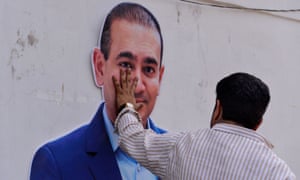
A cardboard cut-out of billionaire jeweller Nirav Modi at a protest against him in New Delhi in February.
 A cardboard cut-out of billionaire jeweller Nirav Modi at a protest against him in New Delhi in February. Photograph: Chandan Khanna/AFP/Getty Images

Narendra Modi won an overwhelming election victory in 2014, having promised to put a stop to the spate of corruption scandals that had dogged India for much of the previous decade. Many involved prominent industrialists – some directly accused of corruption, while others had simply mismanaged their finances and miraculously managed to escape the consequences. Voters turned to Narendra Modi, the self-described son of a poor tea-seller, hoping he would deliver a new era of clean governance and rapid growth, ridding India of a growing reputation for crony capitalism.

Narendra Modi pledged to end a situation in which the country’s ultra-wealthy – sometimes called “Bollygarchs” – appeared to live by one set of rules, while India’s 1.3 billion people operated by another. Yet as they continue to hide out in cities like London, men like Mallya and Nirav Modi have come to be seen as representing the failure of that pledge; the Indian authorities “have a long road ahead”, as one headline put it in the Hindustan Times last year, referring to a “long and arduous” future extradition process in Mallya’s case.

And as Narendra Modi gears up for a tough re-election battle next year, he is fighting the perception that India is unable to bring such men to heel, and that it has been powerless to respond to the rise of this new moneyed elite and the scandals that have come with them. “This ongoing battle to get India’s big tycoons to play by the rules is one of the biggest challenges we face,” says Reuben Abraham, chief executive of the IDFC Institute, a Mumbai-based think-tank. “Getting it right is central to India’s economic and political future.”


India has long been a stratified society, marked by divisions of caste, race and religion. Prior to the country winning independence in 1947, its people were subjugated by imperial British administrators and myriad maharajas, and the feudal regional monarchies over which they presided. Even afterwards, India remained a grimly poor country, as its socialist leadership fashioned a notably inefficient state-planned economic model, closed off almost entirely from global trade. Over time, India grew more equal, if only in the limited sense that its elite remained poor by the standards of the industrialised west.

But no longer: the last three decades have seen an extraordinary explosion of wealth at the top of Indian society. In the mid-1990s, just two Indians featured in the annual Forbes billionaire list, racking up around $3bn between them. But against a backdrop of the gradual economic re-opening that began in 1991, this has quickly changed. By 2016, India had 84 entries on the Forbes billionaire list. Its economy was then worth around $2.3tn, according to the World Bank. China reached that level of GDP in 2006, but with just 10 billionaires to show for it. At the same stage of development, India had created eight times as many.

In part, this wealth is to be welcomed. This year India will be the world’s fastest-growing major economy. During the last two decades, it has grown more quickly than at any point its history, a record of economic expansion that helped to lift hundreds of millions out of poverty.

Nonetheless, India remains a poor country: in 2016, to be counted among its richest 1% required assets of just $32,892, according to research from Credit Suisse. Meanwhile, the top 10% of earners now take around 55% of all national income – the highest rate for any large country in the world.

Put another way, India has created a model of development in which the proceeds of growth flow unusually quickly to the very top. Yet perhaps because Indian society has long been deeply stratified, this dramatic increase in inequality has not received as much global attention as it deserves. For nearly a century prior to independence, India was governed by the British Raj – a term taken from the Sanskrit rājya, meaning “rule”. For half a century after 1947, a system dominated by pernickety industrial rules emerged, often known as the Licence-Permit-Quota Raj, or Licence Raj for short. Now a system has grown in their place once again: the billionaire Raj.

The rise of India’s super-rich – the first and most obvious manifestation of the billionaire Raj – was propelled by domestic economic reforms. Starting slowly in the 1980s, and then more dramatically against the backdrop of a wrenching financial crisis in 1991, India dismantled the dusty stockade of rules and tariffs that made up the Licence Raj. Companies that had been cosseted under the old regime were cleared out via a mix of deregulation, foreign investment and heightened competition. In sector after sector, from airlines and banks to steel and telecoms, the ranks of India’s tycoons began to swell.

Nothing symbolises the power of this billionaire class more starkly than Antilia, the residential skyscraper built in Mumbai by Mukesh Ambani, India’s richest man. Rising 173 metres above India’s financial capital, the steel-and-glass tower is rumoured to have cost more than $1bn to build, looming over a city in which half the population still live in slums.
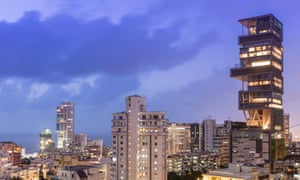
The Antilia building, at right of photograph, in Mumbai.
 The Antilia building, at right of photograph, in Mumbai. Photograph: Alamy

Ambani owns Reliance Industries, an empire with interests stretching from petrochemicals to telecoms. (His father, Dhirubhai, from whom he inherited his company, was one of the main beneficiaries of the economic reforms of the 1980s.) At Antilia, Ambani entertains guests in a grand, chandeliered ballroom that takes up most of building’s ground floor. There are six storeys of parking for the family’s car collection, while the tower’s higher levels feature opulent apartments and hanging gardens. Further down, in sub-basement 2, the Ambanis keep a recreational floor, which includes an indoor football pitch. Antilia became an instant landmark upon its completion in 2010. The city had long been a place of stark divisions, yet the Ambani’s home almost seemed to magnify this segregation. (A spokesman for Reliance did not respond to a request for comment.)

The emergence of the Indian super-rich was bound up in larger global story. The early 2000s were the heyday of the so-called “great moderation”, when world interest rates stayed low and industrialised nations grew handsomely. This was also when the fortunes of India’s new tycoons began to change. Pumped up by foreign money, domestic bank loans and a surging sense of self-belief, industrialists went on a spending spree. Ambani dumped billions into oil refineries and petrochemical plants. Vijay Mallya spent heavily on new fleets of Airbus jets. Nirav Modi began building a global chain of jewellery stores. Stock markets boomed. From 2004 to 2014, India enjoyed the fastest expansion in its history, averaging growth of more than 8% a year.

The boom years brought benefits, most obviously by reintegrating India into the world economy. Yet this whirlwind growth also proved economically disruptive, socially bruising and environmentally destructive, leaving behind what the writer Rana Dasgupta describes as a sense of national trauma. India’s new wealth has been shared remarkably unevenly, too. Its richest 1% earned about 7% of national income in 1980; that figure rocketed to 22% by 2014, according to the World Inequality Report. Over the same period, the share held by the bottom 50% plunged from 23% to just 15%.

Unsurprisingly, some feel resentful. “You walk around the streets of this city, and the rage at Antilia has to be heard to be believed,” Meera Sanyal, a former international banker turned local anti-corruption campaigner, told me in 2014. Six years before that, in 2008, as the scale of India’s billionaire fortunes were becoming clear, Raghuram Rajan – an economist who would later become the head of India’s central bank – asked an even more pointed question about his country’s tycoon class: “If Russia is an oligarchy, how long can we resist calling India one?”


Back in London, Vijay Mallya feels unjustly targeted by India’s recent attempts to shed its reputation for crony capitalism, the second defining characteristic of the billionaire Raj. “I have been accused by politicians and the media alike of having stolen and run away with Rs 9,000 crores [90bn rupees, or $1.3bn] that was loaned to Kingfisher Airlines,” he wrote in his open letter last month. His case had become, he suggested, a “lightning rod for public anger” over the alleged misbehaviour of his fellow tycoons.

In spring 2017, I met Mallya at his London home, a Grade I-listed town house a short walk from Baker Street tube station. A variety of Rolls-Royces and Bentleys were parked along the mews at the rear, alongside a fat silver Maybach with the number plate VJM 1, which idled outside Mallya’s back door. Inside, he sheltered behind a grand wooden table, a gold lighter and two mobile phones lined up in front of him. At one point I asked to be excused to visit the toilet. A flunky ushered me into a golden bathroom, with a shiny gold seat to match its golden taps and loo-roll holder. The fluffy hand towels were white, but each one came embossed with the letters “VJM” in gold thread.

On the surface, Mallya still seemed every bit the ebullient tycoon of old: a bulky man in a red polo shirt, with gold bracelets on each wrist and a chunky diamond ear stud. But by then he had been stuck in Britain for more than a year, and grew downbeat as the afternoon wound on and our conversation turned to his business troubles and the state of his homeland. “India has corruption running in its veins,” he said with a sigh. “And that’s not something one is going to change overnight.”

With his shoulder-length hair and taste for bling, Mallya had long honed an image as the most piratical of India’s generation of entrepreneurs. A specially kitted-out Boeing 727, its bar well-stocked with his own Kingfisher beer, whisked him between parties and business meetings – a distinction that was, in any case, often hazy. “It was all a bit ridiculous,” one ex-board member at a Mallya company told me.
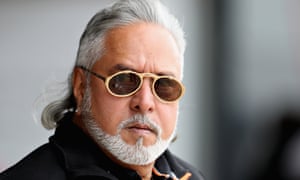
Vijay Mallya, who fled India for London in 2016.
 Vijay Mallya, who fled India for London in 2016. Photograph: Mark Thompson/Getty Images

Now marooned in London, Mallya had plenty of time to ponder his missteps. Once a member of the Rajya Sabha, the Indian upper house of parliament, his diplomatic passport has been cancelled. As a long-time UK resident, he was permitted to stay in the country, but without travel documents he was unable to travel, curtailing his notorious jet-setting lifestyle almost entirely. Earlier this month, a UK court issued an order allowing authorities trying to recover debts to enter his various British properties.

In his pomp, Mallya seemed to represent a new India. In a country whose old commercial elite had been dominated by cautious, discreet industrialists, Mallya was different: rich, powerful and not inclined to hide it. Not all of India’s pioneers behaved in this way – its software and IT billionaires, for instance, were typically less flamboyant figures. But while Mallya continues to deny that he did anything wrong, he admits that he has become what he calls the “poster boy” for a moment of public anger against India’s rich, as many newly wealthy business figures found themselves mired in allegations of wrongdoing.

India’s old system created fertile ground for corruption, forcing citizens and businesses alike to pay myriad bribes for basic state services. But these humdrum problems were trivial compared with the grand scandals that emerged during the 2000s. Assets worth billions were gifted under the table to big tycoons by senior politicians and bureaucrats in what became known as the “season of scams”. Giant kickbacks helped businesses acquire land, bypass environmental rules and win infrastructure contracts. Headlines filled up with fresh outrages, from fraudulent public housing schemes to dodgy road-building projects.

Many of those who backed India’s economic reforms hoped that a more free-market economy would lead to more honest government. Instead, crony capitalism infiltrated almost every area of national life. Hundreds of billions of dollars were siphoned away, according to some estimates, by a shadowy alliance of colluding politicians and business tycoons. India’s old system of retail corruption went wholesale.

Many politicians also became astoundingly rich, and would have made the Forbes list had their holdings not been hidden carefully in shell companies and foreign banks. Rapid economic growth increased the value of political power, and what could be extracted from it. Political parties had to raise more money, to fight elections and fund the patronage that kept them in office. One estimate suggested that India’s 2014 election cost close to $5bn, a huge increase over the cheap and cheerful polls of the pre-liberalisation era. Election experts believe most of this money is brought in illegally from favoured tycoons, in exchange for unknown future favours.

Politicians spend the money to fund campaigns, but also on handing out favours, jobs and cash to constituents. “It’s sort of an unholy nexus,” as Raghuram Rajan put it to me during his tenure as head of India’s central bank. “Poor public services? Politician fills the gap; politician gets the resources from the businessman; politician gets re-elected by the electorate for whom he’s filling the gap.”


This nexus between business and politics lies at the heart of the third problem of India’s billionaire Raj, namely the boom-and-bust cycle of its industrial economy. In recent decades, China went on the largest infrastructure building spree in history, but almost all of it was delivered by state-backed companies. By contrast, India’s mid-2000s boom was dominated almost exclusively by its private-sector tycoons, giving the industrialists and the conglomerates they run a position of outsized importance in India’s economic development.

Bollygarchs borrowed huge sums from state-backed banks and invested with gleeful abandon, in one of the largest deployments of private capital since America built its railroad network 150 years earlier. But when India’s good times came to an end after the global financial crisis, the tycoons’ hubris was exposed, leaving their businesses over-stretched and struggling to repay their debts. In 2017, 10 years on from the crisis, India’s banks were still left holding at least $150bn of bad assets.

Since taking office, Narendra Modi has tried, often ineffectually, to fix this corporate- and bank-debt crisis, alongside the related problems of cronyism and the super-rich that contributed to it. Watching developments such as these, some argue that the power of India’s tycoon class is fading. Yet India’s ultra-wealthy are still thriving, while its ranks of billionaires keep swelling, and will continue to do so.

There is every reason to believe that on its current course, the country’s the gap between rich and poor will widen, too. Perversely, the closer India comes to its achieving its ambitions of Chinese-style double-digit levels of economic growth, the faster this will happen. On most measures, it should already be ranked alongside South Africa and Brazil as one of the world’s least-equal countries. Even more importantly, poor countries that start off with high levels of inequality often struggle to reverse that trend as they grow richer.

Many experts believe India needs to act. “The main danger with extreme inequality is that if you don’t solve this through peaceful and democratic institutions then it will be solved in other ways … and that’s extremely frightening,” as French economist Thomas Piketty has said of India’s future, pointing to likely rising future tensions between the wealthy and the rest.
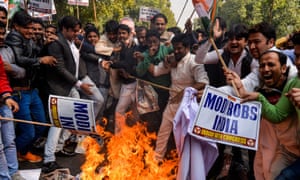
Protesters burning an effigy of billionaire jeweller Nirav Modi in New Delhi in February.
 Protesters burning an effigy of Nirav Modi in New Delhi in February. Photograph: Chandan Khanna/AFP/Getty Images

India is now entering a new phase of development, as it tries to follow Asian economies such as South Korea and Malaysia out of poverty and towards full “middle-income” status. There is no reason this cannot happen. But as we’ve seen in Latin America, the economies with the widest social divides have tended to be the ones that are most likely to get stuck in the “middle-income trap”, achieving moderate prosperity but failing to become rich. The more successful countries of east Asia, by contrast, grew prosperous while managing to stay egalitarian, partly by building basic social safety nets and ensuring that their wealthiest citizens paid their taxes. Of the two models, it seems clear which India should want to follow.

Much the same is true of corruption. India’s old system of cronyism, with its political favours and risk-free bank loans, has came under intense scrutiny, but the battle against corruption is at best half-won. Kickbacks still dominate swathes of public life, from land purchase to municipal contracts. State and city governments are just as venal as ever. Surveys report that India remains Asia’s most bribe-ridden nation. “For any society to lift itself out of absolute poverty, it needs to build three critical state institutions: taxation, law and security,” according to the economist Paul Collier. All three in India – the revenue service, the lower levels of the judiciary and the police – still suffer endemic corruption. Perhaps most importantly, the country’s under-the-table political funding system remains largely untouched.

Progress in fixing India’s problems of corporate and bank debt has also been frustratingly slow. Modi has introduced some important measures, including a new bankruptcy law and a series of bank recapitalisations. But more radical options have been ignored, notably the privatisation of struggling public-sector lenders.

If these struggles sound familiar, that is because they are. India is far from the first country to enjoy a period of rampant cronyism and wild growth, and then grapple with how to respond. In Britain, the onset of the industrial revolution in the mid-19th century kicked off such a moment, as captured in the novels of Charles Dickens and Anthony Trollope. But the more obvious parallel is with America, and the era between the end of the civil war in 1865 and the turn of the 20th century: the Gilded Age, or the era of “the great corporation, the crass plutocrat [and] the calculating political boss”, as one historian put it.

India’s own Gilded Age is different in many ways, but it shares at least one characteristic – namely, that such a period of early industrialisation is also a time of rapid political and economic change, in which it should be possible to invoke what the philosopher Richard Rorty once called the “romance of a national future”, the sense of hope that infuses powers on the rise.

India is set to grow in economic might throughout this century, as America did during the 19th. By some accounts, it has already overtaken China as the world’s most populous nation; in others, the baton will pass during the next decade or two. Whatever the case, the fate of a large slice of humanity depends on India getting its economic model right. Meanwhile, as democracy falters in the west, so its future in India has never been more critical. To make this transition, India’s billionaire Raj must become a passing phase, not a permanent condition. India’s ambition to lead the second half of the “Asian century” – and the world’s hopes for a fairer and more democratic future – depend on getting this transition right.

The Billionaire Raj: A Journey Through India’s New Gilded Age by James Crabtree is published by Oneworld, and available at guardianbookshop.com

02/12/2018

Why do billions of people still lack basic sanitation?

  • 23 November 2018
Community leader NasimaImage copyrightWSUP
Image captionDhaka, Bangladesh: Community leader Nasima shows off her village’s new community toilet

Hi-tech loos that use little or no water and can recycle waste products safely and sustainably promise to give billions of people around the world access to much-needed sanitation. So why do so many still lack this basic amenity?

About 2.3 billion people still lack basic toilets, according to the World Health Organization (WHO). And 4.5 billion don’t have safely managed sanitation, with waste disposed in a way that won’t contaminate drinking water.

Each year contaminated water kills half a million children under five through diarrhoeal diseases, the WHO says.

So many inventors, entrepreneurs and research institutions around the world have been working on hi-tech loos that can function without the need for expensive mains sewerage systems.

Image captionMillions of people live next to unsanitary open sewers with potentially fatal consequences

One approach is taking chloride from urine, turning it into chlorine with electricity, and using that as a disinfectant, says Dr Brian Hawkins, a research scientist in nanomaterials at Duke University, North Carolina.

Activated charcoal can remove organic material and nano-membranes replace the need for septic tanks, he says.

A solar-powered toilet using this approach, developed at Duke and nearby universities, is being tested at a cotton mill in Coimbatore, India and a township in South Africa.

Currently, it can handle about 15 users a day.

New membrane technology means toilets can “get clean water out of human waste, which is pretty cool”, says Dr Alison Parker, a lecturer at Cranfield University in Bedford.

But power is needed to push waste through the membranes. So the challenge is making a self-contained loo that doesn’t need external electricity.

Image captionCranfield University’s clever loo can produce clean water from human waste

Her lab’s Nano Membrane Toilet works by “relying on the energy we can get from human waste, burning faeces, and the person lifting the lid and closing it again – so that’s not a huge amount of energy to work with,” she says.

But reverse electrodialysis, from putting faeces components on one side of the membrane and urine on the other, “gives us a little extra energy”, she says, and is “just enough to give it the boost to do what we need”.

Heating urine before it goes through the membrane to be closer to the vapour state makes it more efficient, too, says Dr Parker.

More Technology of Business

She says her lab’s waterless flush toilet is “basically ready and could be commercialised straight away”.

A challenge now is making them feasible for rural areas – the membranes need cleaning every three months, which is more easily achieved in cities.

Reducing costs

While there is lots of innovation going on, the key challenge is making sanitation affordable, says Jack Sim, World Toilet Day founder.

He remembers growing up in Singapore in the 1950s and 60s and having to use his village’s communal outhouse. It was a “very traumatic” experience, he says, involving buckets and lots of green flies.

Moving to public housing with a flushable loo was “like a miracle”, he recalls.

Image captionWorld Toilet Day founder Jack Sim (r) meets Indian Prime Minister Narendra Modi

He believes people on low incomes need to be convinced to “sacrifice something else and build a toilet first”.

But many promising products are now stuck in the “valley of death”, says Duke University’s Dr Hawkins.

This is the space between developing a successful prototype and “getting to a locked-down product you can scale up, mass produce, and find a market share”.

The aim is to get the operating expenses of clean toilets down to five cents (3.8p) per person per day, he says.

And Neil Jeffery, chief executive of Water & Sanitation for the Urban Poor, a non-profit organisation focusing on African and Indian cities, points out that it’s “not just about the toilets – it’s about how you collect waste safely, transport it, treat it, and how it’s then used”.

Most African cities only have 10-15% of households connected to mains sewerage, he says, with many urban settlements sharing pit latrines instead.

When these fill up, a lorry needs to take their contents to a treatment plant.

Image captionCrane Engineering’s waste treatment trucks will be trialled in 2019

But this can be a costly two- or three-hour drive, says Mark Hassman, project manager for the Mobile Septage Treatment System at Crane Engineering in Wisconsin.

He says the amount of waste that trucks actually bring to treatment plants is “less than 5% [of the total] in some cities”.

Instead, they dump it in ditches, mix it with rubbish and burn it, or “plop it in a ditch, and if it’s rainy season, it goes downstream”.

Mr Hassman has been leading a team designing trucks that can process 70-80% of the waste on site. So instead of emptying two pits, “they can now maybe do eight in one drive, and that hopefully reduces the cost and enables people to afford clean pit emptying,” he says.

He says the trucks are “fairly close” to producing potable water.

The trucks will have trial runs in Africa in 2019, and his company is “looking to get these units out there” commercially in 2020.

The crucial requirement is to create a market that enables companies to make a profit from loos that are also affordable for poorer households, he says.

Image captionSpecial treatment trucks can turn human waste into clean water

Lack of sanitation also has an economic impact.

The Bill & Melinda Gates Foundation, which has been running its Reinvent the Toilet Challenge since 2011, says “more than $200bn (£155bn) is lost due to healthcare costs and decreased income and productivity” as a result of poor sanitation.

This is one of the reasons why Indian Prime Minister Narendra Modi has committed $20bn to build 111 million latrines by 2019 – “the biggest toilet building project in the history of mankind”, says Mr Sim.

The goal of sanitation for all may still be “some years” away. “But I can see this problem being solved in the next decade,” he says.

Not a day too soon for the billions still suffering.

02/12/2018

Kartarpur corridor: A road to peace between India and Pakistan?

  • 29 November 2018
Gurcharan Singh
Image captionGurcharan Singh welcomes the opportunity to unite Indians and Pakistanis

Seventy-five-year-old Gurcharan Singh was just a child during Partition in 1947, when his family left their home in the city of Sialkot, in modern day Pakistan, to head to India.

Now on a visit to the Sikh temple in the Pakistani village of Kartarpur, he was delighted that the two countries had agreed to construct a corridor allowing visa-free access to pilgrims from India.

“Since Pakistan was created our community has wanted this,” he told the BBC. “Two families,­ Indians and Pakistanis,­ are meeting again.”

The Gurdwara Darbar Sahib Kartarpur is one of the holiest places in Sikhism. It’s believed to have been built on the site where Guru Nanak, the founder of the religion, died in the 16th Century.

Image captionThe Gurdwara Darbar Sahib Kartarpur, close to the Pakistan-Indian border, is one of the holiest sites in Sikhism

The temple is located around 4km (2.5 miles) from the border with India, but tensions between the neighbouring countries have meant Sikh pilgrims have often found it difficult to visit. Some have had to be content with viewing it through binoculars from India.

The “Kartarpur corridor” will however lead from the Indian border straight to the gurdwara, with the sides fenced off.

The move has been welcomed enthusiastically by the Sikh community, and also represents a rare instance of co-operation between the two countries, which have fought three wars against each other since independence.

Image captionThe ceremony was attended by Sikh children

Relations between India and Pakistan remain strained, but at a ceremony formally starting construction work on the pathway on the Pakistani side of the border, the country’s Prime Minister Imran Khan said: “We will only progress when we free ourselves from the chains of the past”.

A number of Indian politicians were amongst those attending.

Pakistani Foreign Minister Shah Mahmood Qureshi told the BBC the Kartarpur project would help improve the countries’ relationship.

“The more people meet, the more they realise how much in common we have, and what we are missing by not resolving our outstanding issues.” he said.

Formal talks between India and Pakistan have stalled since an attack in 2016, which Indian authorities blamed on Pakistani-backed militants. Pakistan denied the claim.

Prime Minister Khan directly addressed the commonly held view that Pakistan’s powerful military and intelligence services don’t want peace with India, whilst civilian governments generally do.

“My political party, the rest of our political parties, our army, all our institutions are all on one page. We want to move forward,” he said.

Image captionPakistani PM Imran Khan spoke of his hope that the two neighbours can one day be friends

However India’s Foreign Minister, Sushma Swaraj, said the initiative did not mean “bilateral dialogue will start”, adding: “Terror and talks cannot go together. The moment Pakistan stops terrorist activities in India, bilateral dialogue can start.”

Pakistan denies supporting militants targeting Indian forces in Kashmir and in return accuses India of supporting separatist movements within Pakistan.

Following his election victory this summer, Mr Khan announced that for every “one step” India takes on improving relations, Pakistan would take “two”. However, a planned meeting between the countries’ foreign ministers on the sidelines of the United Nations General Assembly in September was cancelled by Indian officials, amidst anger over stamps issued by Pakistan commemorating what they termed Indian atrocities in Kashmir.

Analyst Michael Kugelman, from the Wilson Centre, told the BBC the Kartarpur border crossing was a “significant” development but it would be wrong to suggest that the next step was a peace process.

“It’s a confidence building measure but at the end of the day India and Pakistan are still at loggerheads”.

Image captionSikhs will be celebrating a landmark birthday of their founder next year

Many observers have also predicted that substantial progress on dialogue between the neighbours would have to wait at least until after elections are held in India, next April or May.

Mr Kugelman said: “It’s politically risky for the Indian government, particularly for a Hindu nationalist government like the current one, to extend an olive branch to Pakistan during the height of campaign season.”

The Kartarpur corridor is due to become operational next year, in time for celebrations of the 550th anniversary of the birth of Guru Nanak.

02/12/2018

Why is the Taj Crumbling?

Twilight of the Taj

By Salman Ravi

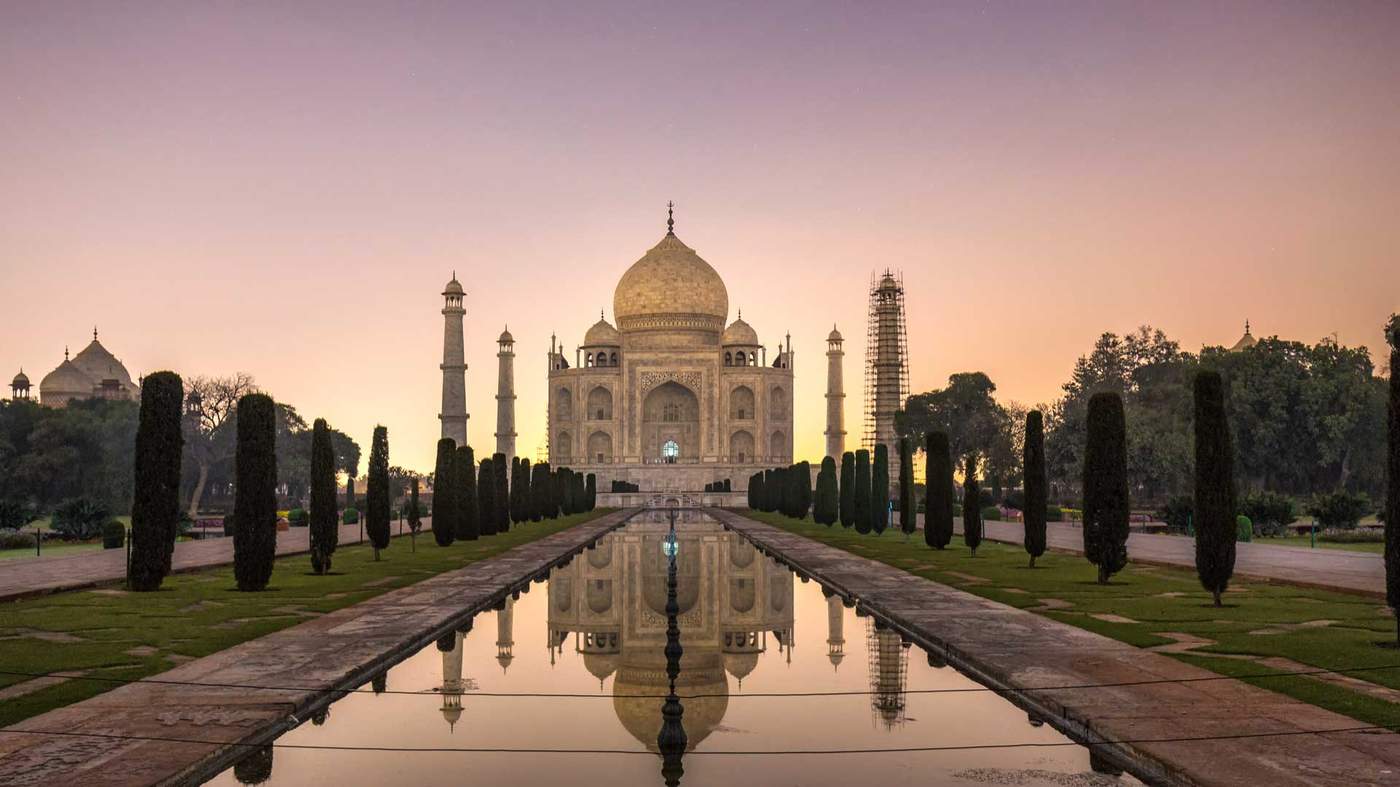
The Taj Mahal is India’s most famous building, attracting millions of tourists.

But a combination of neglect and pollution is threatening its existence.


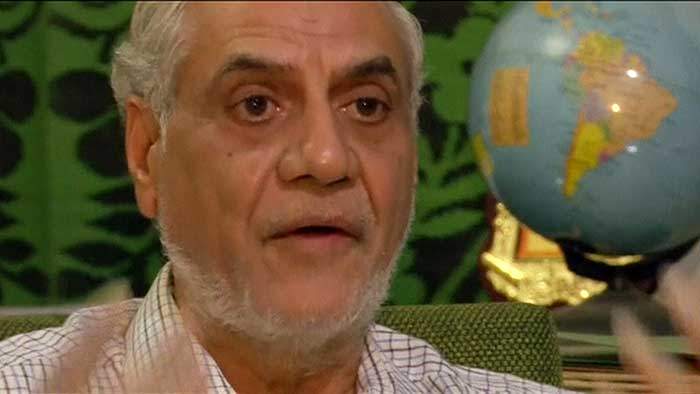
Shamshuddin Khan has been showing visitors around the Taj Mahal for more than 30 years. During that time he has been a tour guide to more than 50 world leaders – recent guests have included the Sri Lankan president and the Israeli prime minister.

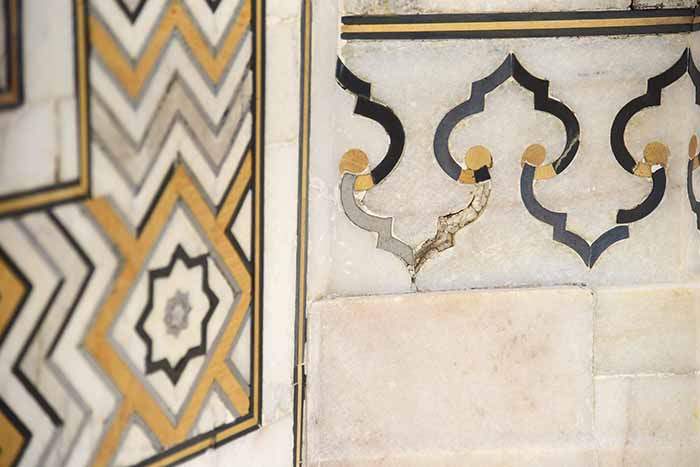
Over the past three decades, he says, his hair has turned greyer, but the Taj Mahal has become darker. Approaching the building, Khan points out the cracks and the decaying marble of the structure.

“There are embarrassing moments when the foreign tourists ask me why the Taj Mahal is not being maintained the way it should have been. They also ask us why it is losing its colour and shine. We guides have no answers.”

Shamshuddin Khan, Taj Mahal tour guide

Shamshuddin Khan, Taj Mahal tour guide

The Taj Mahal was built in the city of Agra in the 17th Century by the Emperor Shah Jahan. It was a mausoleum for his favourite queen, Mumtaz Mahal, who died giving birth to their 14th child. The emperor used marble from Rajasthan which was said to have a unique feature – it looks pink in the morning, white in the afternoon, and milky in the evening.

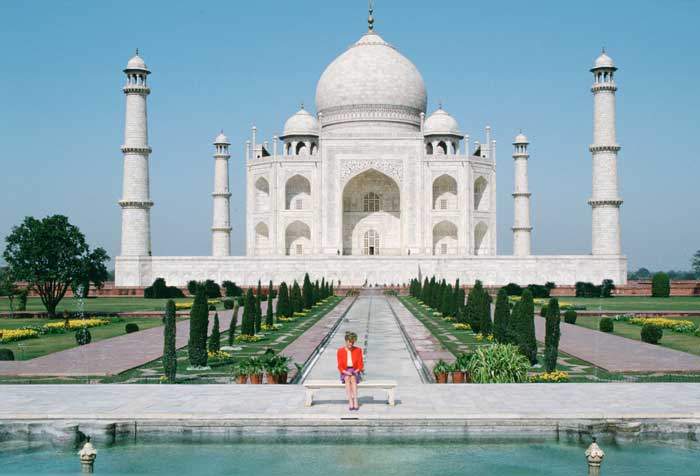
Rabindranath Tagore, one of India’s most celebrated poets, described the Taj Mahal as “a tear of marble… on the cheek of time”. In 1992, Princess Diana was famously photographed, alone in front of the building, a few months before the announcement of her separation from Prince Charles.

1992: The Taj's most noted modern visitor, Princess Diana

1992: The Taj’s most noted modern visitor, Princess Diana

The Indian tourism and culture ministry says that between four to six million tourists visited the Taj Mahal in the five years to 2015. Peak tourist season begins in the month of October and continues until March.

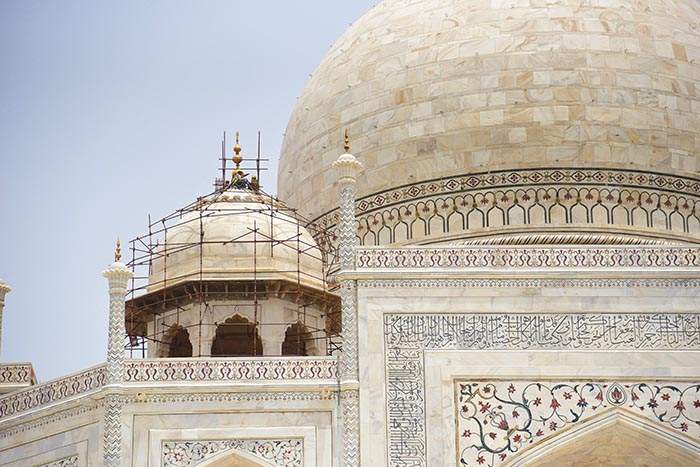
But the Taj Mahal has indeed begun to lose its shine. Its foundations are weakening and cracks are becoming larger, and deeper in the marble dome and the monument. The upper parts of the minarets are said to be on the verge of collapse. In high winds earlier this year, two pillars on an outer building fell to the ground.

In July, the veteran environmentalist and lawyer MC Mehta brought a petition to India’s Supreme Court, calling for fresh efforts to save the Taj Mahal.

Judges agreed, and ordered regular hearings involving all those responsible for the building’s conservation – the state and federal governments, and the Archaeological Survey of India (ASI). It criticised the “lethargy” of state and federal officials towards the fate of India’s most famous building:

“Taj Mahal should be protected. However, if such an indifference of officials continues then it should be closed down. Even then if things do not shape correctly, then the authorities should demolish it.”

While few are willing to countenance the demolition of the Taj Mahal, the mere mention of the idea by the Supreme Court indicates that there is now a real question mark over its future.

Pollution

The petition which MC Mehta delivered to the Supreme Court this year was not his first. A lawyer by profession, he has been attempting to make the Indian authorities take action to preserve the Taj Mahal since the mid-1980s.

At that time, airborne pollution had already been a problem in the area for many years.

Environmentalists were particularly concerned about a major oil refinery in Mathura, 50km away, which started operating in the 1970s.

In 1978, an expert committee conducting studies on air quality in and around Agra found substantial levels of sulphur dioxide (SO₂) and particulate matter in the atmosphere. According to Supreme Court documents, “the four-hourly average values of SO₂ at Taj Mahal were observed to be higher than 300 µg/m³ (micrograms per cubic metre)”.

Leaving aside the ruinous effect on public health, the effect of this pollution on the Taj Mahal was becoming increasingly clear. Sulphur dioxide, along with other pollutants, were combining with moisture in the atmosphere to cause acid rain. A report by Unesco for the Indian government found that the monument was turning yellow because of “suspended particulate matter and dust impinging on the surface”.

In 1984, Mehta brought a petition to the Supreme Court, arguing that foundries, chemical industries and refineries were the main cause behind the discoloration of the Taj Mahal.

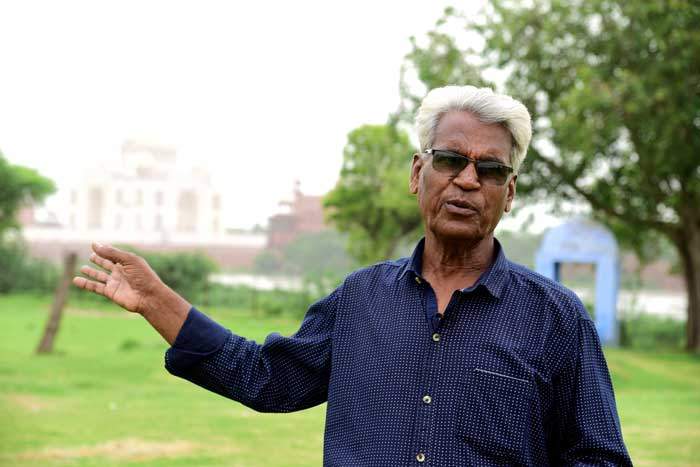
MC Mehta has been fighting a legal battle to save the Taj Mahal since the 1980s

MC Mehta has been fighting a legal battle to save the Taj Mahal since the 1980s

Nine years later the Supreme Court announced that it agreed with him, and drew up a list of measures to reduce pollution in the area. Orders were passed to close all polluting industries in around Agra and especially those very near the Taj Mahal.

Companies operating in and around Agra were ordered to use only natural gas as a fuel. The use of coal was made illegal in the area.

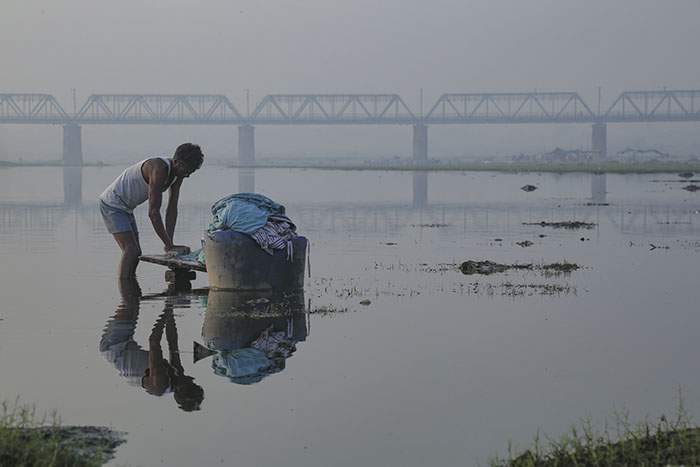
A ban was imposed on on diesel vehicles and machinery in the city, and orders were passed to remove all tanneries from the area. It was made illegal to take buffalo to the Yamuna, the river on whose banks the Taj Mahal stands, and illegal to wash laundry there.

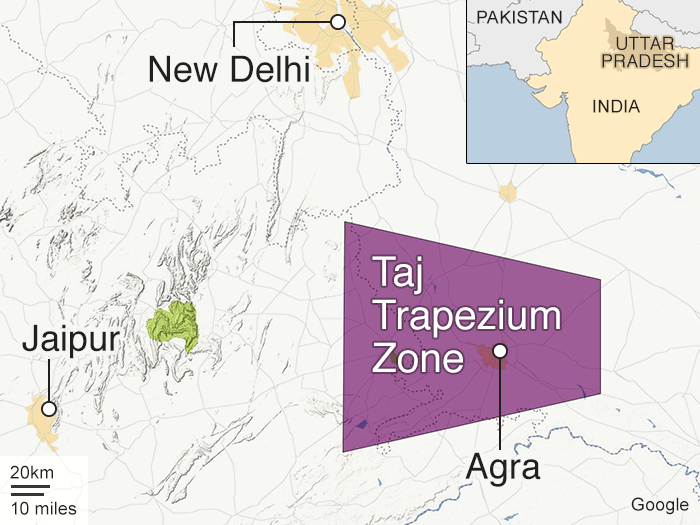
In 1998 the Supreme Court established a special exclusion area to keep heavy industry at a distance from the monument. The Taj Trapezium Zone (TTZ) covers an area of more than 10,400 sq km.

Mehta says that much could have been changed if the authorities had followed the Supreme Court’s order. “Unfortunately nothing changed and I had to knock at the door of the Supreme court again,” he says.

Use of diesel-operated vehicles continued unabated. Local industry owners protested against the restrictions and even formed an organisation with a slogan – “remove Taj, save industry”.

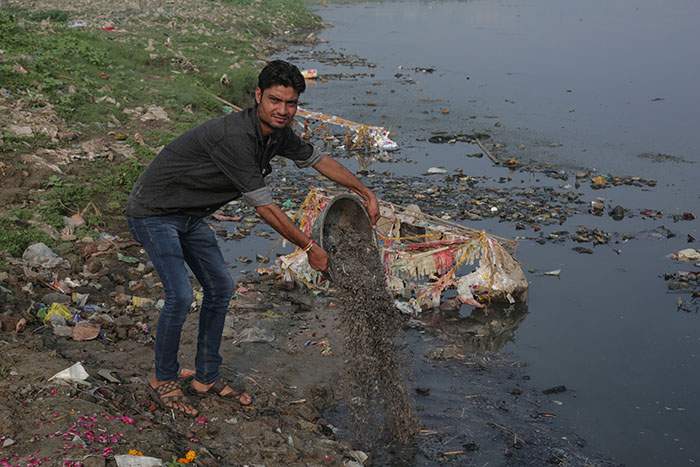
Smoke, dust and toxic effluents from industries in and around Agra continue to be dumped into the river Yamuna, and pollution has continued rising at an alarming rate. While tanneries were relocated, other activities – such as the use of diesel vehicles and generators – continued unabated. Moreover, cattle continued to bathe in the Yamuna, and clothes continued to be laundered there.

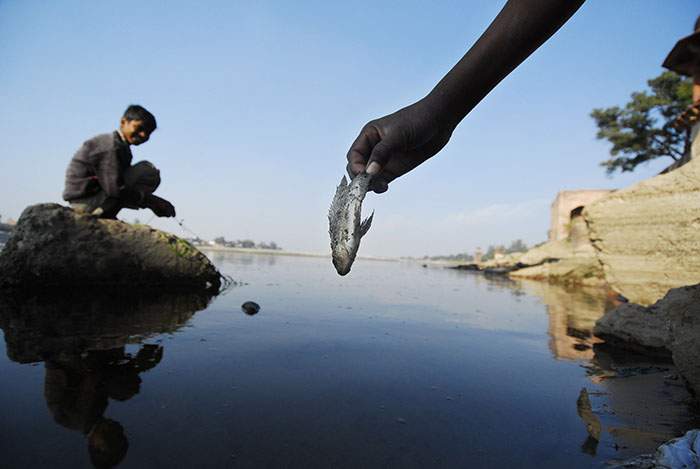
The threat to the Taj Mahal does not just come from the air – it is also waterborne. Here, too, the situation seems to be worsening. The stretch of the Yamuna river which passes through Agra is one of the most polluted waterways in the world.

“The industries along the river right from Delhi to Agra have been draining their chemical and other waste directly into the river,” says local environmentalist Brij Khandelwal. He points out that the city drains of Agra – about 90 of them – eject sewage directly into the Yamuna without any treatment.

Fish cannot survive these conditions, and in their absence, flies, mosquitoes and other insects – which would normally be eaten by the fish – proliferate above the dirty water and swarm around the Taj Mahal, where their droppings also discolour the monument.

Insects breed on the polluted Yamuna river and discolour the Taj Mahal with their droppings

A lack of water, as well as its poor quality, is also causing major problems for the Taj Mahal.

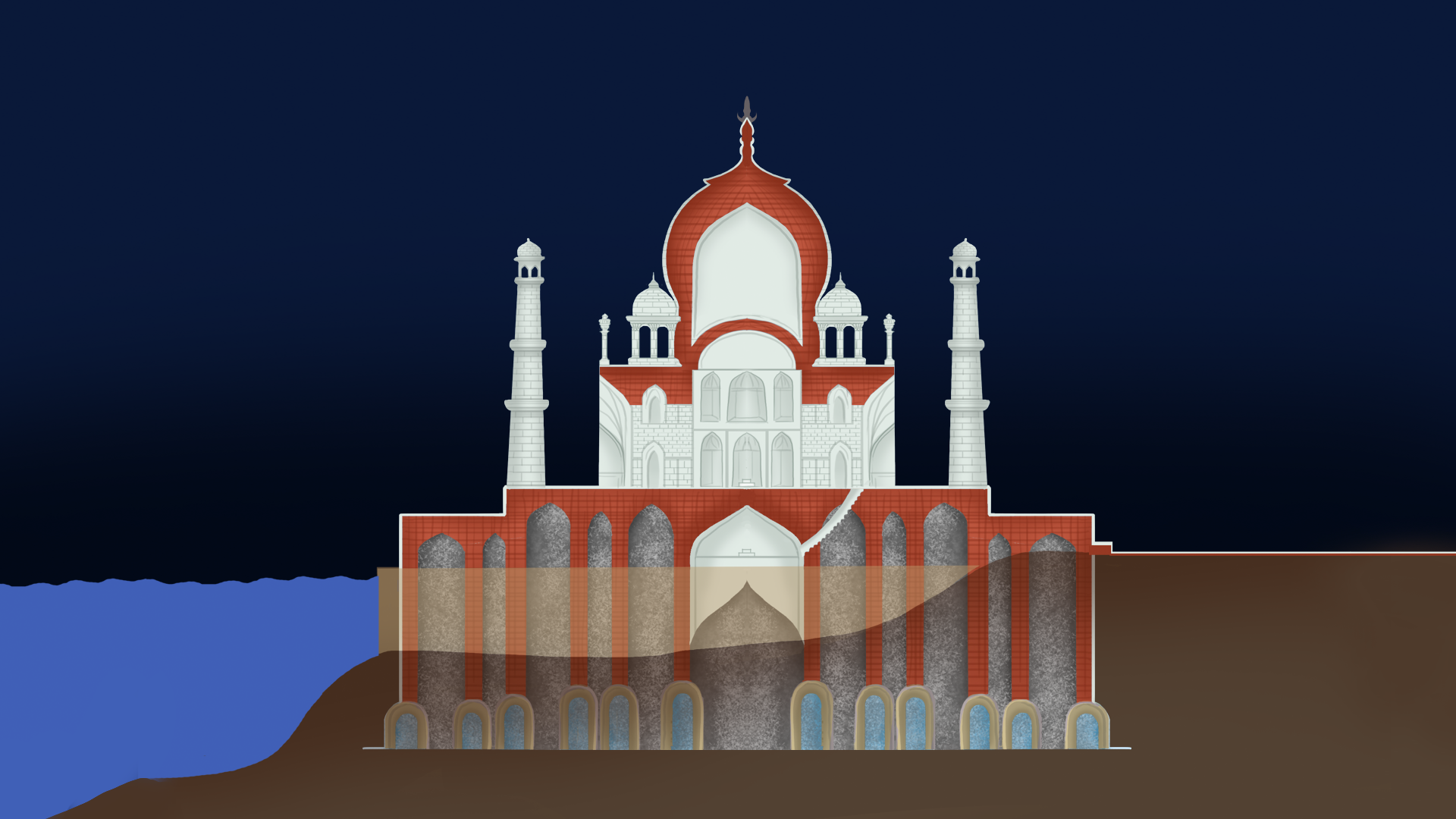
The building’s foundations are laid on 180 wells and wooden bases, which require water all year round.

According to the historian Prof Ramnath, most Mughal buildings are situated in the middle of a garden. The Taj Mahal is unusual because it was built at the corner of its garden, on the banks of the Yamuna.

The reason behind this, he says, was to ensure a supply of water to the wells and the wood bases. If the foundation isn’t watered all year round, the wood below will eventually dry up, break and rot.

As water levels fall, timbers supporting the Taj Mahal begin to crack

As water levels fall, timbers supporting the Taj Mahal begin to crack

When the Taj Mahal was constructed, most business and travel took place along the river. But as the population grew and the industries flourished, dams and barrages were built on the Yamuna, reducing the river flow.

“The Yamuna river that flows down the Himalayas, shrinks and converts into a virtual drain by the time it reaches Agra,” says Khandelwal.

The pre-monsoon depth of the water table in Agra has been declining steadily for decades. In the 1980s, the pre-monsoon depth was about 15m below ground level (bgl), according to the ground water department of the Uttar Pradesh state government.

Today, the ground water table has declined to alarming levels – 35m bgl and even lower in some areas.

In order to save the Taj Mahal, says Khandelwal, the Yamuna needs to be restored to its original levels.

“When 12,500 tons is the weight of the dome only, the estimated weight of the remaining building can well be imagined. The foundation of such a heavy building should always be strong,” he says.

As the river bed dries up, it also creates dust particles which blow up against the Taj Mahal in windy conditions. Dust storms are frequent in the region. Due to change in climate patterns, Khandelwal says, the desert is moving rapidly towards Agra.

In Taj Ganj

Sandeep Arora walks briskly along the narrow lanes of Taj Ganj – the settlement of streets and houses which surrounds the Taj Mahal. He owns a local hotel and is in a hurry to reach his workplace on time. Driving is out of the question because of the restrictions on the use of diesel vehicles.

He points out the dilapidated structures and fallen buildings in Taj Ganj. “This area is a part of Taj Mahal’s heritage. We have been living here for generations. The houses that you see were constructed when Taj Mahal was built. Most of the people living in Taj Ganj are the descendants of the ones whose gave their sweat and blood for the construction of the monument. But, what are we getting in return? Indifference, neglect, apathy,” he says.

Taj Ganj was the settlement where the workers, craftsmen and artisans who built the Taj Mahal lived. It has a population of about 5,000 people, including many “Pachchikars”, descendants of the original builders, who follow traditional artisan techniques.

The streets are lined with shops selling small marble replicas of the Taj Mahal, “crafted by the local artisans who have been living with the traditions of their ancestors”, according to Shamsuddin the tour guide.

It is not highly paid work. “If we are lucky, and some foreign tourist wants to buy a replica of the Taj Mahal, we get a few hundred rupees. This is how we earn a living,” says Basheer Ahmed, a local shop-owner.

Shamsuddin Khan says that not enough is being done to harness the collective knowledge of the Pachchikars. “They are the descendants of those craftsmen who worked during the construction of the Taj Mahal. Who will save the Taj Mahal? Only these artisans. They know it as it is in their genes. But the government has not taken any initiative to preserve their art or to teach this art to other people.”

RK Dikshit, a retired ASI official, disagrees, saying that the Pachhikars have been engaged in the Taj Mahal’s conservation for a long time. They are the people who know the art, he says.

The Indian Supreme Court has deemed the population of Taj Ganj – along with the area itself – to be a “living heritage”. But it’s a decision that has displeased many local residents. They say that the authorities are ensuring that the area will become a slum.

“The residents don’t have the right to rebuild their damaged walls and roofs. We need to have permission or a no-objection certificate from the district administration to even put a nail on the wall. We can’t use diesel generators while bigger diesel generators are used by big hotels in rest of Agra,” says Arora.

When a toilet in his hotel needed repair, Arora says he had to send six letters to government officials before permission was granted. He also complains that local residents are restricted from using diesel vehicles, while 5,000 passes have been distributed to officials, politicians and their relatives. “They come on diesel vehicles right up to the entrance of Taj Mahal, which is prohibited,” he says.

The complaints of Taj Ganj residents mirror a more general lack of agreement on how the Taj Mahal could be saved.

The Supreme Court has entrusted the job of conserving the Taj Mahal, and the heritage of Agra, to K Mohan Rao, the city’s divisional commissioner. He says that measures are being taken to tackle the amount of garbage emanating from the canals and city’s houses.

“Several committees have been formed by the state administration for waste management. Sewage treatment plants are being installed,” says Rao. He says that proposals have also been drawn up to convert Agra into a “smart city” – involving a complete revamp of the city’s infrastructure. But activists like Khandelwal feel that in the process the heritage of the city will get lost.

He thinks that any plan should also involve conserving all those structures that were built alongside the Taj Mahal, as well as restorations made by the British in the late 19th Century.

Khandelwal and Mehta are also unhappy with the ASI’s conservation programme of treating the Taj Mahal with a paste of Fuller’s earth, which is supposed to absorb the dirt and excrement discolouring the walls. They say that the paste makes the surface of the marble rough, which in turn makes the building more vulnerable to damage from the dust storms which frequently strike Agra.

To restore the glory of the Taj Mahal, Mehta, Khandelwal and the people of Taj Ganj believe that attention has to be paid to how conservation was carried out during the Mughal era and even during British rule.

This would be achieved by restoring the river Yamuna back to an unpolluted state, and involving the traditional “pachhikars” in the conservation work.

But after devoting so many years to the Taj Mahal, Mehta says he has little hope that anything will be done to save it. As the foundations become weaker, he worries that the day will come when only the memory of the Taj Mahal will be left.

“So many agencies have been involved by the Supreme Court to conduct studies on how to save the Taj Mahal. These agencies have submitted their findings to the court from time to time. The court has been issuing orders after orders.

“Unfortunately, the authorities are not serious. I am growing old now. But I will still fight.”

02/12/2018

India farmers: Tens of thousands march against agrarian crisis

  • 30 November 2018
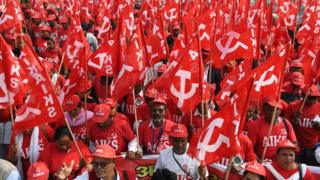
Farmers protesting in DelhiImage copyrightGETTY IMAGES
Image captionThe farmers are marching to highlight the agrarian crisis

Tens of thousands of Indian farmers have marched to the parliament in the capital, Delhi, to highlight the deepening agrarian crisis.

They arrived on Thursday from across the country and held a rally demanding better crop prices, drought relief and loan waivers.

Indian agriculture has been blighted by a depleting water table and declining productivity for decades.

This is the fourth such farmers’ protest in the past year.

Farmers make up important voting bloc in the country and, analysts say, given the scale of the protests, their discontentment could hurt the ruling Bharatiya Janata Party (BJP) in next year’s general election.

“We voted for the BJP but anti-farmer policies of the government have hit us hard,” Lakhan Pal Singh, one of the farmers participating in the march, told Reuters news agency.

One of their chief demands is a special parliamentary session to discuss solutions to the agrarian crisis, including a full loan waiver and higher crop prices.

Half of India’s population works on farms, but farming contributes only 15% to the country’s GDP.

Image captionThe farmers, including women, have come from different parts of India

In most states, governments have been less than swift in paying the farmers more for their crops – the federal government sets the price for produce and procures crops from farmers to incentivise production and ensure income support.

Indian farmers also struggle with debt owed to banks and money lenders. And crop failures trigger farm suicides with alarming frequency. At least 300,000 farmers have killed themselves since 1995.

Daughters, wives and other family members of farmers who took their own lives over crop failure or mounting debt are also participating in the protest – with some of them carrying photographs of their loved ones.

Read more about India’s farming crisis

The march has been organised by an umbrella group of farmers’ organisations from different parts of the country. Many of the protesters are also members of the farmers’ wing of the Communist Party of India (Marxist).

They have been arriving in Delhi since Thursday night. They gathered at a huge public ground that is often used for political rallies and spent the night in tents there. They started matching towards the parliament on Friday morning even as thousands of policemen were deployed for security.

Sangita Bhoir, a woman farmer from the western state of Maharashtra, had protested in Mumbai city a few months ago. Now, she is in Delhi.

Image captionFamilies of farmers who have killed themselves also participated in the protest

“In Mumbai, we had blisters in our feet [from walking]. They [the government] had promised that they would fulfil our demands in three months, but they never did,” she told BBC Marathi.

Several young doctors and medical students have also joined the farmers to show support and to provide them with medical aid, if necessary.

Many others – including lawyers, artists and teachers – are bringing drinking water and food, as well as publicising the protest on social media.

Image captionThis is the fourth such farmers’ protest in the past one year

“Due to social media, there has been an increased awareness about farmers’ issues in Delhi,” says Monami Basu, a Delhi University professor who is also participating in the march.

“I wanted to be a part of this march to show solidarity with the agitating farmers.”

The protest in Delhi is the latest by farmers in recent years. In March, tens of thousands of farmers from the western state of Maharashtra had walked 160km (100 miles) to Mumbai city in support of similar demands.

And last year, drought-hit farmers from the southern state of Tamil Nadu brandished human skulls and held live mice in their mouths to draw attention to their plight.

02/12/2018

China and the Logistics of Everything

China’s densely populated cities are making it easier for companies to deliver everything from food takeout to large appliances quickly and at cheaper rates than other parts of the world. China boasts 156 cities with over 1 million people, compared with just 10 in the United States. This density has enabled Chinese companies to build an elaborate supply chain network that ships more than 140 million parcels a day and makes China the world’s largest eCommerce market, according to Ronald Keung of Goldman Sachs Research. Keung notes that the nation’s online retail segment  is projected to reach $2 trillion by 2020.


The strong logistics supply chain is currently the key driver of much higher online penetration in China that will lead the rest of the world.

– Ronald Keung

02/12/2018

The US-China trade war: from first shots to a truce

  • Washington has agreed to hold off on new tariffs but the core conflicts have yet to be resolved
PUBLISHED : Sunday, 02 December, 2018, 5:44pm
UPDATED : Sunday, 02 December, 2018, 5:44pm
Sarah Zheng

<a class="scmp-icon-cross" onclick="popoverClose(this);"></a><h3 class="popover-title"></h3>

” data-original-title=””> 

1SHARE

Related Articles

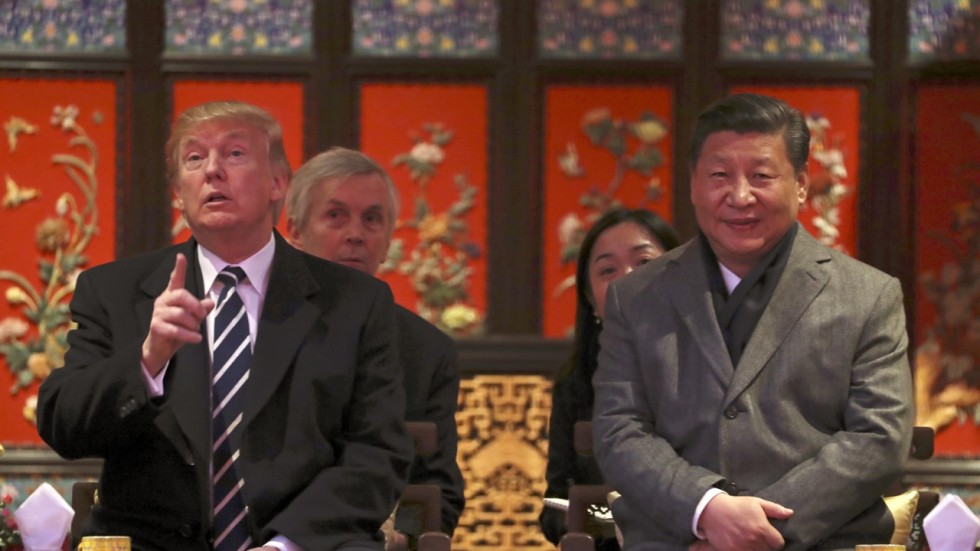
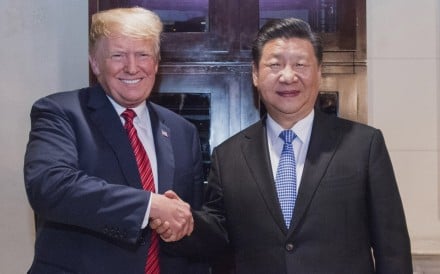
China and the United States agreed to a 90-day ceasefire on new tariffs in their trade war at the G20 summit in Buenos Aires, allowing a reprieve after months of threats and stalled talks.

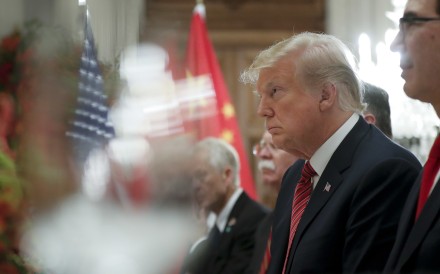
The decision for the US to hold off on planned tariff increases on US$200 billion in Chinese goods from 10 to 25 per cent on January 1 came over a grilled steak dinner in Argentina, the first face-to-face meeting between US President Donald Trump and his Chinese counterpart Xi Jinping since the start of the conflict.

Here is a look back at how it all began.

The first shots

The truce comes almost a year after the two countries began sparring over trade. Trump first slapped 30 per cent tariffs on solar panels and washing machines in February, prompting a complaint to the World Trade Organisation from Beijing. Then in March, the Trump administration imposed steel and aluminium tariffs across the board, including on China, which the Chinese government responded to with tariffs on 128 US products such as wine, fruit, and pork.

But the trade war began in earnest in July with the US levying its first round of punitive tariffs, triggered by an investigation under Section 301 of the Trade Act into Chinese trade and intellectual property practices.

Washington’s duties on US$34 billion in Chinese products was quickly matched by Beijing. The US imposed tariffs on another US$16 billion in August – again matched by China – and then US$200 billion in September. Beijing responded to the third round by targeting US$60 billion in US goods.

Beijing’s US$110 billion total targeted industries that analysts said were aimed at Trump’s political base, including a particularly stinging 25 per cent duty on American soybeans.

While business leaders in both countries called for a resolution, a series of trade talks – including low-level discussions in Washington in late August – failed to yield a breakthrough.

After the Chinese side reportedly cancelled scheduled talks in September, US officials signalled that they would not return to the negotiating table without a concrete proposal from Beijing.

Then just before the G20 summit, Chinese Vice-Premier Liu He, Xi’s top economic aide, called off a planned meeting in Washington at the last minute and pinned everything on talks in Buenos Aires.

Just how bad has it been?

The trade war cast a long shadow over the Asia-Pacific Economic Cooperation forum in Papua New Guinea in November, resulting in the leaders failing for the first time to issue a joint communique. And as the China-US conflict has rolled on, it has spilled over into a broader strategic concern, one some analysts have described as the start of a new cold war.

In October, US Vice-President Mike Pence slammed Beijing not only for unfair trade practices, but for militarisation of the energy-rich South China Sea, domestic repression including massive state imprisonment of ethnic Uygurs in Xinjiang, and expanded global influence through “debt diplomacy”. Without offering evidence, Trump also accused China of meddling in US elections ahead of the November midterms.

As tensions escalated, Washington tightened export restrictions on strategic industries, sanctioned a key department of the Chinese military for purchases from Russia, and increased visa scrutiny for Chinese academics in the US.

Meanwhile, American companies in China have reported increased scrutiny from regulators and delayed approvals for licences.

What’s next?

Xi and Trump initially appeared to hit things off with reciprocal lavish state visits in Mar-a-Lago in Florida and Beijing, but their apparent honeymoon was short-lived. A 100-day plan that outlined ways for China to open its economy failed to address the Trump administration’s fundamental concerns.

Those concerns include US complaints about Chinese intellectual property theft and industrial subsidies, centred on Beijing’s state-backed “Made in China 2025” initiative, a programme to turn China into a leader in a range of advanced technologies.

Despite the ceasefire, analysts are sceptical that a deal can be reached on the wide range of prickly trade issues. Only days before the G20 summit, Trump told The Wall Street Journal that it was “highly unlikely” he would delay the January 1 tariff increases, insisting that the brunt of the existing tariffs were being borne by China.

He also said the US was ready to levy tariffs on the remaining US$267 billion in Chinese imports, including consumer goods such as Apple products.

The White House is insisting on structural reforms to China’s economy, beyond window-dressing measures to close the trade imbalance, but Xi is unlikely to make major concessions given the inevitable domestic political backlash, analysts say.

“Both sides got the time out they wanted, to recalibrate their strategies and figur

e out what to do next,” Patrick Chovanec, managing director and chief strategist at Silvercrest Asset Management, said on Twitter.

“But the underlying issues – some due to China’s protectionist ideology, some due to Trump’s – remain unresolved.”

01/12/2018

Zimbabwean president commissions construction of Chinese-funded new parliament building

HARARE, Dec. 1 (Xinhua) — Zimbabwean President Emmerson Mnangagwa on Friday commissioned the construction of Zimbabwe’s new parliament building in Mt. Hampden, 25 km west of the capital Harare, by Chinese firm Shanghai Construction Group.

The Chinese government will provide about 100 million U.S. dollars grant for the construction of the new parliament structure, the largest building to be funded by Chinese government in a southern African country.

The Zimbabwean government will chip in with about 10 million dollars for offsite infrastructure such as residential areas, shopping centers, access roads and electricity and water provision as it moves to establish a self-contained new city in the area to decongest the capital Harare.

Performers are dancing at the groundbreaking ceremony of Zimbabwe’s new parliament building in Mt. Hampden, Mashonaland West Province, Zimbabwe, November 30, 2018.(Xinhua/Shaun Jusa)

The 650-seat building will replace the 100-seat building built during the colonial era which has become smaller for parliament business and can no longer accommodate the 350 parliamentarians and staff members.

The new structure will have extra facilities for conferencing, 12 committee rooms and adequate space for office staff and parking.

President Mnangagwa said the long-awaited new building will enable parliamentarians to fully execute their legislative roles and further entrench democratic tenets in the country.

It will also resolve the congestion challenge in the current bicameral parliament building, he said.

Zimbabwean president Emmerson Mnangagwa (Right First) attends the groundbreaking ceremony of Zimbabwe’s new parliament building in Mt. Hampden, Mashonaland West Province, Zimbabwe, November 30, 2018.

“We express our profound gratitude to the Chinese government for their continued support of our various developmental programs. We commend the Belt and Road Initiative under which infrastructure development projects such as this one, are being undertaken in emerging economies,” he said.

He said the new spacious parliament building will, upon completion, undoubtedly improve the comfort of its users and change the ambience around which parliamentary business is conducted.

The president said the relocation of Parliament to Mt. Hampden will be a catalyst for subsequent developments throughout the area as government will also put structures for two other arms of the state – the executive and the judiciary.

Senior officials attend the groundbreaking ceremony of Zimbabwe’s new parliament building in Mt. Hampden, Mashonaland West Province, Zimbabwe, November 30, 2018.

Chinese charge d’affaires in Zimbabwe Zhao Baogang said the new parliament building, with a floor space of 33,000 square meters, six floors and two congress halls and other facilities, will greatly enhance the working conditions of the Zimbabwe parliament.

He said the parliament project will take 32 months to complete.

“The honorable MPs will work harder for the new legislations and make greater contribution to the institutional building of this country,” he said.

He added that the new parliament building represents the arduous efforts of the new Zimbabwe government to propel economic development and turn Zimbabwe into a middle income status by 2030.

“This is not just a landmark building in this area, it marks the start of construction of a new city of Harare. Within a few years, a new Harare will take shape. It will attract more visitors into this country.

“With strong leadership and hard work, Zimbabwe will regain its past glory, becoming a middle income country, one of the major economies in Africa, an envy by many African countries,” Zhao said.

As Zimbabwe has become one of the 140 countries that have signed BRI cooperation agreements with China, Zhao hoped that Zimbabwe will get more benefits under the cooperative framework.

Zimbabwe, he said, had done everything to ensure that Zimbabwe-China relations set an example for bilateral relations between China and other African countries.

“I believe Zimbabwe will continue to enjoy the special treatment from China,” he said.

Zimbabwe’s two vice presidents Constantino Chiwenga and Kembo Mohadi attended the ground breaking ceremony, among other dignitaries.

Tags: ,
01/12/2018

Chinese scientists discover spider species nurses young with milk

BEIJING, Nov. 30 (Xinhua) — Chinese scientists have discovered a species of spiders that can produce milk and care for their young, providing a new take on the understanding of invertebrate animals’ maternal care.

The study, published online Thursday on the U.S. journal Science, was conducted by researchers from the Chinese Academy of Sciences (CAS).

The findings focus on Toxeus Magnus, a species of jumping spider native to southeastern Asia, which lives in nests and looks like ants.

According to the study, spider mothers in their laboratory-based nests were found to feed a milk-like substance to their spiderlings and continue to care for them as they matured.

During the first 20 days, the spider babies were found to first drink droplets of spider milk left on the surface of the nest and then suck directly from their mother’s abdomen area.

Compared with cow’s milk, spider milk has nearly four times the protein but less fat and sugar.

From about day 20 to day 40, the young spiders were able to leave the nest to hunt food, but they were still allowed to drink milk from their mothers.

The most intriguing part starts after 40 days when the spiders reach sexual maturity. Only daughters were allowed to stay with their mother in the nest, while the sons were attacked by the females and not allowed to return home.

In the study, maternal care and milk provisioning appeared to work together to ensure the long-term survival of young spiders.

Of the 187 spiderlings observed in 19 different nests, the survival rate was 76 percent for spiders that received both. Separated from the mother at day 20, the survival rate of the spiderlings dropped to 50 percent.

Previous studies show that maternal care, which continues after the offspring reach maturity, only exist among some long-lived advanced social vertebrates like humans and elephants.

Chen Zhanqi, lead author of the study from Xishuangbanna Tropical Botanical Garden, CAS, told Xinhua the findings demonstrate that mammal-like provisioning and parental care for sexually mature offspring also evolved in invertebrates.

He noted that the new findings encourage researchers to reevaluate this “parenting style” among animals, especially in invertebrates. Invertebrates make up over 95 percent of Earth’s species.

Nicole Royle, a senior lecturer in the behavioral ecology of Exeter University in Britain, said it is the most comprehensive study that proves long-term maternal care also exists in invertebrates.

“It will help researchers gain a better understanding of the evolution process of milk provisioning and parental care for sexually mature offspring across the animal kingdom,” he said.

01/12/2018

Boeing delivers 2,000th airplane to China

U.S.-SEATTLE-CHINA-BOEING AIRPLANE-2000TH

Rick Anderson (L, front), Boeing vice president of Northeast Asia sales, and Che Shanglun (R, front), chairman of Xiamen Airlines, attend the signing ceremony during the delivering of the 2,000th Boeing airplane to China in Seattle, the United States on Nov. 30, 2018. Top U.S. aircraft manufacturer Boeing Company on Friday delivered its 2,000th airplane to China, which is a milestone for the U.S. aircraft maker in the world’s largest commercial aviation market. (Xinhua/Wu Xiaoling)

SAN FRANCISCO, Nov. 30 (Xinhua) — Top U.S. aircraft manufacturer Boeing Company on Friday delivered its 2,000th airplane to China, which is a milestone for the U.S. aircraft maker in the world’s largest commercial aviation market.

The aircraft, a Boeing 737 MAX, is the eighth of the same model that Boeing has delivered to Xiamen Airlines, a fast growing carrier that operates the largest all-Boeing fleet in China with more than 200 jets.

“Our long-standing industrial relationship in this market has been mutually beneficial, fueling significant growth in Boeing’s business, the U.S. economy, and the Chinese aviation industry,” said Ihssane Mounir, senior vice president of Commercial Sales and Marketing at Boeing.

Che Shanglun, chairman of Xiamen Airlines, said his company has steadily grown in the past 34 years, doubling its fleet size over the past five years and achieving profits for 31 years in a row.

“Throughout that time, Boeing has been a valued partner in our growth and expansion by providing safe and reliable airplanes,” he said.

Xiamen Airlines is one of Boeing’s more than 30 commercial customers in China. Boeing-made jets comprise more than half of the over 3,000 jetliners flying in the Asian country.

Boeing delivered its first 1,000 airplanes to Chinese airlines over four decades, but the next 1,000 Boeing jets have been delivered over the past five years.

The next 20 years will witness China’s commercial fleet more than doubled, and Boeing predicts China, the world’s second largest economy, will need 7,690 new airplanes valued at 1.2 trillion U.S. dollars by 2038.

The commercial services market in China will be driven by a growing demand of 1.5 trillion dollars over the next two decades, accounting for 17 percent of the world total, Boeing said.

Law of Unintended Consequences

continuously updated blog about China & India

ChiaHou's Book Reviews

continuously updated blog about China & India

What's wrong with the world; and its economy

continuously updated blog about China & India