09/02/2017

Trump breaks ice with China in letter to Xi – BBC News

US President Donald Trump has sent a letter to Xi Jinping, his first direct approach to the Chinese leader.

The president thanked Mr Xi for congratulating him on his inauguration last month and said he looked forward to “constructive” relations.

Mr Trump has not yet spoken to Mr Xi but did call other world leaders.

Chinese foreign ministry spokesman Lu Kang said his country attached great importance to the letter, Reuters news agency reports.

He commended Mr Trump for sending Lunar New Year greetings to the Chinese people and said co-operation between the two countries was the only option.

Change in tone

The letter, featuring standard diplomatic pleasantries, comes after a steady stream of belligerent attacks aimed at Chinese trade and policies.

In recent months, Mr Trump has challenged Beijing on sensitive issues such as Taiwan and the South China Sea. He angered China by taking a call from Taiwan’s President Tsai Ing-wen, the first involving a US president or president-elect in decades.

China sees Taiwan as a breakaway province to be reunited with the mainland, by force if necessary. The US cut formal ties with Taiwan in 1979.

China’s gamble for global supremacy in the Trump era

Is Taiwan a bargaining-chip for Trump on China?

Chinese Year of the Rooster marked with huge Trump sculpture

“President Trump stated that he looks forward to working with President Xi to develop a constructive relationship that benefits both the United States and China,” the letter said, according to the White House.

Mr Trump also wished the Chinese people “a happy Lantern Festival and prosperous Year of the Rooster”.

Lunar New Year celebrations officially end on Saturday with a Lantern Festival.
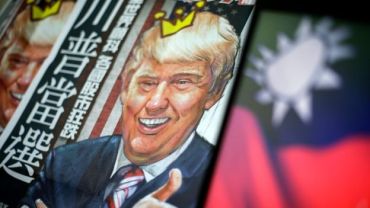
China has been angered by Mr Trump’s comments on the One China policy concerning Taiwan

The conciliatory tone is in stark contrast to previous statements by Mr Trump, whose presidential campaign was marked by anti-China rhetoric that continued after winning the election.

In December, before his inauguration, Mr Trump posted a series of tweets criticising China for its exchange rate policy and its operations in the South China Sea.

He also questioned the One China policy, which is the diplomatic acknowledgement by the US of Beijing’s position that there is only one Chinese government, following his call with Taiwan.

Shortly after he took office on 20 January, his administration vowed to prevent China from taking territory in the South China Sea.

Beijing has so far responded cautiously, expressing “serious concern” about Mr Trump’s position on the One China policy, and urging the US to maintain close ties with China.

It also lodged a protest over the phone call with Ms Tsai, dismissing it as a “petty trick”, and maintained it would “defend its rights” in the South China Sea.

But state media outlets have been less restrained and have issued strongly-worded rebukes, blasting Mr Trump for “playing with fire” on the Taiwan issue.

They also warned of serious action and a “resolute battle” against Mr Trump.

Source: Trump breaks ice with China in letter to Xi – BBC News
07/02/2017

Call the mayor!: Chinese officials use hotlines to take the public’s pulse | The Economist

IN 1375 a secretary in the justice department wrote a long petition to the Ming emperor. Bored by the endless preamble, the Son of Heaven had the functionary dragged to the court and flogged. That night he read to the end of the petition and discovered four sensible proposals crammed into its final page. He ordered them to be enacted the next day.

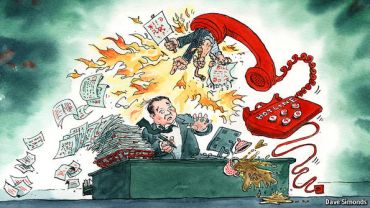
Xi Jinping, China’s president, is less attentive to petitions (called “memorials to the throne” in imperial times) than was his Ming predecessor. China still has bureaus where citizens can appeal against official injustice, but the government discourages people from using them. It often locks up those who try, putting them in “black jails” without trial. But if appeals to the emperor now fall on deaf ears, humbler forums for complaint are encouraged. The two main ones are known as “mayor’s mailboxes” and “12345 hotlines”.

There are mayor’s mailboxes on the websites of every municipal government, usually indicated by a button next to a biography of the official with an exhortation to “write me a letter” (or, in practice, send an e-mail). The hotlines allow people to be put through to a local bureaucrat. The first one was set up in 1983. Since then they have proliferated, creating an unco-ordinated tangle. But the past few years have seen rounds of consolidation. Shanghai announced a single hotline in 2013. Guangzhou, in the south, did so in 2015. The unified ones all use the same number, 12345.

Such services may sound parochial, but they play an important role. Chinese officials find it hard to gauge what citizens are thinking. There is no free press and no elections to give them clues. Internet chatter is censored automatically, often before criticism reaches officials’ ears. So e-mails to the “mayor” and hotline calls provide rare and valuable guides to public concerns about a wide range of issues: local governments handle everything from social housing to education and health care. The Communist Party hopes that the hotlines and e-mails will make local administrations more accountable, more efficient and—perhaps—more popular. But do they?

In recent months state media have been promoting what they call a model example—the 12345 hotline in Jinan, capital of the coastal province of Shandong. It was launched in 2008, has about 60 operators on duty and gets nearly 5,000 calls a day, rising to 20,000 on busy ones. In 2014 Wang Zongling of the Standardisation Administration, which sets national standards, looked at the hotline’s impact on the government in Jinan. Before it was set up, the city had 38 hotline numbers for contacting different departments. That was “chaos”, the administration said.

The single hotline brought some order. The average time for handling a complaint fell from 10-15 days before it was set up to five afterwards. The share of calls put through to the right person rose from 80% to 97%. Partly because it is now possible to call city hall without wasting your time, enquiries rose from just over 4,000 a day between 2008 and 2011 to almost 5,000. Since the 12345 operators were better trained than before, they processed calls more quickly and the cost per call fell.

But Jinan is a special case. A survey last year by Dataway Horizon, a consultancy in Beijing, found wide variations in the quality of service. In Beijing, Shanghai and Chongqing, which are among the richest cities, all hotline calls were put through right away. In Yunnan, Tibet, Shaanxi and Qinghai—less-developed provinces in the west—only a fifth of calls were even answered on the first attempt. A meeting last July to introduce a hotline in Wuxi near Shanghai reportedly degenerated into a squabble between a deputy mayor and district councillors who argued that it would waste money. In nearby Hangzhou the hotline crashed last month when parents flooded it with calls complaining that school exams were too difficult.

In an attempt to improve widely varying levels of service, the central government recently laid down rules for running 12345 hotlines. Starting in July, calls must be answered within 15 seconds, at least one person on duty should be able to speak a language other than Mandarin and the line should be open 24 hours a day.

Perhaps because they are often poorly run, hotlines do not seem to be making local governments any more popular. These form the most despised tier of authority in China: many of the most egregious face-to-face abuses of power take place locally. In Jinan, despite all those efficiency gains, the survey found that “enquirer satisfaction” was only 1.3% higher after the hotline was established than before it. The spread of hotlines has had no discernible impact on the rise of anti-government demonstrations, most of which are aimed at local governments (see chart).

But it is possible that there would have been even more protests without the safety-valve of hotlines. State media say one of their roles is to help with “stability maintenance” by alerting officials to potential flashpoints. Many public protests relate to bread-and-butter issues, such as the ones a local newspaper said were most frequently raised by callers to the 12345 hotline in Nanjing, a southern city: the management of apartment blocks, the water supply, illegal construction, violations of consumer rights and shoddily built housing.

The same topics flood mayors’ mailboxes (both virtual and real). Diana Fu of the University of Toronto and Greg Distelhorst of the Massachusetts Institute of Technology have trawled through over 8,000 letters and e-mails sent to mayors’ offices in nearly 300 cities. They found that environmental problems headed the list of concerns. Four of the top 15 involved various kinds of dispute over property.

Arguments over property are among the most frequent causes of unrest. Local government is largely financed by selling land, which is often seized without fair compensation. Very few people dare to protest explicitly about political issues, but all politics is local—and in China local politics is all about land.

Calling for the resignation of a mayor may be risky, but the correspondence read by Ms Fu and Mr Distelhorst shows that complainants are not shy about pointing fingers at lower-level officials. “Zhou’s behaviour is despicable,” seethes one writer about a civil-service examiner caught up in a bribery case in Zhaotong city, Yunnan province. Another, from Shaanxi province, asks: “Is it possible that the budget for road repairs has been swallowed up by corruption (just a suspicion)? I would not rule out reporting it to the media…”

For bureaucrats, such accusations may be a salutary surprise. Most officials spend their lives talking to one other about party business, not listening to the public. Over the next few months, party committees across the country will hold tens of thousands of meetings to discuss preparations for a five-yearly congress in Beijing later this year. As some officials admit privately, none of these gatherings will help them understand any better what most of the country is thinking. Perhaps the hotlines and mailboxes may.

Source: Call the mayor!: Chinese officials use hotlines to take the public’s pulse | The Economist

03/02/2017

In Punjab, jobless youth take a chance with anti-establishment party AAP | Reuters

Twenty seven-year-old Rupinder Kaur Ruby is a political novice but her message is clear: jobs for young people.

Grabbing the microphone, the law student tells a few hundred supporters in a dusty village square in the northwest Indian state of Punjab that the ruling parties have failed them.

“Punjab is not in a good place. And the youth are the most affected. They want to fight back,” she said, raising her fist to cheers, as the crowd covered her in garlands before heading off to canvass for votes in a state election on Saturday.

Ruby is one of several inexperienced candidates her Aam Aadmi (Common Man) Party is fielding to tap anger among an increasingly aspirational but frustrated youth, and to challenge Prime Minister Narendra Modi as his party heads into five state polls over the next month starting with Punjab.

A strong showing by AAP, which won a handful of seats in Punjab in the 2014 general election and governs the city-state of Delhi, would serve as a mid-term warning for the still-popular Modi as the economy fails to fulfil expectations.

The young in Punjab have been hit hardest by factory shutdowns, amid allegations that corruption has hastened the economic decline of a relatively rich state of 28 million people bordering Pakistan.

Unemployment tops voter concerns there, according to a recent poll, and young people are less and less willing to work their parents’ fields in the state known as India’s “bread basket”.

GENERATIONAL SHIFT

Most recent opinion polls show Congress, India’s main opposition party, in the lead in Punjab, ahead of AAP which has been criticised by rivals for failing to flesh out how it would boost employment were it to come to power.

But Ruby’s party is most popular among the young, reflecting a generational shift in India that poses a problem for Modi as newer parties seek to capitalise on the lack of jobs.

Nearly two-thirds of India’s 1.3 billion people are under 35 – a demographic “bulge” that will create the world’s largest working-age population before 2050.

Despite average annual economic growth of 6.5 percent between 1991 and 2013, India added less than half the jobs needed to absorb new entrants into the workforce.

The incumbent Shiromani Akali Dal (SAD) party that rules Punjab alongside Modi’s Bharatiya Janata Party, and Congress, have governed the state alternately for decades with a focus on Sikhism, the state’s dominant religion, and farm subsidies.

Those priorities resonate less among the young, and now all the main parties are promising free smartphones and 2,500 rupees ($37) a month for the unemployed.

“The other parties are all the same,” said 30-year-old Jaskaran Sharma, who works as a truck driver in the Middle East and was helping with Ruby’s campaign in between jobs.

“She is energetic, and young people understand the system,” he told Reuters in the village of Teona.

Punjab’s official unemployment rate in 2015/16, at 6 percent, was above the national average of 5 percent, according to the Labour Bureau, although economists say the figures do not reflect the true picture.

Levels of underemployment are higher; only 17 percent of Punjab’s population earns a regular wage.

VOLUNTEERSAAP, which scored surprise wins in local elections in Delhi in 2013 and 2015 on a broad anti-corruption platform, is led by 48-year-old Arvind Kejriwal, a former tax inspector who hopes to expand into other regions by channelling anger over unemployment.

AAP workers like Ruby, daughter of a local government retiree, have built young teams to fan out across villages and campaign door-to-door.

“We depend on our volunteers. This is a ground-up campaign,” she told Reuters over tea and biscuits, while young men snapped photos with her.

Ruby has the lowest declared wealth, at 175,000 rupees ($2,600), of any candidate in the state, according to reports. The 10 poorest candidates are from AAP, although the party has also chosen several well-off politicians as candidates.

“The youth are looking for change, and for that they are going to take a risk with AAP,” said Ashutosh Kumar, a professor of political science at Panjab University.

The ruling party, led by the wealthy Badal family, still commands support among older generations and better-off farmers, while Congress is attracting voters who see AAP as inexperienced.

Sitting outside the office of his SAD party in the Badal heartland of Lambi, landlord farmer Bagga Singh said Kejriwal was a “traitor” who had fooled people.

The protest vote boosting AAP would peter out, he predicted, because the Badals had established skill centres, curbed corruption and job creation would soon pick up.

Still, he acknowledged more needed to be done.

“Young people don’t want to work in agriculture. The margins are down and they don’t want the hard work,” the bearded 70-year-old said, wearing a pink Sikh turban. “They want to sit in an air conditioned office.”

($1 = 67.4900 Indian rupees)

Source: In Punjab, jobless youth take a chance with anti-establishment party AAP | Reuters

Tags:
03/02/2017

Apple Is Set to Make in India, State Official Says – India Real Time – WSJ

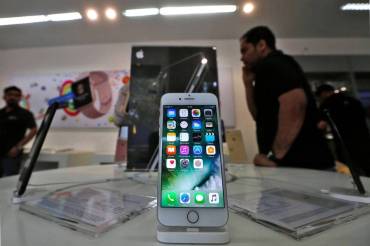
In a potential boost to Prime Minister Narendra Modi’s “Make in India” initiative, tech giant Apple Inc. is nearing a deal with Taiwanese contract manufacturer Wistron Corp. to start making products in the southern state of Karnataka, a senior state official said.

“The contractual agreement between the two companies is on the verge of being signed,” the Karnataka government official who has direct knowledge of the matter said.

The first phase of assembling iPhones will likely start as early as the end of March, and further expansion is expected over the next two to six months, the official said.An Apple spokeswoman said the company has nothing to share beyond a statement it made last week, which said: “We appreciate the constructive and open dialogue we’ve had with [the] government about further expanding our local operations.”

A Wistron spokeswoman declined to comment. The company has a factory in the southern Indian city of Bangalore where it makes smartphone components, and has sought permission from the state authorities to expand the facility with additional power supply and fire-fighting facilities, the official said.

“What we are given to understand is that Apple is awaiting a final word from the government of India regarding tax and tariff concessions sought by the company, before signing up the contractual agreement,” the official said.

Making goods such as the iPhone locally may help the Cupertino, Calif., company to open its own stores in India, in turn building its brand in a country where it has less than a 5% share of a booming smartphone market.

Karnataka’s Information and Technology minister, Priyank Kharge, welcomed Apple’s proposal to consider Bangalore, also known as Bengaluru, as the location for potential manufacturing.

“Apple’s intentions to manufacture in Bengaluru will foster cutting edge technology ecosystem and supply chain development in the state, which are critical for India to compete globally,” Mr. Kharge said in a statement Thursday.Apple is looking to ramp up revenues in India as sales stagnate in China, long an engine of growth. India should soon overtake the U.S. as the world’s second-largest smartphone market after China. Smartphone shipments in India grew 18% last year, compared with just 3% globally, according to Counterpoint Research.

Apple Chief Executive Tim Cook in a call with analysts this week confirmed the company is “in discussions” to open retail stores in the country, and said Apple intends to “invest significantly in the country and believe it’s a great place to be.” (http://blogs.wsj.com/indiarealtime/2017/02/01/what-tim-cook-said-about-apples-big-plans-for-india/)

Last week, a team of executives led by Priya Balasubramaniam, an Apple vice president, met with senior Indian government officials in New Delhi as well as state officials in Karnataka to discuss the firm’s proposals. (https://www.wsj.com/articles/apple-nears-deal-to-manufacture-products-in-india-1485340934)

Under Mr. Modi, India has been eager to attract foreign investment and create the manufacturing facilities and jobs the country needs to sustain long-term growth.

Source: Apple Is Set to Make in India, State Official Says – India Real Time – WSJ

Tags:
03/02/2017

Something to Crow About: Ivanka Trump Visits Chinese New Year Party – China Real Time Report – WSJ

Chinese social media lit up Thursday over an appearance by Ivanka Trump and her daughter at a Lunar New Year celebration at Beijing’s embassy in Washington.

Photos and video went viral, showing Ms. Trump and 5-year-old Arabella being hosted at the Wednesday night event by China’s ambassador to the U.S., Cui Tiankai. On the Chinese microblogging site Weibo, the term #Trump’sDaughterVisitsChina’sEmbassy in Chinese quickly zoomed up to become the seventh most-searched item on Thursday.

Just as remarked, however, was the lack so far of Year of the Rooster wishes from President Trump.

“Trump’s daughter visits China’s embassy and wishes China a happy New Year! The daughter understands more than the father,” one Weibo user said.

The Lunar New Year — the most important holiday in China — is celebrated in several countries across Asia and by Chinese around the world. It has become an occasion for global leaders to offer up well wishes. In 2015, British royal Prince William wished China a happy Year of the Sheep in Mandarin in a video televised across the nation. When they were presidents, George W. Bush and Barack Obama issued Lunar New Year messages.

As the start of the Year of the Rooster officially came and went over the weekend, Chinese media noted the conspicuous absence of a similar tribute from Mr. Trump.

“Her father, the new U.S. president, has broken the tradition of sending New Year greetings to people of Chinese origin in the U.S. during their most important festival,” a China Daily slideshow of photos featuring Ms. Trump noted.

The White House didn’t immediately respond to a request for comment.

Some social media posts gave Mr. Trump the benefit of the doubt, saying the lack of new year’s greetings may not have been a deliberate snub, but the work of his advisers. Mr. Trump has vowed to get tough with China over its trade and currency policies, and his advisers have called for countering Chinese actions in the South China Sea with a naval blockade.

“To be honest, I think that Trump really maybe just forgot. He’s surrounded by anti-China people. There wouldn’t be anyone to remind him,” wrote another Weibo user. “Now it’s already too late, and to wish happy New Year under pressure from the media would mean losing face, right? So he just lets his daughter make an appearance.”

Video from the Chinese Embassy function featured Arabella and her mother being shown rooster paper cutouts and art made from melted sugar, as well as posing with costumed Chinese opera performers.

Arabella has previously endeared herself to the Chinese public after a video of her reciting Chinese poetry was widely circulated last year. On Thursday, social media users further amused themselves by analyzing her less-than-enthusiastic facial expressions captured at the embassy’s event. “She looks like I do when I don’t want to visit my relatives,” ran one.

“It looks like she’s angling for yasuiqian,” wrote another, referring to the red envelopes tucked with cash traditionally handed out to children over the holiday.

While Mr. Trump may have yet to formally extend his well wishes for the holiday Year of the Rooster, he has in other ways inspired the Year of the Rooster in China. A shopping mall in the central city of Taiyuan put up a large rooster sculpture with a Trump-like hairstyle in central China, inspiring balloons of similar design.

Source: Something to Crow About: Ivanka Trump Visits Chinese New Year Party – China Real Time Report – WSJ

01/02/2017

The Economist explains: What is India’s “Cold Start” military doctrine? | The Economist

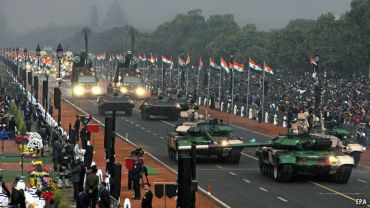
LAST week India celebrated its 68th Republic Day, the highlight of which is an elaborate parade to show off India’s military might (pictured).

Soldiers goose-stepped and tanks rolled down Rajpath, New Delhi’s main ceremonial thoroughfare, as India’s president, Pranab Mukherjee, and this year’s guest of honour, Abu Dhabi’s Crown Prince Sheikh Mohammed bin Zayed al Nahyan, looked on. Fighter jets screeched overhead. The annual display was particularly pointed this year, coming barely three weeks after Bipin Rawat, India’s new army chief, acknowledged in an interview the existence of the country’s “Cold Start” military doctrine. What is Cold Start and why did General Rawat, who took office on December 31st, mention it in public?

Cold Start is the name given to a limited-war strategy designed to seize Pakistani territory swiftly without, in theory, risking a nuclear conflict. It has its roots in an attack on India’s parliament in 2001, which was carried out by terrorist groups allegedly used as proxies by Pakistan’s powerful intelligence services (ISI). India’s response to the onslaught was a flop: by the time its lumbering Strike Corps were mobilised and positioned on the frontier, Pakistan had already bulked up its defences, raising both the costs of incursion and the risk that it would escalate into a nuclear conflict. Cold Start is an attempt to draw lessons from this: having nimbler, integrated units stationed closer to the border would allow India to inflict significant harm before international powers demanded a ceasefire; by pursuing narrow aims, it would also deny Pakistan a justification for triggering a nuclear strike. Yet India has refused to own up to the existence of the doctrine since it was first publicly discussed in 2004. Nor was its rumoured existence enough to stop Pakistani terrorists from launching devastating attacks in Mumbai in 2008, killing 164 people.

One reason for India to keep its cards close to its chest is that it may not be capable of acting on Cold Start. Indeed, India’s army chief admitted to civilian leaders after the 2008 attacks that his battalions were “not ready for war” with Pakistan. It probably did not help that India’s political leaders never signed off on it either, as a leaked diplomatic cable from 2010 suggested. Yet things have taken a different turn since an assault last September on the Indian garrison of Uri in Kashmir, which left 19 dead. In a departure from India’s traditionally defensive posture, the government responded by authorising “surgical strikes” along the frontier, targeted at “terrorist launchpads” and “those protecting them”. By acknowledging the doctrine, which would demand a more potent retaliation than these commando operations, the army seems keen to signal that it has a range of strategic options, introducing an element of unpredictability in the seriousness of its response. Political leaders may have also come closer to embracing it. The government of Narendra Modi has shown keen interest in national-security matters, moving India into the world’s top-five defence spenders, addressing servicemen’s grievances and mulling a wholesale revamp of the armed forces’ structure.

Whether the strategy will prove effective remains to be seen. By pursuing Cold Start, the army may have reaped “the worst of both worlds”, says Walter Ladwig, a scholar at King’s College London. Should it come after a terrorist attack prepared with the ISI’s knowledge, India’s response would lack the element of surprise. That makes Cold Start a dubious deterrent. And Mr Rawat’s recognition of the doctrine’s existence provides further reason for Pakistan to develop “tactical” nukes—tiny warheads that could easily end up in inexpert or malevolent hands. The risk of overreaction on Pakistan’s side is heightened by India’s continued obfuscation about what exactly the concept means, making the whole premise seem misguided. Indeed, Pakistani officials have already threatened to use nuclear weapons, should India put Cold Start into action. In conventional war, confusing an enemy can lead to victory; when two nuclear powers are involved it is a surer step towards a disastrous draw.

Source: The Economist explains: What is India’s “Cold Start” military doctrine? | The Economist

Tags:
01/02/2017

India Budget 2017: Promise to boost rural spending – BBC News

India’s government has unveiled its annual budget, with promises to boost rural spending and pull more people out of poverty.

It comes months after the controversial withdrawal of high value banknotes which caused chaos in the economy, hurting farmers and the poor most.

Finance Minister Arun Jaitley allocated funds to bring more irrigation, roads, electricity and sanitation to villages.

Farmers would also have more access to credit, he said.

The government also plans to spend a record $7.09bn (£5.69bn) on a scheme which guarantees every rural household 100 days of work each year.

Overall rural and farm spending would be increased by 24% as part of the government’s plan to double farm incomes over five years, Mr Jaitley added.

Tax plan

The finance minister also revealed plans to halve income tax rates for people earning between 250,000 rupees to 500,000 rupees ($3700; £2945 to $7,400; £5888) annually, which Mr Jaitley said should also encourage more people to pay tax.

“The present burden of taxation is mainly on the taxpayer and the salaried employees who are showing their income correctly,” he told parliament.

“Therefore post-demonetisation, there is a legitimate expectation of this class of people to reduce their burden of taxation. Also an argument is made that if nominal rate of taxation is kept at a lower slab, more people will prefer to come in the tax rate.”It is not clear how many people the move would impact, but India has a long-running problem of collecting income tax.

In 2013, the latest year for which data is available, only 2% of Indians completed a tax return and only 1% paid tax.

Other proposals announced in the budget speech included:Cutting tax rates on small and medium-sized companies

Banning cash transactions for sums above 300,000 rupees ($4440; £3533)

Political funding reforms including a cap on the cash donated to a political party by a single source

Nothing for foreign investors: Analysis by Shilpa Kannan, BBC News, Delhi

Arun Jaitley had to do a balancing act between the need to stimulate India’s growth and ensuring that the country’s spending is under control.

But I’ve been at an event run by one of India’s biggest business groups, the CII, and the mood is one of general disappointment.

The finance minister had promised to gradually bring down corporation tax from 30% to 25% – but he didn’t do it last year and it didn’t happen this year either.

Many here are saying there was nothing in for foreign or domestic investors. They fear a flee of money from India.

‘Bright spot’

India’s economy is expected to grow by 6.5% in the year to March 2017, down from 7.6% the previous financial year, a key economic report revealed ahead of the budget.

However, the country was a “bright spot” in the world economy, Mr Jaitley said, adding that the impact on growth from the government’s cash crackdown would wear off soon.

He said the currency ban was a “a bold and decisive measure” and would leaded to larger GDP, more tax revenues and a cleaner economy.

The dramatic move to scrap 500 ($7.60) and 1,000 rupee notes was intended to crack down on corruption and so-called black money or illegal cash holdings.

But the Economic Survey, released on Tuesday and written by the government’s chief economic adviser, admitted the rupee withdrawal had been bad for economy. in the short term.

Source: India Budget 2017: Promise to boost rural spending – BBC News

31/01/2017

The Chinese man trapped in India for half a century – BBC News

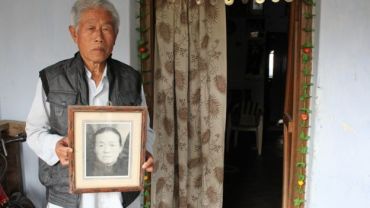
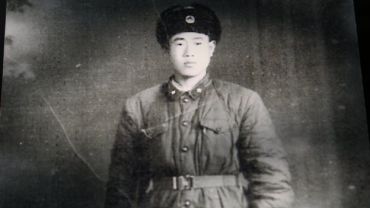
In 1963 a Chinese army surveyor crossed into India and was captured, weeks after a war between the countries. Wang Qi has been unable to leave India ever since – and longs to see his family in China.

BBC Hindi’s Vineet Khare met him.

Tirodi village is a nearly five-hour drive from the nearest airport in Nagpur in central India.

I am here to meet Wang Qi, a Chinese army surveyor who entered India in 1963 but could never go back. For over five decades, he has been longing to see his family back home.

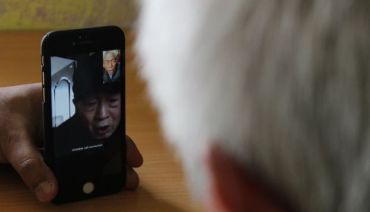
Sporting cropped white hair, black trainers and a body warmer, Mr Wang, who is now in his eighties, hugs me when we meet. We are about to try and make video contact with his family more than 3,000km (1,864 miles) away in China.

Together we go to the government office, which is the only centre equipped with internet for miles around.

He watches in anticipation as I dial and then his eyes light up as the image of his elder brother Wang Zhiyuan, 82, appears on the screen, seated on a sofa in Xianyang, a city in China’s Shaanxi province.

The two brothers are seeing each other after more than 50 years. The conversation in Mandarin lasts 17 minutes.

“I couldn’t recognise him. He looked so old. He said he was alive just for me,” Wang Qi, also known by his Indian name Raj Bahadur, tells me in strongly accented Hindi as his three Indian-born children gather around to comfort him.

Mr Wang’s story is a long and sad one.

Born to a farmer family in Shaanxi with four brothers and two sisters, he studied surveying and joined China’s People’s Liberation Army in 1960.

Mr Wang says he was “tasked with building roads for the Chinese army” and was captured when he “strayed erroneously” inside India’s territory in January 1963.

“I had gone out of my camp for a stroll but lost my way. I was tired and hungry. I saw a Red Cross vehicle and asked them to help me. They handed me over to the Indian army,” he said.

Mr Wang’s mother died in 2006 before he could go back and see her

Indian officials said Mr Wang “intruded into India” and gave “false background and the circumstances” about his whereabouts to the authorities.

He spent the next seven years in a number of different jails before a court ordered his release in 1969.

Police took him to Tirodi, a far-flung village in the central state of Madhya Pradesh. He has not been allowed to leave the country ever since.

It’s still not clear whether Mr Wang is a prisoner of war. But he has been denied official Indian documents or citizenship and also been denied permission to travel back. His family says Mr Wang needs a document to exit India.

Senior local official Bharat Yadav agrees that there have been “deficiencies” and a “lack of interest” in the case.

“There are no suspicions about his actions. If he wants to go back, we will try and help him,” he said.

An official at the Chinese embassy, which helped him secure a passport in 2013, acknowledged he was aware of the issue. A response to questions sent to India’s federal home ministry is still awaited.

It has been a long, excruciating wait for Mr Wang.

Wang Qi joined China’s People’s Liberation Army in 1960

Be it language, food or a vastly different society, Mr Wang has had to adapt every step of the way.

“I began by working in a flour mill. But I cried in the night as I longed for my family. I missed my mother,” he said.

“I wondered what I had got into.”

Mr Wang married a local girl, Sushila, under “pressure from friends” in 1975.

“I was livid with my parents for marrying me off to an outsider. I had trouble understanding his language. I tolerated him for a few months. Then I got used to him,” she says with a smile.

Mr Wang tried his hand at business but his undefined legal status meant visits by local police.

Mr Wang married a local girl, Sushila, under “pressure from friends” in 1975

“I remember Mr Wang being beaten by the police for not bribing them. He was an honest man,” says BB Singh, his neighbour for many years.

“He always talked about his home in China. His family lived in utter poverty. He would cycle for miles with no break,” another former neighbour Jayanti Lal Waghela says.

Mr Wang wrote letters home but received his first reply only in the 1980s. Family pictures were exchanged.

He spoke to his mother for the first time in more than 40 years on the phone in 2002.

“She said she wanted to see me as her last days were near. I said I was trying to return. I wrote letters to everyone who mattered to provide me with exit documents but nothing moved.”

She died in 2006.

Mr Wang’s family in ChinaMr Wang’s nephew met him when he came to India as a tourist in 2009.

It was he who helped him to get the necessary documents for his passport.It is still not clear whether Wang Qi will be able to go to China – and if he did, would he want to return to India?

“My family is here. Where would I go?” he says, playing with his granddaughter in his lap.

Sushila is worried though. “I hope he comes back.”

Mr Wang with his family
Image captionIt is not clear whether Mr Wang will leave his family and return to China
30/01/2017

Inside India’s first department of happiness – BBC News

On a crisp weekday afternoon recently, hundreds of men and women, young and old, thronged a dusty playground of a government high school in a village in India’s Madhya Pradesh state.

Hemmed in by mobile towers and squalid buildings, the ground in Salamatpur was an unusual venue for a government-sponsored programme to “spread cheer and happiness”.

Undeterred by the surroundings and egged on by an energetic emcee, children in blue-and-white school uniforms, women in bright chiffon saris, and young men in jeans and t-shirts participated in games and festivities all morning. Under a tatty awning, people sprawled and a DJ played some music over crackling speakers. People left some food and old clothes for donation near a “wall of giving”.

Denmark the ‘happiest country’ and Burundi ‘the least happy’

UAE government selects ‘happiness officers’

Bhutan PM casts doubts over Gross National Happiness

Mental health and relationships ‘key to happiness’

Venezuela to create ‘ministry of happiness’

On the field, children raced in gunny sacks. A dozen girls, hands tied to their back, sprinted to get their teeth into knotty jalebis, a popular sweet. Women, squealing with delight, competed in tug-of-war contests. Jaunty men from a dancing school vowed the crowd with hip-hop dance moves. A four-year-old girl provided a rousing finale with her Bollywood-style hip-swinging gyrations. At the end of it all, beaming participants received glossy certificates.

On the dais crowded with officials and village leaders, there was mirthful insistence that “happiness week” had kicked off well. Videos and pictures of festivities from all over the state poured into the phones of excited officials: these included grannies tugging rope and grandfathers running with spoons in their mouths, among other things.

A week-long ‘happiness week’ saw girls participating in jalebi races

…and older villagers running with spoons in their mouth

The fun and games were part of a week-long Happiness Festival, organised by the ruling BJP government in what is India’s second largest state, home to more than 70 million people. They also provided a glimpse of the rollout of what is the country’s first state-promoted project to “to put a smile on every face”.

“Even in our villages, people are becoming introverted and self-centred because of TV and mobile phones. We are trying to get people out of homes, come together, and be happy. The aim is to forget the worries of life and enjoy together,” said Shobhit Tripathi a senior village council functionary.

‘Positive mindset’

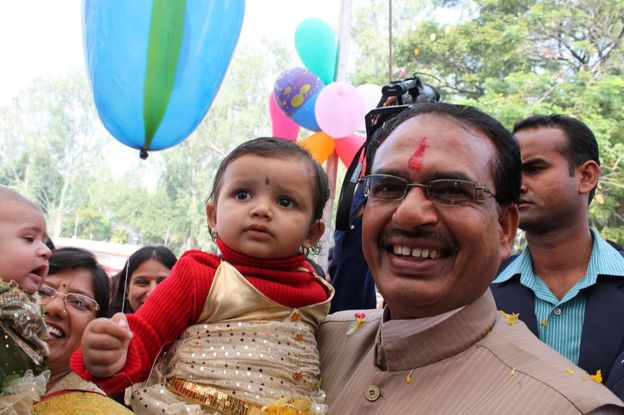
At the heart of this project is the newly-formed Department of Happiness – the first of its kind in India – helmed by the state Chief Minister Shivraj Singh Chouhan himself.

The yoga-loving three-term 57-year-old leader of the ruling BJP believes the “state can help in ensuring the mental well being of its people”.

Under him a gaggle of bureaucrats and a newly formed State Institute of Happiness are tasked with the responsibility of “developing tools of happiness” and creating an “ecosystem that would enable people to realise their own potential of inner well being”. The department also plans to run some 70 programmes and develop a Happiness Index for the state.

Mr Chouhan, who taught philosophy in a local college before embarking on a successful career in politics, told me he had been thinking for a long time on how to “bring happiness in people’s lives”.

He then had an epiphany. Why couldn’t his government run programmes to help citizens have a “positive mindset”? One report said that he was prodded by a popular guru.

The tug-of-war games were keenly contested

Many village children participated in dances

There is more joy sometimes, Mr Chouhan told me, “being poor than being wealthy”.

But one wonders if people would be happy enough if the state was efficient in delivering basic services and be seen to be fair to all its people.

After all, Madhya Pradesh continues to be among India’s poorest states. More than a third of its people are Dalits (formerly known as untouchables) and tribespeople, among the most underprivileged. The world’s worst industrial accident happened in the state capital, Bhopal, in 1984, killing hundreds of people, and thousands of survivors are still fighting for compensation.

Despite impressive strides in farming, infrastructure and public services in recent years, illiteracy, undernourishment and poverty remain major challenges. When Mr Chouhan announced his plan last year, critics warned that the state would have to first deal with several “unhappy areas to make people happy”.

Bureaucracy of happiness?

Mr Chouhan agreed that providing food and shelter remained the primary responsibility of the state. But he said he was also worried about “families breaking up, rising divorces, and the increasing number of single people”. He spoke about the anomie of modern life, and how unwieldy aspirations lead to “excess stress and result in high suicide rates”.

He said that the state, borrowing from religious texts and folk wisdom, can help spread the virtues of “goodness, altruism, forgiveness, humility and peace”.

“We need people to have a positive mindset. We will try to achieve this through school lessons, yoga, religious education, moral science, meditation and with help from gurus, social workers and non-profits. It will be a wide ranging programme,” he said.

I wondered whether all this would spawn another gargantuan bureaucracy of happiness and invite allegations of cultural indoctrination by a government run by a Hindu nationalist party.

n this picture taken, 04 May 2007, Indian malnourished child, Viru (R) is comforted by his mother outside their hut at a village in Shivpuri district some 113 kms from Gwalior.Madhya Pradesh is among India’s poorest states
Don’t worry, Iqbal Singh Bains, the senior-most official in the department of happiness assured me. He’s also the top bureaucrat in the energy department.

“This is not about officials delivering happiness. This is not about preachy governance. You cannot deliver happiness to people. You can only bring about an enabling environment. The journey will be yours alone, the government is there to lend you a helping hand,” he told me.

Lending a hand would be more than 25,000 “happiness volunteers” who have signed up with the government. Government workers, teachers, doctors, homemakers and assorted people will work in the state’s 51 districts, holding “happiness tutorials and programmes”. Some 90 of them have already been trained.

‘Inner demons’

Sushil Mishra is one of them. The 48-year-old school teacher, who lives and works in remote Umaria, has already conducted four hour-long happiness classes at a secondary school, a student’s hostel, and government offices.

The classes, as he tells me, essentially have turned into confessionals, where participants talk about their good and not-so-good deeds, and pledge to improve themselves. Mr Mishra says it’s a challenge to create a relaxing, informal environment, where people can “wrestle with their inner demons”.

“Then they can listen to the voice of their soul, they are in touch with inner feelings. Nothing is forced.”

Madhya Pradesh is not the first place to try to “spread happiness”. But the jury is out on whether the state can play the role of a philosopher-counsellor-evangelist and make citizens happy.

In this photograph taken on October 5, 2011, Chief Minister for the central Indian state of Madhya Pradesh Shivraj Singh Chouhan (R) poses with a child at a function to honour the 'girl child' in Bhopal
The ‘happiness programme’ is the brainhild of chief minister Shivraj Singh Chouhan

Three years ago, Bhutanese PM Tshering Tobgay cast doubts on the country’s popular pursuit of Gross National Happiness (GNH), saying that the concept was overused and masked problems with corruption and low standards of living. In 2013, Venezuela announced a “ministry of happiness”, but it did not stop the country from descending into social and economic chaos. Last year, United Arab Emirates announced the creation of a minister of state for happiness to “create social good and satisfaction”.

Many like sociologist Shiv Visvanathan believe the state has no right getting into the business of spreading happiness. Happiness, they say, is no laughing matter and its relationship with ambition is complex.

“The state cannot start defining what exactly contributes to mental well being. The state cannot colonise the subconscious. What happens to dissenting imagination or civil society? Trying to impose something as abstract as happiness on its people is not only bizarre, but downright dangerous,” said Dr Visvanathan.

Mr Chouhan obviously believes otherwise. In November, 24 of his ministers were sent five questions to find out how happy they were. A score of less than 22 meant that the respondent wasn’t happy.

Nobody knows the answers yet.

Source: Inside India’s first department of happiness – BBC News

26/01/2017

Chinese man cycles 500km in wrong direction to get home – BBC News

The milk of human kindness flows through the veins of Chinese policemen.

“A man hoping to cycle home cross-country for Chinese New Year realised 30 days into his trip that he had been travelling in the wrong direction.

The young migrant worker from China was aiming for his home in Qiqihar, Heilongjiang province, after setting off from Rizhao – over 1,700km away.

But he was stopped by traffic police 500km off course, in the central Chinese province of Anhui.

When they found out, the police paid for a train ticket to get him home.

The man had set off from Rizhao, in Shandong province, in December.

A report from the People’s Online Daily said the man had been living in internet cafes and was low on funds.

But he was determined to make it home so he chose to cycle the route.

The unnamed man could not read maps, meaning he had to rely on others for directions.

Police stopped him when he was riding on a highway, which cannot be used by cyclists.

After discovering his mistake, both police and people working at the toll station he was stopped at contributed to his ticket home.”

Source: Chinese man cycles 500km in wrong direction to get home – BBC News

Law of Unintended Consequences

continuously updated blog about China & India

ChiaHou's Book Reviews

continuously updated blog about China & India

What's wrong with the world; and its economy

continuously updated blog about China & India