24/01/2017

Xi Jinping portrays China as a rock of stability | The Economist

DELEGATES at the World Economic Forum in the Swiss resort of Davos often treat politicians as rock stars. But the fawning reception given to China’s leader, Xi Jinping, on January 17th was extraordinary.
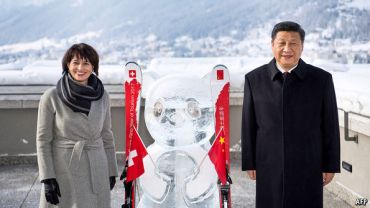
He was the first Chinese president to attend the annual gathering of the world’s business and political elite. Even an overflow room was packed when he delivered, in his usual dour manner, a speech laced with literary references—rendered through bulky headsets into equally monotone translations. Mr Xi said little that was new, but the audience lapped it up anyway. Here, at a time of global uncertainty and anxiety for capitalists, was the world’s most powerful communist presenting himself as a champion of globalisation and open markets.

Mr Xi (pictured, next to a panda ice-sculpture) did not mention Donald Trump by name, nor even America, but his message was clear. “No one will emerge as a winner in a trade war,” he said, in a swipe at Mr Trump who has threatened, among other mercantilist acts, to slap heavy tariffs on Chinese goods. Mr Xi likened protectionism to “locking oneself in a dark room”, a phrase that delegates repeated with delight. His words seemed comforting to many of them after a year of political surprises, not least in America and Britain. Mr Xi quoted from Dickens to describe a “world of contradictions”, as he put it. “It was the best of times, it was the worst of times,” he said. Many foreign businesses complain about what they regard as a rise of protectionism in China, too—but no one could accuse Mr Xi of being out of tune with the Davos mood. China, Mr Xi assured delegates, “will keep its door wide open and not close it”.

The Chinese president also portrayed his country as a staunch defender of the environment. He said that sticking to the Paris agreement on climate change, which came into effect last year, was “a responsibility we must assume for future generations”. These, too, were welcome words to many listening: Mr Trump’s threat to reject the pact will make China’s commitment to it all the more crucial. The week of whose inauguration?

The timing of Mr Xi’s trip was fortuitous—according to the Financial Times his aides were working on it before Britain voted to leave the European Union and well before Mr Trump’s election victory. But he must have relished the points that those events enabled him to score at Davos. Mr Xi faces political battles of his own as he prepares for a five-yearly Communist Party congress in the autumn and a reshuffle right after it. He wants to install more of his allies in key positions. Standing tall on the world stage could help (and attending Davos will have reinforced the point to his colleagues that he is in charge of China’s economy, as he clearly is of every other main portfolio).

Mr Xi would have relished the occasion even had the predictions of many in the global elite a year ago proved accurate—that Britain would vote to stay in the EU and that Mr Trump would not win. The forum is one where embarrassing questions about China’s politics are seldom raised openly. Mr Xi could talk airily of China’s openness, with little fear of being asked why he is clamping down on dissent and tightening controls on the internet (last year this newspaper’s website joined the many foreign ones that are blocked). On January 14th China’s most senior judge condemned judicial independence as a “false Western ideal”.

Previously, the highest-ranking Chinese attendees had been prime ministers. In 2016 the vice-president, Li Yuanchao, who ranks lower than the prime minister in the party hierarchy, led the team. So why has Mr Xi waited until his fifth year as president to turn up? He may well have winced at the thought of doing so last year, when discussions were dominated by questions about China’s management of its slowing economy in the wake of a stockmarket crash and a sudden devaluation of the yuan. Many analysts still worry about China’s economy (not least its growing debt), but the West’s problems have loomed larger over the Swiss Alps this week.

And for all his uplifting talk, Mr Xi shows no signs of wanting to take over as the world’s chief troubleshooter, even if Mr Trump shuns that role. Mr Xi is preoccupied with managing affairs at home and asserting control in seas nearby (see article). “Nothing is perfect in the world,” the new Davos man sagely informed the delegates. But he is unlikely to take the lead in making the world a better place.

Source: Xi Jinping portrays China as a rock of stability | The Economist

Tags:
24/01/2017

5 Things Narendra Modi Will Be Listening For During His Chat with Donald Trump – Briefly – WSJ

Indian Prime Minister Narendra Modi is set to speak with U.S. President Donald Trump on Tuesday in a conversation that will set the tone for future relations.New Delhi hopes it can begin to decipher what the country’s top diplomat, S. Jaishankar, last week called a world in 2017 filled with “known and unknown unknowns”—a reflection on the rapidly-changing global landscape marked by Mr. Trump’s presidency in the U.S., turmoil in Europe and rising Chinese power.

Here are five things Mr. Modi will likely be listening for.

1 Pakistan

Mr. Trump has vowed to be tough on terror, a goal he shares with Mr. Modi. But it isn’t clear how that will shape the new U.S. administration’s views on Pakistan, India’s rival neighbor that Mr. Modi has called the epicenter of global terrorism.India’s security establishment will be watching to see if Mr. Trump puts greater pressure on Pakistan to stamp out terrorist groups on its soil and whether U.S. supply of aid and weapons to Islamabad, a long-standing thorn in India-U.S. ties, will diminish.Mr. Trump’s Pakistan policy will depend in large part on his approach to the conflict in Afghanistan, another big unknown Indians will be looking for more clarity on.

2 China

India is closely watching for clues on how Mr. Trump plans to tackle China, given the new U.S. president’s combative tone toward Beijing. A more-assertive China has in recent years driven closer U.S.-India collaboration on defense and security issues. In an address last week, Mr. Modi, without naming China, spoke about “rising ambitions and rivalries” in Asia as “visible stress points” and called for “predictable behavior rooted in international norms and respect for sovereignty.”But if U.S.-China differences spilled into a military confrontation, it is unclear how India, which is involved in territorial disputes with its more-powerful neighbor, will respond.

India will also be looking for signs of a different outcome analysts have predicted—a more inward-looking U.S. under Mr. Trump emboldening an ambitious Chinese leadership to expand the country’s power. Such a development could push India to play a bigger role in Asia and to further strengthen strategic ties with Japan, which is also wary of China’s rise.

3 H-1B visas

Indian officials are anxious to see if Mr. Trump moves to tighten visa rules that would affect the country’s outsourcing giants like Tata Consultancy Services Ltd., Infosys Ltd. and Wipro Ltd. that send programmers and engineers to the U.S. on high-skilled worker, or H-1B, visas. Mr. Trump at times during the campaign criticized the program for supplying “cheap labor.”

4 Russia

Among the biggest potential shifts under a Trump presidency is closer ties between the U.S. and Russia. India, which has long-standing ties with Moscow, would welcome such a development. Analysts in India believe U.S.-Russia tensions under President Barack Obama pushed Russia closer to China. New Delhi will keep an eye on whether Mr. Trump considers easing U.S. sanctions on Russia.

5 NSG membership

India is counting on U.S. backing to help it become a member of the Nuclear Suppliers Group that controls trade in nuclear fuel and technology. Mr. Modi has made a big push for New Delhi’s entry, but has repeatedly been stymied by China. He will hope Mr. Trump finds a way to override Beijing’s objections.

Source: 5 Things Narendra Modi Will Be Listening For During His Chat with Donald Trump – Briefly – WSJ

Tags:
23/01/2017

China’s first aircraft-carrier bares its teeth | The Economist

FOR Admiral Wu Shengli, the commander of China’s navy since 2006, it must have been a sweet swansong to mark his imminent retirement. In November China announced that its first and only aircraft-carrier, the Liaoning, was combat ready.

On December 24th its navy duly dispatched an impressive-looking carrier battle-group with three escorting destroyers, a couple of frigates, a corvette and a refuelling ship. It sailed from the northern port of Qingdao down through the Miyako Strait, past Taiwan and into the South China Sea.

Three weeks later the Liaoning (pictured) was back in port having sailed home via the Taiwan Strait, thus completing a loop around the island. The point was not lost on the Taiwanese, who scrambled fighter jets and sent naval ships to monitor the group’s progress. The Chinese ships showed off their firepower, with Shenyang J-15 fighters staging a series of take-off and landing drills. That everything went smoothly was evidence of the navy’s transformation under Admiral Wu (his career perhaps destined by his forename, which means victory). He had meticulously prepared for this moment, which came just four years after the carrier, acquired as a partially built hulk from Ukraine in 1998, formally entered naval service.

China’s deployment of an aircraft-carrier is not a military game-changer. But it is a conspicuous symbol of the country’s ambitions as a maritime and global power. The Liaoning has been a crucial building block for the navy in its evolution from a coastal defence force into what is now a modern navy that China uses to assert its (contested) maritime claims in the East and South China Seas. Within the next 25 years China expects its navy to become a powerful blue-water fleet that can guard China’s sea lanes of communication against any aggressor, push the US Navy beyond the “second island chain” far out into the Pacific (see map) and protect the country’s far-flung commercial interests.

Scary, perhaps, but also easy to sink

To that end, probably around 2004, China made up its mind that it must have aircraft-carriers. A second, indigenously designed one, based on the Liaoning but with the latest radar and space for more aircraft, is nearing completion at the northern port of Dalian. Many analysts believe that a third such vessel, larger and more complex, is under construction in Shanghai. Andrew Erickson of the US Naval War College says Admiral Wu adopted a “crawl, walk, run” approach to developing a carrier capability, recognising the difficulties involved. Carrier operations are inherently dangerous—America lost 8,500 aircrew in the 40 years to 1988 on its way to reaching what Mr Erickson calls its current “gold standard” of carrier expertise.


Commissioning the Liaoning was a good way to start. Much modified and fettled by the Chinese, the ship is based on the Soviet Kuznetsov-class design. It is big, with a displacement of about 60,000 tons, but nowhere near the size of America’s super-carriers such as the USS Ronald Reagan, which is based in Japan. That Nimitz-class ship displaces around 100,000 tons.

In other ways, too, the Liaoning pales in comparison with America’s 10 Nimitz-class carriers. They can carry more than 55 fixed-wing aircraft. The Liaoning can only handle 24 J-15s (based on the Russian Sukhoi SU-33) and a handful of helicopters. Unlike the American carriers, it lacks a catapult to propel aircraft from its deck. Instead it relies on a “ski-jump” prow to provide extra lift. As a result, the J-15s have to carry a lighter load of weapons and fuel. Heavier, slower airborne early-warning and anti-submarine aircraft cannot take off from the Liaoning at all. That limits the type of missions the ship can perform and makes the vessel vulnerable when operating beyond the range of shore-based aircraft. The Liaoning also depends on a notoriously unreliable Soviet-era design for its steam turbines, which cuts its range and speed compared with the nuclear-powered Nimitz-class carriers.

The US Office of Naval Intelligence has dismissed the Liaoning’s ability to project naval power over a long distance. But the ship does have military value. It can provide air-protection for China’s fleet, and would be a major asset in disaster-relief or evacuation missions. Peter Singer of the New America Foundation, a think-tank, says that a Liaoning-led battle group would also seem pretty formidable to neighbours, such as Vietnam or the Philippines, should China feel like bullying them.

But the main value of the Liaoning is the experience that it is giving the navy in the complex choreography of carrier operations. Those skills will help in the eventual deployment of indigenously designed carriers. The Chinese have been training with catapult-launch systems on land. This has fuelled speculation that the carrier thought

Source: China’s first aircraft-carrier bares its teeth | The Economist

21/01/2017

Updated PAGES in Chindia Alert Weblog

Dear Follower – I only realised very recently that whereas my new or updated Posts (like this one you’re reading) is sent to you via email, LinkedIN, Facebook or Twitter, my updated Pages are not.

  1. Posts sit in the middle of your screen when you open my blog, but Pages are sort of hidden.  You access Pages through clicking on the tabs under the title banner.  For example, if you hover over the Home tab to the extreme left you will see two pages: Home: Why Chindia and Chindia sources.
  2. Since the New Year, I’ve updated the following Pages:

Major Chinese Social & Cultural events and changes: 2013 – 2019

Major Indian Social & Cultural events or changes: 2013 – 2019

Major Chinese Economic events or changes: 2013 – 2019

Major Indian economic events or changes: 2013 – 2017

Major Chinese Political events or changes: 2013 – 2017

Major Indian Political events or changes: 2013 – 2017


If you are interested in the Pages, I suggest you review them once every six months or so.

Tags:
20/01/2017

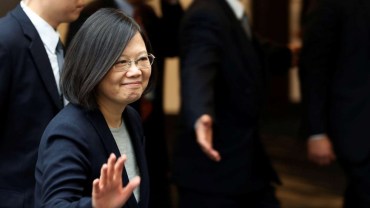
Taiwan’s President Tsai Ing-wen aspires to create ‘new era’ of peace with Beijing | South China Morning Post

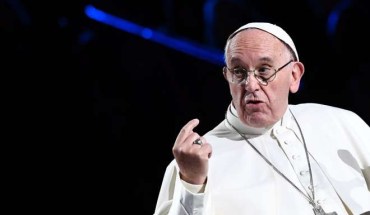
Taiwan aspires to create a “new era” of peace with mainland China, which should set aside the baggage of history and have positive dialogue, Taiwan’s President Tsai Ing-wen said in a letter to Pope Francis, adding military action could not resolve problems.

The issue of self-ruled and proudly democratic Taiwan has shot to the top of the international agenda since US President-elect Donald Trump broke with decades of precedent in December by taking a congratulatory telephone call from Tsai.

Pope Francis hails ‘good’ relations with China after getting gift from Xi Jinping

That, along with subsequent comments by Trump that the one-China policy was up for negotiation, has infuriated Beijing, which views Taiwan as a wayward province, to be bought under its control by force if necessary.

Mainland China is deeply suspicious of Tsai, whose ruling Democratic Progressive Party espouses the island’s formal independence, a red line for Beijing, and has cut off a formal dialogue mechanism with Taiwan.

In her January 5 letter to the Pope, released by her office on Friday, Tsai said upholding peace across the Taiwan Strait called for goodwill and communication.

Taiwan’s President Tsai Ing-wen continues call for Beijing talks but refuses to accept ‘one China’ principle“

Based on many years of experience in cross-Strait negotiations during my political career, I am convinced that military action cannot resolve problems,” Tsai said.

“Taiwan and mainland China were once embroiled in a zero-sum conflict that caused tension in the region and anxiety among our peoples.In contrast, today people on the two sides of the Taiwan Strait enjoy stable lives and normal exchanges under peaceful separate governance.

”China’s priests wary of Vatican’s Beijing olive branchTaiwan was committed to maintaining its democracy and the status quo of peace, but would not bow to pressure, she added.

“I urge the governing party across the Strait, together with the governing party in Taiwan, to set aside the baggage of history and engage in positive dialogue,” Tsai said.

The Vatican is one of only a handful of countries which still maintains formal diplomatic ties with Taiwan, although the Pope is trying to heal a decades-old rift with mainland China where Catholics are divided between those loyal to him and those who are members of a government-controlled official church.

Tsai said she sought to live up to the Pope’s words on nonviolent action.

“As the first female president in the ethnic Chinese world, I aspire to live up to your words as I devote myself to enhancing the well-being of the Taiwanese people and creating a new era for cross-Strait peace.”

Source: Taiwan’s President Tsai Ing-wen aspires to create ‘new era’ of peace with Beijing | South China Morning Post

Tags: ,
19/01/2017

Parking in China Can Be a Long March – China Real Time Report – WSJ

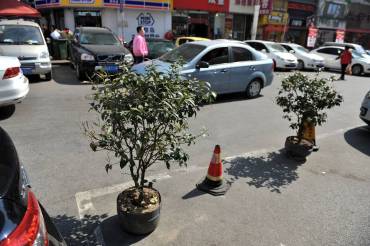
After spending half an hour driving around the Olympic Park area of Beijing in search of a parking space near his home, a furious Xu Fei pulled over to the curb, ditched his car and walked the 10-minute journey home.

With no spaces near his apartment, parking illegally was his only option, risking a fine of 200 yuan ($30).  “I usually bargain with the grocery-store owners downstairs to rent their driveways for parking,” said the 24-year-old finance specialist who lives in a 1970s building that has no parking for any of its 30 apartments. “That evening they were all rented out.”

Once known as the land of the bicycle, China is now the world’s largest automotive market. While the rapid expansion of car ownership has created millions of jobs and helped drive the economy, with it has come congestion, pollution and a shortage of at least 50 million parking spaces in a country where 180 million vehicles ply the roads.

Beijing has 4.4 million private cars, Shanghai 2.1 million cars and the southwestern city of Chengdu 3.3 million cars. By contrast, New York City has 1.9 million cars, Chicago 1.1 million and San Francisco 408,000.

Some major cities have taken measures to restrict car purchases and created tens of thousands of parking spaces over the past years. A Shanghai Municipal Transportation Commission official told the city legislature this week that the agency is considering jacking up parking fees, state media reported.

These measures aren’t keeping pace with car ownership, and there is plenty of room for further growth—vehicle ownership in China is 1/7 that of the U.S.A 2002 residential complex, the Shanghai Grand Garden, comprises 20 high-rise blocks with 1,560 units. The property developer initially assigned 450 spots for cars. Now there are 1,500 resident vehicles.

Cars occupy most of the nearby sidewalks, with some pulled into tiny spots between flower beds, squeezing out pedestrians. The situation gets much worse in the evening, said Tao Baosen, a doorman, pointing at a charcoal Volvo crossover that was pulled over onto the artificial turfs last night.

“Even though it’s very clear how bad the situation is, the number of cars is still growing,” Mr. Tao said.

Parking is a universal problem in densely populated cities. While many developed countries require new buildings to create a specific number of parking spaces, they also take measures to restrict parking. For example, New York City reduced 25,000 off-street parking spaces in Manhattan’s central business district from 1978 to 2010 to prod commuters to take public transportation. London levies costly congestion charges to drive a vehicle into the city center.

By contrast, China is “too lenient towards drivers,” said Liu Shaokun, a vice country director at The Institute for Transportation and Development Policy, a New York-based nonprofit outfit.China has encouraged government and private capital to build more parking spaces. The central government in 2015 required cities with a population of more than 500,000 to target a ratio of 1.3 parking spaces per car when planning residential and commercial developments.

By comparison, every 100 households in New York City’s Brooklyn borough share 40 parking spaces and in Queens, the ratio rises to 60 spaces per 100 households, according to the institute’s research.

“Increasing supply is unlikely to achieve the desired effect,” said Mr. Liu, noting high vacancy rates at many public and commercial parking lots and garages. “Many drivers go to cheaper off-street parking spaces, or just pull over onto the sidewalks since the costs of violating laws are low,” he said.

A variety of services and parking apps has sprung up to try to match cars and parking spaces for money. Edaibo, a Shanghai-based startup that provides valet parking services, has operated at 23 airports in China and last year received an investment from French tire maker Michelin Group to provide the service in major city centers.

D Parking, a Beijing startup, offers an app to connect drivers and parking spots. It aims to take advantage of commuting and business patterns. The company’s research found that more than 70% of the parking spaces in residential communities are idle in the daytime, while office buildings, shops and hospitals nearby face a dearth of spots. The opposite occurs in the evening.

Some efforts to increase supply have also upset drivers who complain they are now being charged to park in areas that were once free.

“We’re used to parking for free. When it comes to money, most of us will drive round and round for a free one,” said Fang Yi, a finance manager for a local hospital in Yiyang, a small city in the center of the country. He said he now spends 15 minutes searching for a free spot when going out

Source: Parking in China Can Be a Long March – China Real Time Report – WSJ

Tags:
18/01/2017

Why Are Party Symbols Like the Bicycle So Important in Indian Elections? – India Real Time – WSJ

A familiar Indian political saga played out in the country this month, as two factions of a party squabbled over what emblem to identify themselves with for upcoming state elections.In a democracy of over 1.2 billion people, many of whom are still illiterate and identify their choice on the ballot paper by the symbol adopted by the party, the answer has more than symbolic importance.

In the case of Uttar Pradesh, India’s largest state, a bloc of the ruling Samajwadi Party is hoping to pedal to success using the symbol of a bicycle in regional polls that start next month.

The Election Commission of India ruled earlier this week that the right to use the name of the Samajwadi Party, or the Socialist party, and its logo—the bicycle–belonged to Akhilesh Yadav, the incumbent chief minister of Uttar Pradesh, and not his father and party founder Mulayam Singh Yadav.

The Yadav father and son have been dueling over control of the party, each claiming to be its head, since it split earlier this month. At the center of the contention was whose faction gets to use the bicycle, the party’s logo since its inception in 1992.The Election Commission of India said the group led by younger Akhilesh Yadav is the genuine Samajwadi Party and “is entitled to use its name and (the) reserved symbol ‘bicycle’” because it had the support of the majority of the party cadre.

Jostling over political symbols is an established trend in India, especially when parties split.

The emblems are valuable because they could be used to solicit voters’ loyalty that would have taken years to cultivate.

Congress, the current national main opposition party, has had to choose new symbols in the past after party splits. It settled for its current symbol–an open palm, which a party leader said stands for hard work and toil–ahead of the 1980 elections.Prime Minister Narendra Modi’s Bharatiya Janata Party meanwhile has retained its original election symbol– the lotus flower, that epitomizes creativity and prosperity in Hinduism–since its formation in 1980.

The bicycle has significant brand value for the Samajwadi Party, which has its voter base in the mostly rural and agrarian Uttar Pradesh, where the human-powered vehicle is one of the most-favored and affordable means of transportation. To connect to voters, the party’s leaders often cycle during campaigns and distribute bikes to their supporters.

The party says on its website that it “gives immense importance to the development of common man and thus adopted the vehicle of the common man–a bicycle as its symbol.”

Source: Why Are Party Symbols Like the Bicycle So Important in Indian Elections? – India Real Time – WSJ

Tags:
18/01/2017

This Is Just How Unequal India Is – India Real Time – WSJ

New report from Oxfam highlights how the country’s wealth is concentrated in the hands of a few

Country Percentage of wealth top 1% has
Global

51

Australia

22

Belgium

18

Brazil

48

Canada

26

Denmark

31

France

25

Germany

31

India

58

Italy

25

Mexico

38

Netherlands

24

New Zealand

20

South Africa

42

Sweden

36

U.K.

24

U.S.

42

The richest 1% of Indians hold 58% of the country’s total wealth, according to Oxfam India.

The stark inequality in India is worse than the global data put out by the organization, which show that the richest 1% have more than 50% of the total world wealth, Oxfam said.

It said recently improved data on the distribution of wealth, particularly in countries like India and China, indicate that the poorest half of the world has less wealth was previously thought. Oxfam singled out India repeatedly in the report.

It said that companies are increasingly driven to pay higher returns to their shareholders. In India, the amount of profits corporations share with shareholders is as high as 50% and growing rapidly, the report said.

A family sits atop a pile of hay on a horse cart on a highway near Amritsar, India, Nov. 4, 2016.

The report said the annual share dividends paid by from Zara’s parent company to Amancio Ortega – the world’s second richest man – are equal to around 800,000 times the annual wage of a worker employed by a garment factory in India.

Oxfam said that the combined wealth of India’s 57 billionaires is equivalent to that of the country’s poorest 70%.“India is hitting the global headlines for many reasons, but one of them is for being one of the most unequal countries in the world with a very high and sharply rising concentration of income and wealth,” Nisha Agarwal, chief executive of Oxfam said in a statement.

Oxfam said India should introduce an inheritance tax and raise its wealth levies as well as increasing public spending on health and education. It said it should end the era of tax havens and crack down on rich people and corporations avoiding tax.

Source: This Is Just How Unequal India Is – India Real Time – WSJ

18/01/2017

Air India starts selling seats in female-only section – BBC Newsbeat

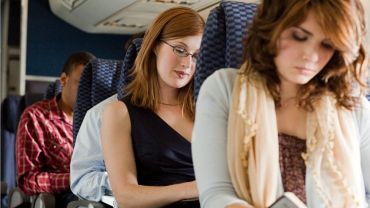
Air India has begun selling female-only seat sections.

The restriction will apply to the front row of six seats on economy flights and comes after reports some women were being groped by other passengers.

A general manager from Air India told The Hindu they wanted to reassure passengers who were travelling alone.Meenakshi Malik said: “We feel, as national carriers, it is our responsibility to enhance comfort level to female passengers.

“In cases of unruly behaviour, the airline crew are authorised to take action as per the law

Jitendra Bhargava Executive Director, Air IndiaThe airline will also now carry two pairs of restrainers to deal with disruptive passengers who can not be controlled.

From later this week, the six seats will be made available on the Airbus A320 aircraft on flights within India.

The women-only seats may be extended to other flights in the next few months.

Single passengers will be able to request the seats when they check in, without any extra cost.

The seats on the very front row will be made available at check-in

Not everybody connected to the airline is happy with the move though.

Former Air India Executive Jitendra Bhargava told The Hindu: “To my knowledge, this happens nowhere in the world. Planes are not unsafe for women passengers.”

In cases of unruly behaviour, the airline crew are authorised to take action as per the law.”The airline is no stranger to controversy.In 2015, bosses told some staff they were too fat to be air attendants and were costing the company a fortune in fuel.

Source: Air India starts selling seats in female-only section – BBC Newsbeat

17/01/2017

China Overtakes India as World’s Fastest-Growing Economy, IMF Says – China Real Time Report – WSJ

China took back in the crown in 2016 thanks ‘primarily’ to Modi’s cash cancellation

 China 6.7
India* 6.6
Asean-5 4.8
Mexico 2.2
U.K.  2
Eurozone 1.7
U.S. 1.6
Japan 0.9
South Africa 0.3
Russia -0.6
Nigeria -1.5
Brazil -3.5
*India estimate is for the year that ends March 31, 2017. The Asean-5 countries are Indonesia, Malaysia, Philippines, Thailand and Vietnam.

Source: China Overtakes India as World’s Fastest-Growing Economy, IMF Says – China Real Time Report – WSJ

Tags:
Law of Unintended Consequences

continuously updated blog about China & India

ChiaHou's Book Reviews

continuously updated blog about China & India

What's wrong with the world; and its economy

continuously updated blog about China & India