06/12/2016

Tsai says call with Trump does not reflect US policy change | South China Morning Post

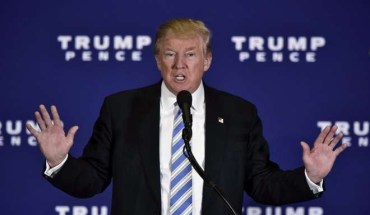
Taiwanese President Tsai Ing-wen said on Tuesday her phone call with US president-elect Donald Trump should not be interpreted a significant shift in American policy, and stressed that both sides saw the value of maintaining regional stability.

“Of course I have to stress that one phone call does not mean a policy shift,” she told a small group of American reporters in Taipei. “The phone call was a way for us to express our respect for the US election as well as congratulate president-elect Trump on his win.”

Taiwan’s Tsai Ing-Wen initiated phone call with Donald Trump, says island’s presidential spokesmanTrump’s phone call with Tsai broke four decades of diplomatic protocol, alarming some commentators who feared it could spark a dangerous confrontation with Beijing.

Others though, especially US Republicans, have welcomed it as a sign Trump will not be bullied by Beijing, and believe the United States should offer more support to Taiwan’s democracy.

Sources in Trump’s team said the call was planned weeks in advance to establish the incoming president as a break from the past, although vice-president-elect Mike Pence described it as a “courtesy” call, not intended to show a shift in US policy on cross-strait ties.

Tsai echoed that line. “I do not foresee major policy shifts in the near future because we all see the value of stability in the region,” she said.Beijing has reacted with relative calm to the call, lodging what it called a “solemn protest” with the US government, but also underlining that its economic and diplomatic relationship with Washington depended on the US acceptance of the one-China principle, which recognises Beijing as the sole representative of the Chinese nation.

Beijing blocks Taiwan from taking part in almost all international bodies. Tsai’s office said she had told Trump during the phone call that she hoped the United States “would continue to support more opportunities for Taiwan to participate in international issues”.

Reacting to criticism of the call, Trump himself pointed out that the United States sold billions of dollars of arms to Taiwan.

Beijing has already increased the pressure on Taiwan since Tsai’s election, upset that she has not publicly endorsed the “one China” principle – although she consistently expresses the need for dialogue.

China’s Foreign Minister Wang Yi appeared to blame Taiwan for the phone call, calling it a “petty” move, and the nationalist Global Times tabloid initially recommended that Beijing should continue to talk to Trump but punish Taiwan.

Michael Cole, a Taipei-based senior non resident fellow at the China Policy Institute, University of Nottingham, wrote that this could include renewed efforts to deny Taiwan access at various multilateral organisations, the stealing of diplomatic allies, punitive economic measures and more intense or frequent military exercises aimed at Taiwan.

If that happens, the domestic support Tsai had received for her call could be countered by greater tensions with Beijing, he said, “What remains to be seen is what kind of ally Taiwan will have in Washington if and when such a shift occurs in the Taiwan Strait,” he wrote in The National Interest.

On Tuesday, there were also signs of growing concern in Beijing that Trump’s constant criticism of Beijing in his speeches and on Twitter might actually mean something. His latest salvo – complaining about China’s currency and trade policy, and its actions in the South China Sea – sparked a frustrated response in the Global Times.What does Donald Trump’s phone call with President Tsai mean for future US arms sales to Taiwan?

“Trump’s China-bashing tweet is just a cover for his real intent, which is to treat China as a fat lamb and cut a piece of meat off it,” it wrote. “China should brace itself for the possible fluctuations of the Sino-US relationship after Trump is sworn in. We must confront Trump’s provocations head-on, and make sure he won’t take advantage of China at the beginning of his tenure.

”The Communist Party mouthpiece People’s Daily took a more measured line, arguing that dialogue was vital to maintaining friendly relations and correct some of Trump’s “inaccurate” criticisms of Beijing.

“Trump’s recent demeanour has proved people’s doubts on his inexperience in diplomatic relations. In fact, Trump is not that ignorant on China and China-US relations, he has some sensible understandings and his own take on matters. But the problem is that Trump’s rhetoric shows that he only knows one side of China and China-US relations,” it wrote in a front-page editorial on its overseas edition.

“At the present, the peaceful transition of China-US relations is the key task that both countries face. It depends on joint efforts, not just good wishes from one side.”

Source: Tsai says call with Trump does not reflect US policy change | South China Morning Post

06/12/2016

Beer Diplomacy: Another Investment Follows a Visit by Xi Jinping – China Real Time Report – WSJ

After pulling a pint for Chinese President Xi Jinping last year, an iconic English pub has now pulled in Chinese investors.

The Plough at Cadsden was purchased by a London-based investment company that the broker, Christie & Co., described as a Chinese company. Terms weren’t disclosed.

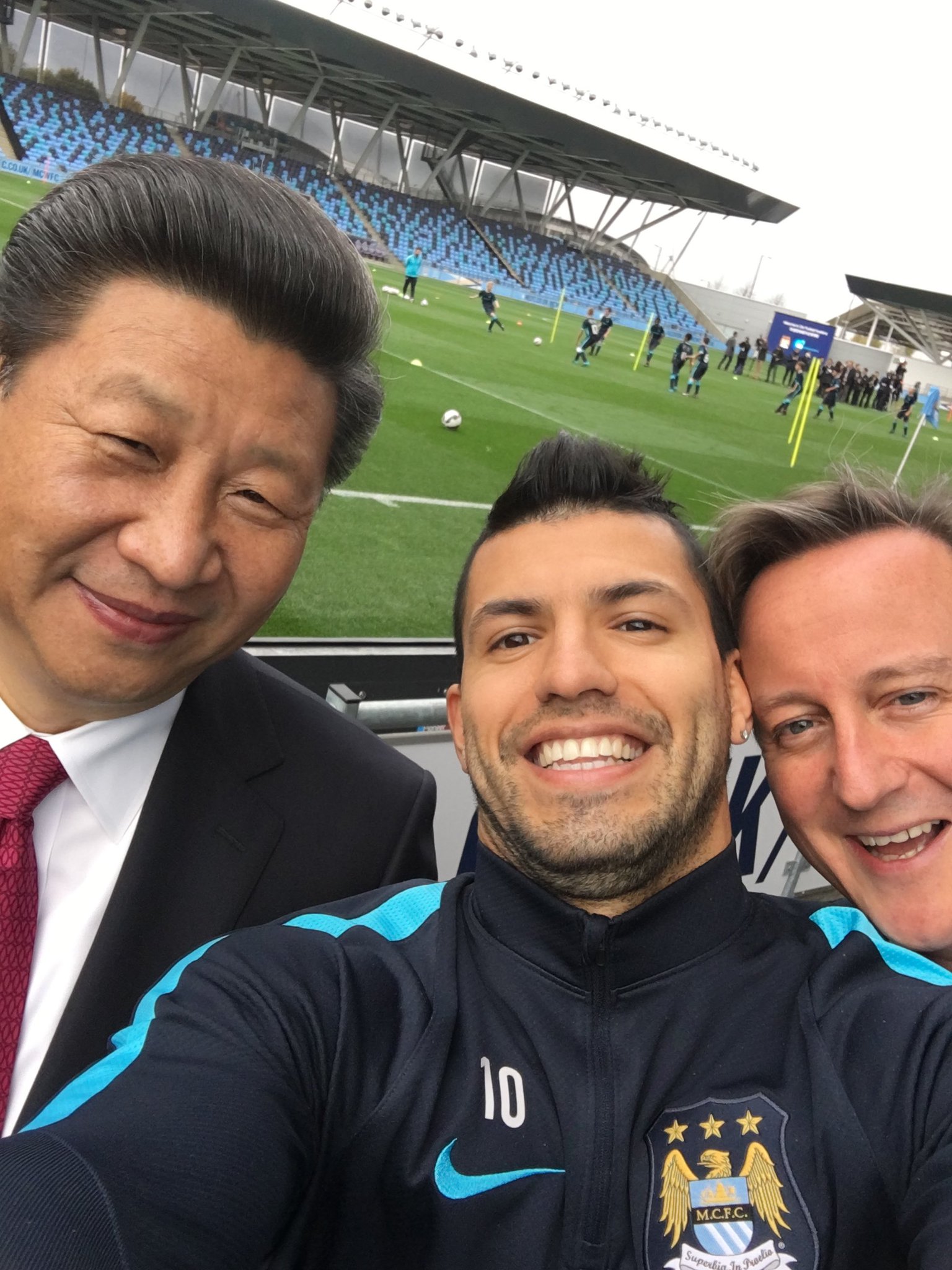
The purchase, by SinoFortone Investment, came after Mr. Xi shared a beer with former U.K. Prime Minister David Cameron at the pub.

Unknown is how his visit may have led to the purchase. But it is the latest deal to follow the Chinese leader’s movements.

On the same day Mr. Xi visited the pub, he also joined Mr. Cameron on a visit to the Manchester City soccer club, in the north of England. The following month a Chinese consortium said it had invested $400 million for a minority stake in the successful soccer club.

Closer to home, Mr. Xi’s patronage of the state-owned Qing Feng Steamed Dumpling Shop in Beijing was followed by an announcement that the restaurant chain plans an IPO. The Plough, which describes itself as “probably the most famous pub in England,” is near Chequers, the country house retreat for British prime ministers. The pub “has become quite a tourist attraction for Chinese visitors” since Mr. Xi’s appearance, Christie & Co said.

SinoFortone Investment extolled the virtues of beer diplomacy, calling pubs “the best way culturally to link people from different countries and build friendships.” The company added that “The English pub concept is growing very fast in China.” SinoFortone has also invested £100 million ($1.28 million) in London Paramount Entertainment, a large theme park proposed for construction on the Swanscombe Peninsula in North Kent. The deal was announced while Xi Jinping was in the U.K.

Source: Beer Diplomacy: Another Investment Follows a Visit by Xi Jinping – China Real Time Report – WSJ

02/12/2016

Indian Startup Plans to Land on the Moon in January 2018 – India Real Time – WSJ

An Indian aerospace startup has said that it will launch its mission to the moon in a year’s time, as it takes part in a Google-funded competition to become the world’s first-ever privately held company to make a soft landing there.

Team Indus‘s rover, nicknamed ‘Ek Choti Si Asha,’ or ‘one small hope’ in Hindi, won the Axiom Research team a million-dollar prize from Google last year.

A group of more than 100 scientists and engineers, including around a dozen former ISRO scientists, make up Axiom Research Labs’ Team Indus. The team is India’s only entry in the Google-funded Lunar XPrize challenge, which has a bounty of $30 million.

To win the prize, a team has to successfully place a spacecraft on the moon’s surface, travel at least 500 meters and transmit high-definition video and images back to Earth.

“A full launch vehicle from ISRO [Indian Space Research Organization] will launch our spacecraft into the orbit of the moon end of 2017,” Rahul Narayan, the fleet commander of the team, said at a news conference in New Delhi on Thursday.

The supermoon rising above Cape Town on November 14, 2016, when it was closest to the earth in 68 years.

The Team Indus spacecraft is expected to make it to the moon’s Mare Imbrium region by January 2018.

The race is on. Sixteen other teams from across the world want to make the 238,900-mile trip, and Team Indus is the fourth team to announce its launch plans, said Mr. Narayan.

“We are considering the team from Israel great competition at this point,” he said.

The Indian team’s plan is the country’s first shot at becoming the fourth nation to land gently on the lunar surface and unfurl its national flag, after the U.S., Russia and China.

The South Asian nation’s inexpensive Mars mission put its satellite Mangalyan, which now appears on India’s new 2,000-rupee bank notes, into the red planet’s orbit for $74 million in September 2014. The U.S. spent $671 million getting its Maven satellite to Mars orbit.

The team said its mission would cost $60 million.

Team Indus’s core leadership team, including fleet commander Rahul Narayan, fourth from left.

“We’ve already raised about $15 million through private equity,” said Julius Amrit, co-founder and director. The company aims to raise $20 million by charging companies or universities to put their instruments on board to collect data. It also expects to raise another $20 million from sponsorship, donations and grants.

Its top investors include Ratan Tata, chairman of the Tata group, one of India’s biggest conglomerates; Nandan Nilekani, co-founder of Indian outsourcing firm Infosys; and the owners of e-commerce website Flipkart Internet Pvt. Ltd.

“We are quite confident at this moment that we will have enough money to send our spacecraft to the moon,” Mr. Amrit said.

The Bangalore-based startup won a million dollar prize from Google last year for its WALL-E lookalike moon rover, which will shoot high-quality images, video and data and beam them from the moon’s surface to the company’s mission center in India.


But the mission isn’t without its challenges.“If you have to softly land, you need to be able to [precisely] manage your velocity and time [to switch your engines on and off],” said Dhruv Batra, Program Lead at Team Indus. “Unfortunately, there is no throttle-like mechanism in a spacecraft, like you have in a car.”

Another challenge is to be able to land at the right time of the day—to make sure the solar panels are able to power the gadgetry, while making sure the temperature isn’t too extreme for the batteries and other electronics to work properly.

“We are currently refining each and every output of our simulations to arrive at that level of precision we need,” said Mr. Batra.Seven years ago, Team Indus was one of the last teams to sign up for the Google challenge, and its founders had no prior experience in aerospace engineering or space sciences, said Mr. Narayan, the fleet commander. “It was just a dream.”

Source: Indian Startup Plans to Land on the Moon in January 2018 – India Real Time – WSJ

01/12/2016

Divorce is on the rise in China | The Economist

WITH his slick navy suit, silver watch and non-stop smoking, Yu Feng is an unlikely ambassador for Chinese family values. The office from which he operates, in Chongqing in western China, looks more like a sitting room, with grey sofas, cream curtains and large windows looking out on the city’s skyscrapers.

Women visit him here and plead for help. They want him to persuade their husbands to dump their mistresses.

Mr Yu worked in family law and then marriage counselling before starting his business in 2007. He charges scorned wives 100,000-500,000 yuan ($15,000-75,000); cases usually take 7-8 months. He befriends both the two-timing husband and the mistress, encouraging them to find fault with each other, and gradually reveals that he has messed up his own life by being unfaithful. He claims a 90% success rate with clients, most of whom are in their 30s and early 40s. “This is the want, buy, get generation,” he says; sex is a part of China’s new materialism. But changing sexual mores and a rocketing divorce rate have prompted soul-searching about the decline of family ties.

The ernai, literally meaning “second wife”, is increasingly common. So many rich men indulge that Chinese media sometimes blame extramarital relationships for helping to inflate property prices: some city apartment complexes are notorious for housing clusters of mistresses, paid for by their lovers, who often provide a living allowance too.

It is not just businessmen who keep mistresses: President Xi Jinping’s anti-corruption campaign has revealed that many government officials do too. According to news reports Zhou Yongkang, the most senior person toppled by the current anti-graft crusade, had multiple paramours; former railways minister Liu Zhijun is rumoured to have kept 18.

China has a long history of adultery. In imperial times wealthy men kept multiple concubines as well as a wife; prostitution was mostly tolerated, both by the state and by wives (who had little choice). Married women, in contrast, were expected to be chaste. After 1950 concubines were outlawed and infidelity deemed a bourgeois vice. Even in the 1980s few people had sex with anyone other than their spouse or spouse-to-be.

Over the past 30 years, however, sexual mores have loosened and more young Chinese are having sex, with more partners and at a younger age. Some clearly continue to wander after marriage. Some 20% of married men and women are unfaithful, according to a survey of 80,000 people in 2015 by researchers at Peking University.

In many respects growing infidelity is a predictable consequence of economic development. Individuals are increasingly willing to put their own emotions or desires above familial obligations or reputation. Improved education and living standards mean they have more financial freedom to do so. Most Chinese couples previously had few chances to meet members of the opposite sex in social situations after marriage, but migration means that many couples live apart. Even if they live together, the pool of temptation has grown larger and easier to dip into, thanks partly to social media.

Businesses like Mr Yu’s indicate that not all spouses see affairs as an unpardonable offence. But surveys also suggest that infidelity is the “number one marriage killer”. Last year 3.8m couples split, more than double the number a decade earlier. China’s annual divorce rate is 2.8 per 1,000 people (also double a decade ago). That is not quite as high as America’s 3.2, but higher than in most of Europe. Chinese families are fraying fast.

Source: Divorce is on the rise in China | The Economist

01/12/2016

As Trump retreats, Xi Jinping moves to upgrade China’s global power play | South China Morning Post

With US president-elect Donald Trump threatening to build a wall on the Mexican border and force Asian allies to increase defence spending, Beijing is busy luring countries across the eastern hemisphere into its orbit.

President Xi Jinping, who is consolidating his power at home, is planning to host a big “One Belt, One Road” summit in China next year, sources close to the central government told the South China Morning Post, adding that the event would match, if not exceed, the scale of this year’s G20 summit in Hangzhou, which attracted about 30 state leaders.

China plans US$2 billion film studio and ‘One Belt, One Road’ theme park

At a time when established world powers are struggling with domestic problems, Xi sees a chance to push ahead with his oddly worded brainchild, a geopolitical push to extend Beijing’s influence to remote corners of the globe.

The belt and road initiative encompasses 65 countries including China, stretching through Southeast, South, Central and West Asia to the Middle East, Africa and East and Central Europe.

However, with globalisation facing increasing scrutiny and electoral scepticism in developed countries, it’s doubtful whether a one-party state with its own deep-rooted economic woes will be able to bind countries together through a programme viewed by critics as a Chinese plot to export its infrastructure and influence.

In addition, China’s shrinking foreign exchange reserves, the falling value of its currency and a tightening of central government control on big overseas investments have raised questions about whether there will be sufficient funds to grease China’s ambitions.

Hong Kong trade presence needed in ‘One Belt, One Road’ cities

The belt and road initiative was launched by Xi in 2013 as an attempt to boost connectivity between China and other countries along the ancient land-based and maritime Silk Roads through trade and infrastructure projects, including high-speed railway lines and energy pipelines. But the wave of populist, anti-globalisation reflected in Trump’s stunning victory in last month’s US presidential election has put its smooth implementation in doubt.

Previous Chinese infrastructure projects overseas, including energy- and resource-related ones in Africa, have triggered resentment in local communities, with Beijing accused of exploitation and failing to benefit local workers.

Even though an increasing number of key US allies, such as Canada and Britain, have joined the Beijing-led Asian Infrastructure Investment Bank (AIIB), set up as part of the belt and road initiative, mistrust over Beijing’s efforts to extend its geopolitical influence are mounting.

James McGregor, greater China chairman of APCO Worldwide, a public relations and consulting firm, said the level of cooperation between Beijing and the incoming Trump administration would be crucial in determining the success of the belt and road initiative.

One of Trump’s policy advisers, former CIA director James Woolsey, has described the current Obama administration’s opposition to the AIIB as a “strategic mistake”.

How One Belt, One Road is guiding China’s football strategy

“Through OBOR and various diplomatic initiatives, China is seeking to lead peacekeeping and economic development efforts in the region,” McGregor said, referring to the belt and road initiative. “But this will be very difficult if the US and China are not aligned and working together in the region to help provide security and promote peace.“

So if Trump pushes an agenda of confrontation with China in regard to trade and security arrangements in Asia, China will have a more difficult time managing its investments in Afghanistan and elsewhere in the region.”

But Professor Wang Yiwei, from the school of international studies at Renmin University in Beijing, said Trump’s protectionist agenda, most notably with his vow to withdraw the United States from the 12-nation Trans-Pacific Partnership (TPP) trade pact, would provide an opportunity for the belt and road initiative to “fill the gap in the market”.

“For a long time, countries around the world have been following America’s standards and development model. But now even the US itself has suffered from its system,” he said. “The US has not learned its lesson from the financial crisis – it has failed to adjust and reform its industries – and it is now blaming the problem on globalisation.”

Wang said that with the belt and road initiative, China was becoming more resistant to the risk posed by the incoming Trump administration and the anti-globalisation trend sweeping the West.“

[The belt and road initiative] is designed to counter the risk posed by the market in the West,” Wang said.

Long-term planning: China’s 21st century Silk Road strategy will take time to reap rewards

The decrease in America’s purchasing power in the wake of the financial crisis had caused the surplus production capacity in China, he said, and the belt and road initiative was a new way to boost China’s exports.

AIIB president Jin Liqun said in early November that the AIIB was “on track” to meet its big first-year targets, including lending US$1.2 billion by the end of this year. So far it has lent US$829 million to six projects in Pakistan, Tajikistan, Indonesia and Bangladesh.

China invested about US$14.8 billion in 49 countries of the 64 other countries along the Silk Road last year, or 12.6 per cent of the country’s total outbound investment, according to the Ministry of Commerce. The US and the European Union remain the top destinations for Chinese outbound investment, which totalled US$146 billion in the first 10 months of this year.

Whether Chinese companies will be as enthusiastic as they used to be about pouring money into overseas projects remains to be seen, with Beijing banning overseas investment deals of more than US$10 billion until September next year and cracking down on overseas mergers, acquisitions and real estate deals involving more than US$1 billion because of concerns about capital flight.

But economists, citing the unsustainability of a strong US dollar, uncertainty about Trump’s policies and China’s need to push ahead with economic reforms, said the restrictions were more of a short-term constraint than a permanent hurdle.

“Restricting outflows is a step back, but it will not alter China’s long-term direction of capital opening,” said Tim Condon, chief Asian economist at ING.

Professor Zhang Jiadong, a belt and road specialist at Shanghai’s Fudan University, said the impact of foreign exchange controls on the belt and road initiative would be limited.

“Forex controls will mainly affect the speed of approval, but will have little impact on infrastructure investments, which usually involve lengthy preparations for feasibility studies and financing arrangements,” he said.

State-owned enterprises, with their capital size and building expertise, are major participants in the initiative. Foreign exchange clearance is just one of many long regulatory procedures they have to navigate, and they usually needed approval from the state asset watchdog and financial backing from state-owned banks.

“Overall, OBOR investment represents only a small proportion [of their activities],” Zhang said.

Chen Fengying, an economist at the China Institute of Contemporary International Relations, said the foreign exchange regulator did not cover belt and road projects.

“Investment in OBOR countries is groundbreaking and needs more government support,” Chen said. “They should be encouraged, rather than regulated.”

The biggest difficulty faced by the belt and road initiative is the need to ease suspicions among countries such as India and Japan, another big investor in Asian development projects, about Beijing’s strategic intentions.

Foreign Minister Wang Yi told a forum in Beijing on Wednesday that China would be accommodative to the needs of different nations in pushing ahead with the belt and road initiative. The AIIB is regarded as a rival to the Japan-led Asian Development Bank and the US-headquartered International Monetary Fund.

Zhang Jianping, an expert on belt and road policy at the National Development and Reform Commission’s Institute for International Economic Research, said mistrust remained a hurdle for China.

“Just because the US withdrew from the TPP doesn’t necessarily mean that its economic power is in decline,” he said. “All the major global financial and investment standards and institutions are still led by the US and Europe. Any attempt by China to rewrite those rules is bound to meet scepticism from the West.”

Observers said investors’ top concerns were returns on investment and safety, and that made developed countries the top destination for market, technology and management expertise, rather than developing countries . They faced bottlenecks in terms of capital, talent and management expertise in belt and road investment, which usually involved labour-intensive manufacturing or resource projects.
Beijing is pushing to build dozens of economic cooperation zones, which will be used to facilitate bilateral trade and investment and potentially draw more private firms. However, more government guidance in terms of policy and financing is needed to help private Chinese firms better integrate into economic development plans in other countries.

Liang Haiming, chief economist at the China Silk Road iValley Research Institute, said opportunities were opening up for China.

“The yuan’s depreciation against the US dollar will not affect China’s investment plans in OBOR countries,” he said. “The Chinese currency is actually strengthening against major Southeast Asian currencies.

“The capital flowing from emerging economies to the US will leave a good opportunity for Chinese capital to enter those countries.”

The Post’s annual China Conference in Hong Kong on Friday will bring business leaders and policy advisers together to share their latest insights on the business opportunities and challenges brought about by the belt and road strategy.

Source: As Trump retreats, Xi Jinping moves to upgrade China’s global power play | South China Morning Post

30/11/2016

India prisons: Why security needs to be improved – BBC News

Two major jailbreaks in a month have shone a spotlight on security in India’s overcrowded and under-staffed prisons. BBC Hindi’s Vineet Khare reports.

On Sunday, five armed men in the northern state of Punjab attacked the high-security Nabha prison and freed six inmates. One of the escapees, a Sikh separatist leader, was recaptured on Monday.

It was a brazen attack. Assailants dressed in police uniforms arrived “on the pretext of depositing a prisoner” but began firing indiscriminately as soon as the prison gate was opened. They escaped with the inmates in a convoy of vehicles.

“This is what happens when there is diversion of jail staff to non-jail work and infrastructure is creaking,” said retired police officer Prakash Singh.

Prison break: Four unusual ways Indians have escaped jail

A bad seven days for Indian justice

More than 180 prisoners have escaped in more than 40 jailbreaks over the past two years, latest government figures say

Last year, two inmates escaped from the high-profile Tihar jail in the capital Delhi by digging a tunnel under a wall.

Last month, eight prisoners escaped from a high-security jail in the city of Bhopal in central Madhya Pradesh state. The inmates, members of an outlawed Islamist group, were killed outside Bhopal after they resisted arrest, police said.

Eight prisoners escaped from this prison in Bhopal last month

The men used bed sheets to scale the walls of the prison before escaping the high-security Bhopal Central Prison, police said.

The police version was questioned when unverified videos of the killing of the men surfaced from the outlawed Students Islamic Movement of India. The matter is being investigated.

India’s prisons are notoriously overcrowded and under-resourced.

Some 1,400 prisons house nearly 420,000 inmates against a capacity of 366,7810, according to India’s National Crime Records Bureau.

More than a third of positions for prison guards and officers are lying vacant. Nearly half of the staff positions in Tihar are vacant.

Inmates ‘do everything’

It is estimated that more than two-thirds of the prisoners in Indian jails are on trial, contributing significantly to overcrowding.The Bhopal jailbreak, described as an act of coldblooded murder by the inmates’ lawyer, served again to highlight what was wrong with India’s prisons.

The prison houses more than 3,000 inmates against a capacity of 1,400.

Madhya Pradesh also has a history of jailbreaks:In 2011, nine prisoners spiked the tea of six guards of the state’s Dabra prison and ran away

In 2013, five captives broke through the washroom window of the dilapidated Khandwa prison and escaped

Retired jail officials say no one is paying attention to a system that is crying out loud for support.

“Our jails are collapsing,” retired jail official GK Agarwal told me in Bhopal, showing me a number of handwritten official correspondences to officials, in which he had pleaded for reforms.

Two years ago, in a missive to top officials, Mr Agarwal had predicted a “big accident” at Bhopal jail owing to its “structure, vulnerable points, imprudent security and staff’s deplorable situation”.

But Mr Agarwal said nothing had moved.

Lawyer Dr Siddhartha Gupta, who spent two days in the jail on a minor charge of “disturbing peace outside the court” told me: “The presence of guards inside is next to nothing.”

It’s the inmates who do everything. From cooking to office jobs to counting inmates, everything is done by them.

“Under pressure to act, Madhya Pradesh’s new head of prisons, Sanjay Choudhary, is promising “speedy modernisation”.

“We are enhancing security, increasing manpower and creating a high-security zone,” he said.

Source: India prisons: Why security needs to be improved – BBC News

30/11/2016

All-American pick-up trucks aim to lure China’s wealthy | Reuters

Automakers Ford (F.N) and General Motors (GM.N) are aiming the pick-up truck, an iconic staple in the United States, at upmarket buyers in China, where most associate trucks with farmers and construction workers.

“The Chinese call it pika, pika – a very low-end worker’s (vehicle). But the (Ford F-150) Raptor is totally different,” said Wesley Liu, Ford’s Asia-Pacific sales director, ahead of this month’s Guangzhou autoshow.

Trucks are largely restricted to overnight driving in most Chinese cities, but four provinces – Yunnan, Liaoning, Hebei and Henan – have this year launched trial programmes allowing them into urban zones in an attempt to stimulate production as economic growth, and car sales, slow.

With those looser restrictions, U.S. pick-up makers aim to distance their trucks from local models made by Great Wall Motor (601633.SS), Jiangling Motors Corp (JMC) (000550.SZ) and others – and appeal to Chinese premium buyers, like Meng Shuo.

The 32-year-old founder of an investment consultancy, who already owned a Chevrolet Camaro when he bought an F-150 pick-up truck five years ago through an unofficial grey market importer. He has since traded it in for a Toyota (7203.T) Tundra, and also owns a Mercedes (DAIGn.DE) luxury sedan and Porsche (PSHG_p.DE) and Mitsubishi (7211.T) sports cars.

Ford said in April it would bring a high-performance version of its F-series – the best-selling vehicle in the U.S. for 34 years – to China, the world’s biggest auto market. A spokesman said the company is studying whether to also bring a mass-market model such as the F-150 or Ranger pick-up to China, depending on demand and future regulations.

“The people who buy the Raptor maybe own some other premium vehicle already. This is another toy,” Liu said.The truck is aimed at four types of buyers, he said – the wealthy, who want to stand out from the crowd; business owners, who want more than a traditional commercial vehicle; drivers who want a single car for all situations; and “gearheads”, who just like the mechanics.

Even as Chinese authorities throw vast subsidies at green, clean auto technologies, the growing wealth of Chinese consumers has driven a boom in larger cars and sport-utility vehicles (SUV). With margins now under pressure in the crowded SUV sector, automakers see potential profits in high-end foreign pick-ups.

Ford and GM – which displayed its Chevrolet Colorado and Silverado trucks around the Guangzhou show, with t-shirt clad urban cowboys and an all-leather rock band selling the trucks’ macho, all-American appeal – have not yet announced prices for their pick-ups, expected to be launched next year. But they should command a sizeable premium to locally made models as China slaps a 25 percent tax on imports.

PICKING UP

For now, pick-ups are a tiny fraction of China’s market.

IHS Markit sees sales increasing by 14 percent this year to 368,791 pick-up trucks, but that would still be only 1.4 percent of China’s light vehicle market.

By contrast, sales in the U.S. are forecast at 2.7 million pick-ups, about 15 percent of the market.

Yan Ningya, an official involved in the Hebei pilot project, said the province, home to Great Wall and other automakers, accounts for half of China’s pick-up production.

The trial has not yet resulted in higher production, he told Reuters, but the local government will need a year from the pilot project’s launch in May to gauge its impact.

After that, the central government may do more to drive production, possibly reclassifying pick-ups as passenger cars rather than commercial vehicles, he said.

The Ministry of Industry and Information Technology, which directed the provinces to launch the pilot projects, did not respond to a faxed request for comment.

“China’s pick-up truck market will be very large in the future,” said Yan, noting domestic brands would likely upgrade their trucks to meet the tastes of middle-class drivers.

Source: All-American pick-up trucks aim to lure China’s wealthy | Reuters

29/11/2016

Digital payment firms cash in on India’s money mess, but can it last? | Reuters

Digital payment providers in India have mobilised hundreds of extra workers to enrol small merchants and offered their services for free, betting that severe cash shortages will prove to be the opportunity of a lifetime.

Signing people up, however, may be the easy part.

Getting shops and customers to change their reliance on cash permanently will involve convincing people like Mohammad Javed, a 36-year-old meat shop owner in New Delhi.

Working out of a bustling market in the capital, he is surrounded by banks and ATM machines, but says he does not know how to use a credit card machine, let alone a mobile wallet.

He says business has dropped since Prime Minister Narendra Modi‘s shock move on Nov. 8 to ditch higher value banknotes, but Javed does not believe mobile app providers offer a solution to his problem – or to his customers.

“We don’t have knowledge or resources to open a mobile wallet or card-swipe machine, and our customers who pay 100-200 rupees ($1.46-$2.92) are not interested either,” he said.

Javed’s reluctance is a reality check for the likes of Paytm and smaller rival MobiKwik, which have gone into promotional overdrive since Modi’s announcement.

The prime minister, whose government supports digital payments, brought in demonetisation to crack down on the shadow economy and improve tax collection.

“Why should India not make a beginning in creating a ‘less-cash society?’,” he said on Sunday, “Once we embark on our journey to create a ‘less-cash society’, the goal of ‘cashless society’ will not remain very far.”P

ROMISING SIGNS

The companies say results have been promising so far.

Paytm, backed by Chinese Internet giant Alibaba Group Holding Ltd (BABA.N), has added 700 sales representatives since Nov. 8, taking its number of agents to 5,000.

Advertisement boards of Paytm, a digital wallet company, are seen placed at stalls of roadside vegetable vendors as they wait for customers in Mumbai, India, November 19, 2016.

The company, which has 4,500 full-time employees, plans to double the number of agents to more than 10,000, as it aggressively expands its network.

It says it has nearly doubled the number of small merchants signed up to its services to 1.5 million in the last few weeks and added eight million clients to the 150 million it had before the banknote ban.

MobiKwik, whose backers include U.S. venture capital firm Sequoia Capital and American Express (AXP.N), said it had increased its agent base to more than 10,000 from about 1,000 before the Modi move.

Merchants on its platform have risen to 250,000 from 150,000 previously, and chief executive Bipin Preet Singh said they were aiming for a million in up to two months. It has added 5 million accounts since Nov. 8, bringing the total to 40 million.

But challenges loom.

Credit Suisse estimates more than 90 percent of consumer purchases are made in cash, as millions still do not have bank accounts. Those who do have bank cards mainly use them to withdraw from cash machines.

Sales of cheap smartphones have boomed in recent years, but internet networks remain patchy, especially in rural India. Financial literacy and technology usage also remain low.

Dillip Kumar Agrahari, a vegetable seller in a Mumbai suburb, recently signed up to Paytm but does not know how to operate a smartphone.

He hopes switching to digital payments will improve his business as the cash crunch drags on, but says he will have to depend on a cousin to help with accounts.

Many businesses have traditionally opted for cash transactions because they are hard for the tax man to trace, given sales taxes are typically at least 10 percent.

Mangal Singh, a furniture store owner, said nearly 80 percent of his business was transacted in cash, even though he accepts credit card payments.

“We are working on wafer-thin margins,” he said. “If we are asked to pay 12.5 percent tax and other charges, we will have to close down our shops.”

Concerns also remain about the infrastructure for mobile payments, as customers or merchants from one platform cannot transfer payments to another.

MobiKwik said it had started offering wallet-to-wallet transfers, though not all rivals were on board.

WHEN WILL PROFITS COME?

The challenges raise questions about whether the business models of mobile payments providers are sustainable.

Paytm recently slashed fees until Dec. 31, from a system of fees that ranged from 1 to 4 percent, with the most lucrative coming from telephone and utility bill payments.

MobiKwik is not charging fees until March 2017.The closely-held companies are loss-making.

Paytm Chief Executive Vijay Shekhar Sharma said the company expected to reach profitability in two years, without giving details. MobiKwik’s co-founder Upasana Taku said they hoped to become profitable in mid-2018.

Fitch Ratings believes that once the cash crunch subsides, some merchants and customers will go back to business as usual, using notes to pay for transactions.

“I would expect some amount of behavioural changes,” said Fitch analyst Saswata Guha. “We’re still not sure if this shock per se is incentive enough for them to completely change the way they do things.”

($1 = 68.1384 Indian rupees)

Source: Digital payment firms cash in on India’s money mess, but can it last? | Reuters

29/11/2016

How China Plans to Revamp Job Security – The Short Answer – Briefly – WSJ

China’s leaders are preparing to loosen job-security regulations as part of efforts to keep businesses afloat amid slowing economic growth. Here is what you need to know.

What Is China’s Labor Contract Law?

A broad set of standards on employment practices that took effect in 2008 after an unusually lengthy debate to safeguard worker rights and boost job security. Some businesses blame it for inflating wages.What Is Happening?The labor ministry has been consulting academics, lawyers and businesses on ways to revise the law to make it easier for businesses to hire and fire workers. The focus is on regulations related to open-ended contracts and severance pay.

What Is at Stake?

The law’s most contentious regulations include one that gives employees the right to request an open-ended contract after 10 consecutive years at a company or two consecutive fixed-term contracts. Another contested provision states that laid-off workers are entitled to one month’s salary for every year of employment.

What Is Next?

Observers say the government may publish draft amendments for public comment next year. They would eventually go to the rubber-stamp parliament for approval.

Source: How China Plans to Revamp Job Security – The Short Answer – Briefly – WSJ

29/11/2016

Nissan Revs Up Connected Car Plans in India – India Real Time – WSJ

Nissan Motor Co. said Tuesday that it planned to accelerate the penetration of internet-connected vehicles by offering a connection device to existing customers in Japan and India starting next year.

Nissan has been among the most aggressive car makers in putting connection technology in lower-priced vehicles. Now, it is expanding the offering to owners of older models.

The device will allow car owners to get live updates on maintenance needs, make service appointments and order parts ahead of time. Nissan said it planned to bring the device to other countries eventually and install it in 30% of the 40 million Nissan vehicles on the road globally today.

The device contains a Global Positioning System tracker and can transmit information about the vehicle’s health to Nissan through mobile networks. The goal is to give customers a taste of connected-car services that will become available on new cars, Nissan said.

“In the coming years, customers will see sophisticated applications of software and hardware that will keep them connected with work, with friends and family. It will allow them to control their vehicles from their phones in their pockets,” said Kent O’Hara, who runs Nissan’s after-sales division.

Source: Nissan Revs Up Connected Car Plans in India – India Real Time – WSJ

Law of Unintended Consequences

continuously updated blog about China & India

ChiaHou's Book Reviews

continuously updated blog about China & India

What's wrong with the world; and its economy

continuously updated blog about China & India