06/10/2016

Chinese people optimistic about the future, says Pew survey – BBC News

At a time of Brexit and talk of a wall between the United States and Mexico, it seems the Chinese are embracing international engagement.

They think their country’s power is rising, that their living standards will keep improving, that corruption is being cleaned up and that air pollution should be fixed even if it means slowing down economic growth.

These are the views which have emerged from a broad survey from Washington-based the Pew Research Center.

Elsewhere there is fear and uncertainty. Here optimism trumps all.

When asked about economic globalisation, 60% of people said it is a good thing and only 23% think it is bad for China.

While some China watchers are warning that this country’s mounting local government debt could mean that a hard landing is on the way, Chinese people don’t appear to share this pessimism.

Nearly 90% of respondents amongst this group of 3,154, interviewed face-to-face in China earlier this year, think that the state of their country’s economy is either “very good” or “somewhat good”.

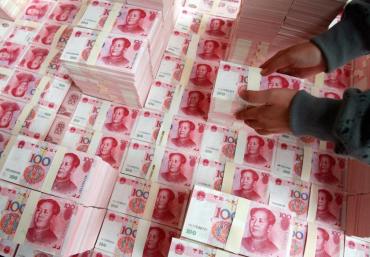
GETTY IMAGES – Chinese people seem to remain optimistic

Looking into the future things will apparently get even better: 76% of people think the economy will improve over the next 12 months, 70% said their personal financial situation will improve and eight out of 10 people believe that their children will have a better standard of living than they do.

Bread and butter issues

It’s not that people are without concerns.

“Corrupt officials” is at the top of the table when it comes to people’s worries (83% said this was a “very big” or “moderately big” problem) and yet here too we see optimism.

Some 64% of them said that President Xi Jinping‘s massive anti-corruption drive would improve the situation over the next five years.

Running down the concern list, an alarmingly high number of people see income inequality and the safety of food and medicine as “very big” problems.

This should give the Chinese Communist Party pause for concern.

If you enjoy monopoly power on the basis that you are delivering “socialism with Chinese characteristics” then a small group of ultra-rich driving around in their sports cars and showing off their wealth while most struggle to pay the rent is surely at odds with your central message.

Then, if ordinary Chinese people can’t even trust the food and medicine they are giving their children, the possibility for social unrest over bread and butter issues is looming large.

The environment also emerges as a massive challenge with water and air pollution at the front of people’s minds.

Air pollution is so bad in China that half of those polled said their country should fight air pollution harder even if it means sacrificing economic growth.

GETTY IMAGES – Emissions from coal-powered industries, cars and heating systems generate the smog

Only 24% saw air deterioration as a necessary price to pay.

When it comes to the war of ideas in the top echelons of power here, those ministers in favour of tougher environmental protection measures could do worse than table this research.

A “major threat” to China?

The South China Sea and other geo-strategic tensions offer some of the most bleak opinions.

Nearly six out of 10 people think that territorial pressures with neighbours could lead to military conflict; 77% say their way of life needs to be protected from “foreign influence” (up by 13 percentage points since 2002) and only 22% say China should help other nations.

Regarding relations with rival superpower the United States people views are complex and, at times, seemingly contradictory.

Around half of Chinese respondents rated the US favourably but more than half think that Washington is trying to prevent China from becoming an equal power.

About 45% said that US power and influence poses a “major threat” to China. In fact the US came in at number one as the top international threat to the country.

GETTY IMAGES – More than half of Chinese people think that Washington is trying to prevent China from becoming an equal power

It’s interesting that some would see the Obama administration’s so-called “pivot to Asia” as a greater threat than say jihadist extremist groups just across the western border promoting bloody conflict in China’s vast Muslim region of Xinjiang.

Either way, whatever the perceived threat, China is seen as becoming ever more important and with ever more power at its disposal.Information is being controlled here ever more tightly – whether it is coming from the traditional media or sources online – so some analysts will see these views as the inevitable result of messages being delivered to the Chinese people by their government.

This may the be case but, in a world where politicians in various countries are accused of exploiting people’s fear and insecurity, could it be that a quarter of the globe’s population are going around with a smile on their dial because every day they look out the window and to them it just gets better and better?

Source: Chinese people optimistic about the future, says Pew survey – BBC News
06/10/2016

Why HSBC Says India is Better Than China or the U.S. for Expats – India Real Time – WSJ

While India may be known for its oppressive pollution, poverty and bureaucracy, it’s a better place to be sent to work than China or even the United States according to a recent survey.

An HSBC report that tried to break down what it’s like to be an expatriate in different countries this week surprisingly ranked India ahead of the world’s two biggest economies.

In its HSBC Expat Explorer 2016 report based on an online survey of 27,000 expats this year, the bank ranked India 26th out of 45 countries. While that is on the bottom half of the rankings, the U.S. did worse at 30th as did China at 34th.

How is that possible?

One factor was the Indian economy. Even though it is decades behind China and the U.S. it is still the fastest growing major economy in the world right now. That means globe-trotting executives and entrepreneurs don’t feel like they have been relegated to the backwaters when they work in India.

“More than half (51%) of expats in India believe the country is a good place for them to progress their career, compared with 42% across Asia-Pacific,” said the report, which ranked India 10th for “entrepreneurship,” better than China which got the 16th rank. India was also rated by expats as “a good place to start a business,” about 7% more than China in the region.

“Expats in India are also able to save more, with 44% saying that living there has accelerated their progress towards making longterm savings and investments, compared with 39% across the region,” said the report.

More important for the rankings this year though was family and friends.

The expats who responded to the HSBC survey gave India much higher marks in terms of ease of integrating with the locals as well as cost of raising children.

Of course the report also showed how India continues to underperform in many areas including quality of life and safety.India’s overall ranking slipped this year. Last year it was 17th out of 39 countries just below the U.S. but still better than China.

“The slight drop in India’s ranking is due to a range of factors, for example, expat parents in India have reported that the country is more expensive to bring up a child than last year,” said the bank when asked about India’s lower ranking this year.

Why did India, China and the U.S. perform worse than last year? That’s because they faced new competition from 6 other countries which were not a part of last year’s survey, including Norway and Austria which were ranked 6th and 7th in 2016.

On the top of the rankings this year was Singapore, New Zealand and Canada.

Source: Why HSBC Says India is Better Than China or the U.S. for Expats – India Real Time – WSJ

06/10/2016

Does Britain owe a debt to India for its 200 years of colonisation? – Oxford Union Society

Dr Shashi Tharoor, MP speaks eloquently on why, in his view, Britain owes a huge debt to India for its 200 years of colonisation.  If this notion interests you – regardless of whether you agree with it or not – I urge you to watch this short video from You Tube – Dr Shashi Tharoor. You will not be disappointed.

05/10/2016

Why are millions of Indians marching in silence? – BBC News

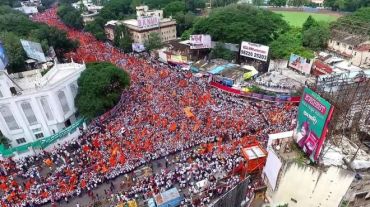
It is a unique protest: the silent marchers have no leaders; and they include the peasant and the professional. Women lead many of the marches; and politicians are not allowed to seize them. It is a sound of silence, says a commentator, that India can ill afford to ignore.

The protesters belong to the Maratha caste, one of India’s proudest – the warrior king Shivaji was one of them. Mostly farmers, they comprise more than a third of one of the population of Maharashtra, a relatively prosperous state, which is home, on one hand to Bollywood, thriving factories and farms and on the other, malnourished children and neglected tribespeople living in abject poverty.

Huge protests

The rape of a teenage Maratha girl allegedly by three low caste Dalit men triggered the silent marches in July. Then the protests expanded to include a demand for quotas in college seats and government jobs and a review of a 27-year-old federal law that protects Dalits and tribespeople from caste-related atrocities.

What is India’s caste system?

Why India’s farm communities are angryAfter more than 20 such rallies, the silent marchers – who call themselves the Maratha Revolutionary Silent Rallies – are expected to gather in the western Indian state capital, Mumbai, at the end of October. More than 10 million people are expected to participate in what could turn out to be one of largest protests in India in recent memory.

The upper-caste, largely land-owning Marathas have a handful of grumbles.

For one, they have turned their ire on the Dalits and tribespeople, alleging that the law to protect them has become a pretext to target the upper caste community, and lodge false cases against them. (The victims also get state compensation for as many as 47 offences against them.)

Image copyright VAISHALI GALIM

But this may not be an entirely truthful claim. Although dalits and tribespeople – India’s wretched of the earth – comprise 19% of Maharashtra’s population, but only 1% of the police complaints were filed by them last year, according to one report. Also the federal law was applicable in less than 40% of the complaints.

Social unrest

Clearly this disingenuous grievance masks a longer-standing demand: caste quotas in government jobs and seats in educational institutions. India’s Supreme Court has put a 50% cap on caste quotas, a limit that has already been reached in Maharashtra. Any concessions to the Marathas will mean that they will have to be officially labelled backward or less-privileged and the quotas will have to come at the expense of those for the less privileged castes. This could potentially trigger off bloody caste wars in the state.

The silent marchers of Maharashtra point to a host of structural infirmities afflicting India, which, if not resolved in time, could stoke widespread social unrest.

Growing inequity and decades of flagrant cronyism has meant that power and wealth continue to belong to a few.

The majority of colleges, cooperative banks and sugar factories in Maharashtra, for example, are owned by a clutch of politicians. According to one estimate, 3,000 families own more than 70% of all the farms in the state. The majority of the state’s 18 chief ministers have been Marathas. Half of its lawmakers belong to the community as well.

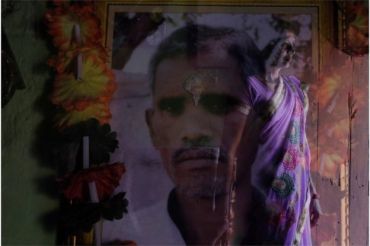
Image copyright MANSI THAPLIYAL Maratha farmers have taken their lives after they failed to repay debts

But caste and class don’t often coalesce in India, and the Marathas, like other upper caste communities have mixed fortunes: they are the educated elite and the rich farmers, but they are also the struggling small and landless farmers and farm workers. More than a third of Marathas are landless, according to one estimate.

It is the “lower and middle-rung Marathas who feel isolated, neglected, marginalised in the job market and denied opportunities in higher education,” in a fast-changing country, as commentator Kumar Ketkar points out in this perceptive essay on the ongoing protests.

The silent marches also shine a spotlight on its looming farm crisis as farmer incomes plummet due to expensive feedstuff, fertiliser, labour and erratic crop prices.

Frustration

Plot sizes have also shrunk, making farming unrewarding. Most of India’s farms are rain fed, and irregular weather changes are playing havoc with crops as rivers are drying up, and drought is common. Farmers are often left to fend for themselves and have no skills for jobs in India’s services-based economy. Aspiration is turning into frustration.

The Maratha protests also point to how India is veering towards what sociologist Andre Beteille called a “populist democracy” where social and political life are influenced by group identities and loyalties. “Problems arise when the loyalties of kinship and community are allowed to distort and override the demands of constitutional government,” wrote Professor Beteille.

Image copyright MANSI THAPLIYAL Farming is becoming an unrewarding profession

Many believe India’s quotas for seats and jobs are in a sordid mess of its own making.

It is indisputable that affirmative action is essential for communities like dalits and tribespeople who have been historically wronged. But extending it to other castes recklessly can distort matters.

How much burden of quotas can a state bear without being weakened irreparably? India needs jobs – and fast – and skills training if it has to avoid the social unrest that could blight a developing nation. Otherwise, the marchers of Maharashtra may not remain silent for long.

Source: Why are millions of Indians marching in silence? – BBC News

05/10/2016

Transforming lives in India’s manufacturing hubs – BBC News

By day she works as an assistant engineer, leading a team of 10 in a car factory manufacturing parts for Renault-Nissan Alliance vehicles.

The Make in India scheme aims to make the country a global manufacturing hub

Like hundreds of thousands of people across India, Sujitha‘s journey from an under-developed village in India’s south to the outskirts of the city of Chennai (Madras), has transformed her life.

“My native place is a small village called Kizhattur. There is not even proper transport over there,” says Sujitha. “Because I grew up in that situation, I knew that I had to study hard and find a job.”

And she did just that – albeit against the wishes of her family who wanted her to marry and settle down.Sujitha secured a diploma and when Renault-Nissan advertised a position for a junior engineer five years ago, she jumped at the opportunity.”I can’t even imagine what I would be doing if I did not work in this factory. Perhaps I would be in the village doing small jobs on the farm,” she says. “I would just about make ends meet.”

Detroit of Asia

Nissan and Renault are two of several international carmakers that have set up shop outside Chennai in the last 10 years.

Nearly a fifth of all cars made in India are produced in the area around Chennai in Tamil Nadu state

Today the area, known as the “Detroit of Asia”, is a thriving manufacturing hub where cars are produced for export as well as for the domestic market.India makes about 24 million vehicles a year, nearly a fifth of them in this region of Tamil Nadu state.

“We have seen a number of other car manufacturers establish plants in the state and that has helped us attract and help local suppliers relocate and set up in Tamil Nadu itself,” says Colin Macdonald, managing director of Renault-Nissan.

“Since 2010, we had about 15% of our suppliers in the Tamil Nadu area. We are now operating with 60% of our Indian suppliers in Tamil Nadu. So from an employment perspective, this is huge.

“High unemployment

Creating jobs is central to Prime Minister Narendra Modi‘s Make in India campaign, an effort to promote inclusive growth in the country.Modi has promised foreign players he will make it easier to do business in India.

But more than two years after taking power, and after introducing a raft of policies, unemployment rates are at a five-year high.According to a recent government survey, about 77% of Indian households have no regular wage or salaried person, and so for many, life is not improving fast enough.

Domestic market growth

Despite that, success in places like Chennai is a sign that India remains appealing to foreign companies.Now that the area has become an auto hub, cost-effective raw materials can be sourced. With the port less than 100km away, it is easy to import parts and export products back out. Labour is cheap too.

Several car companies have set up shop on the outskirts of Chennai. Workers here are seen at Ford’s plant in Chengalpattu

The growth of the domestic market only adds to India’s appeal.”Today, only 20 in 1,000 people in India own a vehicle but we expect that to grow dramatically in the next five years and we expect the market to be five million cars by 2020, making India the third biggest market on the planet,” says Colin Macdonald.

A matter of pride

For Sujitha Rajendrababu, owning a car one day has become more of a reality than a dream.

“What I had dreamed of becoming in the future was made true by this job. I do not know how to express this.”

The daughter of a farmer, she has already used the money she has earned to buy a fridge, a TV, some jewellery and even a holiday around India. But her ambitions don’t stop there.

“My long-term goal is to become the manager of the stamping shop. I don’t only want to be the manager of the stamping shop, but of this organisation as well.”

And she wants the same for other people just like her.

“A lot of people in my village ask me if I can help them find jobs for their children. That makes me feel proud.”

Source: Transforming lives in India’s manufacturing hubs – BBC News

03/10/2016

Amitabh Bachchan: ‘If she gets paid more than me, that’s fine’ – BBC News

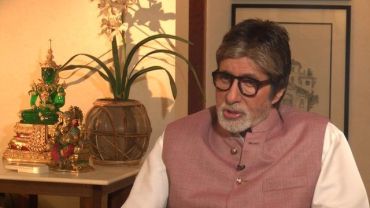
One of India’s biggest stars, Amitabh Bachchan, says he’s glad people are talking about the gender pay gap.

He recently starred in a film called Pink about feminism and attitudes towards women in India which has caused quite a stir in the country.

He spoke to the BBC’s Yogita Limaye.

Source: Amitabh Bachchan: ‘If she gets paid more than me, that’s fine’ – BBC News

03/10/2016

How Google’s Bicycle-Riding Internet Tutors Are Getting Rural Indian Women Online – India Real Time – WSJ

The internet fails to reach millions of women in the small towns and villages of India, so Google is trying to deliver it to them — by bicycle.

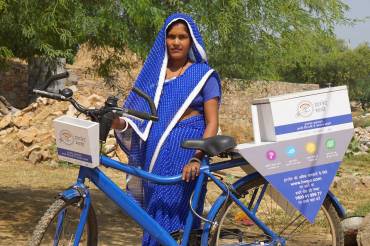
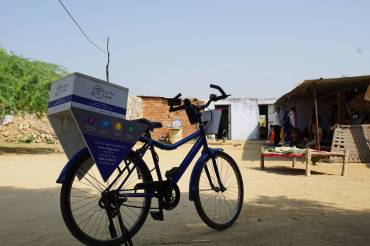
The Alphabet Inc. unit has built an army of thousands of female trainers and sent them to the far corners of the Subcontinent on two-wheelers, hoping to give rural woman their first taste of the web. Each bike has a box full of connected smartphones and tablets for women to try and train on.

The idea is to give people who have never even sent an email a better understanding of how being connected could improve their lives. Families that can afford to be online often chose not to be because they do not see the value. Meanwhile women are sometimes blocked by their families from new technology.

ENLARGEA web trainer who is taking part in Internet Saathi, the joint program of Alphabet, Inc.‘s Google and local philanthropy Tata Trusts, in the village of Habibwala, in Rajastan, India, Sept. 28, 2016. PHOTO: GOOGLE

Bhagwati Kumari Mahawar got her very first taste of the internet just a month ago.

The 19-year-old used a smartphone Google brought to her remote village in the desert state of Rajasthan to search for designs of mehndi, the elaborate henna designs Indian women get on their hands and feet. Then she looked up information on how to sew a blouse.

ENLARGEBhagwati Kumari Mahawar in the village of Habibwala, in Rajastan, India, Sept. 28, 2016. PHOTO: GOOGLE

“I really wanted to learn,” she said, sitting in the shade near the Google bicycle and a water buffalo.In the project, called Internet Saathi, Google partnered with local philanthropy Tata Trusts to show women in rural India how to connect to the web.

Instructors are trained in how the web works, and then are given bicycles with large boxes on the back containing internet-enabled devices running Google’s Android mobile operating system. The newly equipped “saathis” — or “partners” in Hindi — then cycle from village to village providing instruction to their peers.

“I wasn’t sure if I could do it or not,” said the instructor who helped Ms. Mahwar get online, 30-year-old Kamla Devi Mahawar, who is unrelated to her pupil.

She never used the web until she began her Saathi training ten months earlier, but since then has enjoyed showing women how to search for information like recipes and stitching guides, and showing them how to use voice queries if they are unable to type in text.

ENLARGEWomen look at cell phones as part of Internet Saathi, the joint program of Alphabet, Inc.’s Google and local philanthropy Tata Trusts, in the village of Habibwala, in Rajastan, India, Sept. 28, 2016. PHOTO: NEWLEY PURNELL/THE WALL STREET JOURNAL

In a demonstration, she sat on the ground while half a dozen women circled around her, watching as she searched for images of nearby temples and forts. Some women want to learn how to use Facebook Inc.’s WhatsApp messaging service, while others simply want to make phone calls, she said.

Since the program’s launch last year, about 9,000 guides have helped reached 1 million women, Google said, noting that the program fits its mission of helping expand internet access globally.

India is an increasingly important commercial market for the Mountain View, Calif. search titan given its nascent internet economy.

While the country is home to more than 1.2 billion people, consultancy McKinsey & Co. reckons some one billion people still lack regular web access. More online consumers in the years ahead could mean more users of Google’s services, like its search engine, email and Android.

A bike used by an instructor who teaches women how to use the web, part of Internet Saathi, the joint program of Alphabet, Inc.’s Google and local philanthropy Tata Trusts, in the village of Habibwala, in Rajastan, India, Sept. 28, 2016. PHOTO: GOOGLE

Last week, at an event in New Delhi, Google executives said they are expanding their efforts to reach Indians with products and features like a new version of its YouTube app designed to work even on India’s often sluggish mobile networks.

Asked how her work with others could be made easier, Ms. Mahwar, the trainer, was quick to point out that better web connectivity is key.

“The internet doesn’t work half the time,” she said. Fixing that “would help a lot.”

Source: How Google’s Bicycle-Riding Internet Tutors Are Getting Rural Indian Women Online – India Real Time – WSJ

03/10/2016

India tax amnesty draws $9.8bn in asset declarations — FT.com

Modi government claims progress in fulfilling election vow to crack down on ‘black money’

A four-month amnesty for tax evaders in India has resulted in the declaration of hidden assets worth nearly $10bn, the government has said, as it seeks to fulfil an election pledge to crack down on illicit “black money”.

The Income Declaration Scheme, which ran from June through September, allowed citizens to report assets previously undeclared to the tax authorities, without risk of prosecution. A charge of 45 per cent was to be levied on the assets declared under the scheme — one of the most conspicuous initiatives in Prime Minister Narendra Modi’s drive to tackle widespread corruption that is seen as a significant drag on the economy.

Arun Jaitley, finance minister, told reporters at the weekend that assets worth Rs652.5bn ($9.8bn) had been declared under the scheme, implying a boost to government revenue of Rs294bn. The amnesty attracted 64,275 declarations, with the average amount declared standing at Rs10.2m. Mr Jaitley cited this to rebut prior fears that the initiative might not elicit a response from wealthy Indians.

New Delhi had not publicly stated a revenue target, but some media reports had said officials were aiming to uncover about Rs1tn in previously undeclared assets.

The initiative followed a similar one launched in 1997 that yielded revenue of Rs97.6bn, but Mr Jaitley said that the latest drive was firmer in its treatment of evaders, arguing that the previous effort had allowed them to make payments based on unduly low valuations of their assets.$9.8bnA

mount of assets declared under India’s four-month tax amnesty

Only about 4 per cent of Indian adults pay income tax, according to the government’s latest economic survey. While the annual income of most Indians is below the Rs250,000 threshold beyond which income tax is due, the slender income tax base also reflects the extent of economic activity that occurs through informal transactions beyond the oversight of tax officials. Such activity amounts to about 20 per cent of gross domestic product, according to a recent report by analysts at Ambit Institutional Equities. That report argued that heightened official scrutiny of domestic transactions had encouraged tax evaders to keep money in cash, hitting demand for formal banking services as well as for property and gold — asset classes commonly used to launder money. Liases Foras, a property research company, estimated in 2014 that 30 to 40 per cent of Indian real estate transactions involved an illicit cash payment.

Firm progress in reducing tax evasion would boost the credibility of Mr Modi’s government, which made this a key part of its 2014 election manifesto. $343bnEstimated amount of assets Indians sent abroad illicitly between 2002 and 2011Central to the drive has been the pursuit of funds concealed in offshore accounts, of which Mr Modi pledged before his election “to bring back every rupee … and use it for the welfare of the poor”.

The US-based group Global Financial Integrity has estimated that Indians sent $343bn of assets abroad illicitly between 2002 and 2011.Last year India’s parliament passed a law imposing criminal penalties for the illicit concealment of overseas assets. This year the government scrapped a treaty with Mauritius under which investments from the island state were exempted from capital gains tax: an arrangement that had been criticised for allowing wealthy Indians to “round-trip” illicit funds back into the country.

Source: India tax amnesty draws $9.8bn in asset declarations — FT.com

03/10/2016

India joins Paris Climate Change Agreement, submits instrument of ratification at UN headquarters – Times of India

With the US, China and now India signing the accord, other nations should not hesitate to join them. On any case, thes three account for the vast majority of the pollution, so even if no one else signs up, its good news for Mother Gaia.

India formally joined the Paris Climate Change Agreement by submitting its instrument of ratification+ at UN headquarters in New York on Sunday – the birth anniversary of Mahatma Gandhi.

The instrument of ratification was deposited by India’s permanent representative to the UN, Syed Akbaruddin.

By putting Gandhi seal on the climate deal, the country will now urge the global community to adopt ‘Gandhian way of life’ (shun extravagant lifestyles) to reduce their carbon footprints and protect the earth from adverse impact of climate change.

India will articulate its point vigorously during the next climate conference (COP22) at Marrakech in Morocco, beginning November 7.

“India had led from front to ensure the inclusion of climate justice and sustainable lifestyles in the Paris Agreement+ . We will put across this view based on Gandhian lifestyle in Morocco”, said environment minister Anil Madhav Dave.

Spelling out next course of action after India formally joined the Agreement, Dave said, “It is important that apart from emission cuts, we also focus on measures that involve broader participation. People in developed countries live extravagant lifestyles with high carbon footprint.

“Simple everyday changes in lifestyles, when practiced by a large number of people around the globe, collectively will make a huge impact”.

Source: India joins Paris Climate Change Agreement, submits instrument of ratification at UN headquarters – Times of India

03/10/2016

China’s Yuan Just Joined An Elite Club Of IMF Reserve Currencies

China’s yuan joins the International Monetary Fund’s basket of reserve currencies on Saturday in a milestone for the government’s campaign for recognition as a global economic power.

The yuan joins the U.S. dollar, the euro, the yen and British pound in the IMF’s special drawing rights (SDR) basket, which determines currencies that countries can receive as part of IMF loans. It marks the first time a new currency has been added since the euro was launched in 1999.The IMF is adding the yuan, also known as the renminbi, or “people’s money”, on the same day that the Communist Party celebrates the founding of the People’s Republic of China in 1949.

“The inclusion into the SDR is a milestone in the internationalization of the renminbi, and is an affirmation of the success of China’s economic development and results of the reform and opening up of the financial sector,” the People’s Bank of China said in a statement.

China will use this opportunity to further deepen economic reforms and open up the sector to promote global growth, the central bank added.

The IMF announced last year that it would add the yuan to the basket, so actual inclusion is not expected to impact financial markets. But it puts Beijing’s often opaque economic and foreign exchange policy in the international spotlight as some central banks add yuan assets to their official reserves.

Critics argue that the move is largely symbolic and the yuan does not fully meet IMF reserve currency criteria of being freely usable, or widely used to settle trade or widely traded in financial markets. U.S. Republican presidential nominee Donald Trump has said he will formally label China a currency manipulator if he wins November’s election.

China stunned investors by devaluing the currency last year and the yuan has since weakened to near six-year lows, adding to worries about already feeble global growth.

Some China watchers also fear that Beijing’s commitment to further market opening and financial sector reforms will fade after its diplomatic success, despite repeated reassurances from Beijing it will continue with the process.

U.S. Treasury Secretary Jack Lew said on Thursday the yuan was “quite a ways” from true global reserve currency status. The new IMF status recognizes the “enormous” change in China in the last 10 years that had made the yuan more open, but Beijing still had work to do to make its currency and its economy more market-driven, he said. “Being part of the SDR basket at the IMF is quite a ways away from being a global reserve currency,” he said.

Capital Economics said inclusion of the currency in the IMF’s SDR basket will have minimal impact on foreign demand for yuan assets, so “offers little support” for the currency.“

If anything, the risk is that official intervention to keep the renminbi stable ahead of its inclusion will subsequently be paired back, allowing for renewed deprecation,” it said in a research note.

The IMF on Friday fixed the relative amounts of the five currencies in the basket for five years, based on their average exchange rates over the past three months.

Source: China’s Yuan Just Joined An Elite Club Of IMF Reserve Currencies

Law of Unintended Consequences

continuously updated blog about China & India

ChiaHou's Book Reviews

continuously updated blog about China & India

What's wrong with the world; and its economy

continuously updated blog about China & India