21/12/2015

Successor to Saab announces $12 billion China electric car deal | Reuters

If this initiative gathers momentum, China will do more for electric cars (and for climate change) than the rest of the world put together!

“The China-focussed consortium that bought bankrupt Swedish automaker Saab – and bet on going all electric – unveiled its first major deal on Thursday, a mammoth $12 billion (8 billion pounds) order for electric cars for a Chinese leasing company.

NEVS electric car

The single order for 250,000 electric vehicles, including 150,000 cars based on the Saab 9-3 sedan, appeared to be all but unprecedented. There were just 665,000 electric cars in the world and 83,000 in China as of the end of 2014, according to the International Energy Agency.

National Electric Vehicle Sweden (Nevs) said it would swiftly hire hundreds of workers in Sweden to start building cars for Panda New Energy, a Chinese firm it said leases zero-emission vehicles to chauffeur-driven fleets.

Those based on the Saab 9-3 compact sedan will have a new chassis for electric drive, with bodies built and painted in Sweden and sent to China for final assembly. No details were given about the other 100,000 but a company spokesman said they would primarily be built in China.

Nevs bought the assets of the bankrupt 70-year-old Swedish automaker in 2012 with the aim of transforming it into a leading global producer of electric cars. It exited corporate reorganisation procedures in April.

“This is a strategic collaboration for Nevs not only in terms of the numbers of vehicles, but it is also an important step to implement our vision and new business plan,” Nevs Vice Chairman Stefan Tilk said in a statement.

“Cooperating with many chauffeured car service platforms in China, Panda aims to become one of the biggest electric vehicle leasing companies in the world,” Nevs said of its customer.

Nevs, which was created in 2012, has so far sold only a limited number of gasoline-powered cars based on Saab’s latest model. The deal is the first it has signed in line with its plans to go electric.

“It will be a huge challenge to produce that many cars. Their around 800 suppliers will make up a substantial part of that challenge,” said Skovde University business administration professor Mikael Wickelgren.

Nevs is co-owned by a holding company called National Modern Energy Holdings, as well as the Beijing State Research Information Technology Co. (SRIT) and Chinese industrial park Tianjin Binhai Hi-tech industrial Development Area (THT).

Nevs said at the time of the purchase of Saab’s assets that it would convert the Saab 9-3 to electric power, while simultaneously developing an all-new model to produce in Sweden for the European market and in China for the Chinese market.

($1 = 6.4822 Chinese yuan renminbi)”

Source: Successor to Saab announces $12 billion China electric car deal | Reuters
21/12/2015

Panda power | The Economist

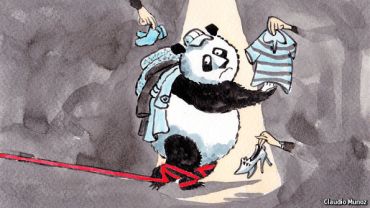
THE feeding frenzy for the pandas comes at nightfall. People furtively approach them, pouring bags of old clothes down their gullets.

By day, the trucks arrive to clean the bears out, leaving them empty for the next big meal. The pandas are plastic. They are large, bear-shaped receptacles, designed to entice people to donate their unwanted garments to those in need.

First deployed in 2012, there are now hundreds around Shanghai, often placed by entrances to apartment buildings. They swallowed about a million items of clothing last year. The procession of donors feeding trousers to pandas is impressive. But they usually do so under cover of darkness. Charitable giving is not yet a middle-class habit. Many people still feel awkward about it, despite their growing prosperity. China’s GDP per person is about one-seventh of America’s.

But in 2014 Chinese gave 104 billion yuan ($16 billion) to charity, about one-hundredth of what Americans donated per person (see chart). This is partly a legacy of attitudes formed during Mao’s rule, when the party liked to present itself as the source of all succour for the poor (to suggest otherwise was deemed counter-revolutionary). Even until more recent years the party was reluctant to encourage charities, worried that they might show up its failings.

The middle classes have worries too—that giving large amounts to charity may draw unwanted attention to their wealth. They do not want to fuel the envy of the have-nots or encourage tax collectors to pay them closer attention.

The top 100 philanthropists in China gave $3.2 billion last year, according to Hurun Report, a wealth-research firm based in Shanghai. That was less than the amount given by the top three in America.

In 2008 when a powerful earthquake hit the south-western province of Sichuan—the deadliest in China in more than 30 years—it seemed that one positive outcome would be a boom in charitable giving. Volunteers poured into the devastated region and donations filled the coffers of aid organisations. Problems soon arose, however. Embarrassed that private relief efforts were proving more effective than official ones, the government reined in citizen-led organisations.

Source: Panda power | The Economist

21/12/2015

Shifting barriers | The Economist

THE pillars of social control are flaking at the edges.

First came the relaxation in October of draconian family-planning restrictions. Now it is the turn of the household-registration, or hukou, system, which determines whether a person may enjoy subsidised public services in urban areas—rural hukou holders are excluded. On December 12th the government announced what state media trumpeted as the biggest shake-up in decades of the hukou policy, which has aggravated a huge social divide in China’s cities and curbed the free flow of labour.

The pernicious impact of the system, however, will long persist. As with the adjustment to the decades-old family-planning policy (now all couples will be allowed to have two children), the latest changes to the hukou system follow years of half-hearted tinkering. They will allow migrant workers to apply for special residency permits which provide some of the benefits of an urban hukou (a booklet proving household registration is pictured above).

If an urban hukou is like an internal passport, the residency permit is like a green card. Under the arrangements, migrants will be able to apply for a permit if they have lived in a city for six months, and can show either an employment contract or a tenancy agreement. The document will allow access to state health care where the migrants live, and permit their children to go to local state schools up to the age of 15. It will also make other bureaucratic things easier, like buying a car. Such reforms have already been tried in some cities. They will now be rolled out nationwide.

For those who meet the requirements, the changes will bring two main benefits. They should allow some of the 70m children who have been left behind to attend school in their native villages to join their migrant parents. And it will allow migrants to use urban services without losing the main benefit of their rural hukou: the right to farm a plot of land. According to a survey in 2010 by the Chinese Academy of Social Sciences, 90% of migrants did not want to change their registration status because they feared losing this right.

Source: Shifting barriers | The Economist

14/12/2015

Japan, India agree on rail, nuclear deal | The Japan Times

Tokyo and New Delhi agreed to major deals Saturday, including the introduction of Japan’s bullet train technology to India and an agreement on nuclear cooperation.

The bilateral accord was reached during talks in New Delhi between Prime Minister Shinzo Abe and his Indian counterpart, Narendra Modi. “This enterprise will launch a revolution in Indian railways and speed up India’s journey into the future. It will become an engine of economic transformation in India,” Modi said after the talks, referring to the introduction of Japanese shinkansen technology in building a high-speed railway in India. “This project befits the start of a new era for (ties between) Japan and India,” Abe said.

The two countries also agreed on a civil nuclear cooperation pact. Sensitive negotiations had continued for five years on exporting Japan’s nuclear power plant technology to India, with one of the sticking points being whether Japan could ensure that its nuclear technology would not be diverted for military use. India, despite being a de facto nuclear weapons state, has not joined the Nuclear Non-Proliferation Treaty. “Japan is promoting (nuclear) nonproliferation, given the history of Nagasaki and Hiroshima, while India is outside the NPT framework but wants to cooperate on nuclear power generation,” one Japanese official said while noting Japan is the only country to have suffered atomic bombings.

Deputy Chief Cabinet Secretary Koichi Hagiuda, who accompanied Abe on the visit, told reporters after the talks that Japan’s cooperation under the bilateral civil nuclear pact will stop if India conducts a nuclear test. The two projects were the main points of focus of Abe’s three-day visit to India, which began Friday. Japan is keen to tap into India, with its 1.2 billion population, and forge closer ties in light of China’s growing political and economic clout in the region. Under a policy to elevate bilateral ties to what they now call a “Special Strategic and Global Partnership,”

Abe and Modi plan to boost security cooperation between the two nations and exchange views on regional issues such as the situation in the South China Sea, Japanese officials said. While Japan and India are not directly involved in the tensions in the South China sea, a key shipping route for oil and other imports, they are both concerned over the freedom of navigation in international waters. China claims almost the entire South China Sea and has competing territorial claims with Vietnam, the Philippines, Brunei, Malaysia and Taiwan. Beijing’s fast-paced and massive land reclamation work has made the smaller Asian claimants uneasy. Seeing India’s potential value to Japan, both on the economic and political fronts, Abe has touted the importance of strengthening bilateral ties to help maintain peace and stability in Asia. Abe’s latest trip to India is his third visit as prime minister. The shinkansen technology will be applied to a planned 500-km-long high-speed railway that will link Mumbai and Ahmedabad in western India and take roughly two hours.

Japan, which is seeking to spur its economy through infrastructure exports to Asia, is looking to play catch-up after losing out to China in its bid to secure a key high-speed railway contract in Indonesia in October. Construction of the Indian railway project, which is estimated to cost 980 billion rupees ($14.6 billion), will begin in 2017, with the aim of starting operations in 2023. Japan has sounded out India about a plan for Tokyo to provide yen loans on the premise that the railway contract will be given to a consortium of Japanese firms, a Japanese government source said.

The two leaders also signed others pacts, including one that allows the transfer of defense equipment to India and another on data protection, which allows the exchange of defense-related information. The moves reflect Tokyo’s desire to forge closer ties with New Delhi due to China’s muscle-flexing.

When Modi visited Japan last year, Abe vowed to extend ¥3.5 trillion in public and private investment and financing to India over five years for development. Japan also pledged a ¥50 billion loan to India for a public-private partnership infrastructure project.

Source: Japan, India agree on rail, nuclear deal | The Japan Times

14/12/2015

‘Spice-Girl Diplomacy:’ North Korean Girl Band’s Beijing Shows Abruptly Cancelled – China Real Time Report – WSJ

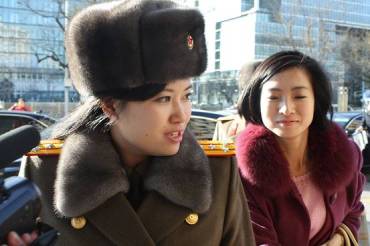
The Moranbong band’s shows at China’s National Center for the Performing Arts have been cancelled “due to some reasons,” an employee at the venue told China Real Time Saturday night.

A person who had a ticket to one of the band’s invitation-only shows confirmed that he received a cancellation notice late Saturday afternoon. Short hair, glittery miniskirts, electronic pop music and perhaps even the theme song from the 1976 Hollywood hit “Rocky” were expected to grace the stage of Beijing’s top music hall Saturday night as the Moranbong band was set to kick off three days of shows in the Chinese capital.

The group — which was accompanied by an army orchestra, the State Merited Chorus – arrived in Beijing on Thursday and was expected to stay until next Tuesday on what the North Korean official news agency KCNA described as a “friendship visit” to China.

Zuma Press China’s state-run media lit up with news reports on the group’s visit in recent days, with the official Xinhua News Agency publishing a slideshow showing the women arriving in Beijing dressed in military-style frocks and fur hats. It was unclear Saturday evening whether the band was still in Beijing.

Japan’s Kyodo News Service reported that band members were seen at Beijing’s Capital International Airport and had flown back to Pyongyang late Saturday afternoon. But no updates were forthcoming from Xinhua and other Chinese state-run media. The visit was to have been the group’s first overseas tour — although no one, it seemed, knew how to obtain a ticket.

Neither the concert venue nor China’s foreign ministry was able to provide instructions on buying a ticket when asked by China Real Time this week. A ticket agent at the National Centre for the Performing Arts said before Saturday’s cancellations that the performances were being treated as a national-level foreign affairs activity and that the concert hall was responsible only for providing the venue. “We don’t have a single ticket on hand; we even don’t know yet which room will be offered for the performance,” the ticket agent said.

Chinese foreign ministry spokeswoman Hua Chunying said Friday that she had no details on the show or its audience — and had not been invited herself. ”This performance is not organized by the foreign ministry so I have no more information to offer,” she said at a regular briefing. “As for where to buy the tickets, I have no information. I myself have no ticket to the performance.”

Some speculated that the tour was being organized by another official organ, the International Department of the Chinese Communist Party’s Central Committee. Neither that department nor the North Korean Embassy responded to requests for comment. China has long been North Korea’s economic and diplomatic lifeline. Yet the traditional alliance between the two has come under strain in recent years, particularly after Pyongyang conducted its third nuclear test in 2013 and North Korean forces seized a Chinese fishing boat later that year.

Even so, both countries have played up their ties again since this fall when senior Chinese official Liu Yunshan stood alongside Mr. Kim at a military parade in Pyongyang to mark the 70th anniversary of North Korea’s ruling Workers’ Party. Mr. Liu, who is a member of the Standing Committee of the Chinese Communist Party, also passed along to Mr. Kim a letter from Xi Jinping in which the Chinese president called for closer relations.

Whether Moranbong’s short-lived visit to Beijing was intended to show a further warming of ties between China and North Korea — also known as the Democratic People’s Republic of Korea, or DPRK — remains open to debate. Asked Friday about the group, Ms. Hua called the tour “a major event showing the friendship between the DPRK and China.” “We believe it contributes to our mutual understanding and the sound and sustainable development of bilateral ties,” she added.

Zhang Yushan, a researcher at the Jilin Social Science Academy who studies North and South Korea, cautioned against reading too much into the visit. “This spice-girl diplomacy doesn’t really mean China and North Korea’s relations really will become warmer,” he said. This week, a top United Nations official called for the Security Council to refer North Korea to the International Criminal Court over “gross human rights violations.” China called a vote to stop the meeting, although it failed to halt it. “North Korea was seeking help from China”, Mr. Zhang of the move. “We are both very practical.”

Members of the Moranbong Band are believed to have been selected by Kim Jong Un himself. The group has become the most well-known girl band in North Korea since its debut in 2012. In addition to anthems urging listeners to “support our supreme commander with arms,” Moranbong’s repertoire also includes a surprising number of foreign pieces, including the “Rocky” theme song

Source: ‘Spice-Girl Diplomacy:’ North Korean Girl Band’s Beijing Shows Abruptly Cancelled – China Real Time Report – WSJ

10/12/2015

China to introduce tough emissions controls for ships | Reuters

China will introduce tough controls on ship emissions at three key port areas from January to reduce sulfur dioxide which results in acid rain, causing respiratory difficulties and sometimes premature death, said the Ministry of Transport.

Shipping containers are seen on a ship docked at a port in Rizhao, Shandong province, China, December 6, 2015. REUTERS/Stringer

If strictly implemented the move would force oil suppliers to increase the supply of cleaner marine fuel, industry experts said. The ministry gave no details on how the new emissions rules would be enforced or penalties for non-compliance.

The new rules will apply to merchant ships navigating or anchoring in the waters of Pearl River Delta, Yangtze River Delta and the Bohai Bay rim, with a goal to cut sulfur dioxide by 65 percent by 2020 from the 2015 level, according to a document issued by the Ministry of Transport.

Similar emissions control areas exist in the North Sea and the north American coast.

Ships berthed at ports within the three Chinese emissions control zones will start using bunker fuel with a maximum sulfur dioxide (SO2) content of 0.5 percent from January 2016, the ministry said.

Hong Kong made it mandatory in July for merchant ships to switch to fuel with a SO2 content of 0.5 percent from high sulfur fuel. Neighboring Shenzhen port launched a voluntary fuel switching scheme in July this year that is expected to cost 200 million yuan ($31.07 million) in subsidies over three years.

Enforcement of the new emission measures will initially be up to individual ports, but the controls will be toughened in 2017 to cover all key ports in the three control areas.

They will be tightened further from the start of 2019, when ships entering control zones, not just berthed or anchored, will have to use 0.5 percent SO2 bunker fuel or below. Fishing, sports and military vessels will be exempt, said the ministry.

Oil consultancy ICIS estimated that majority of fuel use in China’s shipping sector is currently using fuel with 1-2 percent SO2 content.

The International Maritime Organization (IMO), a U.N. body which regulates merchant shipping, plans to introduce a global cap on ship emissions in either 2020 or 2025.

The IMO will carry out a review in 2018 that will include an assessment of the availability of low-sulfur fuel that will be used to decide the actual implementation date.

Source: China to introduce tough emissions controls for ships | Reuters

10/12/2015

Aging population could shrink workforce by 10% in China|Society|chinadaily.com.cn

The graying of the population could shrink the number of working-age adults by more than 10 percent in China by 2040, a report from the World Bank said on Wednesday. It means a net loss of 90 million workers in the country until that time, according to the report named “Live Long and Prosper: Aging in East Asia and Pacific”.

“Developing middle-income countries in East Asia, such as China, are already aging quickly and face some of the most pressing challenges in managing aging,” it said. East Asia, as the Word Bank’s research showed, is aging faster than any other region in history. Nearly 36 percent of the world’s population aged 65 and over, or 211 million people, live in this region, which is the largest share among all regions in the world.

The bank warned that the rapid pace and sheer scale of aging in East Asia raises policy challenges, economic and fiscal pressure, as well as social risks. “Without reforms, for example, pension spending in the region is projected to increase by eight to 10 percent of GDP by 2070.”

Axel van Trotsenburg, regional vice-president of the World Bank‘s East Asia and Pacific Region, said on Wednesday that “East Asia Pacific has undergone the most dramatic demographic transition we have ever seen, and all developing countries in the region risk getting old before getting rich.” He suggested a comprehensive policy approach across the life cycle to enhance labor-force participation and encourage healthy lifestyle through structural reforms in childcare, education, healthcare, pensions, long-term care and more.

The report also recommends a range of pressing reforms in China, including removing incentives in pension systems that have encouraged some workers, especially urban women, to retire too early. Developing countries in the region can take steps to reform their existing pension schemes, including considering gradual increase in retirement age, it said.

Source: Aging population could shrink workforce by 10% in China|Society|chinadaily.com.cn

10/12/2015

Why Delhi Doesn’t Have a Beijing-Style Response to Pollution – China Real Time Report – WSJ

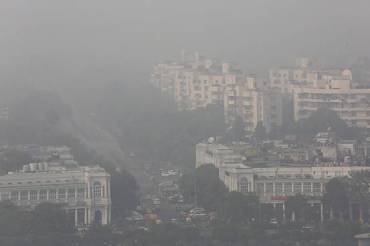
The cities of Delhi and Beijing share a dubious honor as the world’s most-polluted capitals. But their response to dangerous levels of air pollution separates them.

Earlier this week, Beijing for the first time issued a red-alert for pollution, triggered when authorities forecast air-quality levels above 300 for at least three consecutive days.

On China’s government index, a measure of overall air quality, the maximum reading of 500, is described by the government as “severely polluted.” The Chinese administration immediately sent cars off the roads, shut factories and urged schools to close.

In Delhi, where air was similarly dirty, life went on as normal. The starkly different responses prompted some in the Indian capital to question why their government wasn’t taking Beijing-style measures to combat the smog. For sure, plans are underway in India to tackle the capital’s filthy air.

On Friday, Delhi’s government announced it would impose restrictions on the number of cars on its roads from Jan.1. Residents in the Indian city can look up air-pollution data on the website of The System of Air Quality and Weather Forecasting and Research, known as Safar, which uses data collected at 10 locations in the city. On that index, air quality in the city regularly hits “very poor” conditions when levels of PM 2.5 — insidious particles in the air including dirt, soot, smoke and liquid droplets — spike.

These tiny particles are thought to be particularly dangerous because they can lodge deeply in the lungs and cause inflammation, infection and lead to diseases including cancer. Readings on the Safar monitor are calibrated from “good” to “severe.” The Delhi Pollution Control Committee also publishes raw pollution data but doesn’t give qualitative readings alongside.

The U.S. Embassy, which measures pollution on monitors at its compound in the capital and around the country, warns the very young and elderly to remain indoors whenever air quality becomes what it calls hazardous. But none of the readings currently trigger alerts, or responsive action, by Delhi’s government. That’s because India is a democracy, said Ashwani Kumar, chairman of the Delhi Pollution Control Committee, an arm of the state government.

China, of course, is a one-party state. The idea that alerts should tell people to stay indoors when smog hits was  “absurd,” Mr. Kumar added, and people “should decide for themselves what to do with the pollution information.” However, he said the Delhi Pollution Control Committee does plan to introduce an app so that information is available to residents with smartphones. Less than 10% of Indians own a smartphone. It also proposes to install around 70 big screens in strategic locations around the city advising residents what they can do to reduce pollution, Mr. Kumar added. The idea of an environmental alert system is not alien to India.

Source: Why Delhi Doesn’t Have a Beijing-Style Response to Pollution – China Real Time Report – WSJ

10/12/2015

Raise the green lanterns | The Economist

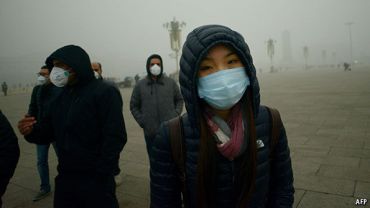
WHEN world leaders gathered in Paris to discuss cutting planet-heating emissions, a pall of smog hung over Beijing. In parts of the capital levels of fine particulate matter reached 30 times the limit deemed safe.

Though air pollution and climate change are different things, Chinese citydwellers think of them in the same, poisoned breath. The murky skies seemed irreconcilable with the bright intentions promised in France.

Yet a marked change has taken place in China’s official thinking. Where once China viewed international climate talks as a conspiracy to constrain its economy, it now sees a global agreement as helpful to its own development.

China accounts for two-thirds of the world’s increase in the carbon dioxide emitted since 2000. It has come a long way in recognising the problem. When China first joined international climate talks, the environment was just a minor branch of foreign policy. The ministry for environmental protection had no policymaking powers until 2008. Only in 2012 did public pressure force cities to publish air-pollution data.

Yet today China pledges to cap carbon emissions by 2030 (reversing its former position that, as a developing power, it should not be bound to an absolute reduction); and it says it will cut its carbon intensity (that is, emissions per unit of GDP) by a fifth, as well as increase by the same amount the electricity generated from sources other than fossil fuels. The latest five-year plan, a blueprint for the Communist Party’s intentions that was unveiled last month, contains clear policy prescriptions for making economic development more environmentally friendly.

There’s more

Right after the Paris summit, however it ends, China is expected to make more promises in a new document, co-written by international experts, that presents a far-reaching programme of how China should clean up its act. It is based on models that account for both economic and political viability. On top of existing plans, such as launching a national emissions-trading scheme in 2017, the government may even outline proposals for a carbon tax, something that has eluded many prosperous countries in the West.

The big question is why China is now so serious about climate change. The answer is not that Communist leaders are newly converted econuts. Rather, they want to use environmental concerns to rally domestic support for difficult reforms that would sustain growth in the coming decades. Since a global slowdown in 2008 it has become clear that to continue growing, China must move its economy away from construction and energy-intensive industry towards services. At the same time, China faces an energy crunch. For instance, in recent years China has been a net importer of coal, which generates two-thirds of China’s electricity. It all argues for growth plans that involve less carbon.

This is where signing international accords, such as the one hoped for in Paris, come in, for they will help the government fight entrenched interests at home. Observers see a parallel with China’s joining the World Trade Organisation in 2001. It allowed leaders to push through internal economic reform against fierce domestic opposition. In the same way, a global climate treaty should help it take tough measures for restructuring the economy.

It will not be easy. Provincial party bosses and state-owned enterprises hate to shut factories, particularly in those parts of the country, such as Shanxi and Inner Mongolia in the north, where coal is a big employer. Cutting demand for energy is even harder. Even if the amount of electricity used by state industry falls, that used by private firms and households is bound to increase. What is more, environmental regulations and laws laid down by the centre are routinely flouted.

But cleaning up China’s act has, for the central government, become a political necessity too. Environmental issues have been major public concerns for over a decade, says Anthony Saich of Harvard University, which has conducted polls. True, rural people fret most (and with good reason) about water pollution. But those in the cities gripe about their toxic air. Both represent a reproach to the government over its neglect of people’s lives and health.

That is why national economic goals, political goals, public opinion and international pressure all point towards trying to cut emissions, pollutants included. In particular, says Zhang Zhongxiang of Tianjin University, now that dealing with climate change is a pillar of China’s diplomacy, the government must show it can keep its promises. It has some tools at its disposal. Across the country, the environmental record of government officials has become a crucial part of their evaluation by the Communist Party; and cadres will be held account

Source: Raise the green lanterns | The Economist

04/12/2015

China’s Tech Industry Is as Male-Dominated as Silicon Valley – China Real Time Report – WSJ

When Chinese President Xi Jinping met with top U.S. and Chinese technology executives in Seattle two months ago, they posed for a now-famous group photo. But one thing was missing: women from China.

As WSJ’s Li Yuan writes in her “China Circuit” column: This defies the conventional wisdom in China that compared with Silicon Valley, China’s tech industry has less of a gender-inequality problem. True, women accounted for nine out of 30 Alibaba partners when it went public in 2014. Both Alibaba and Baidu’s chief financial officers are women. Some of China’s most prominent venture capitalists are women, too.

But the group photo attests to what is really happening behind the success stories: China’s tech industry is as male-dominated as that of Silicon Valley. And unlike the debate and discussions taking place in Silicon Valley about gender inequality, China’s tech industry has yet to acknowledge the problem. With the​tech sector becoming the brightest spot in a sluggish economy, women risk losing out in the competition for the best-paying jobs and the best opportunities to start their own businesses.

Source: China’s Tech Industry Is as Male-Dominated as Silicon Valley – China Real Time Report – WSJ

Law of Unintended Consequences

continuously updated blog about China & India

ChiaHou's Book Reviews

continuously updated blog about China & India

What's wrong with the world; and its economy

continuously updated blog about China & India