Chindia Alert: You’ll be Living in their World Very Soon
aims to alert you to the threats and opportunities that China and India present. China and India require serious attention; case of ‘hidden dragon and crouching tiger’.
Without this attention, governments, businesses and, indeed, individuals may find themselves at a great disadvantage sooner rather than later.
The POSTs (front webpages) are mainly 'cuttings' from reliable sources, updated continuously.
The PAGEs (see Tabs, above) attempt to make the information more meaningful by putting some structure to the information we have researched and assembled since 2006.
Image copyright GETTY IMAGESImage caption Discrimination against women on account of menstruation is widespread in India
India’s uncomfortable relationship with periods is back in the headlines.
College students living in a hostel in the western Indian state of Gujarat have complained that they were made to strip and show their underwear to female teachers to prove that they were not menstruating.
The 68 young women were pulled out of classrooms and taken to the toilet, where they were asked to individually remove their knickers for inspection.
The incident took place in the city of Bhuj on Tuesday. The young women are undergraduate students at Shree Sahajanand Girls Institute (SSGI), which is run by Swaminarayan sect, a wealthy and conservative Hindu religious group.
They said a hostel official had complained to the college principal on Monday that some of the students were breaking rules menstruating women are supposed to follow.
According to these rules, women are barred from entering the temple and the kitchen and are not allowed to touch other students during their periods.
At meal times, they have to sit away from others, they have to clean their own dishes, and in the classroom, they are expected to sit on the last bench.
Image copyright BBC GUJARATIImage caption Female students gather outside the Shree Sahajanand Girls Institute (SSGI)
One of the students told BBC Gujarati’s Prashant Gupta that the hostel maintains a register where they are expected to enter their names when they get their periods, which helps the authorities to identify them.
But for the past two months, not one student had entered her name in the register – perhaps not surprising considering the restrictions they have to put up with if they do.
So on Monday, the hostel official complained to the principal that menstruating students were entering the kitchen, going near the temple, and mingling with other hostellers.
The students allege that, the next day, they were abused by the hostel official and the principal before they were forced to strip.
They described what happened to them as a “very painful experience” that had left them “traumatised” and amounted to “mental torture”.
One student’s father said that when he arrived at the college, his daughter and several other students came to him and started crying. “They are in shock,” he said.
On Thursday, a group of students held a protest on the campus, demanding action against the college officials who had “humiliated” them.
The college trustee Pravin Pindoria said the incident was “unfortunate”, adding that an investigation had been ordered and action would be taken against anyone found guilty of wrongdoing.
But Darshana Dholakia, the vice-chancellor of the university which the college is affiliated with, put the blame on the students. She said that they had broken rules and added that some of them had apologised.
However, some of the students told BBC Gujarati that they are now under pressure from the school authorities to play down the incident and not to speak of their ordeal.
On Friday, the Gujarat State Women’s Commission ordered an investigation into this “shameful exercise” and asked the students to “come forward and speak without fear about their grievances”. The police have lodged a complaint.
Media caption Using comics to combat India’s menstruation taboos
This is not the first time that female students have been humiliated on account of periods.
Discrimination against women on account of menstruation is widespread in India, where periods have long been a taboo and menstruating women are considered impure. They are often excluded from social and religious events, denied entry into temples and shrines and kept out of kitchens.
Increasingly, urban educated women have been challenging these regressive ideas. In the past few years, attempts have been made to see periods for just what they are – a natural biological function.
But success has been patchy.
In 2018, the top court in a landmark order threw open the doors of the Sabarimala shrine to women of all ages, saying that keeping women out of the temple in the southern state of Kerala was discriminatory.
SIHANOUKVILLE, Cambodia (Reuters) – U.S. President Donald Trump has thanked Cambodia for taking in the castaway cruise ship MS Westerdam in a rare message to a country that is one of China’s closest allies and has often been at odds with Washington.
Five countries turned away the Westerdam, worried its passengers could be carrying the coronavirus despite it having no known cases before Cambodia’s authoritarian prime minister, Hun Sen, agreed the passengers could disembark there.
“Thank you to the beautiful country of Cambodia for accepting the @CarnivalCruise ship Westerdam into your port. The United States will remember your courtesy,” Trump said in a post on Twitter late on Friday.
The Westerdam, operated by Carnival Corp (CCL.N) unit Holland America Inc, docked in the port of Sihanoukville on Thursday after being shunned for two weeks.
Its 1,455 passengers began to disembark on Friday.
The passengers were tested regularly on the cruise ship and Cambodia also tested 20 once it docked. None were found to have the new coronavirus that has killed more than 1,500 people, the vast majority in China.
Cambodia’s Hun Sen has often sparred with the United States over its accusations of human rights abuses and its condemnation of a crackdown on the opposition since 2017.
He has brought Cambodia much closer to China, which has provided billions of dollars in aid for infrastructure projects and stood by Cambodia in the face of Western criticism.
“We are very grateful that Cambodia opened its port … We hope that other countries can be equally as helpful to people in need,” U.S. Ambassador to Cambodia W. Patrick Murphy told reporters at the Westerdam.
MOUNTING SCRUTINY
The cruise line industry has come under mounting scrutiny amid the virus outbreak after more than 200 people tested positive for the infection onboard a ship quarantined in Japan.
Two ships, German-owned AIDAvita and the Norwegian Jade, were denied entry by Vietnam amid the worries. [L4N2AF052]
These two have, however, docked at Thai ports.
AIDAvita docked at Laem Chabang port on Friday, a Thai Marine Department official told Reuters.
“The ship will leave the port tomorrow.”
The Jade, operated by Norwegian Cruise Line Holdings Ltd (NCLH.N), docked at Ko Samui on Saturday morning, another Thai Marine Department official said.
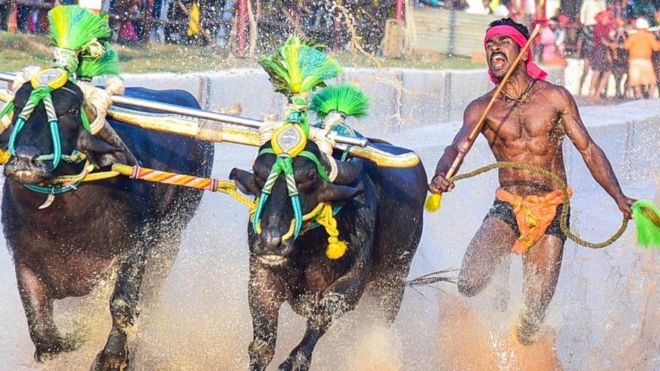
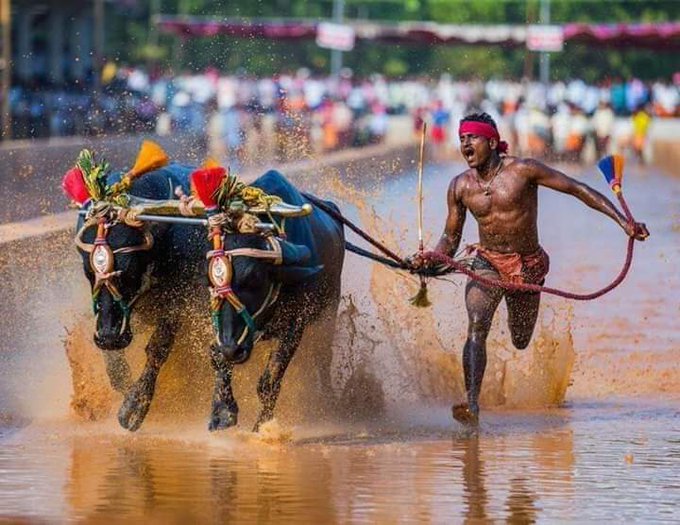
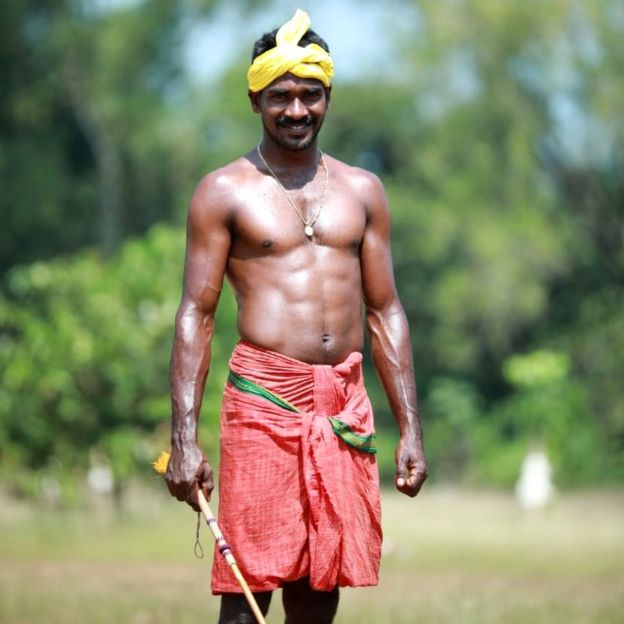
Image copyright ANNU PAIImage caption Srinivas Gowda also praised the efforts of his teammates, the two buffalo
A construction worker in south India is being compared to the Olympic gold medallist sprinter Usain Bolt after a record-breaking win in a buffalo race.
Srinivas Gowda, 28, was competing in Kambala, a sport from the southern state of Karnataka where people sprint 142m through paddy fields with buffalo.
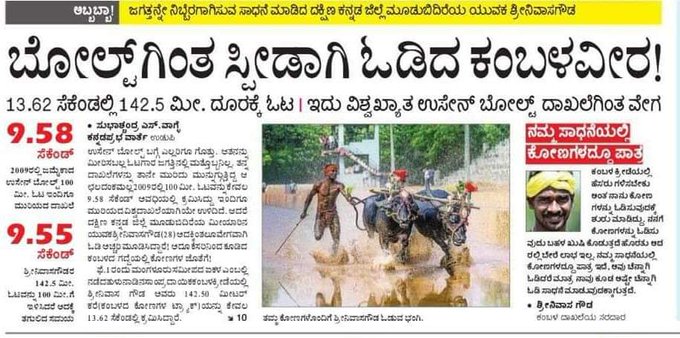
Mr Gowda is said to have finished in 13.42 seconds. Bolt holds the world 100m record of 9.58 seconds.
But the governing body for Kambala has warned against comparing him to Bolt.
“We would not like to indulge in any comparison with others,” Prof K Gunapala Kadamba, president of the Kambala Academy, told BBC Hindi.
“They [Olympic event monitors] have more scientific methods and better electronic equipment to measure speed.”
Prof Kadamba’s response came after several local newspapers and journalists made the comparison between Mr Gowda’s performance and the Jamaican sprinter’s world record time.
He is Srinivasa Gowda (28) from Moodabidri in Dakshina Kannada district. Ran 142.5 meters in just 13.62 seconds at a “Kambala” or Buffalo race in a slushy paddy field. 100 meters in JUST 9.55 seconds! @usainbolt took 9.58 seconds to cover 100 meters. #Karnataka
But Mr Gowda, from Moodabidri in Karnataka’s coastal district of Dakshina Kannada, was excited about his record-breaking win and praised his teammates – the two buffalo he ran alongside – for doing so well.Image copyright ANNU PAIImage caption Srinivas Gowda, 28, has been taking part in Kambala for seven years
He told BBC Hindi he had taken part in Kambala for seven years, adding: “I got interested in it because I used to watch Kambala during my school days.”
What is Kambala?
Kambala, which roughly translates to “paddy-growing mud field” in the local language Tulu, is a traditional sport originating from part of Karnataka’s coast.
Participants sprint through a field, which is normally either 132m or 142m, with two buffalo that are tethered together.
It is controversial, and in the past the sport has attracted strong criticism from international animal rights groups.
In 2014, India’s Supreme Court issued a ban on races with bulls, prompted primarily by campaigns against the practice of Jallikattu, a form of bull-fighting from the neighbouring state of Tamil Nadu.
Two years later, Karnataka’s state court issued an interim order stopping all Kambala events.
Prof Kadamba said that the organising body had responded to this, updating the sport in order to make it more humane.
He said their current and former students – including Mr Gowda – are now taught how to deal with buffalo “in a humane manner without unnecessarily hurting the animal”.
In 2018, the state started allowing Kambala races to take part again, but issued several conditions – including a ban on the use of whips.
But the practice is still under threat. International animal rights group Peta has a petition pending in the Supreme Court, arguing that Karnataka’s reinstatement of Kambala was illegal.
“This Kambala is quite different from the traditional Kambala that used to be practised some decades ago,” Prof Kadamba added.
MUNICH (Reuters) – U.S. Secretary of State Mike Pompeo defended on Saturday his nation’s global role despite misgivings in Europe, vowing that Western values would prevail over China’s desire for “empire”.
Pompeo was seeking to reassure Europeans troubled by U.S. President Donald Trump’s “America first” rhetoric, ambivalence over the transatlantic NATO military alliance and tariffs on European goods.
“I’m happy to report that the death of the transatlantic alliance is grossly exaggerated. The West is winning, and we’re winning together,” he said in a speech at the Munich Security Conference, listing U.S. steps to protect liberal democracies.
RELATED COVERAGE
U.S., allied firms testing alternatives to Chinese 5G technology – Esper
Pompeo was, in part, responding to German President Frank-Walter Steinmeier, who on Friday accused the United States, Russia and China of stoking global mistrust.
Trump’s decision to pull out of the 2015 Iran nuclear deal, as well as the Paris climate accord, have undermined European priorities, while moves such as recognition of Jerusalem as Israel’s capital have weakened European diplomacy, envoys say.
Pompeo defended the U.S. strategy, saying Europe, Japan and other American allies were united on China, Iran and Russia, despite “tactical differences.”
He reiterated Washington’s opposition to the Nord Stream 2 gas pipeline under construction between Russia and Germany under the Baltic Sea, a project backed by the government of German Chancellor Angela Merkel.
Citing Russia’s 2014 annexation of Crimea, cyber threats in Iran and economic coercion by China, Pompeo said those countries were still “desiring empires” and destabilising the rules-based international system.
U.S. Secretary of Defense Mark Esper, speaking immediately after Pompeo, focused his remarks solely on China, accusing Beijing of a “nefarious strategy” through telecommunications firm Huawei [HWT.UL].
“It is essential that we as an international community wake up to the challenges presented by Chinese manipulation of the long-standing international rules-based order,” Esper said.
He said it was not too late for Britain, which last month said it would allow Huawei a limited role in building its 5G networks, to take “two steps back,” but added he still needed to asses London’s decision.
“We could have a win-win strategy if we just abide by the international rules that have been set in place for decades … that respect human rights, that respect sovereignty,” he said.
Those accused Huawei of violating US sanctions and stealing technology from T-Mobile. Huawei has denied the claims.
The firm, one of the world’s biggest smartphone makers, said the US is targeting it because its expansion is a threat to American business interests.
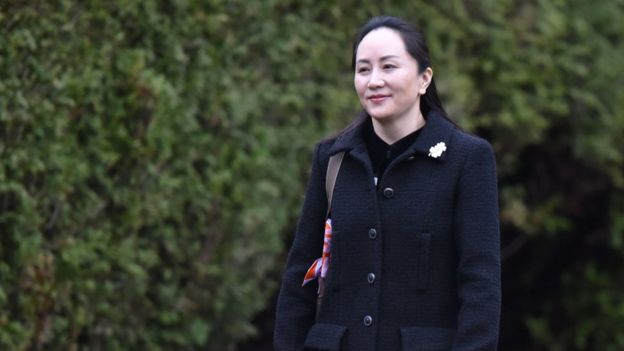
Meng Wanzhou, its chief financial officer and the daughter of the company’s founder, is still being held in Canada where she is fighting extradition to the US.
She is wanted there on charges of fraud and sanctions violations – claims she denies.
Image copyright AFPImage caption Meng Wanzhou was arrested during a layover in Vancouver in 2018
“This new indictment is part of the Justice Department’s attempt to irrevocably damage Huawei’s reputation and its business for reasons related to competition rather than law enforcement,” the company said.
In the updated indictment, the US accuses Huawei of racketeering and trade secret theft, and gives more detail about the firm’s efforts to evade US rules on doing business with Iran and North Korea.
Prosecutors also said Huawei offered bonuses to staff who obtained “confidential information” from its competitors.
“As a consequence of its campaign to steal this technology and intellectual property, Huawei was able to drastically cut its research and development costs and associated delays, giving the company a significant and unfair competitive advantage,” prosecutors said.
Huawei said the new charges are a “contrived repackaging” of claims that have already been litigated in civil court.
“The government will not prevail on these charges which we will prove to be both unfounded and unfair,” the company said.
The new charges, filed in federal court in Brooklyn on Thursday, suggest the US is not backing away from its fight over Huawei, which has added to tensions between the US and China, and complicated American relationships with allies.
The US has pushed partners such as the UK to ban Huawei technology from their networks, maintaining the company’s equipment could be used for spying by China.
NEW DELHI/MUMBAI (Reuters) – The Indian government ordered mobile carriers on Friday to immediately pay billions of dollars in dues after the Supreme Court threatened the companies and officials with contempt proceedings for failing to implement an earlier ruling.
The court, which had ordered companies including Vodafone Idea (VODA.NS) and Bharti Airtel (BRTI.NS) to pay 920 billion Indian rupees ($13 billion) in overdue levies and interest by Jan. 23, last month rejected petitions seeking a review of the order it issued back in October.
“This is pure contempt, 100% contempt,” Justice Arun Mishra told lawyers for the companies and the government on Friday.
Later in the day, the Department of Telecommunications called for “immediate payments” from the telcos. A second order instructed relevant offices to stay open on Saturday to “facilitate the Telecom Licensees to make payments or contact them with respect to any matter related to that.”
The companies had contested the government’s definition of revenues subject to tax and Vodafone Idea and Bharti Airtel both flagged risks to their ability to continue as ongoing concerns following the October order. They did not immediately respond to calls seeking comment on the new ruling.
The companies, along with Reliance Jio, which is backed by Asia’s richest man, Mukesh Ambani, control more than 90% of India’s mobile market.
Jio, a relatively new entrant which has disrupted the market with its cut-price offerings, has paid its dues.
Shares in Vodafone Idea, in which Britain’s Vodafone Group (VOD.L) owns a sizable stake, closed down 24.4% after the order. The company’s future is in doubt, with Vodafone Group having said it has no plans to commit any more equity into India.
Shares in Bharti Airtel rose 4.64%, as many investors expect it will be able to survive the payment, leaving it and Jio with a potential opportunity to win market share and enjoy an effective duopoly in the sector. In a letter to the government, Bharti Airtel said it would deposit 100 billion rupees by Thursday and pay the balance “well before” the next hearing on March 17.
Justice Mishra rebuked the government for having failed to implement the court order on collecting the dues. “A desk officer in the government stays a Supreme Court order … Is there any law left in the country?,” he said.
“We will draw up contempt against everyone,” he added, implying that both company and government officials could be fined or jailed if the dues are not paid by March 17.
Analysts said the court’s move could harm the government more broadly, as well as the companies.
“It can’t be in anybody’s interest if a company as high profile as Vodafone Idea shuts shop. Also, the government’s own dues from the sector are at risk,” said Mahesh Uppal, director at ComFirst, a telecom consultancy firm.
BANKS BURDENED
Indian banks are burdened with nearly $140 billion of bad loans and face another huge hit if Vodafone Idea is forced into bankruptcy.
Banks in India are owed roughly 300 billion rupees by Vodafone Idea, according to a Macquarie report from last year.
“Banks were yet to make additional provisioning for these loans as they were expecting some sort of a relief from the court,” said Siddharth Purohit, an analyst at SMC Institutional Equities.
Banks that have the highest exposure to Vodafone Idea include State Bank of India (SBI.NS), Punjab National Bank (PNBK.NS), Canara Bank (CNBK.NS) and Bank of India (BOI.NS), among others, the Macquarie report said.
Vodafone Idea, which owes the government about $4 billion in dues related to the ruling, has seen its shares slide more than 40% since the court ruling in October.
The broader Indian stock market also reversed early gains to trade lower after the ruling as investors worried about the fallout.
Still, some analysts remained hopeful the government could appeal to the court to review its decision.
“Let’s see how the government reacts and what they do. If the government appeals to the court they could still settle it out, and we may see some positives emerge for everyone,” said a senior industry analyst, who asked not to be named.
MUNICH (Reuters) – Germany’s president took an indirect swipe at U.S. President Donald Trump on Friday in accusing Washington, China and Russia of stoking global mistrust and insecurity with a “great powers” competition” that could threaten a new nuclear arms race.
In opening remarks at the annual Munich Security Conference, German President Frank-Walter Steinmeier deplored the three big powers’ approach to global affairs and, without naming Trump, took issue with his vow to “make America great again”.
“‘Great again’ – even at the expense of neighbours and partners,” quipped Steinmeier, a former Social Democrat foreign minister whose comments on foreign policy carry authority.
As foreign minister in 2014, he was central to the so-called “Munich consensus” when German leaders said Berlin was ready to assume more responsibility in global affairs. Steinmeier pressed that point again on Friday, but not before bemoaning the foreign policy approaches of Russia, China and the United States.
“Russia…has made military force and the violent shifting of borders on the European continent the means of politics once again,” he said in the text of a speech for delivery at the opening of the conference.
“China…accepts international law only selectively where it does not run counter to its own interests,” Steinmeier said.
“And our closest ally, the United States of America, under the present administration itself, rejects the idea of an international community.”
The upshot is “more mistrust, more armament, less security…all the way to a new nuclear arms race,” he said.
In response, he said, Germany should raise defence spending to contribute more to European security and to maintain its alliance with the United States, recognising that U.S. interests were gravitating away from Europe toward Asia.
He also called for a European policy towards Russia “that is not limited to condemning statements and sanctions alone”.
Europe, he added, “must find its own balance with China between intensifying competition between systems and the need for cooperation.”
More than 1,300 people are now known to have died from the virus.
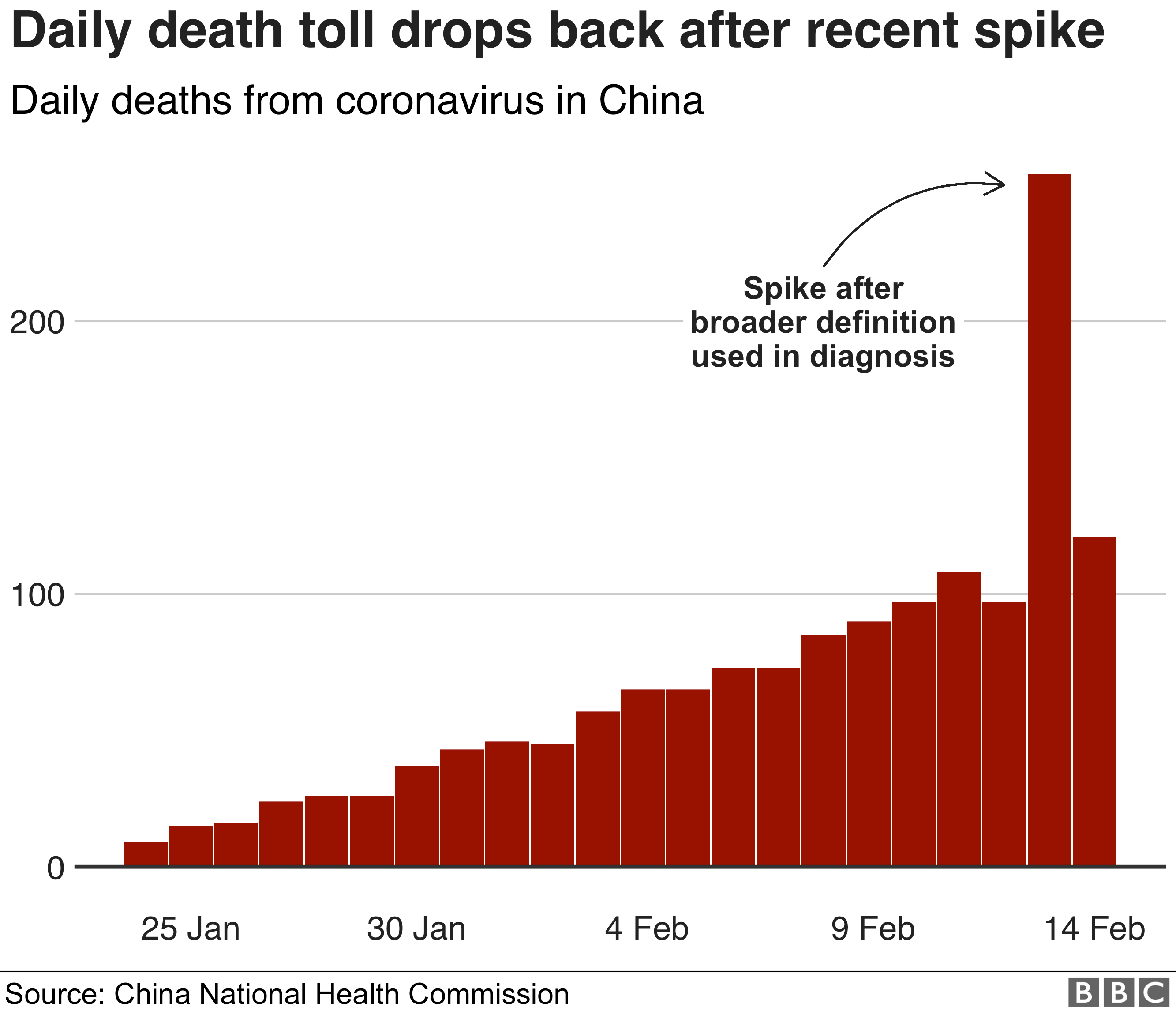
The latest figures show 122 new deaths in China, bringing the toll to 1,381.
The total number of infections has jumped to 63,922 cases, according to the National Health Commission.
The World Health Organization said there was no major shift in the virus’s pattern of mortality or severity, despite a spike in cases in Hubei, the epicentre of the disease, on Tuesday.
Most of this was down to Hubei using a broader definition to diagnose people, said Mike Ryan, head of WHO’s health emergencies programme.
There was also no significant rise in cases outside China, the WHO said.
However, a cruise ship docked in Japan, the Diamond Princess, saw 44 new cases, bringing the total there to 218.
What is the situation with medical workers?
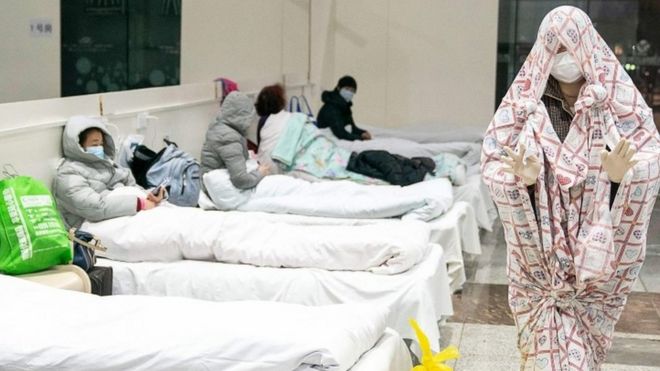
Zeng Yixin, vice minister of China’s National Health Commission, said 1,102 medical workers had been infected in Wuhan, where the outbreak began, and another 400 in other parts of Hubei province.
He said the number of infections among staff was increasing.
Media caption Medics in Wuhan resort to shaving their heads in a bid to prevent cross-infection of the coronavirus
“The duties of medical workers at the front are indeed extremely heavy; their working and resting circumstances are limited, the psychological pressures are great, and the risk of infection is high,” Mr Zeng said, quoted by Reuters.
Local authorities have struggled to provide protective equipment such as respiratory masks, goggles and protective suits in hospitals in the area.
One doctor told AFP news agency that he and 16 colleagues were showing possible symptoms of the virus.
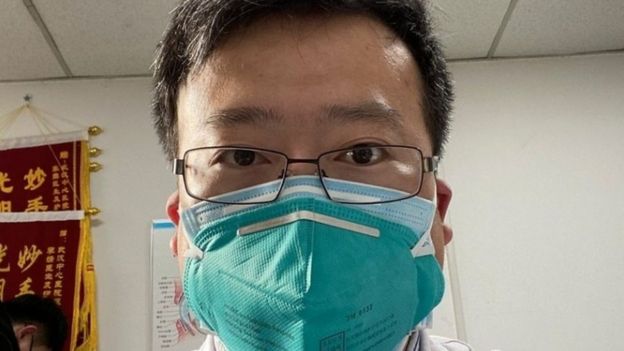
On 7 February the plight of medical workers was highlighted by the death of Li Wenliang, a doctor at Wuhan Central Hospital who had tried to issue the first warning about the virus on 30 December.
Image copyright LI WENLIANGImage caption Li Wenliang contracted the virus while working at Wuhan Central Hospital
He had sent out a warning to fellow medics but police told him to stop “making false comments”.
A wave of anger and grief flooded Chinese social media site Weibo when news of Dr Li’s death broke.
Image copyright AFPImage caption Asian airlines have been hard hit by the virus outbreak
Economic impacts of the virus
Global airline revenue expected to fall by $4bn (£3.1bn) to $5bn this year
China’s car sales likely to fall more than 10% in first half of year, the China Association of Automobile Manufacturers tells Reuters
Singapore’s economy could fall into recession as a result of the outbreak, Prime Minister Lee Hsien Loong says
Malaysian finance minister says a stimulus package will be announced for aviation, retail and tourism industries
What is happening on the Diamond Princess?
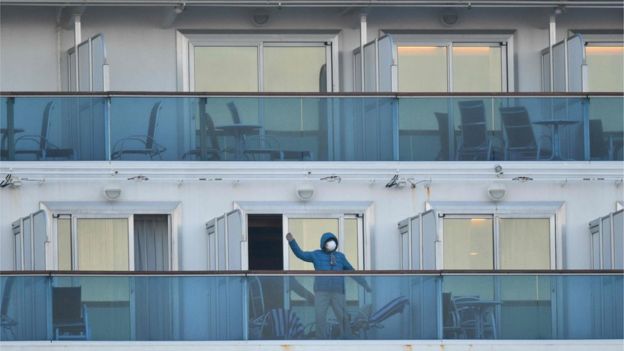
The vessel is in quarantine in Yokohama, in southern Japan. Not all the 3,700 people on board have been tested yet.
People with the virus are taken to hospitals on land to be treated, while those on board are largely confined to their cabins.
Image copyright AFPImage caption The Diamond Princess has 3,700 people on board – not all of whom have been tested
However on Thursday Japan said it would allow those aged 80 or over who have tested negative for the coronavirus to disembark.
Health Minister Katsunobu Kato said they could be allowed off the ship as early as Friday but would have to stay in accommodation provided by the government, the Japan Times reported.
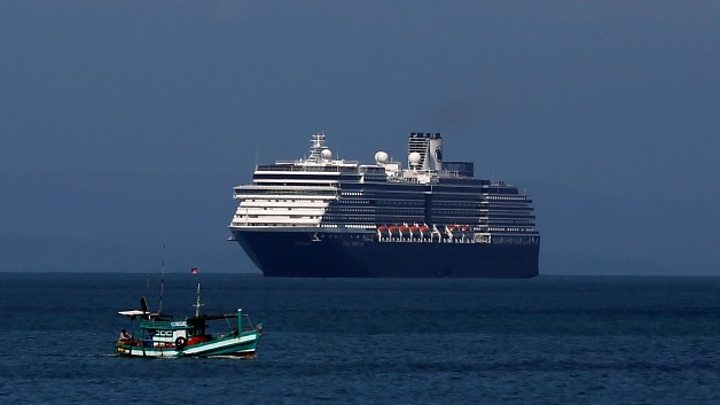
Meanwhile another cruise ship – the MS Westerdam, carrying more than 2,000 people – docked in Cambodia after being turned away by ports in Japan, Taiwan, Guam, the Philippines and Thailand despite having no sick patients on board.
Media caption The Westerdam was finally able to dock in Sihanoukville, Cambodia
In other developments:
Outside China there have now been two deaths and 456 cases in 24 countries
Singapore health ministry reports nine new cases, bringing the total number there to 67
Australia has extended its ban on people coming from mainland China for another week, to 22 February
China said it would stagger the return of children to school – several provinces have closed schools until the end of February
In Vietnam, which borders China, thousands of people in villages near the capital, Hanoi, have been put under quarantine after several cases were discovered. Vietnam has now confirmed at least 16 cases
The Red Cross has called for sanctions relief for North Korea, which would allow the aid agency to transfer funds to buy equipment. Testing kits and protective clothing are urgently needed to prepare for a possible outbreak, it says
A Russian woman – who was put into a coronavirus quarantine but escaped – is resisting attempts by officials to bring her back to hospital by force. Alla Ilyina, 32, has been refusing to open the door of her St Petersburg apartment to police
SRINAGAR/NEW DELHI, India (Reuters) – More than two dozen diplomats are visiting Indian-administered Kashmir, New Delhi said on Wednesday, as the country tries to reassure foreign allies following several months of unrest in the contested territory.
The group includes European diplomats, some of whom declined a previous invitation from New Delhi to visit the region. A proposed vote in the European Union parliament next month could chastise India for its actions in Kashmir.
The Muslim-majority Himalayan region is claimed by India and arch-rival Pakistan and has been in turmoil since New Delhi stripped it of special status and clamped down on communication and freedom of movement in August.
India has since eased those restrictions, and restored limited internet connectivity last month, ending one of the world’s longest such shutdowns in a democracy.
But many political leaders, including three former chief ministers of Jammu & Kashmir state, are still in detention without charge six months after the crackdown, and foreign journalists have so far been denied permission to visit the region.
Representatives from countries including Germany, Canada, France, New Zealand, Mexico, Italy, Afghanistan and Austria are on a two-day visit to “witness for themselves the progressive normalisation of the situation,” India’s foreign ministry said in a statement on Wednesday.
Representatives from several countries, including Germany’s ambassador Walter Lindner, were pictured on a traditional wooden shikara boat on Dal Lake, in Kashmir’s main city of Srinagar.
“We are interacting with the traders, businesswomen and entrepreneurs in Srinagar about the status of business and tourism,” Afghanistan’s envoy Tahir Qadiry said in a tweet on Wednesday.
Sources familiar with the itinerary said the trip will also include meetings with the Indian army and government officials, as well as journalists and civil society groups selected by the security services.
Last month fifteen foreign envoys visited Kashmir – a trip participants characterised as tightly-choreographed with no room for independent meetings.
“Things looked calm, but we only had a very short time out the window of the car to assess the situation,” said a diplomat who attended the previous trip.
“They told the truth, but not necessarily the whole truth,” he added of his meetings with delegates.
BEIJING, Feb. 13 (Xinhua) — The rise in the number of recovered patients infected with the novel coronavirus is a positive signal that the current treatments are getting results, said Guo Yanhong, an official with the National Health Commission (NHC).
A total of 5,911 infected people had been discharged from hospital after recovery by the end of Wednesday, the NHC said in a daily report.
Each day since Feb. 7 has seen some 500 patients walk out of hospital after recovery, Guo said at a press conference held in Beijing Thursday afternoon.
A preliminary analysis of 597 discharged cases found that about 90 percent of the cured patients had mild symptoms while 10 percent were those in severe or critically ill condition, she noted.
“Even severe and critically ill patients can be cured and discharged from hospital after careful treatment,” Guo said.
Citing the analysis, Guo said that the 597 infected were hospitalized for an average of some 10 days before being discharged.


 Image copyright GETTY IMAGES
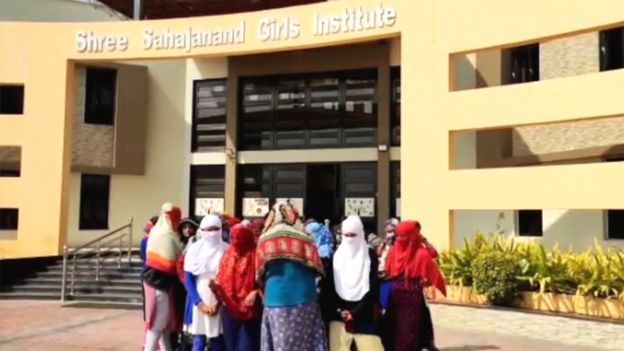 Image copyright BBC GUJARATI







 CHINDIA ALERT: You'll be living in their world, very soon