Posts tagged ‘Beijing’

29/05/2012

* Former Chinese rail minister expelled from Party

China Daily: “Liu Zhijun violated discipline and will face judicial investigationLiu Zhijun, former railway minister, was expelled from the Communist Party of China due to serious disciplinary violations, according to a decision by the Central Commission for Discipline Inspection announced on Monday.

Liu, 59, was also blamed for fostering corruption throughout the railway system. The disciplinary watchdog said Liu had taken advantage of his position to help Ding Yuxin, board chairwoman of Beijing Boyou Investment Management Corp, make huge illicit gains. He was also charged with accepting a large number of bribes and leading a corrupt life. His illicit gains have been confiscated and he will be handed over to the judicial department for further investigation. His disciplinary violations may include criminal acts, the watchdog said.

Lin Zhe, a professor at the Party School of the Central Committee of the CPC who specializes in fighting corruption, said Liu will probably face severe punishment. “Expelling Liu from the Party means his political life has ended,” she said, adding such punishment for an official is very heavy. However, Lin added Liu’s case will not be brought to court any time soon, “because the case is complicated”, and more time is needed to investigate. No matter what achievements an official has made, no matter how high his position was, the authority will deal with corruption without fear or favor, Lin added.

Li Chengyan, head of Peking University’s clean government research center, said the case is being treated seriously. “Lius punishment, after a one-year investigation, shows our government attaches great importance to the case.” The announcement on Monday is the latest development in the investigation.

Liu was appointed vice-minister of railways in 1996 and minister in 2003. He was removed from his post in February last year. At least eight senior officials at the Ministry of Railways have been sacked in the past two years and placed under investigation. They include, Zhang Shuguang, former deputy chief engineer at the ministry, Luo Jinbao, former board chairman of China Railway Container Transport Co and Su Shunhu, former deputy chief of the ministrys transport bureau.”

via Former rail minister expelled from Party |Politics |chinadaily.com.cn.

23/05/2012

* Taiwan spies increase in carrier threat

Hong Kong Standard: “Taiwan’s intelligence chief said Beijing plans to build two aircraft carriers to go with the first one in its fleet, a refitted former Soviet carrier currently undergoing sea trials.

“Indeed, the Chinese communists have decided to build two aircraft carriers on their own,” Tsai Teh-sheng, head of the National Security Bureau, told lawmakers. Construction is expected to start next year and in 2015, with the warships, which would be conventionally powered, to be delivered in 2020 and 2022. Tsai said Beijing has conducted six sea trials of its first carrier since the middle of last year, and that Taiwan expects it to go into service before the end of this year. Initially it may simply be used for training purposes but it can be sent for battles when necessary in the future,” he said. The ship’s sea trials have sparked international concern about the mainlands widening naval reach amid growing regional tensions over maritime disputes and a US campaign to assert itself as a Pacific power.”

via Taiwan spies increase in carrier threat – The Standard.

20/05/2012

* China dissident Chen Guangcheng arrives in the US

BBC News: “Chinese activist Chen Guangcheng has arrived in New York to begin a new life in the United States.

The blind human rights lawyer caused a diplomatic crisis when he escaped house arrest to arrive at the US embassy in Beijing last month. Speaking outside New York University, where he has been offered a fellowship, Mr Chen said China had dealt with the situation with “restraint and calm”. But he raised concerns about ongoing reprisals against his family. “Acts of retribution in Shandong have not been abated and my rights to practice law have been curbed – we hope to see a thorough investigation into this,” he said, referring to the province where he was kept under house arrest. The activist thanked US officials and his supporters for their help and said he had come to the United States for “recuperation in body and spirit”.

Chen Guangcheng and his family were taken from a Beijing hospital, where he was being treated for a foot injury, to the capitals airport on Saturday. A crowd of activists, supporters and curious New Yorkers greeted Chen at the university apartment block in Greenwich Village where he and his family will stay. Wearing dark glasses and hobbling on crutches, he may not have looked like a conquering hero, but that is how he was treated. There were cheers and screams of encouragement. Some had brought flowers, while one woman was led away in tears after failing to secure a hug from her idol.

Former House speaker Nancy Pelosi described his arrival in the US as “a milestone in the cause for human rights in China“.”

via BBC News – China dissident Chen Guangcheng arrives in the US.

19/05/2012

* How China’s 300m microbloggers are shaking the system

The Times: “There was a time when a hardline editorial in the Beijing Daily could strike fear into Chinese hearts. These days, such clumsy propaganda draws a stream of sarcasm from the country’s 300 million or so microbloggers. …

Welcome to the world of the Twitter-like Sina Weibo — weibo means microblog — which has become one of the greatest threats to Communist Party supremacy. With 20 million followers, the most popular microblogger is the actress Yao Chen, whose musings, like “the traffic is good today” or “I recommend that documentary” are hardly incendiary. But many more want to weigh in on touchier topics … It is clashes like these that are reframing the battle for control of information.

Concerns have intensified as China approaches its once-a-decade change of leadership in a state of political turmoil not seen for 20 years. What Beijing wants is stability, a smooth transfer of power and a public convinced that everything is improving. The microbloggers ensure that it will have to achieve that against a backdrop of scrutiny, mockery and even defiance.

For a regime that has long prided itself on its control of information, the huge numbers who follow the most popular microblogs are a potent reminder of diminishing influence. In common with the most followed people on Twitter, which is banned by Chinese censors, the most popular weibos have readerships that dwarf the circulation of the largest newspapers.

“It has given a voice to 300 million Chinese and that has never happened before,” said Zhan Jiang, a professor of journalism at the Beijing Foreign Studies University. “It has taken on the role of spreading information when news is breaking and that is a big challenge to the Government and media.” As the Government is quickly recognising, sheer size of readership is not the real problem. The war being lost by the authorities, said Hu Xingdou, of the Beijing University of Technology, involves the sophistication of the information in the public domain, the speed of its flow and the vibrant debate. “Weibo has started the enlightenment in China and promoted social progress,” he said. “It is pushing the Government to disclose more, exposing more truths and allowing people to play a role in politics. We should thank God for giving weibo to China: without it, our prospects would not be good.”

Some bloggers talk about 2012 as the year in which Beijing might finally lose control of information. But they also fear that some of the most influential weibos are being quietly shut down — an attempt, said one, to test the “arrogant and stupid idea” that information can still be controlled. The 140-character weibo offers far more scope for provocative content than a 140-letter Tweet. Official data is ridiculed, corruption is outed and the contradictions of the system laid bare. When officials tried to bury news of a fatal train crash in southern Wenzhou last year, it was the exposure via weibo that forced the authorities to change tactics immediately.

“The more powerful weibo has become, the more use it could be to the central government if they thought about it,” said Francis Cheung, a China economist at CLSA Securities. “They are still thinking of weibo as something that can be controlled. In reality it is a new media that is telling Beijing more about what is going on around the country than it ever knew before.”For now, the Government appears to be resorting to tried and tested strategies: it is insisting that users register with their real names and has made it a crime to spread false rumours. Some believe these measures could kill the weibo phenomenon, others are convinced the genie is out of the bottle.

A large part of the power of weibo, which is hosted by Sina, the state-owned ISP, is its resilience. When words are blocked by the censors, codes and puns evolve within minutes to get around the ban. Premier Wen Jiabao becomes known as “teletubbies” while the deposed Chongqing party secretary, Bo Xilai, becomes “tomato”.

This week, weibo users were on form when the National Bureau of Corruption Prevention said that 72.7 per cent of Chinese were satisfied with government progress on fighting corruption. The derision went viral. “Public opinion poll? Did they conduct it inside the Politburo? Poor old public opinion — raped once again,” wrote one user.

“Weibo is doing something in China that is very different from what microblogs are doing in the West,” said Mr Hu. “It has become a means of making sure that people’s constitutionally guaranteed rights are actually upheld.”

via How China’s 300m microbloggers are shaking the system | The Times.

19/05/2012

* Rich in kindness

China Daily: “Billionaire behind major philanthropic projects says there’s always more to do.

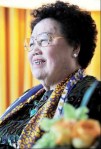
Entrepreneur and philanthropist Chan Laiwa, also known as Chen Lihua, is no stranger to lists of the world’s richest people, from Forbes to Hurun. But the self-made billionaire finds there is “so much” beyond wealth. “While wealth does come through our hard work and efforts, it is not the ultimate goal and is not above everything,” Chan, 71, says in her Manhattan hotel room the day before she was honored at an April gala as one of Time magazine’s 100 Most Influential People for 2012.

Such sentiments might seem standard from any rich person concerned with public image, but Chan in person – sincere, humble and thoughtful – makes people around her feel at ease. She impresses most with her passion for art, particularly of sandalwood, a medium she has loved since she was a girl. Born into a family of Manchu, the ethnic group that led Chinas last imperial dynasty, the Qing 1644-1911, Chan spent most of her childhood in the Summer Palace in Beijing. She is a descendant of a noble Manchu family of the Yellow Banner Clan, some members of which were ministers of state under the Qing emperor.

Chan’s childhood home was furnished with red sandalwood, a material used in the emperors’ palace in bygone times. “As I grew older, I felt the need to preserve this important part of Chinese culture,” recalls Chan, who opened a furniture factory in the 1980s and began making old-style pieces modeled after those from Beijing’s Palace Museum, more widely known as the Forbidden City.

In 1999, Chan fulfilled a childhood dream by investing in a $16 million red sandalwood museum in the capital. The thousands of treasures displayed there include a scale model of a corner tower in the Forbidden City, a reproduction of the memorial gateway carved with 320 dragons from Longquan Temple in Shanxi province, and a number of intricate furniture pieces and sculptures.

She made her fortune in the 1990s through a series of real estate ventures involving her Fu Wah International Group, the Hong Kong company fashioned out of Chan’s furniture store. The businesswoman later moved to Beijing for more opportunities. Chan was recently voted among Time magazines 100 Most Influential People in the World for 2012.

via Rich in kindness|People|chinadaily.com.cn.

04/05/2012

* China pledges more support for small, micro-sized firms

Xinhua: “The State Council, or China’s Cabinet, announced on Thursday a slew of measures to enhance the fiscal, financial and taxation support for small and micro-sized enterprises in a bid to ensure their sound development.

China’s small and micro-sized firms are facing increasing operational pressures and rising production costs amid a complicated and uncertain economic situation, and financing difficulties and heavy taxation are adding more pains. Therefore, the State Council issued a document to boost the healthy development of small and micro-sized firms as they play an irreplaceable role in creating jobs and promoting the real economy. The document, including 29 measures in eight aspects, required local authorities to enhance fiscal and tax support for the small and micro-sized firms, relieve their financing difficulties and create a favorable environment for their development.”

via China pledges more support for small, micro-sized firms – Xinhua | English.news.cn.

28/04/2012

* Chinese Activist Chen Guangcheng Escapes House Arrest in China

New York Times: “The dramatic nighttime escape of a blind rights lawyer from extralegal house arrest in his village dealt a major embarrassment to the Chinese government and left the United States, which may be sheltering him, with a new diplomatic quandary as it seeks to improve its fraught relationship with Beijing.

The lawyer, Chen Guangcheng, one of the best-known and most politically savvy Chinese dissidents, evaded security forces surrounding his home this week and, aided by an underground network of human rights activists, secretly made his way about 300 miles to Beijing, where he is believed to have found refuge in the American Embassy, according to advocates and Chinese officials. An official in the Chinese Ministry of State Security on Friday said that Mr. Chen had reached the United States Embassy, but American officials would not confirm reports that Mr. Chen had found shelter there.

Mr. Chen’s escape represents a significant public relations challenge for the Chinese government, which has sought to relegate him to obscurity, confining him to his home in the remote village of Dongshigu and surrounding him with plainclothes security guards, even though there are no outstanding legal charges against him.

The case also poses a major new diplomatic test for the United States. In February, the Obama administration was thrust into an internal Chinese political dispute when Wang Lijun, the former top police official from the region of Chongqing, sought refuge in the American Consulate in Chengdu. Mr. Wang revealed details about the killing of a British businessman, setting off a cascade of events that led to the downfall of Bo Xilai, who was the party chief in Chongqing and a member of China’s Politburo. American diplomats said they had determined that Mr. Wang’s case did not involve national security, and he was turned over to Chinese officials, prompting criticism from some in Washington about their handling of the case. Both sides insist Mr. Wang left of his own accord.”

via Chinese Activist Chen Guangcheng Escapes House Arrest in China – NYTimes.com.

27/04/2012

* China Wants More Trade With Central and Eastern Europe

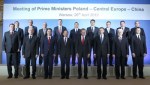
New York Times: “Prime Minister Wen Jiabao said Thursday that China wanted to double trade with the countries of Central and Eastern Europe to $100 billion a year by 2015, and pledged billions in loans to help promote investment in the region.

Mr. Wen made the announcement at a gathering in Warsaw that brought together business and political leaders of countries stretching from the Baltics to the Balkans that are eager to do business with China, even as they struggle to overcome stereotypes still held by many in the region who associate the Chinese as makers of inexpensive toys and designer knock-offs.

Infrastructure, high technology and green technology are target areas for growth, Mr. Wen said, announcing that Beijing would set up a $10 billion line of credit to support investment in these specific industries. He also pledged an additional $500 million in funds to be made available to Chinese companies seeking to make first-stage investment in the region.”

via China Wants More Trade With Central and Eastern Europe – NYTimes.com.

China continues to woo everyone. And Mr Wen is making himself very busy in his final year in office.

Related post: https://chindiapedia.wordpress.com/wp-admin/post.php?post=5753&action=edit

https://chindia-alert.org/political-factors/geopolitics-chinese/

27/04/2012

* US Is Seeing Positive Signs From Chinese

New York Tines: “When China suddenly began cutting back its purchases of oil from Iran in the last month,  officials in the Obama administration were guardedly optimistic, seeing the move as  the latest in a string of encouraging signs from Beijing on sensitive security issues  like Syria and North Korea, as well as on politically fraught economic issues like China’s exchange rate.

As with so many signals from Beijing, though, its underlying motives for reducing its imports of Iranian oil remain a mystery: Are the Chinese embracing Western sanctions? Or, as some experts suspect, are they trying to extract a better price from one of their main suppliers of crude? The answer is probably a bit of both, according to senior administration officials who acknowledge that they do not know for certain. But for the White House, which has labored to build a more constructive relationship with China, Beijing’s motives may matter less than the general direction in which it appears to be moving.”

via U.S. Is Seeing Positive Signs From Chinese – NYTimes.com.

19/04/2012

* HSBC issue of renminbi bonds in London

China Daily: “George Osborne, British chancellor of the exchequer, announced an initiative on Wednesday that reaffirms his support of London becoming an offshore yuan center. That came as the banking and financial services company HSBC Holdings Plc introduced the first yuan-denominated bond to be offered in London.

Meanwhile, the City of London Corp, which governs an area in central London, published a report showing that 109 billion yuan $17.3 billion worth of customer and interbank yuan deposits were held in the city at the end of December. “This is a significant moment,” Osborne said as he introduced a policy named “London as a center for offshore renminbi business”. “This builds on the progress London has already made toward becoming the Western hub for renminbi. “Today’s event emphasizes that we are not prepared to let anyone steal a march on us in terms of new products and new markets. We are the natural home in the West for those who want to invest in China’s economic success story.

“Osbornes comments came after HSBC announced the introduction of a 3-year yuan bond. HSBC’s term sheet for the bond issuance implied it was worth at least 500 million yuan, Reuters has reported. The proposed issuance comes amid reforms Beijing has made to advance its plans to make the yuan an international currency. London is working to make itself into a center for offshore yuan trade following an agreement that was reached between Britain and China last year.

via HSBC issue of renminbi bonds in London real|Europe|chinadaily.com.cn.

Law of Unintended Consequences

continuously updated blog about China & India

ChiaHou's Book Reviews

continuously updated blog about China & India

What's wrong with the world; and its economy

continuously updated blog about China & India