Posts tagged ‘Bo Xilai’

29/07/2012

* Bo wife murder charge vexes skeptical Chinese

Reuters: “China’s ruling Communist Party might insist that the murder charge against Gu Kailai, the wife of ousted Politburo member Bo Xilai, is a simple case of all being equal before the law, but winning over the jury of public opinion is proving tough.

Since China’s last big political scandal — the purge of Shanghai party chief Chen Liangyu in 2007 — its citizens have flocked to sign up to the Twitter-like microblogging site Sina Weibo, ensuring this time there will be lively public debate about the case against Bo and Gu, despite tight censorship.

In its first official statement on Gu’s case since April, state news agency Xinhua ran a brief report last week saying China will try Gu on charges of murdering a British businessman. The news spread rapidly on Weibo.

While state media generally stuck to reprinting that story, the influential tabloid the Global Times on Friday wrote an editorial warning nobody was above the law.

But that is a line the party is going to have a hard time convincing people is true, as suspicion swirls that populist politician Bo and his wife Gu are victims of a power struggle — and no more corrupt than other Chinese leaders.

People already have little faith in government statements despite repeated pledges to be transparent, after the SARS cover-up in 2003, among others, and refusal to discuss events such as the 1989 crackdown on pro-democracy demonstrators in Beijing.”

via Bo wife murder charge vexes skeptical Chinese | Reuters.

See also: 

18/07/2012

* As China Talks of Change, Fear Rises on Risks

NY Times: “A heavyweight crowd gathered last October for a banquet in Beijing’s tallest skyscraper. The son of Mao Zedong’s immediate successor was there, as was the daughter of the country’s No. 2 military official for nearly three decades, along with the half sister of China’s president-in-waiting, and many more.

“All you had to do,” said one attendee, Zhang Lifan, “was look at the number of luxury cars and the low numbers on the plates.”

Most surprising, though, was the reason for the meeting. A small coterie of children of China’s founding elites who favor deeper political and economic change had come to debate the need for a new direction under the next generation of Communist Party leaders, who are set to take power in a once-a-decade changeover set to begin this year. Many had met the previous August, and would meet again in February.

The private gatherings are a telling indicator of how even some in the elite are worried about the course the Communist Party is charting for China’s future. And to advocates of political change, they offer hope that influential party members support the idea that tomorrow’s China should give citizens more power to choose their leaders and seek redress for grievances, two longtime complaints about the current system.

But the problem is that even as the tiny band of political reformers is attracting more influential adherents, it is splintered into factions that cannot agree on what “reform” would be, much less how to achieve it. The fundamental shifts that are crucial to their demands — a legal system beyond Communist Party control as well as elections with real rules and real choices among candidates — are seen even among the most radical as distant dreams, at best part of a second phase of reform.

In addition, the political winds are not blowing in their favor. The spectacular fall this spring of Bo Xilai, the Politburo member who openly espoused a populist philosophy at odds with elite leaders, offered an object lesson in the dangers of challenging the status quo. And official silence surrounding his case underscores high-level fears that any public cracks in the leadership’s facade of unity could lead its power to crumble.

As a result, few people here expect the party to willingly refashion itself anytime soon. And even those within the elite prepared to discuss deeper changes, including the second-generation “princelings,” as they are known, have a stake in protecting their own privileges.

“Compare now to 1989; in ’89, the reformers had the upper hand,” said Mr. Zhang, a historian formerly associated with the government’s Chinese Academy of Social Sciences, referring to the pro-democracy student protests that enjoyed the support of a number of important party leaders but were crushed in Tiananmen Square. “Twenty years later, the reformers have grown weaker. Now there are so many vested interests that they’ll be taken out if they touch anyone else’s interests.”

To Mr. Zhang and others, this is the conundrum of China’s rise: the autocracy that back-flipped on Marxist ideology to forge the world’s second-largest economy seems incapable of embracing political changes that actually could prolong its own survival.

Much as many Americans bemoan a gridlocked government split by a yawning partisan gap, Chinese advocates for change lament an all-powerful Communist Party they say is gridlocked by intersecting self-interests. None of the dominant players — a wealthy and commanding elite; rich and influential state industries; a vast, entrenched bureaucracy — stand to gain by ceding power to the broader public.

Many who identify with the reform camp see change as inevitable anyway, but only, they say, because social upheaval will force it. In that view, discontent with growing inequality, corruption, pollution and other societal ills will inevitably lead to a more democratic society — or a sharp turn toward totalitarianism.

An overriding worry is that unless change is carefully planned and executed, China risks another Cultural Revolution-style upheaval that could set it back decades.”

via As China Talks of Change, Fear Rises on Risks – NYTimes.com.

See also: https://chindia-alert.org/prognosis/chinese-challenges/

15/06/2012

* Recent Cases Shed Light on China’s Feared Interrogation System

NY Times: “Membership in the Chinese Communist Party has many advantages. Officials often enjoy government-issued cars, bottomless expense accounts and the earning potential from belonging to a club whose members control every lever of government and many of the nation’s most lucrative enterprises.

Interrogation

Interrogation (Photo credit: Steve Rhode)

There is, however, one serious downside. When party members are caught breaking the rules — or even when they merely displease a superior — they can be dragged into the maw of an opaque Soviet-style disciplinary machine, known as “shuanggui,” that features physical torture and brutal, sleep-deprived interrogations.

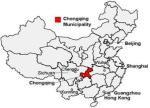
And that is exactly what appears to have happened to Bo Xilai, once one of China’s most charismatic and ambitious politicians. Mr. Bo has not been seen in public since mid-March, when he was stripped of his position as party chief of the sprawling municipality of Chongqing in southwest China. He was later accused of “disciplinary violations” and removed from the Politburo.

Few who have been pulled into the system emerge unscathed, if they emerge at all. Over the last decade, hundreds of officials have committed suicide, according to accounts in the state news media, or died under mysterious circumstances during months of harsh confinement in secret locations. Once interrogators obtain a satisfactory confession, experts say, detainees are often stripped of their party membership and wealth. Select cases are handed over to government prosecutors for summary trials that are closed to the public.

“The word shuanggui alone is enough to make officials shake with fear,” said Ding Xikui, a prominent defense lawyer here.

Although the leadership has not disclosed details of its investigation into Mr. Bo, insiders say it involves a number of allegations, including corruption, spying and obstructing justice on behalf of his wife, who has been implicated in the death of a British businessman, Neil Heywood.

Two people who have been briefed said Mr. Bo’s troubles had been compounded by his effort to rise to the top levels of power and protect himself by currying favor with the military. In addition to inquisitors from the party’s commission for discipline, the army’s political division is playing a role in the interrogations, the sources said.

via Recent Cases Shed Light on China’s Feared Interrogation System – NYTimes.com.

14/06/2012

* Actress Sues Publications Over Bo Allegations

NY Times: “One of China’s most famous actresses has filed a libel suit against two prominent Hong Kong news organizations over articles saying she was paid to have sex with Bo Xilai, the deposed Communist Party official.

The actress, Zhang Ziyi, sued Apple Daily, a well-known tabloid newspaper, and Next Magazine Publishing, both of which are owned by Next Media. Executives at the companies have declined to comment. Apple Daily reported this spring that Ms. Zhang made $110 million by sleeping with Mr. Bo and other officials in recent years; the article said she was introduced to Mr. Bo by Xu Ming, a tycoon who has been detained in the Bo investigation. Mr. Bo, a former Politburo member, is being investigated for abuse of power.”

via China – Actress Sues Publications Over Bo Allegations – NYTimes.com.

28/04/2012

* Chinese Activist Chen Guangcheng Escapes House Arrest in China

New York Times: “The dramatic nighttime escape of a blind rights lawyer from extralegal house arrest in his village dealt a major embarrassment to the Chinese government and left the United States, which may be sheltering him, with a new diplomatic quandary as it seeks to improve its fraught relationship with Beijing.

The lawyer, Chen Guangcheng, one of the best-known and most politically savvy Chinese dissidents, evaded security forces surrounding his home this week and, aided by an underground network of human rights activists, secretly made his way about 300 miles to Beijing, where he is believed to have found refuge in the American Embassy, according to advocates and Chinese officials. An official in the Chinese Ministry of State Security on Friday said that Mr. Chen had reached the United States Embassy, but American officials would not confirm reports that Mr. Chen had found shelter there.

Mr. Chen’s escape represents a significant public relations challenge for the Chinese government, which has sought to relegate him to obscurity, confining him to his home in the remote village of Dongshigu and surrounding him with plainclothes security guards, even though there are no outstanding legal charges against him.

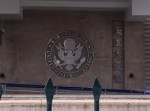
The case also poses a major new diplomatic test for the United States. In February, the Obama administration was thrust into an internal Chinese political dispute when Wang Lijun, the former top police official from the region of Chongqing, sought refuge in the American Consulate in Chengdu. Mr. Wang revealed details about the killing of a British businessman, setting off a cascade of events that led to the downfall of Bo Xilai, who was the party chief in Chongqing and a member of China’s Politburo. American diplomats said they had determined that Mr. Wang’s case did not involve national security, and he was turned over to Chinese officials, prompting criticism from some in Washington about their handling of the case. Both sides insist Mr. Wang left of his own accord.”

via Chinese Activist Chen Guangcheng Escapes House Arrest in China – NYTimes.com.

26/04/2012

* China Invests in Germany Amid Uncertainty

New York Times: “As Prime Minister Wen Jiabao of China tours Europe this week, it is no accident that Germany occupies a special place on his itinerary. After all, Germany is the one European Union country that has a trade surplus with China. And it has also been a focus of Chinese investment in Europe — so much so that analysts say some Germans are growing wary as Chinese businesses have been snapping up German engineering companies.

Mr. Wen, making his sixth visit in eight years, and the German chancellor, Angela Merkel, on Sunday opened the annual trade fair in Hanover, billed as the world’s leading showcase for industrial technology. They plan to witness the signing of an economic agreement at the Volkswagen headquarters, in Wolfsburg, on Monday. According to German media reports, the deal will include the opening of a new car plant in the far western Chinese region of Xinjiang.

Mr. Wen’s agenda, as with a follow-up trip planned by his likely successor, Vice Prime Minister Li Keqiang, seems aimed at presenting an aura of business as usual, even as trade tensions flare with the West and the Communist Party at home is embroiled in its biggest scandal in years, involving the deposed Politburo member Bo Xilai.”

via China Invests in Germany Amid Uncertainty – NYTimes.com.

Two birds with one stone: Collaboration with Germany & VW; and opening up a major auto plant in Xinjiang, one of the two provinces with significant unrest (the other, of course, is Tibet).

14/04/2012

* Police reinvestigate death of Neil Heywood according to law

Xinhua: “Chinese police have set up a team to reinvestigate the case that British citizen Neil Heywood was found dead in Chongqing on Nov. 15, 2011, which was alleged by Wang Lijun who entered, without authorization, the U.S. general consulate in Chengdu on Feb. 6 and stayed there, Xinhua learned from authorities.

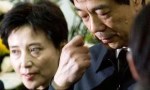
Police authorities paid high attention to the case, and set up the team to reinvestigate the case according to law with an attitude to seek truth from facts. According to investigation results, Bogu Kailai, wife of Comrade Bo Xilai, and their son were in good terms with Heywood. However, they had conflict over economic interests, which had been intensified. According to reinvestigation results, the existing evidence indicated that Heywood died of homicide, of which Bogu Kailai and Zhang Xiaojun, an orderly at Bo’s home, are highly suspected. Bogu Kailai and Zhang Xiaojun have been transferred to judicial authorities on suspected crime of intentional homicide.”

via Police reinvestigate death of Neil Heywood according to law – Xinhua | English.news.cn.

Note that Xinhua prefixed Bo to Mme Gu’s surname, which is not usual in mainland China, but common in Hong Kong and elsewhere where the wife has a business profile of her own, but wants to be associated with her husband. One wonders if this is the authorities subtle way of linking Mme Gu to Bo, who is in political disgrace.

Related post: https://chindia-alert.org/2012/04/05/deciphering-chinese-names/

14/04/2012

* China ejects Bo from elite ranks, wife suspected of murder

Reuters: “China’s Communist Party has banished the country’s brashest and most controversial politician from its top ranks and detained his wife in connection with the murder of a British businessman, the most tumultuous upheaval in the nation’s leadership in decades.

The decision to cast out Bo Xilai from the party’s Central Committee and its Politburo effectively ends the career of the former high-flyer, widely seen as pressing for a top post in China’s next leadership to be decided later this year.

The official Xinhua news agency confirmed a Reuters report several hours earlier on Tuesday that Bo had been suspended from his party posts, and separately reported that his wife, Gu Kailai, was suspected in the murder of Briton Neil Heywood.

“Comrade Bo Xilai is suspected of being involved in serious disciplinary violations,” said Xinhua, citing a decision by the central party leadership to banish Bo from its top ranks.

“Police set up a team to reinvestigate the case of the British national Neil Heywood who was found dead in Chongqing,” the news agency said, referring to the sprawling southwestern municipality where Bo was party chief until he was dismissed in March as a scandal surrounding him unfolded.

It was the most dramatic convulsion in China’s secretive leadership since 1989, when Jiang Zemin was plucked from obscurity to head the Communist Party after the bloody crackdown on democracy protests in Beijing.

Jiang replaced Zhao Ziyang, who was toppled by hardliners for supporting the student movement centered on Tiananmen Square that was crushed by the army with heavy loss of life.

Xinhua said evidence indicated Heywood’s death was a homicide and Gu Kailai and Zhang Xiaojun, an assistant in Bo’s household, were “highly suspected.” It cited a dispute over unspecified “economic interests” between Gu and Heywood that “constantly intensified”.

Gu and Zhang had been “handed over to the judicial authorities”, it said – meaning they have been detained.”

via China ejects Bo from elite ranks, wife suspected of murder | Reuters.

15/03/2012

* Bo Xilai replaced by Zhang Dejiang as Chongqing Party chief

China Daily: “Zhang Dejiang has been appointed Party chief of Chongqing, replacing Bo Xilai, according to a decision of the Communist Party of China (CPC) Central Committee announced Thursday. Bo will no longer serve as secretary, standing committee member or member of the CPC Chongqing municipal committee.

The decision was announced by Li Yuanchao, head of the Organization Department of the CPC Central Committee, at a meeting of officials in Chongqing on Thursday. Li said the CPC Central Committee made the decision after discreet consideration and based on current circumstances and the overall situation.

Zhang delivered a speech at the meeting of Chongqing officials, according to xinhuanet.com.

Zhang, born in November 1946, is a native of Tai’an, Liaoning province. He became a member of the Political Bureau of the CPC Central Committee in 2002 and began serving as vice premier of the State Council, China’s Cabinet, from 2008. Zhang had previously served as Party chief in Jilin, Zhejiang and Guangdong provinces, respectively, between 1995 and 2007.

via Zhang Dejiang replaces Bo as Chongqing Party chief|Politics|chinadaily.com.cn.

Bo was seen to be a strong contenders for one of the seven places on the Standing Committee of the Political Bureau of the Communist Party (total 9 members), equivalent to the inner cabinet, when the incumbents will retire this autumn due to mandatory retirement age. He was extremely successful in bringing Chongqing on from a secondary inner city into a thriving first city (one of four) in China. However, his views were seen by many of his colleagues as veering back to the left in recent times. This demotion means that he is no longer a candidate for the SC of the Politburo.

Law of Unintended Consequences

continuously updated blog about China & India

ChiaHou's Book Reviews

continuously updated blog about China & India

What's wrong with the world; and its economy

continuously updated blog about China & India