Posts tagged ‘China Development Bank’

01/11/2015

China Abandons the One-Child Policy – China Real Time Report – WSJ

China on Thursday said it would formally end its notorious one-child policy, which was intended to curb a surging population but has since been blamed for looming demographic problems in the world’s No. 2 economy.

As WSJ’s Carlos Tejada reports: In a brief statement on Thursday, China’s official Xinhua News Agency said all Chinese would be allowed to have two children. It didn’t provide a time frame or any other details. China effectively hobbled the one-child policy two years ago, when it allowed couples to have two children if one parent came from a household without other siblings. It has also long allowed exceptions in some parts of the country. Advertisement

Still, Thursday’s move marked a symbolic shift as well as an acknowledgment that China now faces a looming worker-shortage in coming decades. China’s fertility rate, or the number of births per woman, was below the replacement level at 1.17 in 2013, according to the most recent data from the World Bank. Demographers have been urging Beijing to do more to thwart a predicted labor shortage, arguing that they should lift birth restrictions entirely. Read the full story on WSJ.com. Sign up for CRT’s daily newsletter to get the latest headlines by email.

Source: China Abandons the One-Child Policy – China Real Time Report – WSJ

20/04/2015

Chinese president to launch economic corridor link in Pakistan | Reuters

Chinese President Xi Jinping arrived in Pakistan on Monday to launch $46 billion in projects linking the allies, a figure that would far exceed U.S. spending in Pakistan and underscores China’s economic ambitions in Asia and beyond.

Photo

The infrastructure and energy projects are aimed at establishing a Pakistan-China Economic Corridor between Pakistan’s southern Gwadar port on the Arabian Sea and China’s western Xinjiang region.

The plan is part of China’s aim to forge “Silk Road” land and sea ties to markets in the Middle East and Europe and reflects a shift of economic power in the region to China, said Mushahid Hussain Sayed, chairman of the Pakistani parliament‘s defense committee.

“Pakistan, for China, is now of pivotal importance. This has to succeed and be seen to succeed,” he said.

The corridor, a network of roads, railways and pipelines, will pass through Pakistan’s poor Baluchistan province where a long-running separatist insurgency, which the army has again vowed to crush, will raise doubts about the feasibility of the plan.

The security of Chinese workers will be a prime concern for Xi. In his talks with Pakistani Prime Minister Nawaz Sharif and military leaders, Xi is also likely to raise China’s fears that Muslim separatists from Xinjiang are teaming up with Pakistani militants.

Xi has linked economic cooperation with security.

“Our cooperation in the security and economic fields reinforce each other, and they must be advanced simultaneously,” he said in a statement to media on the eve of his two-day visit.

Xi is expected to call for greater efforts to bring peace to Afghanistan, where Pakistan is keen to restrict the influence of is rival India.

via Chinese president to launch economic corridor link in Pakistan | Reuters.

17/01/2015

China Telecom plans bid to build Mexico broadband network – sources | Reuters

China’s third-largest carrier China Telecom is preparing a possible bid for a contract to build and run a new mobile broadband network in Mexico and is seeking local partners to join it in a consortium, three people with knowledge of the matter said.

It has already secured up to several billion dollars of financing from Chinese state-controlled banks, including the China Development Bank, for the project, which Mexico estimates will cost $10 billion over 10 years, one of the people said.

The proposed network is part of a sweeping reform designed to break billionaire Carlos Slim‘s hold on the Mexican telecoms business, but the Chinese involvement could prove controversial and trigger concerns from the U.S., some Mexican officials say.

Mexico’s government is trying to ease its economic dependence on the United States and ramp up Chinese investment. A Chinese-led consortium looks poised to win a $3.75 billion contract to build a high-speed train system, sources with knowledge of the plan say. This is despite the group’s previous winning bid being revoked late last year amid a political scandal.

via Exclusive: China Telecom plans bid to build Mexico broadband network – sources | Reuters.

23/05/2013

* China urbanization plan hits roadblock over spending fears – sources

Reuters: “China’s plan to spend $6.5 trillion on urbanization to bolster the economy is running into snags, sources close to the government said, as top leaders fear another spending binge could push up local debt levels and inflate a property bubble.

A general view of newly built houses at Dadun village of Lingshui ethnic Li Autonomous County, Hainan province, in this January 18, 2013 file photo. REUTERS-Stringer-Files

Premier Li Keqiang has rejected an urbanization proposal drafted by the National Development and Reform Commission (NDRC), seeking changes to put more emphasis on economic reform, according to the sources, who are familiar with the matter.

Many local authorities have already lobbied to get funding for projects, ringing alarm bells among top leaders in Beijing.

State-owned China Development Bank recently pledged to lend 150 billion yuan ($24.47 billion) to southeastern Fujian province to support its urbanization and channel 30 billion yuan into urban projects in central Anhui province, according to Chinese media.

“The urbanization plan could be delayed. Top leaders have seen potential risks if the program cannot be kept on the right path,” said an economist at a top think-tank which advises the cabinet.

“The leadership aims to jumpstart reforms, but local governments see this in a different perspective – they view this as the last opportunity to boost investment,” said the economist who requested anonymity due to the sensitivity of the issue.

China plans to spend some 40 trillion yuan ($6.5 trillion) to bring 400 million people to its cities over the next decade as leaders such as Li try to sustain economic growth that slowed to a 13-year low of 7.8 percent in 2012.

Li, the driving force behind urbanization, has turned more cautious following warnings from leading academics over the risks, said the think-tank sources who are involved in the policy discussions.

The NDRC is racing against the clock to amend the long-term plan in a bid to publish it by the end of June.”

via Exclusive :China urbanization plan hits roadblock over spending fears – sources | Reuters.

02/02/2013

* Venezuela seeks $4 billion China loan, $2 billion Chevron credit

Reuters: “Venezuela‘s government and state oil company PDVSA are in urgent talks over a long-expected $6 billion in loans from China and U.S. energy giant Chevron that would help relieve the nation’s strained finances, sources close to the discussions said.

Workers stand in front of a drilling rig at an oil well operated by Venezuela's state oil company PDVSA in Morichal July 28, 2011. REUTERS/Carlos Garcia Rawlins

Oil Minister Rafael Ramirez said this week that PDVSA had no plans to issue any more dollar-denominated bonds, confounding widespread speculation that one was planned to address a chronic shortage of dollars for local businesses.

That has left the government in the OPEC member seeking other forms of financing, amid pressure to order a devaluation of its currency that would ease the pressure on its cash flow by providing more bolivars for every dollar of oil sales.

Its top priority is a deal agreed last year with China Development Bank for a $4 billion loan this year.

Venezuela has borrowed $36 billion from China in recent years – repaid with oil shipments – making Beijing the single biggest foreign source of funding for the country’s socialist government, according to finance ministry data.

But a source close to the talks told Reuters that the Chinese team wanted to toughen the terms of the deal.

“The Chinese have introduced a clause that the Venezuela team decided to reject,” the source said, without describing the proposed change. “That was holding things up until recently, but they are coming to an agreement on the amendment.””

via Exclusive: Venezuela seeks $4 billion China loan, $2 billion Chevron credit – sources | Reuters.

19/09/2012

* CIC Invested About $2 Billion in Alibaba

WSJ: “China’s sovereign wealth fund invested about $2 billion in Alibaba Group Holding Ltd. as the Chinese Internet company bought back a large stake owned by Yahoo Inc., according to people with knowledge of the deal.

image

Alibaba said late Tuesday that it had completed an initial buyback of half of Yahoo’s 40% stake in Alibaba in a deal valued at approximately $7.6 billion. China Investment Corp. led a consortium of Chinese investors including buyout funds Boyu Capital, Citic Capital, and China Development Bank Corp.’s private-equity arm.

Alibaba’s deal with Yahoo valued the Chinese e-commerce company, which includes Alibaba.com, payment service Alipay and other properties, at about $40 billion.

Under terms of the deal, Yahoo is receiving about $6.3 billion in cash, $800 million in preferred stock in Alibaba and $550 million as a result of amending the firms’ technology and intellectual-property licensing agreement.

Yahoo retains about a 23% stake in Alibaba, following the transaction announced Tuesday. Alibaba said it has the right to repurchase half of Yahoo’s remaining stake.

CIC, which has about $410 billion in assets under management, said in June interview that it had confidence in China’s economic growth and was actively scouting overseas investment opportunities leveraged to China’s growth prospects.”

via CIC Invested About $2 Billion in Alibaba – WSJ.com.

26/06/2012

* Chinese in Talks to Fund U.S. Homes

WSJ: “Lennar Corp., one of the U.S.’s largest home builders, is in talks with the China Development Bank for approximately $1.7 billion in capital to jump-start two long-delayed San Francisco projects that would transform two former naval bases into large-scale housing developments, according to people familiar with the discussions.
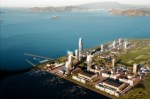
The negotiations aren’t final and the financing arrangement could still fall through. But if completed, the deal would reflect a changing dynamic between the U.S. and Chinese economies, as an American company turns to China for help funding a long-delayed and partially publicly funded project that otherwise wouldn’t get done.

The developments, Treasure Island and Hunters Point Shipyard, also have the potential to alter San Francisco’s housing market by providing nearly 20,000 new homes, a sports arena and millions of square feet of office and retail space in a market that is land-constrained and has had limited new construction. The city has committed hundreds of millions of dollars, in the form of tax-increment bonds, to the projects, which in total are expected to cost $10.5 billion over the next few decades.

In recent years, Chinese state money—in large part provided by CDB and its counterpart the Export-Import Bank of China—has been pivotal in funding major infrastructure and resource projects around the world, but the bulk of that activity has been in developing countries in Africa, South America and Asia.

That has resulted in the construction of dams, airports, railways, highways and sports arenas that otherwise wouldn’t get built, primarily in developing countries. Funding is typically conditional upon Chinese developers and contractors being used to build the projects. And in order to keep costs down, and in many cases to ensure the necessary expertise, at least a portion of the workforce is flown in from China.

This would be difficult or impossible in San Francisco, where local regulations and deals cut with local governments generally require developers to use local labor and pay prevailing wages.

The CDB and the Lennar partnership have been in discussions to include China Railway Construction Corp., a state-run contractor, in the development of Treasure Island and Hunters Point, according to people familiar with the matter. While it is unclear what CRCC’s role would be, the company could serve as an adviser or in an consulting role, or could possibly even invest in a local construction company that employs U.S. workers, these people said.

With Chinese firms increasingly eyeing opportunities in the U.S. and other developed markets, CDB will likely find itself being approached to fund more deals in the U.S. People familiar with the negotiations said CDB was using the Treasure Island and Hunters Point projects—which both include “green” building and affordable housing components that are of interest to Chinese builders—as a test case to become familiar with what’s required for doing such deals in the U.S.”

via Chinese in Talks to Fund U.S. Homes – WSJ.com.

See also: 

Law of Unintended Consequences

continuously updated blog about China & India

ChiaHou's Book Reviews

continuously updated blog about China & India

What's wrong with the world; and its economy

continuously updated blog about China & India