Posts tagged ‘China’

24/01/2016

Well-wishing | The Economist

SINCE he took over as China’s leader in 2012, Xi Jinping has been a busy globetrotter. Last year he visited more countries than Barack Obama, America’s president (14 against 11).

Heedless of whether his hosts are powerful, puny or pariahs, he has flown everywhere from America to the Maldives and Zimbabwe. Mr Xi wants to project China’s rising power—and his role in promoting that—to foreign and domestic audiences. But until this week, he had not set a presidential foot in the Middle East.

The trip, under way as The Economist went to press, began in Saudi Arabia (whose king, Salman bin Abdul Aziz, is pictured with Mr Xi). He then visited Egypt and was due to finish his tour in Iran. No Chinese president had toured the region since 2009. China’s leaders had worried about getting embroiled in the region’s intractable disputes. But China has a big stake in the Middle East. It is the world’s largest oil importer and gets more than half of its crude from the region (see chart). Mr Xi’s much ballyhooed “new Silk Route”, aimed at linking China and Europe with the help of Chinese-funded infrastructure, runs across the Middle East. Chinese companies are already building expressways and harbours there. In this section Divorce: a love story Well-wishing Reprints Related topics Middle East Politics Government and politics World politics Asia-Pacific politics

The timing of Mr Xi’s tour is tricky. Tensions between Saudi Arabia and Iran are particularly high after Saudi Arabia executed a Shia cleric earlier this month and angry Iranians responded by storming the Saudi embassy in Tehran. But the lifting of Western sanctions on Iran on January 16th (see article) allowed Mr Xi to display even-handedness by visiting both countries, without upsetting Western powers. Mr Xi, like his predecessors, likes to present China as a non-interfering champion of peace. (Xinhua, China’s state-run news agency, said this week that the West’s “meddling hands” were “more of a mortal poison than of a magic potion” in the Middle East.) But Mr Xi is not keen to play a central role as peacemaker. China’s first “Arab Policy Paper”, released on January 13th, is a vague, waffly document. It talks of “building a new type of international relations”, but is devoid of new ideas.

Zhang Ming, a vice-foreign minister, said this week that economic development was the “ultimate way out” of conflict in the region. By expanding its trade and investment links with the Middle East, China hopes discontent and conflict there will gradually dissipate. In addition to crushing dissent, it is trying a similar approach in Xinjiang, a province in western China with a large Muslim population—so far without success.

In the long run, China may find it hard to avoid taking sides. To some extent it has already done so in Syria: it talks to representatives from both the Syrian government and the opposition, but by vetoing UN resolutions on intervention it tilts, in effect, in the government’s favour. The presence of a growing number of Chinese citizens in the Middle East may challenge China’s non-interventionist approach. After a Chinese national was executed by Islamic State in November, China promised to strengthen protection of its citizens abroad. Its new rules of Middle Eastern diplomacy could end up resembling familiar Western meddling

Source: Well-wishing | The Economist

22/01/2016

Prime Minister Narendra Modi flags off Mahanama Express in Varanasi – The Hindu

In his fifth visit to his constituency, Varanasi, after assuming power, Prime Minister Narendra Modi on Friday flagged off a new train, Mahanama Express, connecting the temple town to the national capital through Lucknow. Named after Pandit Madan Mohan Malviya, the founder of the Banaras Hindu University, the train is fully equipped with modern facilities and boasts of bio toilets in every coach and has renovated and refurbished AC-coaches fitted with led screen. The train will run thrice a week and cover the distance from Varanasi to New Delhi in 14 hours.

Prime Minister Narendra Modi interacts with a physically challenged child while distributing assistive devices at a function, in Varanasi on Friday.

Attending the Divyangjan Sashaktikaran Samaroh in Varanasi, Mr. Modi also gave away assisting electronic devices, artificial limbs, tricycles, Braille kits, hearing aids, teaching-learning material kit and other equipment to 9,296 ‘divyangs’ or specially-abled persons.

“When I say let us use the word ‘divyang’ it is about a change in mindset,” Mr. Modi said while reiterating his plea for doing away with the word “viklang” (handicapped) and instead calling the differently-abled as “divyang” (those born with a divine limb/organ).

“Let us not think about what is lacking in a person, let us see what is the extra ordinary quality a person is blessed with,” said Mr. Modi, who personally distributed electronic devices to around a dozen persons.

The PM last visited his constituency in December 2015 along with his Japanese counterpart Shinzo Abe. In his address, Mr. Modi recalled the visit and even praised Mr. Abe for appreciating and mentioning his trip to Varanasi in a speech in Japan. “In one year of this government, 1800 such camps have been held. While in the two decades not even a 100 camps were set up,” Mr. Modi said taking a jibe at previous Congress government’s indifference to the differently-abled. On the way to the function, a bus carrying ‘divyangs’ met an accident injuring around 20 persons. Taking cognizance of the matter, Mr. Modi ordered swift action and officials reached the spot. “Most of the received minor injuries, but some will need to be hospitalized for a few days. The government will make all arrangements for treatment,” Mr. Modi said.

The PM also interacted with ‘divyang’ children who have overcome disabilities relating to speech and hearing with the help of the ADIP (Assistance to Disabled Persons) scheme of the Centre.

“The result of such camps is that middlemen will get eliminated-nut bolts are being tightened and the shops of these middlemen are shutting down. And due to this some people are getting worried but not me. If I am in pained, it is by the plight of the poor in the country,” Mr. Modi said.

Source: Prime Minister Narendra Modi flags off Mahanama Express in Varanasi – The Hindu

22/01/2016

Chinese president offers remedies for Mideast predicaments, aid to Arab development – Xinhua | English.news.cn

Out-of-the box thinking.  Hope other major powers start to subscribe to this point of view. The current ones  of taking sides and partisan fighting isn’t working.

“Visiting Chinese President Xi Jinping on Thursday prescribed his remedies to restore peace in the Middle East and promote development in the Arab world.

EGYPT-CAIRO-CHINA-XI JINPING-VISIT

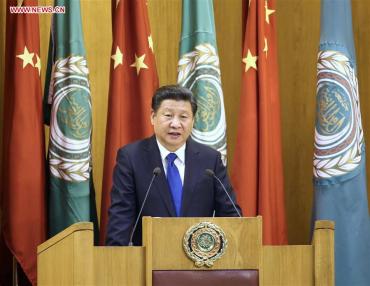
While delivering a speech at the headquarters of the Arab League, Xi described the Middle East region, which in many’s eyes is almost an equivalent to wars and tumult, as a “land of abundance.”

PATH TO PEACE

The Chinese leader concluded in the remarks that dialogues and development are the key factors that can help bring peace and stability back in this part of the world.

He said use of force offers no solution to problems, neither will zero-sum mentality bring enduring peace, adding that for the success of talks, there is need for utmost patience and flexibility.

Speaking of the Syrian crisis, he said there will be no winner out of a conflict, and to address the hot-spots, what is the most urgent, is to bring about cease-fire and start political talks.

Xi also believed that turmoil in the Middle East stems from the lack of development, while the ultimate solution will depend on development, saying that only when young people are able to live a fulfilled life with dignity can hope prevail in their heart. Only then will they voluntarily reject violence, extremist ideologies and terrorism.

Mahmoud Allam, former Egyptian ambassador to China, admitted that many of the deep-rooted problems the Arab world is grappling with have been the result of failures to achieve a successful development model, saying development is no doubt the most viable path of mobilizing people toward achieving their common interests and overcoming disagreements.

TANGIBLE HELP

Also in his speech, the Chinese president introduced a host of fresh moves including loans, financial aid and common investment fund to help improve livelihood, fight terrorism and promote development in the Arab world.

The Chinese government has decided to pledge 50 million RMB (7.53 million U.S. dollars) to help improve the lives of the Palestinians and 230 million RMB (about 35 million dollars) for Syria, Jordan, Lebanon, Libya and Yemen as humanitarian assistance, said Xi.

Beijing also wants to promote the industrialization in the Middle East. To achieve that end, China is going to hand out a number of loan programs, including a 15-billion exclusive loan, a 10-billion business lending, and 10 billion concessional loans so as to facilitate production capacity cooperation between China and the regional countries, according to the president.

Meanwhile, China also prepares to work with the United Arab Emirates and Qatar to set up a common investment fund worth 20 billion dollars that focuses on traditional sources of energy in the Middle East, infrastructure, and high-end manufacturing.

Xi also offered in his speech 300 million dollars for law enforcement cooperation, police training so as to help build up the abilities of the regional countries to maintain stability.China also planned to provide 1,000 training opportunities for young Arab leaders, and strengthen exchanges among their think tanks, experts and scholars.

CHINA’S DOS AND DON’TS IN MIDEAST

The Chinese leader also said his country will neither look for proxies nor try to fill any “vacuum” in the Middle East, adding that Beijing has no intention of building any sphere of influence in the region.

“Instead of looking for a proxy in the Middle East, we promote peace talks; instead of seeking any sphere of influence, we call on all parties to join the circle of friends for the Belt and Road Initiative; instead of attempting to fill the ‘vacuum’, we build a cooperative partnership network for win-win outcomes,” he said.

Meanwhile, Xi promised that China will not link terrorism with any specific ethnic group or religion, as doing so will only create ethnic and religious tensions, adding that there should be no double standards in battling terrorism.

Also, he said the Middle East is the meeting place of ancient human civilizations and home to diverse and splendid cultures. China will continue to unswervingly support Middle East and Arab states in preserving their ethnic and cultural traditions, and oppose all forms of discrimination and prejudice against specific ethnic group and religion.”

Source: Chinese president offers remedies for Mideast predicaments, aid to Arab development – Xinhua | English.news.cn

22/01/2016

Beijing shut down over 1,000 factories over past 5 years|Society|chinadaily.com.cn

Very good news, indeed.

Beijing has closed 1,006 manufacturing and polluting enterprises over the past five years, the municipal government revealed Friday.

In addition, 228 markets were also closed over the period, Beijing Mayor Wang Anshun said in a government work report presented during the city’s annual parliamentary session, which opened Friday.

More than 13,000 applications for new businesses have also been rejected because they were on the list of prohibited or restricted operations, Wang said.

Beijing had closed or relocated nearly 400 polluting factories in 2014 and another 300 in 2015, previous figures show.”

Source: Beijing shut down over 1,000 factories over past 5 years|Society|chinadaily.com.cn

14/01/2016

Xi’s new model army – The Economist

Xi Jinping reforms China’s armed forces—to his own advantage

CHINA’S biggest military shake-up in a generation began with a deliberate echo of Mao Zedong.

Late in 2014 President Xi Jinping went to Gutian, a small town in the south where, 85 years before, Mao had first laid down the doctrine that the People’s Liberation Army (PLA) is the armed force not of the government or the country but of the Communist Party. Mr Xi stressed the same law to the assembled brass: the PLA is still the party’s army; it must uphold its “revolutionary traditions” and maintain absolute loyalty to its political masters. His words were a prelude to sweeping reforms in the PLA that have unfolded in the past month, touching almost every military institution.

The aim of these changes is twofold—to strengthen Mr Xi’s grip on the 2.3m-strong armed forces, which are embarrassingly corrupt at the highest level, and to make the PLA a more effective fighting force, with a leadership structure capable of breaking down the barriers between rival commands that have long hampered its modernisation efforts. It has taken a long time since the meeting in Gutian for these reforms to unfold; but that reflects both their importance and their difficulty.

The PLA itself has long admitted that it is lagging behind. It may have plenty of new weapons—it has just started to build a second aircraft-carrier, for instance—but it is failing to make effective use of them because of outdated systems of command and control. Before any substantial change in this area, however, Mr Xi felt it necessary to strengthen the party’s control over the PLA, lest it resist his reforms and sink back into a morass of money-grubbing.

The reforms therefore begin with the main instrument of party control, the Central Military Commission (CMC), which is chaired by Mr Xi. On January 11th the CMC announced that the PLA’s four headquarters—the organisations responsible for recruiting troops, procuring weapons, providing logistics and ensuring political supervision—had been split up, slimmed down and absorbed into the commission. Once these were among the most powerful organisations in the PLA, operating almost as separate fiefs. Now they have become CMC departments.

Power to the party

The political headquarters was the body through which the party kept an eye on the ranks and ensured they were up to speed on Maoist texts and the party’s latest demands. The loss of its autonomous status may suggest that the party’s role is being downgraded. Far from it. Now the party’s CMC (there is also a state one, which exists only in name) will be better able to keep watch. The body’s 15 new departments will include not only departments for politics but also for logistics, personnel management and fighting corruption. Mr Xi has already turned his guns on graft, imprisoning dozens of generals.

The second reform has been to put the various services on a more equal footing. The land forces have hitherto reigned supreme. That may have been fine when the PLA’s main job was to defend the country against an invasion across its land borders (until the 1980s the Soviet Union was considered the biggest threat). But now China has military ambitions in the South China Sea and beyond, and wants the ability to challenge American naval and air power in the western Pacific. A recent editorial in the Liberation Army Daily, a PLA mouthpiece, berated the armed forces for their “army-centric mindset”.

In addition to those for the navy and air force, a separate command has now been created for the army, which had previously run everything. On December 31st the CMC also announced the formation of a command responsible for space and cyberwarfare, as well as one for ballistic and cruise missiles (previously known as the Second Artillery Force, part of the army). There is also a new joint command with overall control of the various services, a little like America’s joint chiefs of staff.

Big changes are also afoot in regional command structures. China used to be divided into seven military regions. These were powerful and relatively self-contained; sharing or swapping troops and equipment was rare. Now, according to reports in the South China Morning Post, a newspaper in Hong Kong, the number will be reduced to five. Troops will be recruited and trained by the various services before regional deployment. This will ensure greater central control over the regions.

China has been talking about military reform for decades, but change has been glacial. Opposition within the armed forces has been intense. “If [reform] is not done properly,” wrote Sun Kejia and Han Xiao of the PLA National Defence University last month, “it could affect the stability of the armed forces or even all of society.” (The article was promptly removed from the Liberation Army Daily website.) Demobbed soldiers could make trouble—Mr Xi wants the number of troops to be cut by 300,000. State firms have been ordered to reserve 5% of jobs for laid-off veterans.

The recent reforms are more extensive than most Western observers had expected after the Gutian conference. But even so, they are incomplete. The army still holds sway over some appointments (all five chiefs of the new regional commands are army generals, for instance). The PLA has traditionally given higher status to combat units than to those providing communications, logistics, transport and the like, a misplaced emphasis in an age when information and communications are crucial in warfare. The reforms do little to correct that bias. Moreover, many details about them remain unclear. No one knows, for example, where the troop cuts will come from or what units will go into the new space and cyberwarfare command.

The first result of the reforms is likely to be confusion in the ranks, until the new system settles down. Dennis Blasko, an American observer of the PLA, says no one can be sure of the results until they are tested in battle. Amid the murk, only one man clearly seems to have got his way: Mr Xi.

From: http://www.economist.com/news/china/21688424-xi-jinping-reforms-chinas-armed-forcesto-his-own-advantage-xis-new-model-army

08/01/2016

Three political questions looming over China’s leadership in 2016 – WSJ China Real Time

From: http://blogs.wsj.com/chinarealtime/2016/01/08/three-political-questions-looming-over-chinas-leadership-in-2016/?mod=djemChinaRTR_h

Last year saw more attention to Chinese President Xi Jinping as China’s paramount leader, including what many observers have seen as a cult of personality. The economy may eclipse politics as a concern for Beijing in 2016, but in China the two are always closely intertwined. Here are the three major political questions that will loom over the Xi leadership in the months to come.

  1. Is it time for thelong-running anticorruption campaignto shift its focus?

In laying out a vision for his anti-corruption drive in 2013, Xi Jinping vowed to go after both high-ranking “tigers” and low-level “flies.” So far the campaign has been fueled by the takedowns of a procession of big cats – but there are signs that a change is in the offing.

There’s upside to an increased focus on local cadres and others at the insect level. For one, it would send a signal to doubters that the anti-graft campaign is genuine, not just a way to purge Xi’s political enemies. It would also help Xi score points with regular citizens and reform-minded officials outraged at the pervasiveness of corruption in China.

But there’s also a political risk. Already, the current crusade has compelled many officials to hunker down and sit on their hands to avoid attracting attention – a phenomenon that has slowed policymaking. Likewise, many developers remain wary of starting new projects that might aid an ailing economy because they’re still not sure what’s permissible in the new environment.

Broadening the anti-graft campaign could handcuff policymaking even further, because cadres will spend time looking over their shoulders, and entrepreneurs, wondering about political support, will wait until the dust settles before embarking on new commercial initiatives.

  1. What sort of politics does China want to practice?

Xi Jinping and Chinese Premier Li Keqiang agree on a great deal, but they have distinctive notions about how to build a better China.

Xi believes that China’s political future rests on a reassertion of the party’s rule, preventing potential challenges from social groups, and convincing citizens and cadres alike that the government stands for something more than just nationalism — that socialism is still relevant but needs to be recast in ways that appeal to society.

Li appears to see his political mission differently. In his eyes, ideological renovation is far less crucial to the country than administrative restructuring and being a more efficient and approachable government. It’s innovation, not rectification, Li argues, that will secure the Party’s legitimacy. From experimenting with new ways to measure China’s actual economic performance to making bureaucratic requirements easier for citizens to meet, Li has created a profile for himself that challenges the prevailing political course being set by Xi.

While Xi wants more control over society, Li argues for less oversight and regulation in China’s economy and bureaucracy–making it easier for businesses to start up and succeed as a way of preventing social pressure from becoming a political threat.

Thus far, the policy divide between Xi and Li hasn’t resulted in political warfare. But some lower-level cadres are increasingly perplexed about which template to follow: They’ve been quietly pressing for clarification about whether they should be focusing on being better Communists, or on building a more efficient and responsive government. It’s not clear how they can accomplish both, especially when they’re under the anticorruption microscope.

The economy could catalyze conflict here. If slower growth turns into a tailspin, Li and his allies will surely press to have their agenda for change adopted more widely, and argue that the current strategy of “politics before economics” championed by Xi isn’t working. Xi and his comrades won’t concede the political high-ground they currently occupy without a fight.

Xi and Li have been doing a fine job of sharing responsibility up to now, but the divide in their approaches is getting wider, and the challenges China faces will very likely compel one model to be adopted at the expense of the other.

  1. What happens if resistance to Xi’s reforms becomes active political opposition?

Xi’s efforts to centralize party control over the economy and society have been ruthless. Even the hint of organized opposition to party policies has brought out the truncheon swingers, with censorship or jail awaiting those who propose an alternative political path for China.

Observers who see Xi’s main opposition as coming from the Chinese street are looking down a now-empty avenue. They should be paying attention to disquiet within the ranks of officialdom.

The boldness and breadth of Xi’s reforms have led some in the party ranks to wonder privately about—and even openly question—whether his handling of China’s challenges has always been correct. For example, there are some who contend that the anticorruption campaign has placed too much power in the hands of discipline inspectors and unnecessarily disrupted the status quo (in Chinese).

Some of that scrutiny concerns Xi’s efforts to reinsert the Party more fully into economic and social life, a move that risks stoking discontent in a populace that has grown used to a certain level of leeway in recent decades. There are also those within the political apparatus who see Xi’s recent restructuring of China’s military as courageous but more aimed at quelling dissent from the armed forces than rejuvenating strategy and doctrine. Even Xi himself has noted in a recently released collection of internal speeches (in Chinese) that not everything he has been doing has been met with universal acclaim within the Communist party. Murmurs of discord have reached a level in recent months where a number of officials have been punished for “improper discussion” of Party policies.

Thus far, the angst, anxiety and antagonism within the government to Xi’s reforms remain unorganized. That’s because no one has proposed an alternative strategy for dealing with the nation’s many challenges that would unify the disaffected to act against Beijing. Social activists have little political support from above; annoyed cadres are afraid that any move to form a coalition could plunge the country into civil unrest.

Xi and his allies have been as determined as they’ve been daring in following their own reform path—and their success in getting their way politically has been remarkable thus far. The most pressing question for this new year is whether what has worked thus far will continue to do so—or whether the disaffected in China start believing that their leadership may have begun to run out of answers.


06/01/2016

What might happen in China in 2016? – McKinsey

Abbreviated from McKinsey: http://www.mckinsey.com/Insights/Strategy/What_might_happen_in_China_in_2016?cid=other-eml-alt-mip-mck-oth-1601

What’s in store for China in 2016?

The reality is that China’s economy is today made up of multiple subeconomies, each more than a trillion dollars in size. Some are booming, some declining. Some are globally competitive, others fit for the scrap heap. How you feel about China depends more than ever on the parts of the economy where you compete. In 2015, selling kit to movie theaters has been great business, selling kit to steel mills less so. In your China, are you dealing with a tiger or a tortoise? Your performance in 2016 will depend on knowing the answer to this question and shaping your plans accordingly.

Many well-established secular trends in China will continue in 2016. The service economy’s expansion is perhaps most prominent among them. In this piece, as usual, I won’t spend much time on the most familiar things. Instead, I will highlight what I believe will become the more important and more visible trends in 2016, either because they are now accelerating to scale or a discontinuity may become a tipping point. (For a quick summary, see sidebar, “The China Orr-acle: Gordon’s predictions for 2016.”) I hope you find my ideas valuable.

The 13th five-year plan—few surprises

Much of China’s 13th five-year plan will seem pretty familiar, as it has been flagged in advance at the Fifth Plenum and elsewhere. Perhaps the only challenge will be to interpret the plan’s intent clearly through the new “party speak” now coming to dominate government pronouncements.

The GDP growth target will still be 6 percent–plus, which will be softened a bit but not eliminated by parallel quality-of-life goals: the environment, health, income, and the like. Achieving the growth target will remain the core objective of fiscal and monetary policies, so expect lower interest rates and pressure on the exchange rate versus the US dollar in 2016. Financial reforms aimed at moving more of the economy toward a market-based allocation of capital will continue.

Meanwhile, there will be more progress on interest-rate deregulation, on the IPO process (registration rather than approval), on permitting new entrants (especially from the tech sector and from abroad) into financial services, and on reimplementing laws suspended in the summer of 2015. The plan will promote decentralization, but the reality is likely to be greater centralization. More infrastructure will be built, mainly to enhance intraregional development—for example, around Greater Beijing.

Green initiatives, reinforced by December 2015 commitments made in Paris and the “red alert” in Beijing that same month, will take center stage. The central government will make such big and visible commitments to its citizens that local authorities will have to mount a serious effort to deliver. There will be tougher emissions standards and more spending to support the development of nonfossil fuels. Green finance will be available. Both private-sector and state-owned companies will rebrand their ongoing initiatives as green. China will explicitly build new export engines from its emerging global leadership in green products; for example, expect to see lots of Chinese-made air-filtration products in Delhi and the rest of India in 2016. Beyond green initiatives, going global will remain a key theme, as detailed in the One Belt, One Road program.1


Finally, the plan will recognize China’s success in raising labor productivity over the past decade and prioritize the acceleration of productivity growth, for both capital and labor, from 2016 to 2020. The plan will raise the implications of higher productivity for workers: the disappearance of many traditional well-paying jobs and the need for increased labor mobility and for the lifetime renewal and development of skills. But I am concerned that implementation will be left to local administrators and that the regions requiring the most help will have the lowest amounts of money to invest in reskilling the workforce and the least impressive actual skills to deliver.

Fewer jobs, flatter incomes—and, potentially, less confidence

The workplace in China is already changing dramatically in ways that will create many individual losers—for example, workers in industry sectors in secular decline (such as steel or textiles) or in industries where technology is rapidly displacing people even as output grows (like financial services or retailing). The government must help these workers reskill themselves to deliver on its commitment that all parts of society will benefit from economic growth and to keep people actively engaged in the economy. It will not be enough for officials to visit major local employers, as they did during the global financial crisis, and press them to retain all their current workers.

The maturing of investing: More options for Chinese investors and foreign investment managers

Chinese investors today remain dependent on bank deposits and property. Yet after the volatility of the property and stock markets in 2015, investors want to diversify into more stable vehicles. The number of wealth managers seeking to address this need has increased massively. Often, their main challenge is not finding clients but rather credible products to sell. The main challenge for investors is to find advisers they can trust; most simply push the products that give them the largest commission.

Manufacturing in China is changing, not disappearing

The closely watched manufacturing purchasing manager’s index (PMI) remains below 50, which indicates deterioration, leading to talk that the country may be nearing the end of its time as a manufacturer for the world. Let’s be clear: manufacturing is not about to become irrelevant in China. However, the country is evolving toward extremes of performance: the truly awful and the genuinely competitive.


Agricultural imports are rising and rising

In 2016, China’s growing food needs will drive agricultural imports to record highs in both volume and value. A wider range of countries than ever before will find agricultural-export opportunities there.

More centralization

The Chinese media, especially during President Xi’s increasingly frequent trips abroad, made it clear that economic decision making has been centralized over the past two years. China will become still more centralized in 2016, rolling back decentralization where it had unintended outcomes. For example, after local governments received authority to approve new power plants, more than 150 new coal-fired ones were green-lit in the first nine months of 2015—more than three times the number approved in 2013, under the old centralized decision-making process. Unsurprisingly, coal-producing areas granted the largest number of approvals for plants that weren’t required under any realistic demand projection, even setting aside the question of whether any new plants at all should be coal fired. State-owned enterprises are behind most of these projects and would expect to be bailed out if they fail. Thus, for multiple reasons, such decisions will be recentralized.

Moving people at scale—the middle class, not peasants

Despite prodigious investment, many Chinese cities cannot build enough quality infrastructure to avoid massive day-to-day congestion. Even though the new five-year plan will commit the country to build more of it, that will not solve these problems; growth has simply outstripped potential solutions. For example, Beijing’s population officially grew by 60 percent, to 21 million, in just the past 14 years—and unofficially by significantly more.

Movies in China: $$$

A Chinese movie will gross $500 million domestically in 2016. As a benchmark, the highest-grossing movie of all time on US domestic screens is Avatar, at $760 million. This year’s leading domestic productions in China were Monster Hunt (which has grossed $380 million as of September) and Lost in Hong Kong (more than $200 million). The leading international movie, Furious 7, grossed almost $400 million in China. The country’s box office has been set to grow by almost 50 percent in 2015, and new screen additions alone should deliver 20 percent–plus growth in 2016. More than half of the top-ten movies for 2015 (as of late November) are domestic productions, and 60 percent of the box office comes from Chinese movies. The country’s producers and directors have clearly tapped into what excites local moviegoers (and what censors permit).

China continues to go global, with the United Kingdom as a new focal point

China’s outbound investment will accelerate in 2016, with One Belt, One Road–related initiatives driving much of it. A second driver will be distressed-asset acquisitions in basic materials and related sectors: Chinese acquirers may plan not to extract the assets in the near term but simply to stockpile them as long-term insurance. Finally, a growing share of the acquisitions will come from private-sector companies that aspire to global leadership. These companies are increasingly sophisticated buyers, conducting quality due diligence, working with traditional advisers, and focusing on countries where they think that warm political relations will make it easier to do deals.

And finally . . .

My enduring prediction that big business would embrace soccer in China has finally been realized, even if that happened more slowly than I expected. Footballer Sergio Agüero, of Manchester City Football Club, took what became one of the world’s most shared selfies, with President Xi and British Prime Minister David Cameron. It seemed only a matter of time before Chinese capital (specifically, China Media Capital and CITIC Capital Holdings) invested in Manchester City and its global network of teams, which includes the New York City Football Club. Other leading teams are exploring how to participate in China. Arsenal Football Club has a multiyear grassroots program in place, as does Real Madrid. And outbound investment in soccer is growing, highlighted when Wanda Group bought into Atlético de Madrid in 2015.

As always, don’t overfocus on short-term noise about Chinese GDP growth. Try to identify the medium-term direction of the parts of the economy relevant to your business. Enjoy China in 2016!

Gordon Orr is a director emeritus of McKinsey and senior external adviser.

01/01/2016

‘The Miraculous History of China’s Two Palace Museums’ – China Real Time Report – WSJ

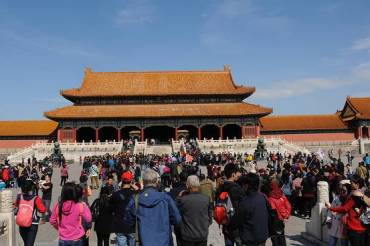
In late 1948 and early 1949, toward the end of the Chinese civil war, Nationalist leader Chiang Kai-shek transported across the Taiwan Strait hundreds of thousands of valuable Chinese artifacts which are now stored in Taipei’s National Palace Museum. Along with its Palace Museum counterpart in Beijing – more famous as the Forbidden City – the museums serve as one of the most poignant reminders of the division of China.

Beijing’s Palace Museum, which celebrated its 90th anniversary in October, was established shortly after the last Chinese emperor, Pu Yi, was forced from his palace, where he had been allowed to stay even after the Chinese republic was founded in 1911.

Intellectuals at the time wanted to set up a Chinese museum along the lines of the great museums in Europe.

Today, millions visit both museums each year, crowding around artifacts such as the Jadeite Cabbage and the Meat-Shaped Stone in Taipei.

Among the visitors are huge tour groups of mainland Chinese tourists, as the Taipei government continues to liberalize travel policies for its neighbor amid a broader detente.

This week, a branch of the National Palace Museum housing exhibits from around Asia was inaugurated in the southern Taiwanese city of Chiayi.

In his book “The Miraculous History of China’s Two Palace Museums,” Hong Kong-based writer Mark O’Neill details the treacherous history of how some of China’s most precious artifacts were rescued from the invading Japanese imperial army in the 1930s and later transported to Taiwan, and the powerful symbolism of the museums.

Source: Writing China: Mark O’Neill, ‘The Miraculous History of China’s Two Palace Museums’ – China Real Time Report – WSJ

31/12/2015

2015 Chinese diplomacy: Reaching farther and wider – Xinhua | English.news.cn

2015 has been a productive year not only for China, but for its partners all over the world. The world’s second largest economy reached out farther and wider, through initiatives such as the “Belt and Road” and the “AIIB“. And President Xi Jinping led the way.


President Xi Jinping’s official state visit to the UK was full of pomp and pageantry and the occasional imbibing. Footage of President Xi and Prime Minister David Cameron enjoying a pint and some banter in an English pub went viral in China. And the rest is history. The consumer power of the world’s second largest economy has been felt fully by the British beer company. Just this time, it started with President Xi himself.

And in the year 2015, it’s been a recurring story. Wherever the Chinese president travels, Chinese investment and consumer power are his companions. From projects worth in the billions. There’s Chinese investment in the UK infrastructure and energy sector.

Chinese financing of Russian and Central Asian natural gas projects and China’s pledge of 60 billion dollars of development funds to African nations.

To a more personal touch, a visit, in the case of Boeing, by the President of the world’s largest airplane market, means shored up confidence for some 160-thousand employees, against the backdrop of a wobbly global economy, The president also brought Ping Pong diplomacy to a high school in Washington State while students there returned the favor by showing the well-known football fan, a different kind of football. And this viral photo of President Xi brought forward cutting edge research at the Imperial College London.

2015 has been a year when Chinese initiatives were taking root and taking shape on a global scale from the Belt and road initiative. To the AIIB, and the south-south cooperation fund. Economies reshaped and lives transformed or in the case of Greene King, a centuries old British beer finding a new Chinese following.

Source: 2015 Chinese diplomacy: Reaching farther and wider – Xinhua | English.news.cn

31/12/2015

It’s official: China building second aircraft carrier as concern mounts over claims to South China Sea | South China Morning Post

China on Thursday confirmed it is building a second aircraft carrier, as its neighbours worry about Beijing’s new assertiveness to claims in the South China Sea.

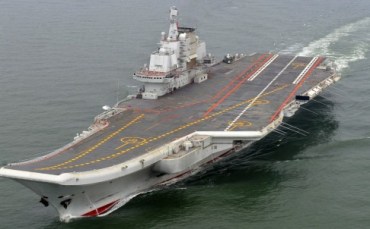
Chinese aircraft carrier Liaoning cruises for a test on the sea. Photo: AP

Defence Ministry spokesman Yang Yujun said the carrier had been designed in China and was being built in the port of Dalian in Liaoning province. The construction drew on experiences from the country’s first aircraft carrier, the Liaoning, bought from Ukraine in 1998 and refitted in China.

Source: It’s official: China building second aircraft carrier as concern mounts over claims to South China Sea | South China Morning Post

Law of Unintended Consequences

continuously updated blog about China & India

ChiaHou's Book Reviews

continuously updated blog about China & India

What's wrong with the world; and its economy

continuously updated blog about China & India