Posts tagged ‘China’

30/12/2015

Historian praises China’s global infrastructure building, criticizes West’s destructive methods – Xinhua | English.news.cn

China, with its impressive international infrastructure initiatives, has injected impetus into global growth, a U.S.-German historian has said, while criticizing Washington’s hawkish attitude, as reported by Sputnik.

China is “leading an economic renaissance of a scale not seen in more than a century,” said F. William Engdahl, a historian and economic researcher, in his recent article for New Eastern Outlook. “Beijing is, with customary Chinese speed, linking its economy by land and by sea lanes to all Eurasia,” the historian wrote, previously saying that China is “moving forward with an impressive array of major international infrastructure projects” in various regions. “For my side, I infinitely prefer the peaceful building projects to the destroying ones,” Engdahl said.

During the Johannesburg Summit of the Forum on China-Africa Cooperation (FOCAC) in early December in South Africa, Chinese President Xi Jinping unveiled the 60-billion-U.S.-dollar aid package for Africa in the next three years. The package seeks to help Africa to industrialize, modernize its agricultural production, boost the skills of its workers, build infrastructure and improve its health care.

“Unlike NATO’s endless wars, construction of infrastructure — railways, water navigation, electric power grids, lifts people up and enhances peace and stability,” Engdahl said, pointing out that Xi’s offer benefits both Africa and China.

China is also establishing a more amicable, vibrant neighborhood and is deepening economic ties with European countries through its Belt and Road initiative. The Belt and Road initiative, comprising the Silk Road Economic Belt and the 21st Century Maritime Silk Road, was brought up by Xi in 2013, with the aim of building a trade and infrastructure network connecting Asia with Europe and Africa along the ancient Silk Road routes.

The initiative creates a “golden opportunity” for the countries of Central and Eastern Europe that are facing economic difficulties, linking the East and the West of the Eurasian continent through a vast network of high-speed railways and maritime routes, Engdahl said.

“China is the world address in rail infrastructure today, while the West, led by the pathetic rail construction record of the USA, falls farther and farther behind,” Engdahl said, referring to China’s planned construction of a Hungary-Serbia high-speed railway. The railway linking the capitals of Hungary and Serbia, Budapest and Belgrade, has a total length of 350 km, with 184 km in Serbia. It is designed for electric passenger and cargo trains with a maximum speed of 200 km per hour. Once complete, it will help create a fast lane for importing and exporting products between China and Europe.

Besides recognizing the export of “Chinese rail technology” to Europe, the researcher also mentioned Beijing’s intentions to invest in constructing and upgrading port facilities in the Baltic, Adriatic, and Black Seas.

Source: Historian praises China’s global infrastructure building, criticizes West’s destructive methods – Xinhua | English.news.cn

30/12/2015

Top 10 policy changes in China in 2015

  1. Two children for all couples

China will allow all couples to have two children, abandoning its decades-long one-child policy, the Communist Party of China announced in late October. The change is intended to balance population development and address the challenge of an ageing population.

Under the new policy, couples who have two children can enjoy longer maternity leave and they could have more than two children if eligible. Current longer marriage and maternity leaves enjoyed by citizens who marry late and delay having children will be removed, and so will the rewards for couples who volunteer to have only one child.

The two-child policy will come into force on Jan 1.

2. Raising the retirement age

The 13th Five-Year Plan (2016-20) proposes progressively raising the retirement age to help address the country’s pension pressure and labor shortage.

On Nov 20, the Ministry of Human Resource and Social Security said raising the retirement age will be done progressively in small steps. The authority will raise the retirement age by several months every year, and the policy adjustment will be made public in advance. The Ministry of Human Resources and Social Security is drawing up the policy and will solicit public opinions on the completed draft.

In 2017, China should complete the integration of its two pension systems. From 2018, the retirement age for women should be raised one year every three years, and the retirement age for men should be raised one year every six years. This means in 2045, the retirement age for both men and women will be 65.

3. Household permits on the way for all

China will provide unregistered citizens with household registration permits, a crucial document entitling them to social welfare, according to a high–level reform meeting held in early December.

“It is a basic legal right for Chinese citizens to lawfully register for hukou. It’s also a premise for citizens to participate in social affairs, enjoy rights and fulfill duties,” said a statement released on Dec 9 after a meeting of the central leading group for comprehensively deepening reform.

The meeting was told that registration should take place regardless of family planning and other policy limits, and that those without hukou who face difficulties in applying should have their problems solved.

4. Unified pension system

The landmark pension reform plan, announced by the State Council on Jan 14, aims to eliminate the dual-track pension system in China.

New measures on old-age insurance were unveiled for the nearly 40 million workers in government agencies and public institutions, most of whom are civil servants, doctors, teachers and researchers. Insurance will now be paid by both workers and organizations, instead of just by organizations or central finance as in the past.

Before the measures were introduced, corporate employees had to pay for their own old-age insurance, while government staff enjoyed pensions without making any contribution at all. The reform helps to bring fairness and quench long-term public outcry.

5. Rural residents encouraged to buy properties in cities

China will roll out measures to reduce its property inventory and stabilize its ailing housing market, said a statement released on Dec 21 after a key policy meeting.

Rural residents relocating to urban areas should be allowed to register as city residents, which would enable them to buy or rent property, according to the conference.

In addition, a low-rent public housing program will cover those without household registration.

6. Harsher environmental protection law

China’s revised Environmental Protection Law came into effect on Jan 1, bringing with it heavier punishments.

According to the revised law, extra fines accumulating on a daily basis will be imposed on enterprises that fail to rectify violations.

Local officials may be demoted or sacked for misconduct, including the concealment of offenses, falsifying data, failing to publicize environmental data, and not giving closure orders to enterprises that illegally discharge pollutants.

7. Entrepreneurship encouraged among college students

The Ministry of Education announced in May that more than 30 measures would be introduced to support students starting their own businesses, and for innovation in scientific and academic research.

The measures are outlined in a series of guidelines released by the State Council, including developing and opening compulsory and selective courses for students, and awarding them credits for taking the courses.

Establishing innovation and entrepreneurship records, with transcripts for students, encouraging teachers to guide students in innovation and starting up businesses, and providing them with funds and supporting them to take part in entrepreneurship contests are also on the list.

8. New plan targets water pollution

China released the Action Plan for Water Pollution Prevention and Control on April 16 to tackle serious water pollution, aiming to intensify government efforts to reduce emissions of pollutants and to protect supplies.

The plan calls for 70 percent of the water in the country’s seven major river basins, including the Yangtze and Yellow rivers, to be in good condition by 2020, and for a continued improvement to 75 percent by 2030.

The amount of “black and smelly water” in urban areas will be reduced to 10 percent by 2020 and will largely disappear by 2030.

9. Toughest smoking ban in Beijing

A new regulation on tobacco use took effect in Beijing on June 1. The regulation extends existing smoking bans to include all indoor public areas and workplaces, plus a number of outdoor areas, including schools, seating areas in sports stadiums and hospitals where women or children are treated.

Violators will face fines of up to 200 yuan ($32), a twentyfold increase from the previous 10-yuan penalty stipulated by the previous regulation adopted in 1996. Owners of buildings classified as public places, such as restaurants, that fail to stop smokers lighting up face fines of up to 10,000 yuan.

Members of the public can report violations to the authorities by dialing a health hotline (12320) or via social media.

10. Price control on most medicines lifted

China has lifted price controls on most medicines since June 1 with the intention of creating a more market-driven pricing system that will help keep medical costs in check.

Only narcotics and some listed psychotropic drugs continue to be controlled by the government, with ceiling retail prices.

Public health departments must boost supervision on medical institutions and check improper medicine and medical equipment use, as well as excessive checkups and treatment, according to a notice issued in May.

From: http://usa.chinadaily.com.cn/china/2015-12/28/content_22835045.htm

21/12/2015

Successor to Saab announces $12 billion China electric car deal | Reuters

If this initiative gathers momentum, China will do more for electric cars (and for climate change) than the rest of the world put together!

“The China-focussed consortium that bought bankrupt Swedish automaker Saab – and bet on going all electric – unveiled its first major deal on Thursday, a mammoth $12 billion (8 billion pounds) order for electric cars for a Chinese leasing company.

NEVS electric car

The single order for 250,000 electric vehicles, including 150,000 cars based on the Saab 9-3 sedan, appeared to be all but unprecedented. There were just 665,000 electric cars in the world and 83,000 in China as of the end of 2014, according to the International Energy Agency.

National Electric Vehicle Sweden (Nevs) said it would swiftly hire hundreds of workers in Sweden to start building cars for Panda New Energy, a Chinese firm it said leases zero-emission vehicles to chauffeur-driven fleets.

Those based on the Saab 9-3 compact sedan will have a new chassis for electric drive, with bodies built and painted in Sweden and sent to China for final assembly. No details were given about the other 100,000 but a company spokesman said they would primarily be built in China.

Nevs bought the assets of the bankrupt 70-year-old Swedish automaker in 2012 with the aim of transforming it into a leading global producer of electric cars. It exited corporate reorganisation procedures in April.

“This is a strategic collaboration for Nevs not only in terms of the numbers of vehicles, but it is also an important step to implement our vision and new business plan,” Nevs Vice Chairman Stefan Tilk said in a statement.

“Cooperating with many chauffeured car service platforms in China, Panda aims to become one of the biggest electric vehicle leasing companies in the world,” Nevs said of its customer.

Nevs, which was created in 2012, has so far sold only a limited number of gasoline-powered cars based on Saab’s latest model. The deal is the first it has signed in line with its plans to go electric.

“It will be a huge challenge to produce that many cars. Their around 800 suppliers will make up a substantial part of that challenge,” said Skovde University business administration professor Mikael Wickelgren.

Nevs is co-owned by a holding company called National Modern Energy Holdings, as well as the Beijing State Research Information Technology Co. (SRIT) and Chinese industrial park Tianjin Binhai Hi-tech industrial Development Area (THT).

Nevs said at the time of the purchase of Saab’s assets that it would convert the Saab 9-3 to electric power, while simultaneously developing an all-new model to produce in Sweden for the European market and in China for the Chinese market.

($1 = 6.4822 Chinese yuan renminbi)”

Source: Successor to Saab announces $12 billion China electric car deal | Reuters

10/12/2015

China to introduce tough emissions controls for ships | Reuters

China will introduce tough controls on ship emissions at three key port areas from January to reduce sulfur dioxide which results in acid rain, causing respiratory difficulties and sometimes premature death, said the Ministry of Transport.

Shipping containers are seen on a ship docked at a port in Rizhao, Shandong province, China, December 6, 2015. REUTERS/Stringer

If strictly implemented the move would force oil suppliers to increase the supply of cleaner marine fuel, industry experts said. The ministry gave no details on how the new emissions rules would be enforced or penalties for non-compliance.

The new rules will apply to merchant ships navigating or anchoring in the waters of Pearl River Delta, Yangtze River Delta and the Bohai Bay rim, with a goal to cut sulfur dioxide by 65 percent by 2020 from the 2015 level, according to a document issued by the Ministry of Transport.

Similar emissions control areas exist in the North Sea and the north American coast.

Ships berthed at ports within the three Chinese emissions control zones will start using bunker fuel with a maximum sulfur dioxide (SO2) content of 0.5 percent from January 2016, the ministry said.

Hong Kong made it mandatory in July for merchant ships to switch to fuel with a SO2 content of 0.5 percent from high sulfur fuel. Neighboring Shenzhen port launched a voluntary fuel switching scheme in July this year that is expected to cost 200 million yuan ($31.07 million) in subsidies over three years.

Enforcement of the new emission measures will initially be up to individual ports, but the controls will be toughened in 2017 to cover all key ports in the three control areas.

They will be tightened further from the start of 2019, when ships entering control zones, not just berthed or anchored, will have to use 0.5 percent SO2 bunker fuel or below. Fishing, sports and military vessels will be exempt, said the ministry.

Oil consultancy ICIS estimated that majority of fuel use in China’s shipping sector is currently using fuel with 1-2 percent SO2 content.

The International Maritime Organization (IMO), a U.N. body which regulates merchant shipping, plans to introduce a global cap on ship emissions in either 2020 or 2025.

The IMO will carry out a review in 2018 that will include an assessment of the availability of low-sulfur fuel that will be used to decide the actual implementation date.

Source: China to introduce tough emissions controls for ships | Reuters

10/12/2015

Aging population could shrink workforce by 10% in China|Society|chinadaily.com.cn

The graying of the population could shrink the number of working-age adults by more than 10 percent in China by 2040, a report from the World Bank said on Wednesday. It means a net loss of 90 million workers in the country until that time, according to the report named “Live Long and Prosper: Aging in East Asia and Pacific”.

“Developing middle-income countries in East Asia, such as China, are already aging quickly and face some of the most pressing challenges in managing aging,” it said. East Asia, as the Word Bank’s research showed, is aging faster than any other region in history. Nearly 36 percent of the world’s population aged 65 and over, or 211 million people, live in this region, which is the largest share among all regions in the world.

The bank warned that the rapid pace and sheer scale of aging in East Asia raises policy challenges, economic and fiscal pressure, as well as social risks. “Without reforms, for example, pension spending in the region is projected to increase by eight to 10 percent of GDP by 2070.”

Axel van Trotsenburg, regional vice-president of the World Bank‘s East Asia and Pacific Region, said on Wednesday that “East Asia Pacific has undergone the most dramatic demographic transition we have ever seen, and all developing countries in the region risk getting old before getting rich.” He suggested a comprehensive policy approach across the life cycle to enhance labor-force participation and encourage healthy lifestyle through structural reforms in childcare, education, healthcare, pensions, long-term care and more.

The report also recommends a range of pressing reforms in China, including removing incentives in pension systems that have encouraged some workers, especially urban women, to retire too early. Developing countries in the region can take steps to reform their existing pension schemes, including considering gradual increase in retirement age, it said.

Source: Aging population could shrink workforce by 10% in China|Society|chinadaily.com.cn

10/12/2015

Why Delhi Doesn’t Have a Beijing-Style Response to Pollution – China Real Time Report – WSJ

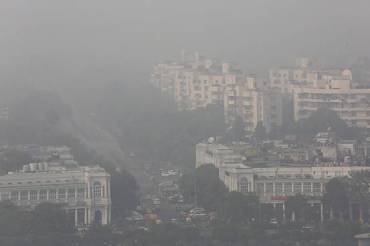
The cities of Delhi and Beijing share a dubious honor as the world’s most-polluted capitals. But their response to dangerous levels of air pollution separates them.

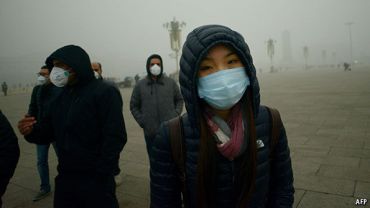
Earlier this week, Beijing for the first time issued a red-alert for pollution, triggered when authorities forecast air-quality levels above 300 for at least three consecutive days.

On China’s government index, a measure of overall air quality, the maximum reading of 500, is described by the government as “severely polluted.” The Chinese administration immediately sent cars off the roads, shut factories and urged schools to close.

In Delhi, where air was similarly dirty, life went on as normal. The starkly different responses prompted some in the Indian capital to question why their government wasn’t taking Beijing-style measures to combat the smog. For sure, plans are underway in India to tackle the capital’s filthy air.

On Friday, Delhi’s government announced it would impose restrictions on the number of cars on its roads from Jan.1. Residents in the Indian city can look up air-pollution data on the website of The System of Air Quality and Weather Forecasting and Research, known as Safar, which uses data collected at 10 locations in the city. On that index, air quality in the city regularly hits “very poor” conditions when levels of PM 2.5 — insidious particles in the air including dirt, soot, smoke and liquid droplets — spike.

These tiny particles are thought to be particularly dangerous because they can lodge deeply in the lungs and cause inflammation, infection and lead to diseases including cancer. Readings on the Safar monitor are calibrated from “good” to “severe.” The Delhi Pollution Control Committee also publishes raw pollution data but doesn’t give qualitative readings alongside.

The U.S. Embassy, which measures pollution on monitors at its compound in the capital and around the country, warns the very young and elderly to remain indoors whenever air quality becomes what it calls hazardous. But none of the readings currently trigger alerts, or responsive action, by Delhi’s government. That’s because India is a democracy, said Ashwani Kumar, chairman of the Delhi Pollution Control Committee, an arm of the state government.

China, of course, is a one-party state. The idea that alerts should tell people to stay indoors when smog hits was  “absurd,” Mr. Kumar added, and people “should decide for themselves what to do with the pollution information.” However, he said the Delhi Pollution Control Committee does plan to introduce an app so that information is available to residents with smartphones. Less than 10% of Indians own a smartphone. It also proposes to install around 70 big screens in strategic locations around the city advising residents what they can do to reduce pollution, Mr. Kumar added. The idea of an environmental alert system is not alien to India.

Source: Why Delhi Doesn’t Have a Beijing-Style Response to Pollution – China Real Time Report – WSJ

10/12/2015

Raise the green lanterns | The Economist

WHEN world leaders gathered in Paris to discuss cutting planet-heating emissions, a pall of smog hung over Beijing. In parts of the capital levels of fine particulate matter reached 30 times the limit deemed safe.

Though air pollution and climate change are different things, Chinese citydwellers think of them in the same, poisoned breath. The murky skies seemed irreconcilable with the bright intentions promised in France.

Yet a marked change has taken place in China’s official thinking. Where once China viewed international climate talks as a conspiracy to constrain its economy, it now sees a global agreement as helpful to its own development.

China accounts for two-thirds of the world’s increase in the carbon dioxide emitted since 2000. It has come a long way in recognising the problem. When China first joined international climate talks, the environment was just a minor branch of foreign policy. The ministry for environmental protection had no policymaking powers until 2008. Only in 2012 did public pressure force cities to publish air-pollution data.

Yet today China pledges to cap carbon emissions by 2030 (reversing its former position that, as a developing power, it should not be bound to an absolute reduction); and it says it will cut its carbon intensity (that is, emissions per unit of GDP) by a fifth, as well as increase by the same amount the electricity generated from sources other than fossil fuels. The latest five-year plan, a blueprint for the Communist Party’s intentions that was unveiled last month, contains clear policy prescriptions for making economic development more environmentally friendly.

There’s more

Right after the Paris summit, however it ends, China is expected to make more promises in a new document, co-written by international experts, that presents a far-reaching programme of how China should clean up its act. It is based on models that account for both economic and political viability. On top of existing plans, such as launching a national emissions-trading scheme in 2017, the government may even outline proposals for a carbon tax, something that has eluded many prosperous countries in the West.

The big question is why China is now so serious about climate change. The answer is not that Communist leaders are newly converted econuts. Rather, they want to use environmental concerns to rally domestic support for difficult reforms that would sustain growth in the coming decades. Since a global slowdown in 2008 it has become clear that to continue growing, China must move its economy away from construction and energy-intensive industry towards services. At the same time, China faces an energy crunch. For instance, in recent years China has been a net importer of coal, which generates two-thirds of China’s electricity. It all argues for growth plans that involve less carbon.

This is where signing international accords, such as the one hoped for in Paris, come in, for they will help the government fight entrenched interests at home. Observers see a parallel with China’s joining the World Trade Organisation in 2001. It allowed leaders to push through internal economic reform against fierce domestic opposition. In the same way, a global climate treaty should help it take tough measures for restructuring the economy.

It will not be easy. Provincial party bosses and state-owned enterprises hate to shut factories, particularly in those parts of the country, such as Shanxi and Inner Mongolia in the north, where coal is a big employer. Cutting demand for energy is even harder. Even if the amount of electricity used by state industry falls, that used by private firms and households is bound to increase. What is more, environmental regulations and laws laid down by the centre are routinely flouted.

But cleaning up China’s act has, for the central government, become a political necessity too. Environmental issues have been major public concerns for over a decade, says Anthony Saich of Harvard University, which has conducted polls. True, rural people fret most (and with good reason) about water pollution. But those in the cities gripe about their toxic air. Both represent a reproach to the government over its neglect of people’s lives and health.

That is why national economic goals, political goals, public opinion and international pressure all point towards trying to cut emissions, pollutants included. In particular, says Zhang Zhongxiang of Tianjin University, now that dealing with climate change is a pillar of China’s diplomacy, the government must show it can keep its promises. It has some tools at its disposal. Across the country, the environmental record of government officials has become a crucial part of their evaluation by the Communist Party; and cadres will be held account

Source: Raise the green lanterns | The Economist

04/12/2015

China’s Tech Industry Is as Male-Dominated as Silicon Valley – China Real Time Report – WSJ

When Chinese President Xi Jinping met with top U.S. and Chinese technology executives in Seattle two months ago, they posed for a now-famous group photo. But one thing was missing: women from China.

As WSJ’s Li Yuan writes in her “China Circuit” column: This defies the conventional wisdom in China that compared with Silicon Valley, China’s tech industry has less of a gender-inequality problem. True, women accounted for nine out of 30 Alibaba partners when it went public in 2014. Both Alibaba and Baidu’s chief financial officers are women. Some of China’s most prominent venture capitalists are women, too.

But the group photo attests to what is really happening behind the success stories: China’s tech industry is as male-dominated as that of Silicon Valley. And unlike the debate and discussions taking place in Silicon Valley about gender inequality, China’s tech industry has yet to acknowledge the problem. With the​tech sector becoming the brightest spot in a sluggish economy, women risk losing out in the competition for the best-paying jobs and the best opportunities to start their own businesses.

Source: China’s Tech Industry Is as Male-Dominated as Silicon Valley – China Real Time Report – WSJ

04/12/2015

Selective Equality? China Retirement Age Plan Sparks Backlash Among Women – China Real Time Report – WSJ

China’s policy makers have long accepted the need for workers to delay retirement to ease social and fiscal pressures from a rapidly aging population. Few, however, could agree on how to do it.

This week, state-backed researchers fueled fresh debate on the issue with a new proposal on how to coax more productive years out of China’s silver-haired generation. They called for gradually extending the country’s statutory retirement thresholds over the next three decades, culminating in a flat retirement age of 65 years. But their plan is proving unpopular. It is particularly striking a nerve among some women, who in China can retire between five and ten years earlier than men. The statutory retirement age for men is set at 60 years.

On social media, many female users mocked what they perceived as selective pursuit of gender equality. “In 2045, would there be equal pay between men and women? Would men be able to give birth?” a user, who identified as female, wrote on the popular Weibo microblogging service. “Chinese society, in reality, is rife with gender inequality; why bring about gender equality in retirement age?” another user wrote.

In an online survey, the state-run China National Radio found nearly 80% of respondents objected to setting a flat retirement age for men and women. “Delaying retirement is understandable, but setting the same retirement age for men and women isn’t compatible with our country’s conditions,” CNR quoted a Weibo user as saying. “Men would only have to work five more years, while women would have to work ten years longer. And women still have to face family pressures, so it’s clearly unsuitable.”

The proposal from the Chinese Academy of Social Sciences comes amid a longstanding debate in government and academic circles on how to implement a much-needed but deeply unpopular policy. Beijing has said it will gradually raise retirement thresholds starting in 2022, though the policy would only be finalized in 2017. Under rules unchanged since the 1950s, China allows most female workers to retire when they turn 50, while women in public-sector jobs can do so at 55 years of age. To change this, the CASS researchers proposed that the government could in 2017 set a flat retirement age for women at 55 years, eliminating the distinction between private and public-sector workers. Authorities could begin extending retirement thresholds—for men and women—at a fixed pace, starting in 2018.

CASS researchers suggest adding a year to the female retirement age every three years, while doing so for men every six years. Beijing could also allow flexibility for workers to bring forward or delay their retirement by up to five years, on the condition that their pension payouts would be adjusted accordingly, CASS said.

Source: Selective Equality? China Retirement Age Plan Sparks Backlash Among Women – China Real Time Report – WSJ

01/12/2015

Boost for China as it joins IMF elite – FT.com

The IMF on Monday gave a major vote of confidence to China and its reform efforts, giving the renminbi greater weighting than the yen or pound as it included the currency in its elite basket of reserve currencies.

Chinese one-hundred yuan banknotes are stacked for a photograph at the Korea Exchange Bank headquarters in Seoul, South Korea, on Thursday, Feb. 27, 2014. Photographer: SeongJoon Cho/Bloomberg

The vote by the board to make the renminbi the fifth currency in the basket used to value the IMF’s own de facto currency followed months of deliberation at the fund and years of lobbying by a Beijing eager for the recognition.

“The Rmb’s elevation to the club of elite global reserve currencies is a big step for China and a significant one for the international monetary system,” said Eswar Prasad, professor of economics at Cornell University and a former IMF China mission chief.

The renminbi will become the third biggest currency in the “special drawing rights” basket when it takes effect on October 1. The move is largely symbolic but Christine Lagarde, IMF managing director, called it a “milestone” in China’s economic reform “journey” and its integration into the global financial system.

Following the move the currency slipped 0.19 per cent to Rmb6.4374 against the dollar in offshore trading in Hong Kong.

The People’s Bank of China set its daily “fix” — the onshore rate around which the currency can trade 2 per cent either side — at Rmb6.3973 per dollar, its fourth consecutive slightly weaker rate.

Investors generally expect China to allow its currency to weaken gradually but few see much likelihood of a repeat of its 3 per cent August devaluation, which sent shockwaves through global markets.

Source: Boost for China as it joins IMF elite – FT.com

Law of Unintended Consequences

continuously updated blog about China & India

ChiaHou's Book Reviews

continuously updated blog about China & India

What's wrong with the world; and its economy

continuously updated blog about China & India