Posts tagged ‘Deng Xiaoping’

01/11/2013

Chinese land reform: A world to turn upside down | The Economist

MORTGAGING a village home is a sensitive issue in China. A nervous local official has warned residents of Gumian, a small farming community set amid hills and paddies in Guangdong province, that they risk leaking state secrets if they talk to a foreign reporter about the new borrowing scheme that lets them make use of the value of their houses. They talk anyway; they are excited by what is going on.

Urban land in China is owned by the state, and in the 1990s the state allowed a flourishing property market to develop in the cities. That went on to become a colossal engine of economic growth. But rural land, though no longer farmed collectively, as it was in Mao’s disastrous “people’s communes”, has stayed under collective ownership overseen by local party bosses. Farmers are not allowed to buy or sell the land they work or the homes they live in. That hobbles the rural economy, and the opportunities of the farmers who have migrated to the cities but live as second-class citizens there.

Hence the importance of experiments like those in Gumian. Cautious and piecemeal, they have been going on for years. Some are ripe for scaling up. Handled correctly, such an expansion could become a centrepiece of Xi Jinping’s rule.

On October 7th Mr Xi said the government was drawing up a “master plan” for not just more reform, but a “profound revolution”. Such talk is part of the preparations for a plenum of the Communist Party’s Central Committee which will begin on November 9th. It is the third such meeting since Mr Xi came to power; because the first two plenums of a party chief’s term are given over largely to housekeeping matters, including party and government appointments, third plenums are the ones to watch.

And Mr Xi is marking this one out as particularly important. In private conversations with Western leaders he has been comparing the event to the third plenum that, in 1978, saw Deng Xiaoping’s emergence as China’s new strongman after the death of Mao two years earlier, and set the stage for the demise of the people’s communes. Indeed “profound revolution” is a deliberate echo of a phrase of Deng’s.

via Chinese land reform: A world to turn upside down | The Economist.

27/09/2013

Xi Jinping tightens his grip with echoes of Chairman Mao at his worst

The Times: “Xi Jinping has marked his first half-year as President of China by resurrecting some of the finest leadership traditions of the late Chairman Mao: public humiliation, political backstabbing and crackling paranoia between officials.

Mao Zedong (1893-1976) leader of chinese communist party

The campaign, which was given a test-run in Hebei province yesterday under the glare of Mr Xi himself, involves a revival of the widely despised “criticism and self-criticism” drives established in the post-revolutionary 1950s.

The unbearably tense sessions, which force officials to decry their own shortcomings before highlighting the faults of their closest colleagues, have been given a makeover for the early 21st century and rebranded as “Democratic Life Meetings”.

But they have lost none of their old edge. Though nominally cast as a way to bring operational problems to light, the sessions were always intended to enforce discipline. The return of the practice comes as Mr Xi appears to be channelling key tracts of rhetoric and ideology from Mao Zedong.

In his first six months at China’s helm, the new President has intensified a Mao-style control of information, he has unabashedly allowed critics of the regime to be rounded up, he has called for Mao-style indoctrination for school children and told regional officials that “revolutionary history is the best nutrition for Communists”.

Even his much vaunted anti-corruption campaign has drawn on the vocabulary employed by Mao: Mr Xi has asserted the need to bring down both the “tigers” and “flies” of corrupt officialdom in a direct echo of comments by Chairman Mao six decades ago.

Hu Xingdou, a political economist at the Beijing Institute of Technology, said that while Mr Xi’s economic policies were in the mould of the great reformer Deng Xiaoping, the new leader was a Maoist when it came politics.

The criticism sessions, which could be rolled out to affect tens of thousands of senior officials across the country, are part of Mr Xi’s reference to the overtly Maoist leadership model known as the “mass line” that seeks to focus policy on the needs of ordinary Chinese.

“At the moment, the ruling party feels it needs Maoism, and it is hard to say whether it is Xi’s own idea or not. There are too many social contradictions in China and the Party does need some type of authority in order to rule, otherwise the boat will overturn,” he said.

The latest round of criticism and self criticism sessions were conducted among the top echelon of Communist Party officials in Hebei: the 12-member provincial standing committee.

With a shirt-sleeved and unsmiling, Mr Xi quietly taking notes, and with state-run television cameras rolling, the party secretary of Hebei, Zhou Benshun, condemned a senior colleague’s personal ambition and her consuming need to look good in the eyes of supervisors. This misguided focus, he said, would lead to the local government “doing something irrelevant to the public interest”.

Obliged then to come up with a genuine set of personal failings of his own. Mr Zhou had to list his foibles as the most powerful man in Asia glowered inches away from him.

“I have not done enough to orient my achievements around ordinary people’s interests,” he said. “Sometimes my policy making is too subjective and carried out without a deep knowledge of the people. I haven’t been practical enough in my ideology. My fighting sprit is slack and my drive to work hard is falling away.”

His blunt appraisals were merely the opening gambit in a session in which nobody escaped criticism – much of it openly tailored to Mr Xi’s previous tirades against formalism, waste and corruption.

As the accusations flew, one member was accused of being too impatient, another said that the committee generally issued too many documents. With possibly negative implications for his career, the local head of the disciplinary inspection commission was accused by colleagues of underplaying the importance of punishment.

Several offered up broad condemnations of waste in the province, pointing out that Hebei had spent Rmb3.3 million (£335,000) hiring celebrities to sing and dance at the New Year Evening Gala in February.

Sun Ruibin’s self criticism, meanwhile, appeared carefully attuned to the public disgust at corrupt officials. “As a municipal party secretary I was given a big cross-country 4×4 car,” he said. “I felt perfectly at ease about it, although it was in clear violation of rules and regulations.”

In its write-up of the Hebei sessions, Chinese state media quoted a senior Hebei official who, perhaps unsurprisingly, felt that the revival of the criticism and self-criticism seminars was a good thing.

“After we were promoted and were officials for a long time … we started feeling good and arrogant,” he said, “We began just glancing at ‘shop fronts’ and rarely checking out ‘the backyards’ and ‘corners’ during inspection trips.””

via Xi Jinping tightens his grip with echoes of Chairman Mao at his worst | The Times.

27/09/2013

Big reform plans for China’s newest trade zone set high expectations

Reuters: “China has formally announced detailed plans for a new free-trade zone (FTZ) in Shanghai, touted as the country’s biggest potential economic reform since Deng Xiaoping used a similar zone in Shenzhen to pry open a closed economy to trade in 1978.

The sunrise rises over the skyline of Lujiazui financial district of Pudong in Shanghai September 27, 2013. REUTERS/Aly Song

In an announcement on Friday from the State Council, or cabinet, China said it will open up its largely sheltered services sector to foreign competition in the zone and use it as a testbed for bold financial reforms, including a convertible yuan and liberalized interest rates. Economists consider both areas key levers for restructuring the world’s second-largest economy and putting it on a more sustainable growth path.

No specific timeline was given for implementing any of the reforms, though these should be carried out within 2-3 years, it said, adding financial liberalization may depend on adequate risk controls. Chinese state media have cautioned that dramatic financial reforms are unlikely this year.

An executive at a foreign multinational in Shanghai said his firm was waiting for more clarity. “Is this Shenzen 2.0 heralding the beginning of a new era in trade, or a flash in the pan to simply boost economic confidence?””

via Big reform plans for China’s newest trade zone set high expectations | Reuters.

24/08/2013

China’s Rotational Ruler Model

International Policy Digest: “The only system that can be described as similar to the Chinese “once-in-a-decade transition of power” practice in the 21st century is Plato’s rotational ruler model proposed in The Republic— “those who have come through all our practical and intellectual tests with distinction must be brought to their final trial…and when their turn comes they will, in rotation…do their duty as Rulers…when they have brought up successors like themselves to take their place as Guardians, they will depart…” A comparison shows that three common features and two pragmatic variations can be found between the Chinese system and Plato’s ideal. And this system, if well institutionalized, can achieve an advantage that democracy can produce—regular and peaceful handover of authority.

Before coming to power, Hu Jintao, Xi Jinping and many other Politburo members had gone through certain types of party school training programs and been posted in rotation among several local administrative and/or functional ministerial positions as a sort of on-the-job training. Although the Chinese curriculum is not exactly the same as Plato’s mathematics (10 years), dialectic (5 years) and the post-dialectic “military or other office” apprenticeship (15 years), the fundamental principle is the same, namely, that only purposively trained for statecraft people can become rulers of the state.

The second common feature is that the rulers lead the state “in rotation” which in modern terms means “tenure”. In China, as imposed by Deng Xiaoping and subsequently stipulated in the constitution and certain administrative directives, there is a maximum limit of ten years (two terms of five years each) for an officer to hold a particular position. It has been a national anticipation that when the tenure comes to the end, the rulers in Beijing have to step down and retire. Hu Jintao’s complete retirement from both the state presidency and chairmanship of the party’s Central Military Commission in 2012 indicates that the practice has been institutionalized.

One of the main duties of the rulers is to bring up, assess and select their successors. Here is the third common feature between the Chinese system and Plato’s ideal. The selection of rulers is in no doubt arbitrary but there have been some signs of institutionalization in place. Firstly, it is supposed to be on merit. It has been generally expected that the selected rulers should have good track record in heading at least two provincial governments. Secondly, age is a strict requirement for consideration. Thirdly, like Plato’s “final trial,” the two leading candidates have to serve five years in the Politburo for final assessment before formal assumption of the top posts of state president and premier respectively. So far, authority has been handed over to the persons without kinship to their predecessors. It seems meritocracy is working.

The arrangement that potential rulers are openly recruited in China can be deemed as the first pragmatic variation from Plato’s ideal. While Plato proposes a caste system for his “Guardian herd,” Chinese Communist Party membership is open to all citizens. It provides socio-political upward mobility opportunity to the general public, which is in line with the functional purpose of the two thousand years long Chinese tradition of civil service examination system. The satisfaction of the national aspiration for socio-political mobility through open and fair competition is a key factor for social stability, and even legitimacy.

Nevertheless, the second pragmatic variation from the Platonic model that the Chinese rulers are allowed to hold private property and have family has become the source of rampant corruption. Plato, who understood the weakness of human greed, explicitly prohibited his ideal rulers from having private property and family. Unfortunately, it is impractical and unrealistic. Therefore, it will be a great challenge for Xi Jinping to strike a balance between private property ownership and the declaration of his assets so as to put corruption under control.

The present political succession system in China can be viewed as a pragmatic and experimental implementation of Plato’s ideal in a large scale that it has been institutionalized as a huge human resources management system for public administration, political training as well as selection of helmsmen as rulers.”

via China’s Rotational Ruler Model — International Policy Digest.

18/06/2013

Mao’s birthday: Party time

The Economist: “THERE was a time, just a few months ago, when some analysts were speculating that new leaders preparing to take over in China wanted to abandon Mao. If it ever seemed likely then, it is looking far less so now. The new helmsman, Xi Jinping, has been showing no sign of squeamishness about the horrors of that era. Preparations are under way for big celebrations of Mao’s 120th birthday on December 26th. Mr Xi will likely use the occasion to pay fulsome homage.

On June 5th the party chief of Hunan, Xu Shousheng, paid a visit to one of his province’s most-visited attractions: Mao’s rural birthplace in Shaoshan village (the Hunan Daily’s report is here, in Chinese). There he laid a wreath before a bronze statue of the late chairman. Mr Xu has good economic reasons for showing obeisance. Last year the province earned nearly $4.6 billion from “red tourism”, as pilgrimages to historic Communist sites are known (a local newspaper, in Chinese, describes hopes to boost this by more than 20% in 2013). But Mr Xu made clear he was not there just to drum up business for Hunan. The central leadership, he said, was attaching “great importance” to the birthday celebrations. The entire nation, he said, was paying “great attention”.

Hunan officials are pulling out all the stops. In September it was reported that Xiangtan prefecture, which governs the village, was planning to spend 15.5 billion yuan ($2.5 billion) on 16 projects described as “presents” for Mao (see here, in Chinese). These include the refurbishing of a Mao museum in Shaoshan, a new road around the tourist area, a new drainage system for nearby Shaoshan city and the building of a new community called Hope Town for local farmers (described here). Shaoshan village is organising cultural performances, an academic conference and a “big gathering” to mark the anniversary, as well as the usual handout of free “happiness and longevity noodles” to visitors on the big day (see here, in Chinese, for a list of this year’s events in Shaoshan and here, in English, for some of the traditional ones).

It is all but certain that Mr Xi will feature prominently in the celebrations. His two immediate predecessors both gave speeches in praise of Mao on similar occasions: Hu Jintao in 2003, on the 110th anniversary (here, in Chinese), and Jiang Zemin in 1993, on the 100th (here, in Chinese). The signs are that Mr Xi will strike a similar tone. In January he told colleagues in the ruling Politburo that the achievements of the post-Mao era should not be used to negate those of the earlier years of Communist rule, and vice versa. In May a Beijing newspaper revealed that Mr Xi had also quoted Deng Xiaoping as saying that repudiation of Mao could lead to chaos (see here, in Chinese).

But in the coming months Mr Xi might be wary of overdoing the adulation. In the autumn he will preside over a crucial meeting of the party’s central committee that he apparently hopes will approve plans for wide-ranging economic reforms. Encouraging Maoists could play into the hands of what liberals in China call “interest groups”, such as large state-owned enterprises, that stand in the way of reform.

Fuelling Maoist fervour could also make it more difficult to handle the case of Bo Xilai, a Politburo member who was expelled from the party in November for alleged abuses of power, including complicity in the murder of a British businessman. Mr Bo is a darling of die-hard Maoists who believe that, for all the party’s lip-service to Mao, the country has fallen prey to the worst excesses of capitalism. He is widely expected to be put on trial in the coming months. Mr Xi does not want to encourage supporters of Mr Bo.”

via Mao’s birthday: Party time | The Economist.

23/05/2013

* Conservatives counter demands for constitutional rule in China

It seems the ‘gloves are off’ – conservatives versus the President: see last para of this article.

SCMP: “Chinese conservatives have come out to argue against the adoption of “constitutional rule”, a term increasingly used by liberals to demand the realisation of basic human rights guaranteed in the Chinese constitution.

china_housing_xhg104_5351411.jpg

The nationalistic Global Times in an editorial on Wednesday called such demands “empty political slogans” made by “a group of misled intellectuals”.

These intellectuals wanted to “change China’s course of development”, the paper argued.

“If the entire Western world together can’t muster the might [to change China’s course], then a small group of domestic dissenters will be even less able to do so.”

Even though the Chinese constitution in theory guarantees freedom of speech, the press and to demonstrate, and the right to elect and be elected, human rights organisations say such rights are consistently cracked down upon.

Many lament that courts cannot invoke the constitution to protect the civil and political rights of citizens. Nobel Peace Prize laureate Liu Xiaobo has attempted to cite rights guaranteed in the constitution in his trial for “inciting subversion of state power” that led to an 11-year prison sentence in 2009.

When the liberal Guangzhou-based newspaper Southern Weekly called for a realisation of a “constitutional dream” in its traditional New Years editorial in January, censors replaced the text with a more muted version, triggering a rare public strike by journalists.

Democracy activists are often seen holding placards with the Chinese characters for “constitutional rule” in photos shared on microblogs.

The editorial in the Global Times, which ranks among the most widely read dailies in China, comes a day after a Beijing law scholar Yang Xiaoqing wrote an article with similar reasoning for the Communist Party’s bi-weekly Red Flag Magazine.

Citing Marx and Engels, the Renmin University professor repudiated what she called the “old Western” understanding of constitutional rule as an oppressive tool of the – in Marxian terms – capitalist stage of development.

Those with capital use the constitution’s allure to trick those who have nothing into believing that they lived in a fair system, she argued in ideologically orthodox terms. Citing Deng Xiaoping and Jiang Zemin, she predicted chaos for China if the country were ever to come under constituional rule.

In contrast to that chaos, Yang offers a vision of a “Chinese contribution to humanity in regards to constitutional rule” in which China’s People’s Congresses under the leadership of the Communist Party are truly representative of the nation’s people and are able to supervise the judiciary.

While a few people supported her comments, they have predominantely been mocked on microblogs, with thousands of people sharing her photo. Lei Yi, a Beijing-based historian, sarcastically wrote in a microblog post that he was reminded of Stalin and Pol Pot.

President Xi Jinping has repeatedly called for more respect of the constitution since he assumed the leadership of the Communist Party in autumn. “No organisation or individual should be put above the constitution and the law,” he reportedly said at a Politburo seminar in February.”

via Conservatives counter demands for constitutional rule in China | South China Morning Post.

24/02/2013

* Will China Ever Be No. 1?

Foreign Policy: “Will China continue to grow three times faster than the United States to become the No. 1 economy in the world in the decade ahead? Does China aspire to be the No. 1 power in Asia and ultimately the world? As it becomes a great power, will China follow the path taken by Japan in becoming an honorary member of the West?

English: Senior Minister Lee Kuan Yew of Singa...

Senior Minister Lee Kuan Yew of Singapore,  (Photo credit: Wikipedia)

Despite current punditry to the contrary, the surest answer to these questions is: No one knows. But statesmen, investors, and citizens in the region and beyond are placing their bets. And U.S. policymakers, as they shape the Obama administration’s pivot to Asia, are making these judgments too. In formulating answers to these questions, if you could consult just one person in the world today, who would it be? Henry Kissinger, the American who has spent by far the most time with China’s leaders since Mao, has an answer: Lee Kuan Yew.

Lee is the founding father of modern Singapore and was its prime minister from 1959 to 1990. He has honed his wisdom over more than a half century on the world stage, serving as advisor to Chinese leaders from Deng Xiaoping to Xi Jinping and American presidents from Richard Nixon to Barack Obama. This gives him a uniquely authoritative perspective on the geopolitics and geoeconomics of East and West.

Lee Kuan Yew’s answers to the questions above are: yes, yes, and no. Yes, China will continue growing several times faster than the United States and other Western competitors for the next decade, and probably for several more. Yes, China’s leaders are serious about becoming the top power in Asia and on the globe. As he says: “Why not? Their reawakened sense of destiny is an overpowering force.” No, China will not simply take its seat within the postwar order created by the United States. Rather, “it is China’s intention to become the greatest power in the world — and to be accepted as China, not as an honorary member of the west,” he said in a 2009 speech.

Western governments repeatedly appeal to China to prove its sense of international responsibility by being a good citizen in the global order set up by Western leaders in the aftermath of World War II. But as Kissinger observes, these appeals are “grating to a country that regards itself as adjusting to membership in an international system designed in its absence on the basis of programs it did not participate in developing.”

via Will China Ever Be No. 1? – By Graham Allison and Robert D. Blackwill | Foreign Policy.

See also: https://chindia-alert.org/prognosis/superpowers/

03/11/2012

* From lawyer to leader, Li Keqiang will be best-educated leader yet

For 20 years, the top Chinese leaders were mostly engineers (or scientists).  The president-to-be is Xi Jinping is a chemical engineer by training; and the Premier-to-be Li Keqiang holds postgraduate degrees in law and economics. We shall soon see who are the other members of the central committee of the Politburo and what are their backgrounds. But I am certain engineers will not be in the majority. If I am correct, then as nothing significant in China happens by accident, the shift from engineers to a wider set of backgrounds probably means a shift from concentrating on infrastructure and engineering-oriented enterprises to wider investments and concerns.

South China Morning Post: “The next premier is likely to be the best educated since the founding of the People’s Republic of China, with Vice-Premier Li Keqiang , who holds postgraduate degrees in law and economics from prestigious Peking University, due to succeed Premier Wen Jiabao in March.

a96e6fa6a5510963dc4fc73b018df9db.jpg

At university, Li studied the ideas of leading British judges and mixed with democracy advocates, leading some to hope his premiership will herald significant political change in the world’s last major communist-ruled nation.

Li is the first senior central government leader to hold a PhD in economics and master’s and bachelor’s degrees in law, all earned at a university that was a hotspot of dissent, and his liberal studies background contrasts strongly with the engineering backgrounds of those who have run China recently.

A member of the first group of students admitted to university after late paramount leader Deng Xiaoping ordered the resumption of the university entrance exam in 1977, following the chaos of the Cultural Revolution, Li studied law under Professor Gong Xiangrui , an expert on Western constitutional law who had studied in Britain in the 1930s. Li followed that with a PhD in economics under Li Yining , the mainland’s market reform guru.

Kerry Brown, head of the Asia programme at the Chatham House think tank in London, said Li was the first lawyer to become a member of the party’s supreme Politburo Standing Committee and he would be the first lawyer to become premier.

“He typifies the new leaders inasmuch as he is not a technocrat, has a PhD from Peking University and had a long period of training in the provinces before elevation to executive vice-premier in 2008,” Brown said.

Li is one of the few top leaders fluent in English, surprising observers during a visit to Hong Kong last year when he broke with protocol and addressed an event at the University of Hong Kong in English. His wife, Cheng Hong, is a linguistics professor and an expert on American literature who has translated several modern American works into Chinese.

Brown praised Li for having an engaging public manner, something he said was shown in Li’s visit to Hong Kong last year.

“He is not afraid of using English in public, though the heavy treatment of protesters and journalists at the time caused much criticism,” Brown said.

Most of China’s leaders over the past couple of decades have been engineers-turned-bureaucrats, trained in an education system heavily influenced by the Soviet Union.

But 57-year-old Li, like many of his contemporaries, brings a markedly different mindset to the problems facing the nation.

via From lawyer to leader, Li Keqiang will be best-educated leader yet | South China Morning Post.

See also: https://chindia-alert.org/2012/02/18/chinese-leadership-are-mostly-engineers/

26/05/2012

* Chinese fashion group has global designs

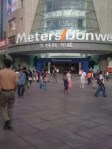
FT: “When research agency Millward Brown Optimor released rankings of the fastest growing global brands this week, at number 10 was a company that most Financial Times readers have probably never heard of: Chinese youth fashion brand Metersbonwe.

Some mainland brands are becoming household names in the west – such as Lenovo, Haier or Huawei – but they were not on the list. Instead, unknown Metersbonwe appeared, just a few slots below Apple.

Present in even the smallest Chinese cities, Metersbonwe will soon be coming to a high street near you if Zhou Chengjian, founder and chairman of the board, has his way. Within three to five years, he plans to push into the fashion markets of London, Paris, New York and Milan with his youthful and inexpensive designs.With revenue last year of Rmb10bn ($1.6bn) and net profit of Rmb1.2bn – up 32 and 59 per cent respectively year on year – Metersbonwe has done what so few other Chinese brands have been able to: outpace foreign rivals in the hyper-competitive mainland fashion market.

Millward Brown Optimor ranked Metersbonwe tenth in the world for “brand momentum” – advertising-speak for growth potential and consumer popularity. The result was based entirely on the company’s performance in China, where Euromonitor says Shenzhen-listed Metersbonwe is the third-largest apparel brand by sales behind Nike and Anta, a local sportswear brand. Even China’s economic slowdown seems not to be dimming the company’s lustre: Metersbonwe is predicting a 20 per cent rise in revenues and net profit this year, with sales so far appearing recession-proof.

The Metersbonwe story embodies the phrase “rags to riches”. Mr Chengjian, 46, who created the company 17 years ago, started out as a penniless tailor. Now he is the second richest person in Shanghai – a city of the stunningly wealthy – with a fortune of nearly $5bn, according to the latest Hurun rich list. A peasant from a tiny village in coastal Zhejiang province, he says he was no good at school, did not enjoy working in the sun and rain on construction sites, but did like the soft feel of fabric under his fingers so became a tailor. “My dream is to be the world’s tailor,” he told the FT in an interview this week, in an office decorated with posters of Chinese leaders Mao Zedong and Deng Xiaoping. His staff say he reveres Mao because he “made China free” and Deng because he “made China open”.

Mr Zhou says there is no particular secret to his success, apart from keeping his head amid all the fabulous opportunities for making money. “I work very hard and China is developing very fast,” he said. “Other Chinese companies dabble in too many things. But we set out 10 years ago to focus only on fashion.” He created a downmarket version of H&M and Zara, targeting college students and recent graduates, with a brand that many think is European.

Although Mr Zhou claims Metersbonwe was first a Mandarin name, many of its shops carry most prominently only the English transliteration, an obvious attempt to appeal to Chinese consumers who equate foreign brands with better style and quality.

“They did the right thing at the right time,” says Wu Xiaobo, dean of the school of management of Zhejiang University, who points out that Metersbonwe was the first garment company in China to adopt the international practice of outsourcing all manufacturing. …

With international retailers beating a path to China to make money, why is Mr Zhou so intent on launching overseas? In his typically earthy way, Mr Zhou says he is like a frog in boiling water, where the water is the increasingly competitive Chinese fashion scene. If he hangs around too long, he will die; there is no alternative but to jump out while there is still time – to become a household name around the world.”

via Chinese fashion group has global designs – FT.com.

Related posts: 

Law of Unintended Consequences

continuously updated blog about China & India

ChiaHou's Book Reviews

continuously updated blog about China & India

What's wrong with the world; and its economy

continuously updated blog about China & India