Posts tagged ‘Hindi’

03/10/2016

Amitabh Bachchan: ‘If she gets paid more than me, that’s fine’ – BBC News

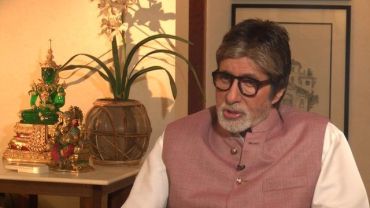
One of India’s biggest stars, Amitabh Bachchan, says he’s glad people are talking about the gender pay gap.

He recently starred in a film called Pink about feminism and attitudes towards women in India which has caused quite a stir in the country.

He spoke to the BBC’s Yogita Limaye.

Source: Amitabh Bachchan: ‘If she gets paid more than me, that’s fine’ – BBC News

13/08/2014

Class divide puts English to the test in India’s civil services

Indian students in recent weeks have protested the use of English in the country’s difficult civil service examinations. The students, usually from Hindi-speaking regions of India, say that the exams reflect a class divide: if you speak and write English well, you are seen as part of the educated, urban elite. If you do not, it’s because you are one of the disadvantaged, usually from smaller towns or villages.

English is a tricky subject in India. A language imposed by colonists who exploited the people and resources of the land for centuries, it also was the one language that people seeking independence from the British could use to speak to one another. It remains one of two official languages across India, though many people do not speak it well or at all. I spoke to some of the civil service aspirants who have complained about the language requirement and the structure of the exams, and learned about the role that they hope the exam will play in their lives.

Ashutosh Sharma is a 25-year-old psychology graduate from Basti district of Uttar Pradesh, who has been camping in Delhi’s Mukherjee Nagar neighbourhood for the past two years, hoping that he will crack the examination one day.

“The entire protest is presented as a language issue. It’s much more than that. It’s about how a group of elite people in the country want to govern the things. How they cannot digest that a villager, who doesn’t match their lavish lifestyle, rises to the ranks on the basis of his knowledge and hard work,” he said.

Ashutosh said he comes from a village, and is better acquainted with the problems the country faces in these places. “When I was in the village primary school, I remember that the teacher would hardly come to take classes. There was no accountability. As a district magistrate, I would know better how the problem can be fixed and I can deal with the problem regardless of whether I speak English or not.”

via India Insight.

06/08/2014

Key questions that have been lost in the din of protests against the civil services exam

In the midst of protests against the new format of the civil services examination, several key issues have gone unaddressed. An opportunity for meaningful debate about the exam has quickly turned into a slanging match.
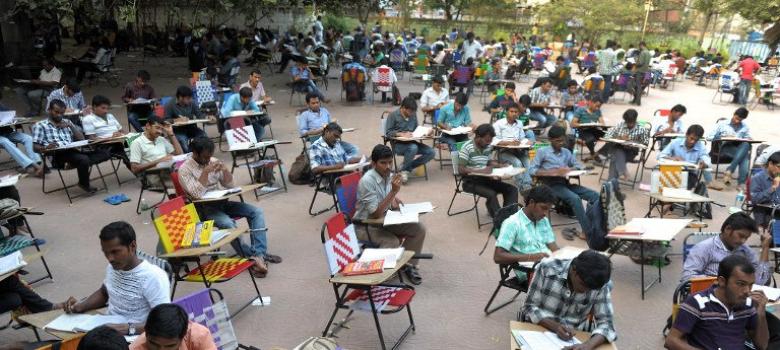
The matter has assumed an unnecessarily adversarial tone, with English pitted against other Indian languages. But the issues are far more complex and far less binary than politicians believe. Here are some key questions that have got lost in the din.

Should the Civil Services Aptitude Test be scrapped altogether?

The answer is a clear no. The CSAT gauges logical reasoning, problem-solving skills, analytical abilities, basic numeracy and English proficiency up to class 10 level. To argue that an administrator can do without any of these skills is unrealistic. An administrator has to deal with huge amounts of quantitative and qualitative information and any deficiency in these skills would mean a sub-par performance on the job.

Does the CSAT discriminate against students doing the exam in Hindi or regional languages?

No, but it does employ very poor translation software. The Union Public Service Commission, which conducts the exam, must acquire competent translators or purchase translation software that is up to the mark. This should do the trick.

Is there a grain of truth in what the protestors are alleging?

At the heart of the uproar lies the allegation that the exam is biased towards those who take the exam in English. Since the revised format came into force in 2011, the number of students who take the exam in Hindi has steadily fallen. (However, to really judge whether this is significant, one would have to look not at the absolute numbers of successful candidates who do the exam in Hindi, but the percentage of such candidates out of all those who take the exam in Hindi. But data about the number of test takers in each language is not available).

There may be a kernel of truth to this claim. But the blame lies to a large extent with the coaching and publishing industry. There is simply not enough study material available in Hindi and other regional languages. It is this paucity of study material that hurts students from vernacular backgrounds in the long run.

Surely, pelting stones and burning vehicles is not acceptable behaviour?

Some protestors, by resorting to violence, have demonstrated their unsuitability for the job. It is safe to say that many students have spent hundreds of hours preparing for the exam in its current format. What about their efforts? Do they count for nothing? By taking to the streets and letting political players into the mix, the protestors have probably done more harm than good.

Does the civil services exam in its current format select the best and the brightest?

Opinions differ considerably. An IAS probationer who did not want to be named told this writer: “The civil service exams, in its existing format, put less emphasis on rote learning and that is a good thing. The less this examination focuses on retention of information, the better.”

The civil services exam in its current format has three key components. The prelims, the mains and the interview. The first stage of the exam is the prelims, which has two parts, of which the second is the dreaded CSAT. As argued earlier, however, the CSAT is essential for ensuring that only candidates who possess minimum competencies and skill sets make it through to the far more difficult second round, the mains.

The Union Public Service Commission, with its recent revision in format for the mains, has reduced much of the burden on students. Earlier, a student had to master two subjects of their choice (neither of which he or she may have studied before). But now a student just has to choose just one subject of his or her choice. By emphasising general studies and critical thinking, the UPSC has levelled the playing field to a large degree.

How about allowing lateral entry?

The UPSC could also perhaps increase the number of vacancies in the civil services. It is a fact that we don’t have enough administrators for the population. According to various media reports, Right to Information applications and 2011 census figures, India has slightly more than 1,600 government servants for every 100,000 residents, which many studies say is a low ratio.

If quality of candidates is an issue, then the UPSC could look into the lateral entry of specialists, and even pay them market wages, a system used in the developed world. India’s political establishment must separate policy functions from service delivery and stop interference in operational matters. Simultaneously, the political class must establish uniform standards and guidelines across the country.

via Scroll.in – News. Politics. Culture..

01/07/2014

BBC News – English explodes in India – and it’s not just Hinglish

Anyone who travels beyond Delhi and Mumbai to India’s provincial cities will notice English words cropping up increasingly in Hindi conversation. While some of these terms fell out of use in the UK decades ago, others are familiar, but used in bold new ways.

Indian sigh: Spirtual Walk

Picture the scene. I’m chatting to a young man named Yuvraj Singh. He’s a college student in the Indian city of Dehra Dun. We’re talking in Hindi. But every so often there’s an English word. It’s Hindi, Hindi, Hindi, and then suddenly an English word or phrase is dropped in: “job”, “love story” or “adjust”.

What should we make of this? It’s not that Hindi lacks equivalent words. He could have said the Hindi “kaam” instead of “job”. Why mention the English words? And what’s Yuvraj speaking? Is it Hindi, English, an amalgam “Hinglish“, or something else?

In 1886 Henry Yule and Arthur Burnell published Hobson-Jobson, a guide to words from Indian languages that had passed into English.

You can search through it for references to the origins of words such as “shampoo” and “bungalow”. But now many Indian citizens are using English words in the course of talking Hindi – or Tamil, or Bengali etcetera.

Continue reading the main story

Find out more

Listen to From Our Own Correspondent for insight and analysis from BBC journalists, correspondents and writers from around the world

Broadcast on Radio 4 on Thursdays and Saturdays at 11:30 BST and BBC World Service

Listen to the programme

Download the programme

Sometimes you hear English swear words where you would least expect them.

There are some good reasons for the explosion of English words. They are sometimes badges of honour in a society intent on becoming modern. Even if you don’t speak English fluently, you might be able to use the odd word to impress your neighbour.

I was travelling on a train out of Delhi once and a young girl dropped her ice cream on the carriage floor. Her mother turned round and reminded her of what she evidently thought was an appropriate English word: “Say ‘shit!’ Say ‘shit’!” she said strictly. You won’t hear that on the 08:15 to Paddington.

via BBC News – English explodes in India – and it’s not just Hinglish.

20/06/2014

Ensure English is Used on Social Media, Jayalalithaa Writes to PM Modi: Full Text of Letter – NDTV

Tamil Nadu Chief Minister J Jayalalithaa has written to Prime Minister Narendra Modi to ensure the urgent amendment of an instruction that asks government departments to use Hindi for tweets and other social media posts.

Ensure English is Used on Social Media, Jayalalithaa Writes to PM Modi: Full Text of Letter

Following is the full text of her letter:

It has come to my notice that the Ministry of Home Affairs has issued two Office Memoranda, the first by the Official Language Department of the Ministry of Home Affairs (O.M.No.12019/03/2014-OL, dated 10.3.2014) and the second by the Co-ordination Division of the Ministry of Home Affairs (O.M.No.11020/01/2013-Hindi, dated 27.5.2014). These Office Memoranda direct that official accounts on social media like Facebook, Twitter, blogs, Google and You Tube which at present use only English should compulsorily use Hindi, or both Hindi and English,  with Hindi being written above or first. This makes the use of Hindi mandatory and English optional.

As you are aware, as per the Official Languages Rules, 1976, communications from a Central Government office to a State or Union Territory in Region “C” or to any office (not being a Central Government office) or person in such State shall be in English. This provision has been introduced following the introduction of a mandatory proviso to Section 3(1) of the Official Languages Act, 1963, by an amendment in 1968 which states as follows:-

“Provided that the English language shall be used for purposes of communication between the Union and a State which has not adopted Hindi as its official language”.

In this context, while the Office Memoranda have been primarily made applicable to Government of India officers and offices located in “Region A”, social media by their very nature are not only accessible to all persons on the internet but meant to be a means of communication to persons living in all parts of India including those in “Region C”.  People located in “Region C” with whom the Government of India communication needs to be in English, will not have access to such public information if it is not in English. This move would therefore be against the letter and spirit of the Official Languages Act, 1963.  As you are aware, this is a highly sensitive issue and causes disquiet to the people of Tamil Nadu who are very proud of and passionate about their linguistic heritage.

Hence, I request you to kindly ensure that instructions are suitably modified to ensure that English is used on social media.

via Ensure English is Used on Social Media, Jayalalithaa Writes to PM Modi: Full Text of Letter – NDTV.

Law of Unintended Consequences

continuously updated blog about China & India

ChiaHou's Book Reviews

continuously updated blog about China & India

What's wrong with the world; and its economy

continuously updated blog about China & India