Posts tagged ‘India’

20/10/2016

India Still Has Work to Do on Rule of Law, Report says – India Real Time – WSJ

India is making progress on the openness of its government but it needs to improve security and reduce political violence, a new report on the rule of law says.

The latest “Rule of Law Index,” released Thursday by World Justice Project, a Washington-based nonprofit, ranks India 66th among 113 countries.

The report, based on a survey of 1,000 people and local experts, looked into Indians’ dealings with their government, the police, courts and other state institutions in their day-to-day lives.

Compared with the same countries included in the study last year, India’s rank improved three places in 2016. However, once 11 more countries were added for this year’s survey, India slipped seven places to 66th. The 2016 survey compared 113 countries over six subject areas, including “constraints on government power,” “order and security” and “fundamental rights,” among others.India’s average score for “open government” improved from 0.53 in 2014 to 0.66 in 2016. Prime Minister Narendra Modi has made communication with citizens a priority, launching the engagement portal mygov.in in 2014, which allows citizens to make suggestions on key government programs.

India also scored better than last year in “constraints on government powers”–measuring the effectiveness of institutional checks on government power by the legislature, judiciary, and independent auditing and review agencies.

But the South Asian nation’s score declined for “order and security,” where it ranked in the “bottom tercile” with Uganda, Kenya, Afghanistan and Pakistan for “conventional crime, political violence, and violence as a means to redress personal grievances.

”India also did poorly compared with last year in safeguarding fundamental rights, including “effective enforcement of the right to life, rights of the accused and fundamental labor rights,” among others, said the report.

In South Asia, Nepal came 63rd, three places ahead of India. Pakistan was ranked 106th in the bottom eight of the global rankings. The country was judged to have the worst access to civil justice and to be the least orderly and secure out of the 66 countries ranked in the index in 2011.

The rule of law is important to the progress of countries, said Alejandro Ponce, chief research officer of The World Justice Project.“In broad terms, a lack of rule of law discourages investment and economic growth,” said Mr. Ponce.

Source: India Still Has Work to Do on Rule of Law, Report says – India Real Time – WSJ

Tags: ,
14/10/2016

India and Russia to sign air defence deal – BBC News

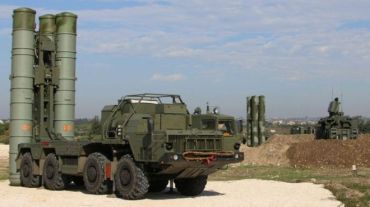
Russia and India are expected to sign a deal on Saturday for the delivery of an advanced air defence system to Delhi, a Kremlin official has said.

The S-400 missiles are Moscow’s most sophisticated aircraft defence system.Yuri Ushakov said the agreement would be signed at a summit in Goa where President Vladimir Putin will hold talks with Indian PM Narendra Modi.

India is also hosting a Brics summit in Goa this weekend involving Brazil, Russia, India, China and South Africa.

“An agreement on the delivery of S-400 ‘Triumph’ anti-missile defence systems and other deals will be signed as a result of the talks,” Russian news agencies quoted Mr Ushakov as saying.

Russia’s missiles send robust signal

The Kremlin earlier this week said the talks with Mr Modi would focus on “a wide range of matters of bilateral relations, especially trade and economic ties”.

The S-400 surface-to-air missiles have been deployed to Syria, where Russian forces have been operating in support of the government of President Bashar al-Assad.Russia and India were close allies during the Cold War, but recently the relationship has become more complex.Talks have been held annually since 2000 and hosted alternately by Moscow and Delhi.

Source: India and Russia to sign air defence deal – BBC News

13/10/2016

Is this the world’s most oversubscribed school? – BBC News

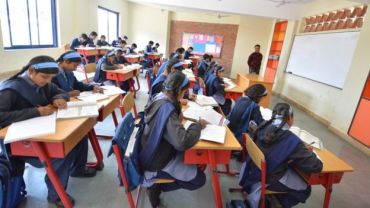
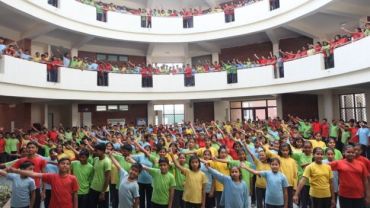
The VidyaGyan Leadership Academy, a boarding school in India‘s Uttar Pradesh state, is offering an elite education for pupils drawn from the rural poor.

There are about 200 places on offer each year – but such is the appetite for families to get a better life for their children, there are 250,000 applications.

The school, set up by the Shiv Nadar Foundation, is completely free, and offers the type of education usually available only to the very wealthy.

Roshni Nadar Malhotra, a businesswoman and trustee of the foundation, says the school has been modelled on India’s private schools, which put students on the pathway to top universities and high-flying careers.

Roshni Nadar Malhotra wants the school to produce a more meritocratic generation of leaders for India

But the VidyaGyan school is open only to the very clever and very poor – which she describes as the “top of the bottom of the pyramid”.

No-one can even apply u

Unless their family income is below the equivalent of £1,500 per year, and the school carries out checks to make sure that better-off families are not trying to get in.

“Most of India is rural, there is a huge population in India not being tapped for their excellence. They have no access to great universities,” says Ms Malhotra, who is chief executive officer of the HCL technology company.

A performer from Uttar Pradesh prepares to take part in a festival

“We wanted to see if we could have an admissions system that was truly meritorious.”

The admissions system operates on an epic scale.

After the initial 250,000 applications, Ms Malhotra says, about 125,000 turn up to take a written test.

The drop-out rate is a reflection of the tough lives of these families, who might struggle to travel to a local test centre or be stopped by bad weather.

The school’s ambition is for its students to compete anywhere in the world

Based on the results, there is a shortlist of about 6,000 students, who then take another set of tests. There are also visits to the homes of applicants.

This sifting process produces an intake of 200 pupils, boys and girls, who are taught, clothed, fed and housed by the school.

These children from the poorest rural families, a deliberate mix of religions and castes, then receive a high-cost education, exposing them to ideas and opportunities.

It is an intensive process, designed to create a “stepping stone” to top universities in India or abroad.

The school has been founded to help clever poor pupils from Uttar Pradesh

It has become such a phenomenon that there are now coaching academies dedicated to training people for the test.

So far the school has cost the foundation £59m – and Ms Malhotra says there have been questions about whether the money would have been better spent on teaching basic literacy to much bigger numbers of young people.The final intake of 200 pupils stands compared with Uttar Pradesh’s population of about 200 million.

But Ms Malhotra says the distinct purpose of the school is to create a leadership academy focusing on providing a chance for disadvantaged youngsters to compete with India’s elite.

These are the children of poor, uneducated farmers, and she wants them to be equipped to reach the top in politics, business or sport.

The school is intended to provide a stepping stone to top universities

And she says there is a “ripple effect” on the home villages of these pupils, as they see their young people being able to go to a top university in India or in Europe or the United States.

“When students get into a great university, it’s a huge aspirational lift for their village. These students become beacons of hope.”

There are also expectations of paying back to their local communities. In the summer, when they go home, they have to carry out a socially useful project, such as providing cleaner water, clearing away rubbish or finding a safer way of cooking.

“It’s about getting their hands dirty and finding out how to solve problems,” says Ms Malhotra.

Once pupils are accepted, everything in the school is free for families

The school’s first graduates have left with “stellar results”, but she also wants them to be equipped to compete with international students anywhere.

“It’s not just about getting in, they need to be able to survive. All of a sudden you’re thrown in with other highly competitive students from all over the world.”

It will be some time before it is possible to see if they become India’s future leaders, she says. “But they’re on their way.”

Source: Is this the world’s most oversubscribed school? – BBC News

12/10/2016

What’s a slum? In India, Dharavi’s thriving informal economy defies the label | Reuters

Malik Abdullah’s plastic recycling business in Dharavi, the sprawling slum in Mumbai that is among the largest in Asia, has survived fire, building collapses, and the criminal underworld for decades. Now, it is threatened by development.

For 35 years, Abdullah has carried on the business built by his father, pulverising used plastic cans and bottles into pellets, then selling them to factories to refashion.

Thousands of small businesses like his thrive in Dharavi, creating an informal economy with an annual turnover of $1 billion by some estimates.

Now, plans to replace the ramshackle workshops and decrepit homes with office blocks and high-rise apartments threaten the businesses that employ thousands of its 1 million residents.

“The city doesn’t care about the businesses here, which are our livelihood,” said Abdullah, 52, standing in an alley crammed with towering stacks of plastic containers.

“This is where we live, this is where we work. Where will we go if they only build flats and offices?” he said.

During the past two decades, there have been several attempts to develop Dharavi, which sprawls over 240 hectares (590 acres). However, residents have opposed many of them, saying they do not consider their interests.

Real estate in Mumbai, India‘s financial hub, is among the most expensive in the world. The contrast between rich and poor is stark, and about 60 percent of the city’s population of more than 18 million lives in slums.

Dharavi has always been a magnet for migrants from across India. Many have lived there for decades, their one-room tenements and low-rise homes dwarfed by the gleaming glass and chrome office towers and luxury hotels that dot the city.

Amid Dharavi’s narrow alleys, open drains and canopies of electric cables, migrants who came in search of better economic opportunities have created a community of schools, temples, mosques, restaurants, tailors and mobile phone shops.

Tens of thousands work as potters, leather tanners, weavers, soap makers, and in Dharavi’s massive recycling industry.

Most homes double up as work spaces, the whirr of sewing machines, the clang of metal and the pungent odour of spices mingling with the call for prayer and the putrid smell of trash.

“People think of slums as places of static despair as depicted in films such as ‘Slumdog Millionaire‘,” said Sanjeev Sanyal, an economist and writer, referring to the Academy Award-winning movie that exposed the gritty underbelly of Dharavi.

“If one looks past the open drains and plastic sheets, one will see that slums are ecosystems buzzing with activity… Creating neat low-income housing estates will not work unless they allow for many of the messy economic and social activities that thrive in slums,” he said.

ROOF TOPS

Once a small fishing village, Dharavi was notorious as a den of crime in the 1970s and ’80s. Following a massive crackdown, violent crime is rare and Dharavi has featured in movies, art projects and a Harvard Business School case study.

Fed by two suburban railway lines and perilously close to the Mumbai airport, Dharavi has lured developers, too.

Recent plans by city officials envisaged private developers clearing the area and building high-rise flats in which each eligible family gets a free 225 sq ft (21 sq metres) unit. The developer in turn gets rights to build commercial space to rent.

Dozens of such housing blocks have been built over the years, falling into disrepair as facilities were not upgraded.

What these buildings also lack is room for work. The squat tenements are perfectly suited for businesses, with living and sleeping spaces sitting atop work spaces, workers spilling into the alleys, and material stacked outside and on roof tops.

In Kumbharwada, the potter’s colony, where migrants from neighbouring Gujarat state make earthen water pots and lamps, potters’ wheels can be seen through open doorways, while ready pots are stacked in the alleys awaiting pickup.

The colony is abuzz ahead of the Dussehra and Diwali festivals, when decorated pots and lamps are in demand.

With small televisions turned on low, women sit cross-legged on the floor in their homes, painting motifs in red, yellow and green, and gluing on sequins and shiny bits of mica.

Down another alley, a group of women chat and braid leather strips for belts and bags on the stoop of a home.

“We want new flats, but they are small,” said Sharada Tape, who earns about 100 rupees ($1.50) a day.

“There are no spaces like this where we can all sit and work. It will be difficult, but we need the money,” she said.

RESIDENTS WANT MORE SAY

City officials last month submitted a new 250 billion rupee ($3.7 billion) redevelopment plan to Maharashtra state for approval after previous plans failed to attract bidders.

The new plan, a public-private partnership, has ample commercial space for businesses, but only for the “formal, legitimate” ones, said Debashish Chakrabarty, head of the Dharavi Redevelopment Authority.

“All the licensed businesses will have space under the plan. It will be better, cleaner than what they have now,” he said.

It is this narrow definition of what’s legal and permissible that is the biggest challenge, not just to recognising Dharavi’s businesses, but also determining Dharavi’s fate, said Rahul Srivastava, a founder of the Institute of Urbanology in Mumbai.

“The biggest impediment to the improvement of many of these settlements is the misconception that they are illegitimate, because residents don’t own the land they occupy,” he said.

“Can settlements which are home to fifth-generation migrants be called ‘informal’? We need to transform our perception of these neighbourhoods,” he said.

Across the country, plans to build modern Smart Cities will force tens of thousands of people from their slum homes as planners spruce up central business districts and build metro train lines, activists say.

Campaigners say until authorities give Dharavi residents more power and recognise the vital role of their businesses, any redevelopment plan is destined to fail.

“If we don’t have these small enterprises, it wouldn’t be Dharavi,” said Jockin Arputham, president of the National Slum Dwellers’ Federation in Mumbai.

“This is a people-sponsored economic zone, and the redevelopment should be around the economic zone. It is a township, not a slum, and it should be treated as one,” he said.

Abdullah, the plastic recycler, is reconciled to his fate.

“We want development. We also want to keep our businesses,” he said.

“But we have to be prepared for any eventuality. We are not owners of the land, so we may have to shut down,” he said.

($1 = 66.5075 Indian rupees)

Source: What’s a slum? In India, Dharavi’s thriving informal economy defies the label | Reuters

11/10/2016

Diaspora Dollars Dwindle: Indian Remittance Growth Slips to 12-Year Low – India Real Time – WSJ

India’s global army of expatriates–which does everything from writing software in Silicon Valley to building skyscrapers in in Qatar–is the world’s most generous when it comes to number of dollars sent home, but this year they have become a bit stingy.

Recently released World Bank estimates predict the Desi diaspora will send home $65.45 billion this year. While that is just above remittances into China ($65.17 billion) and tens of billions beyond any other country, it is a 5% decline from last year.

The last time India saw a bigger slide in remittances was back in 2004 when remittances fell 11%.

Globally, remittances are expected to edge up about 1% this year, the World Bank predicted, so why is India underperforming?

The main problem is that many of the Gulf Cooperation Council countries have been struggling with the decline in oil prices. That has meant they are hiring fewer Indians, providing fewer perks to their international employees and in some countries even restricting the number of foreigners that can be hired.

“This year the South Asia region would see a decline of 2.3% in remittances to the region due mainly to the impact of declining oil prices and labor market nationalization policies on remittances from GCC countries,” the report said. “Moving forward remittance growth in the region is expected to remain subdued.”

Some parts of the southern state of Kerala and other regions in India that depend on remittances are already starting to feel the pain from the decline in oil riches.

The World Bank expects remittance growth to return, expanding 2.2% in South Asia next year and 2.3% the year after that. Globally remittance growth will likely be stuck below 4% for years, the bank said.

“Remittances continue to be an important component of the global economy, surpassing international aid. However this ‘new normal’ of weak growth in remittances could present challenges for millions of families that rely heavily on these flows. This, in turn, can seriously impact the economies of many countries around the world bringing on a new set of challenges to economic growth,” said Augusto Lopez-Claros, Director of the World Bank’s Global Indicators Group.

Source: Diaspora Dollars Dwindle: Indian Remittance Growth Slips to 12-Year Low – India Real Time – WSJ

07/10/2016

India telecoms spectrum auction raises $9.9 billion, Vodafone tops spending | Reuters

Vodafone Group Plc (VOD.L) was the biggest spender in an Indian mobile phone spectrum auction that raised a total $9.9 billion for the government, as carriers competed to boost subscribers in the world’s fastest-growing internet services market.

The proceeds of the auction, which ended on Thursday after five days of bidding, helped India raise about 658 billion rupees ($9.87 billion).

That figure was well below the $84 billion worth of spectrum on offer however, as carriers shunned the priciest category of airwaves, snapping up less than half of the total on offer.

Yet given the vast volume available, no one had expected the priciest spectrum – that offers deeper reach – to be bought now, as data demand in India is still in its infancy and data costs in the ultra-competitive market are falling, making it harder for carriers to justify big cash outlays.

JPMorgan earlier on Thursday had projected the auction would generate between $8 billion and $12 billion.The government had budgeted for 646 billion rupees ($9.7 billion) as revenue from the auction in the current fiscal year ending March. It will receive some 320 billion rupees upfront, as carriers are allowed to make payments in instalments.

Vodafone, which in recent months injected $7.2 billion in its Indian unit, the market’s No.2, bought spectrum worth more than $3 billion, according to a source with knowledge of the matter.

Market leader Bharti Airtel (BRTI.NS) bought $2.13 billion worth, while No. 3 player Idea Cellular (IDEA.NS) spent $1.92 billion at the auction.

The three rivals, which together hold more than 60 percent of the Indian market of a billion-plus mobile subscriptions, are being challenged by new entrant Reliance Jio Infocomm, backed by India’s richest man Mukesh Ambani.Reliance Jio, which has the most 4G airwaves across India’s 22 telecoms zones, last month launched services with free voice calls and cut-rate data prices, triggering a price war. It bought spectrum worth $2.05 billion.

Although among India’s top three, Vodafone and Idea lag Bharti and Jio in terms of 4G presence, and were seen beefing up their high-speed data networks by aggressively bidding in the latest spectrum sale.

Idea said on Thursday it had been able to complete its mobile broadband footprint in all 22 service areas after the latest auction. Vodafone was yet to give details.The government found no takers for the best-quality and the priciest 700 megahertz airwaves, offered for the first time.

Carriers instead purchased spectrum in the 1800 and 2300 bands that can also handle 4G traffic.

All seven carriers including Reliance Communications (RLCM.NS) and Tata Teleservices that participated in the auction bought some spectrum, Telecoms Minister Manoj Sinha told reporters on Thursday.

The auction was India’s largest by spectrum volume.

Source: India telecoms spectrum auction raises $9.9 billion, Vodafone tops spending | Reuters

06/10/2016

Does Britain owe a debt to India for its 200 years of colonisation? – Oxford Union Society

Dr Shashi Tharoor, MP speaks eloquently on why, in his view, Britain owes a huge debt to India for its 200 years of colonisation.  If this notion interests you – regardless of whether you agree with it or not – I urge you to watch this short video from You Tube – Dr Shashi Tharoor. You will not be disappointed.

05/10/2016

Why are millions of Indians marching in silence? – BBC News

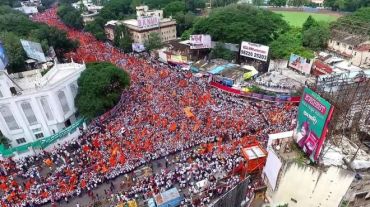
It is a unique protest: the silent marchers have no leaders; and they include the peasant and the professional. Women lead many of the marches; and politicians are not allowed to seize them. It is a sound of silence, says a commentator, that India can ill afford to ignore.

The protesters belong to the Maratha caste, one of India’s proudest – the warrior king Shivaji was one of them. Mostly farmers, they comprise more than a third of one of the population of Maharashtra, a relatively prosperous state, which is home, on one hand to Bollywood, thriving factories and farms and on the other, malnourished children and neglected tribespeople living in abject poverty.

Huge protests

The rape of a teenage Maratha girl allegedly by three low caste Dalit men triggered the silent marches in July. Then the protests expanded to include a demand for quotas in college seats and government jobs and a review of a 27-year-old federal law that protects Dalits and tribespeople from caste-related atrocities.

What is India’s caste system?

Why India’s farm communities are angryAfter more than 20 such rallies, the silent marchers – who call themselves the Maratha Revolutionary Silent Rallies – are expected to gather in the western Indian state capital, Mumbai, at the end of October. More than 10 million people are expected to participate in what could turn out to be one of largest protests in India in recent memory.

The upper-caste, largely land-owning Marathas have a handful of grumbles.

For one, they have turned their ire on the Dalits and tribespeople, alleging that the law to protect them has become a pretext to target the upper caste community, and lodge false cases against them. (The victims also get state compensation for as many as 47 offences against them.)

Image copyright VAISHALI GALIM

But this may not be an entirely truthful claim. Although dalits and tribespeople – India’s wretched of the earth – comprise 19% of Maharashtra’s population, but only 1% of the police complaints were filed by them last year, according to one report. Also the federal law was applicable in less than 40% of the complaints.

Social unrest

Clearly this disingenuous grievance masks a longer-standing demand: caste quotas in government jobs and seats in educational institutions. India’s Supreme Court has put a 50% cap on caste quotas, a limit that has already been reached in Maharashtra. Any concessions to the Marathas will mean that they will have to be officially labelled backward or less-privileged and the quotas will have to come at the expense of those for the less privileged castes. This could potentially trigger off bloody caste wars in the state.

The silent marchers of Maharashtra point to a host of structural infirmities afflicting India, which, if not resolved in time, could stoke widespread social unrest.

Growing inequity and decades of flagrant cronyism has meant that power and wealth continue to belong to a few.

The majority of colleges, cooperative banks and sugar factories in Maharashtra, for example, are owned by a clutch of politicians. According to one estimate, 3,000 families own more than 70% of all the farms in the state. The majority of the state’s 18 chief ministers have been Marathas. Half of its lawmakers belong to the community as well.

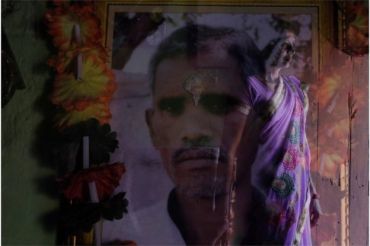
Image copyright MANSI THAPLIYAL Maratha farmers have taken their lives after they failed to repay debts

But caste and class don’t often coalesce in India, and the Marathas, like other upper caste communities have mixed fortunes: they are the educated elite and the rich farmers, but they are also the struggling small and landless farmers and farm workers. More than a third of Marathas are landless, according to one estimate.

It is the “lower and middle-rung Marathas who feel isolated, neglected, marginalised in the job market and denied opportunities in higher education,” in a fast-changing country, as commentator Kumar Ketkar points out in this perceptive essay on the ongoing protests.

The silent marches also shine a spotlight on its looming farm crisis as farmer incomes plummet due to expensive feedstuff, fertiliser, labour and erratic crop prices.

Frustration

Plot sizes have also shrunk, making farming unrewarding. Most of India’s farms are rain fed, and irregular weather changes are playing havoc with crops as rivers are drying up, and drought is common. Farmers are often left to fend for themselves and have no skills for jobs in India’s services-based economy. Aspiration is turning into frustration.

The Maratha protests also point to how India is veering towards what sociologist Andre Beteille called a “populist democracy” where social and political life are influenced by group identities and loyalties. “Problems arise when the loyalties of kinship and community are allowed to distort and override the demands of constitutional government,” wrote Professor Beteille.

Image copyright MANSI THAPLIYAL Farming is becoming an unrewarding profession

Many believe India’s quotas for seats and jobs are in a sordid mess of its own making.

It is indisputable that affirmative action is essential for communities like dalits and tribespeople who have been historically wronged. But extending it to other castes recklessly can distort matters.

How much burden of quotas can a state bear without being weakened irreparably? India needs jobs – and fast – and skills training if it has to avoid the social unrest that could blight a developing nation. Otherwise, the marchers of Maharashtra may not remain silent for long.

Source: Why are millions of Indians marching in silence? – BBC News

05/10/2016

Transforming lives in India’s manufacturing hubs – BBC News

By day she works as an assistant engineer, leading a team of 10 in a car factory manufacturing parts for Renault-Nissan Alliance vehicles.

The Make in India scheme aims to make the country a global manufacturing hub

Like hundreds of thousands of people across India, Sujitha‘s journey from an under-developed village in India’s south to the outskirts of the city of Chennai (Madras), has transformed her life.

“My native place is a small village called Kizhattur. There is not even proper transport over there,” says Sujitha. “Because I grew up in that situation, I knew that I had to study hard and find a job.”

And she did just that – albeit against the wishes of her family who wanted her to marry and settle down.Sujitha secured a diploma and when Renault-Nissan advertised a position for a junior engineer five years ago, she jumped at the opportunity.”I can’t even imagine what I would be doing if I did not work in this factory. Perhaps I would be in the village doing small jobs on the farm,” she says. “I would just about make ends meet.”

Detroit of Asia

Nissan and Renault are two of several international carmakers that have set up shop outside Chennai in the last 10 years.

Nearly a fifth of all cars made in India are produced in the area around Chennai in Tamil Nadu state

Today the area, known as the “Detroit of Asia”, is a thriving manufacturing hub where cars are produced for export as well as for the domestic market.India makes about 24 million vehicles a year, nearly a fifth of them in this region of Tamil Nadu state.

“We have seen a number of other car manufacturers establish plants in the state and that has helped us attract and help local suppliers relocate and set up in Tamil Nadu itself,” says Colin Macdonald, managing director of Renault-Nissan.

“Since 2010, we had about 15% of our suppliers in the Tamil Nadu area. We are now operating with 60% of our Indian suppliers in Tamil Nadu. So from an employment perspective, this is huge.

“High unemployment

Creating jobs is central to Prime Minister Narendra Modi‘s Make in India campaign, an effort to promote inclusive growth in the country.Modi has promised foreign players he will make it easier to do business in India.

But more than two years after taking power, and after introducing a raft of policies, unemployment rates are at a five-year high.According to a recent government survey, about 77% of Indian households have no regular wage or salaried person, and so for many, life is not improving fast enough.

Domestic market growth

Despite that, success in places like Chennai is a sign that India remains appealing to foreign companies.Now that the area has become an auto hub, cost-effective raw materials can be sourced. With the port less than 100km away, it is easy to import parts and export products back out. Labour is cheap too.

Several car companies have set up shop on the outskirts of Chennai. Workers here are seen at Ford’s plant in Chengalpattu

The growth of the domestic market only adds to India’s appeal.”Today, only 20 in 1,000 people in India own a vehicle but we expect that to grow dramatically in the next five years and we expect the market to be five million cars by 2020, making India the third biggest market on the planet,” says Colin Macdonald.

A matter of pride

For Sujitha Rajendrababu, owning a car one day has become more of a reality than a dream.

“What I had dreamed of becoming in the future was made true by this job. I do not know how to express this.”

The daughter of a farmer, she has already used the money she has earned to buy a fridge, a TV, some jewellery and even a holiday around India. But her ambitions don’t stop there.

“My long-term goal is to become the manager of the stamping shop. I don’t only want to be the manager of the stamping shop, but of this organisation as well.”

And she wants the same for other people just like her.

“A lot of people in my village ask me if I can help them find jobs for their children. That makes me feel proud.”

Source: Transforming lives in India’s manufacturing hubs – BBC News

03/10/2016

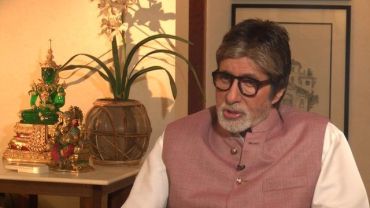
Amitabh Bachchan: ‘If she gets paid more than me, that’s fine’ – BBC News

One of India’s biggest stars, Amitabh Bachchan, says he’s glad people are talking about the gender pay gap.

He recently starred in a film called Pink about feminism and attitudes towards women in India which has caused quite a stir in the country.

He spoke to the BBC’s Yogita Limaye.

Source: Amitabh Bachchan: ‘If she gets paid more than me, that’s fine’ – BBC News

Law of Unintended Consequences

continuously updated blog about China & India

ChiaHou's Book Reviews

continuously updated blog about China & India

What's wrong with the world; and its economy

continuously updated blog about China & India