Posts tagged ‘India’

15/09/2014

China on track to develop Indian railways as Xi heads to South Asia | Reuters

China will pledge to invest billions of dollars in India’s rail network during a visit by President Xi Jinping this week, bringing more than diplomatic nicety to the neighbors’ first summit since Narendra Modi became prime minister in May.

China's President Xi Jinping attends a meeting with Venezuela's President Nicolas Maduro at Miraflores Palace in Caracas in this July 20, 2014 file photo. REUTERS/Jorge Silva/Files

The leaders of Asia’s three biggest economies – China, India and Japan – have crisscrossed the region this month, lobbying for strategic influence, building defense ties, and seeking new business opportunities.

Beijing’s bid to ramp up commercial ties in India comes despite a territorial dispute that has flared anew in recent years, raising concerns in New Delhi, where memories of a humiliating border war defeat in 1962 run deep.

It follows a pledge by Japan to invest $35 billion in India over the next five years – including the introduction of bullet trains – and a drive to deepen security ties during talks earlier this month between Modi and Prime Minister Shinzo Abe in Tokyo.

India and China are expected to sign a pact that will open the way for Chinese participation in new rail tracks, automated signaling for faster trains and modern stations that India’s British-built rail system desperately needs, having barely added 11,000 km of track in the 67 years since independence.

China, which added 14,000 km of track in the five years to 2011, is also pushing for a share of the lucrative high-speed train market in India, which it says would be cheaper than Japanese proposals.

“India has a strong, real desire to increase its cooperation with China and other countries to perfect and develop its rail system, and has concrete cooperation ideas,” Assistant Chinese Foreign Minister Liu Jianchao told reporters ahead of Xi’s trip.

“India is considering building high-speed railways, and China has a positive attitude towards this.”

China’s consul general in Mumbai, Liu Youfa, told the Times of India last week that Chinese investment in the modernization of India’s railways could eventually touch $50 billion.

Beijing is looking to invest another $50 billion in building India’s ports, roads and a project to link rivers, part of an infrastructure push that Modi has said is his top priority to crank up economic growth.

Chinese investment will also help narrow a trade deficit with India that hit $31 billion in 2013.

via China on track to develop Indian railways as Xi heads to South Asia | Reuters.

15/09/2014

With eye on China, Modi’s India to develop disputed border region | Reuters

India has eased restrictions on building roads and military facilities along its disputed border with China, as the new government seeks to close the gap on its neighbor’s superior transport network and take a stronger stance on Beijing.

Indian environment minister Prakash Javadekar told Reuters he had relaxed environmental rules within 100 km (62 miles) of the contested border in remote Arunachal Pradesh in order to speed up construction of some 6,000 km of roads.

The move, which also allows for the construction of army stations, arms depots, schools and hospitals in the sparsely populated Himalayan region, was announced days before Chinese President Xi Jinping visits India on Sept. 17-18.

“This is about defense preparedness,” said Javadekar. “On the Chinese side of the border, not only have they built good roads, they are building up their railway network. Our army faces problems because of the bad quality of roads,” he added.

Work on the roads will start in the coming months.

via With eye on China, Modi’s India to develop disputed border region | Reuters.

11/09/2014

India and China in wary dance as Xi Jinping prepares for South Asia trip | South China Morning Post

Xi Jinping will start his first South Asia tour with a visit to Beijing’s latest investment in Sri Lanka, a US$1.4-billion port city development to include a marina and a Formula One track – all just 250km from India’s coast.

japan_denmark_tok332_45418663.jpg

The president’s trip to the site, next to a major Chinese-funded commercial port, will provide a vivid reminder of Beijing’s growing economic clout in India’s backyard ahead of his maiden visit to New Delhi next week.

Despite his hardline nationalist reputation, India’s Prime Minister Narendra Modi moved quickly to engage with traditional rival China after taking office in May, inviting Xi to India.

But he has also sought to stop India’s neighbours falling further into China’s embrace, choosing Bhutan and Nepal for his first foreign trips as prime minister and extending an olive branch of peace to arch-rival Pakistan.

That may not worry China too much. Modi’s close relationship with Tokyo, on the other hand, is likely to raise alarm bells in Beijing that analysts say he may be able to use to his advantage.

Indian Prime Minister Narendra Modi pictured in New Delhi earlier this month. Photo: EPA

Modi enjoys a particularly warm friendship with his Japanese counterpart Shinzo Abe, who welcomed him even as he was shunned by Western powers over claims he failed to stop deadly religious riots in Gujarat, the state he used to run.

Both India and Japan are wary of what many see as Beijing’s growing territorial assertiveness, and Washington is eager for them to step up their cooperation by way of counterweight to China.

“China is looking at India under Modi as a serious and credible partner as well as potential adversary.” POLITICAL ANALYST SHYAM SARAN

“China is concerned that we would get closer to Japan and to the US under Modi. They don’t want that to happen,” said Jayadeva Ranade, president of the Centre for China Analysis and Strategy in New Delhi.

via India and China in wary dance as Xi Jinping prepares for South Asia trip | South China Morning Post.

05/09/2014

Australia to sign uranium export deal with India – Businessweek


Embed from Getty Images

Australia’s Prime Minister Tony Abbott met with his Indian counterpart Friday on a two-day state visit during which they are expected to sign a deal to allow the export of Australian uranium to India for use in power generation.

The agreement is expected to be signed Friday evening. Australia, which has almost a third of the world’s known uranium reserves, imposes strict conditions on uranium exports and India’s failure to sign the Nuclear Non-proliferation Treaty had long been a barrier to a trade deal.

Australia and India have been negotiating a nuclear safeguards agreement with verification mechanisms since 2012, when a former Australian government agreed on civil nuclear energy cooperation with India that would eventually allow the export of Australian uranium to the energy-starved South Asian nation.

India faces chronic shortages of electricity and about 65 percent of its installed power generation capacity comes from burning fossil fuels including oil, coal and natural gas. India is eager to expand its nuclear power capacity.

Australia’s decision to sell uranium to India follows a civil nuclear agreement with the United States. The deal with the U.S. was signed in 2008 and allowed Washington to sell nuclear fuel and technology to India without it giving up its military nuclear program.

India is seeking a similar agreement with Japan. The two sides have claimed “significant progress” but failed to reach a last-minute agreement on safeguards sought by Tokyo when the Indian Prime Minister Narendra Modi was in Japan earlier this month.

via Australia to sign uranium export deal with India – Businessweek.

05/09/2014

India’s $33 Smartphone Sales Surge, Setting the Stage for a Shakeup – India Real Time – WSJ

The maker of India’s $33 Mozilla Firefox smartphone says sales of the world’s cheapest smartphone have been strong since it launched last week.

Intex Technologies India Ltd. said it quickly sold out of its first batch of Cloud FX phones–which use Mozilla Corp.’s Firefox operating system—and that it has already had to order another large shipment. It expects to sell 100,000 handsets this month and a total of 500,000 by the end of the year, the company said.

Another super-cheap Firefox-powered smartphone hit the Indian market on Tuesday. India’s Spice Retail Ltd. started selling its Spice Fire One Mi FX1 for about $37. The company did not respond to requests for early sales figures.

The less-than-2,000-rupee price tags make the Firefox mobile operating system smartphones more than 30% cheaper than the least-expensive smartphones which use Google Inc.’s Android operating system.

Other phone sellers say they are also planning Firefox handsets. India’s Karbonn Mobiles says it plans to launch a $41 Firefox smartphone by the end of September. It will be less than half the price of Karbonn’s latest Android phone, making it a “game changer,” said Pardeep Jain, managing director of Jaina Mobiles India Pvt., which  controls the Karbonn brand.

Reviews for the ultralow-cost phones have so far been generally positive. While the phones may lack some functionality and speed, buyers and technology reporters agreed they were still a great deal for the price and a good option for first-time smartphone buyers who use their phones for basic calls, web surfing and social networking.

While Mozilla phones will make smartphones affordable to millions of new users, they will likely get more competition soon on price from Android, the operating system used on most phones from Samsung Electronics and others, analysts said.

Google is expected to launch its Android One low-cost smartphone in the next few weeks.

via India’s $33 Smartphone Sales Surge, Setting the Stage for a Shakeup – India Real Time – WSJ.

05/09/2014

Modi’s first 100 days looked more like Manmohan’s than Vajpayee’s

The new prime minister hasn’t faced a major crisis or unveiled a startlingly new policy.

For the last week, Indian newspapers, channels and websites have been plastered with evaluations of Narendra Modi’s first 100 days. From dedicating entire editions to the 100-day landmark to building complex timelines describing every policy announcement over the last three months (and even comparing what has been achieved to the Bharatiya Janata Party’s campaign promises), there has been so much content that it’s hard to arrive at a conclusion about whether Modi’s Prime Ministership has been good or bad.

That might be expected, considering the scale of the challenge that the new government has set for itself. Alternatively, it might also be surprising: many expected Modi Sarkar to be a hate-it-or-love-it administration, rather than one that would leave people with lukewarm feelings.

Another way to approach the question might be to try and figure out how Modi’s first 100 days will be remembered. The first few months of new governments can often set the tone for what is to come. In hindsight, the trends picked up in the first days are then grafted on to narratives that are applied to entire tenures.

A look back at previous prime ministers might give us an inkling of how this will play out.

via Scroll.in – News. Politics. Culture..

05/09/2014

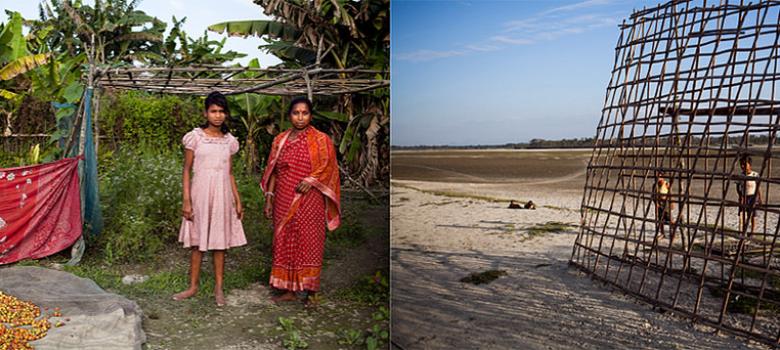
In Assam, villagers struggle to protect their land from the roaring Brahmaputra

Descending from the plateaus of Tibet and flowing through China, India and Bangladesh, the Brahmaputra is one of India’s mightiest rivers, its width running up to 10 kilometers at some places. On its 3,000-kilometer journey, the Brahmaputra provides a livelihood to thousands of communities living on its banks. They depend on it for food, water and farming. In 1950, however, the great earthquake in Assam altered the topography of the river valley and the people of Assam have since been struggling with intense droughts and floods.

Since the earthquake, Assam has witnessed severe cases of river erosion. According to official records, 36 villages, 10 schools, six tea gardens and hundreds of humans and animas have been washed away. The situation has been exacerbated by increasing deforestation and erratic climate changes.

In 2012, floods in Assam displaced over a million people and affected close to 4,500 villages. Today, these villagers from Tinsukia district in Upper Assam are struggling to protect their land and livelihoods from the eroding banks and the rising waters of the mighty Brahmaputra.

via Scroll.in – News. Politics. Culture..

05/09/2014

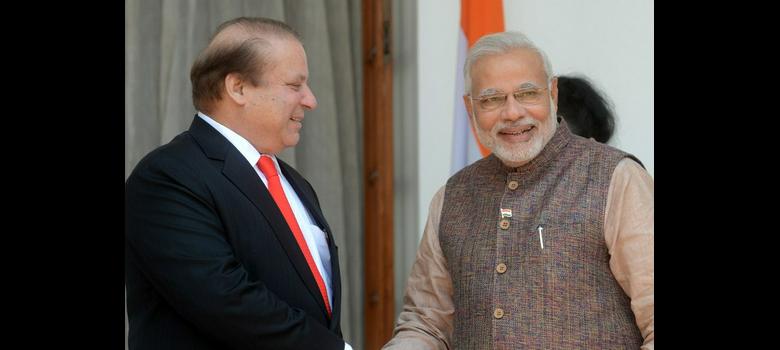
Nawaz Sharif attempts mango diplomacy to placate Modi

Pakistan government keen on reigniting diplomatic ties with India

Pakistan Prime Minister Nawaz Sharif on Thursday sent a package of special mangoes from his country through “official channels” to his Indian counterpart Narendra Modi. This move is seen in Indian diplomatic circles as Pakistan’s initial attempt to rectify the damage caused by its High Commissioner Abdul Basit’s meetings with separatist leaders from Kashmir last month. In response to these meetings, India had cancelled foreign-secretary levels talks with Pakistan scheduled for August 25. Meanwhile, there is speculation that Modi and Sharif might conduct bilateral talks on the sidelines of the United Nations General Assembly summit in New York later this month.

via Scroll.in – News. Politics. Culture..

04/09/2014

India and Japan Are a Perfect Fit – India Real Time – WSJ

Indian Prime Minister Narendra Modi’s visit to Japan will generate headlines for the big deals that he does (or doesn’t) conclude with his Japanese counterpart Shinzo Abe. These include civil nuclear cooperation, high-speed rail construction and defense ties.

However, the bilateral relationship ultimately depends on thousands of smaller commercial deals. If the two leaders set the tone and clear away obstacles, the India-Japan partnership can become the driver of Asia’s growth. Mr Modi said on this visit that Japan and India bear a ‘huge responsibility’ to define the path of Asian growth in the 21st century.

The two powers are complementary on several levels, but primarily in the economic realm. Japan has the largest growth problem in the world while India has the largest development problem.

There is no clearer example of this than India’s need for new roads, railways and ports. The Reserve Bank of India has defined India’s key economic problem as a supply-side deficit; demand is abundant, at times rampant, but supply responses are reduced by the unavailability and cost of capital, alongside logistics bottlenecks. The result is higher inflation and lower growth.

Japan can provide the solution in the form of capital and technology. Tokyo is a partner in the $90 billion Delhi-Mumbai Industrial Corridor which will create new “smart cities,” seven of which have started construction. Some 100 more are planned nationwide. This initiative has already yielded the Delhi Metro, built under budget and within schedule with Japanese loans and rolling stock.

via India and Japan Are a Perfect Fit – India Real Time – WSJ.

03/09/2014

In Modi’s first 100 days, foreign ministry moves fastest on Raisina Hill

With her many visits abroad, External Affairs Minister Sushma Swaraj has been running the busiest ministry in the new government.

India’s new foreign minister, Sushma Swaraj, seems to be running the busiest ministry on Raisina Hill ─ the area of Lutyen’s Delhi that houses key government buildings ─ for the regime led by Prime Minister Narendra Modi.

Modi’s decision to invite all the heads of state in the South Asian Association for Regional Cooperation group to his swearing-in ceremony, widely hailed as a good and forward-thinking move, meant that Swaraj had to be on her toes from the get-go. In no time at all, Swaraj and Modi embarked on trips to neighbouring countries such as Bangladesh and Nepal, which an Indian head of state had not officially visited since 1997.

Swaraj has had her hands full, visiting neighbours such as Bangladesh and Myanmar in quick succession while overseeing the successful evacuation of hundreds of stranded Indian citizens from hotspots such as Iraq and Libya and formulating India’s position on the conflict between Israel and the Palestinian territory of Gaza. She has just returned from Vietnam and was set to go to Beijing for a trilateral meeting with the Chinese and Russian foreign ministers but the government called off her trip, perhaps in deference to the sensitivities of Japan, where Prime Minister Modi arrived on Sunday for a summit.

On Israel, despite the BJP’s highly favourable stance towards the country, India eventually stuck to its historical position by voting in favour of Palestine at the United Nations Human Rights Commission. Many BJP supporters questioned the government’s move, with some saying it was unable to break out of a Congress-era mindset.

The new order at the Ministry of External Affairs has a spring in its heels. From looking to invite all heads of state in the African Union to New Delhi to attracting mixed responses for allowing Modi to cancel talks with Pakistan after its high commissioner met Kashmiri separatist leaders from the Hurriyat Conference, the ministry has been hogging the limelight on Raisina Hill.

via Scroll.in – News. Politics. Culture..

Law of Unintended Consequences

continuously updated blog about China & India

ChiaHou's Book Reviews

continuously updated blog about China & India

What's wrong with the world; and its economy

continuously updated blog about China & India