Posts tagged ‘India’

03/09/2014

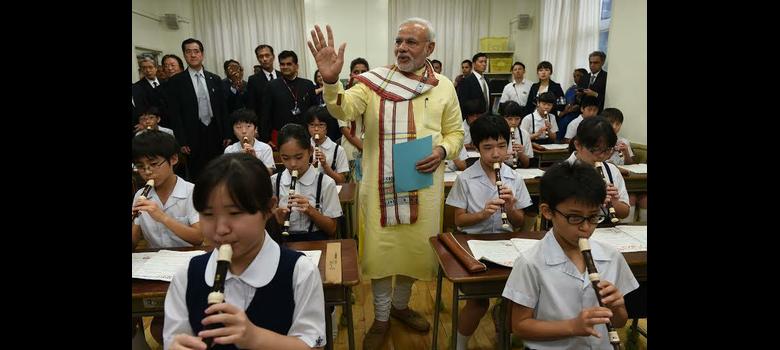
These photos show what Modi did in Japan when he wasn’t attending to business

All prime ministers enjoy spending time abroad, especially if it is while visiting a particularly friendly ally.

Prime Minister Narendra Modi isn’t exactly the jovial type. Sure, he peppers his speeches with a bit of light humour occasionally, but he doesn’t seem like the kind of person who would enjoy a comedy night on television. So what could possibly make him really happy? The same thing that makes heads of states happy all over the world: leaving their own countries to visit friendly allies.

And by any measure, it seems like Modi managed to have a blast in Japan (even if no nuclear deal was signed). Since he also happens to be the Selfie Era Prime Minister, every moment of this fun journey was documented and promptly tweeted by the prime minister’s official twitter account.

more photos from:  http://scroll.in/article/677092/These-photos-show-what-Modi-did-in-Japan-when-he-wasn’t-attending-to-business

03/09/2014

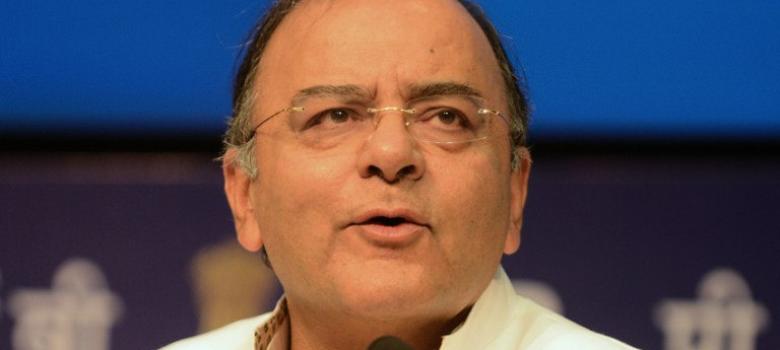
Jaitley’s biggest tasks lie ahead: big-bang reforms and restructuring the Finance Ministry

The finance minister has had to tackle inflation, India’s stance in the WTO and easing regulatory hurdles. That was the easy part.

Even before the general election ended in May, it was clear that if the Narendra Modi-led Bharatiya Janata Party formed the government, Arun Jaitley would head one of the important ministries on Raisina Hill, the area of Lutyen’s Delhi that houses some of the most important government buildings.

But Jaitley’s move to North Block, the part of the Hill housing the finance ministry, was not easy. Contesting his first Lok Sabha election, he lost the race in Amritsar to the Congress candidate by nearly one lakh votes, raising questions within the party about his eligibility to be granted a key ministry. Jaitley, who has also been given charge of the defence ministry, is a man with as many detractors as admirers in New Delhi and within his own party.

Often teased in Delhi circles as the only Congresswala in the BJP, Jaitley was seen by many as an obvious choice for the crucial portfolio of finance. He got the job because he has a shrewd strategic mind and knows how to work Delhi. In addition, the BJP needed someone who had the nerves to handle a ministry that was practically in the ICU despite valiant, though sometimes questionable, efforts by his predecessor and friend, the Congress’s P Chidambaram.

Both Prime Minister Narendra Modi and Jaitley had only a few days to present their first budget to a Parliament and nation that had been promised big-bang economic reforms. As Jaitley presented the Modi government’s first budget on July 12, many who had expected major reforms were left disappointed even though some praised it for pointing in the right direction.

As a member of the Federation of Indian Chambers of Commerce and Industry said, this was a “benefit of the doubt” budget because of the short period in which Jaitley and his team had to think things over. The real test will come in 2015.

Huge challenges

A change in government is not the only factor that drives ministerial reform. The bureaucracy also needs to endorse the new policies. In getting the bureaucracy on board, Jaitley’s team in North Block has faced plenty of challenges, such as the minister’s inability to address the thorny issue of retrospective taxation.

Other things that kept Jaitley busy as soon as he took over were controlling inflation, India’s stance on subsidies at the WTO and making it easier to do business by removing regulatory hurdles. But the enormity of reforms needed to transform the Indian economy and pushing its growth rate to more than 6% require willpower and the stomach to take politically unpopular measures, especially in sectors such as power.

“There are three or four sectors where we just cannot continue doing business as usual,” said Pratap Bhanu Mehta, president of the New Delhi-based Centre for Policy Research. “In areas such as energy we are too dependent on imports and on carbon-intensive energy sources. If we are not on an alternative energy path soon, which means low carbon and technologically efficient [forms], we could be out of the development game in 15 to 20 years.”

It is the support system for business that requires key changes. Foreign industry remains bullish on India but has made its displeasure known over the slow progress on issues such as foreign direct investment, land acquisition and retrospective taxation.

On the domestic front, many industrialists have asked for a revitalised subsidy regime, one in which the government gives subsidies wherever required instead of using them as a populist measure to get votes. At the same time, as a vital component of the global economy, India could find it increasingly difficult to persist with its subsidy regime even if it makes sense on the domestic front.

Back to the drawing board

Globalisation and climate change will become central to India’s economic story. The Asian Developmental Bank concluded in a recent report that South Asian economies such as India could lose 1.8% of their GDP by 2050 and 8.8% of their GDP by the end of the century to climate change.

via Scroll.in – News. Politics. Culture..

03/09/2014

Six ways in which Narendra Modi has changed Delhi

From: http://scroll.in/article/677239/Six-ways-in-which-Narendra-Modi-has-changed-Delhi

He’s undermined the hierarchy of the BJP, but bureaucrats are reporting to work on time.

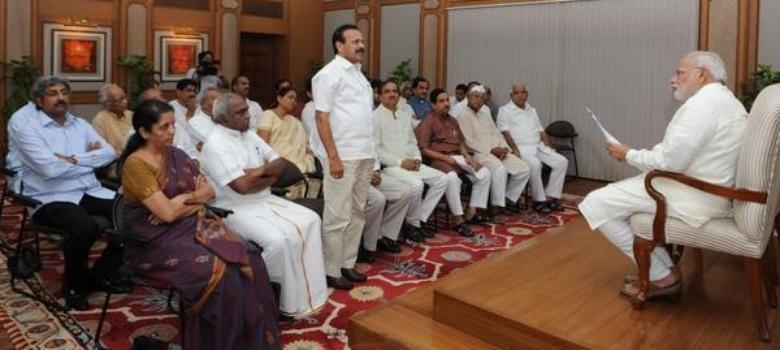
Narendra Modi’s first hundred days in power may not have brought big bang economic reforms or sweeping social initiatives, but the shift in dynamics across political, bureaucratic and corporate circles has been huge. Except for the period of the Emergency four decades ago, which turned everything upside down, never have the customary power equations of Lutyens Delhi become so redundant.

1. The Bharatiya Janata Party
The biggest impact of Modi’s arrival at the seat of power has been on his own party. The Bharatiya Janata Party today is looking like a punctured balloon. This was one of the few remaining political outfits in the country that still routinely practiced internal debate. After Modi’s victory, the hush among the BJP leadership has been deafening. The party is under Modi’s thumb and is now feeling the pressure of Amit Shah’s palm as well. Apart from the overwhelming presence of these two leaders, no one is quite sure about the hierarchy in the party. Party members don’t know whom to approach for what, since everybody else seems so powerless. There is surprisingly little triumphalism or celebratory swagger among BJP leaders in the aftermath of such an astounding electoral victory.

2. The council of ministers
In the beginning there was some envy about those who got plum ministerial positions. But a few of them, such as power minister Piyush Goel, and environment and information minister Prakash Javdekar, were reported to have been ticked off like schoolboys. As a result, a ministerial post does not look so inviting anymore. Individual ministers have never before been so devoid of the powers to dispense favours. In the past, some politicians were able to wrangle such favours even if they were in opposition. The ministers are instead driven to work relentlessly from early in the morning to late in the night, driving teams of sleepless bureaucrats, some of whom appear to have more direct access to the prime minister’s office than their political superiors. The word out is that Big Brother is watching and any sign of laxity will not go unpunished.

3. Parliament
There also appears to a conscious decision by the new prime minister to bypass conventional parliamentary processes for policymaking. Standing committees are yet to be set up. Such is the apathy to parliament that even seat allotments to different parties in the new Lok Sabha are yet to begin. Clearly, Modi does not have much inclination for parliamentary debate and review to make policies.

4. The bureaucracy
Significant changes in the corridors of power are also evident. The bureaucracy, from top to bottom, is still struggling to cope with the drastic departure from the slow pace of government. Office hours are not only being imposed in terms of punctuality, but can also get extended indefinitely.

5. India Inc
The relationship between corporate groups and the Modi government in the first hundred days has belied fears, particularly of liberal-left opinion makers, that it would be a willing instrument for crony capitalists. So far this has not been the case. It has become increasingly clear that the country’s largest industrial magnate Mukesh Ambani, who was supposed to be one of the main moneybags to bankroll the Modi campaign, is not calling the shots. Even Gautam Adani, known to have been personally close to Modi when he was Gujarat chief minister, has not been patronised. Power minister Piyush Goel was said to have been pulled up for publicly hobnobbing with the industrialist whose power company was also slapped with a clear energy cess in the budget.

This is not to suggest that the new prime minister has turned his back on industrialists. He has had individual meetings with a number of them including Cyrus Mistry of the Tata group, Anil Agarwal of Vedanta and Anil Ambani, although mysteriously not the latter’s elder brother, Mukesh. The message so far has been clear. The new government was ready to consider all proposals as long as they fit into the regime’s scheme of things, but would not be manipulated through fear or inducement on specific projects or policies. Ever since the new government came to power, the vast army of corporate lobbyists in Lutyens Delhi have been sitting idle.

6. Sycophants and cheerleaders
Finally, the most striking difference between the Modi regime and previous ones, is the way the new prime minister has spurned a long queue of sycophants and cheerleaders who had expected to be rewarded for their services to the Modi campaign. Quite a few of them are in the media, or experts who are hoping to be accommodated in think tanks now that they have been overlooked for plum government posts. The impression, however, is that the prime minister is adamant about horses for courses, and will only elevate someone he feels will be able to do the job.

Those close to Modi have assiduously cultivated the image of a prime minister who has his party leaders by the scruff of its neck, the bureaucracy on tenterhooks and business magnates at an arms distance – “a tough guy who does not dance”.

01/09/2014

India Outpacing China’s Oil Demand – India Real Time – WSJ

India’s oil demand has grown faster than China’s so far this year, highlighting slowing energy demand in the world’s most populous country and fueling expectations that India may pick up the slack over the medium-to-long term. The pace of India’s demand also reflects optimism about India’s economic growth under Prime Minister Narendra Modi.

In absolute terms China is Asia’s largest oil consumer, having burned 10.76 million barrels a day of oil and accounting for 12.1% of global oil consumption in 2013, according to BP PLC. The second-largest oil consumer in Asia is Japan, though its oil consumption has been declining as its economy has matured.

India ranks third at 3.7 million barrels a day and accounted for about 4.2% of global oil consumption in 2013.

India’s oil demand has shown steady growth through July at an average of 3%, or 101,000 barrels a day. China’s oil demand has declined at an average of 0.6%, or 62,000 barrel a day, in the same period, Barclays PLC analyst Miswin Mahesh said.

Indian oil demand growth has “organic, domestic, economic activity-linked factors still driving it,” he said. Mr. Mahesh expects the south Asian country’s oil demand to accelerate to 210,000 barrels a day next year, spurred by healthy construction activity, government-financed industrial projects and strong growth in car purchases.

China’s oil-demand growth, on the other hand, remains uncertain, with a large portion of its imports this year going into strategic stockpiling instead of consumption. Its oil demand fell into negative territory in July and its oil imports declined for the first time this year.

“This surprise drop in crude imports further supported our view that [China’s] full-year oil demand could be weaker than current market expectations,” Thomas C. Hilboldt, head of Asia Pacific oil research at HSBC Holdings PLC said last week.

The disparity of the demand drivers in India and China is also telling.

The bulk of oil demand in both countries is for diesel, the most widely consumed liquid fuel in Asia. China’s diesel consumption has shown a sharp decline because of its industrial slowdown, while India’s diesel demand rose sharply in the last few months because of power shortages and delayed monsoon rains.

Despite this, the extent to which Indian energy demand can compensate for China’s decline remains doubtful.

Markets are looking for the next emerging-market economy to take over as China moves into its post-industrial phase. Yet India has a fundamentally different economic structure and growth model, Janet Kong, head of market analysis at BP Singapore’s trading division pointed out last week.

“It’s very much a service-oriented economy…not relying on a lot of infrastructure investments or manufacturing,” she said.

The manufacturing sector in India has underperformed for many years, contributing to about 15% of gross domestic product and 12% of employment, compared with 25% or more of GDP in countries like China, Malaysia, Thailand and Vietnam, according to the Asian Development Bank’s 2014 report. Meanwhile, China is transitioning from an industrial economy dependent on exports to focus more on domestic consumption.

via India Outpacing China’s Oil Demand – India Real Time – WSJ.

01/09/2014

Japan and India vow to boost strategic ties during summit | Reuters

Japan and India agreed on Monday to strengthen strategic ties as Asia’s second and third biggest economies keep a wary eye on a rising China, and said they would accelerate talks on the possible sale of an amphibious aircraft to India’s navy.

India's Prime Minister Narendra Modi (R) and Japan's Prime Minister Shinzo Abe shake hands before their talks at the state guest house in Tokyo September 1, 2014. REUTERS/Toru Hanai/Files

Japanese Prime Minister Shinzo Abe and his Indian counterpart Narendra Modi also agreed to speed up talks on a so-far elusive deal on nuclear energy cooperation, welcoming what they called “significant progress” in the negotiations.

“The two prime ministers reaffirmed the importance of defense relations between Japan and India in their strategic partnership and decided to upgrade and strengthen them,” Abe and Modi said in a statement after a summit in Tokyo.

Modi, on his first major foreign visit since a landslide election win in May, arrived on Saturday for a five-day trip aimed at capitalizing on a personal affinity with Abe to bolster security and business ties in the face of an assertive China.

In a sign of their warm ties, the two leaders greeted each other with a bear hug when they met on Saturday in Japan’s ancient capital of Kyoto for an informal dinner. Modi is one of three people that Abe follows on Twitter, while the Indian leader admires Abe’s brand of nationalist politics.

“The 21st century belongs to Asia … but how the 21st century will be depends on how strong and progressive India-Japan ties are,” Modi told Japanese and Indian business executives earlier in the day.

“The 18th century situation of expansionism is now visible,” Modi said, referring to incidents such as encroachment of others countries’ territories and intruding in other countries’ seas, in a veiled reference to China, with which India shares a long disputed border.

“Such expansionism would never benefit humanity in the 21st century,” he said.

Sino-Japanese ties have also been chilled by a row over disputed isles, feuds over the wartime past, and mutual mistrust over defense policies as China seeks a bigger regional role and Abe loosens the constraints of Japan’s post-war pacificism.

Abe is keen to expand Japan’s network of security partnerships with countries such as India and Australia to cope with the challenge presented by China.

via Japan and India vow to boost strategic ties during summit | Reuters.

30/08/2014

The backup power in Indian apartments are funded in the name of a poor Indian farmer

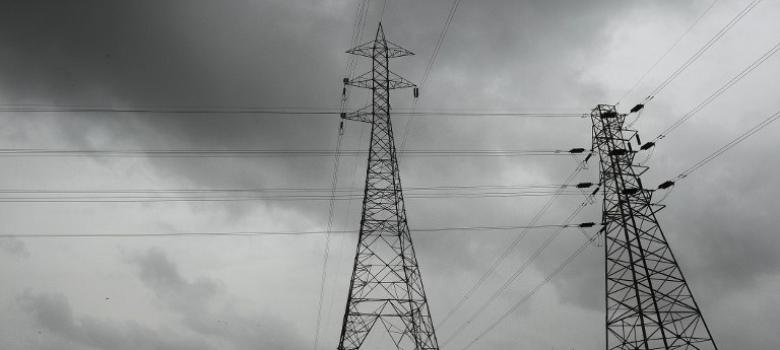
In India’s urban areas, you can tell the interruption in power supply by an accompanying noise – a diesel genset whirring into life somewhere nearby, releasing plumes of dark smoke into the air. Power failure is so endemic in some areas that factories, call centres, hotels and apartment complexes all install large gensets to provide back-up power.

So much so, that the installed power generation capacity of diesel gensets in India has now exceeded 90,000 megawatts, or the equivalent of 36% of India’s total power generation capacity. This estimation by the power regulator, the Central Electricity Regulatory Commission, in fact takes into account only large units with over 100 kilo volt ampere. If smaller units in apartment complexes and household are taken into account, the figure could be much larger.

Policymakers thus far believed that the installed capacity of such units was just over 1,000 MWs, while in reality it was 90 times as much. And so there is no estimation of how much fuel is consumed by these gensets.

There should be. Because these gensets all consume subsidized diesel.

Fuel subsidies were a little under 2% of India’s GDP in 2011-12, according to IMF calculations. Diesel subsidies accounted for nearly half of it.

The rationale for subsidizing diesel is two-fold. Farmers use it to operate motor pumps to irrigate their farms. And second, cost of transporting essential goods and food needs to be kept down to rein in inflation.

Both these reasons are undermined by the situation on the ground and what researchers have shown.

Nearly 27% of diesel sold in India is consumed by vehicles, the economist Kirit Parikh estimated in 2013. All of these are not trucks transporting vegetables. Many are sports utility vehicles owned by the rich. Parikh estimated that an SUV owner received an annual subsidy of Rs50,000 on account of the diesel subsidy in the name of the poor.

Researchers at the thinktank Integrated Research and Action for Development showed in 2012 that a 10% increase in the price of diesel would only result in a 0.6% rise in consumption expenditure of the poorest 10% of people both in the rural and urban areas. A 4% rise in wholesale price index, which can be caused by fiscal deficit-fuelled inflation, can have a much greater impact, they found.

The government recently set up an expenditure reform commission to streamline spending and ensure better targeting of subsidies.

via Scroll.in – News. Politics. Culture..

30/08/2014

India posts highest GDP growth figures in over two years

GDP up by 5.7 per cent in April-June quarter

India’s Gross Domestic Product increased by 5.7 per cent in the April-June quarter, up from 4.6% in the previous quarter. Growth in this quarter was the highest since March 2012, and it was sparked by a boost in the manufacturing and service sectors. However, economists said that this rebound could be temporary and stifled by poor monsoon rains and rising food inflation.

via Scroll.in – News. Politics. Culture..

29/08/2014

In India, Slum Dwellers Move Into High Rises – Businessweek

Indian developer Babulal Varma’s job requires the human touch. The company he co-founded, Omkar Realtors & Developers, specializes in coaxing Mumbai’s slum dwellers from their hovels, then bulldozing the slum and erecting a mix of luxury condominium towers and free new homes for the slum dwellers on the cleared land. Omkar has completed 12 projects, rehousing 40,000, with 12 more in the works, making it the most successful business in this niche. Mumbai’s slums still house 6.5 million people.

One of Omkar’s luxury high rises, under construction

In one slum several years ago, an old woman wouldn’t leave her home. Omkar was keen to develop the site into a $1 billion complex of six luxury high rises and modern housing nearby for the slum dwellers. As Varma recounts it, he visited her and learned that the woman wanted two free apartments, not one. The woman lived with her two sons and their wives in a 90-square-foot shack. The wives argued constantly. Yet the law regulating slum redevelopment says a family that proves residency since 2000 can get only one new, 269-square-foot home on the same land.

Varma came back with a piece of paper showing a line drawn through the unit they’d be moving into, with a second door cut into the hallway. The wives could live separately, he explained. Agreement came in 45 minutes. “If you can understand their problem, if you can understand their issues, all the issues are very small, like a peanut, but to them this is the biggest thing,” says Varma, who cites karma as his operating philosophy as he sits beside an incense-burning Hindu altar.

By law, Omkar and other developers must secure the consent of 70 percent of a slum’s inhabitants before a project can go forward. Slum dwellers who have lived in the same spot since 2000 hold rights to the land but can sign them over to developers.

Omkar (the long form of the Hindu mantra “om”) contributes to the city’s efforts to get its slum dwellers into the middle class. “There is all-round social upliftment as people move from slums into proper apartments,” says Nirmal Deshmukh, chief executive officer of the Slum Rehabilitation Authority (SRA), which selects the developers for the slum projects.

Since her marriage to a postal worker 13 years ago, Swarangi Pingle had lived in a 90-square-foot bilevel hut with her in-laws, her husband’s two siblings, and her daughter, now 11. On May 1 she and her family became homeowners in the development where Varma persuaded the old woman to go along. Pingle’s home on the top floor of a 23-story building has plenty of ventilation and sunlight. In the slum, Pingle would wait an hour to fill water jugs at the communal tap and for her turn at the common toilet. “This is much better,” she says as she shows off the private bathroom, kitchen sink, and aqua-painted living room. The new homes allow space for children to study, she says: “I may have married into a slum, but my daughter won’t go back to one.”

via In India, Slum Dwellers Move Into High Rises – Businessweek.

26/08/2014

Top India court says coal allocations were illegal – Businessweek

India’s Supreme Court said Monday that all government allocations of coal reserves to private companies from 1993 to 2010 were conducted illegally, and it will hold a hearing to decide whether to cancel them.

More than 200 coal blocks, or areas of unmined reserves, were allocated during that period to companies for their use in power plants or steel or cement factories. The companies were allowed to sell excess coal on the open market, but the court said commercial sales from the reserves must be suspended until it makes its decision at a hearing on Sept. 1.

The court’s ruling extends beyond the initial case — dubbed “Coalgate” by the Indian media — in which the previous Congress party-led government was accused of costing the treasury hundreds of billions of dollars by selling or allocating about 155 coal blocks in 2004-09 without competitive bidding. A report by the country’s Comptroller and Auditor General leaked to the media in March 2012 estimated those losses to have been around $210 billion.

The scandal along with other high-profile cases of alleged corruption were seen as a key reason for the Congress party’s loss in this year’s elections to Prime Minister Narendra Modi‘s pro-business Bharatiya Janata Party.

The court said in its ruling Monday that between 1993 and 2010 there had been “no fair and transparent procedure” in the coal allocation process, “resulting in unfair distribution of the national wealth.”

“Common good and public interest have, thus, suffered heavily,” said the court, led by Chief Justice R.M. Lodha.

via Top India court says coal allocations were illegal – Businessweek.

Law of Unintended Consequences

continuously updated blog about China & India

ChiaHou's Book Reviews

continuously updated blog about China & India

What's wrong with the world; and its economy

continuously updated blog about China & India