Posts tagged ‘India’

26/08/2014

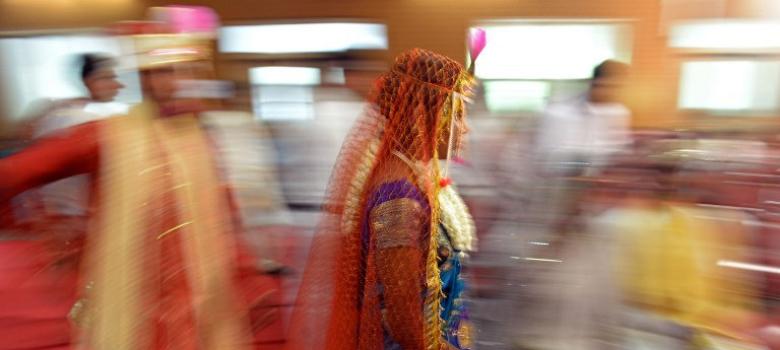
For young Indian urbanites, caste is no longer a marital consideration – but Mummy and Papa are

Caste and language are losing significance in urban India, at least as far as marriage is concerned, according to a survey of more than 400 single adults in Delhi, Mumbai and Bangalore. But other social traditions are not being forgotten: adults between the ages of 20 and 35 say the most important thing is that their partner respects elders and treats their spouse’s family just as they do their own.

More than half of the participants in the survey conducted by Floh, a forum for singles to meet and interact online and offline, said they would take the decision of whom to marry jointly with their parents. Only 22% believed that they could marry someone their parents did not entirely approve of. The respondents all came from similar socio-economic background, with at least an undergraduate degree and earning more than Rs 40,000 per month.

Floh founder Siddharth Mangharam believes that the survey shows that India treads its own path when it comes to social interactions. “We are not following some Western ideology, just 20 or 30 years behind,” he said.

Young urban Indians – and parents, who were also interviewed – seem to have unshakable faith in the idea that humans fall in love at first sight. When asked, 71% of single adults and 62% of parents said they were convinced the phenomenon existed. Most respondents’ main reason for being single was that they had not found the “right one”.

via Scroll.in – News. Politics. Culture..

22/08/2014

India and China: Strangers by choice | The Economist

For those readers really interested in China AND India, this is a ‘must-read’ article.  I’ve only extracted the first part.  For full article go to – India and China: Strangers by choice | The Economist.

FEW subjects can matter more in the long term than how India and China, with nearly 40% of the world’s population between them, manage to get along. In the years before they fought a short border war, in 1962, relations had been rosy. Many in China, for example, were deeply impressed by the peaceful and successful campaign led by Mohandas Gandhi to persuade the British to quit India. A few elderly people in China yet talk of their admiration for Rabindranath Tagore, the Bengali writer who won the Nobel prize for literature in 1913. And though Nehru, India’s first prime minister, was resented as arrogant and patronising by some Chinese leaders, the early post-war years saw friendship persist and some popular respect for him too. In China, for example, books on India were then easily available—unlike today.

The past half-century has produced mostly squabbles, resentment and periodic antagonism. India felt humiliated by its utter defeat at the hands of Mao’s army in the 1962 war. China’s long-running close ties to Pakistan look designed to antagonise India. In return India is developing ever warmer relations with the likes of Vietnam and Japan. An unsettled border in the Himalayas, periodic incursions by soldiers into territory claimed by the other side and China’s claim—for example—that India’s Arunachal Pradesh is really a part of Tibet, all suggest that happier relations will be slow in coming. Even a booming bilateral trade relationship is as much a bone of contention as a source of friendlier ties, given India’s annoyance at a yawning deficit.

One glimmer of hope, in theory, is that ordinary people of the two countries might start to understand each other better as levels of education, wealth and interest in the outside world all grow. As tourists, students and business types visit each other’s countries, perhaps they will find that they have more in common than they believed. In fact, judging by a sharp and well-crafted memoir by an Indian journalist who was posted in Beijing for four years, ignorance and bafflement are likelier to persist.

Reshma Patil was sent by the Hindustan Times, a large Indian newspaper, to Beijing in 2008, one of only four Indian print journalists in the country (by contrast Chinese media groups had 16 correspondents in India). Her account of time there, “Strangers across the border; Indian encounters in boomtown China”, is revealing for its detail and anecdote, but also for its broadly damning conclusion about the state of ties between the countries: “extreme ignorance and nationalism illustrate their mutual relations”, she says.

Most entertaining, from an Indian point of view at least, are her accounts of Chinese ignorance about India. She visits a centre in Beijing devoted to learning cricket in case it ever becomes an Olympic sport (it is called shenshi yundong, or “the noble game”), whose players have never heard of Indian stars, or of the cricket world cup, and who appear to prefer playing ping pong. During numerous forays to universities she finds students learning foreign languages who routinely dismiss India as dirty, poor and irrelevant. A wide misapprehension, she says, is a belief that India is Buddhist. Officials and journalists tell her that India suffers from an “inferiority complex”, that it is so backward (“naked…children piss on the streets”) that there can be “nothing to learn” from the country. She suggests that one Indian drink, the mango lassi, has become popular in China, but otherwise the Chinese she meets mostly have little interest in Indian products or culture. Indian traders are famously stingy. Its brands, such as those of big outsourcing firms, are poorly understood or assumed to be of low quality. Persistent racism towards dark-skinned Indians is broken in only one case, by the head of a Chinese modelling agency who says he is fond of Indians who can pull off a “Western look”.

India meanwhile makes pitifully little effort to correct Chinese misunderstandings. As well as few journalists, India had only 15 diplomats based in Beijing during Ms Patil’s time, most of them inactive. Only two had any economic expertise, and most only started learning Mandarin after their arrival in the country. A big Indian business lobby group had a single representative based in Shanghai. She estimates that only a few hundred Indian businesses, in any case, are active in China (with even fewer Chinese ones in India), and few of the Indian ventures are led by Mandarin-speakers or local hires. As an example of ignorance, she mentions a Chinese business reporter who has never heard of Infosys, a $33 billion Indian IT firm. India’s low profile in China, she argues, “prolongs the shelf-life of anti-India propaganda”. For if most Chinese are merely ignorant, many are troublingly nationalistic where their neighbour is concerned.Ms Patil dismisses annual exchanges of a few hundred students each as a hopeless affair.  Sometimes India ships a low-cost dance troupe to China. Most such exchanges of students, journalists and others end up in mutual frustration; a failure to communicate; and terrible hunger among vegetarian Indians horrified by Chinese cuisine.

via India and China: Strangers by choice | The Economist.

22/08/2014

India’s Government Blocks Release of Film About Sikh Assassins Who Killed Prime Minister Indira Gandhi – India Real Time – WSJ

India’s government has blocked the release of a film about the Sikh assassins who killed the late Prime Minister Indira Gandhi in 1984, saying it could pose a threat to law and order.

Theaters across northern India and select cities elsewhere were set to start showing the Punjabi-language movie, “Kaum De Heere,” which translates as “Diamonds of the Community,” on Friday.

The film tracks the transformation of Mrs. Gandhi’s killers – anointed as martyrs last year by Sikh religious authorities — from dependable bodyguards to assassins.

Mrs. Gandhi’s death sparked large-scale anti-Sikh riots, one of the worst episodes of communal violence in Indian history. Around 7,000 people, mostly Sikhs, are believed to have died in the rioting.

Leela Samson, chairwoman of India’s Central Board of Film Certification, said the movie “rakes up very old and strong sentiments” and sends a “wrong message to the youth that a particular ideology comes above the nation’s interests and that taking the law into your hands is permissible.”

She said that after officials from the Home Ministry, Information and Broadcasting Ministry and film review board watched the film Thursday, film regulators decided to withdraw their earlier approval for it to be shown in theaters.

In an interview with The Wall Street Journal Thursday, the film’s producer, Satish Katyal, said the film was about the lives of the two assassins and the difficulties faced by their families.

“Nobody has been shown as being good or bad. There are no biases,” he said.

Mr. Katyal said it was unfair for the film board to reverse course just hours before the film’s release. If the government had any objections, he said, there was “ample opportunity to raise them before.”

The film opens with the assassination of Mrs. Gandhi, the daughter of independent India’s first prime minister, Jawaharlal Nehru. Mrs. Gandhi, like her father, led the Congress party.

While she was premier, Indian security forces attacked alleged Sikh militants inside the Golden Temple, Sikhism’s holiest site, in a raid dubbed Operation Blue Star. Hundreds of people were killed.

Soon after, Mrs. Gandhi was killed by two Sikh bodyguards, touching off a spasm of religious violence. Senior Congress politicians have faced trials, some of which are ongoing, for inciting mobs and fueling the conflict.

“There will never be any justification for the attack on the sanctity of Sikhs and the targeting of an entire community,” said Avtar Singh, head of the Shiromani Gurdwara Prabandhak Committee, Sikhism’s highest authority.

The party has attempted to reconcile with the Sikh community. Former Prime Minister Manmohan Singh, himself a Sikh, apologized for the riots when he came to power.

via India’s Government Blocks Release of Film About Sikh Assassins Who Killed Prime Minister Indira Gandhi – India Real Time – WSJ.

22/08/2014

India to Unveil First Warship to Deter Chinese Submarines – Businessweek

India will unveil its first home-built anti-submarine warship tomorrow in a move to deter China from conducting underwater patrols near its shores.

CHINA-MILITARY-NAVY-ANNIVER

Defense Minister Arun Jaitley will commission the 3,300-ton INS Kamorta at the southeastern Vishakapatnam port. The move comes a week after Prime Minister Narendra Modi introduced the largest indigenously built guided-missile destroyer and vowed to bolster the country’s defenses so “no one dares to cast an evil glance at India.”

India is playing catch-up to China, which built 20 such warships in the past two years and sent a nuclear submarine to the Indian Ocean in December for a two-month anti-piracy patrol. The waters are home to shipping lanes carrying about 80 percent of the world’s seaborne oil, mostly headed to China and Japan.

“As China grows into a naval, maritime power, it will be more and more active in the Indian Ocean,” Taylor Fravel, a professor at Massachusetts Institute of Technology who studies China’s ties with its neighbors, said by phone. “Of course, it will not be due to some hostility or targeted at India, but because of its economic interests in the Indian Ocean, as a lot of trade passes through. Such a presence will certainly raise questions in India, but it need not necessarily be a cause of major conflict.”

Warship Plans

India has lacked anti-submarine corvettes in its 135-warship fleet for more than a decade now, with the decommissioning of the last of the 10-ship Petya-class of 1960s-vintage Soviet corvettes in December 2003. It plans to build 42 more warships, including three more anti-submarine corvettes, over the next decade, according to Rear Admiral A.B. Singh, an Indian navy official.

About 90 percent of Kamorta’s components are local, with the hull developed by Steel Authority of India Ltd., medium-range guns by Bharat Heavy Electricals Ltd. (BHEL) and torpedo launchers by Larsen & Toubro Ltd, India’s largest engineering company. The ship is two years behind schedule, according to Commodore B.B. Nagpal, the navy’s principal director for naval design.

via India to Unveil First Warship to Deter Chinese Submarines – Businessweek.

20/08/2014

Why decades of India-Pakistan negotiations have not resulted in any real progress

It’s simple. Pakistan wants something India has, but can offer nothing in return that India desires.

It took less than three months for the candle of hope lit by Narendra Modi and Nawaz Sharif at the Indian prime minister’s inaugural ceremony in Delhi to be extinguished. India has cancelled foreign secretary-level talks scheduled to be held in Islamabad next week because Abdul Basit, the Pakistani High Commissioner, met a few separatist leaders. It’s not as if Basit did anything illegal or novel. Kashmir being the apple of discord between India and Pakistan, it is natural for Pakistan’s envoy to consult with secessionist Kashmiris before an important round of bilateral discussions. It has been done many times before. On this occasion, though, the Modi government threw a hissy fit, which is being spun by pliant commentators as a “tough approach”.

The extinguishing of hope was predictable, and followed directly from the mistake of inviting Nawaz Sharif to Delhi. The two prime ministers should have met only when they had something serious to decide upon, after the spadework for an agreement, however minor, had been completed. The euphoria of the inauguration handshake created expectations difficult to fulfill, considering the deeply entrenched and entirely incompatible views of the opposing sides.

The fact that Narendra Modi is no Atal Behari Vajpayee turned Mission Difficult into Mission Impossible. Vajpayee was committed to a legacy-defining vision of securing lasting peace with Pakistan. There was a tiny possibility that he might have accepted the sacrifices essential for it, and convinced his party and the nation to go along. In the reign of Modi, whose idea of India is the most aggressive of any leader since independence, such a sacrifice is inconceivable.

Give and take

Any successful negotiation requires give and take from both sides. The stumbling block to resolving the Kashmir issue is that Pakistan wants something India has, but can offer nothing in return that India desires. Although the official positions of the two sides indicate that each is in occupation of territory that rightfully belongs to the other, in reality India has no use for that part of Kashmir we call POK. Nor has anybody in POK expressed a will to secede from Pakistan and join India. In any conceivable deal, then, India can only lose territory. The abstract peace dividend doesn’t provide anything close to adequate compensation for this physical loss. Which is why India has negotiated in bad faith for decades.

In 1972, the two nations signed the Simla Agreement, resolving not to wage further wars, and to address speedily the issue of Kashmir. In 1999, through the Lahore Declaration, we agreed essentially to the same things, tacking on a promise not to nuke each other. But for over 40 years, through cycles of violent insurrection and relative calm, through dozens of horrific terrorist attacks and thousands of peaceful demonstrations, through periods of sectarian amity and passages of ethnic cleansing, India’s position on the issue hasn’t budged an inch, down to the proscription of any maps that show Pakistani Kashmir for what it really is.

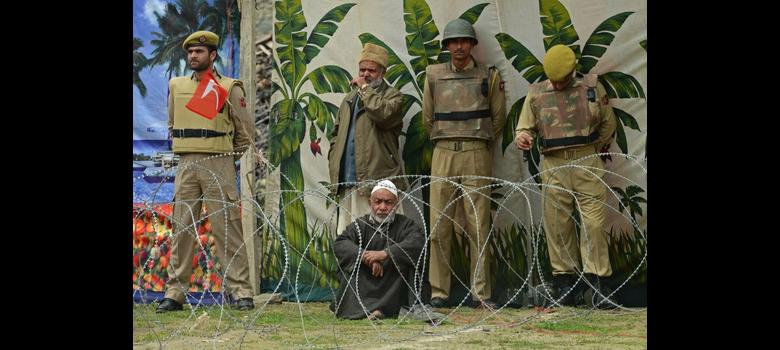
Why would any Indian politician risk negotiating in earnest, when it is clear that Indians in general do not give a fig for what Kashmiris actually want? We are happy to let our security forces commit crimes shielded by the Armed Forces Special Powers Act. We are content to pour billions of rupees into defending an icy wasteland where our soldiers regularly die of exposure. We are barely moved by the discovery of unmarked graves in which thousands of Kashmiris were secretly and hastily buried.

via Scroll.in – News. Politics. Culture..

18/08/2014

Modi Sends India’s Soviet-Inspired Planning Commission Packing – India Real Time – WSJ

India’s prime minister used his inaugural Independence Day speech last Friday to cut off an arm of the country’s government that dates back nearly all the way to independence: the powerful, unloved and sometimes irrelevant-seeming Planning Commission.

The body was the creation of Jawaharlal Nehru, India’s first prime minister, who took from the experience of Japan and the Soviet Union the lesson that late-industrializing countries needed to use state intervention to transform their economies from the “commanding heights.” In the words of the 1950 cabinet resolution that created the commission: “The need for comprehensive planning based on a careful appraisal of resources and on an objective analysis of all the relevant economic factors has become imperative.”

Narendra Modi said on Friday that India could do better. The new prime minister said circumstances had changed since the commission’s creation. He said the federal government wasn’t the only driver of economic growth, and that state governments needed to be empowered to innovate. He promised the creation of a new institution that would serve as a platform for exchanging economic-policy ideas within government.

The announcement wasn’t unforeseen. The prime minister serves ex officio as the Planning Commission’s chairman. But Mr. Modi had spent his first months in office leaving the commission’s other full-time seats conspicuously unfilled. As a former chief minister of the western state of Gujarat, Mr. Modi was said at the time of his election this spring to have a strong interest in giving state governments more space to set budget priorities.

Killing the Planning Commission won’t entirely decentralize government spending in India. Federal tax revenue, according to the country’s constitution, is first distributed between the central and state governments by the Finance Commission. The Planning Commission then allocates spending to states along lines laid out in its Five-Year Plan for the economy.

That’s how it’s supposed to work, at least. Critics have accused the Planning Commission of gradually usurping the Finance Commission’s role as chief arbiter between the federal and state governments, all in the service of Five-Year Plans that are meticulously crafted but rarely achieved. The current plan, which covers 2012 to 2017, runs to three volumes and more than 1,000 pages. It covers all and sundry from boosting the manufacturing sector and increasing female literacy to promoting sports medicine and modernizing the powerloom sector.

The Five-Year Plans pervade policy making in India, at least in name if not always in effect. All federal expenditure is classified as either “plan” or “non-plan,” depending on whether it is undertaken in pursuit of the current Five-Year Plan. The Planning Commission occupies a monolithic grayish structure in New Delhi—Yojana Bhawan, or “Planning House”—just down the road from Parliament.

via Modi Sends India’s Soviet-Inspired Planning Commission Packing – India Real Time – WSJ.

15/08/2014

Online sites shake up hidebound retailing in India – Businessweek

Finding a way into India’s vast but vexing market has long frustrated foreign retailers. Now, overseas investors are pouring billions of dollars into e-commerce ventures that are circumventing the barriers holding back retail powers such as Wal-Mart and Ikea.

Some investors see India as the world’s next big e-commerce opportunity, with the upcoming mammoth public stock offering of Chinese online giant Alibaba hinting at the potential.

Online shopping is still in its infancy in India at $2.3 billion of an overall $421 billion retail market in 2013, according to research firm Crisil. But it is growing fast and the potential of reaching a mostly untapped market of 1.2 billion people has sparked a funding-and-expansion arms race.

Flipkart, a Bangalore-based company founded in 2007 by two former Amazon employees, last month announced it had raised $1 billion in mostly foreign capital after building its registered users to 22 million.

A day later, Amazon raised the stakes with founder Jeff Bezos saying the company would pour $2 billion into developing its India business.

Snapdeal.com, another Indian e-commerce contender, has raised at least $234 million in the past year, and recently local media have reported that Rajan Tata of India’s Tata Group conglomerate is considering a personal investment in the company.

via Online sites shake up hidebound retailing in India – Businessweek.

15/08/2014

Modi Targets Bureaucrats, Manufacturing and Toilets in Independence-Day Speech – India Real Time – WSJ

In his first Independence Day speech Friday, Indian Prime Minister Narendra Modi listed the issues he plans to focus on as the leader of the world’s largest democracy: bickering bureaucrats, women’s rights, manufacturing jobs, trash and toilets.

“You might say Independence Day is an opportunity to talk about big ideas and make big declarations. But sometimes, when these declarations are not fulfilled, they plunge society into disappointment,”said Mr. Modi, who is the South Asian nation’s first prime minister born after India gained independence from Britain 67 years ago. “That’s why I’m talking about things we can achieve in our time.”

Mr. Modi’s Bharatiya Janata Party was propelled to power by Indians who, hungry for better jobs and a higher standard of living, grew frustrated with slowing growth under the previous Congress-led government. Since coming to power in May, Mr. Modi has made some cautious policy moves, disappointing some of his supporters who had expected immediate and bold change from his administration.

Addressing the nation from the ramparts of New Delhi’s regal Red Fort Friday, Mr. Modi said he plans to set the government in order and stop bureaucratic squabbling, underlining his focus on administrative processes rather than economic overhauls. As “an outsider” to New Delhi, he said, he has been shocked since taking office to find that “there were dozens of governments inside the government,” each with “its own fiefdom.”

“Departments are fighting each other, suing each other in the Supreme Court,” Mr. Modi said. “How can they move the country forward?”

In his nearly hour-long speech delivered largely in Hindi, Mr. Modi reiterated his focus on making India a global manufacturing hub and export powerhouse.

Offering a new slogan in English, “Come, make in India,” Mr. Modi invited the world to come to India to manufacture.

“Sell anywhere in the world but make it here,” he said. “Electricals to electronics, chemicals to pharmaceuticals, automobiles to agro-products, paper or plastic, satellites or submarines — Come, make in India.”

Mr. Modi questioned why India needs to import “every little thing,” and urged the country’s youth to open factories and export goods.

Manufacturing makes up only around 15% of India’s gross domestic product as most of its rapid expansion over the last decades has come from the service sector. During spring elections the BJP said it planned to create millions of new jobs if elected. Economists say one of the best ways India can generate employment is through exports.

While India’s labor costs are among the lowest in the world, it has consistently failed to become an export powerhouse like China and Asia’s other largest economies.

Prime Minister Modi also announced initiatives aimed at modernizing India: a nationwide drive for cleanliness that would boost tourism, a program for parliamentarians to transform villages, one by one, into “model villages,” encouraging politicians and companies to build more toilets so people don’t have to use the outdoors and a push to open bank accounts for all Indians.

Mr. Modi also used his speech to address an issue the new opposition has been demanding discussion on: religious violence. A Hindu nationalist leader accused of not doing enough to stop communal violence in the state of Gujarat in 2002 when he was chief minister there, Mr. Modi Friday urged Indians to stop communal fighting. Just this week, opposition parties accused the BJP of polarizing Indians on religious lines and analysts have blamed Mr. Modi of not addressing recent tensions.

“Who benefits from this poison of communalism? It is an impediment to growth,” Mr. Modi said. “Let us choose peace instead and see how it propels our nation forward.”

via Modi Targets Bureaucrats, Manufacturing and Toilets in Independence-Day Speech – India Real Time – WSJ.

14/08/2014

War of Words Erupts Between India and Pakistan – India Real Time – WSJ

An all-to-familiar war of words has erupted between India and Pakistan, threatening to undo efforts to bridge the gap between the estranged neighbors, who have fought three wars since independence from Britain 67 years ago.

The latest rhetorical salvo was fired Wednesday by India’s foreign ministry, which said “mere denials or selective approaches toward terrorism” by Pakistan wouldn’t assuage Indian concerns about what it sees as backing from Islamabad for Islamic terror attacks on Indian soil.

This week’s bickering started when Indian Prime Minister Narendra Modi, on a visit to the disputed state of Jammu and Kashmir on Tuesday, said Pakistan, too weak to fight a conventional war, was using terror groups to wage a “proxy war against India.”

Pakistan’s Foreign Ministry the next day denounced Mr. Modi’s criticism as “baseless rhetoric.”

“It would be in the larger interest of the regional peace that instead of engaging in a blame game, the two countries should focus on resolving all issues through dialogue,” Pakistan’s foreign ministry said.

It wasn’t supposed to be like this. When Indian Prime Minister Narendra Modi invited his Pakistani counterpart, Nawaz Sharif to Delhi for his swearing-in ceremony, it ignited hope for better relations between the estranged neighbors.

The two countries’ foreign secretaries are scheduled to meet in Islamabad on Aug. 25 to “look at the way forward” in the bilateral relationship. But the current spat could cast a shadow over the meeting.

That poses a problem. Deep-rooted suspicion between India and Pakistan has stymied attempts at achieving greater economic integration and better connectivity in the region. Relations between India and Pakistan, a close ally of neighbouring China, also have a major impact on regional stability.

via War of Words Erupts Between India and Pakistan – India Real Time – WSJ.

Law of Unintended Consequences

continuously updated blog about China & India

ChiaHou's Book Reviews

continuously updated blog about China & India

What's wrong with the world; and its economy

continuously updated blog about China & India